Star Salior v3
The 3rd and Final version!
Some changes that were made: I removed the rockets as dice, as cool as the novelty was, in real life, they didn’t work out very well. They were loud and clunky, and after the playtest, they seemed to have more chances rolling a 5 and a 3, so they were unfair. The board now has color and a clearer path to follow, and the cards were removed to make it much simpler. The player cards are updated to have information about the landing mechanisms, instead of filler text.
Cat Rush- Final Game Documentation
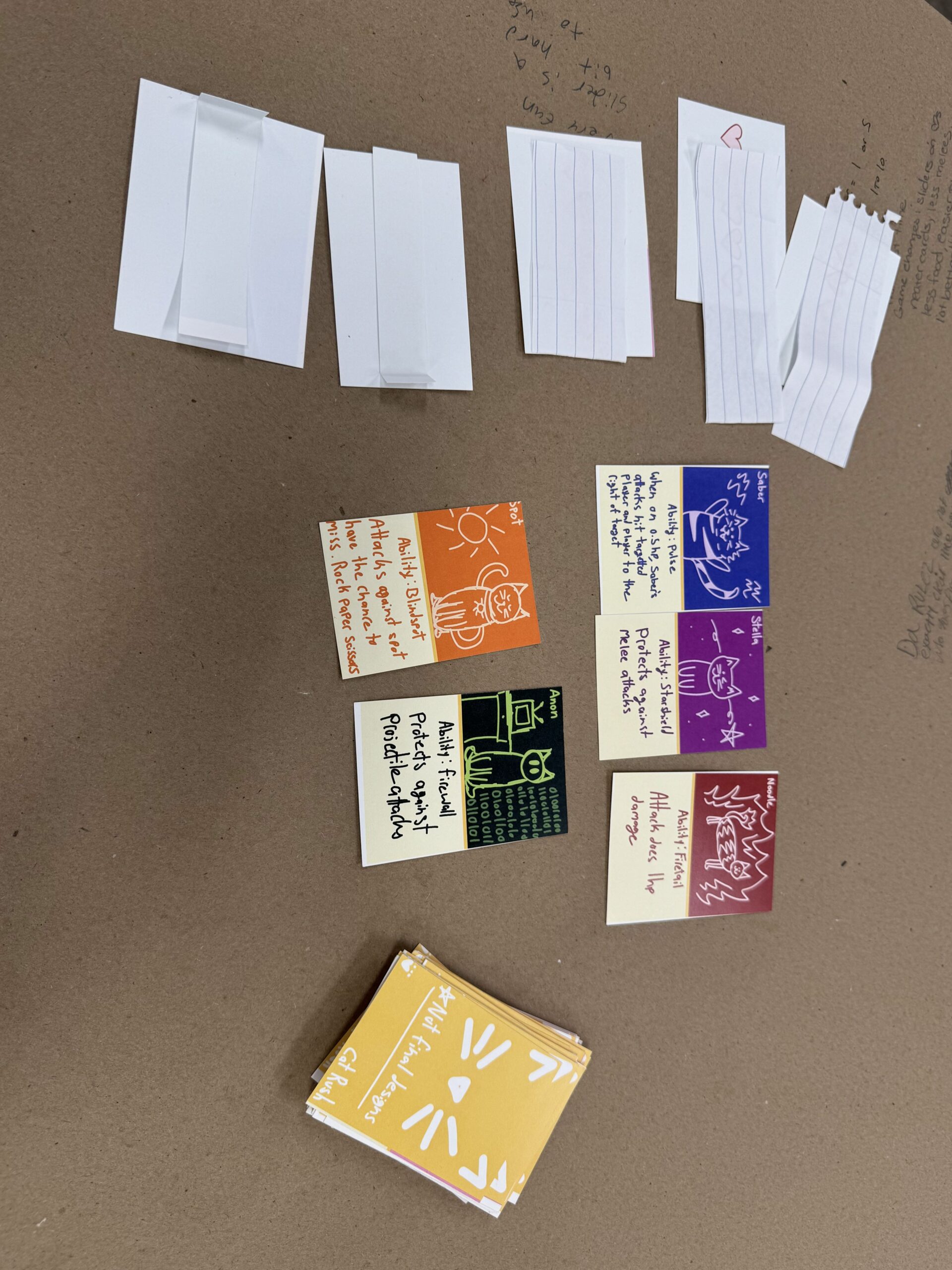
My game is similar to Pokémon, but if it were all cats. The goal is to attack other players and be the last cat standing. It is a mix of luck and skill to use powerups to your advantage and heal using the limited supply of food available. In version 2 of my game, I made the rules a lot more clear surrounding each character’s abilities and how the powerups work. Along with this, I also cut the amount of food cards in half. The first playtest showed me that I was too unclear on some aspects, such as being able to use the base attack by itself. The most helpful comments were about the food supply as well as questions surrounding some of the rules. For version 3, I would make everything into whole numbers and attempt to fix the health sliders again. Along with this, I would add different colored backs for the character and heart cards to keep them better separated from the deck.
Version 2:
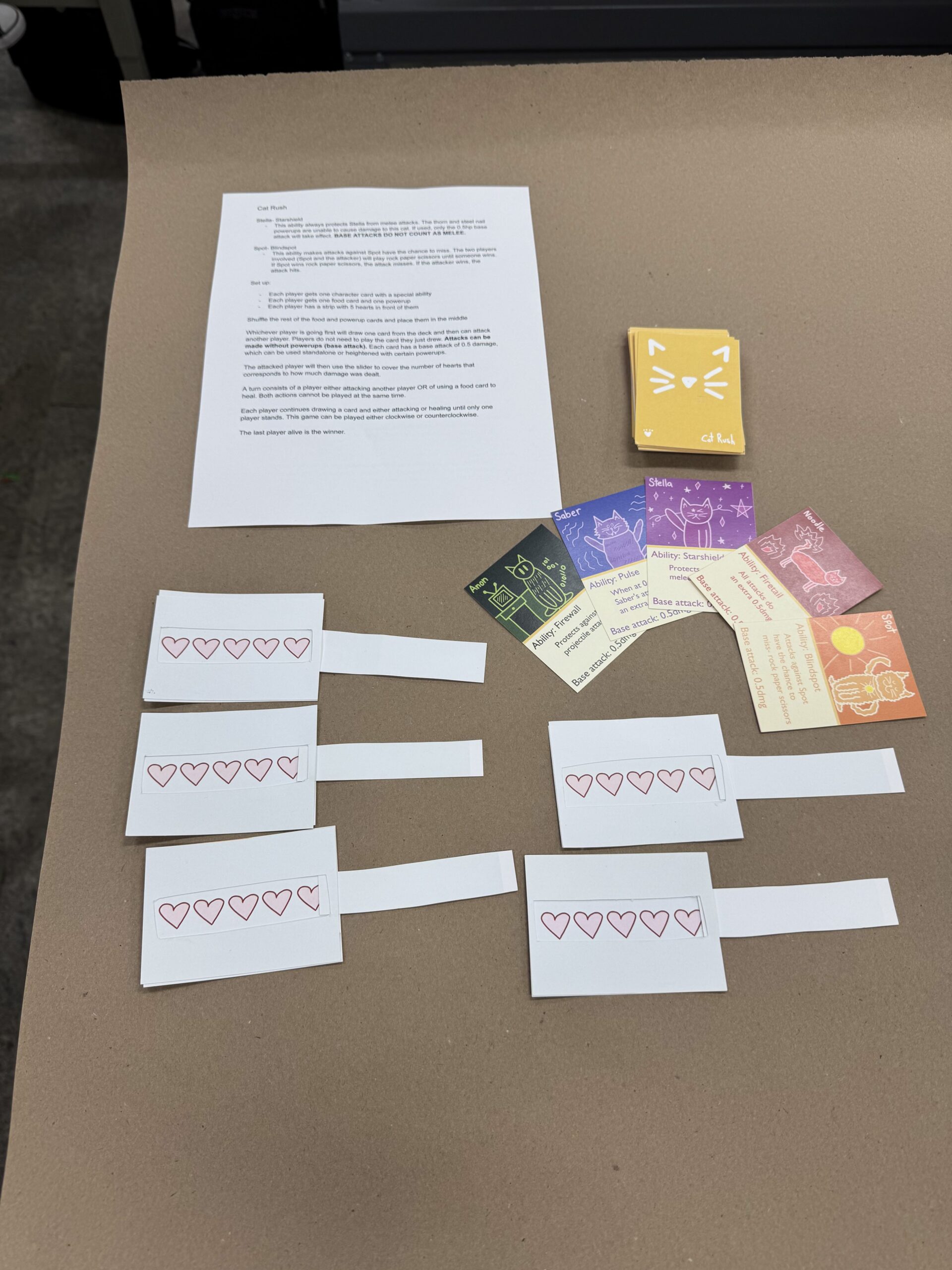
Version 1 (I didn’t take photographs of it last week, so this is it set up without the old rule sheet.)
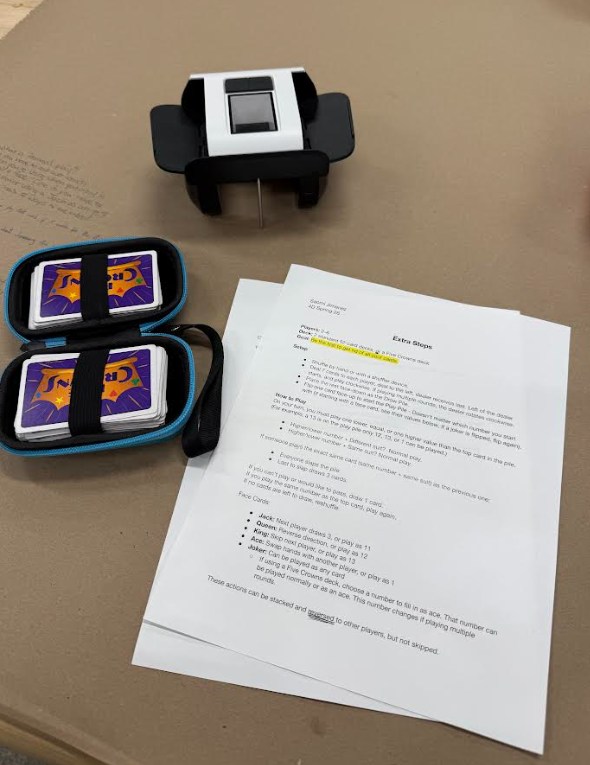
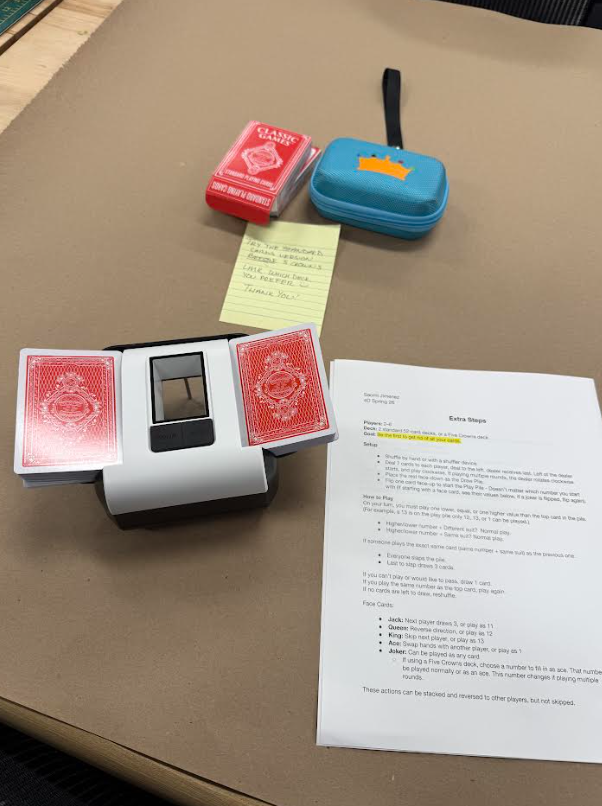
Extra Steps Final Documentation
Please view the attached documents:
Version 1:
Version 2:
Game Design – Final Documentation
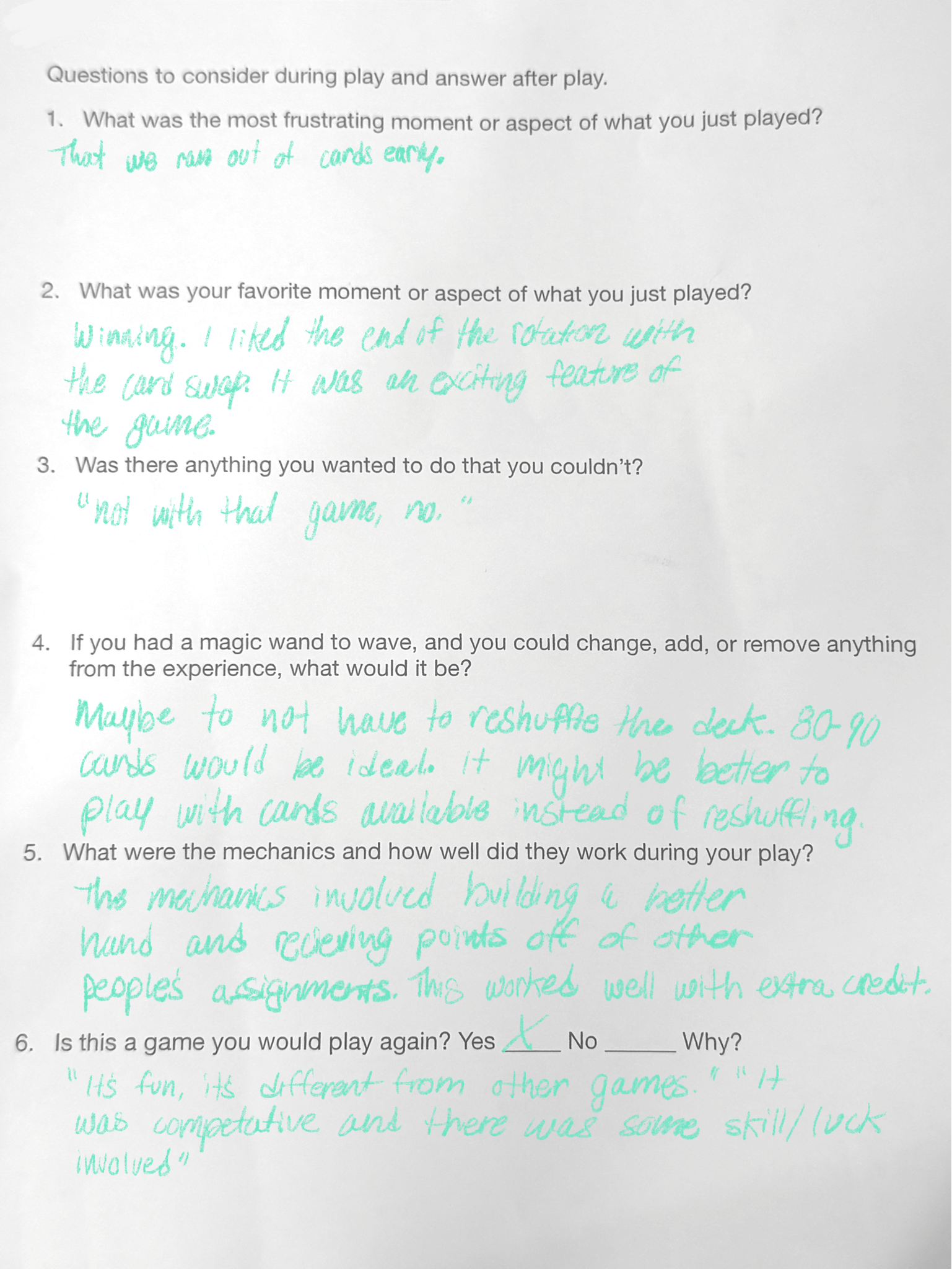
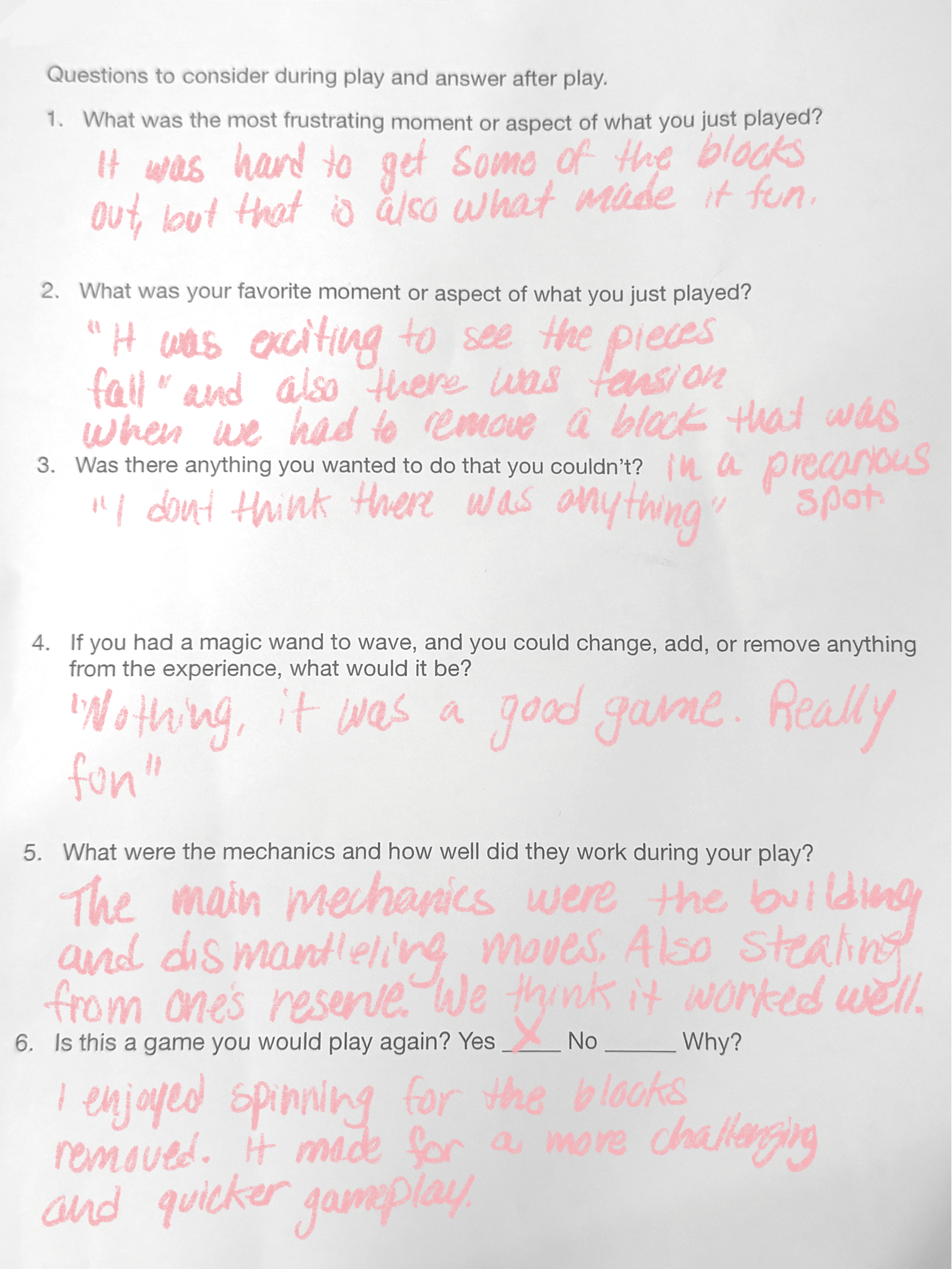
Attached is also a player’s review sheet for both of my competed games. I asked my family for their feedback and took these notes before my final revisions.
Game 1 – Deadline:
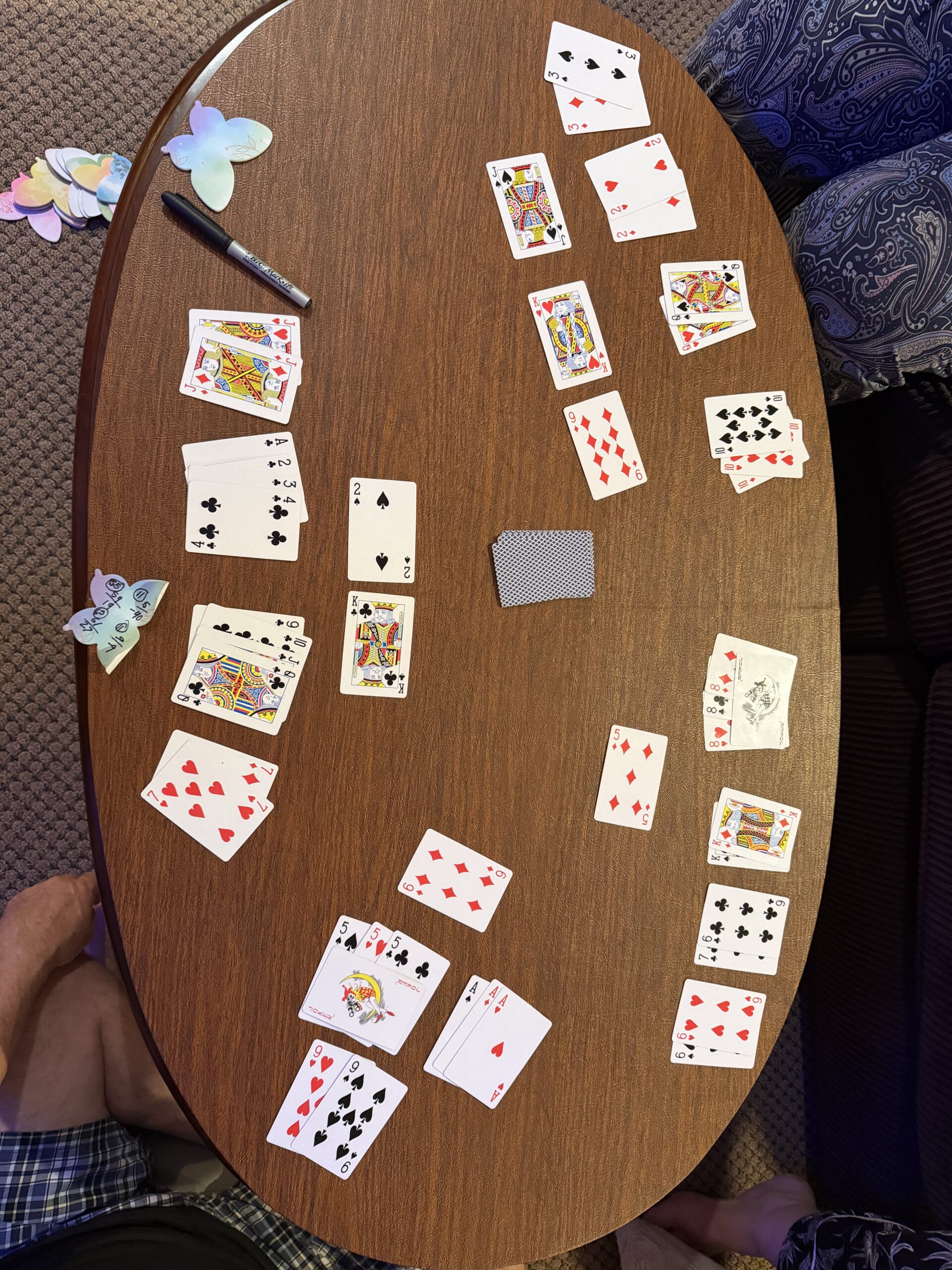
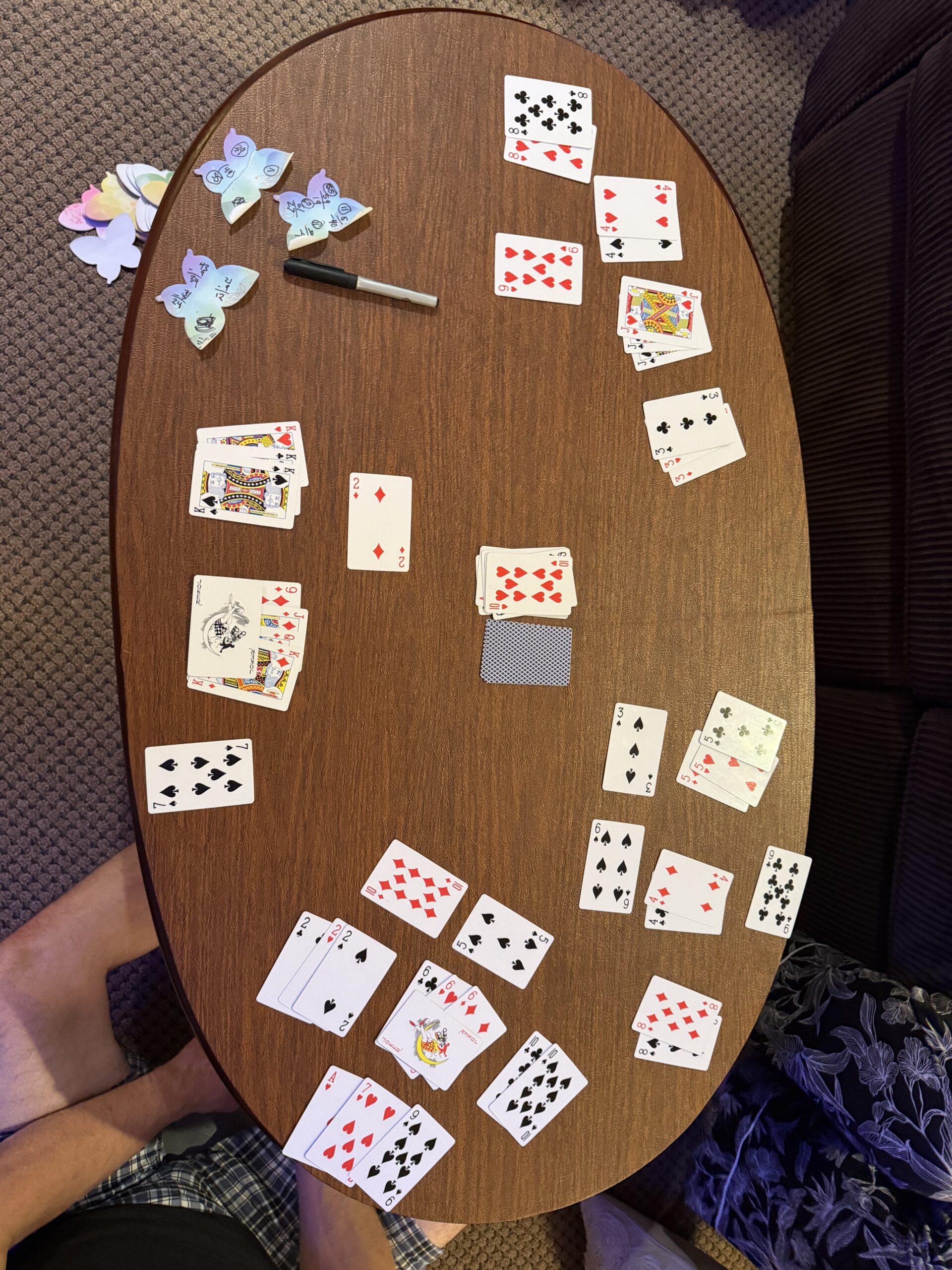
The biggest changes I made to my card game throughout the semester was clarifying the rules and balancing the final scores. I learned that adding illustrations was a more effective way of conveying the layout and specific objectives. I also took note of any confusion during the gameplay experience and made sure that my updated rule sheet reflected these notes from playtesting. In my next iteration I would test out the scoring of consecutive cards of different suits, as well as creating a specialized deck of different classes (Math, English etc.). I also need to expand on the rules regarding extra credit, and building off of extra credit to accumulate points for a “completed assignment” in the game. Playtesting my first game taught me to be thorough with filling these gaps and anticipate questions players might have, especially if they have no experience with Gin Rummy suit building mechanics.
Game 2 – Witch’s Brew:
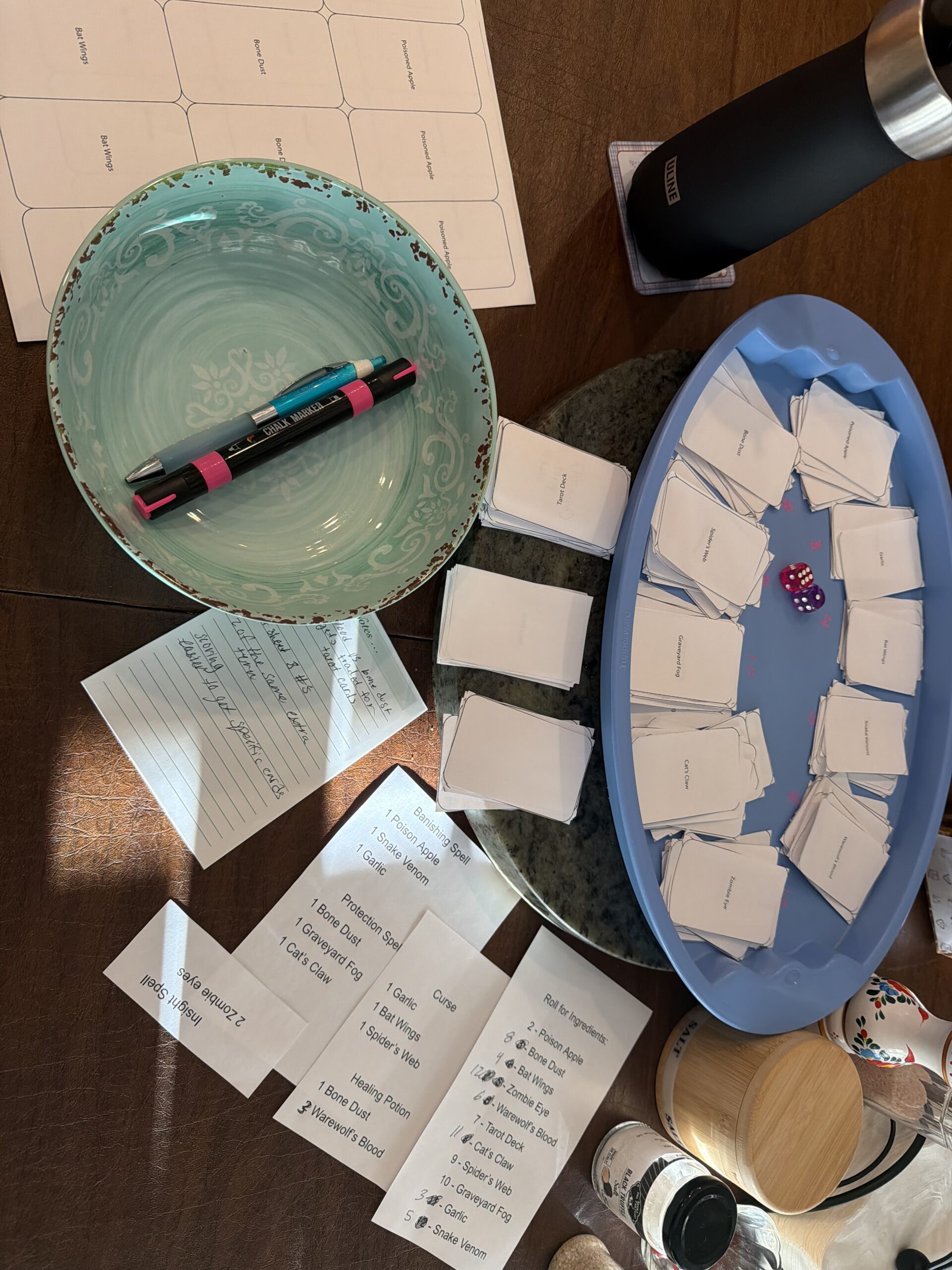
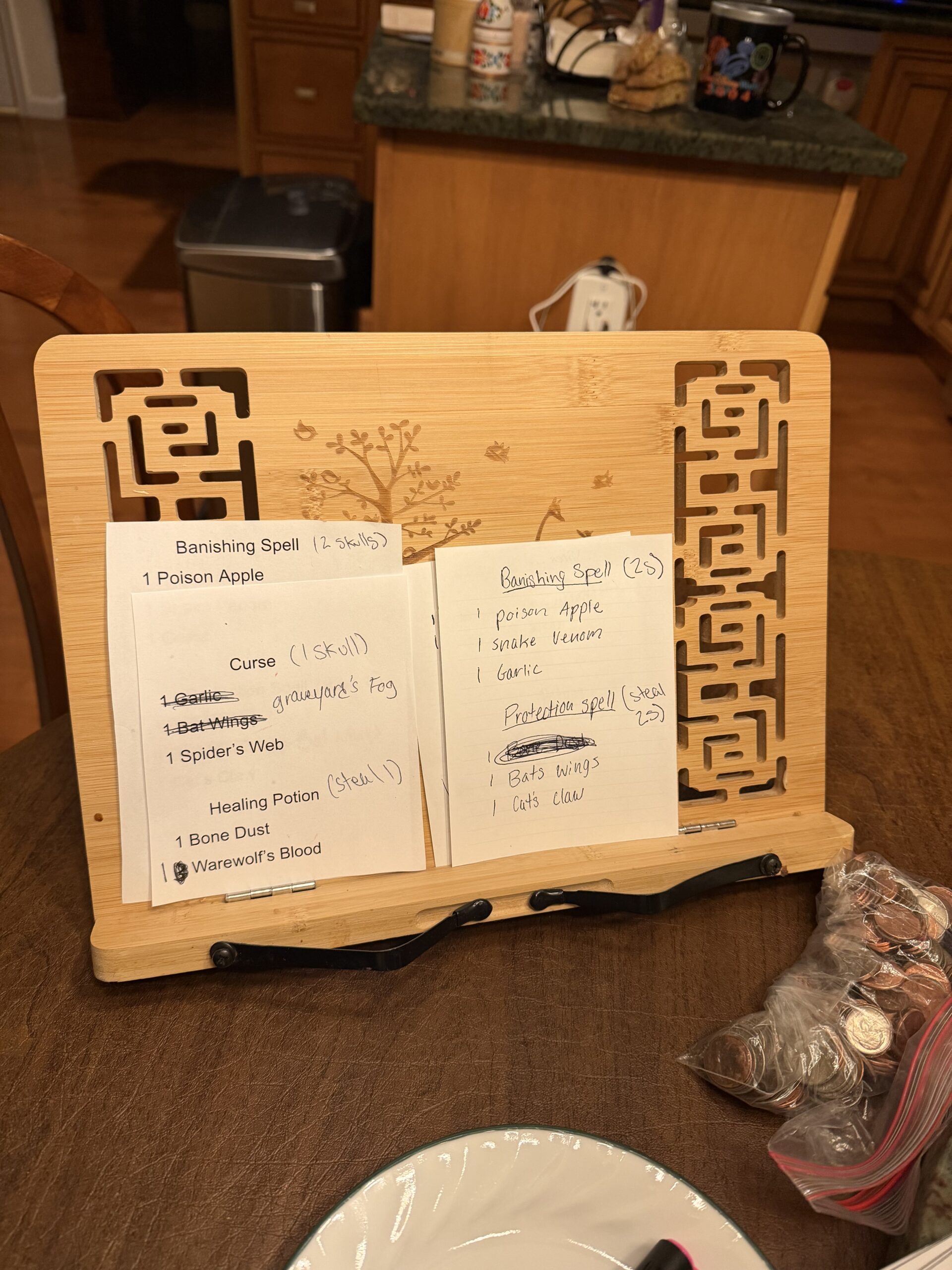
The first iteration of this game had a lot of room for improvement. I explored the use of dice, inspired by Catan, as well as an alternative version using a Game of Life board game spinner (1-10). Though the spinner would have worked for gathering the necessary ingredients, I attempted to balance the game with the probability curve of using two dice. I ended up simplifying the spells, adding action cards for rolling a 7 (the most common combination), and adding special benefits for rolling a 1 or 12 (the most rare combinations). In the next version of this game, I would test out a board more similar to Catan for balancing. Playtesting I learned about game pacing, and managing player frustration.
Game 3 – Takedown:
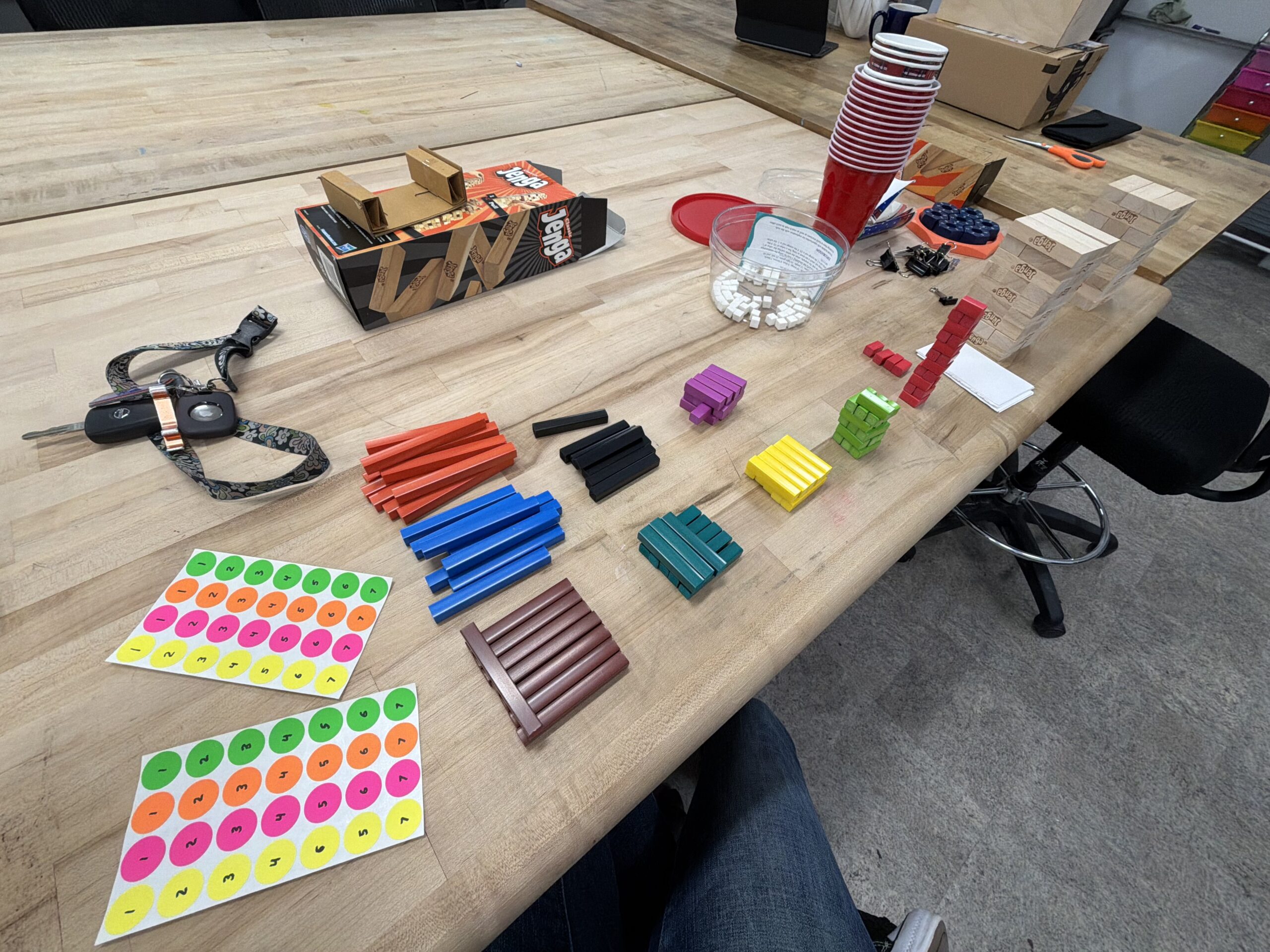
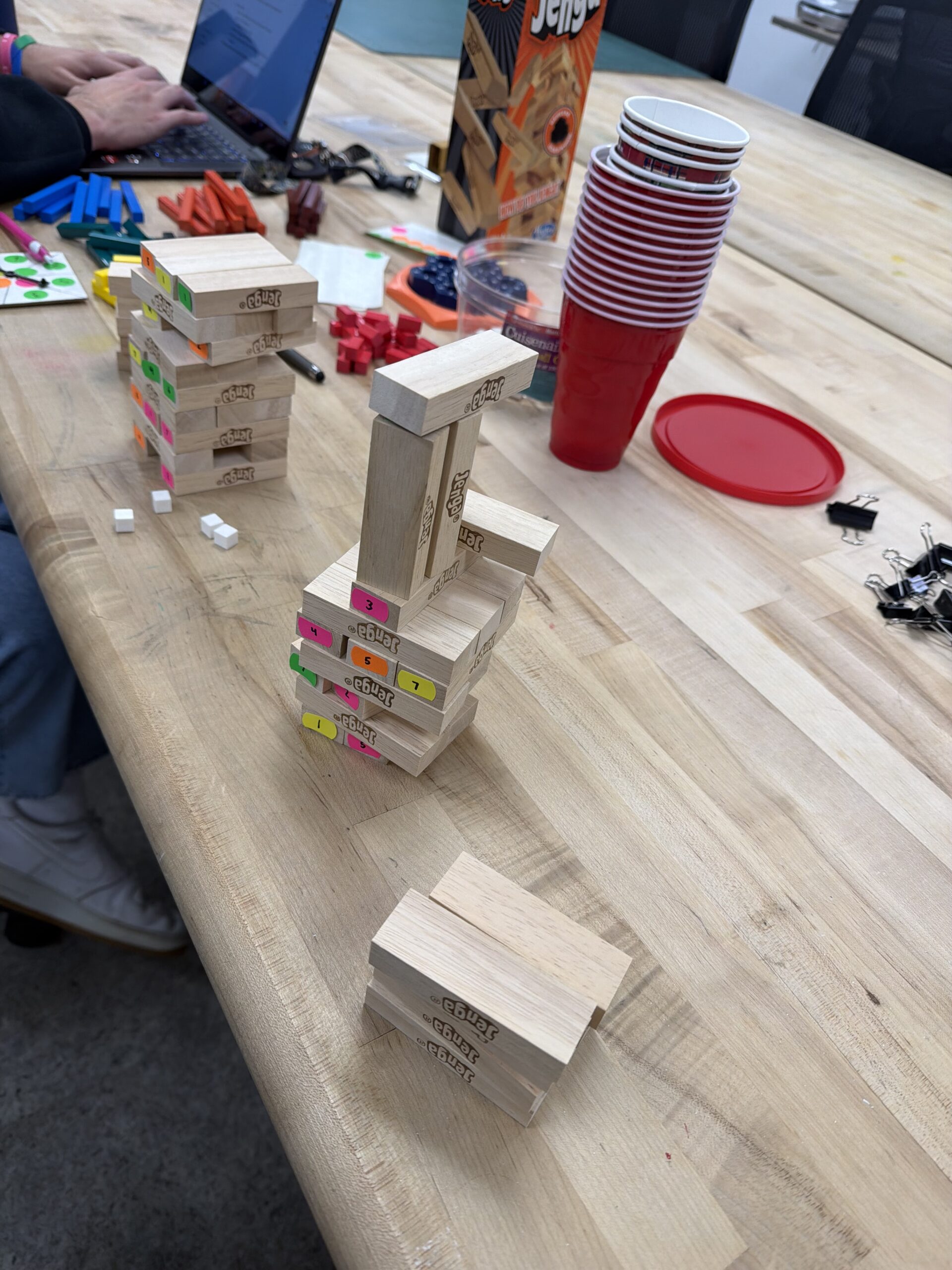
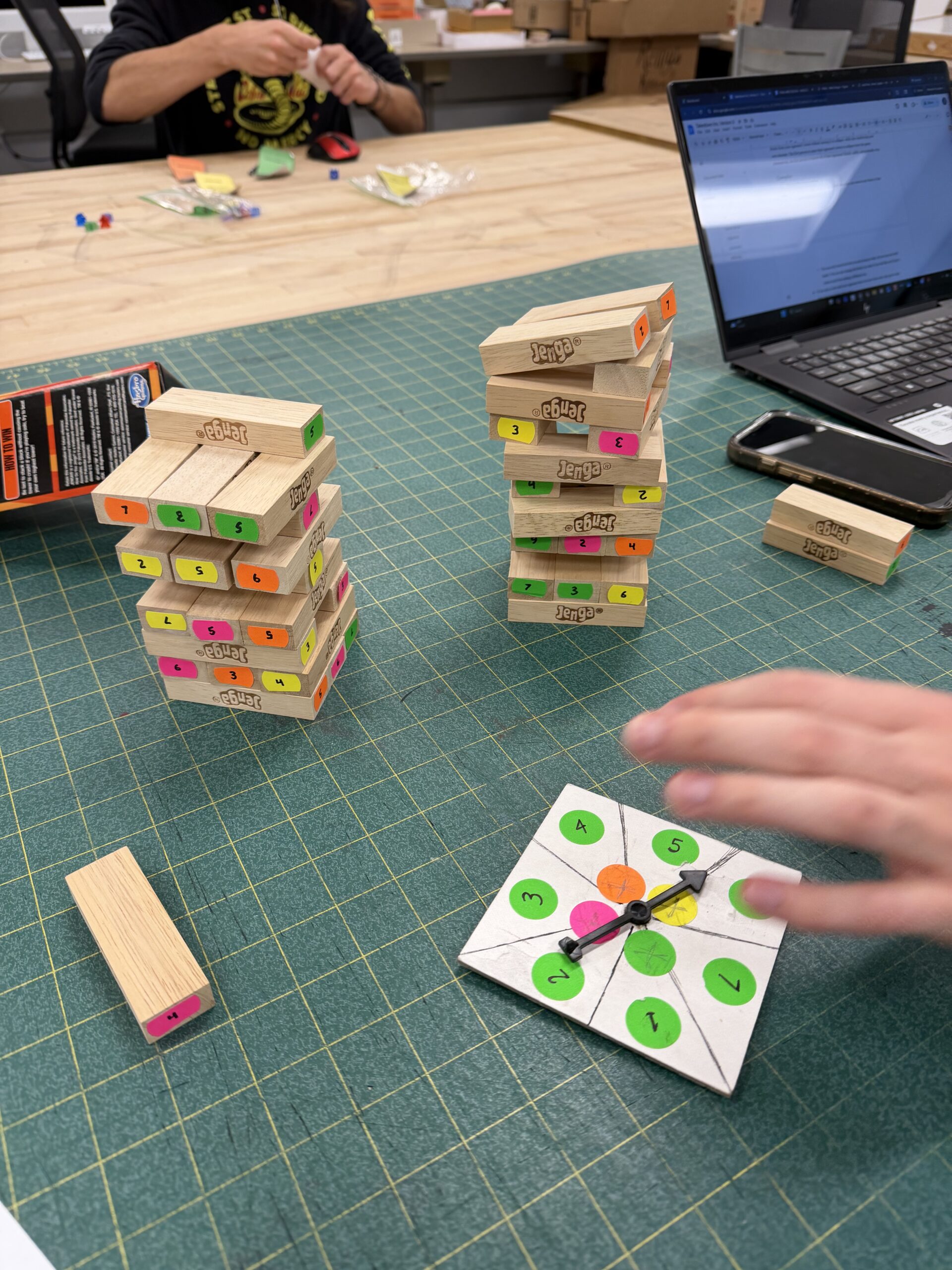
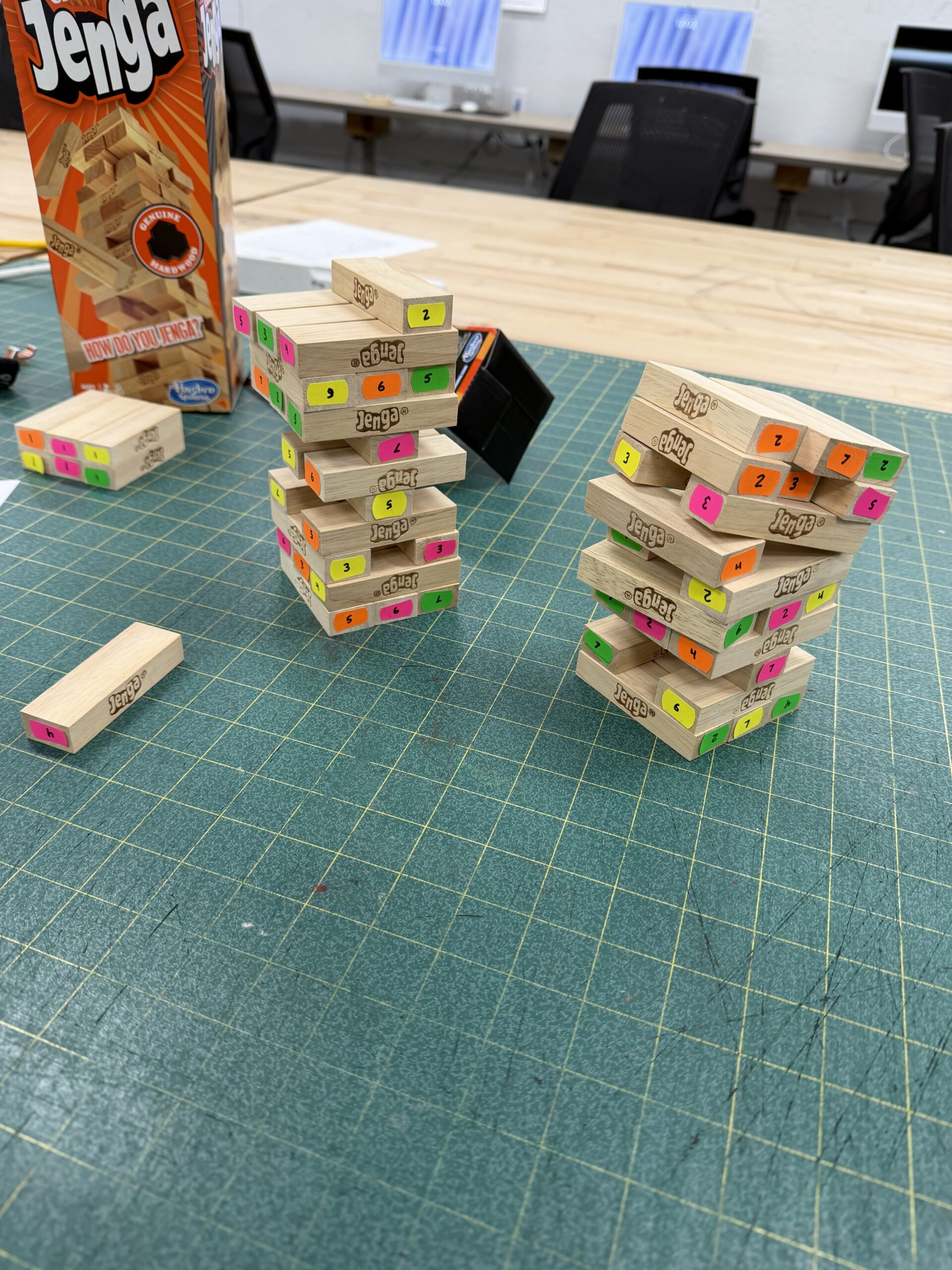
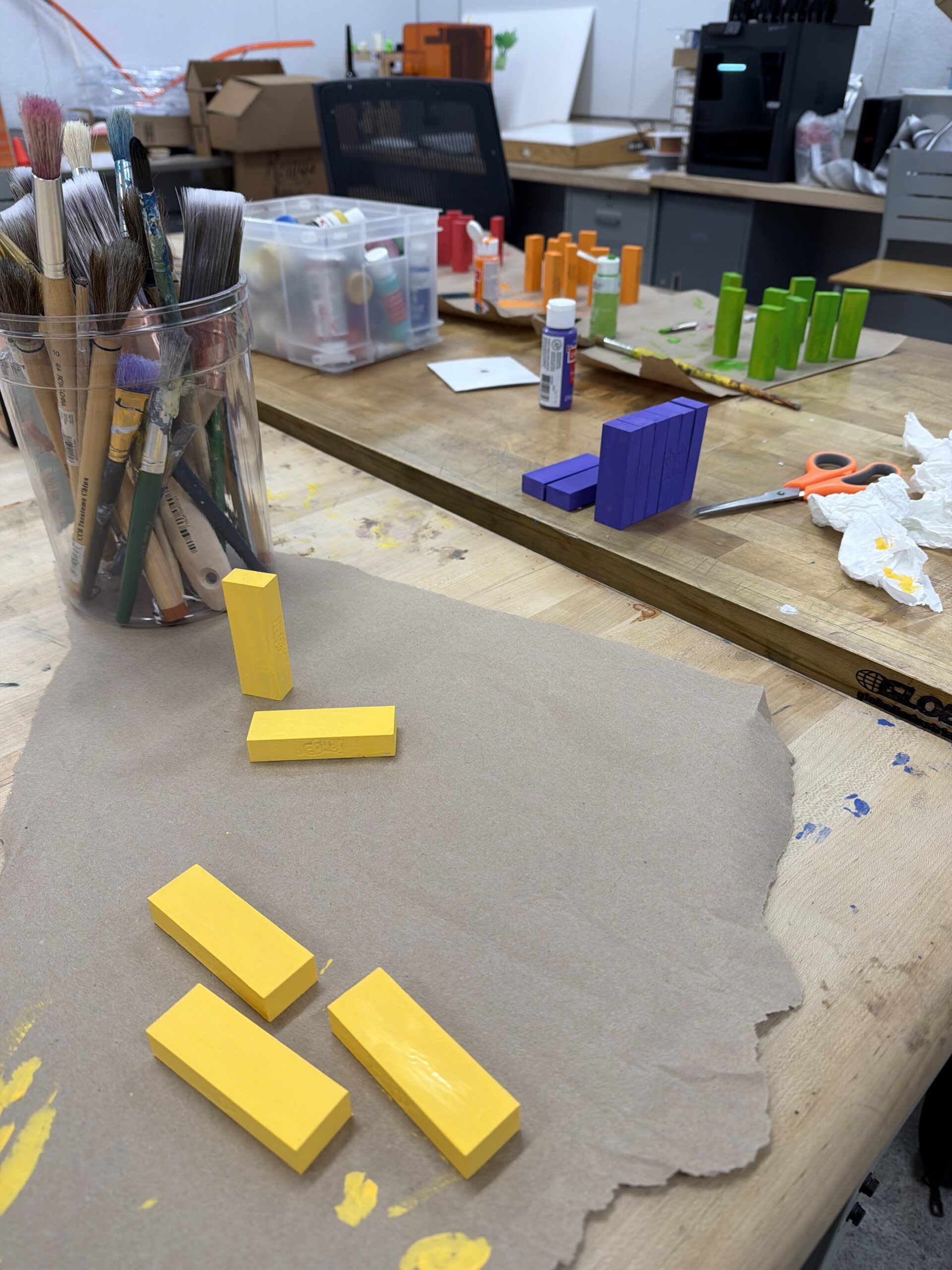
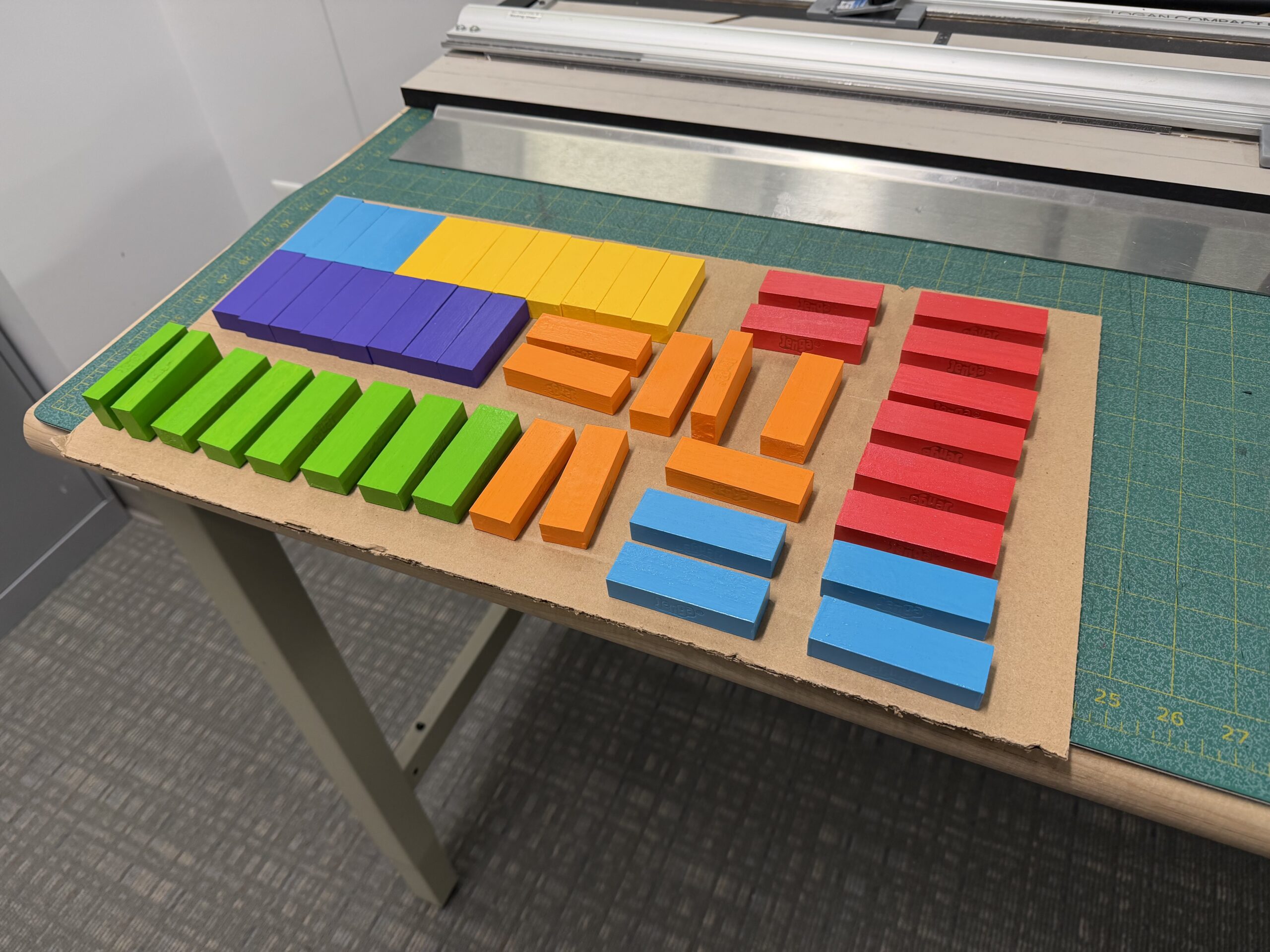
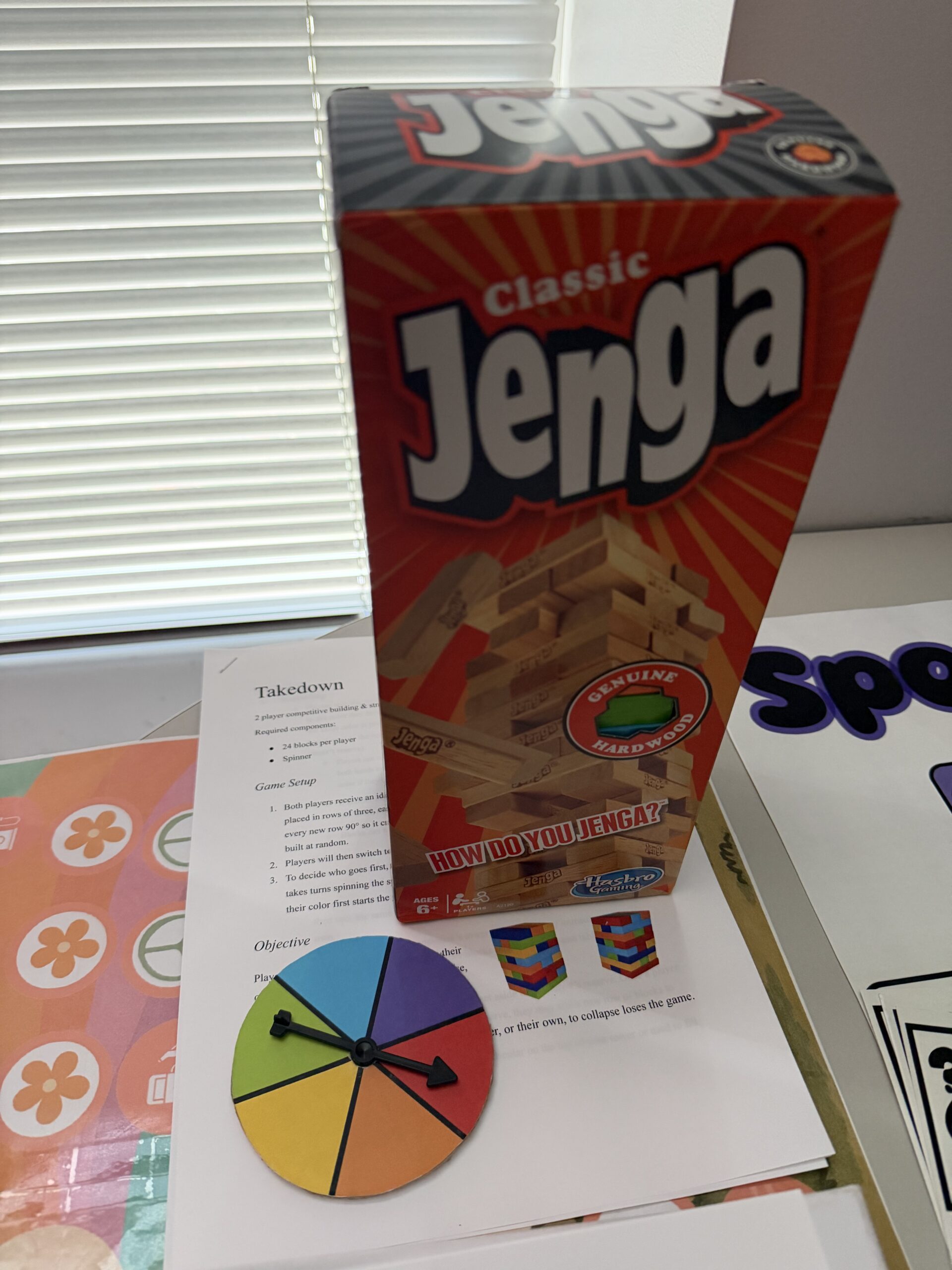
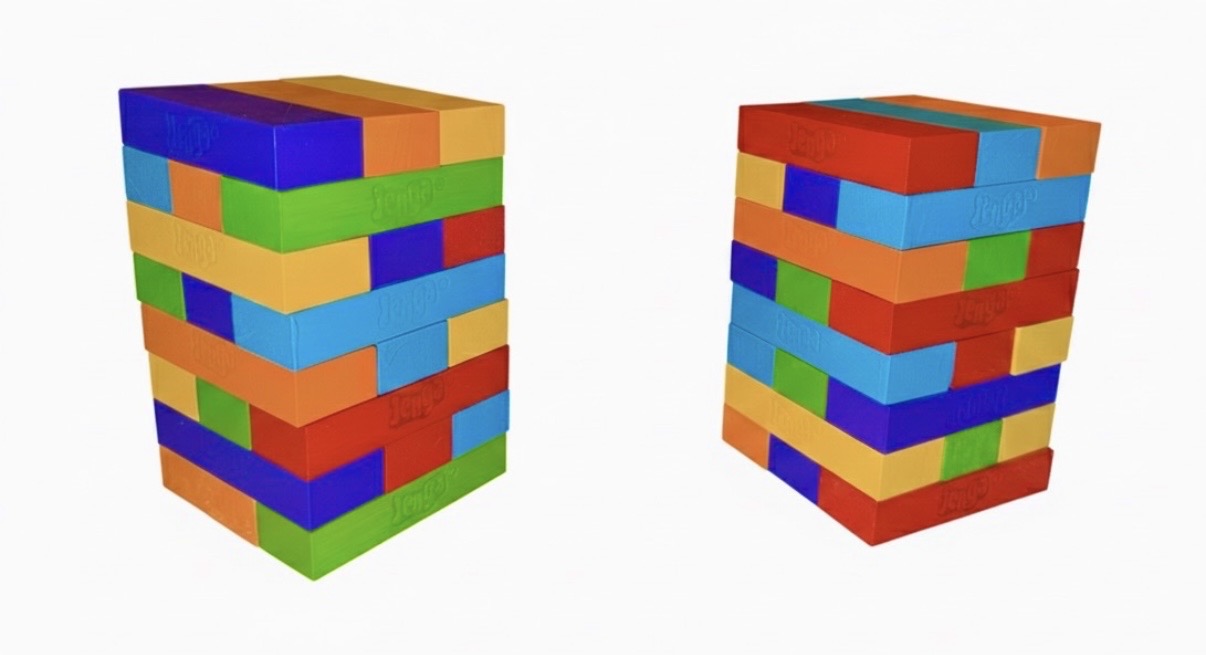
This was our two player game. Originally we used a number system for the blocks, but found that colors would be easier to identify on all sides of each block. We also removed six blocks from the original Jenga game to account for the height of the towers and chosen number of blocks per color. We then worked on crafting the blocks, which were painted with acrylic and then spray painted with a satin finish, and our matching spinner. For the spinner, I used a heat reactive glue sheet (I forget what this process is called) and baked a printed image onto the surface. This was easier than I would have imagined, and I believe it game the prototype a finished look. As for the gameplay, we defined and redefined how many blocks would have to fall for the players would lose the game, and how blocks could be stacked. In the next version, I would like to incorporate wedge blocks like we had talked about, and maybe special weighted blocks so that support the building mechanic and potential for sabotage.
Documentation for The Mow Masters
rules:
Mow Masters!
Objective:
- The objective of the game is to get as many grass points/cards as you and your opponent mow all the grass on the board in order to end the game.
Materials needed:
- Board
- Grass cards
- Setback cards
- Two dice
- meebles (marks which space/tile was mowed already)
- Paper and pencil to keep track of score
- Iphone timer
Setup:
- Take all of the cards and shuffle them into one deck and place them in a empty space on the board.
- The tallest player will start the game or be the first turn.
Turn:
- Both players are going simultaneously
- The player will roll one dice, and move the amount of spaces of that number on the dice.
- The player can go anywhere on the board, no restrictions.
- The player will pick a card for each space they move. For example, they roll a 2 and move 2 spaces hence pick up 2 cards.
- After you have moved (mowed) a space, you will mark it with a x or a meeble.
(you can still use this space to move around in it but you can not get a card from it.)
Ex: rolls the dice and gets 3, but ⅔ spaces are mowed already. So, you can only pick up one card.
- If you pick up a card that has a setback, you will have to complete the task on the card in order to continue.
- You have approx. 25 seconds to complete the
- Out of gas
- Nebby neighbor
- Dinner time
- Reapply sunscreen
- You do not have a time limit with:
- Mower broke
- Dog poop on the blade
- If you do not complete the setback challenge within the time constraints then you have to remove one grass card point from your pile.
Winning/Losing:
- Once the whole lawn is mowed, and there is no more space to collect cards then the game is over.
- Count up your points, and the points win.
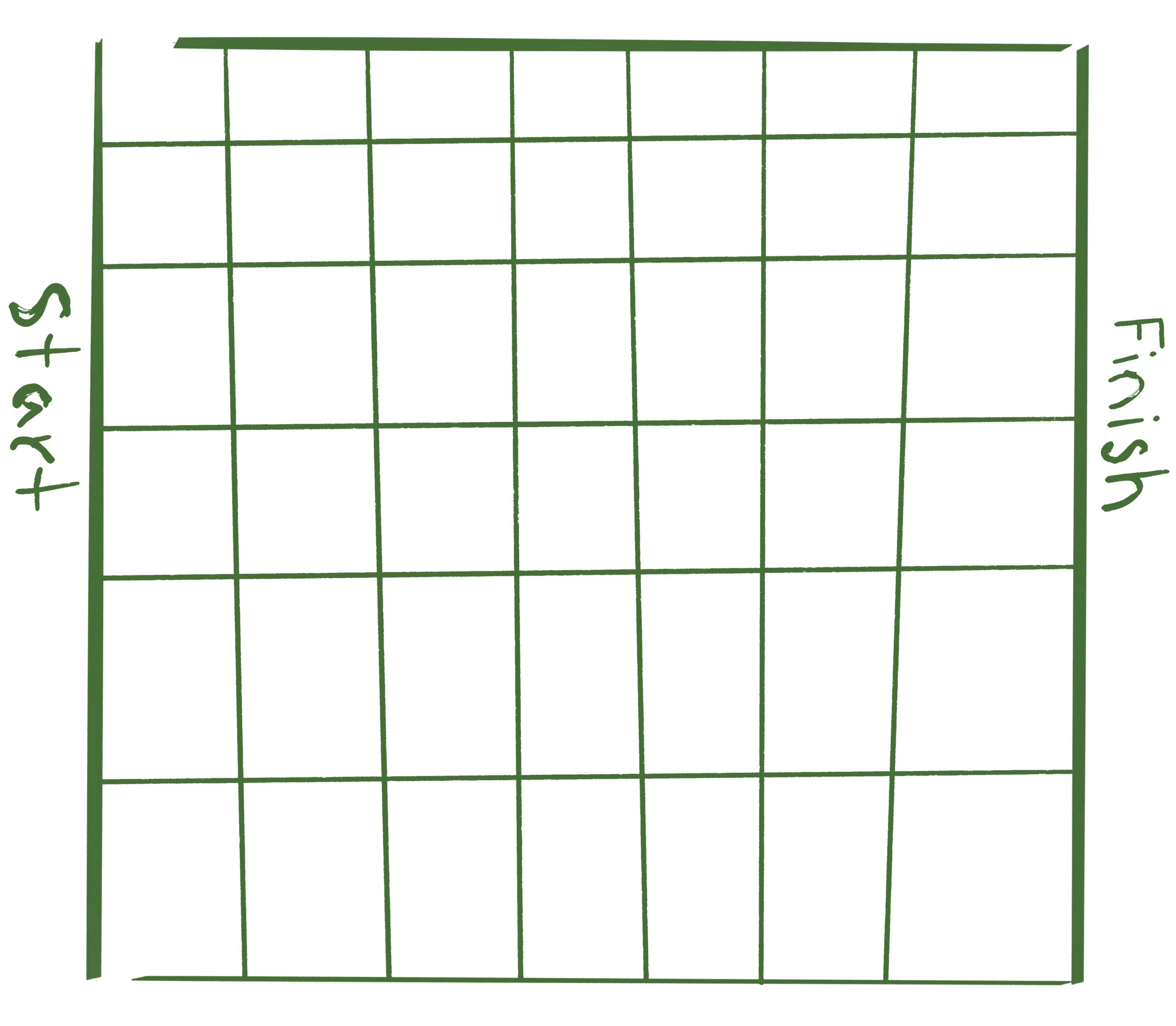
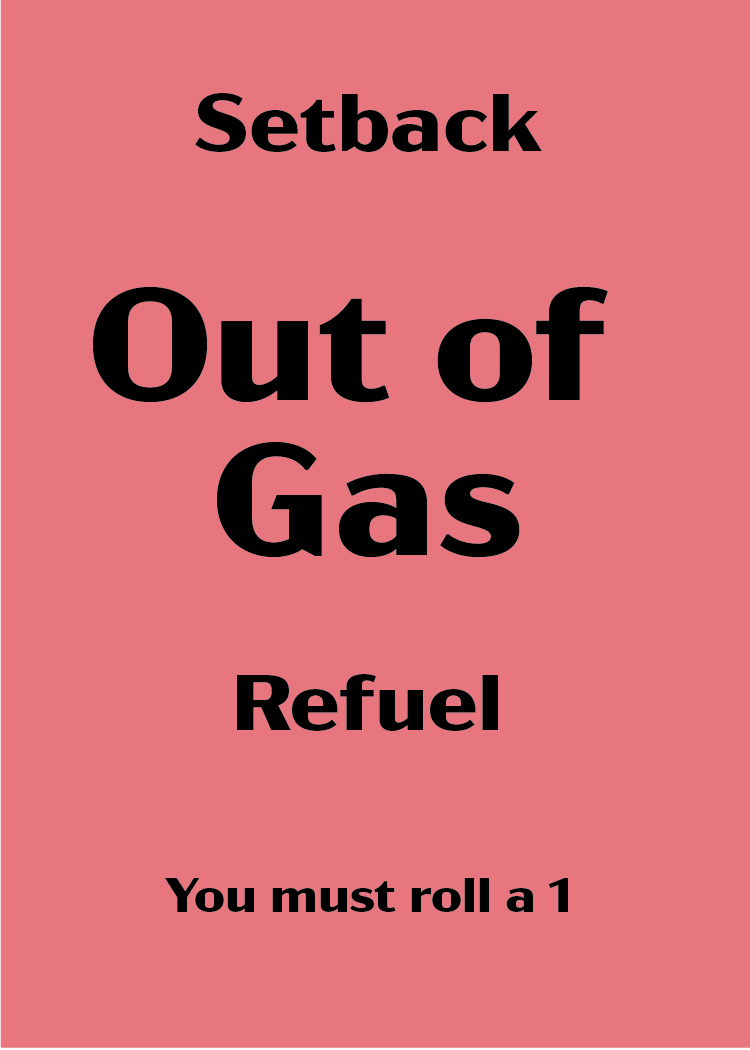


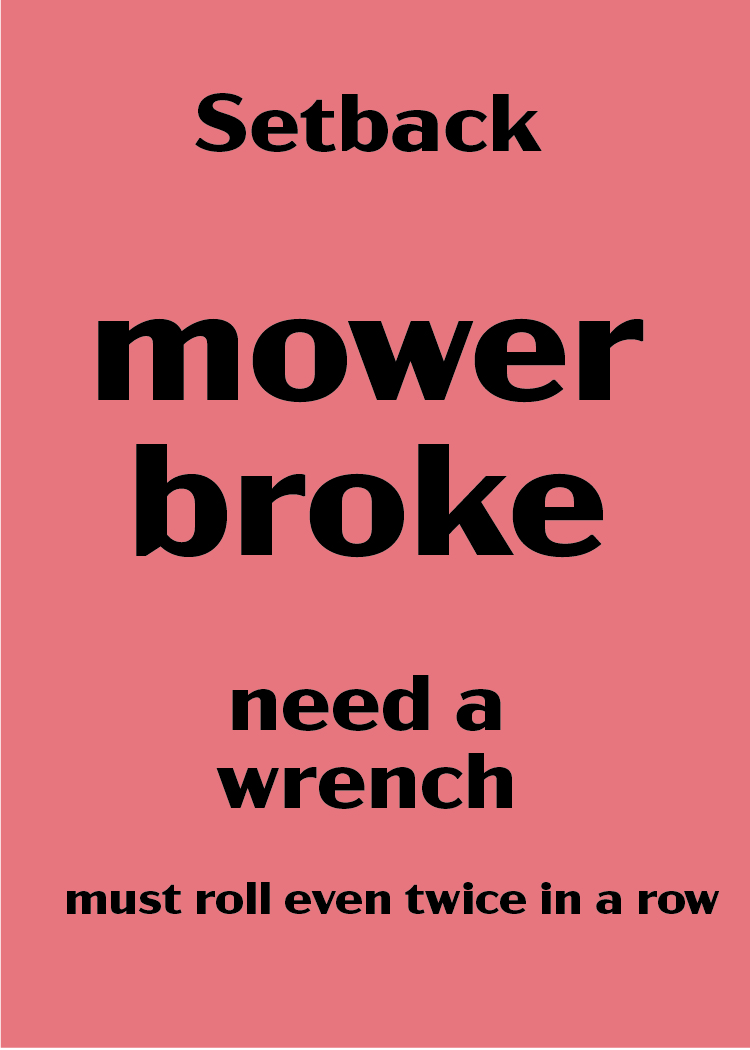

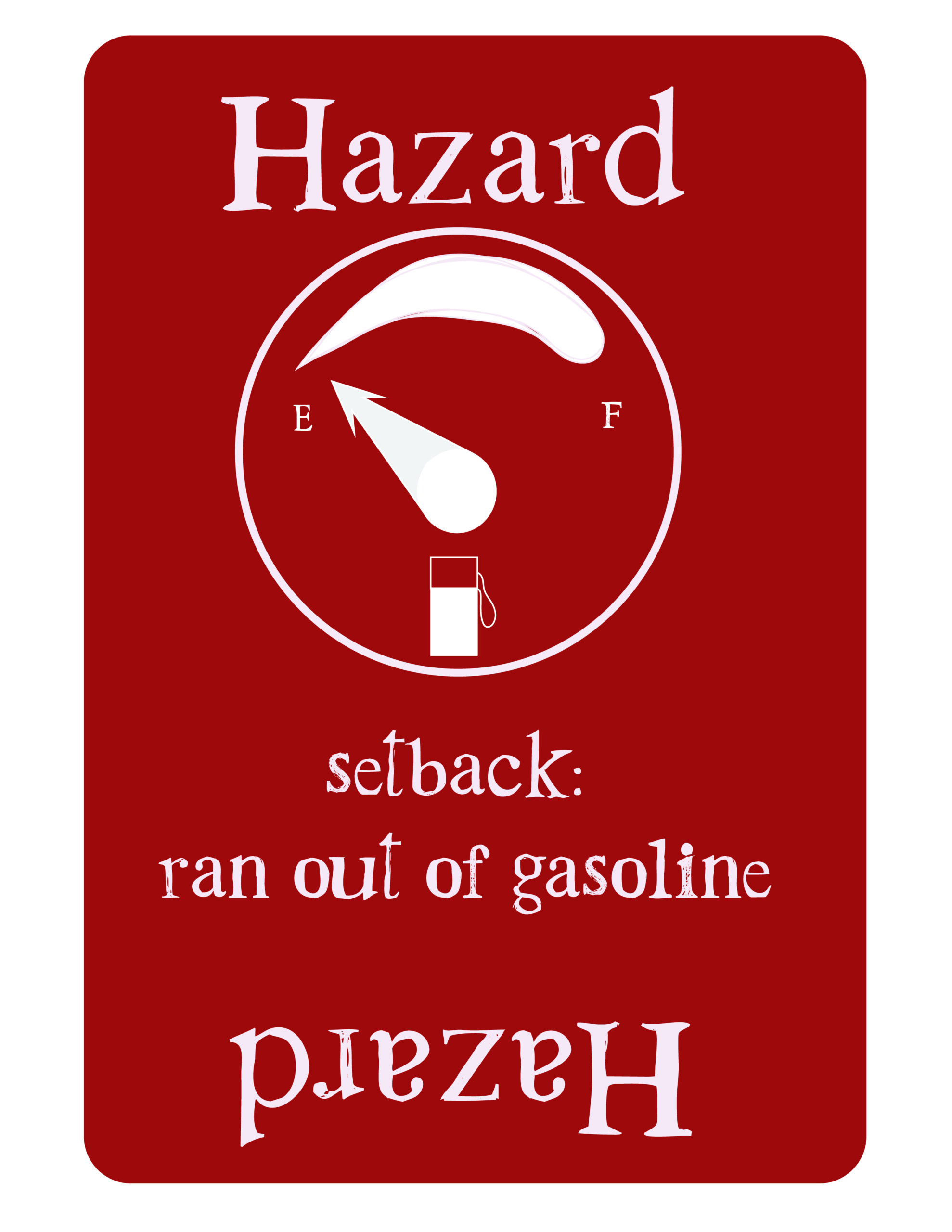
Some changes I made in Mow Masters was adding more setbacks and sabotages. A lot of the players gave me feedback on changing the setbacks since the game was too easy in a sense. I made a lot of alterations regarding the design of the board. I wanted to make it super unique and curvy, but it wasn’t making sense when the game was being played. So, I switched it around and changed the color which was to boring and wasn’t the best design. I finally stopped when the board was just in hashes to give the players a sense of what the board is and how it applies to game.
In the future, I would love to rework only roll 1 dice and two dice for challenges. As well as, adding a sand timer to pick up the pace in the game.
I would say that this is my least favorite game. The rules weren’t really making sense in my brain, and I kind of got frustrated with the design of the board. Overall, I did get get feedback so I was pleased with that.
Documentation for Dessert Dash
Game rules:
Objective:
Be the first to finish your stack of ice cream dishes.
Materials:
1 deck of 60 cards
Setup:
Shuffle the Deck and deal each player 30 cards randomly
Gameplay:
Flip over two and place in between your deck of cards.
There are no “turns”. The players race to be the first to finish their deck by rapidly matching either the flavor, type of dish or number of dishes on their card to the respective ones on EITHER of the cards that are flipped up in the middle.
As the game progresses, obviously the cards will change based on what cards the players place on top. Keep placing matching cards as fast as you can, whenever you can.
Winning:
The game ends when one player finishes their stack. That player is the winner. Hooray!
Reedit of the Rules:
Objective: The first person to get rid of their deck of cards wins!
Setup:
- 1 deck of 60 ice cream cards in different color, shape, or type of ice cream holder variation
- Shuffle the deck and deal each player 30 cards randomly
- From your deck pile pull four cards to keep in your hand at the start of the game
- then flip your deck pile so you cannot see the front of the cards.
- Place two cards in the middle of you and your opponent (face down)
Gameplay:
- there are no turn involved and both players are going simultaneously
- The game will start when you and your opponent flip over the two cards in the middle
- Both of you will try to match the cards in your hand with the one of the cards in the middle.
- You match them by either matching shape, color, or type of bowl, shake, cone, or waffle bowl
- after you found match, you will place the matched card in your hand over the matched card in the center (face up)
- Continue to repeat this until your deck has run out
What if you get stuck?
- if you get stuck, you get to pull 2 cards from your deck. And, if you are still stuck you must wait until your partner matches something, that opens it up for you!
Winning/Losing:
- the fastest person to eliminate their deck wins!!
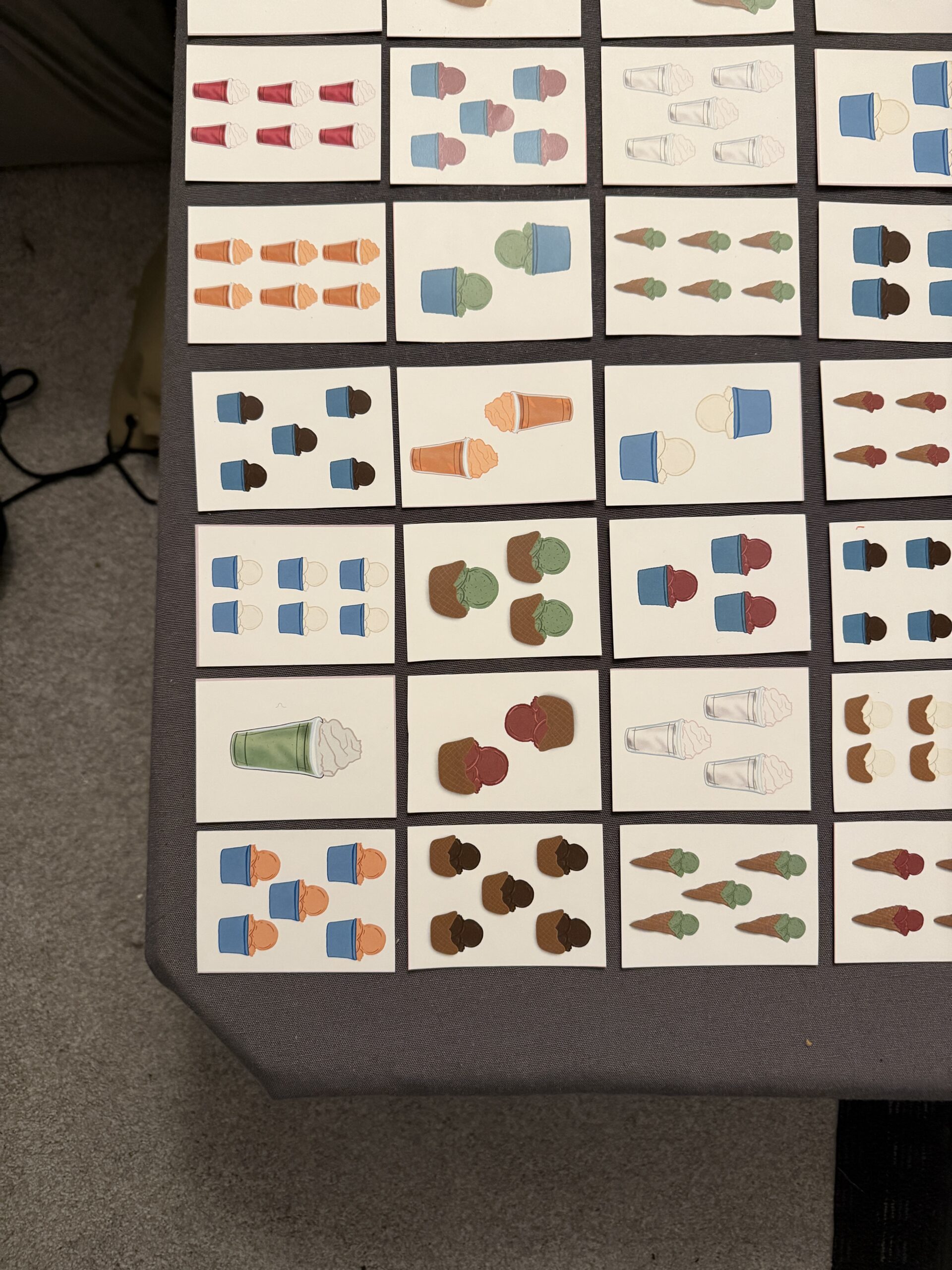
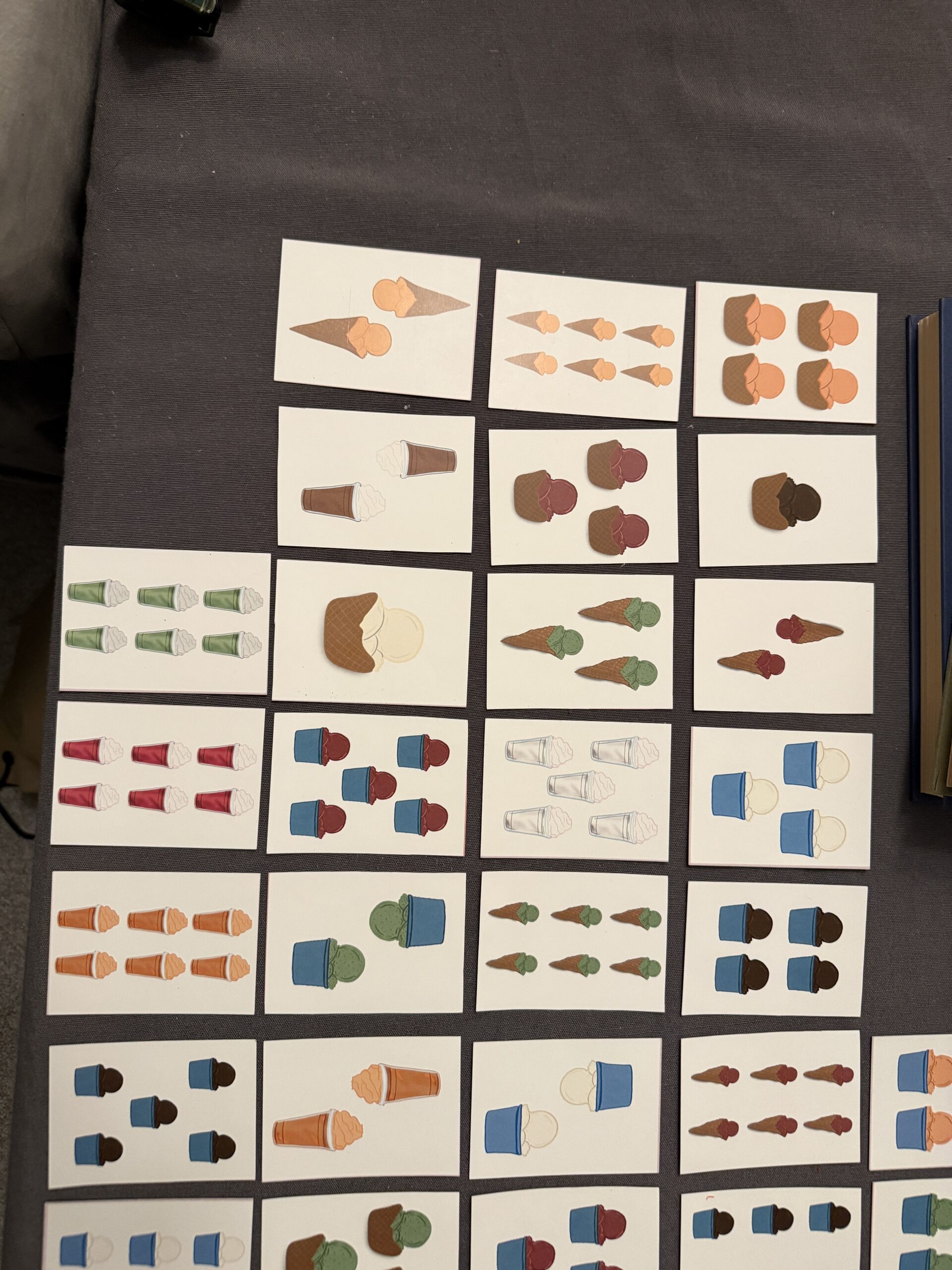
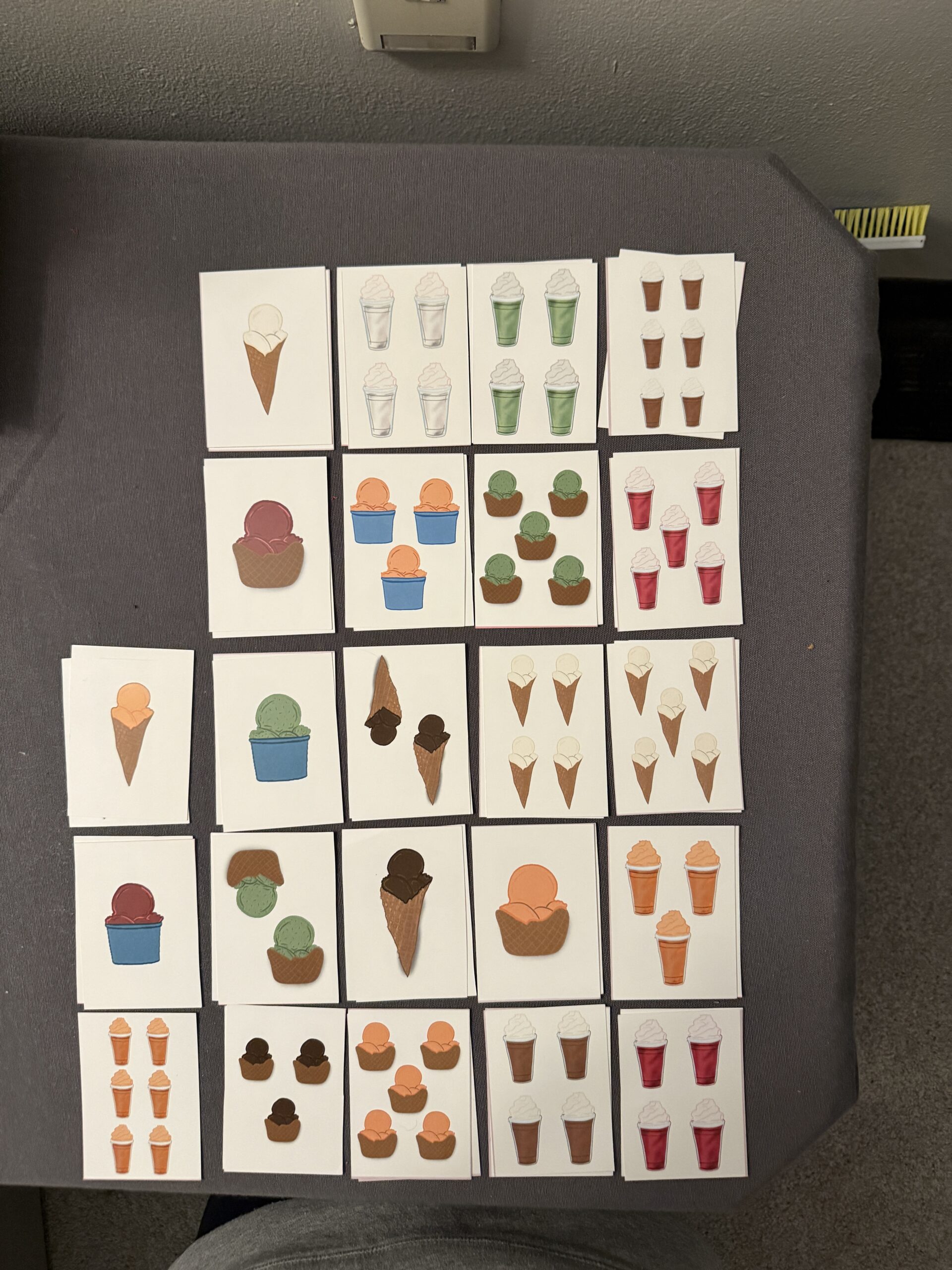
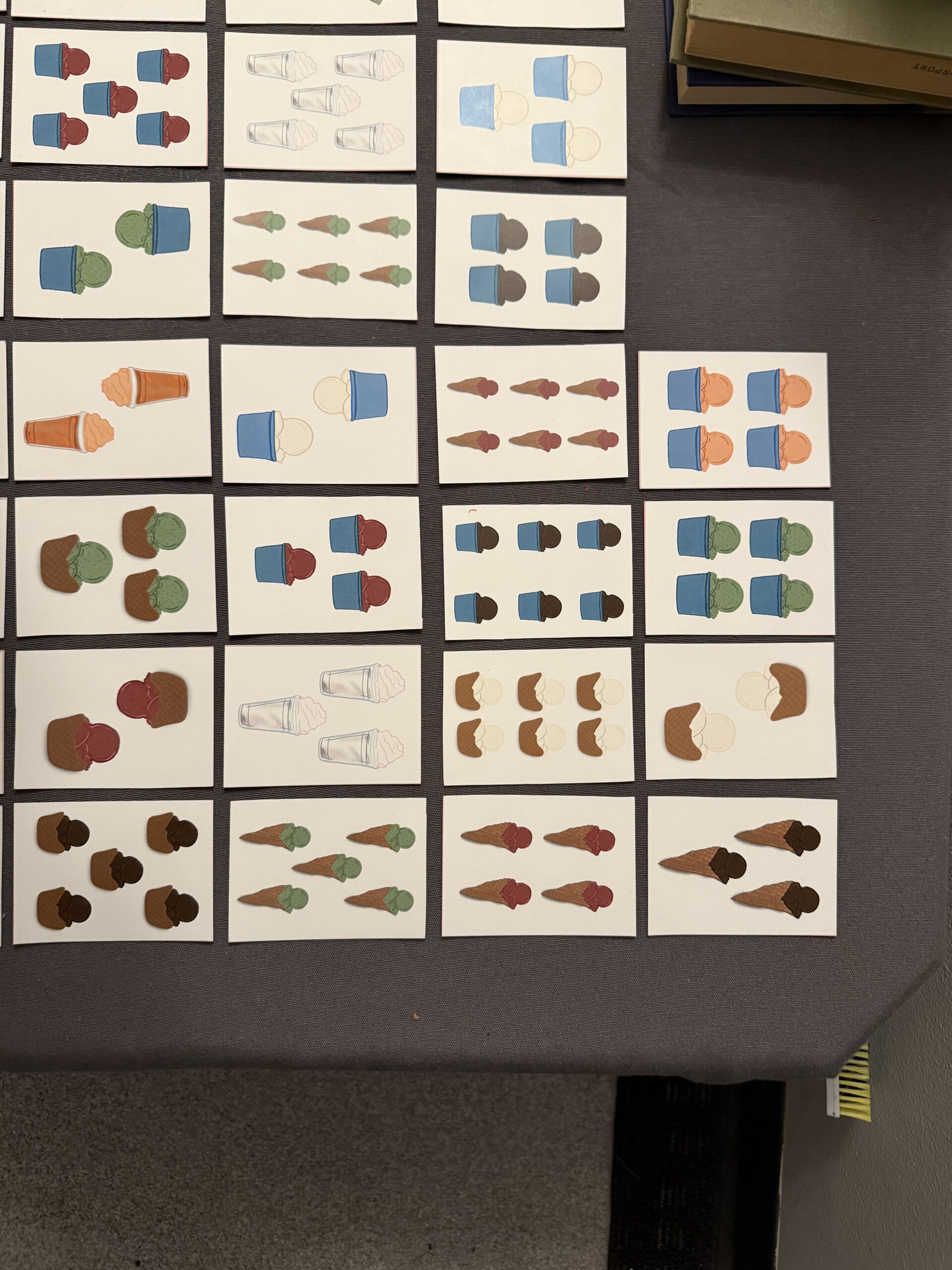
Some changes we made was actually rewriting the entire game. We thought that our game creation could our chosen amount players able to play our game. So, we changed it to a 2 person game. That changed the whole landscape of the game, and we went into the direction of making a fast paced game to get the heart pumping.
Some design alterations was to change the vanilla ice cream flavor to a different color to stand out more. I think in the future, I would also change the waffle bowl so it doesn’t look as similar to other cards. Which would make it easier to play at a fast pace.
Honestly, I really loved making these designs. Even though, they were extremely tedious to cut out and make each card individually, it was super rewarding and fun to see everyone play it. I think Kali and I had some frustrations and stress since we had to recreate a game with limited amount of time since we already had our whole entire game planned out.
Below, is some of our notes we took during the creation process.
brainstorming:
Ice Cream game
Game starts:
Objective: to complete tasks to keep your ice cream shop running and gain points.
- Each player has the opportunity to sabotage the game (if you successful sabotage then you will gain more points) but you risk getting caught and lose points (depending on the round)
Materials needed:
- Task cards
- Sabotage cards
- Problem cards
- Points key
- Melt down meter ( how you lose)
- Two types:
- Task cards
- Sabotage cards
- Problem cards
(the task cards will address the problem cards and the players will draw from the task cards)
- Each player starts out with 4 task cards
Game prior
Melting Mystery
5 players
Objective:
Keep your ice cream shop running as the Staff while Problems arise throughout the day and ward off the Saboteur
Materials:
Problem Cards (diff problems) (15 cards max)
Task Cards (with Sabotage and Defend Cards) *** sabotage (all the same) (Defend all the same) (Task (fixing cards/cleaning))
Role Cards (4 Staff and 1 Saboteur) **all the same staff card and one saboteur card
1 Staff Points Meter and 1 Saboteur Points Meter
Setup:
2 stacks of cards – the Problem cards and Task cards (include sabotage and “diffuse sabotage” cards)
5 Role Cards – 4 Staff and 1 Saboteur – at the beginning of the game each player is given one of their cards to determine their role throughout the game.
Place the Staff Points and Saboteur Points meters within reach (designate one person randomly to be in charge of points)
Each player is dealt 4 Task cards into their hand (after shuffling).
Place Problem cards in the middle of the table and flip over 1 Problem card face-up.
Gameplay:
Each turn players draw one card into their hand (so that when they play one they will have 4 remaining)
Players will play cards to deal with problems that arise.
Based on the Problem, players discuss with each other what part of the Problem card they will address. Feel free to lie. Because someone is the saboteur.
FOR EXAMPLE:
The Problem card on the table says “Fix Soft Serve Machine” : Tasks to Complete: 2+ “Fix it” Task Cards and 1+ “Cleaning” Task Cards
Players will then discuss with each other what cards they plan to use to fix the situation and all place their cards face DOWN on the table. Someone then mixes them up and reveals the cards by placing them face up in a line on the table.
IF player does not like their hand they have the option to pass on a round and replace any number of cards that they like – but caution this can mess up resolving a Problem so make sure you are communicating with your fellow Staff (or enemies heheheehe)
Based on the order the cards are revealed in, if a Sabotage Card is played it sabotages the Task that is to the left of it
If the correct amount of Tasks are played (and not sabotaged) to resolve the Problem, the Staff wins the round. However, if the Problem is not resolved because of a sabotage card, the Staff loses the rounds and the sabotager wins. Each win is worth one point respectively.
NOTE: there are Defend Cards that “diffuse” Sabotage Cards and when played basically make it like there was never a sabotage card – wherever they land in the order when placed face up they automatically diffuse the sabotage.
At the end of every round, the table is cleared (whether the Problem is resolved or unresolved) and a new Problem card is put on the table.
The game consists of 7 rounds. At the end of 7 rounds, proceed to ending the game.
Ending the Game:
The end of the game is where the Staff tries to determine the Saboteur. Discuss amongst yourself who you think has been suspicious throughout the game. Again feel free to lie to the Saboteur to try to win the game. Each person votes who they think is the Saboteur.
If the majority votes the correct Saboteur, the Staff gets an extra point. If EVERYONE votes the correct Saboteur, the Staff gets 2 points.
If the Saboteur does not get voted off (needs a majority vote) they get 2 points.
WINNING:
Whoever has the most points on their respective points meter WINS. Congrats. You have successfully operated your ice cream shop.
Or not, the Sabotager melted all your products.
Additional Rules:
When Staff members get Sabotage Cards in their hands, they should keep them there.
Documentation of Worldbound/Patchwork City
Game Design – Final Documentation
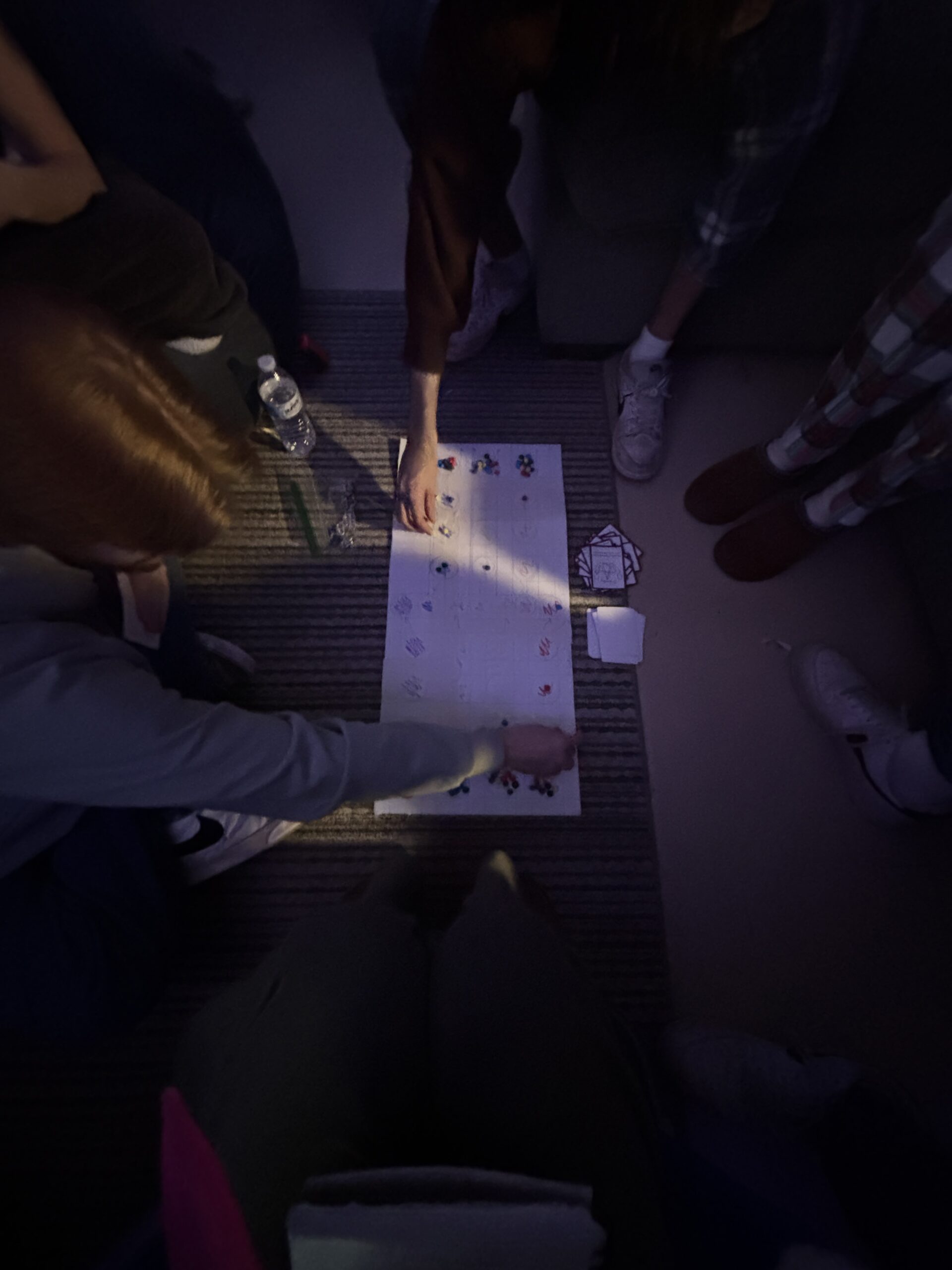
Final Chakra Crusade Updated
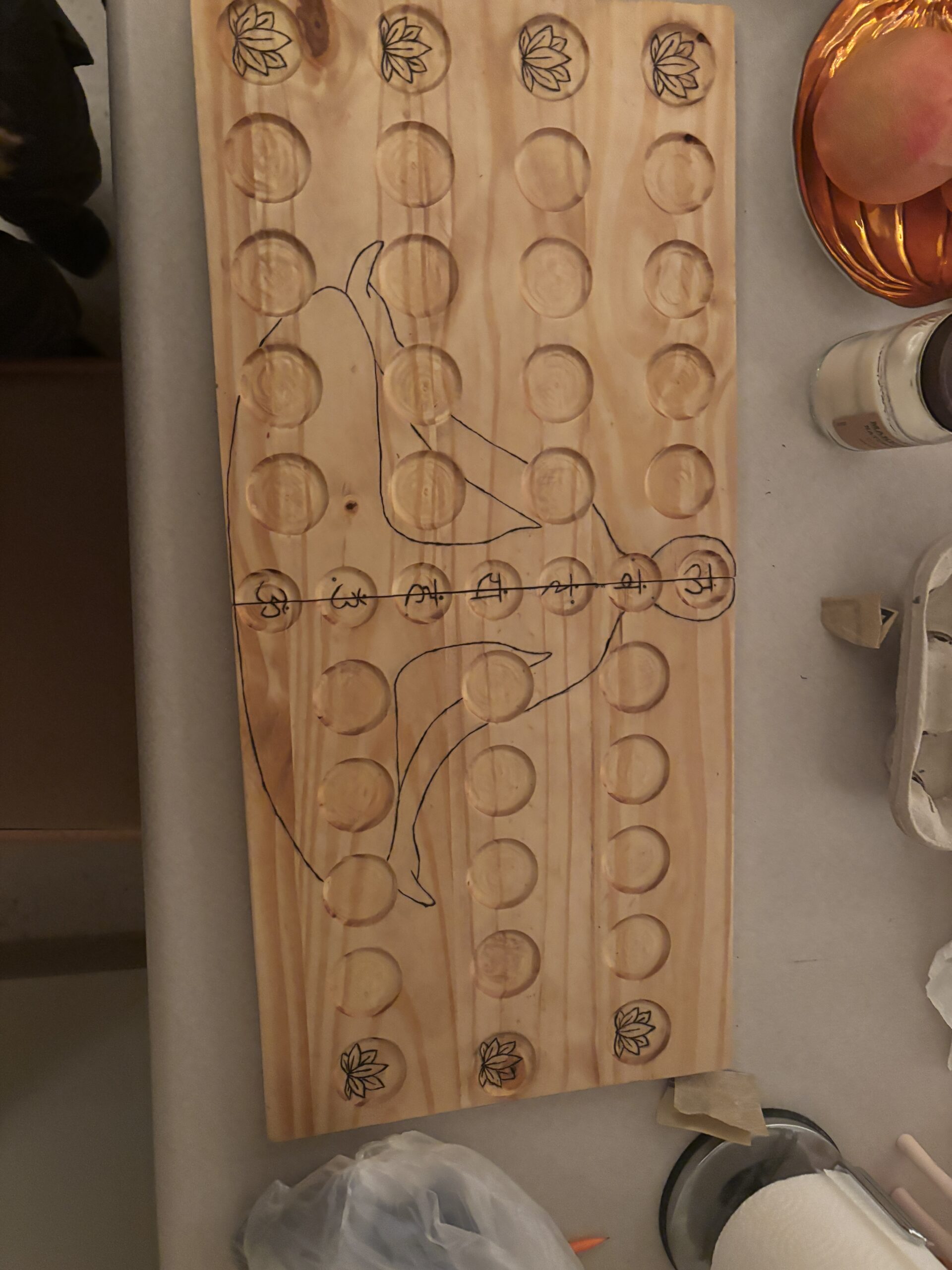
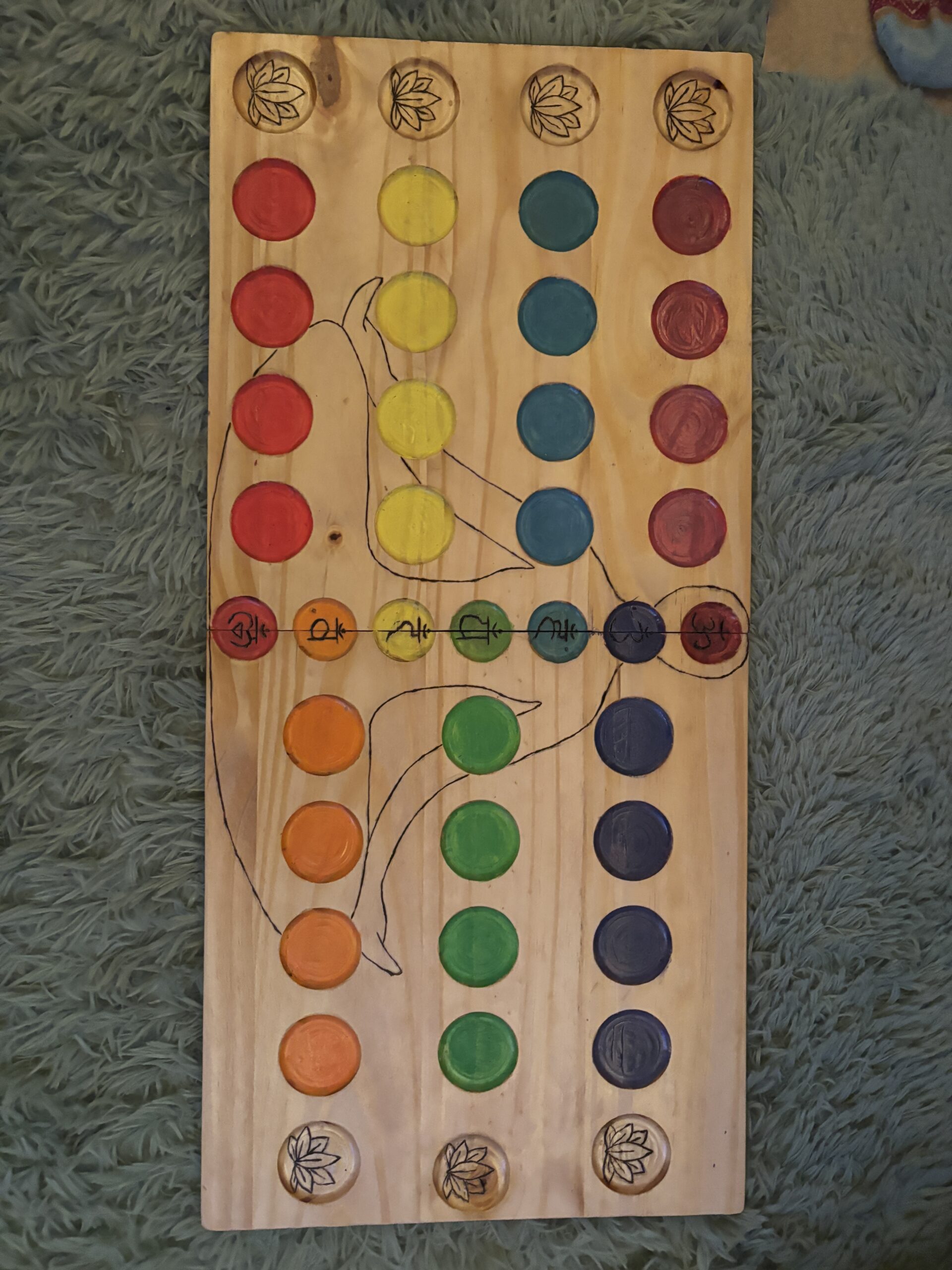
Chakra Crusade
Objective:
The objective of Chakra Crusade is to align all 7 Crystals in their designated Chakra Rows by the end of the game to reach total enlightenment and harmony.
Components:
- Action Card deck
- Color coded crystals (7 per color, total 35 crystals)
- Game board
Set up:
This game can be played with 3-5 players
- Each player chooses:
- 7 crystals of their chosen color.
- Then players set 1 of each crystal in the start positions of each chakra path.
- Start positions – are marked with a lotus symbol
- Chakra Paths – are the color-coded rows leading toward the center.
- Aligned Chakra position – are the central spaces marked with each Chakra’s symbol.
- Then shuffle the deck of cards, and deal 3 cards to each player. Then set the deck near the board.
Start of the game:
- The calmest player goes first. Each player briefly states why they believe they are the calmest; the group decides.
- Turns proceed clockwise.
- Each player must play 2 actions on their turn.
- Actions may be:
- Off-card actions (no card needed)
- On-card actions (action on the card)
- After playing cards, place them face-up in a discard pile.
- At the end of your turn, draw until you have 3 cards in hand.
- If the deck runs out, reshuffle the discard pile.
- Actions may be:
Actions include
OFF card actions:
- Moving: You may move ONE crystal ONE space forward.
- Meditation: Discard one card you dislike, and pick a new card from the deck.
ON card actions:
Movement:
- Flow state: Move ONE of your crystals 2 spaces forward.
- Chatarunga Down: Move one of your crystals back 1 space. Then move a different crystal forward 2 spaces.
- Energy surge: Move 2 different crystals 1 space forward each.
- Friendly Flow: Choose one player. That player moves ONE of their crystals forward 2 spaces
- Counter Flow: Reverse the direction of gameplay (if going clockwise, now go counter clockwise)
Sabotage:
- Blocked Energy: Move ONE target opponent’s crystal back 1 space.
- Skipping yoga: Skip any player’s turn (choose your target)
- Still Mind: everyone moves ONE crystal 1 space backward except YOU
- Vinyasa: Swap one of your crystals with one opponent’s crystal.
Defense (can be played anytime)
- Shield of calm: Use this card to ignore any setback that has been played against you.
- Karma: Deflect a sabotage, and the player who tried to sabotage you gets the setback themselves.
Important: Crystals can only move forward in their current Chakra Path. They cannot switch Chakra Paths .
Beyond first round:
Your goal is to place 3 crystals into the center aligned spot of each Chakra Path.
Aligned Chakras cannot be affected by any card once earned.
Winning and Losing:
- The player who has aligned all 7 Crystals in the center Chakra spots first has to announce:
“I am Enlightened!”
They win immediately.
If multiple players complete their seventh token on the same turn, all are enlightened and share the win.
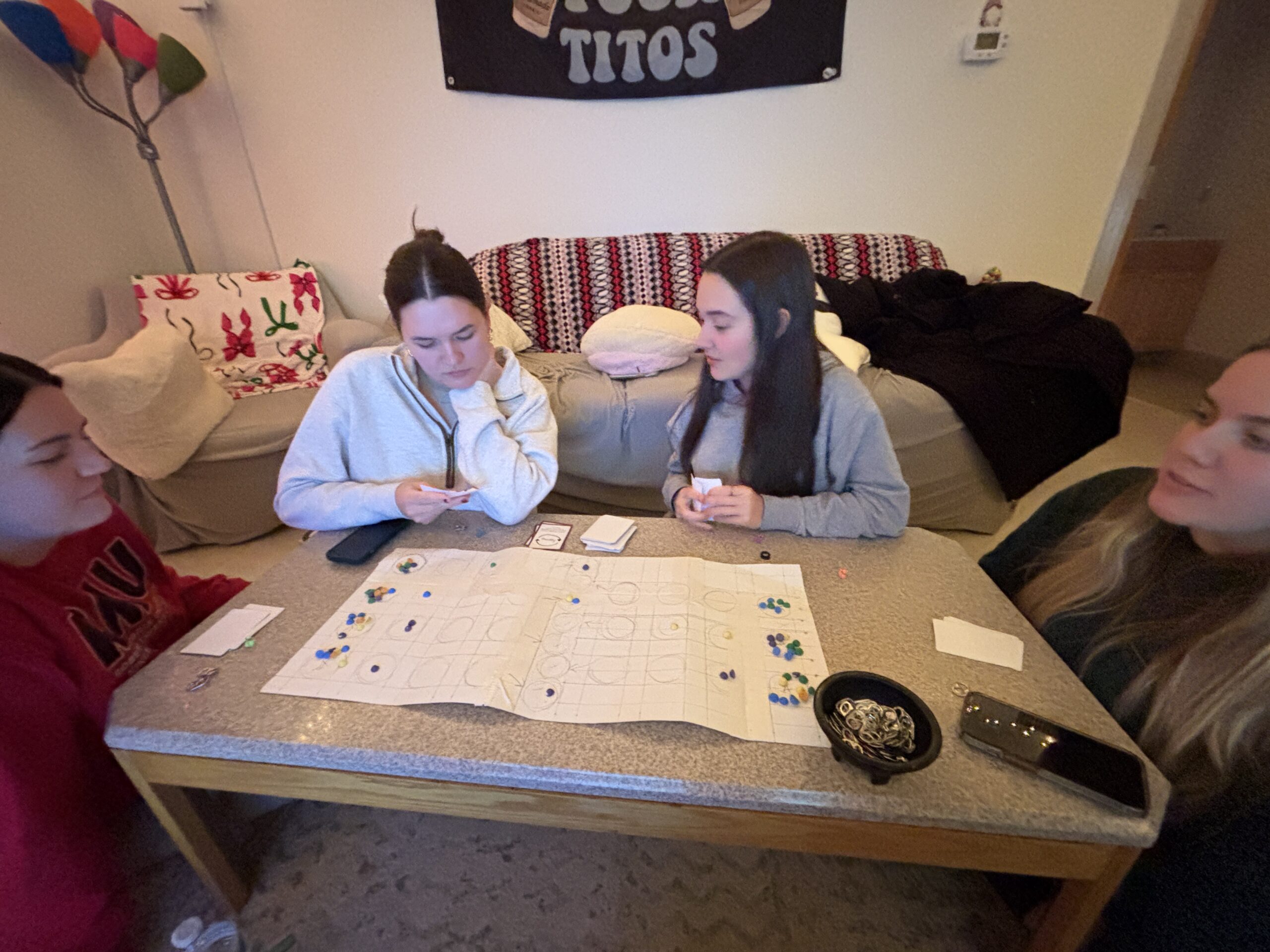
Documentation for The Jammers!!
- Game rules
- The Jammers!
- Madison Hurst
- Objective
- Make the most valuable jam recipes by combining various fruits and spices before the deck runs out! The player that reaches 30 points in recipe combos wins!
- Ideal player count is 3-4.
- Materials Needed
- Strawberry cards
- Blueberry cards
- Peach cards
- Vanilla spice cards
- Mint cards
- Basil cards
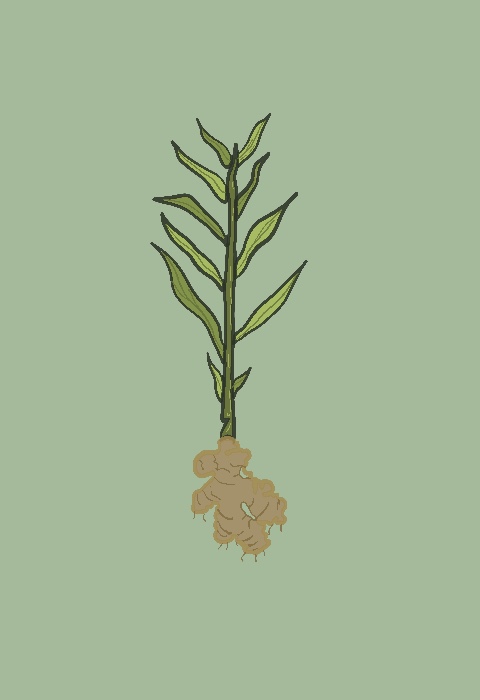
- Ginger cards
- Special action cards
- Jammer Scoresheet and pencil (to add up points as you go)
- Setup
- Shuffle all the deck of cards
- Deal 5 cards to each player
- Place the remaining deck in the center of the table, face down (this will be the draw pile)
- Right next to the draw pile will be the discard pile (these cards can face up when once a pile starts to form)
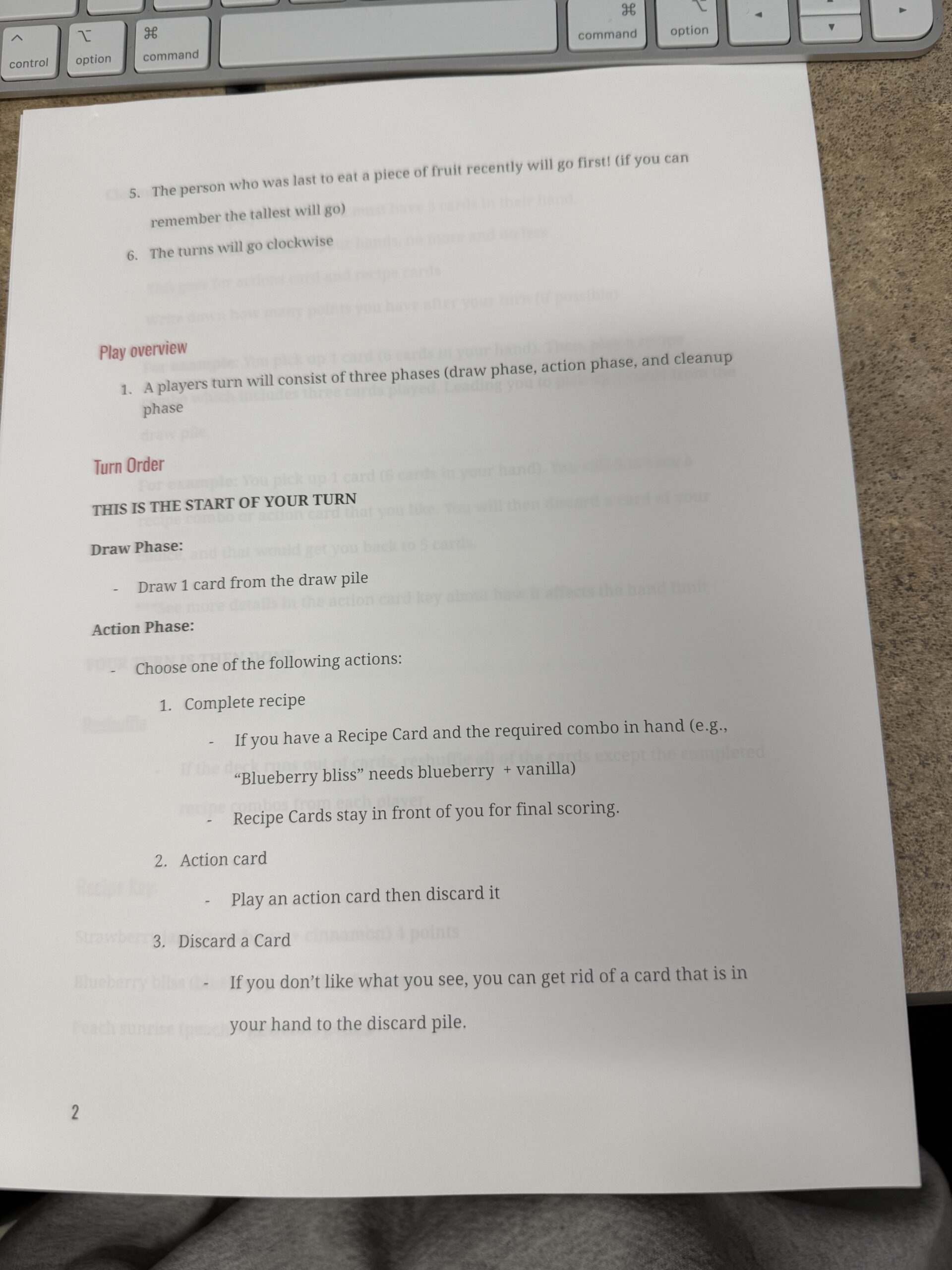
- The person who was last to eat a piece of fruit recently will go first! (if you can remember the tallest will go)
- The turns will go clockwise
- Play overview
- A players turn will consist of three phases (draw phase, action phase, and cleanup phase
- Turn Order
- THIS IS THE START OF YOUR TURN
- Draw Phase:
- Draw 1 card from the draw pile
- Action Phase:
- Choose one of the following actions:
- Complete recipe
- If you have a the correct spice and fruits then create a Recipe Combo from your hand (e.g., “Blueberry bliss” needs blueberry + vanilla)
- Recipe Combos stays in front of you for final scoring.
- Action card
- Play an action card then discard it
- Discard a Card
- If you don’t like what you see, you can get rid of a card that is in your hand to the discard pile.
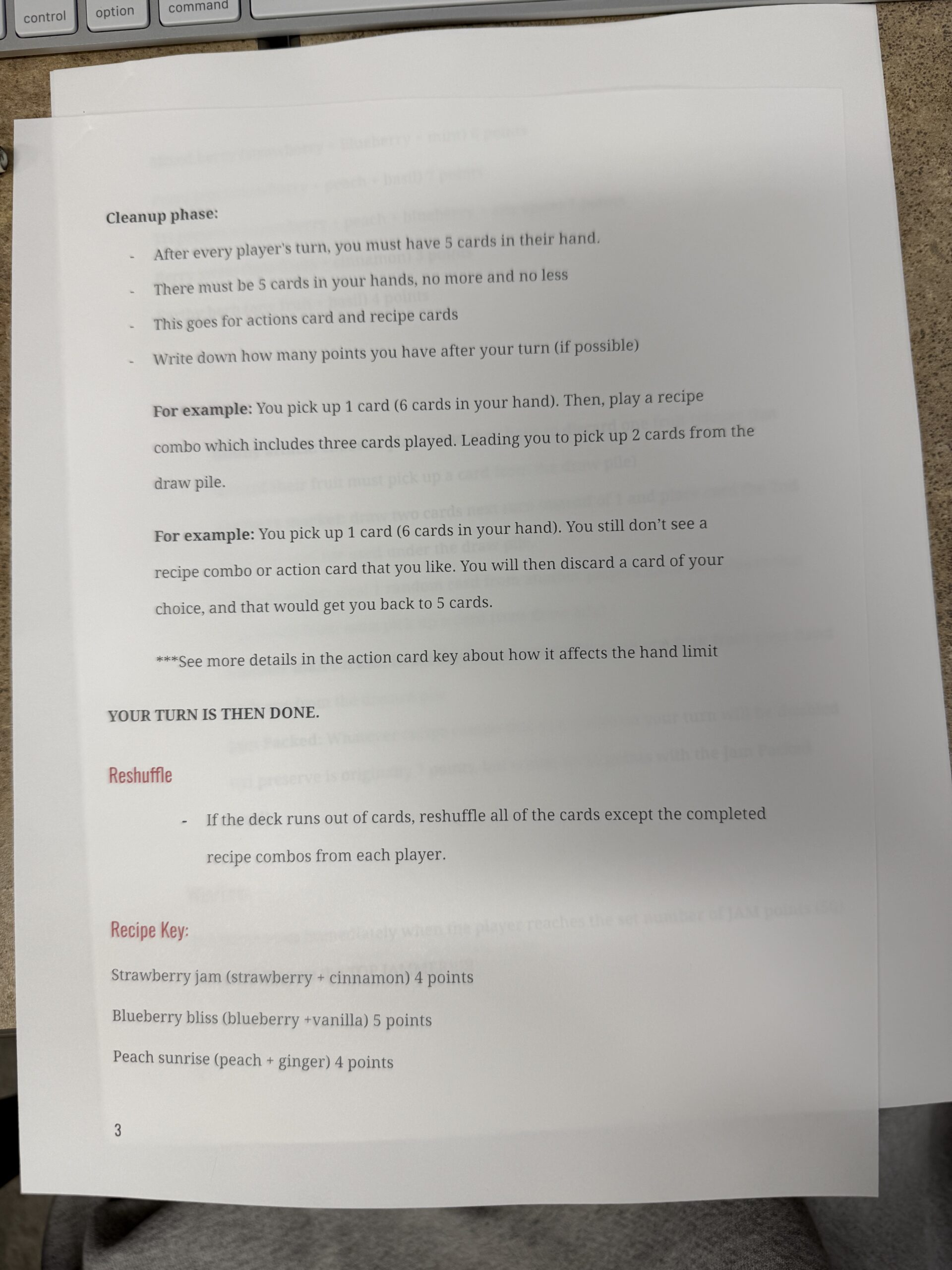
- Cleanup phase:
- After every player’s turn, you must have 5 cards in their hand.
- There must be 5 cards in your hands, no more and no less
- This goes for action, fruit, and spice cards.
- Write down how many points you have after your turn (if possible)
- For example: You pick up 1 card (6 cards in your hand). Then, play a recipe combo which includes three cards played. Leading you to pick up 2 cards from the draw pile.
- For example: You pick up 1 card (6 cards in your hand). You still don’t see a recipe combo or action card that you like. You will then discard a card of your choice, and that would get you back to 5 cards.
- ***See more details in the action card key about how it affects the hand limit
- YOUR TURN IS THEN DONE.
- Reshuffle
- If the deck runs out of cards, reshuffle all of the cards except the completed recipe combos from each player.
- Recipe Key:
- Strawberry jam (strawberry + cinnamon) 4 points
- Blueberry bliss (blueberry +vanilla) 5 points
- Peach sunrise (peach + ginger) 4 points
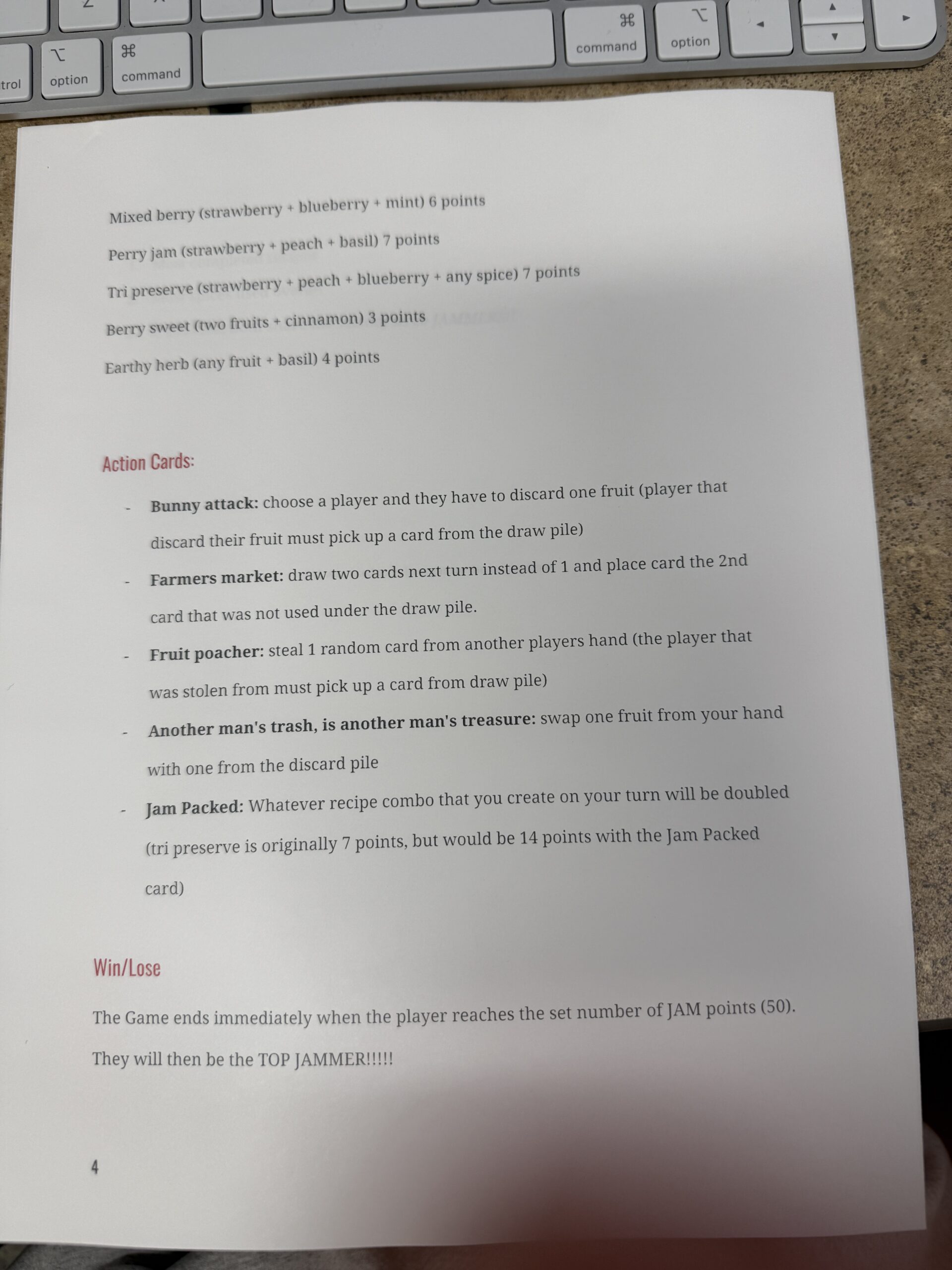
- Mixed berry (strawberry + blueberry + mint) 6 points
- Perry jam (strawberry + peach + basil) 7 points
- Tri preserve (strawberry + peach + blueberry + any spice) 7 points
- Berry sweet (two fruits + cinnamon) 3 points
- Earthy herb (any fruit + basil) 4 points
- Action Cards:
- Bunny attack: choose a player and they have to discard one fruit (player that discard their fruit must pick up a card from the draw pile)
- Farmers market: draw two cards next turn instead of 1 and place card the 2nd card that was not used under the draw pile. Cards can be played the following turn.
- Fruit poacher: steal 1 random card from another players hand (the player that was stolen from must pick up a card from draw pile)
- Another man’s trash, is another man’s treasure: swap one fruit from your hand with one from the discard pile
- Jam Packed: Whatever recipe combo that you create on your turn will be doubled (tri preserve is originally 7 points, but would be 14 points with the Jam Packed card)
- Win/Lose
- The Game ends immediately when the player reaches the set number of JAM points (30) or over, and will be the TOP JAMMER!!!!!
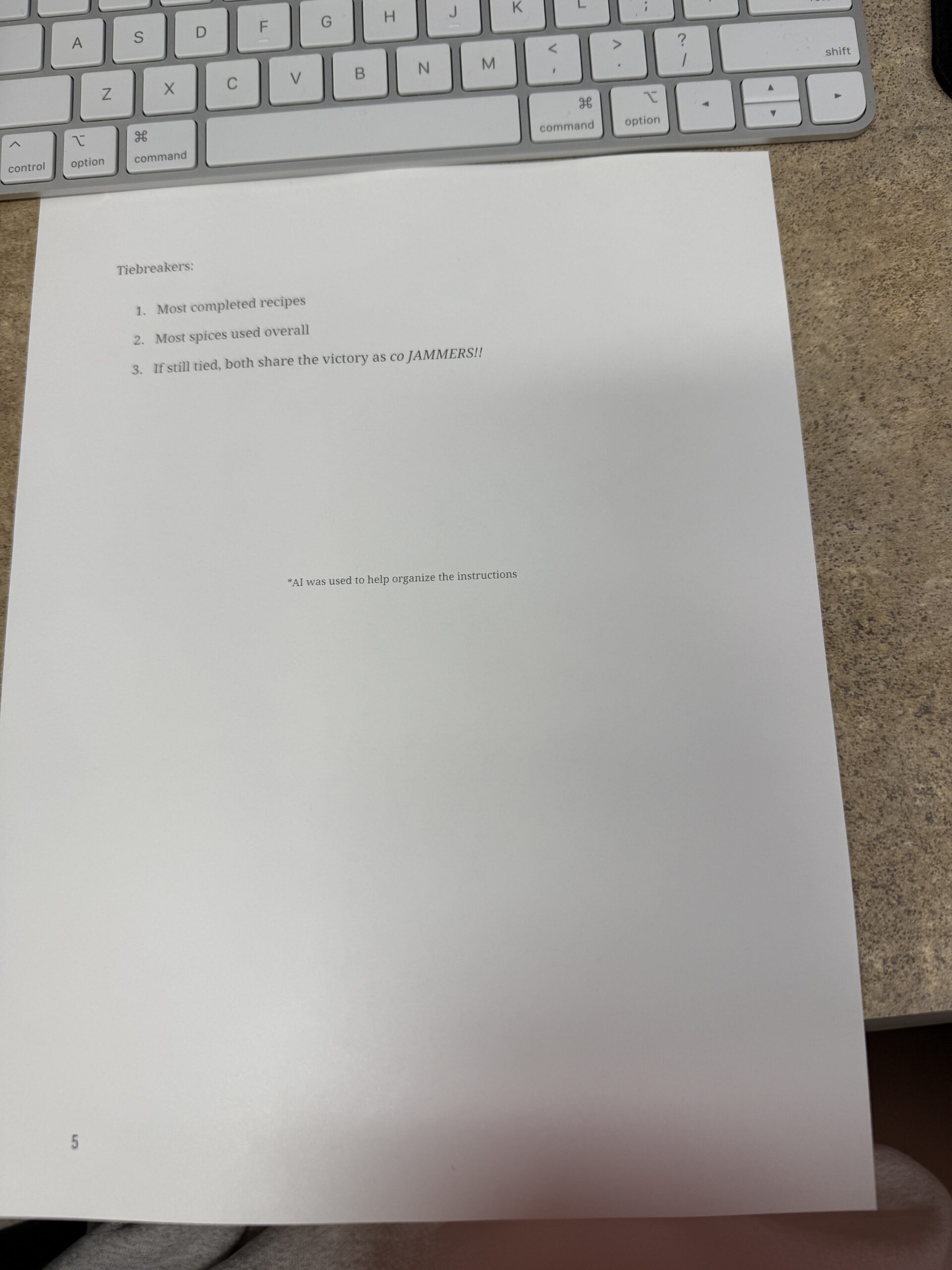
- Tiebreakers:
- Most completed recipes
- Most fruits used overall
- If still tied, both share the victory as co JAMMERS!!
- Photos of:
-
- the game when setup
- details of the pieces
- any process photos – making
- any design iterations – changes to the board, cards or pieces
- An overview of changes made
- An overview of changes to make
- Your thoughts and lessons learned from play testing




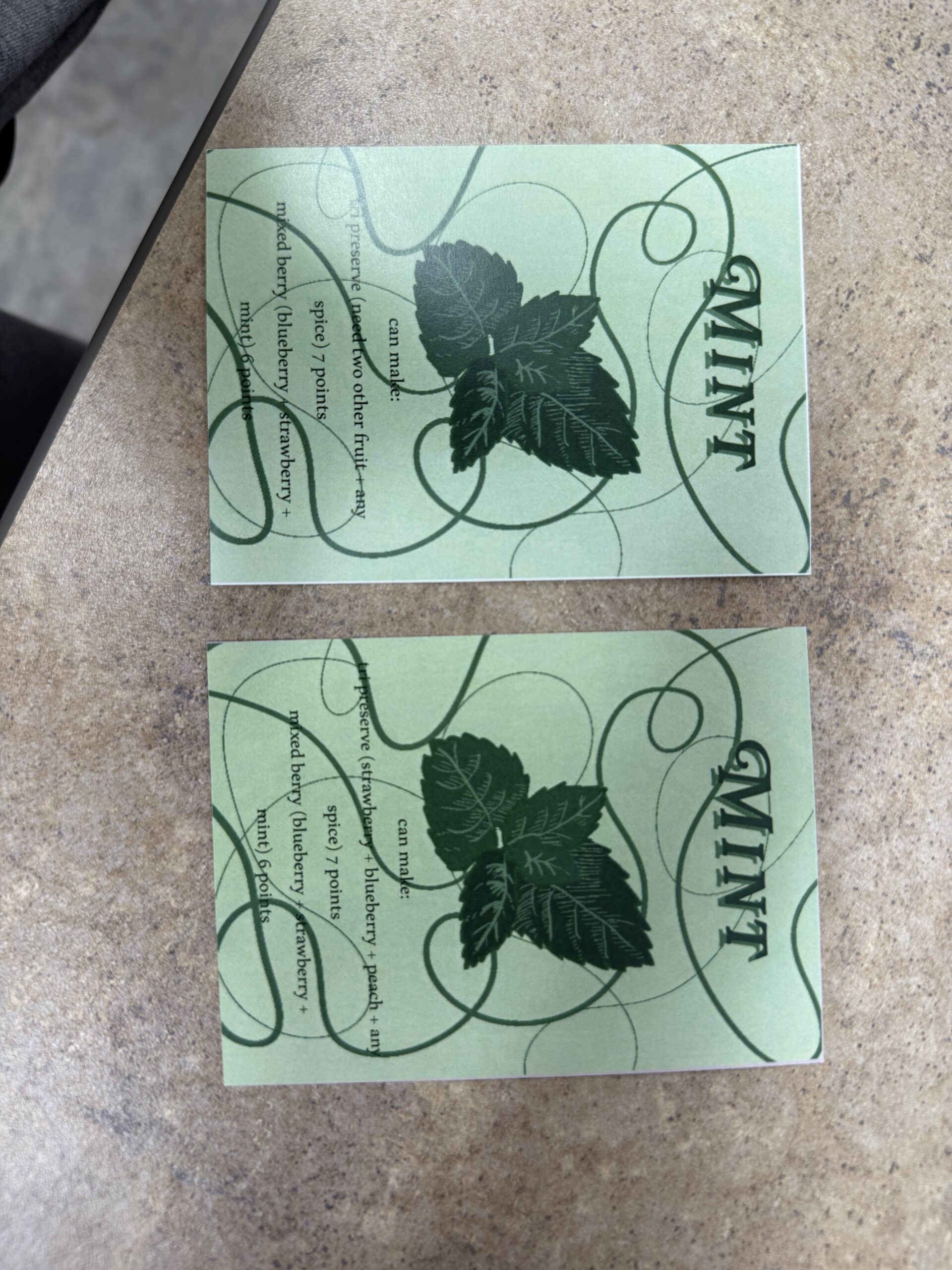
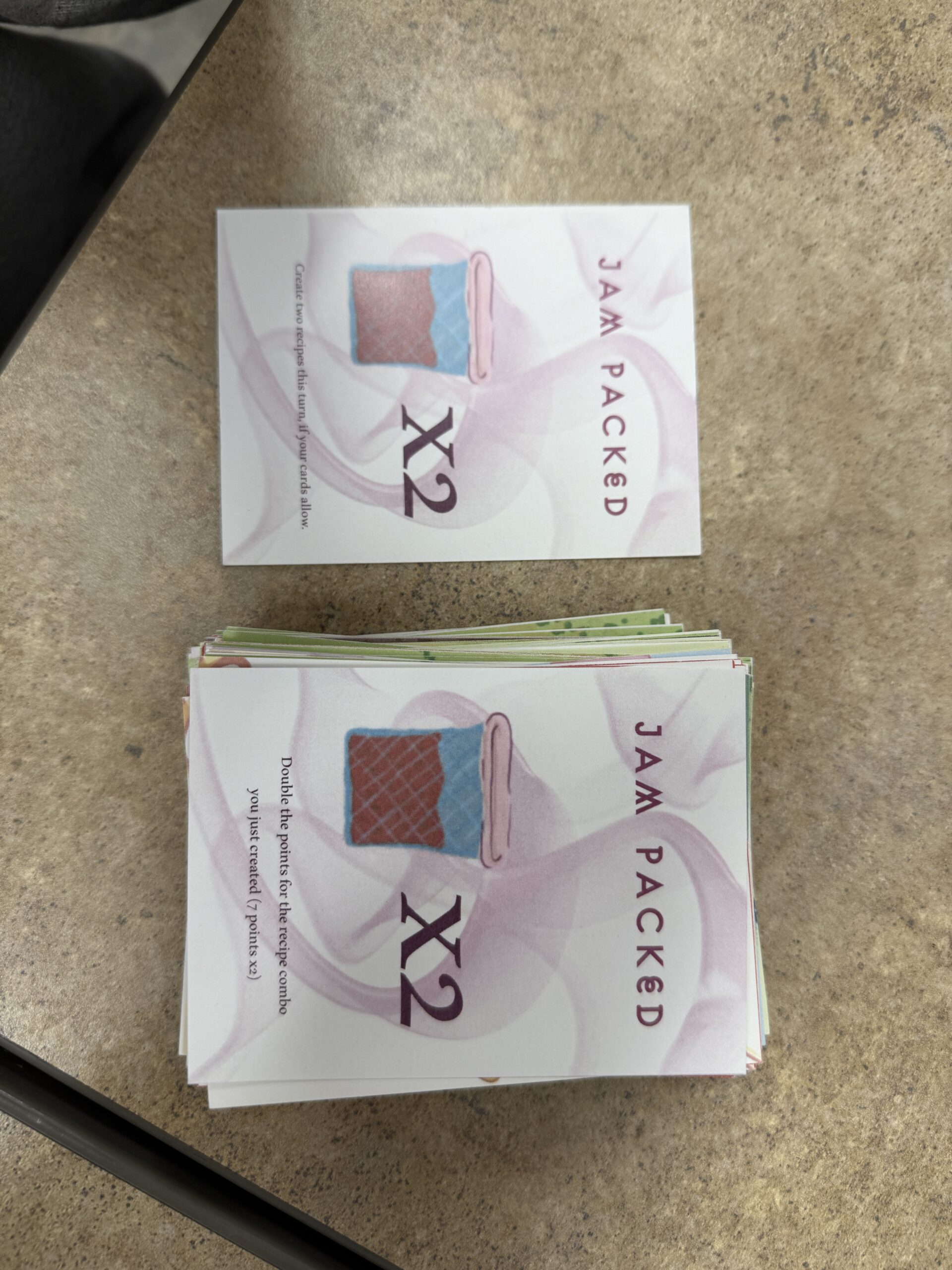
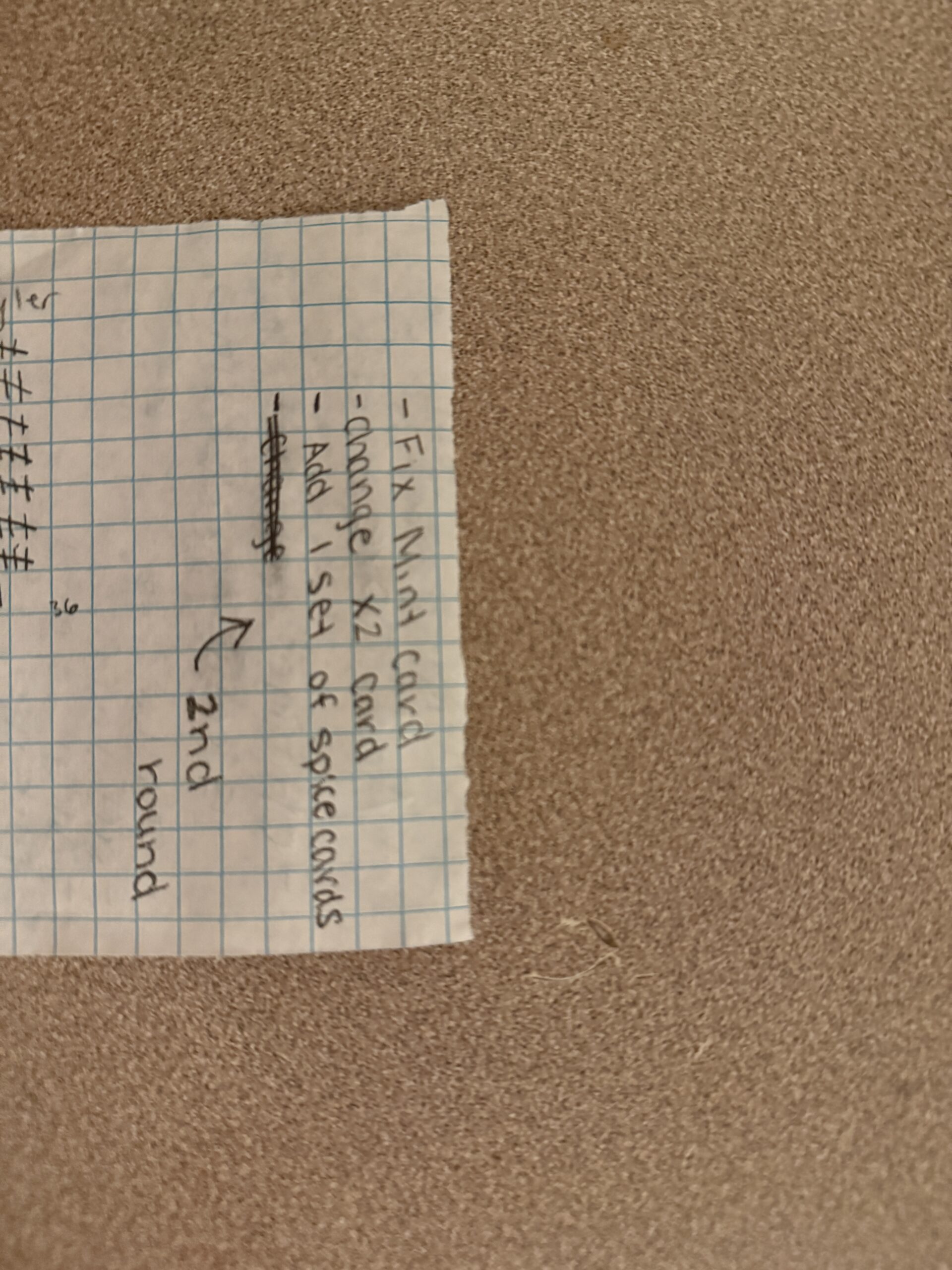
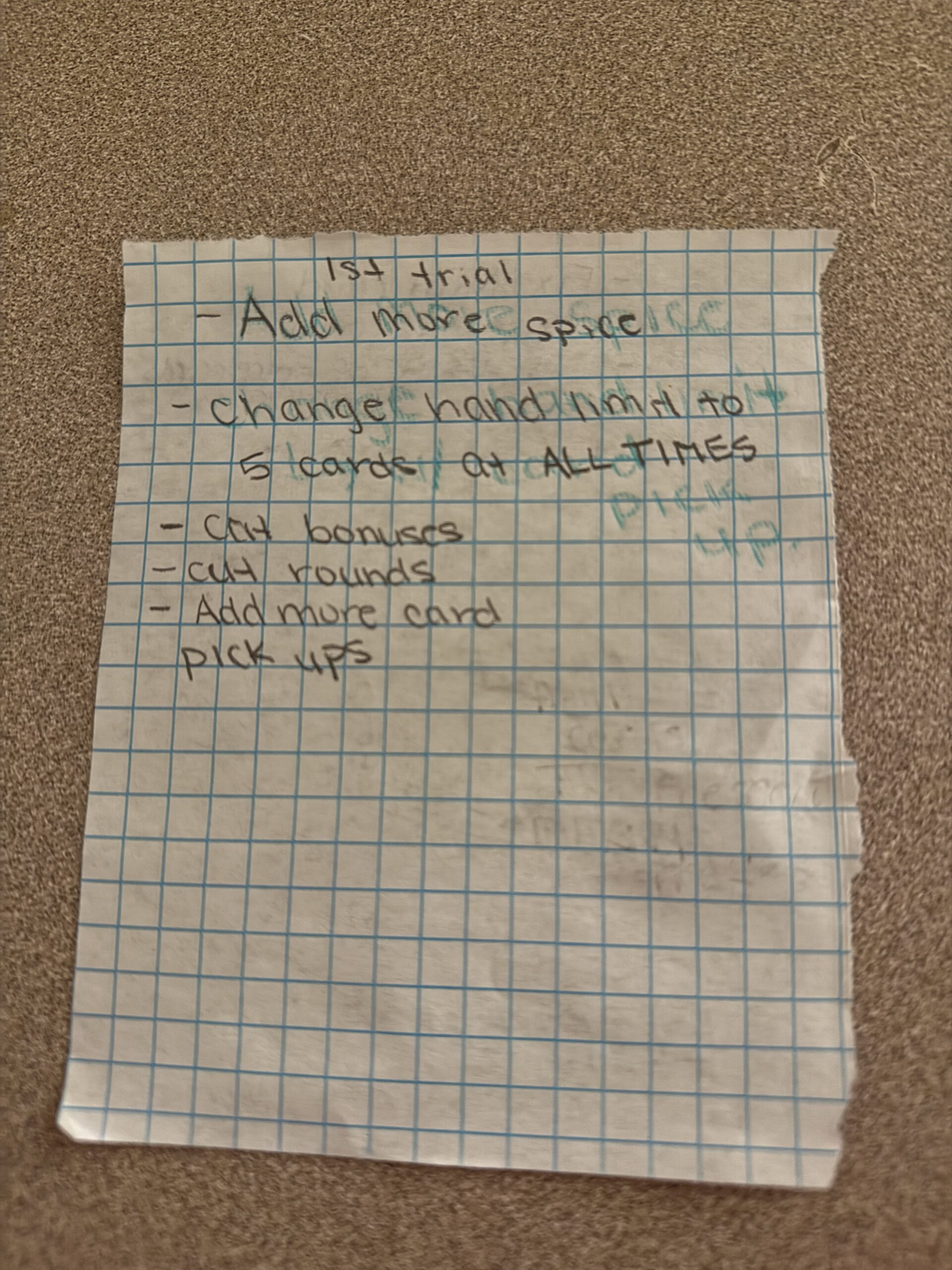
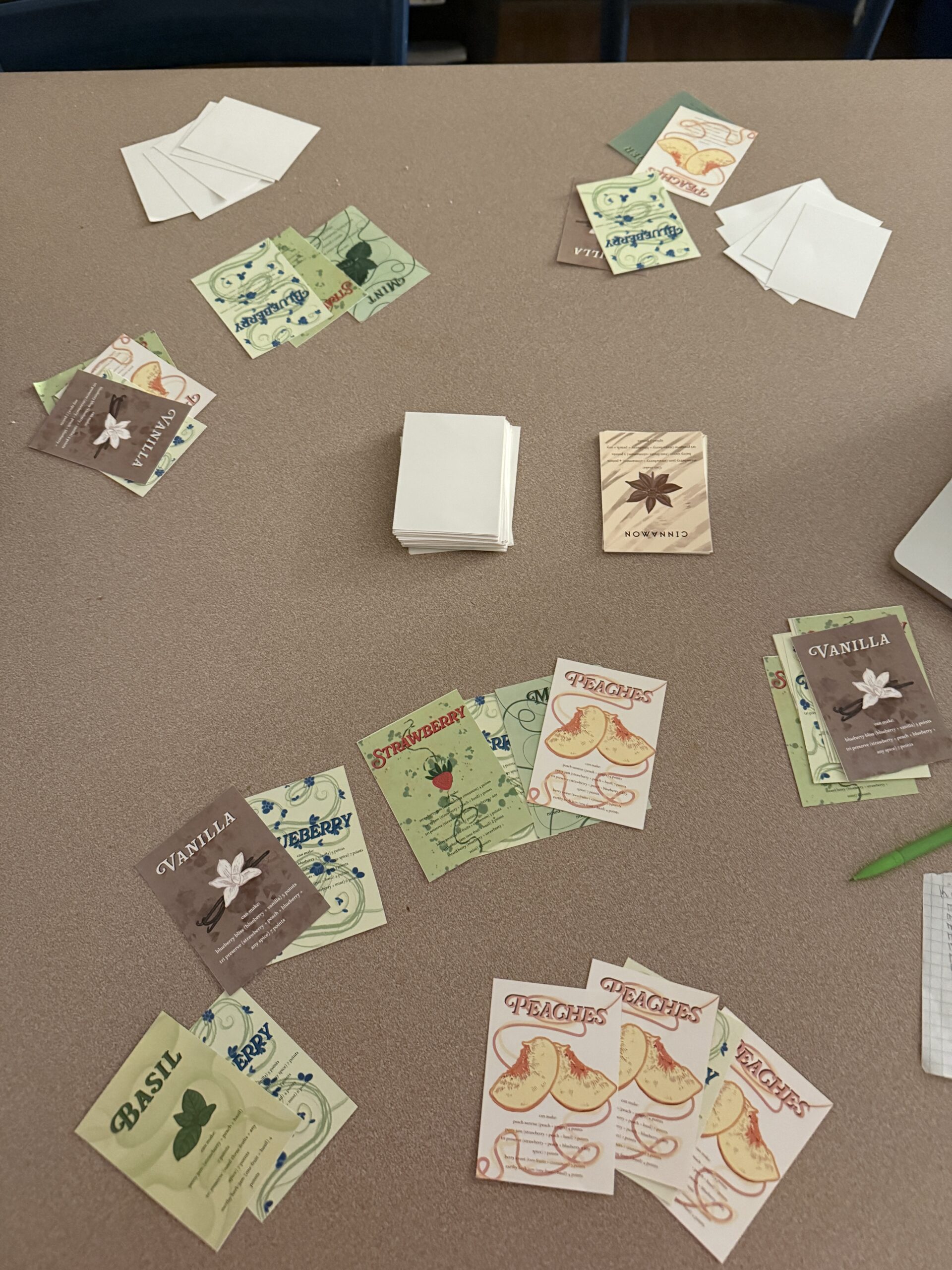
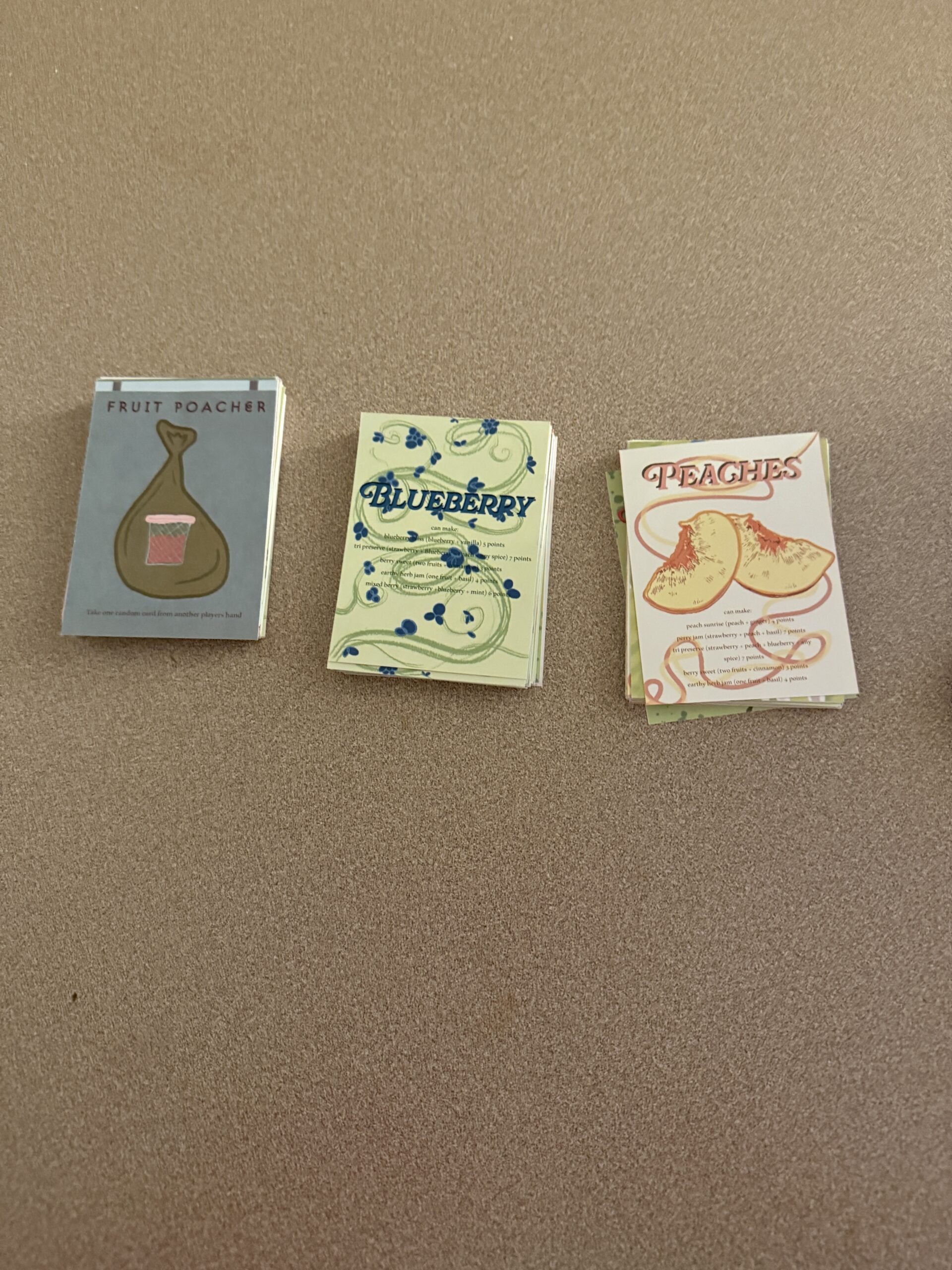
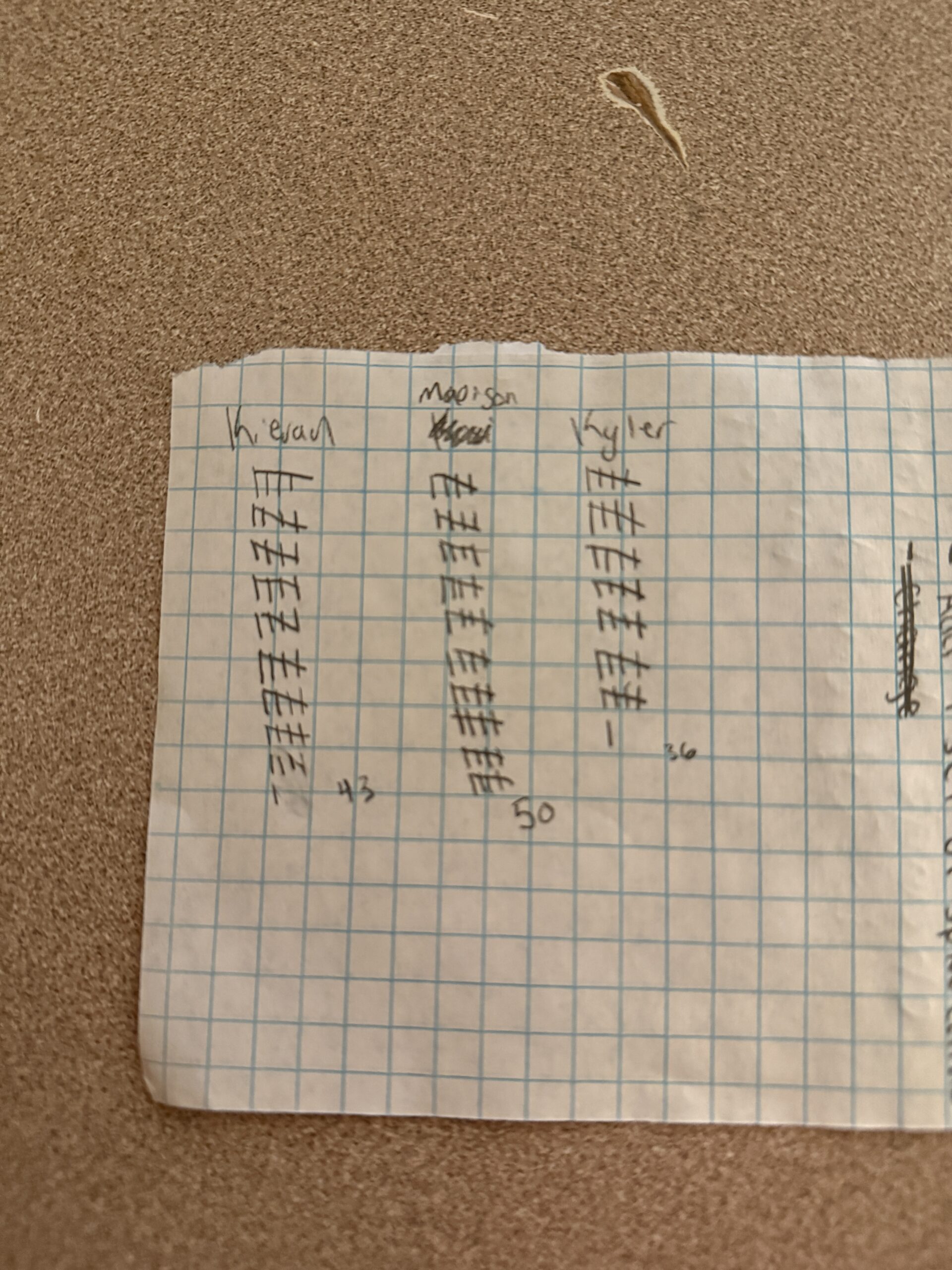
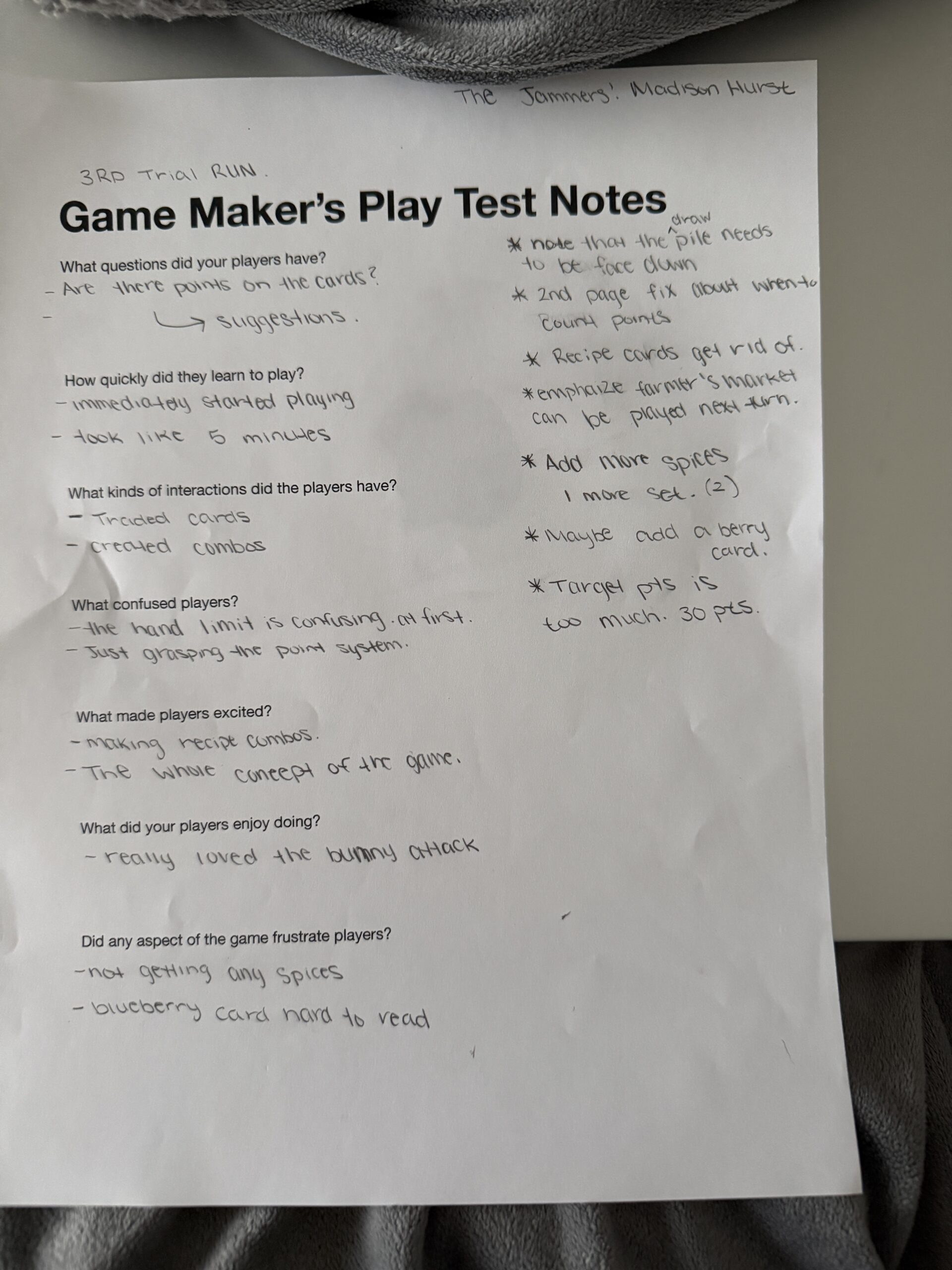
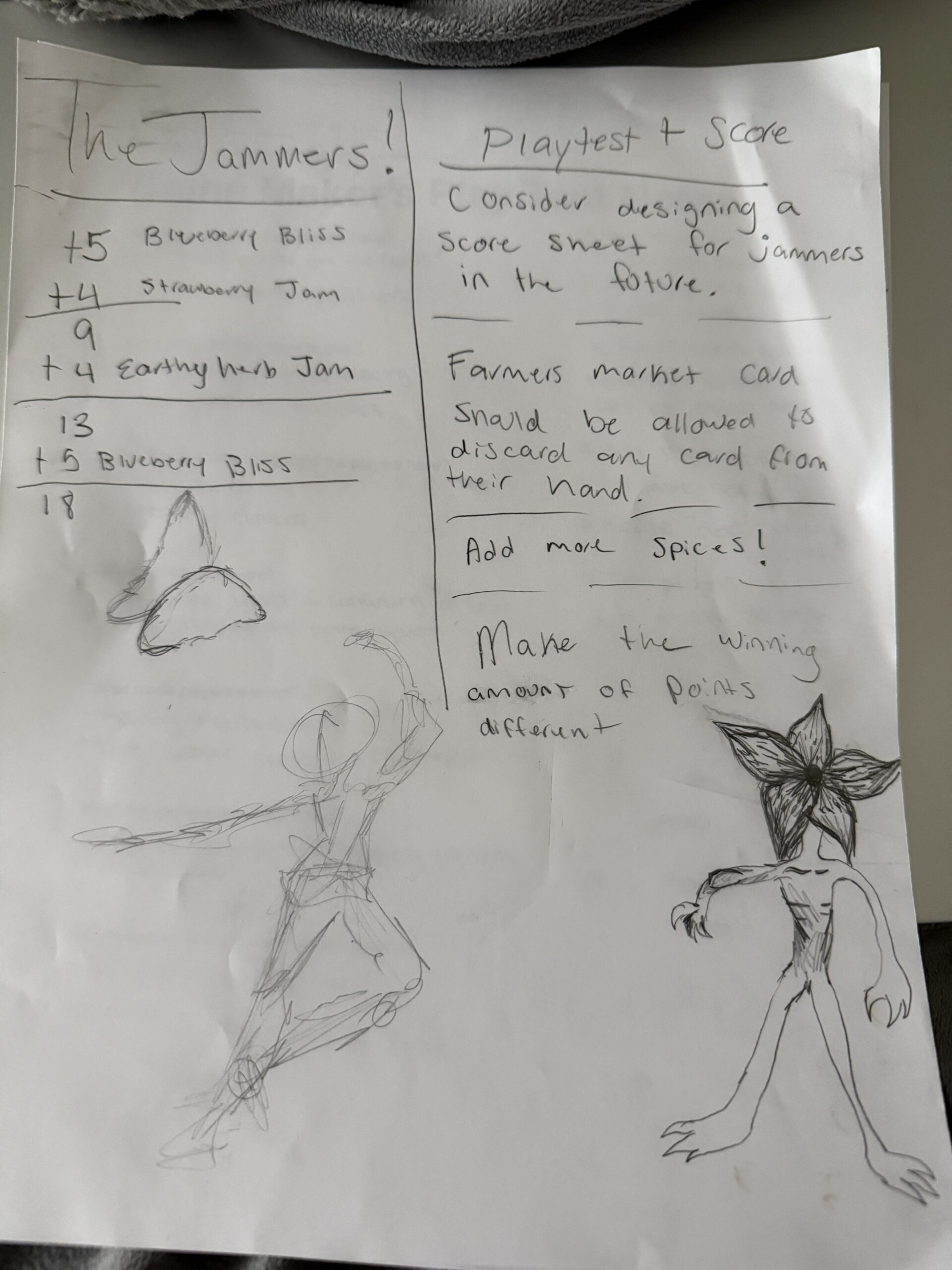
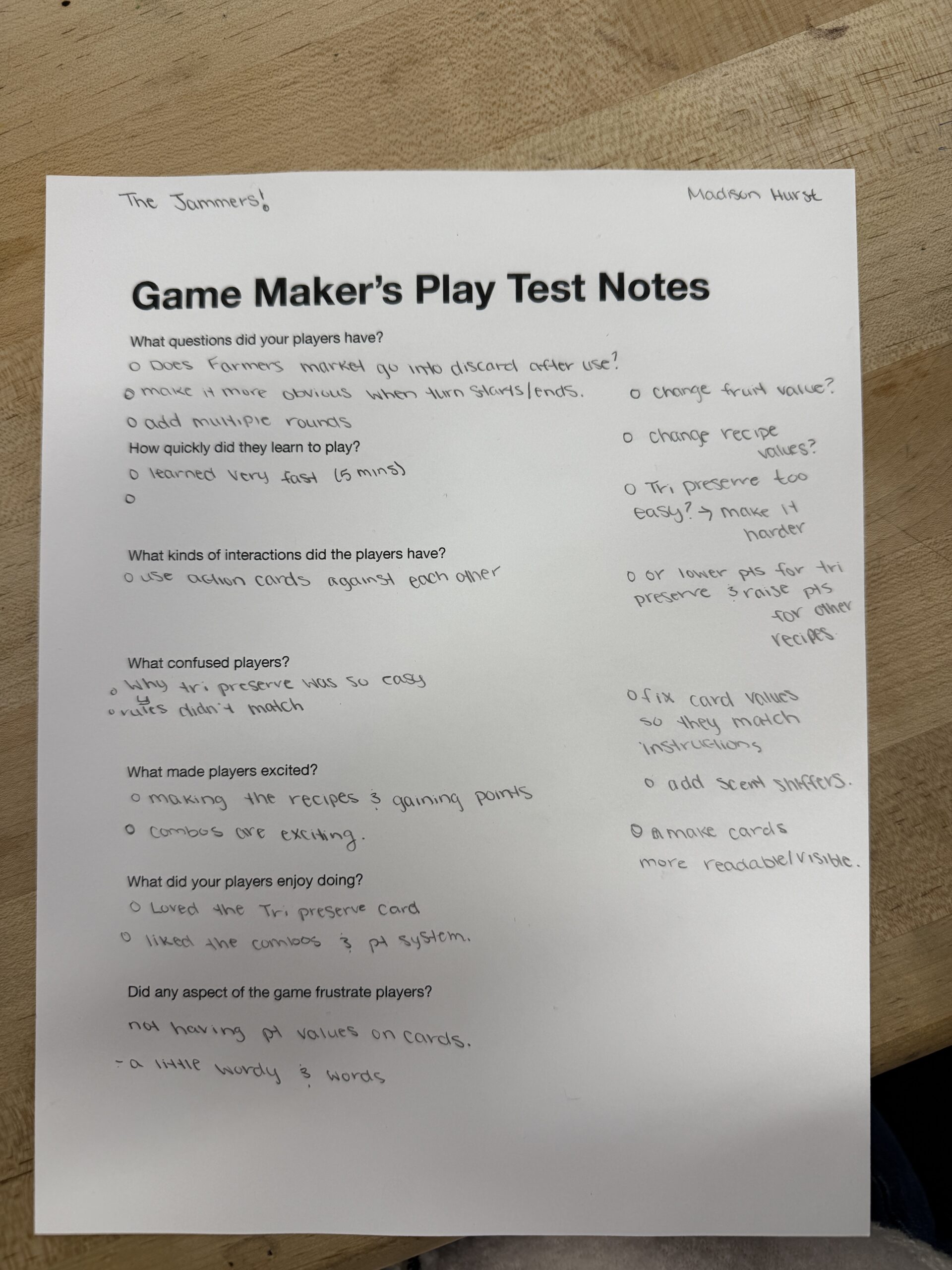
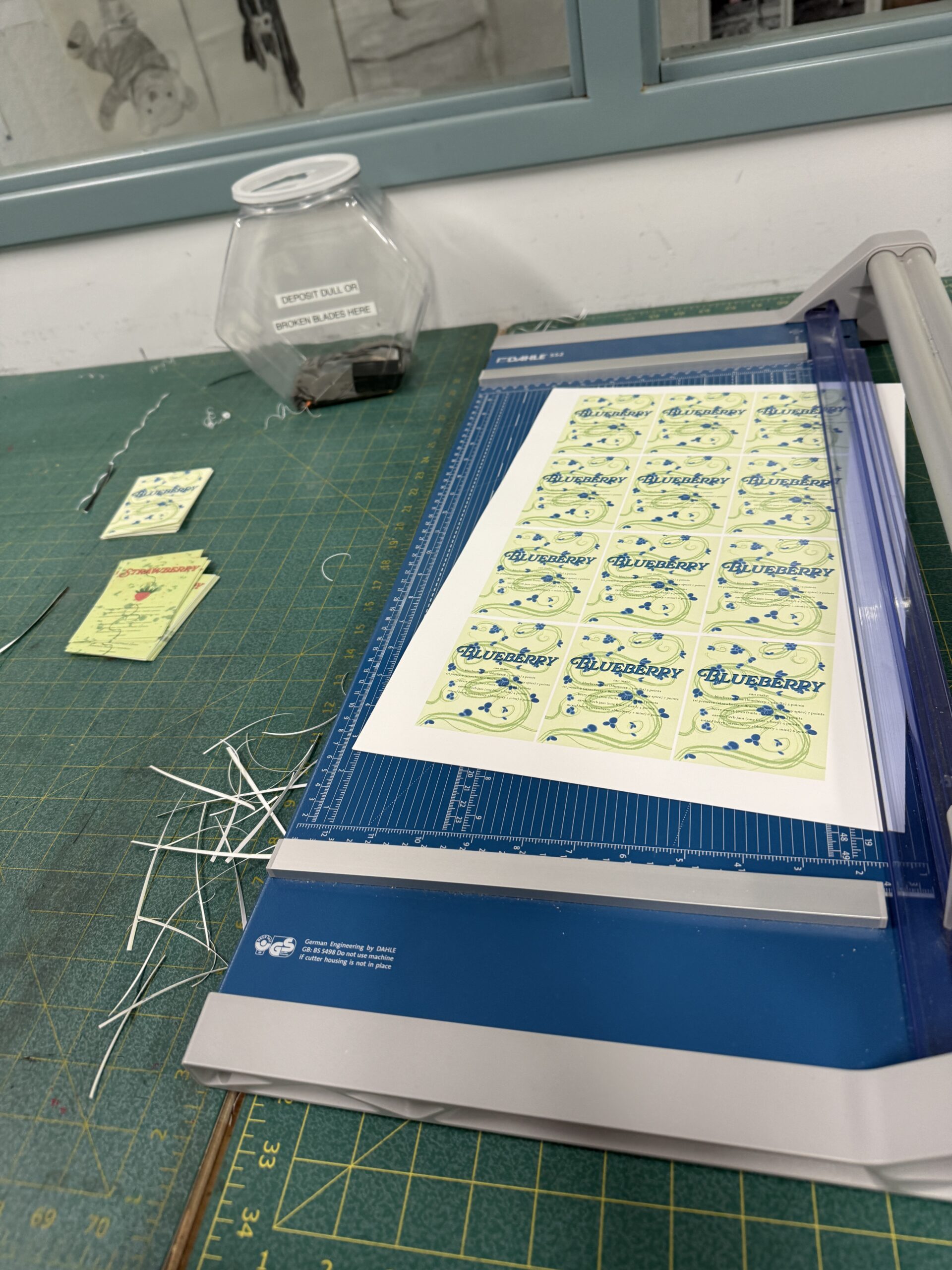
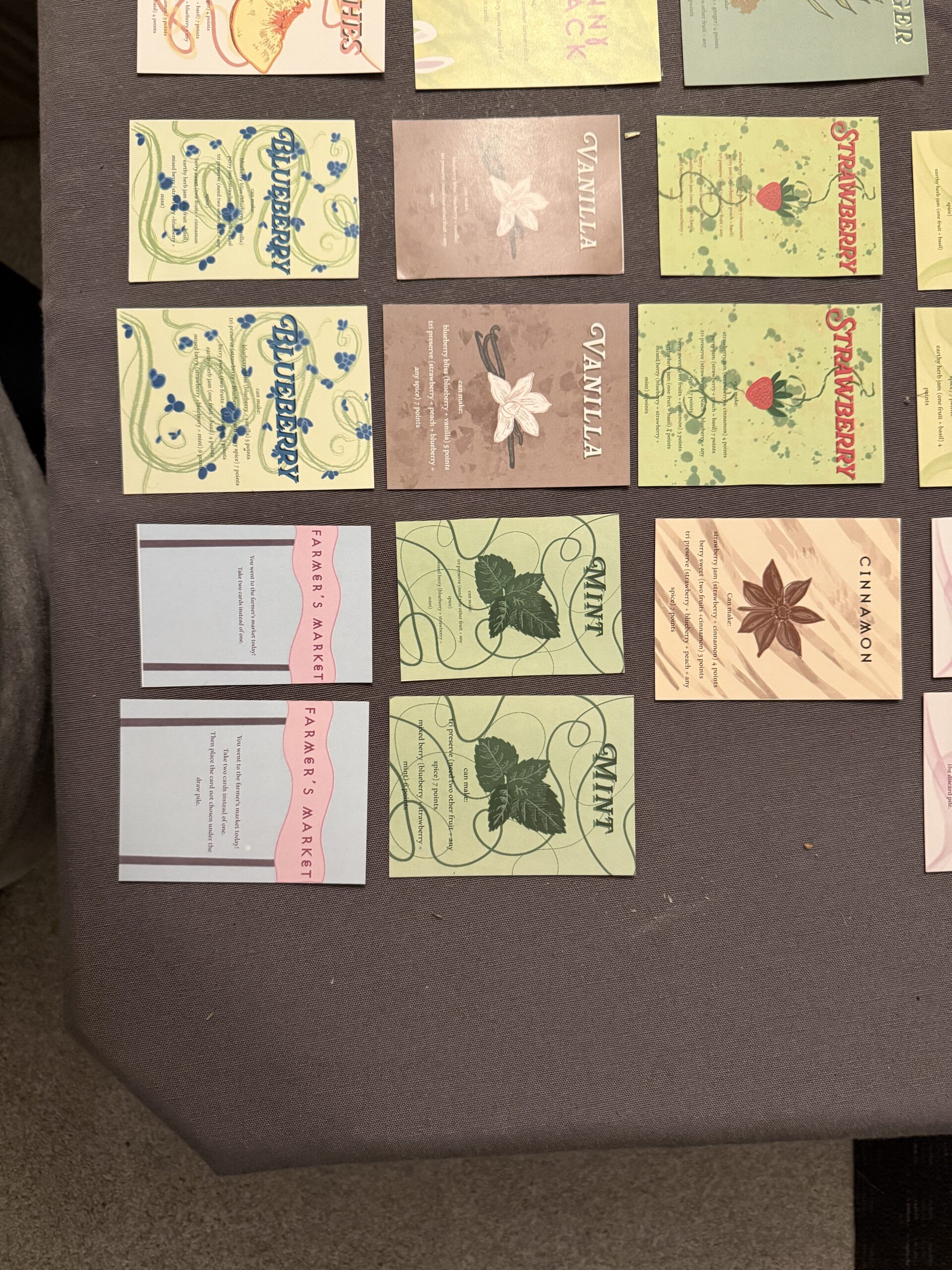
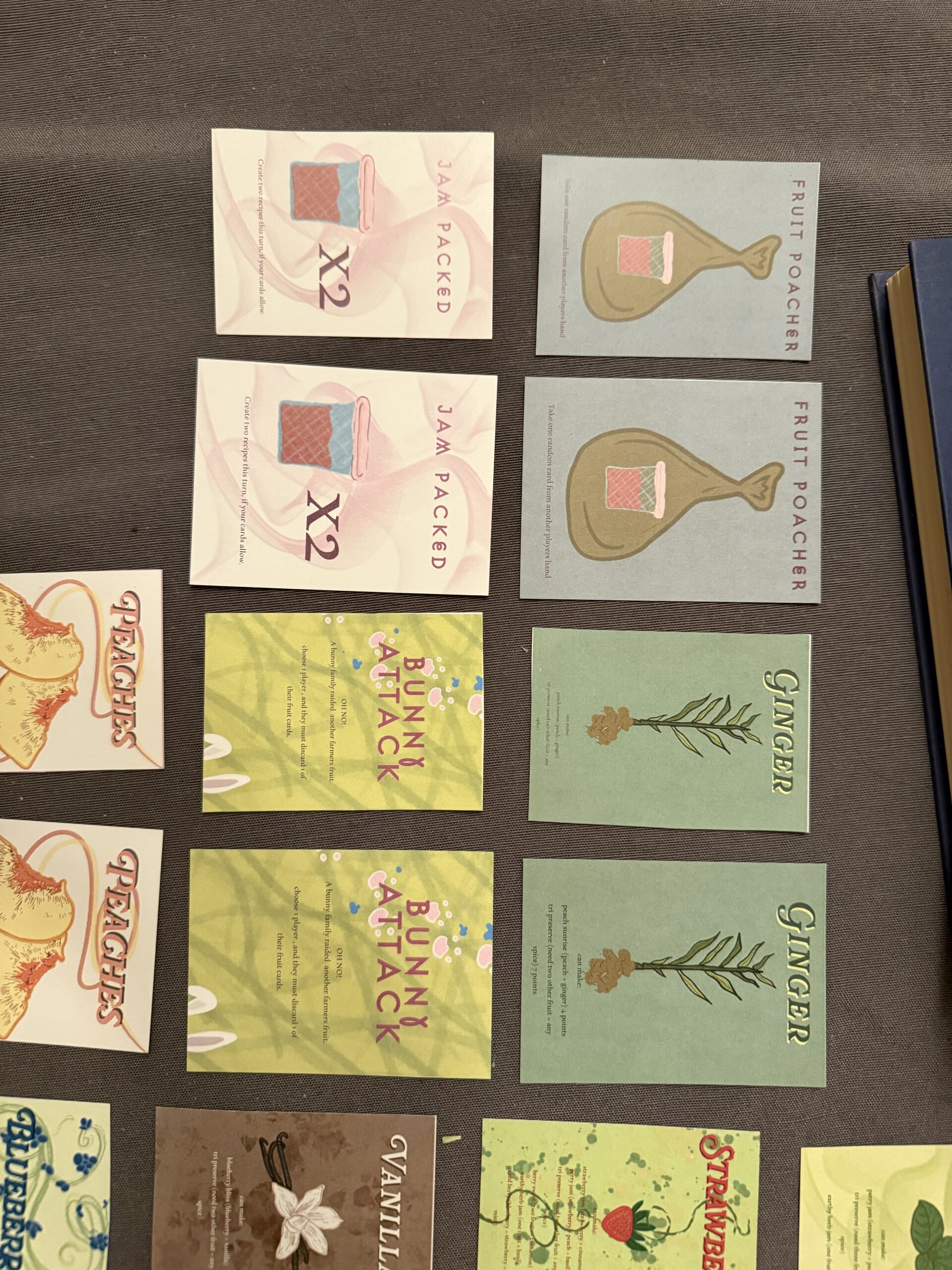
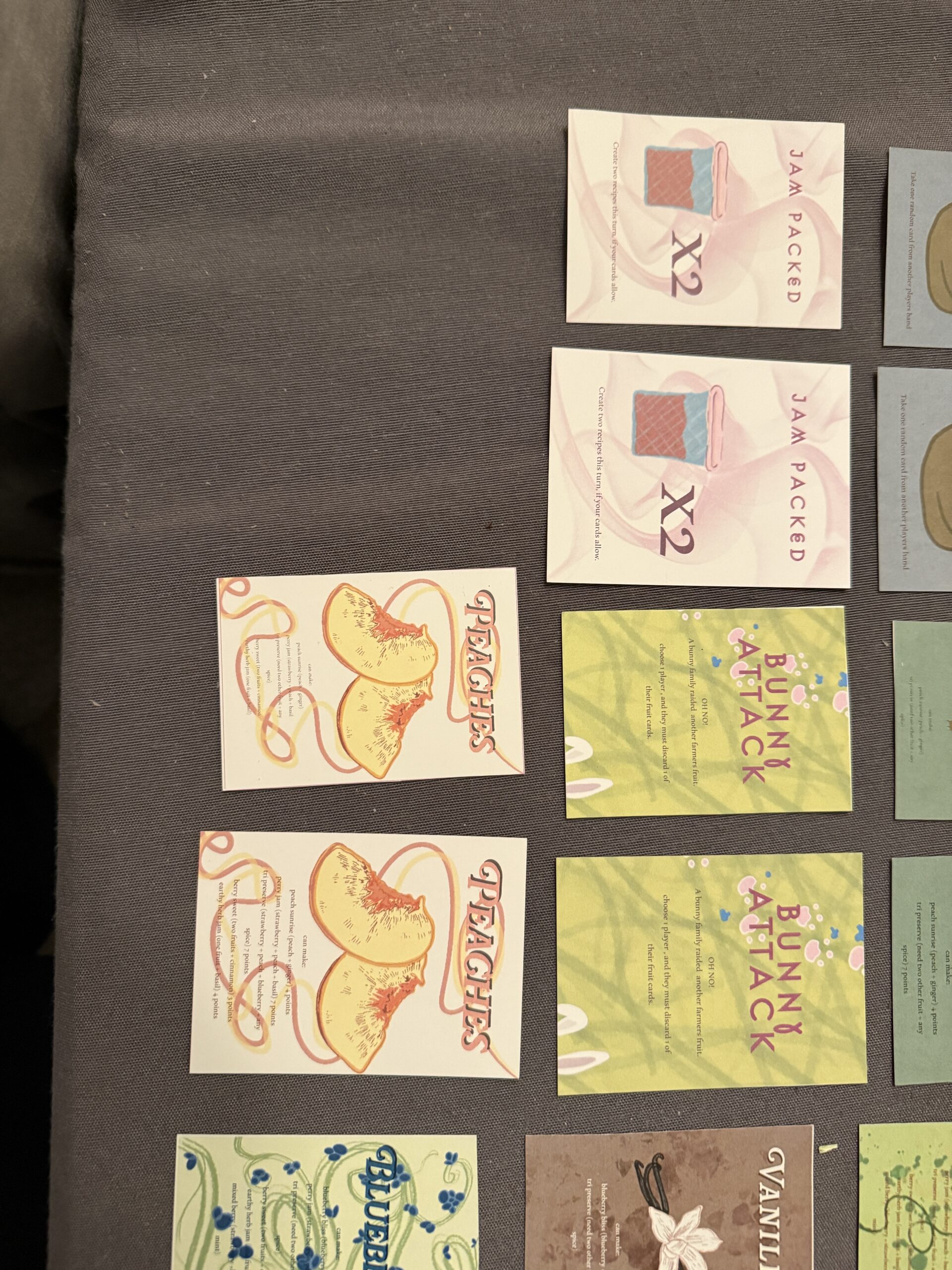
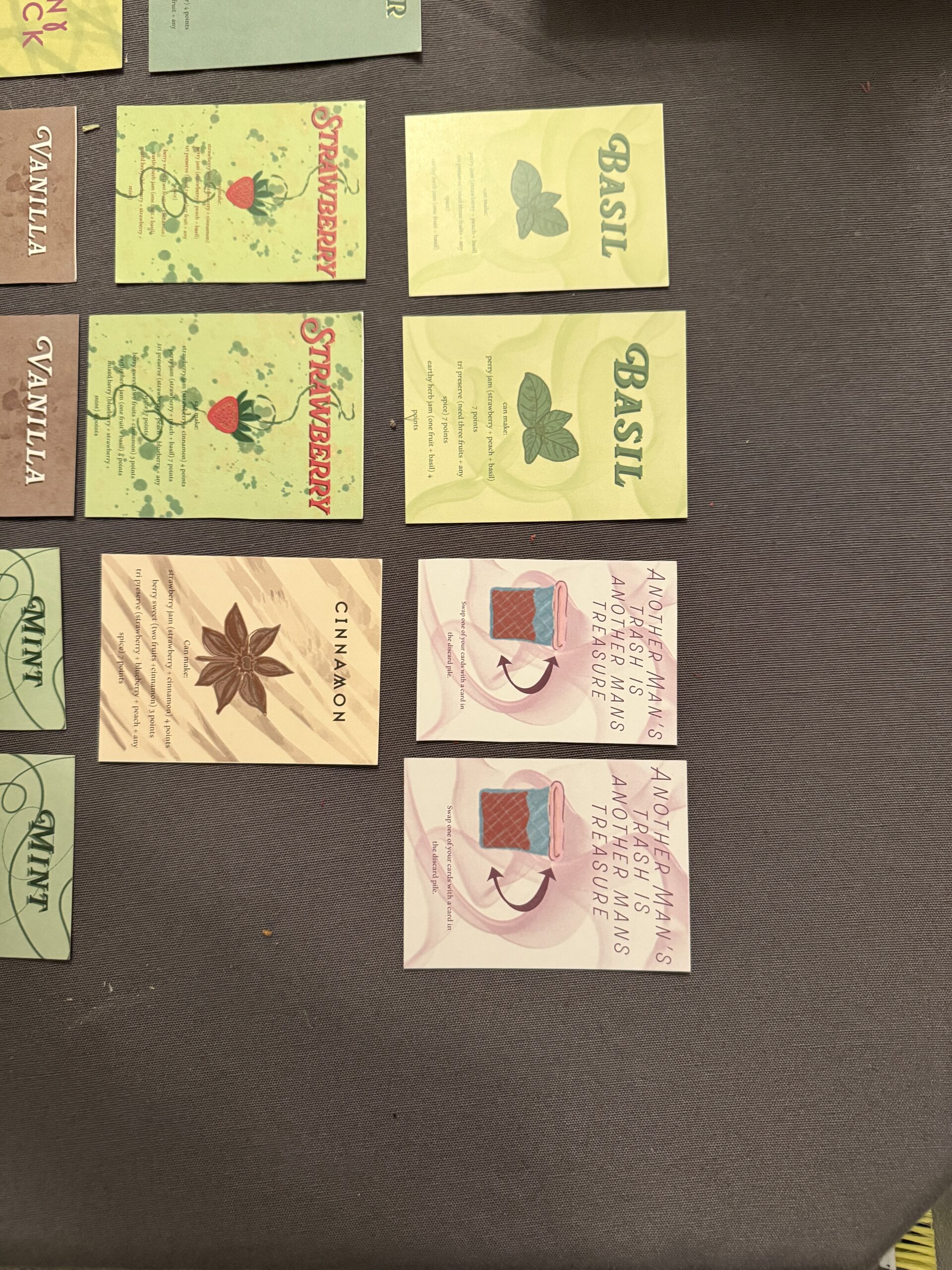
During the course of this design, it went through many reworks. From fixing confusing directions, card size, amount of cards in each category, and changing how a players turn would work. I am pretty proud of what I reworked and testing to see how fluid the game is. I strived to make the cards cut as neat as possible which was tedious, but I am proud of committing to that. Moreover, the game became more fluid once I changed the hand limit to 5 cards (no more or no less). My last change was adding more spices to give people more chances to make recipe combos, and adding a Jammer scoresheet.
Final Project: Spooky Detection Agency
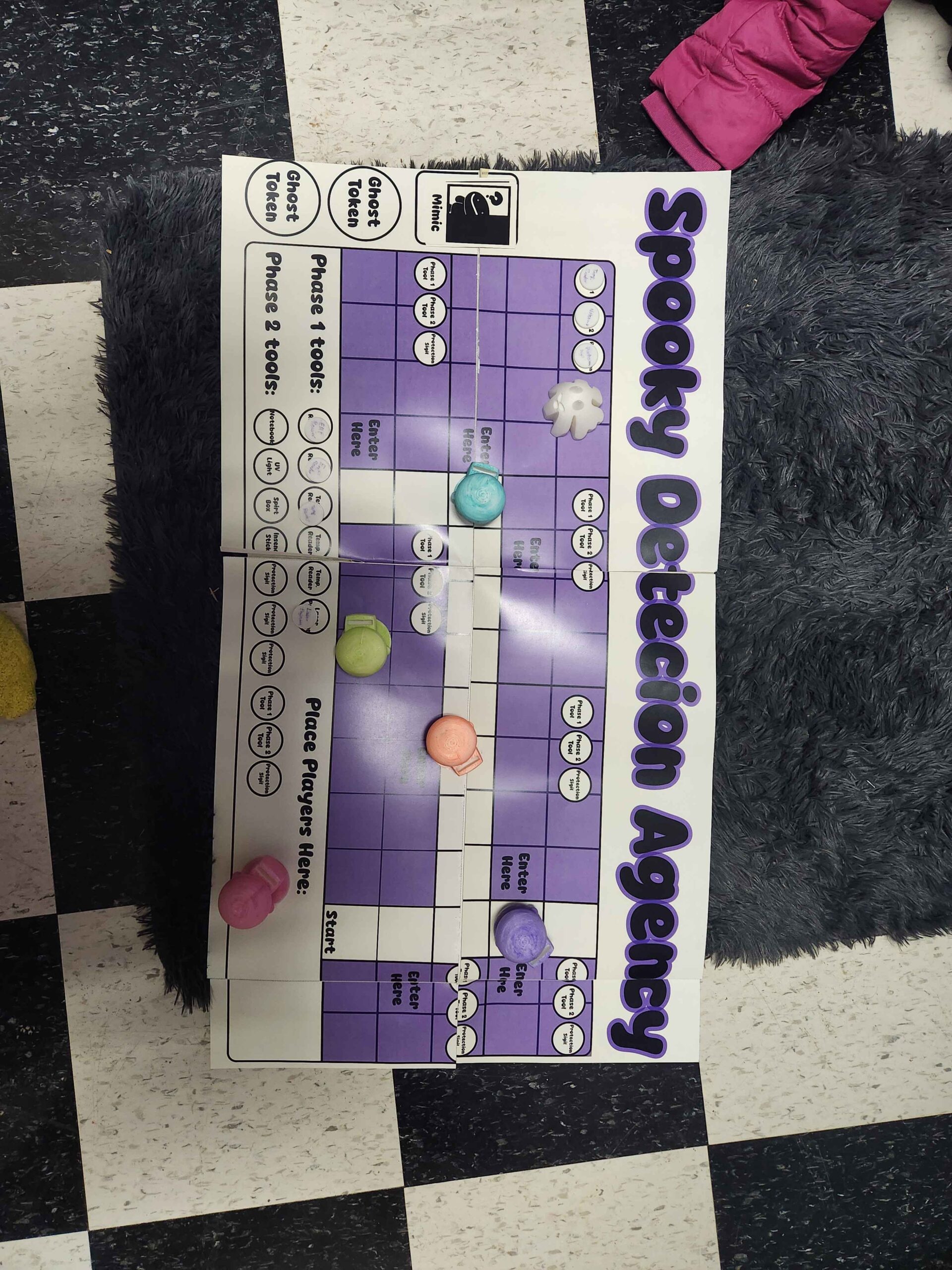
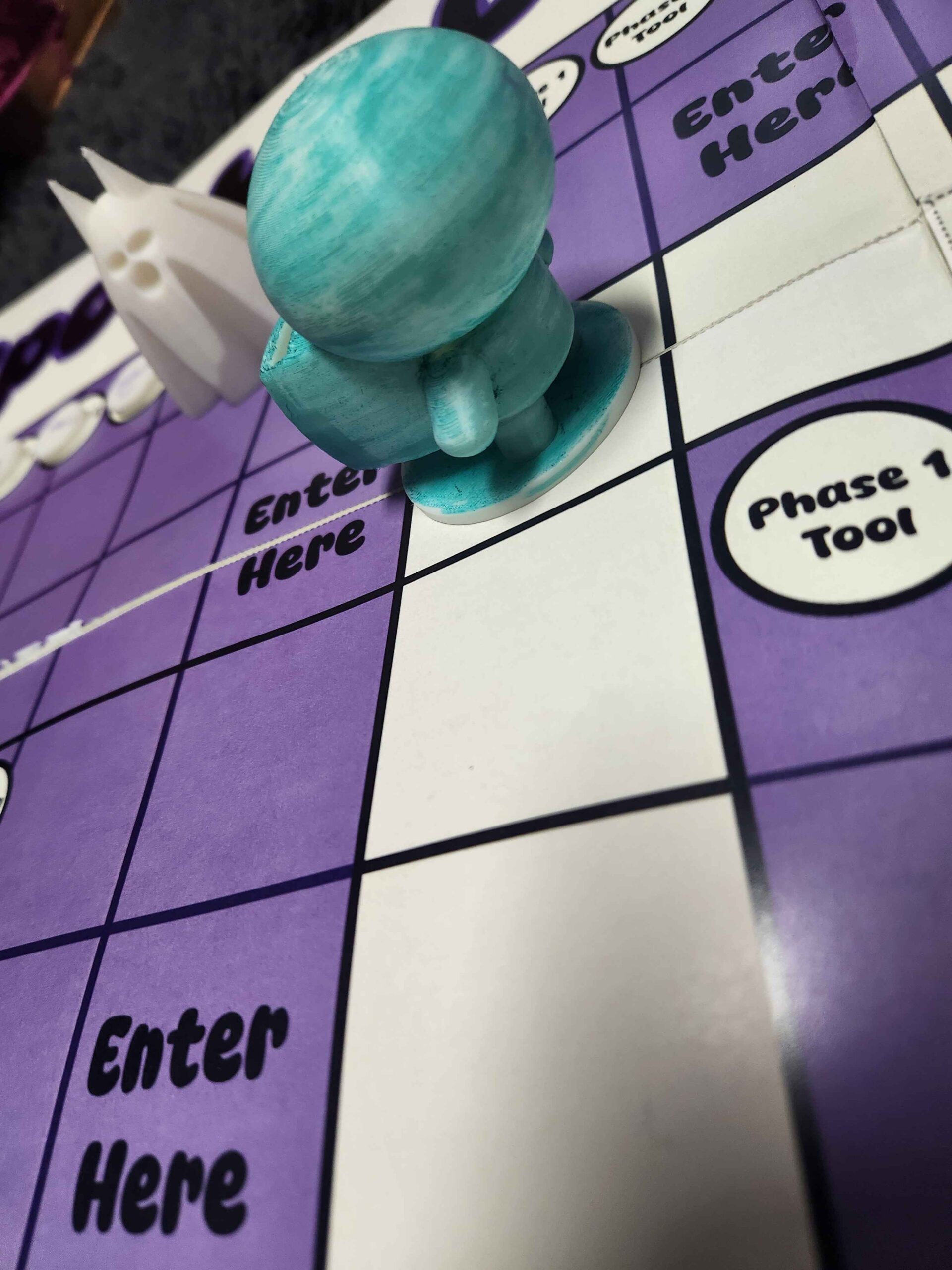
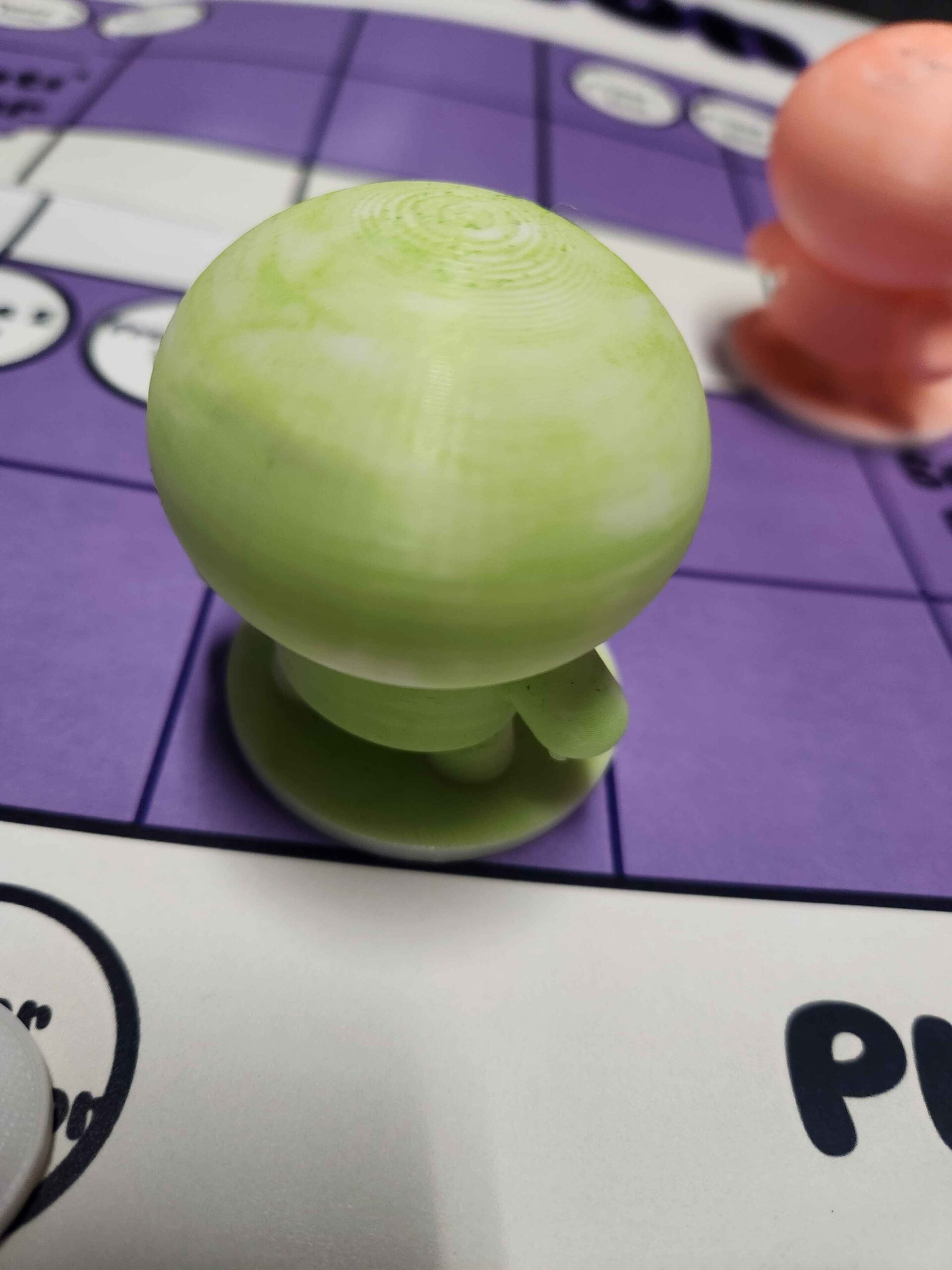
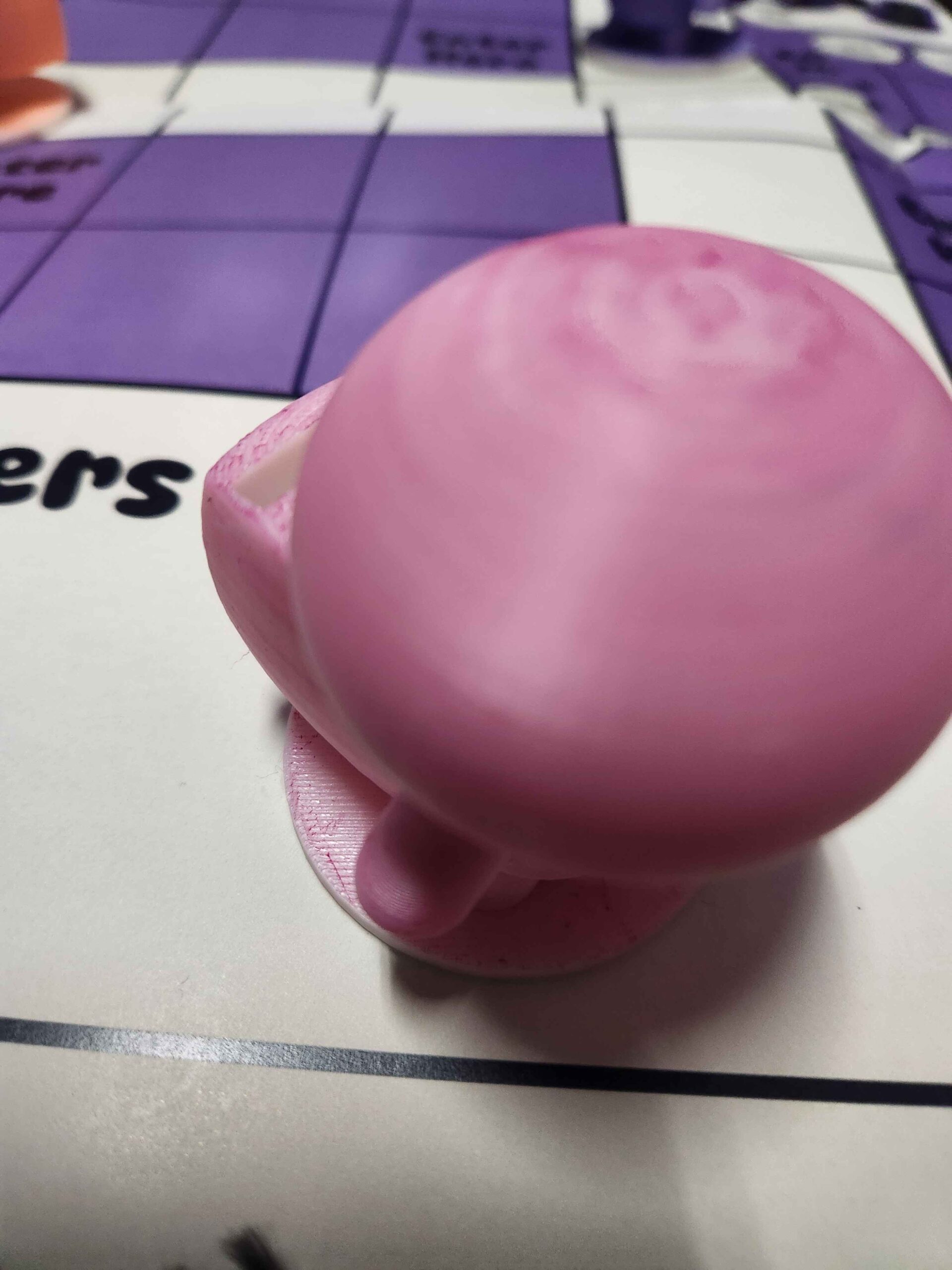
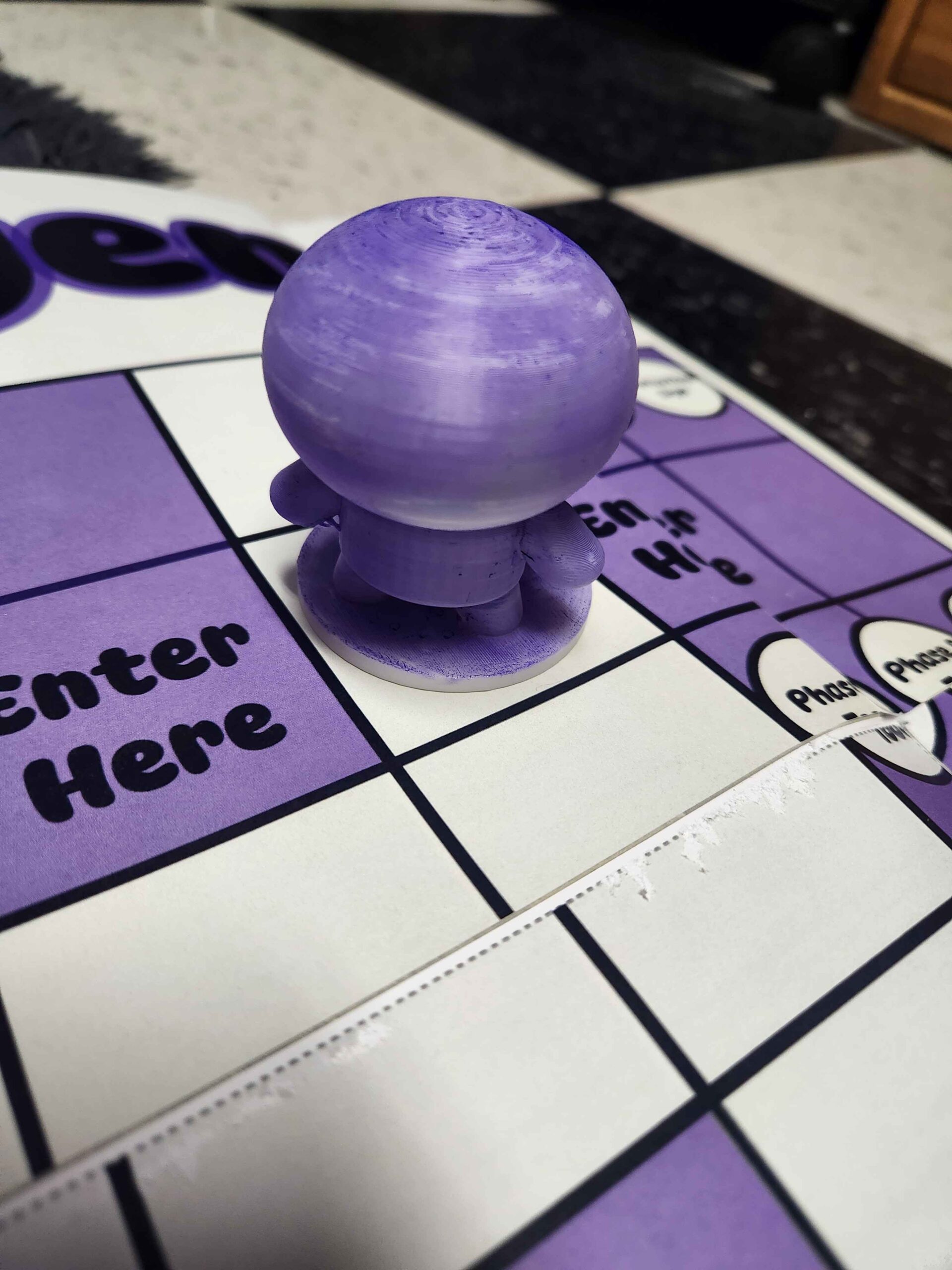
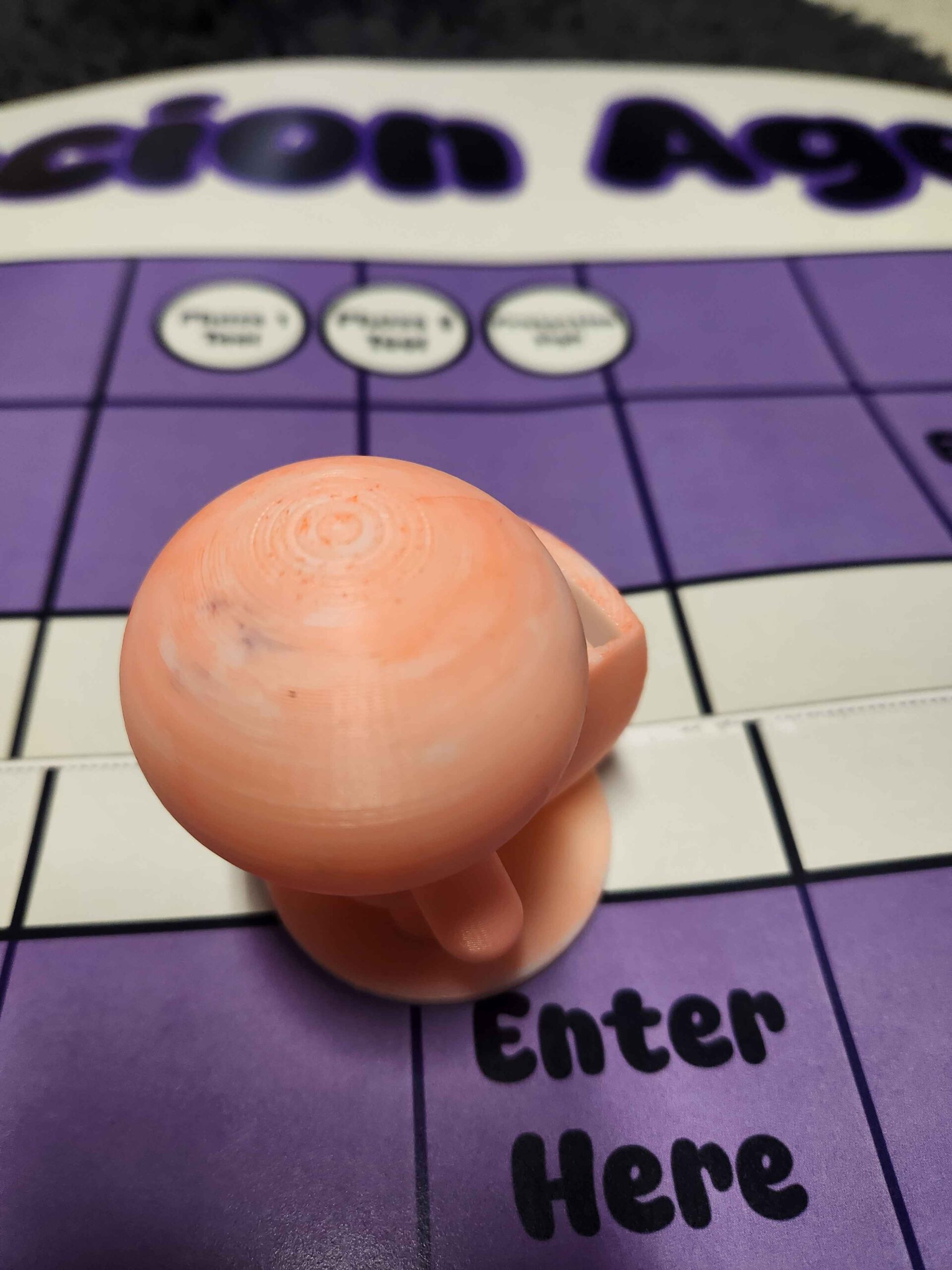
For my final project I deiced to make a board game based on ghost hunting. This was the 3rd attempt for a game like that’s, as previous iterations were tough for users to understand. This one has a better quaily board, colored chacarer tokens and updated rules. I wanted to dye the players, however rit dye was extreamly messy and didnt adhere well, so alcohol based markers were a subsitute, otherwise all pewioces are 3-D printed or cardstock.
Final Thoughts About Boxed In
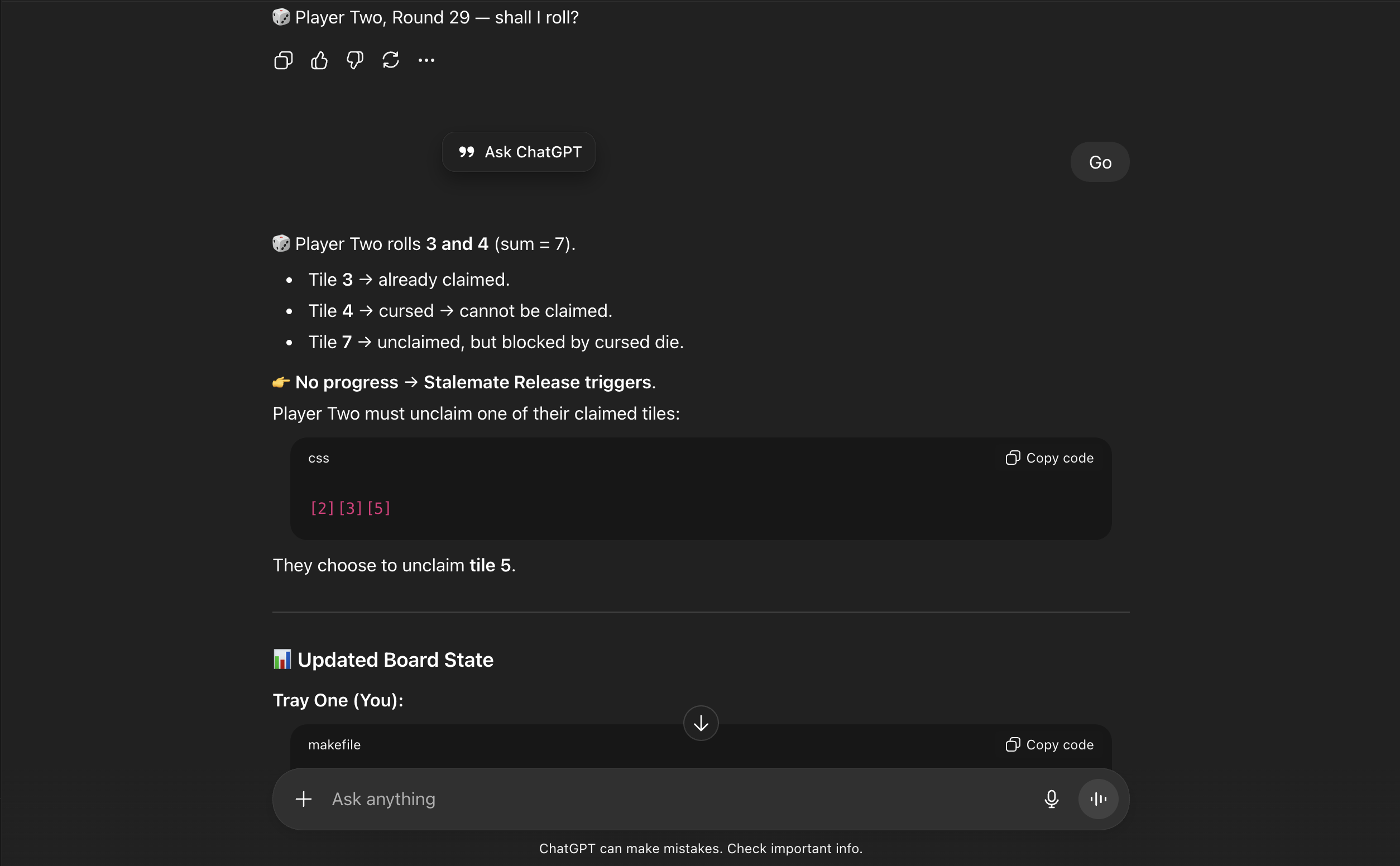
Boxed In came from wondering what a competitive version of Shut the Box might look like. Giving each player their own tray made the game immediately more interesting, and most of the development came from quick playtests with ChatGPT—mainly experimenting with doubles penalties, pacing issues, and ways to keep the game from stalling out.
We found a few solid ideas, like the Stalemate Release rule, but I never quite reached a final version that felt fully balanced. Still, the process paid off. A lot of what we learned while testing Boxed In directly shaped the design of Reactor 21, which grew out of the same experiments but landed in a much stronger place.
In the beginning, both players are just getting their boards started. You roll, claim a few easy tiles, and see what kind of shape your board is taking. It’s mostly about opening things up and seeing where the numbers fall.
As the game settles in, you’re making small adjustments based on what the dice give you. The doubles effects add a little movement, but most of the time you’re just trying to keep your board flexible and avoid boxing yourself into a corner.
Toward the end, there are fewer open spots and each roll gives you a couple of decisions to think through. The Stalemate Release rule helps keep things moving, and you’re mostly trying to keep the board workable long enough to reach your goal.
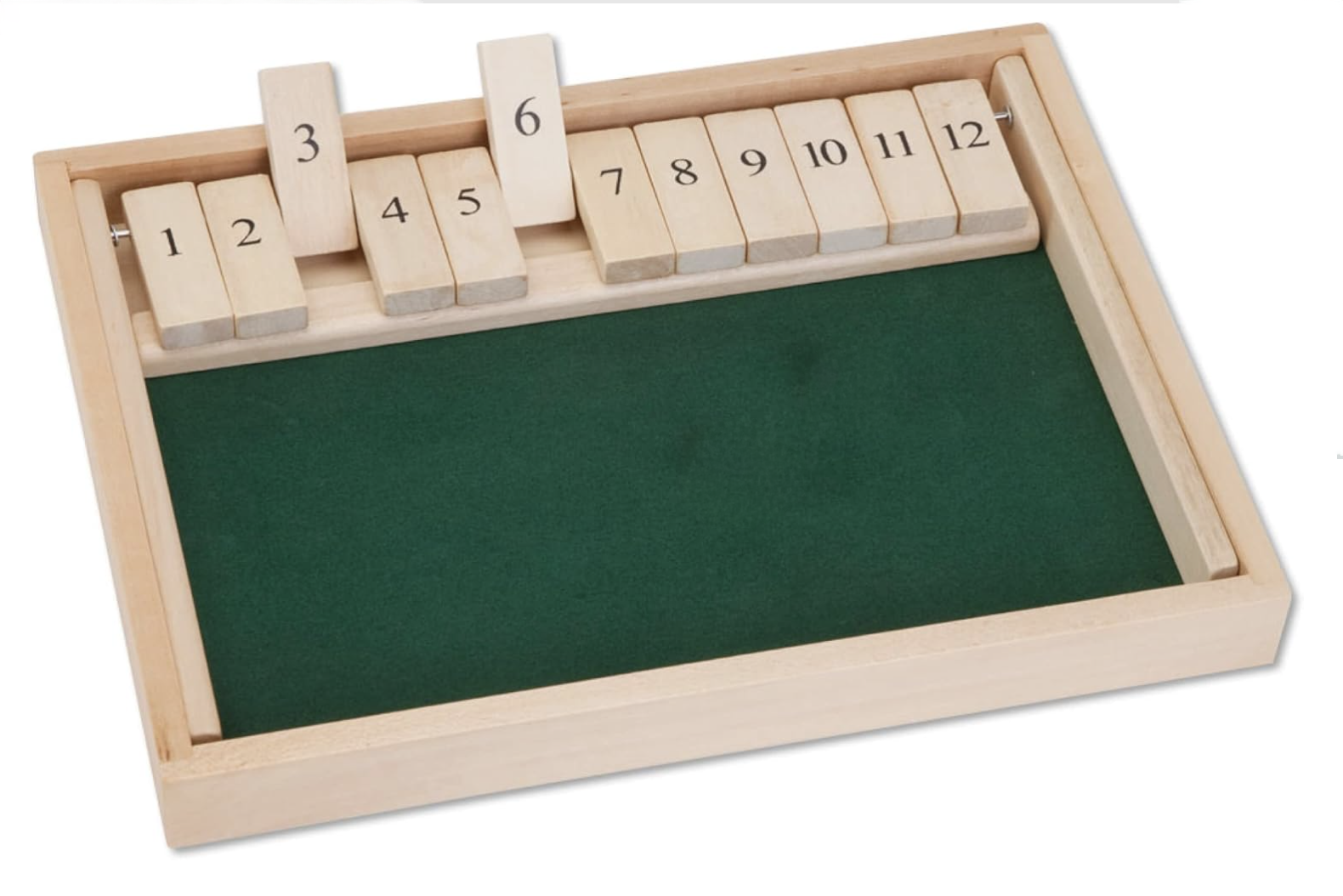
The boards were purchased directly from Amazon. I’ve attached a screenshot of the product photo from the website.
And this is a screenshot of how my playtest with ChatGPT looked on my screen…
Final Thoughts About Reactor 21
Reactor 21 changed quite a bit as I tested different versions of it. The basic idea was always there—two players trying to keep a failing reactor stable—but it took some back-and-forth to figure out what actually made the game interesting. Early versions had the right intention, but some of the mechanics didn’t create the amount of teamwork or pressure I wanted. The game felt like it needed a bit more structure around how instability spreads, what happens during a meltdown, and how the players recover from setbacks.
Most of the improvements came from simply seeing how people reacted to certain moments in the game. Some rules felt too loose, and others were a little unclear in how they resolved. Adding the Nuclear Waste pile, tightening the meltdown rules, and clarifying how cards move between piles helped everything feel more intentional. The goal was always to keep the experience focused on communication and shared decision-making, and those adjustments moved the game in that direction.
During all of this, ChatGPT was helpful for keeping things organized. Any time I adjusted a rule or tried a different way of handling a reactor event, I used ChatGPT to help rewrite the sections cleanly, make sure the terminology stayed consistent, and compare versions so nothing got lost. It also made it easier to step back and look at each revision as a whole instead of just patching small pieces. The mechanics themselves still came from testing and intuition, but having a tool to structure everything made the development process a lot smoother.
Reactor 21 ended up feeling more balanced and readable because of that steady cycle of testing, revising, and tightening the language around the rules.
The three acts of the game are as follows:
Act 1 – Getting your footing
The game starts off pretty gentle. You’re drawing cards, placing them where they fit, and getting a feel for how the reactors behave. Most cards go somewhere without much trouble, and the token tracks are empty, so nothing feels dangerous yet. This is where you learn the rhythm: keep totals tight, stabilize when you can, don’t waste options.
Act II – Things start heating up
Now the reactors are filling up, and suddenly every card matters. A placement that was easy earlier now feels risky. You’re choosing between Instability and Meltdown more often, and both choices actually hurt. The Nuclear Waste Pile kicks in and you start to feel the deck thinning out. This is where the team talks things through, plans moves, and tries to stay one step ahead of the system.
Act III – Hold it all together
By the end, everything’s tense. One bad draw can end the whole run, and every card feels like it might be the last piece you need—or the thing that breaks the grid. You’re trying to lock down those last stabilizations before either track fills up. When the final reactor hits 21, it feels earned; if the system blows, it’s usually by a hair.
(Final thought created with the assistance of AI, using my input)
Final Thoughts On A Game About Color, More Or Less
As I refined A Game About Colors, More or Less, the color system became one of the most important aspects of the design. Early versions relied on fully saturated colors, which made the comparisons visually clear and, in many cases, too easy. During testing, it became obvious that players could identify the stronger or weaker color channels with very little effort, which reduced the level of deduction the game was meant to encourage.
To address this, I shifted the palette to include added black (K) values between 30% and 70%. Lowering saturation created a more subtle, more challenging set of swatches. Colors that once felt predictable became more ambiguous, and players had to make more thoughtful evaluations based on small differences, rather than relying on obvious saturation cues. This adjustment aligned the visual experience more closely with the intentions of the mechanics.
Throughout the development process, ChatGPT was used as a collaborative tool to help build, refine, and organize the rule set. It played a role in structuring the language of the rules, maintaining consistency across versions, documenting changes, and evaluating how each update affected clarity and player experience. It was also useful for keeping a clean version history and ensuring that revisions—such as the shift to a reduced-saturation deck—were incorporated accurately and consistently. The core design decisions remained my own, but ChatGPT helped make the documentation process more efficient and reliable.
This combination of iterative testing and structured rule development resulted in a color system that better supports the game’s deductive, perception-based gameplay.
Act 1 – Getting a feel for the deck’s color language
Early on, players are mostly just getting acquainted with how the deck moves. They make a guess, flip the card, and start noticing which kinds of shifts catch their eye — a bump in brightness, a little pull toward red, or a change in saturation that didn’t seem obvious at first. It’s basically a warm-up for the eyes, where players start realizing that the game isn’t about naming colors; it’s about noticing how they behave.
Act 2 – Learning what actually matters in a swatch
Once everyone has a few cards in front of them, they naturally start leaning on simple bits of color theory — whether they mean to or not. Some players pay attention to value first, because brightness jumps out. Some start tracking saturation because muted colors hide shifts better. Others zero in on hue and notice how small moves between neighbors (like teal to blue-green) feel trickier than big jumps. This is where players start building their own internal system for judging the cards, one clue at a time.
Act III – Stay consistent with the system you’ve built
The game doesn’t suddenly get more intense toward the end — it just asks you to stick with whatever approach you’ve developed. By this point, players have their own way of reading the swatches, and the last part of the game is about trusting that instinct. Maybe you’re watching for low-saturation curveballs, or maybe you’re checking how the brightness sits against the last few cards you saw. It’s steady, calm decision-making — more about consistency than pressure — and the satisfaction comes from seeing how well your eye held up across the whole run.