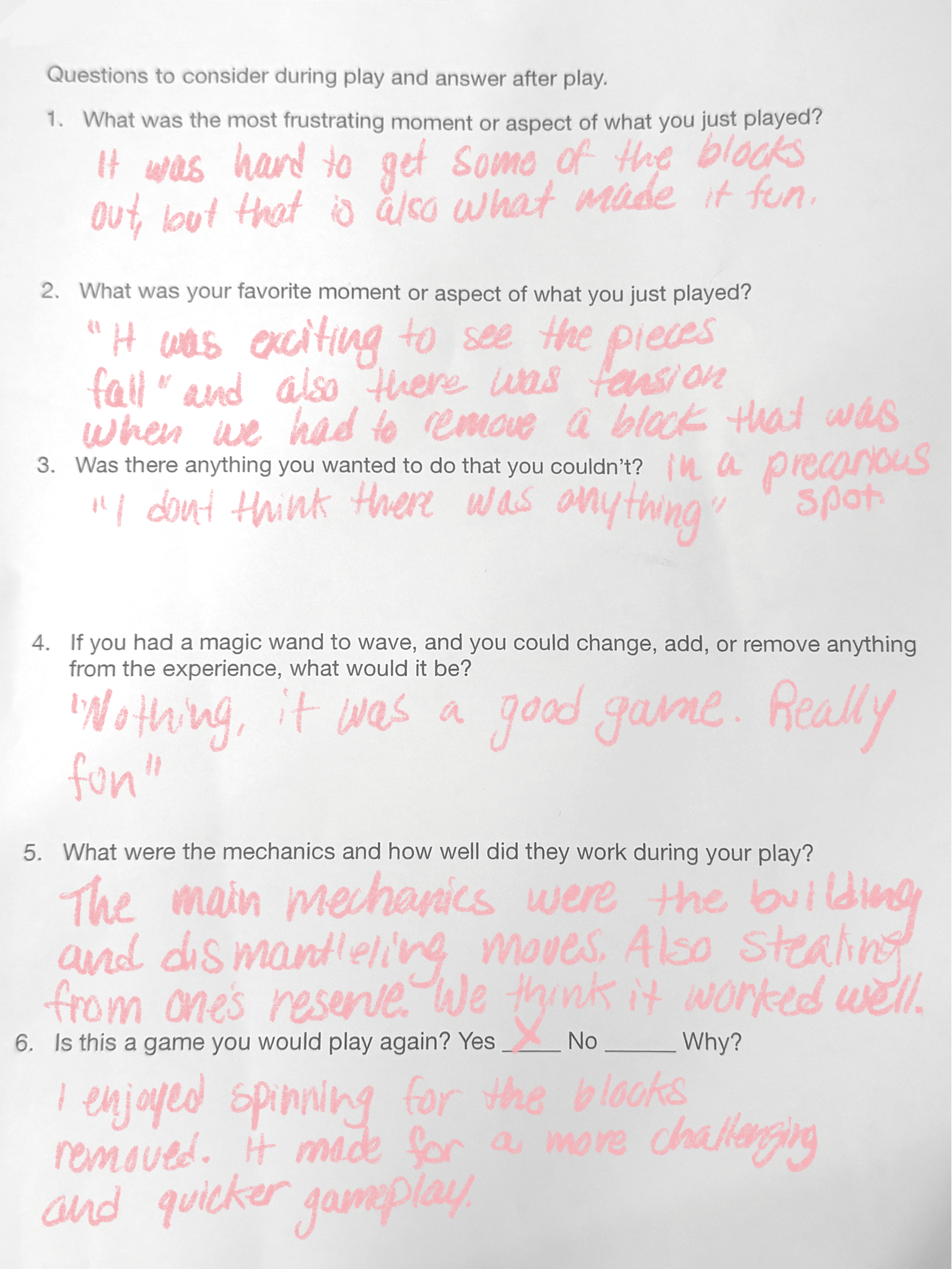
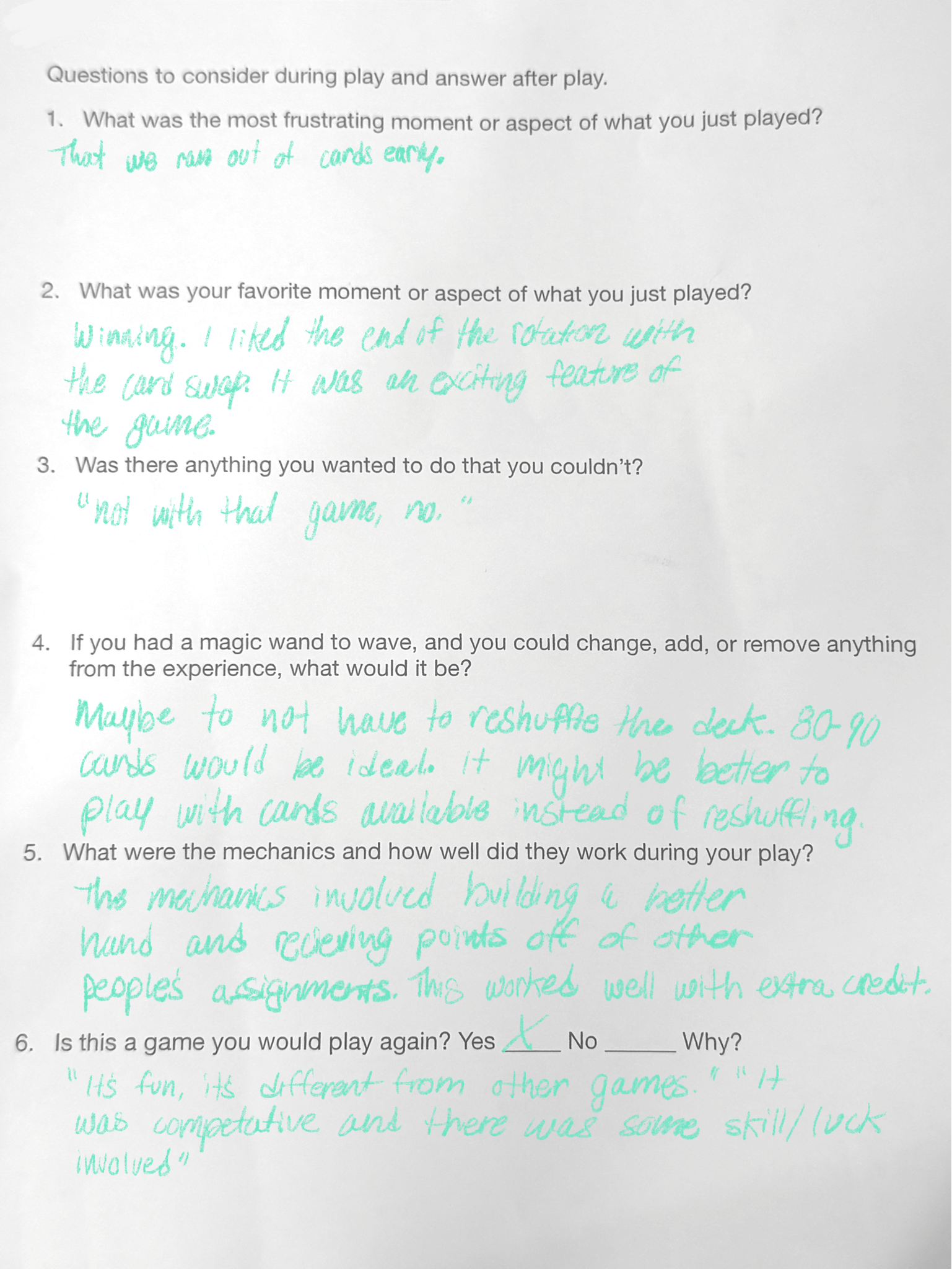
Attached is also a player’s review sheet for both of my competed games. I asked my family for their feedback and took these notes before my final revisions.
Game 1 – Deadline:
The biggest changes I made to my card game throughout the semester was clarifying the rules and balancing the final scores. I learned that adding illustrations was a more effective way of conveying the layout and specific objectives. I also took note of any confusion during the gameplay experience and made sure that my updated rule sheet reflected these notes from playtesting. In my next iteration I would test out the scoring of consecutive cards of different suits, as well as creating a specialized deck of different classes (Math, English etc.). I also need to expand on the rules regarding extra credit, and building off of extra credit to accumulate points for a “completed assignment” in the game. Playtesting my first game taught me to be thorough with filling these gaps and anticipate questions players might have, especially if they have no experience with Gin Rummy suit building mechanics.
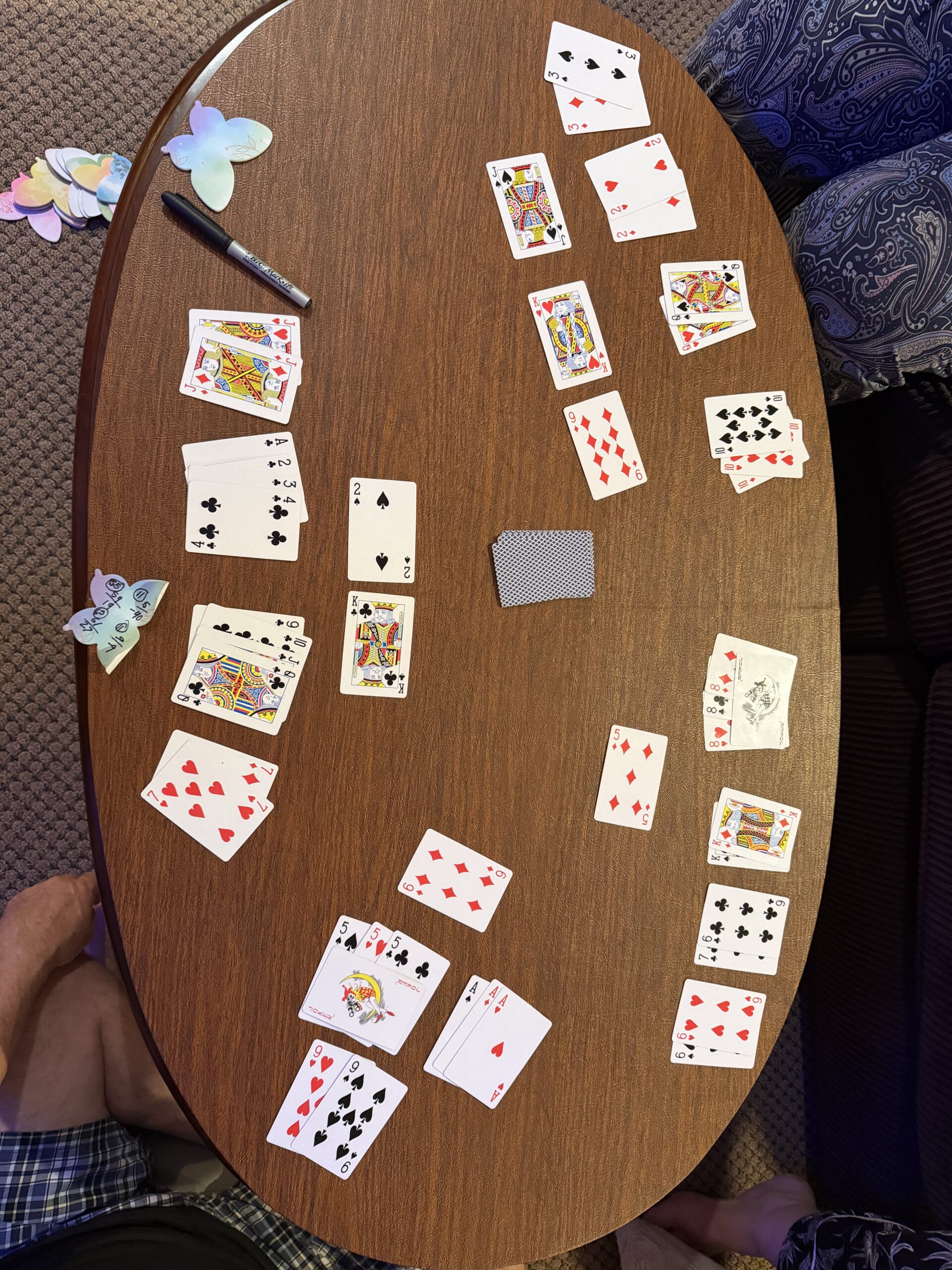
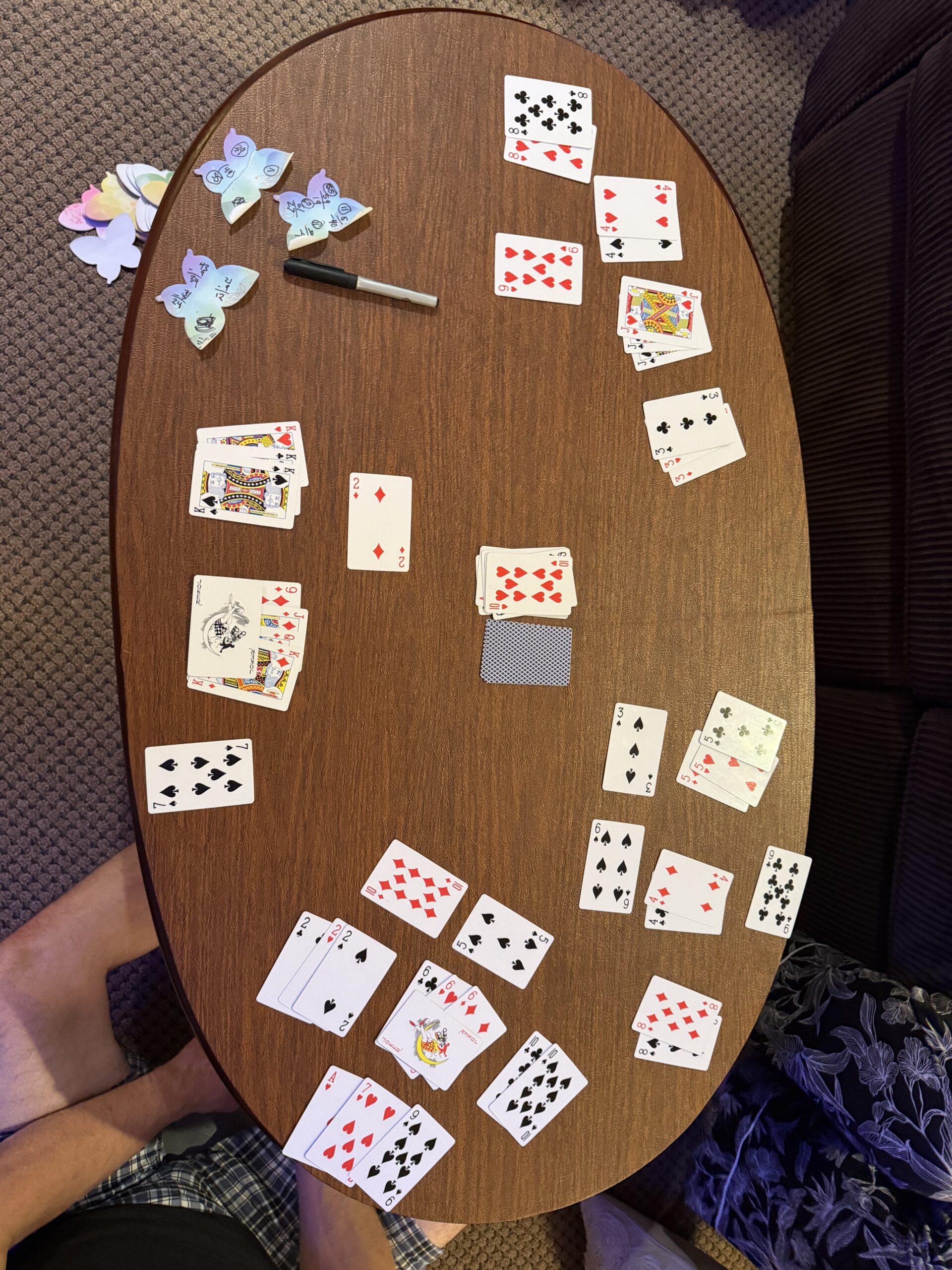
Game 2 – Witch’s Brew:
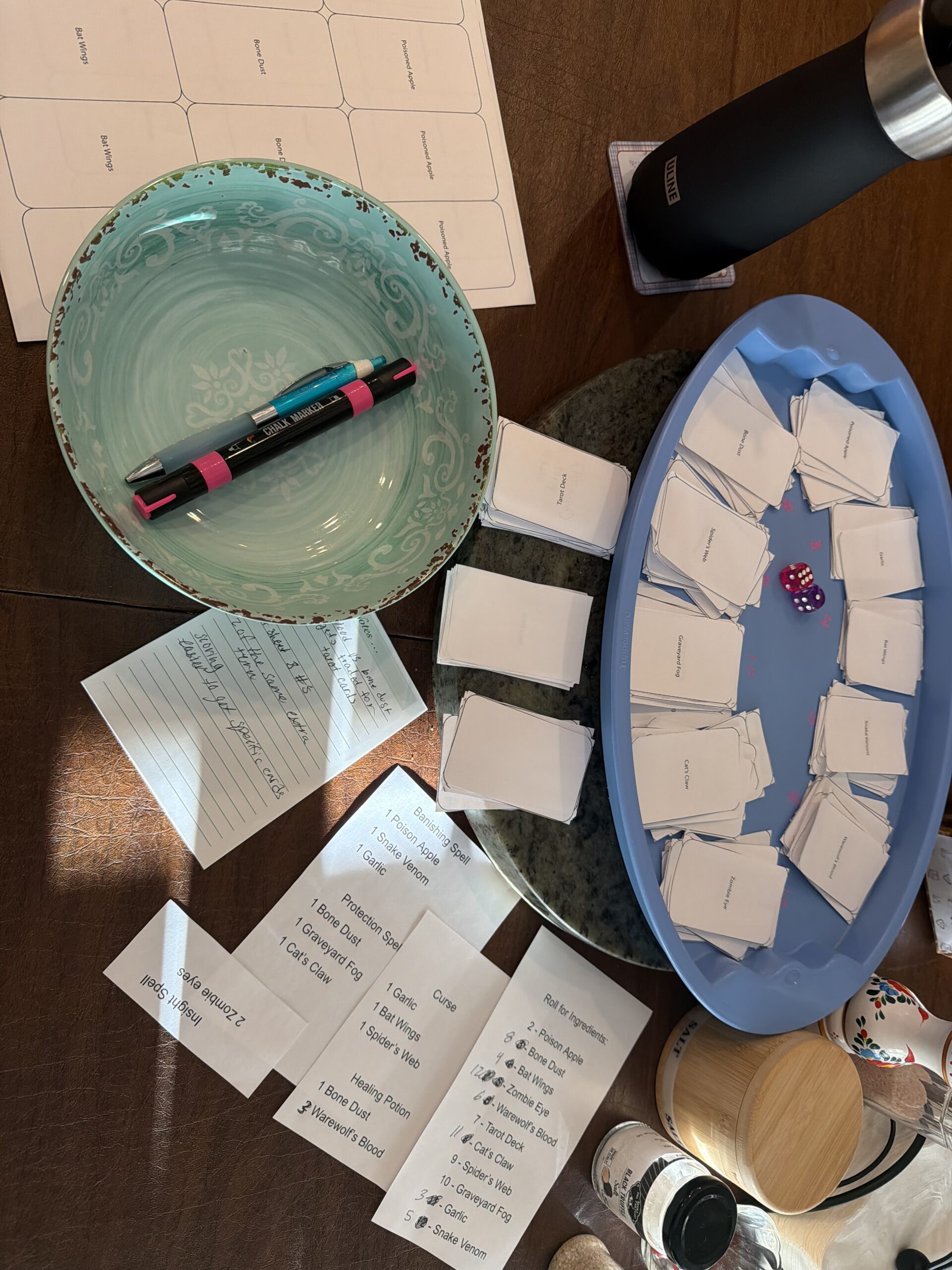
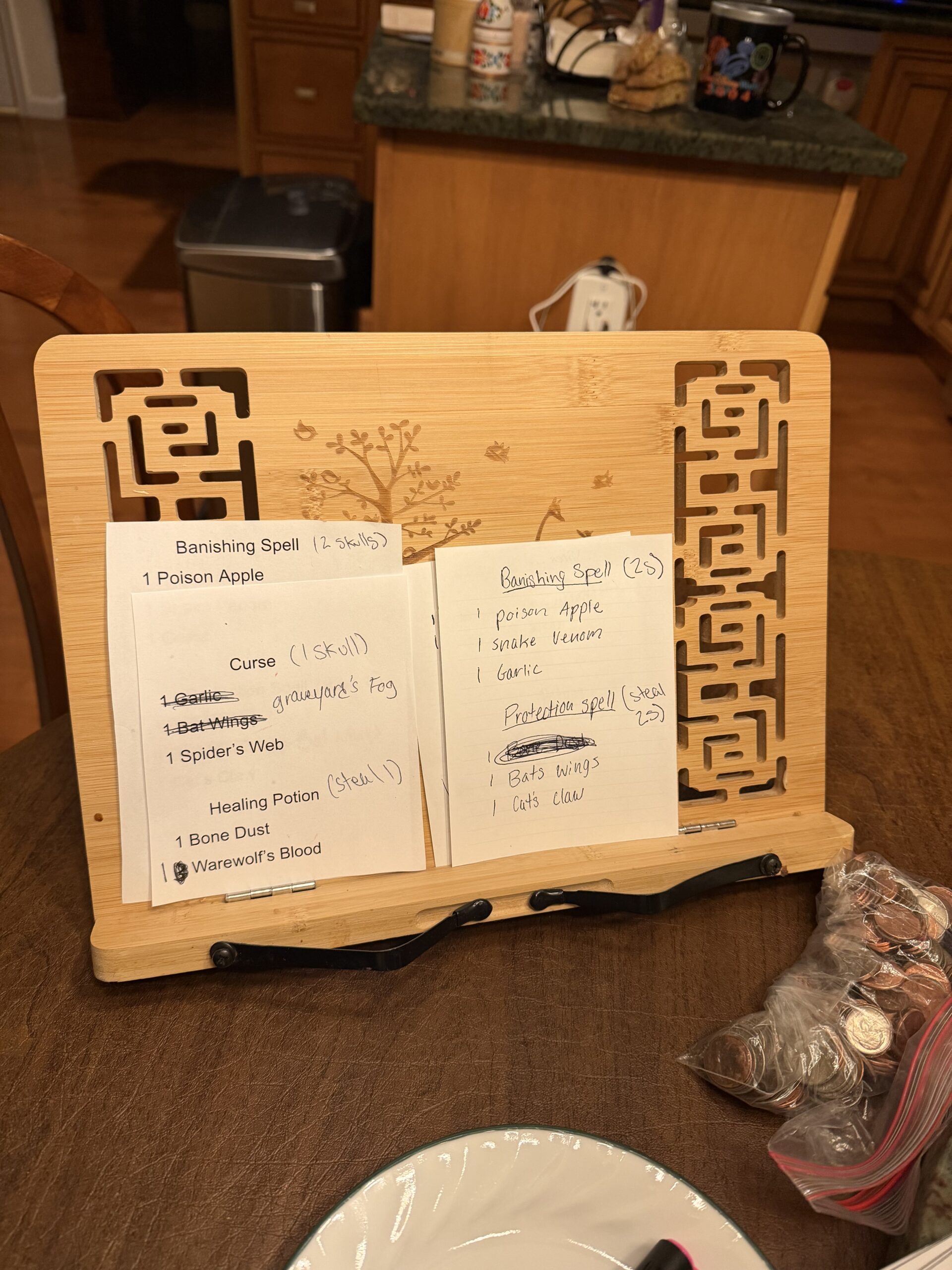
The first iteration of this game had a lot of room for improvement. I explored the use of dice, inspired by Catan, as well as an alternative version using a Game of Life board game spinner (1-10). Though the spinner would have worked for gathering the necessary ingredients, I attempted to balance the game with the probability curve of using two dice. I ended up simplifying the spells, adding action cards for rolling a 7 (the most common combination), and adding special benefits for rolling a 1 or 12 (the most rare combinations). In the next version of this game, I would test out a board more similar to Catan for balancing. Playtesting I learned about game pacing, and managing player frustration.
Game 3 – Takedown:
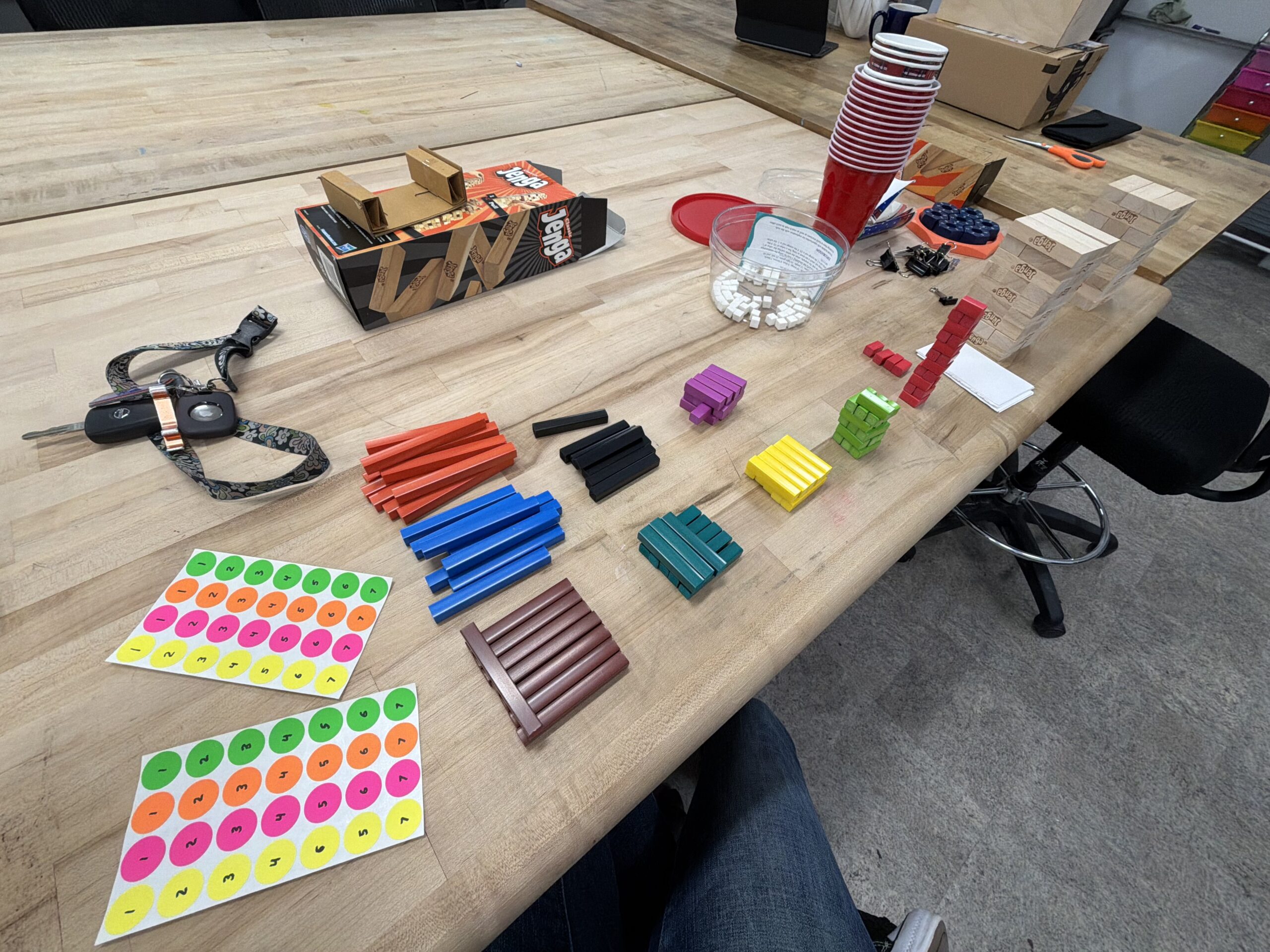
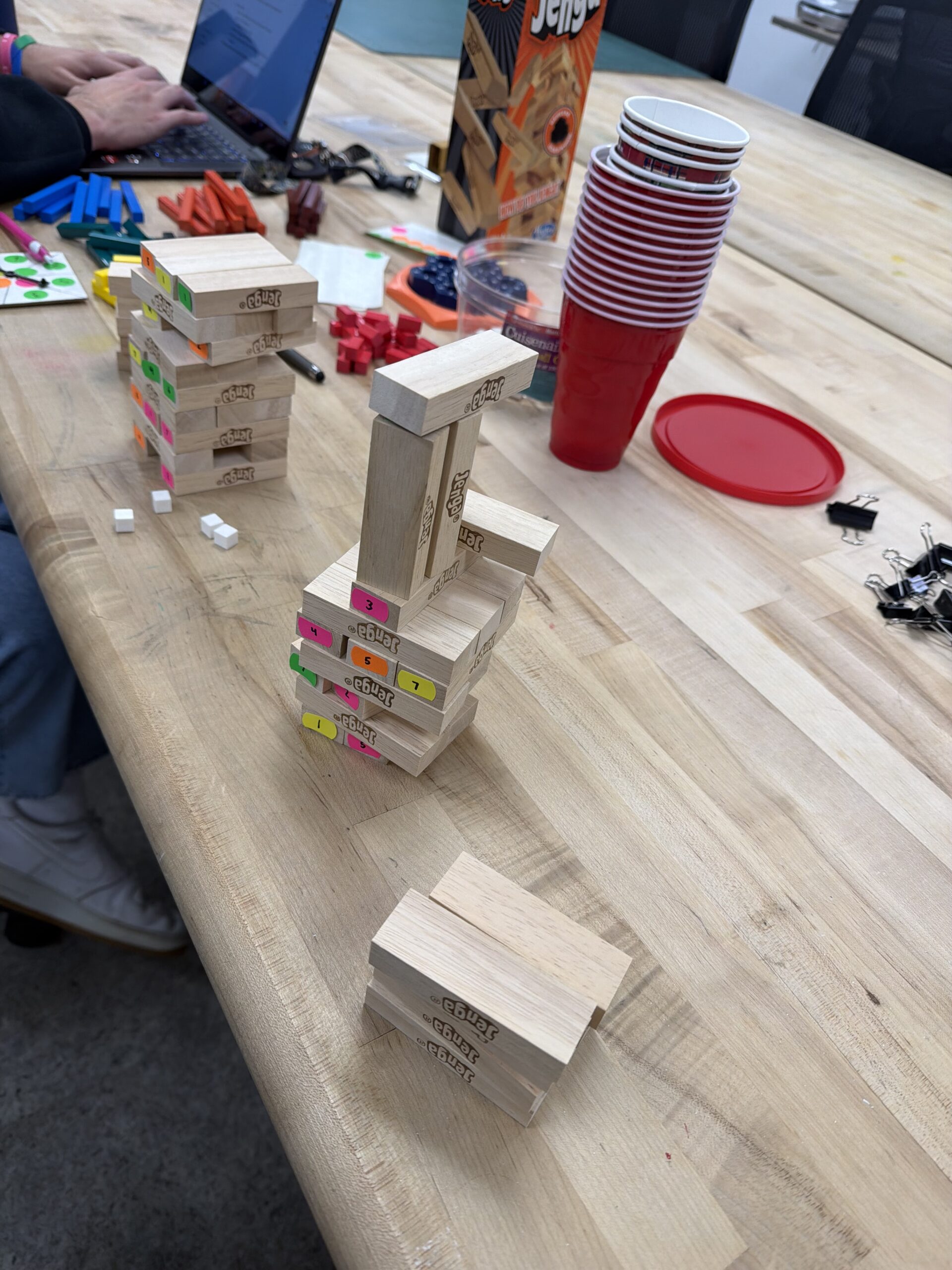
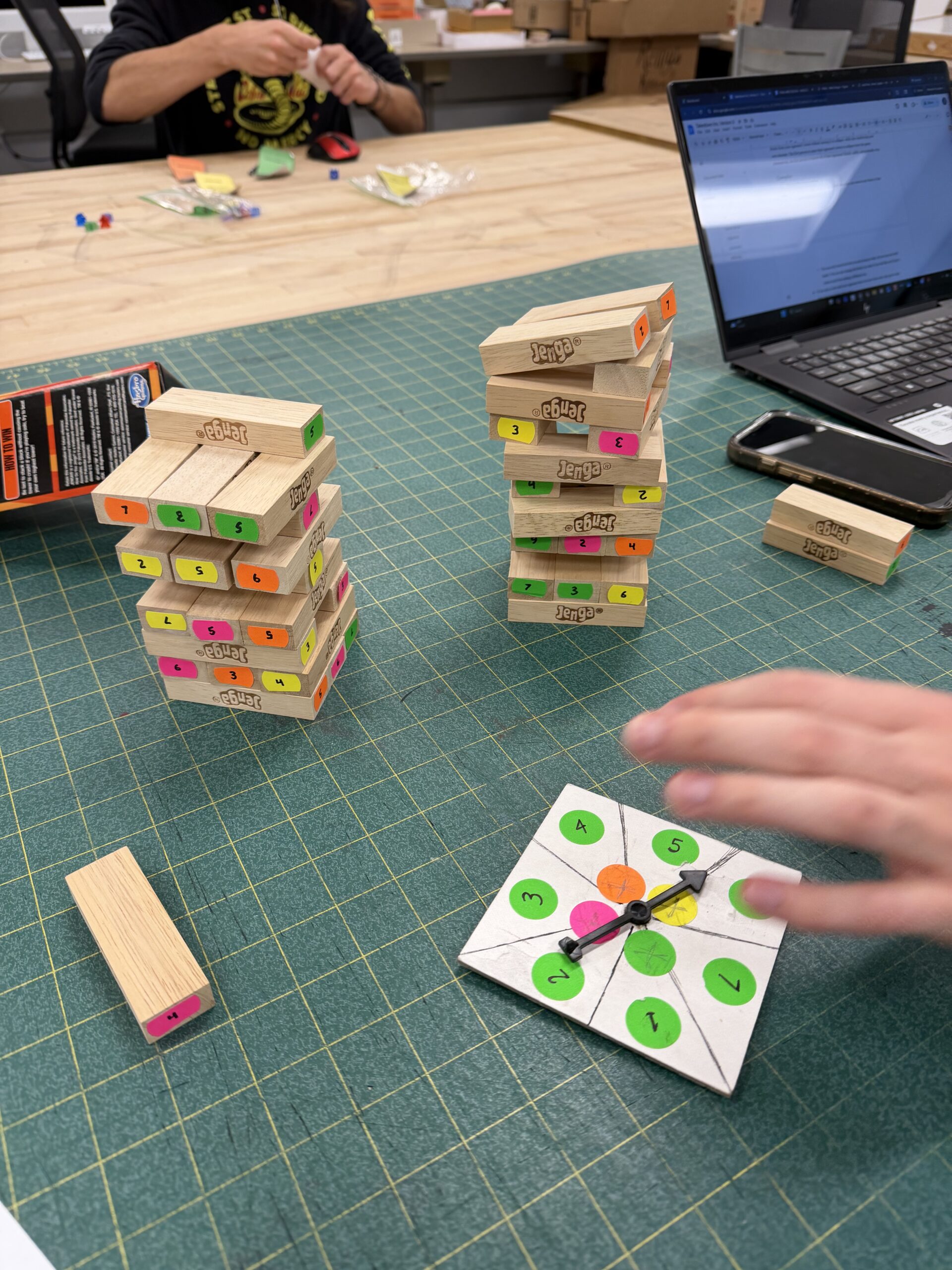
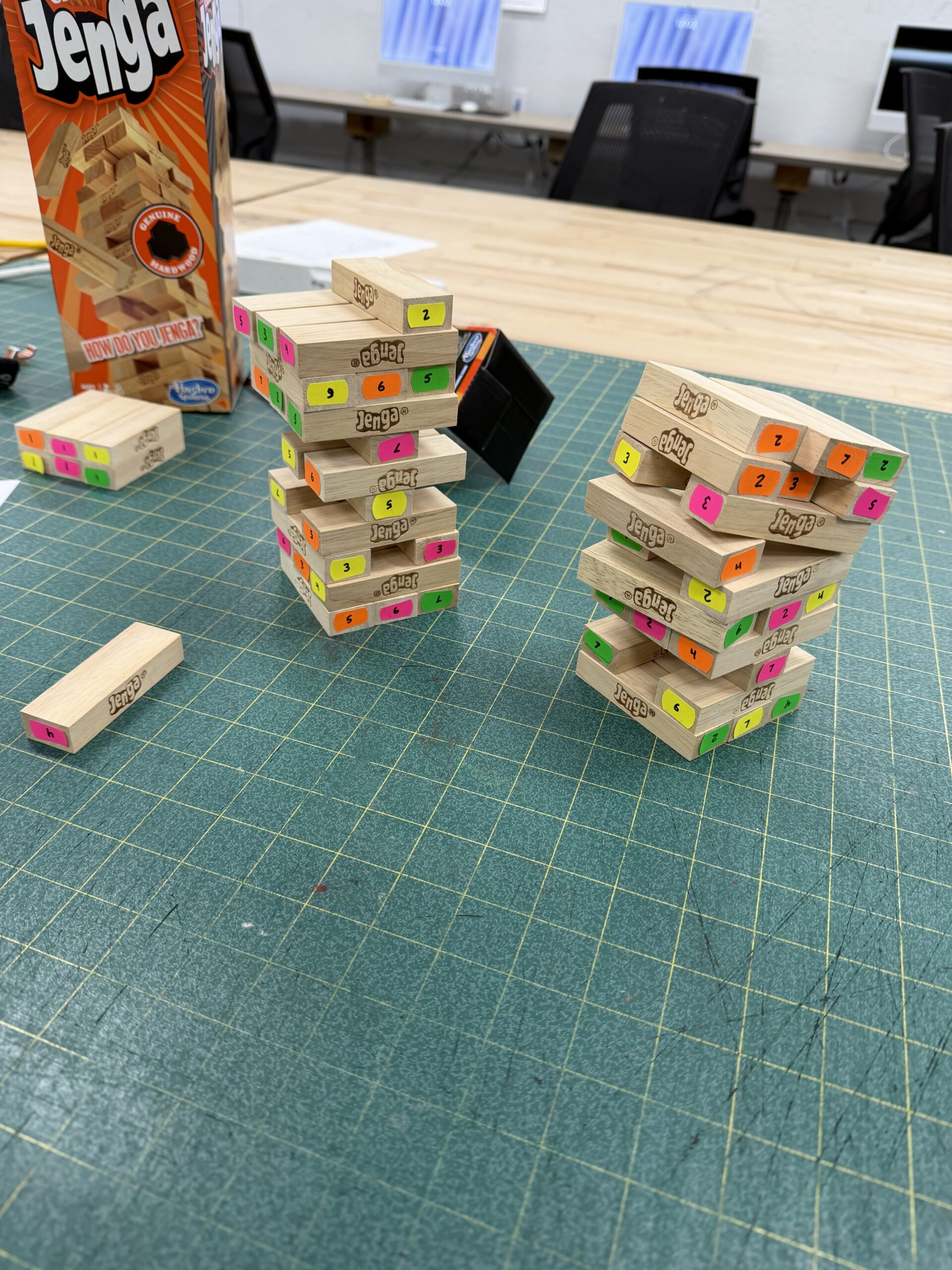
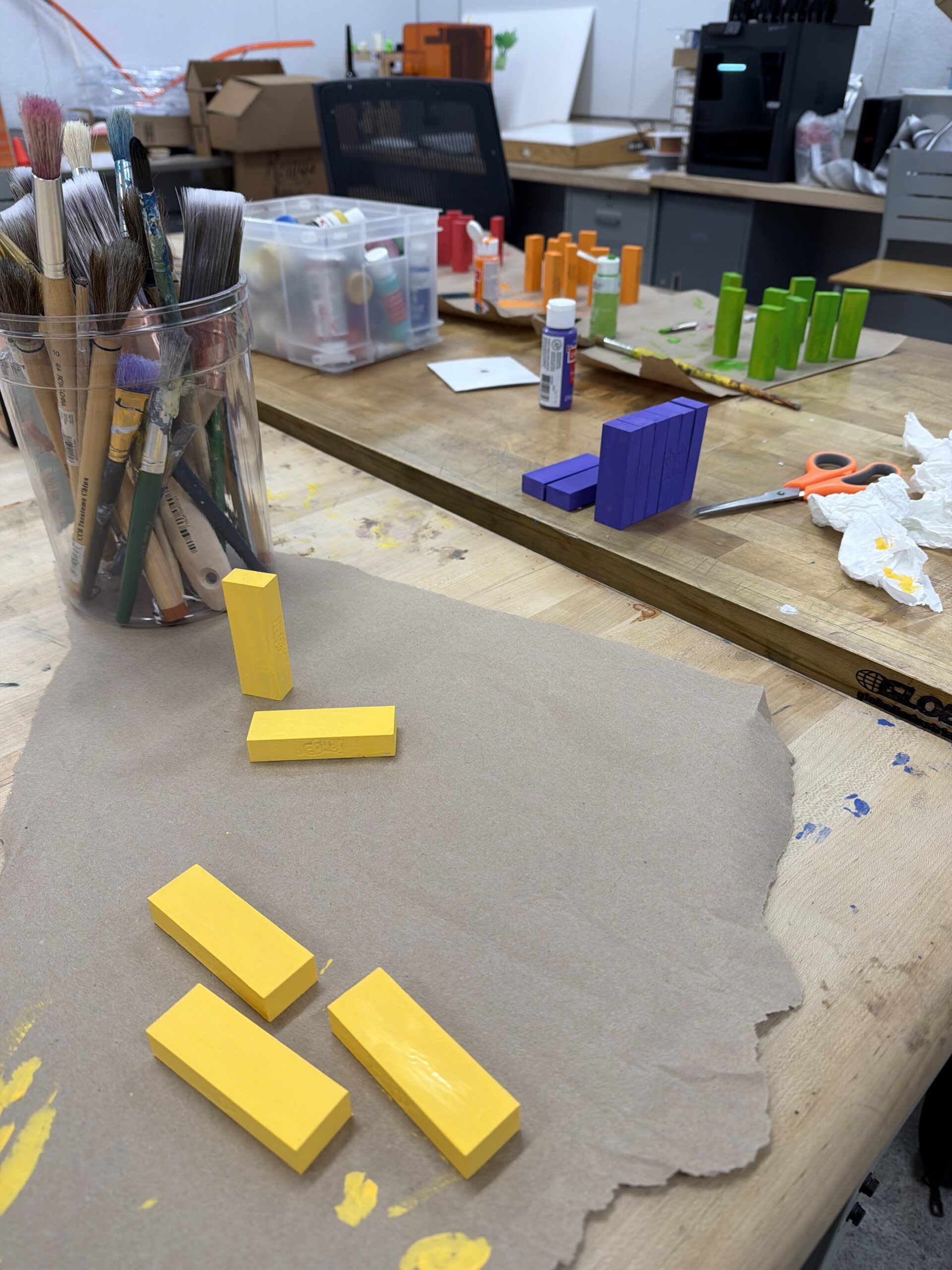
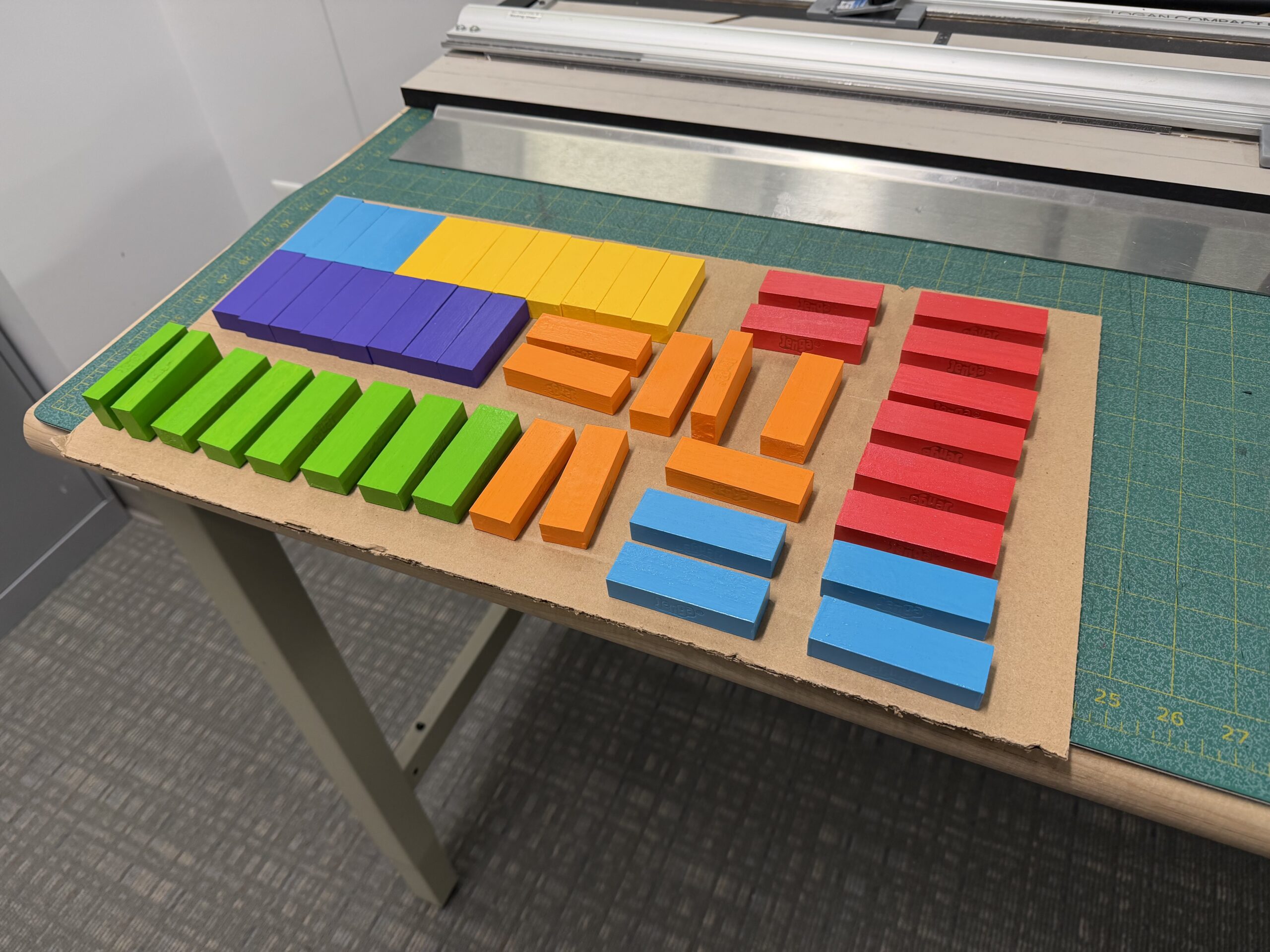
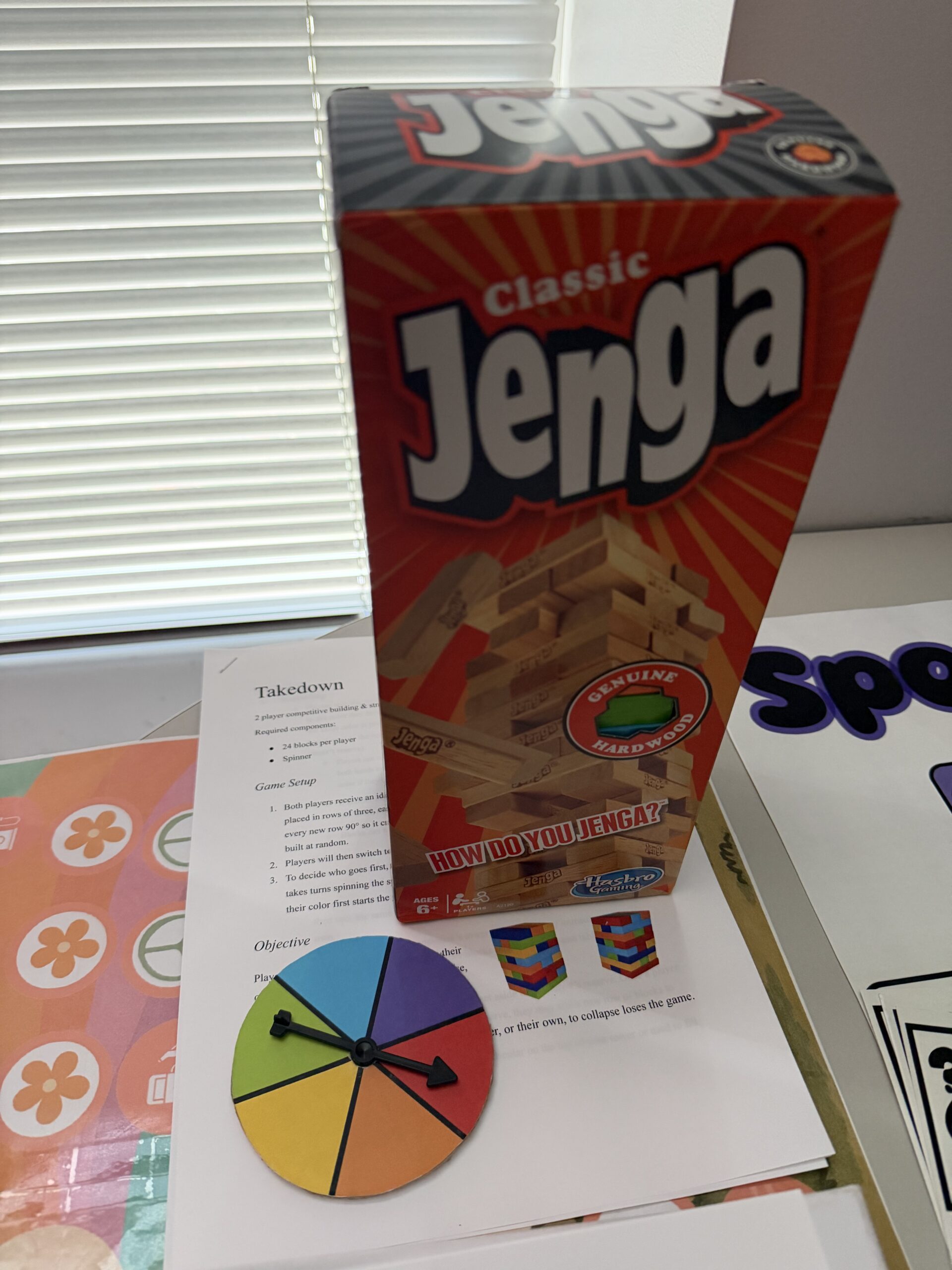
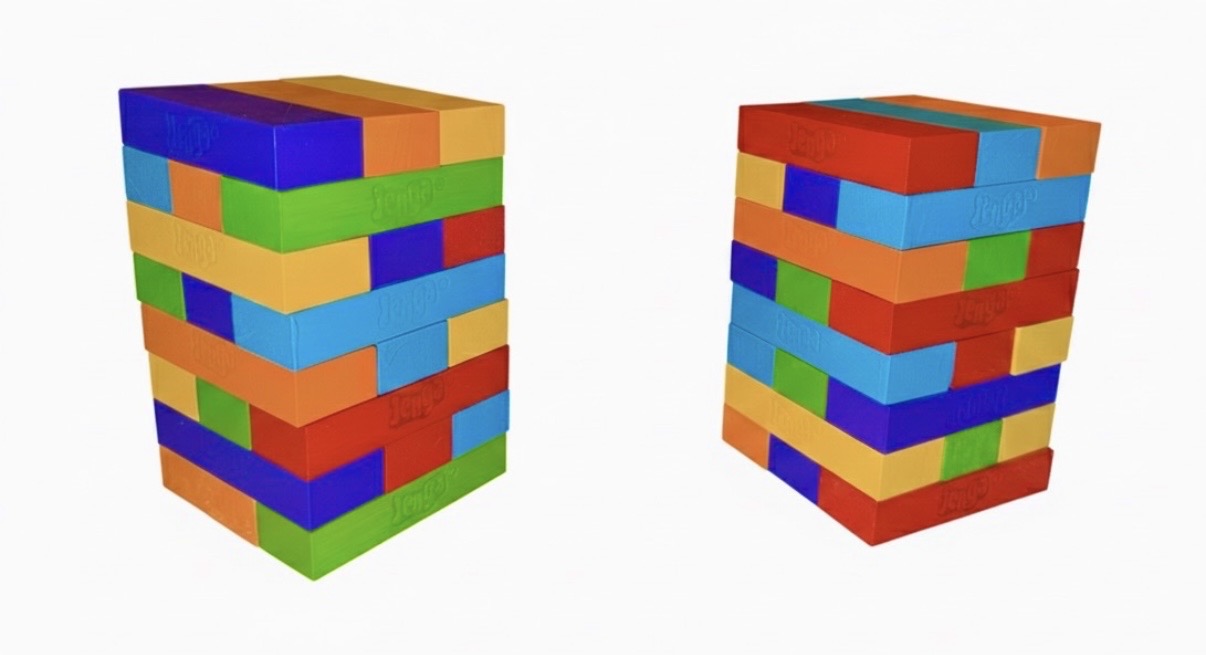
This was our two player game. Originally we used a number system for the blocks, but found that colors would be easier to identify on all sides of each block. We also removed six blocks from the original Jenga game to account for the height of the towers and chosen number of blocks per color. We then worked on crafting the blocks, which were painted with acrylic and then spray painted with a satin finish, and our matching spinner. For the spinner, I used a heat reactive glue sheet (I forget what this process is called) and baked a printed image onto the surface. This was easier than I would have imagined, and I believe it game the prototype a finished look. As for the gameplay, we defined and redefined how many blocks would have to fall for the players would lose the game, and how blocks could be stacked. In the next version, I would like to incorporate wedge blocks like we had talked about, and maybe special weighted blocks so that support the building mechanic and potential for sabotage.