Was it fun? I enjoyed it, very simple game with minimal items needed to play
What were the player interactions? The interactions would be throwing the ball at one another and creating rules for each other.
How long did it take to learn? Seconds
What was the most frustrating moment or aspect of what you just played? The most frustrating part would be if there’s too many rules.
What was your favorite moment or aspect of what you just played? My favorite moment is when we realized you can just end the game by saying you win.
Was there anything you wanted to do that you couldn’t? No
If you had a magic wand to wave, and you could change, add, or remove anything from the experience, what would it be? Nothing
Is this a game you would play again? Yes _____ No ______ Why. Yes because it’s a simple and fun game to play.
Analyze the game using the 3 act structure. Get ball, make rule, throw ball
What are the collaborative and or competitive aspects of the game? I’d say there’s no competitive aspect, but it’s collaborative in the way of making rules together.
What is the game’s metaphor and which of the game’s mechanics standout?
Describe the game in 3 sentences or in the form of a haiku. It’s a fun a simple game to play. Fun to add rules. Easy to learn the game.
Digital Pet ( you get to pick) you have to maintain its health. Feed it , bath it , play with it, hydrate, comfort it, teach it trick, etc.
You can get more pets the more you take care of it.
If you don’t take care of it your pet will be lonely and will just be sitting on your device waiting for you to come back.
Civilization game. Relaxing Garden game where you have to snip, grow, build up on your garden. The more you expand the more you grow and enhance your garden.
Merge Game (Turtle Merge) merging turtles to different breeds/hybrids.
The more you merge the more coins, and points you get.
Endless levels
Police game once you get a call you have to attend to the emergency once you complete the task you upgrade to get employees and upgrade to different materials to help you complete your tasks.
You have endless calls and scenarios to attend to.
Dog walking simulator
some dogs are easier to walk then others
the more you complete the walks the more materials you get to walk the dog while painting your well being to
upgrading to better shoes, better leash, doggie bags, etc.
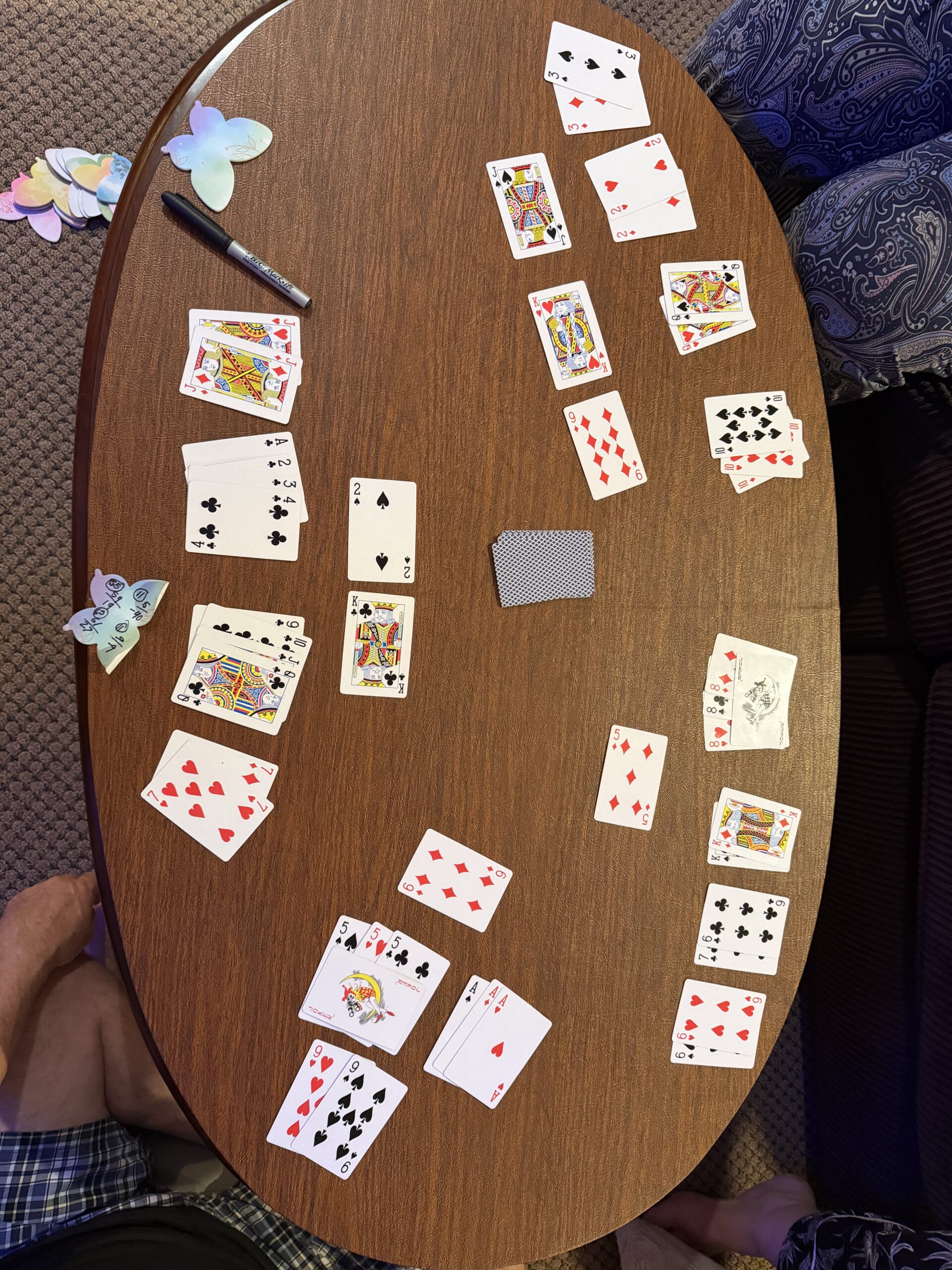
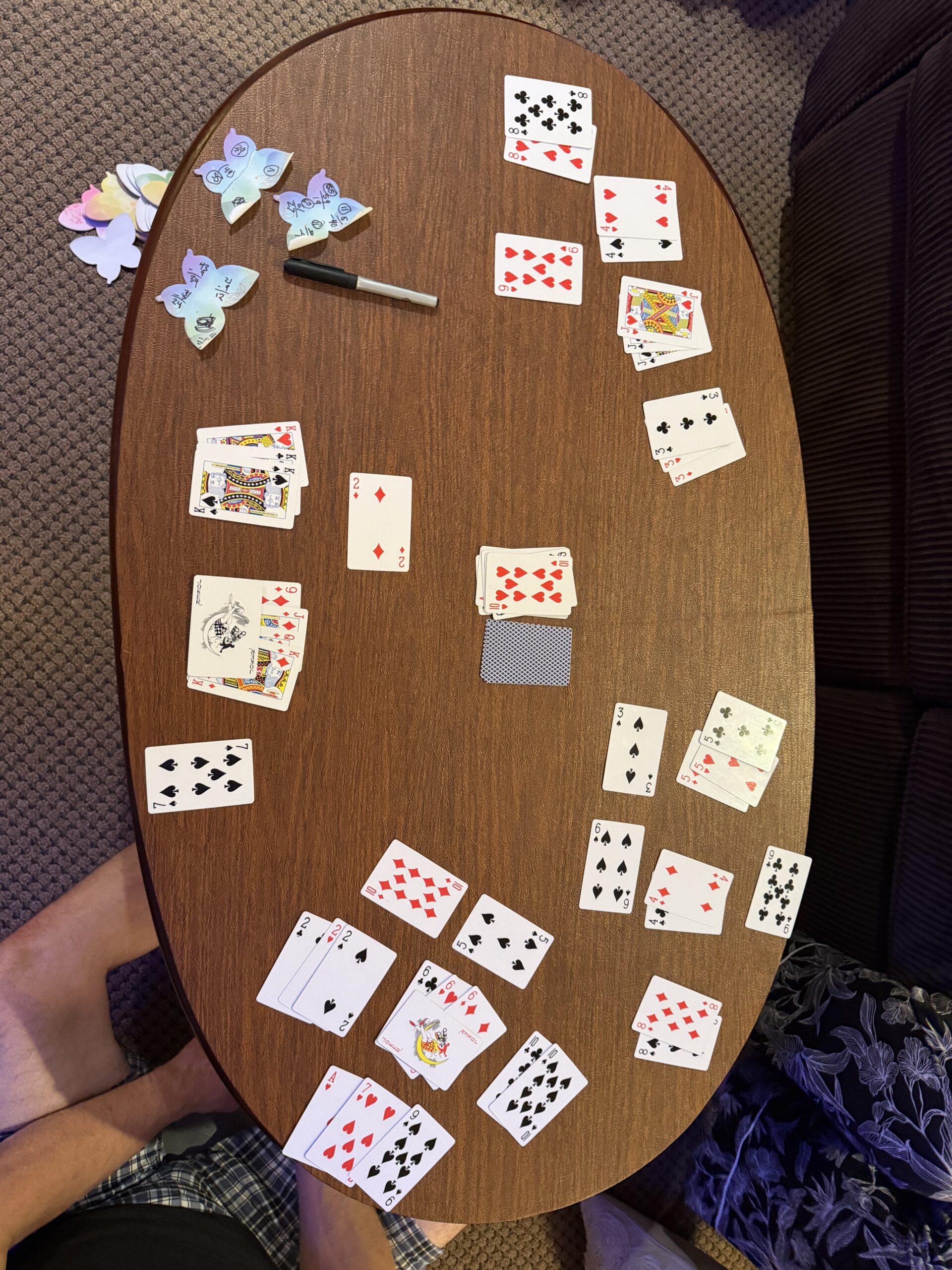
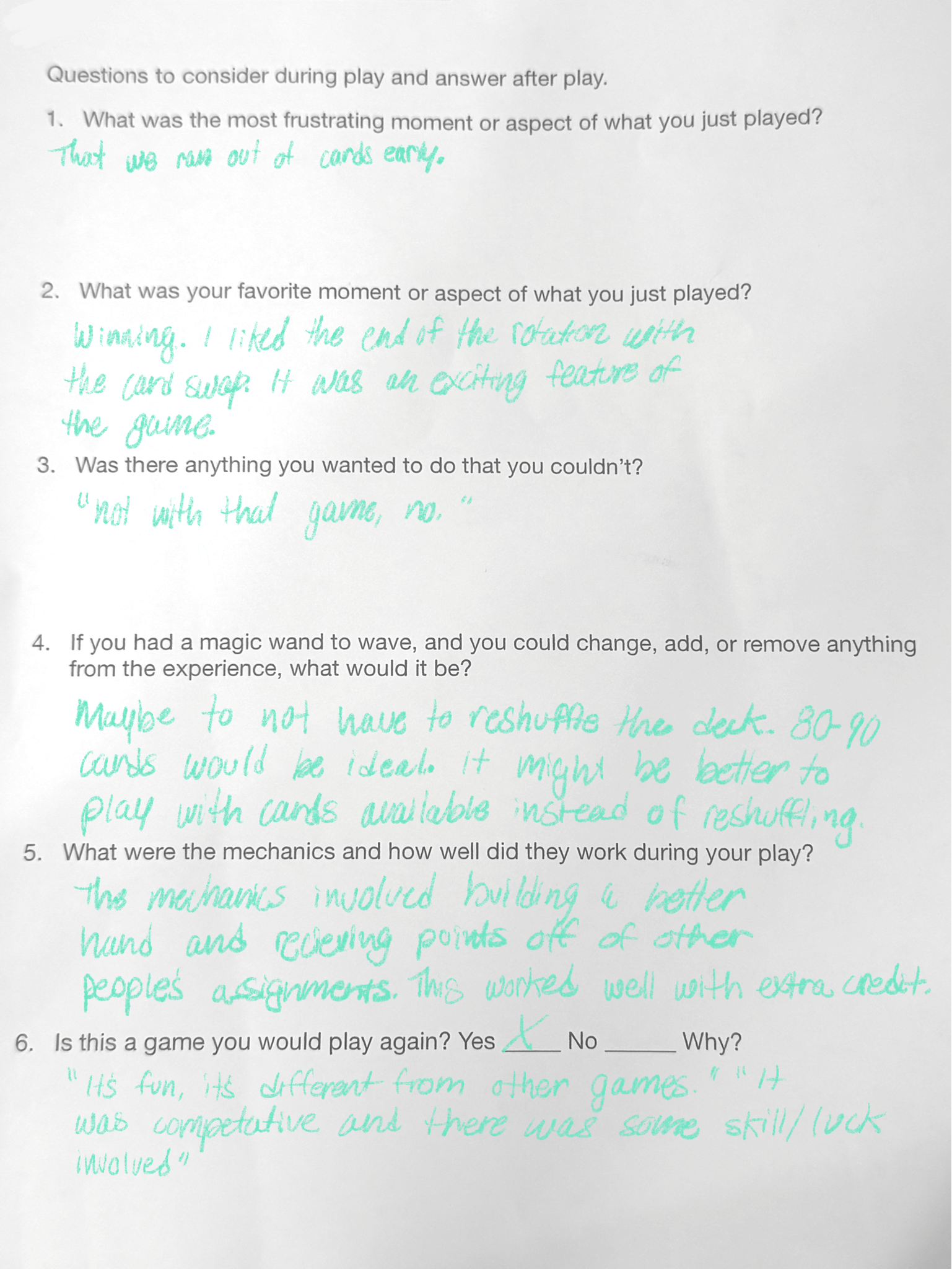
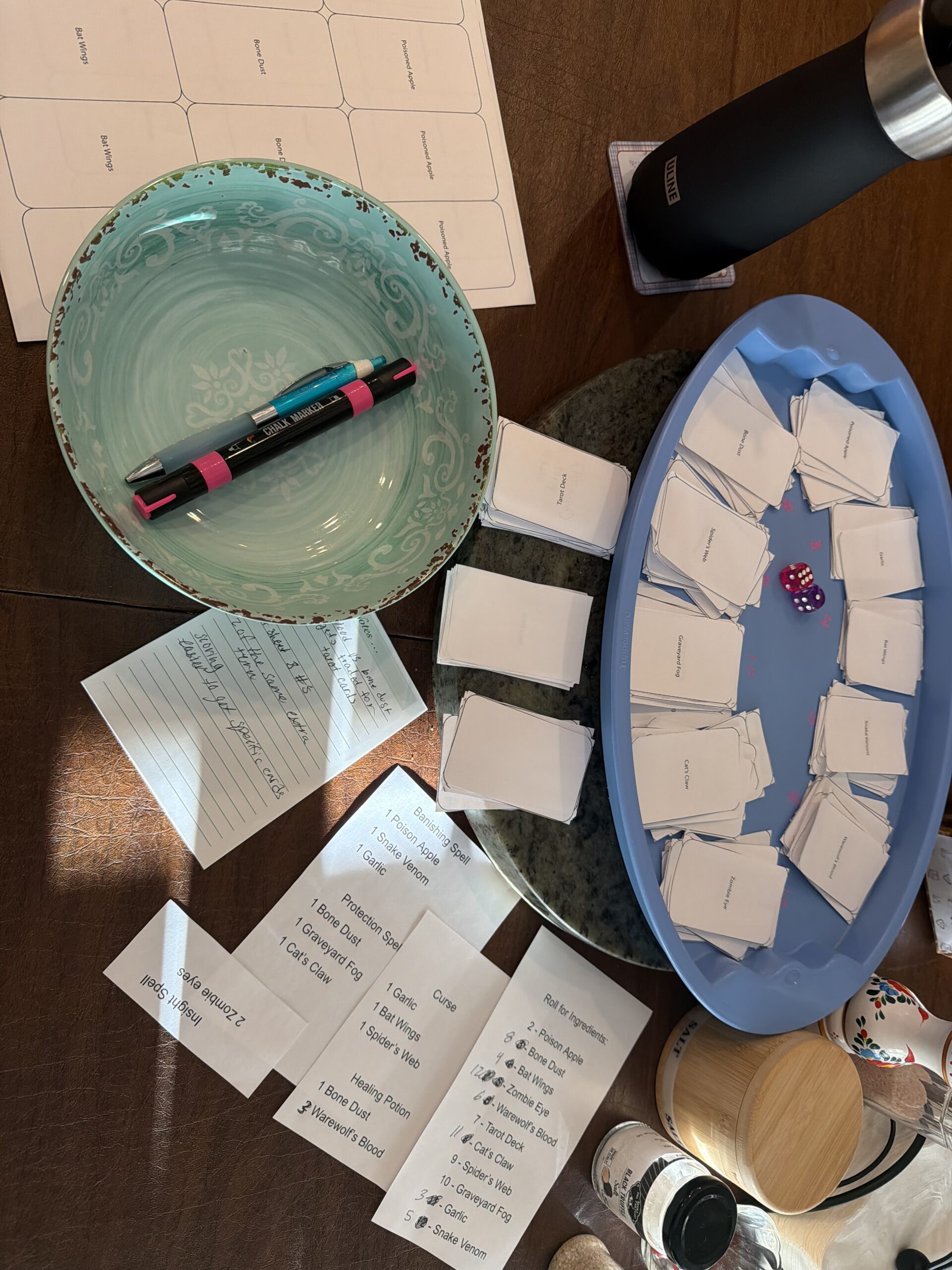
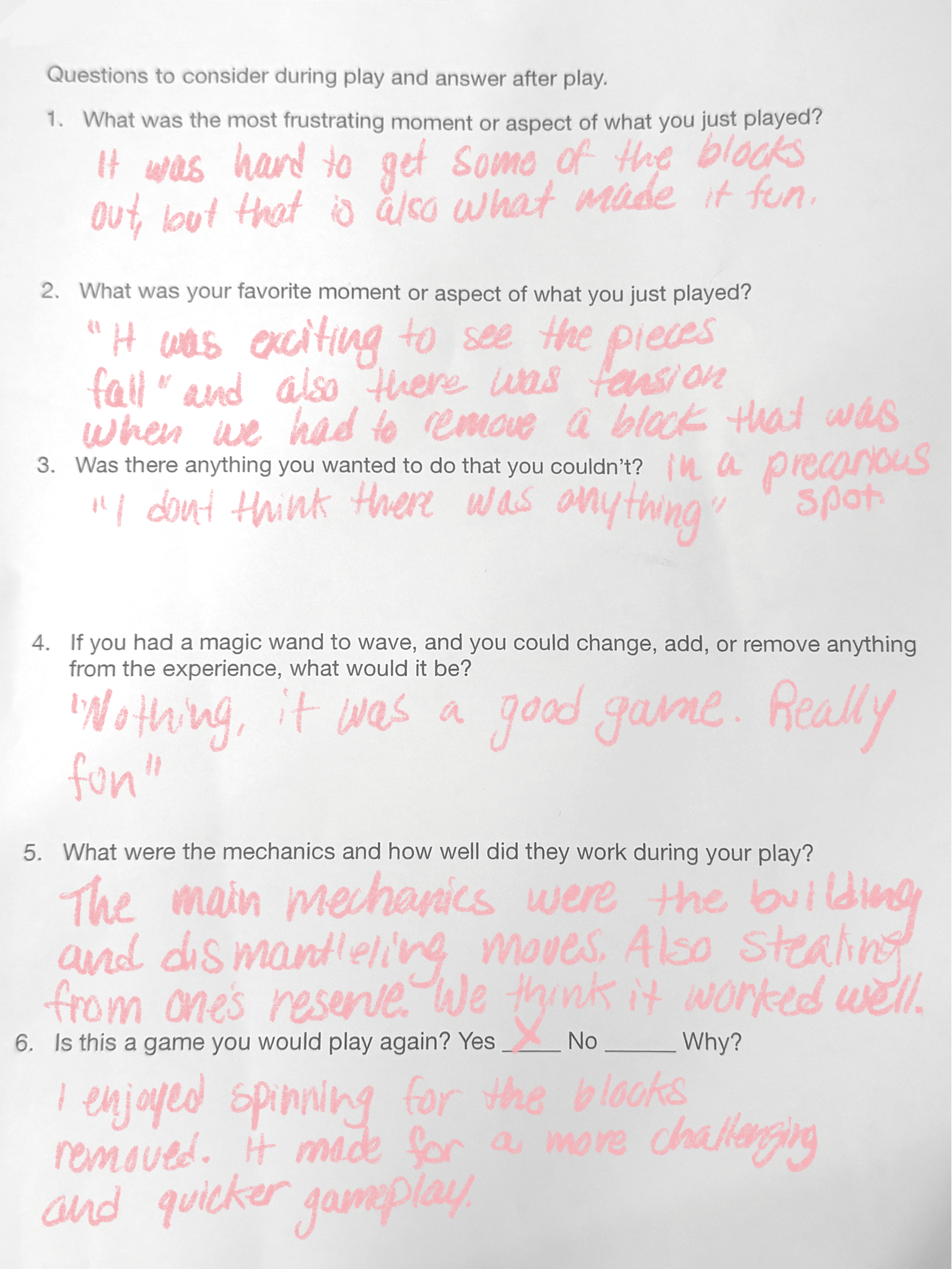
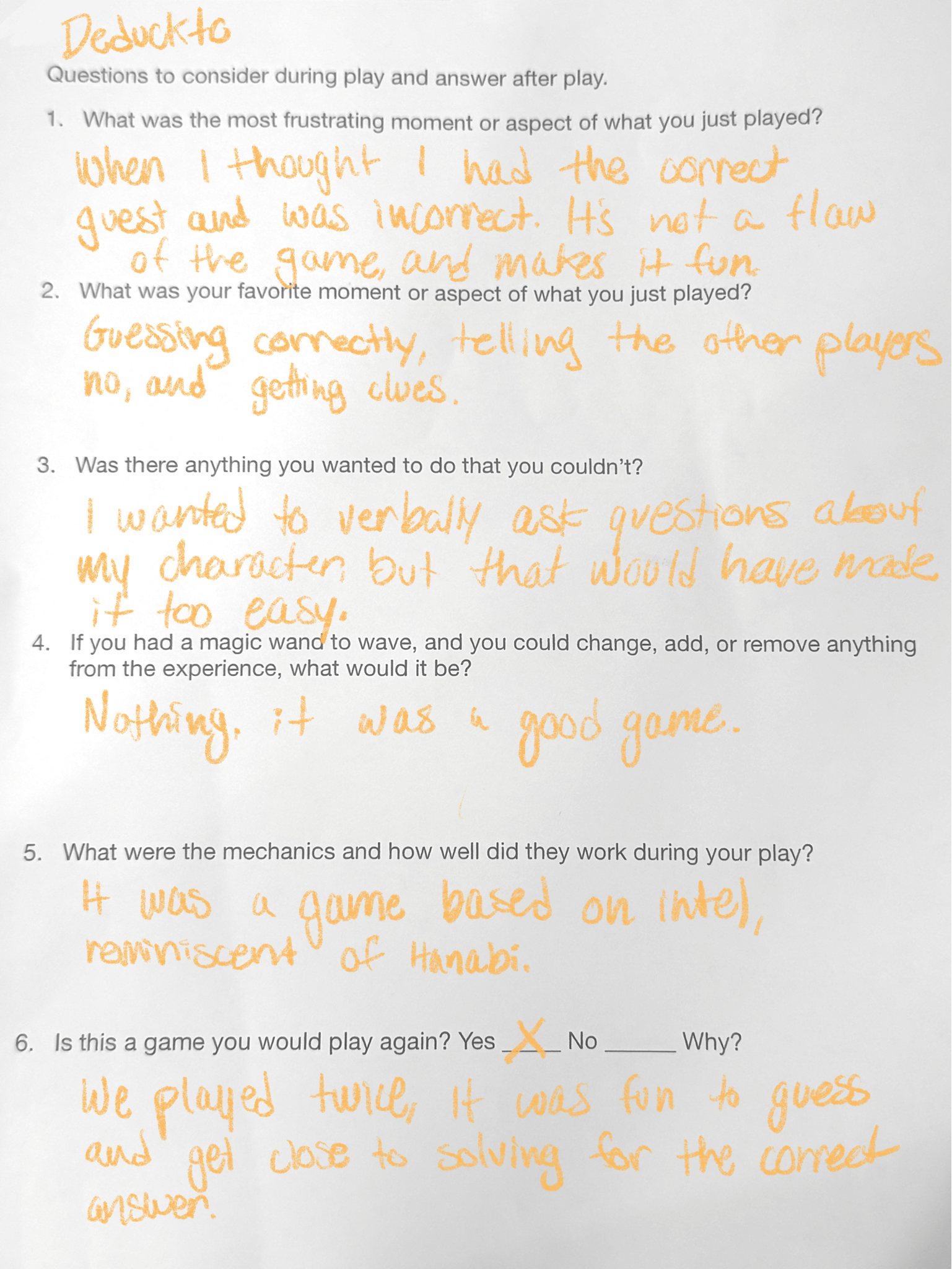
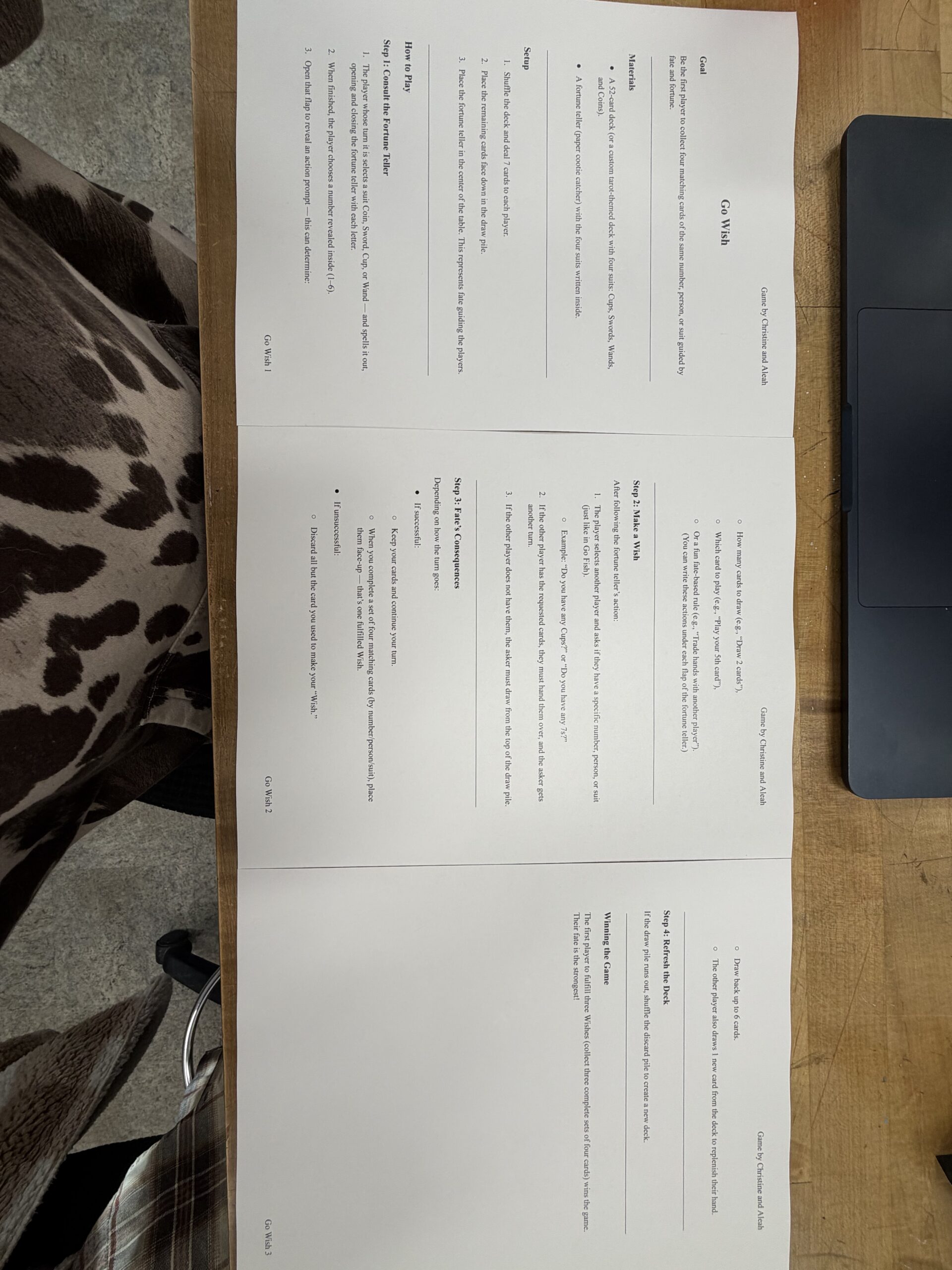
Attached is also a player’s review sheet for both of my competed games. I asked my family for their feedback and took these notes before my final revisions.
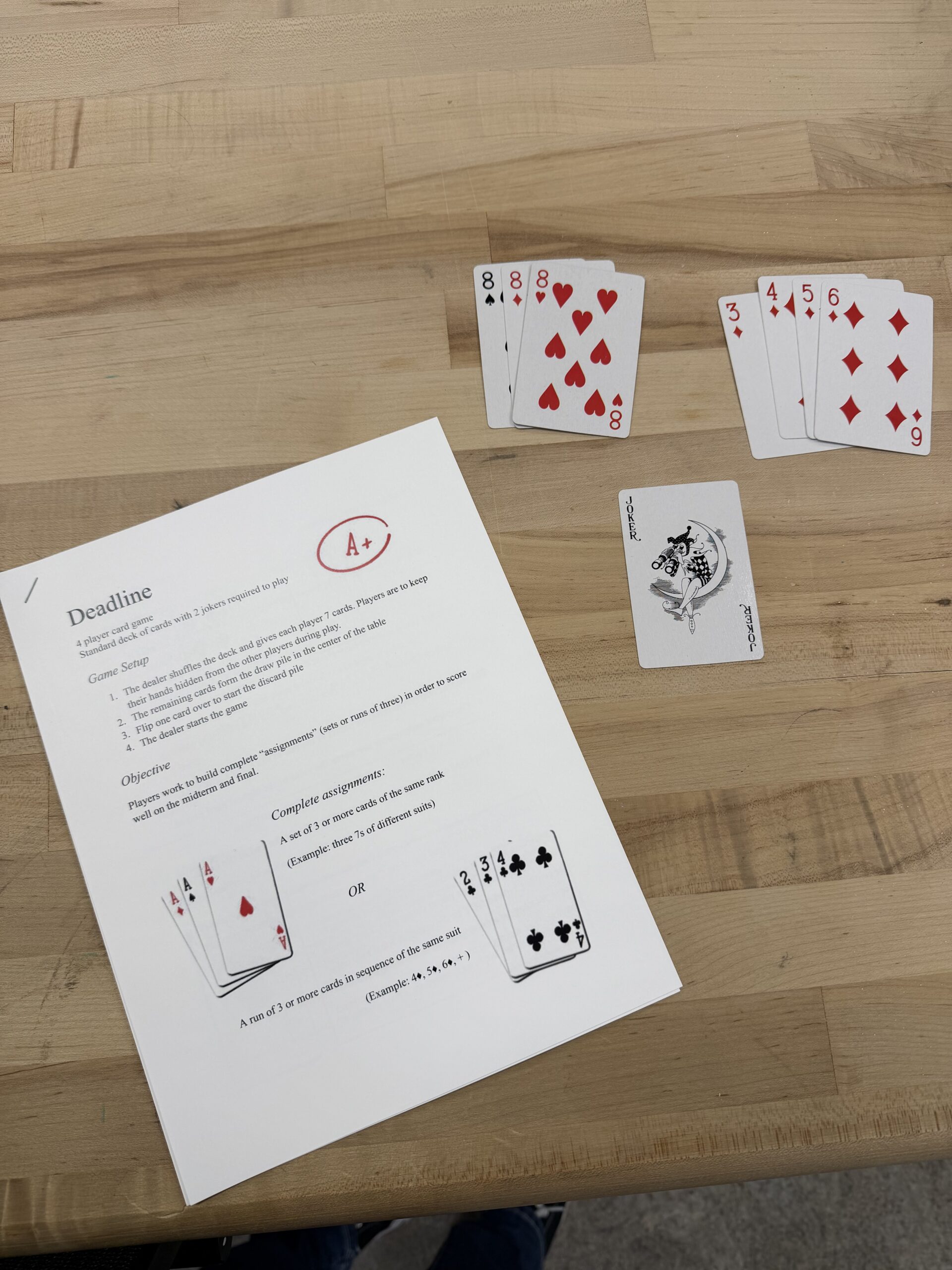
Game 1 – Deadline:
The biggest changes I made to my card game throughout the semester was clarifying the rules and balancing the final scores. I learned that adding illustrations was a more effective way of conveying the layout and specific objectives. I also took note of any confusion during the gameplay experience and made sure that my updated rule sheet reflected these notes from playtesting. In my next iteration I would test out the scoring of consecutive cards of different suits, as well as creating a specialized deck of different classes (Math, English etc.). I also need to expand on the rules regarding extra credit, and building off of extra credit to accumulate points for a “completed assignment” in the game. Playtesting my first game taught me to be thorough with filling these gaps and anticipate questions players might have, especially if they have no experience with Gin Rummy suit building mechanics.
Game 2 – Witch’s Brew:
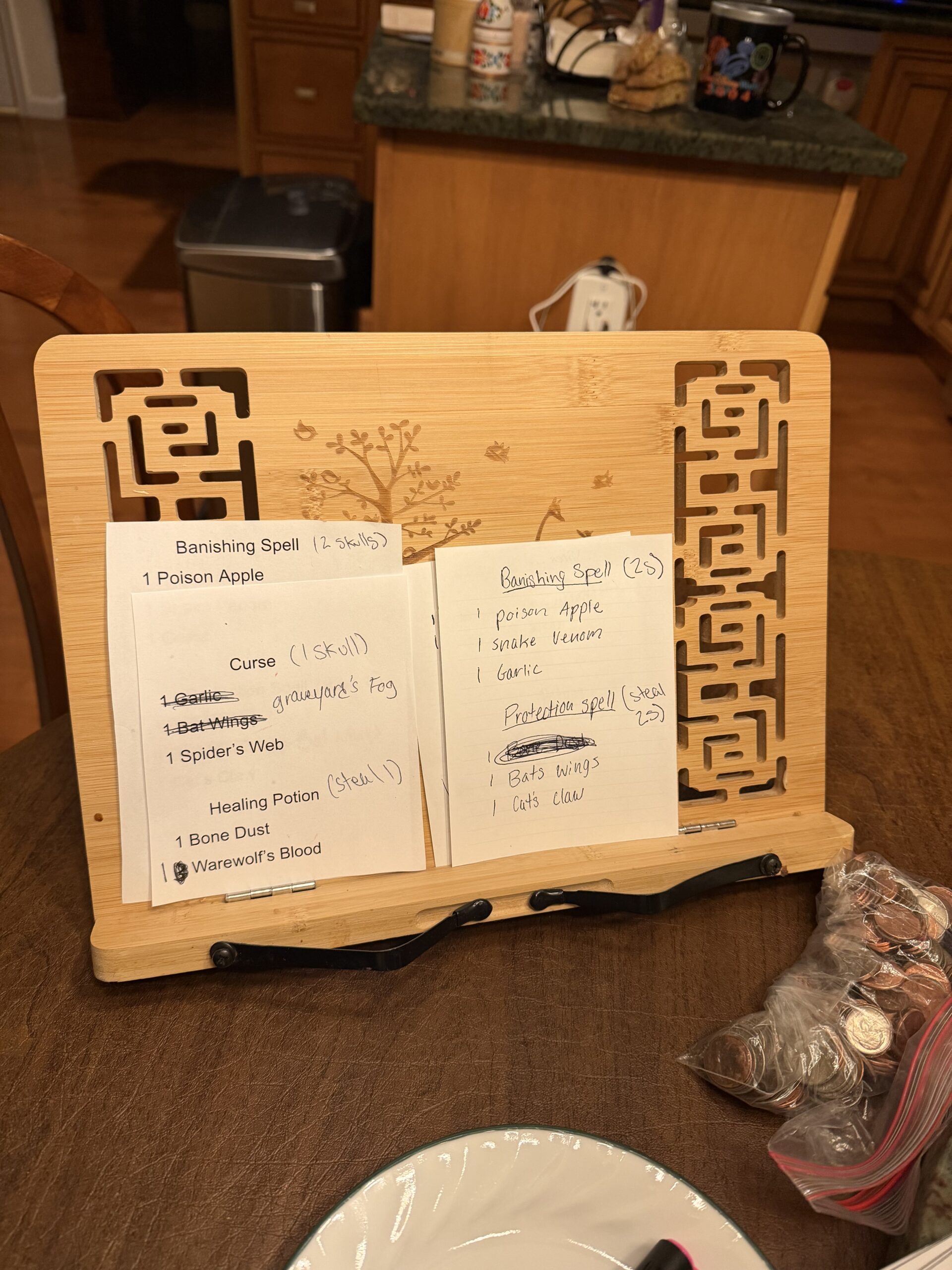
The first iteration of this game had a lot of room for improvement. I explored the use of dice, inspired by Catan, as well as an alternative version using a Game of Life board game spinner (1-10). Though the spinner would have worked for gathering the necessary ingredients, I attempted to balance the game with the probability curve of using two dice. I ended up simplifying the spells, adding action cards for rolling a 7 (the most common combination), and adding special benefits for rolling a 1 or 12 (the most rare combinations). In the next version of this game, I would test out a board more similar to Catan for balancing. Playtesting I learned about game pacing, and managing player frustration.
Game 3 – Takedown:
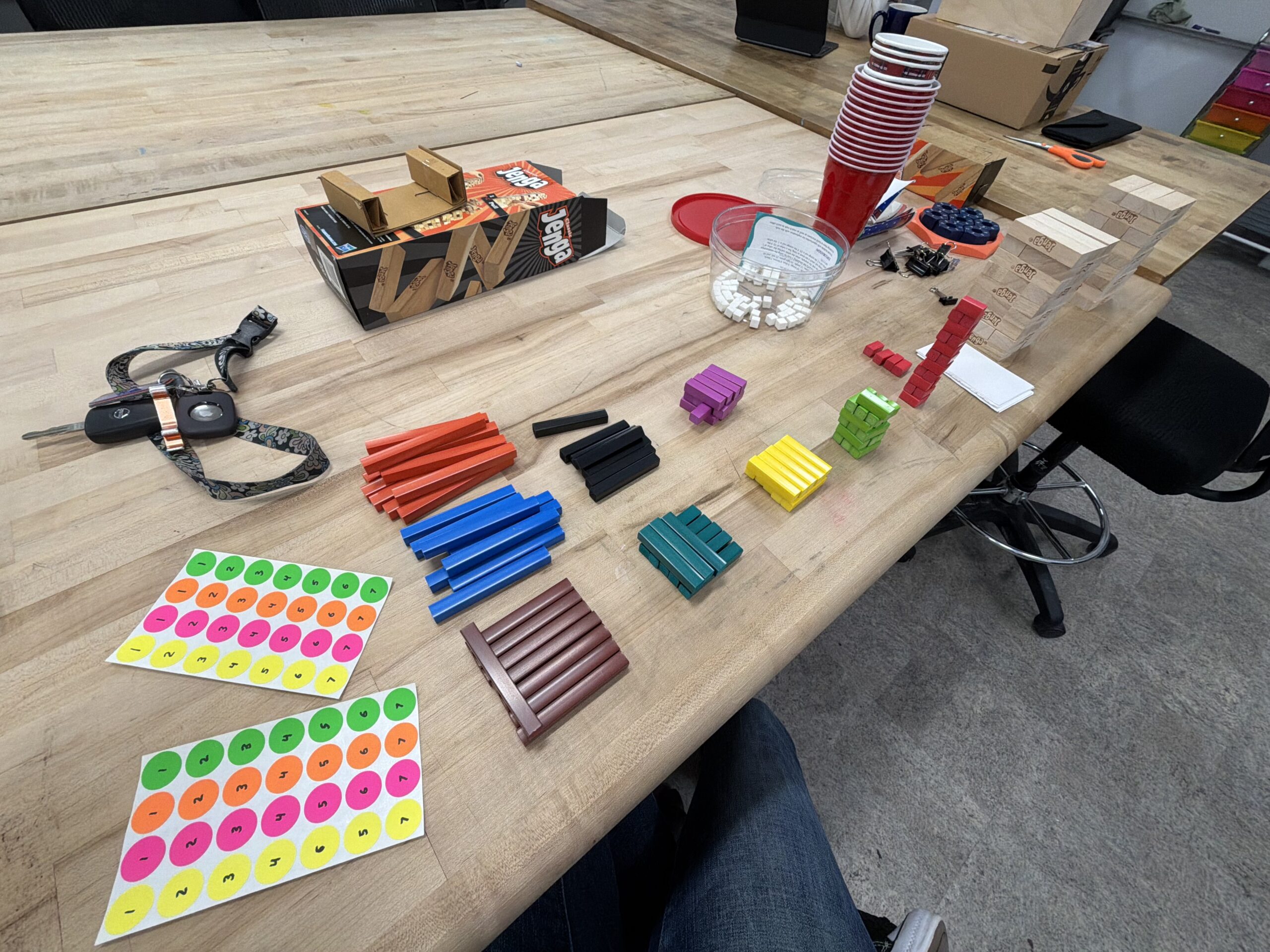
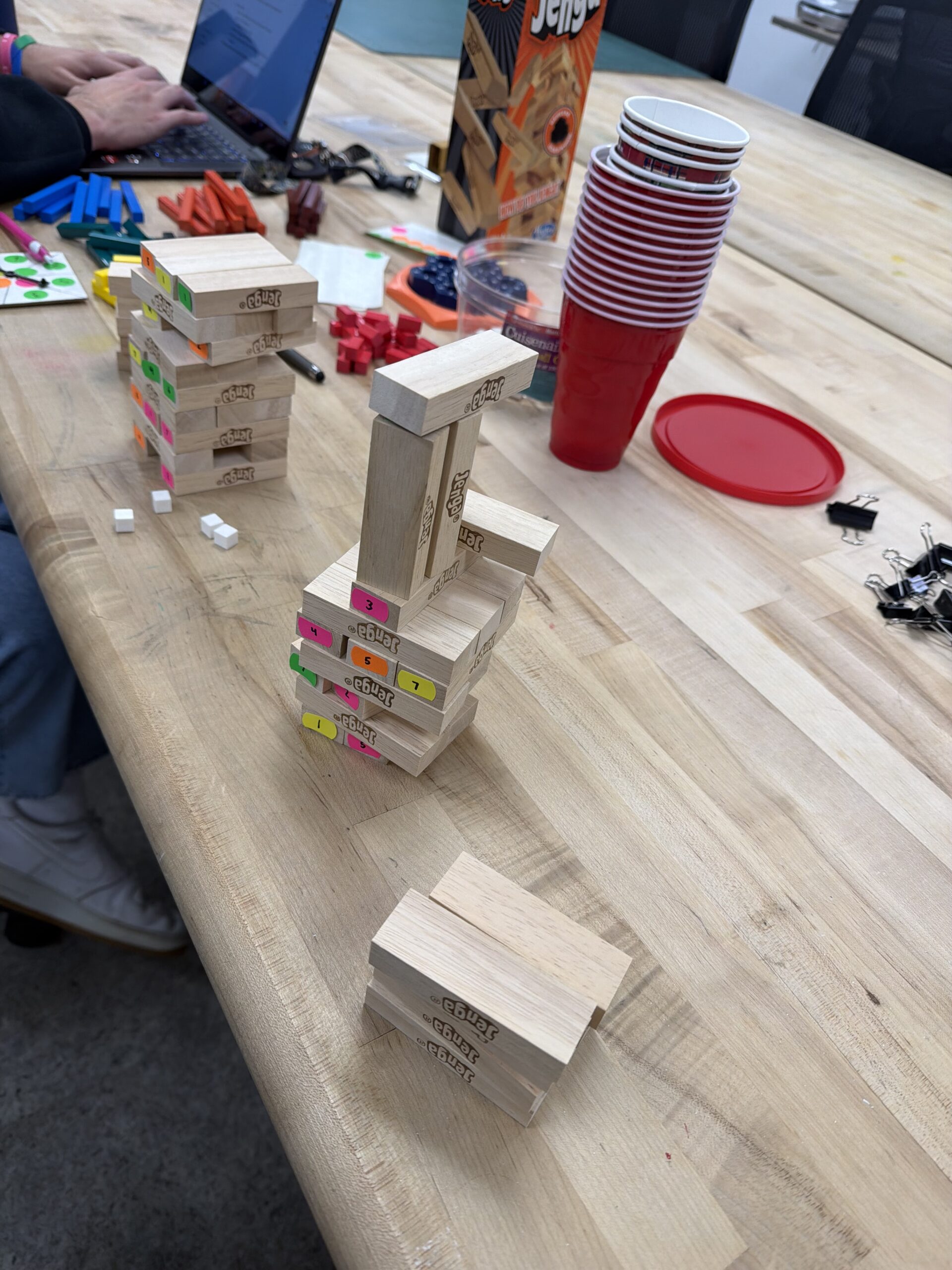
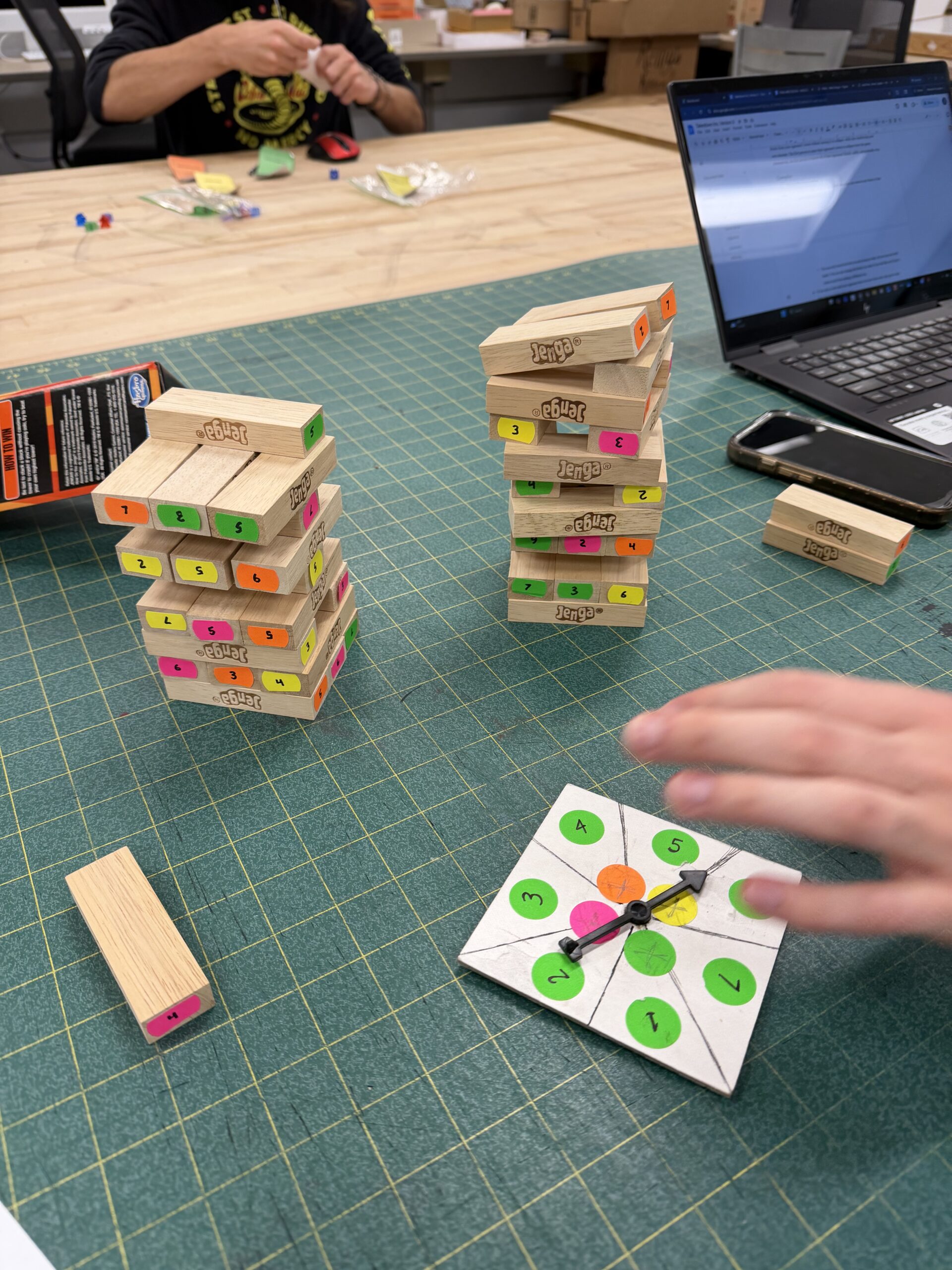
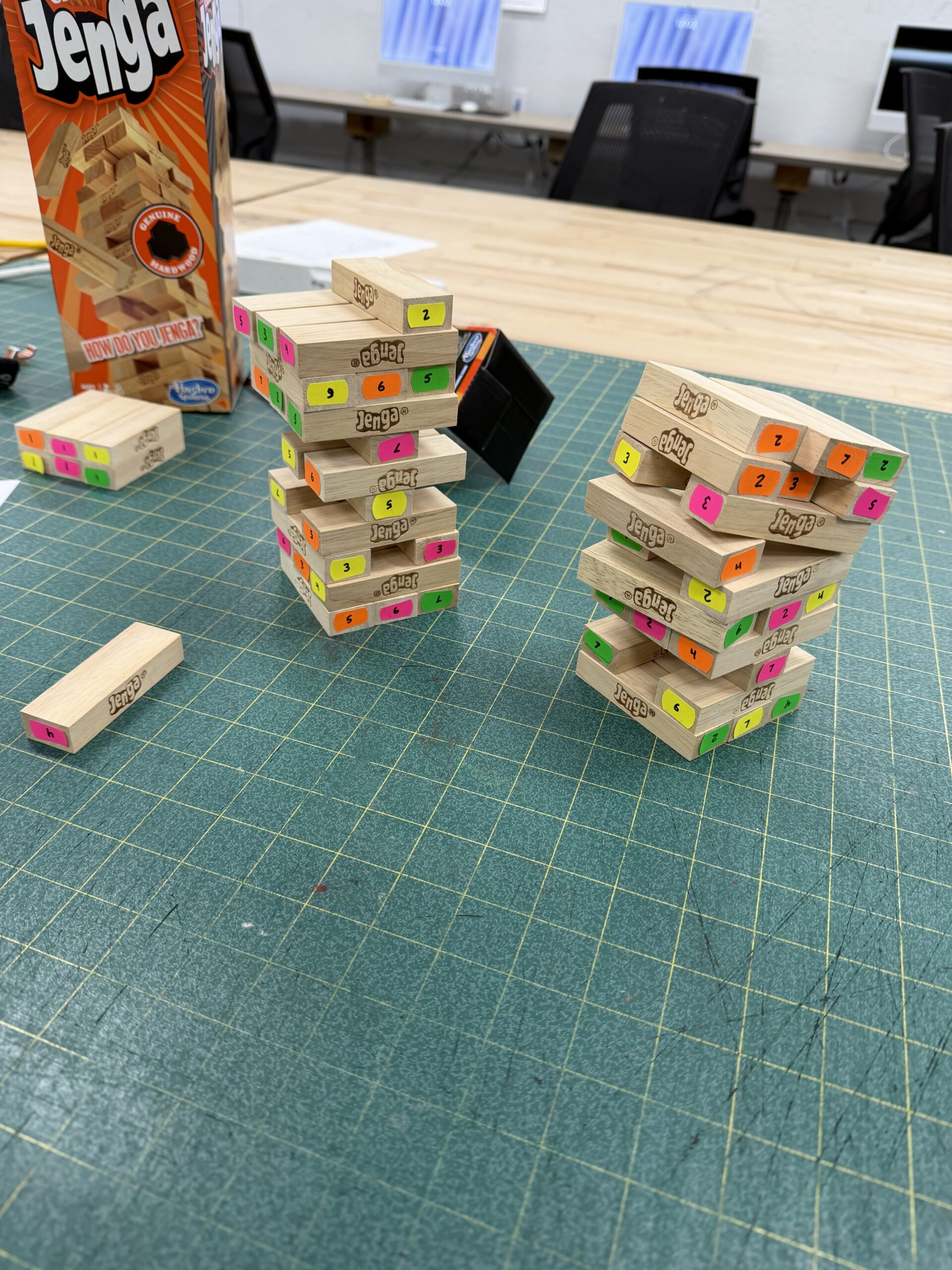
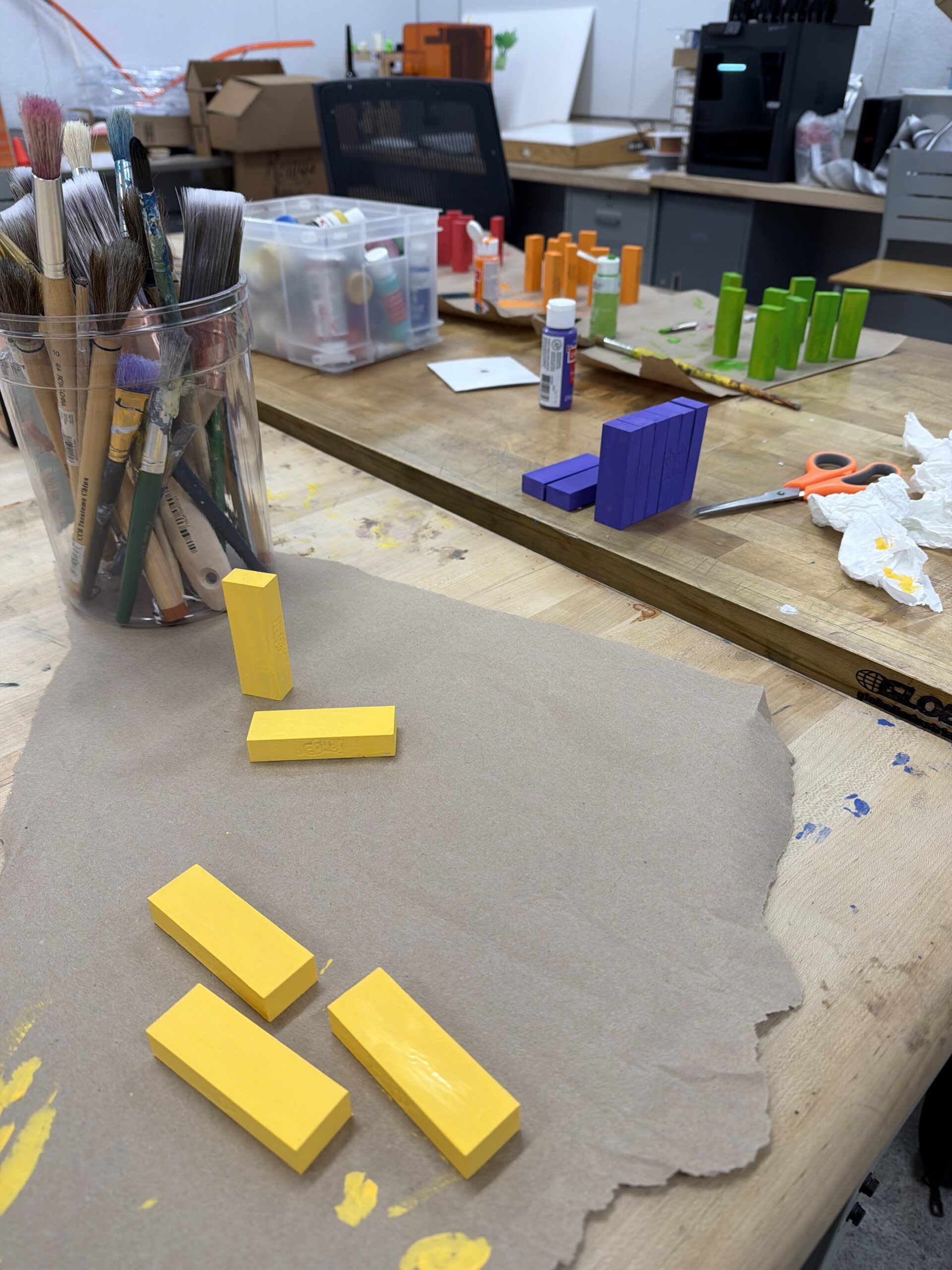
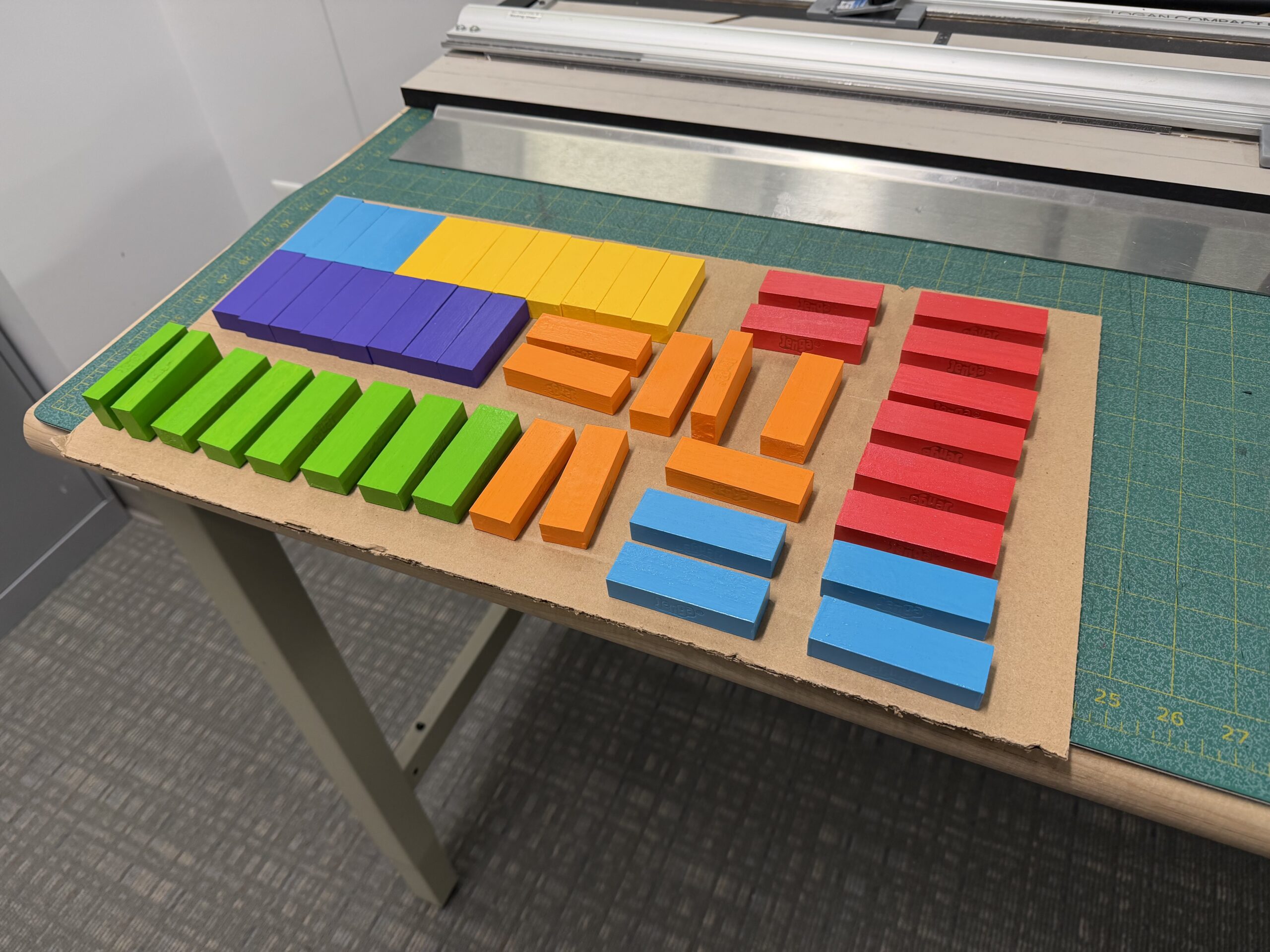
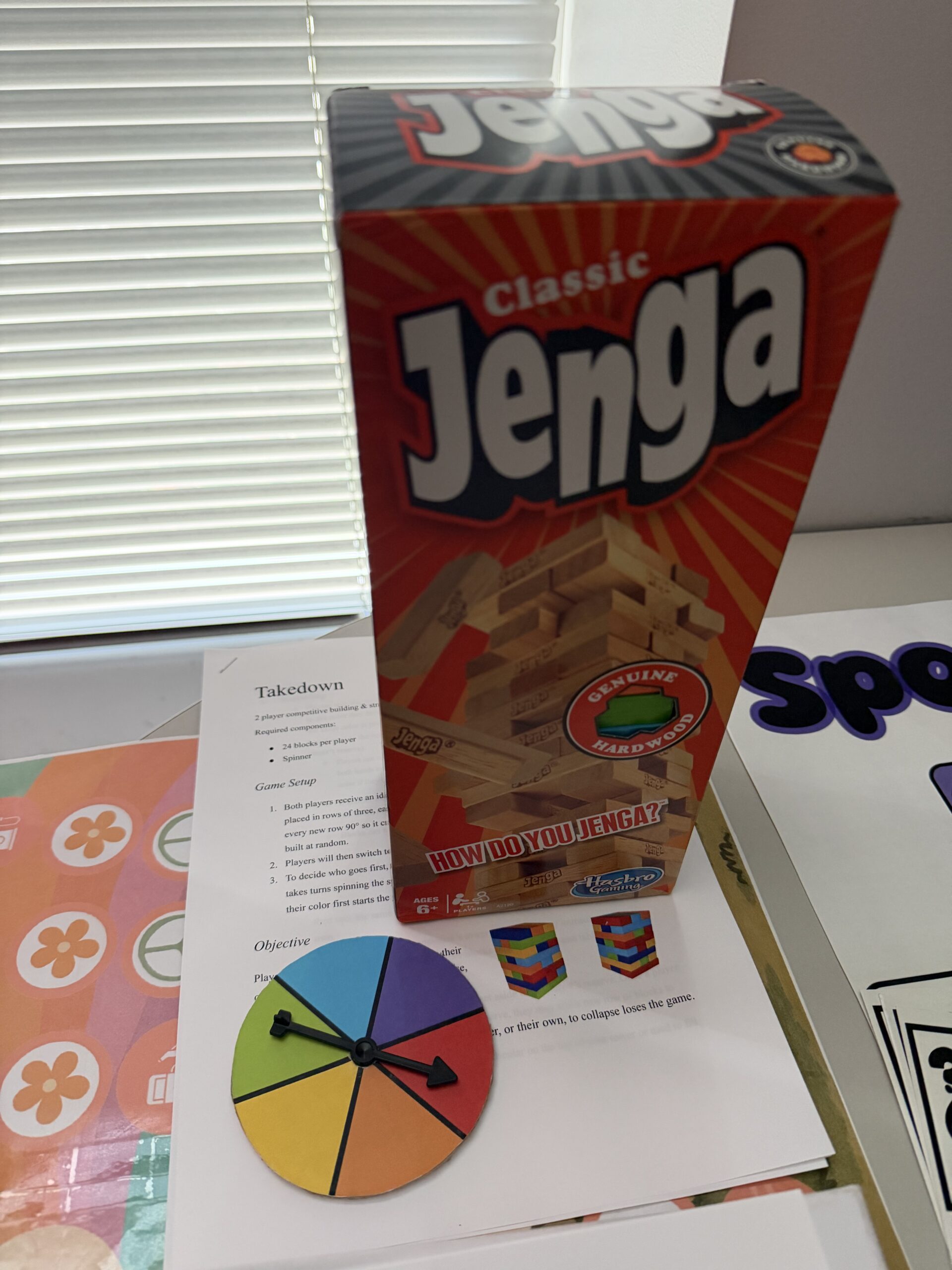
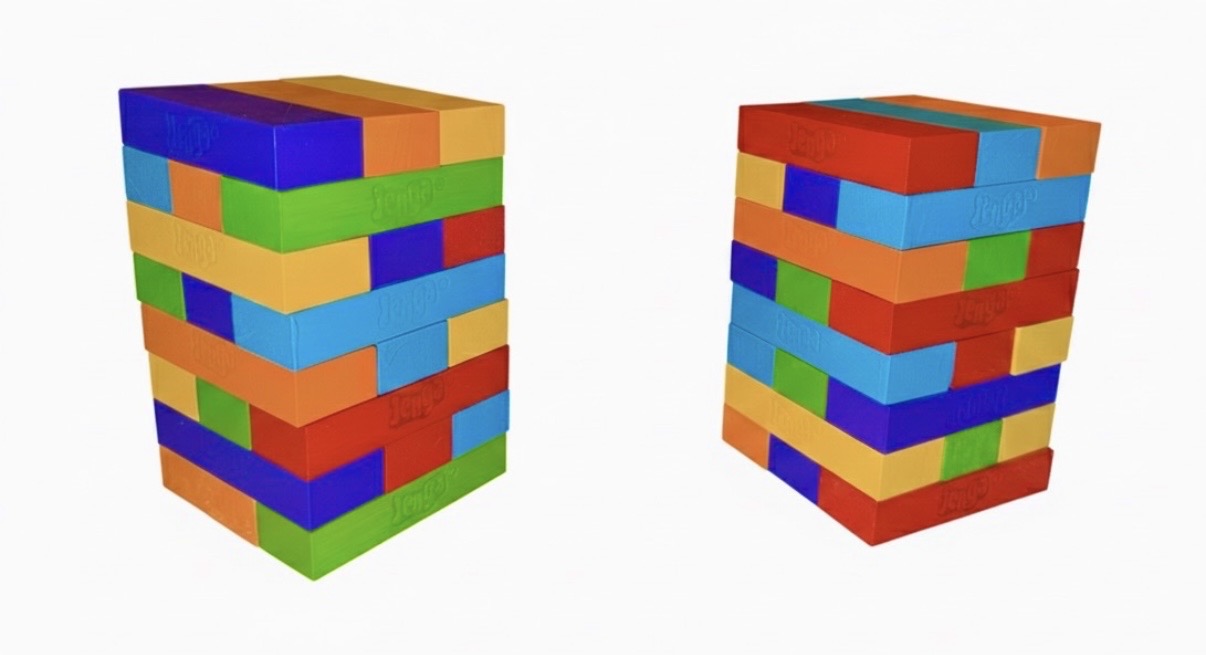
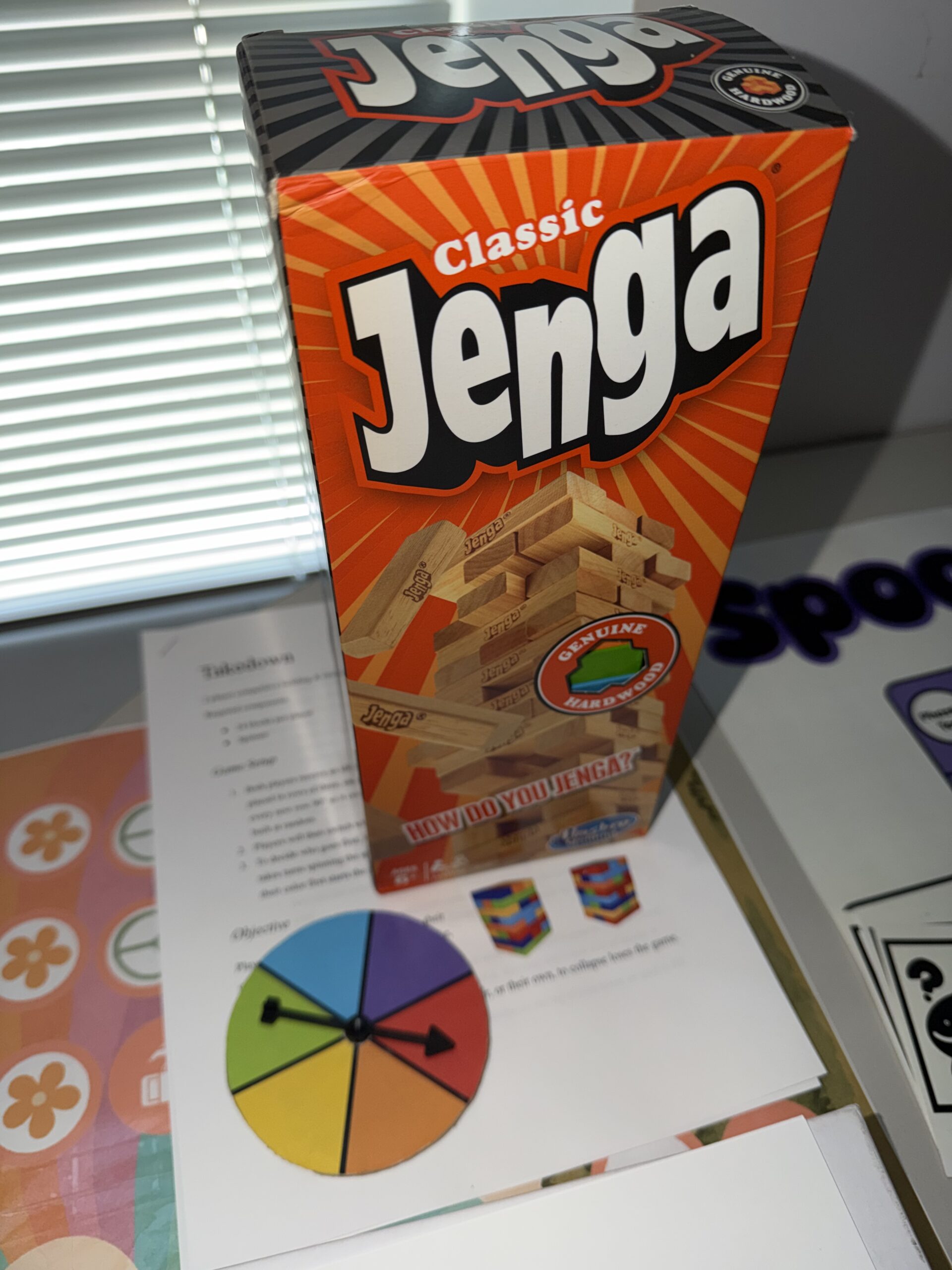
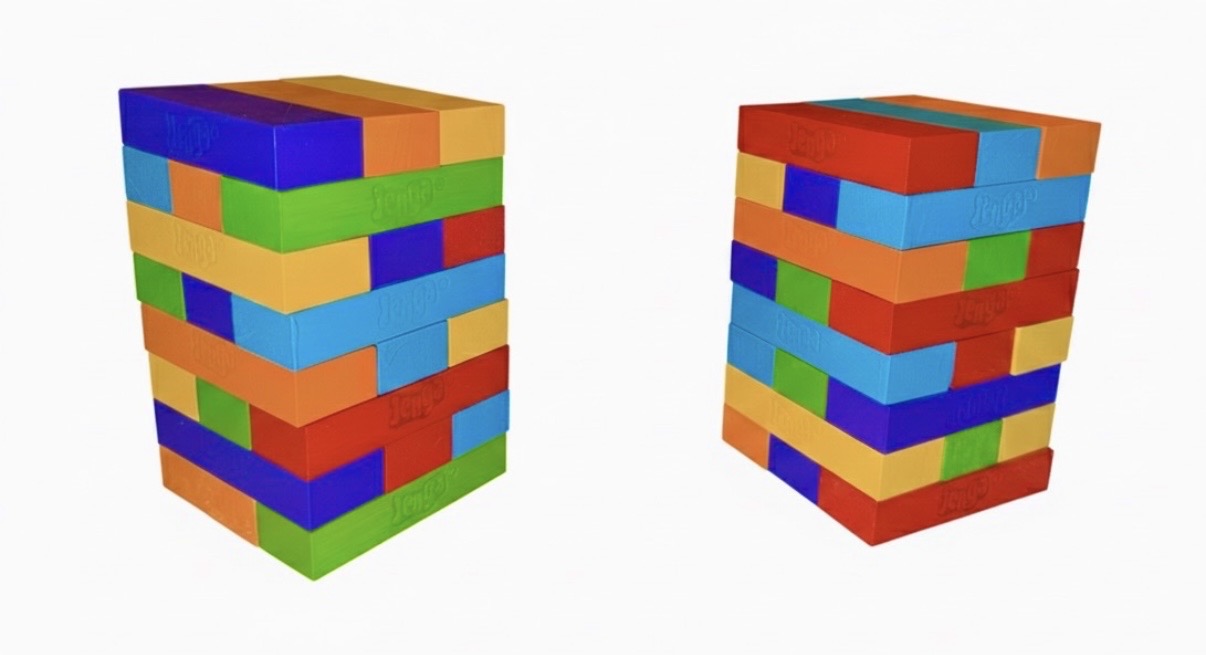
This was our two player game. Originally we used a number system for the blocks, but found that colors would be easier to identify on all sides of each block. We also removed six blocks from the original Jenga game to account for the height of the towers and chosen number of blocks per color. We then worked on crafting the blocks, which were painted with acrylic and then spray painted with a satin finish, and our matching spinner. For the spinner, I used a heat reactive glue sheet (I forget what this process is called) and baked a printed image onto the surface. This was easier than I would have imagined, and I believe it game the prototype a finished look. As for the gameplay, we defined and redefined how many blocks would have to fall for the players would lose the game, and how blocks could be stacked. In the next version, I would like to incorporate wedge blocks like we had talked about, and maybe special weighted blocks so that support the building mechanic and potential for sabotage.
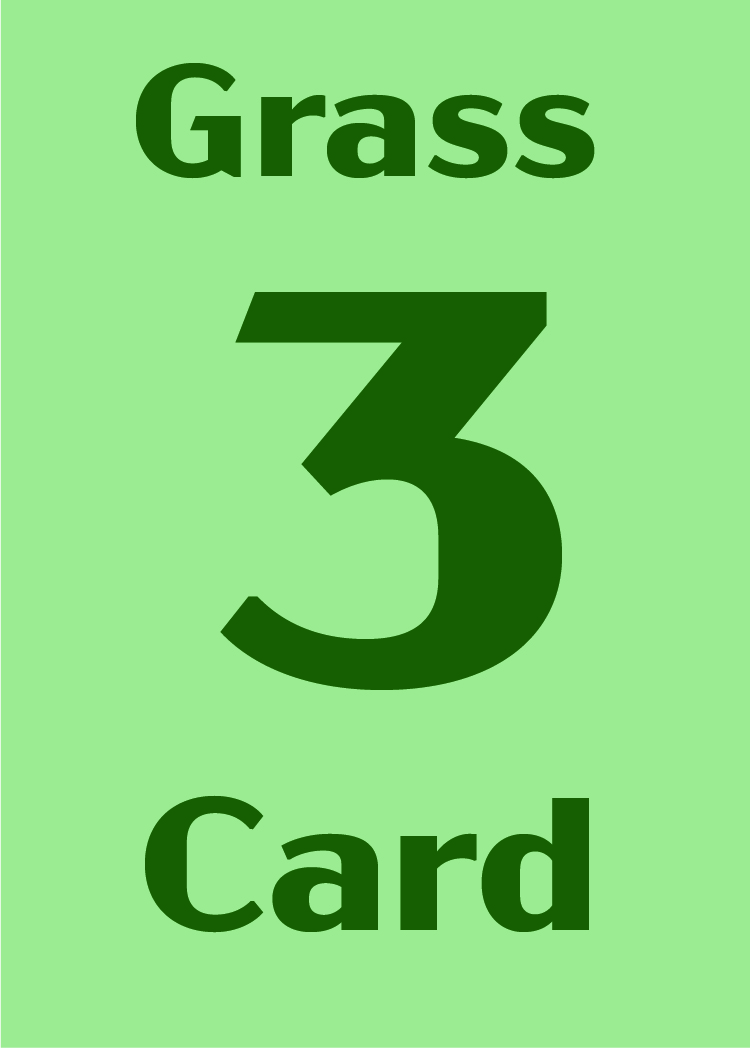
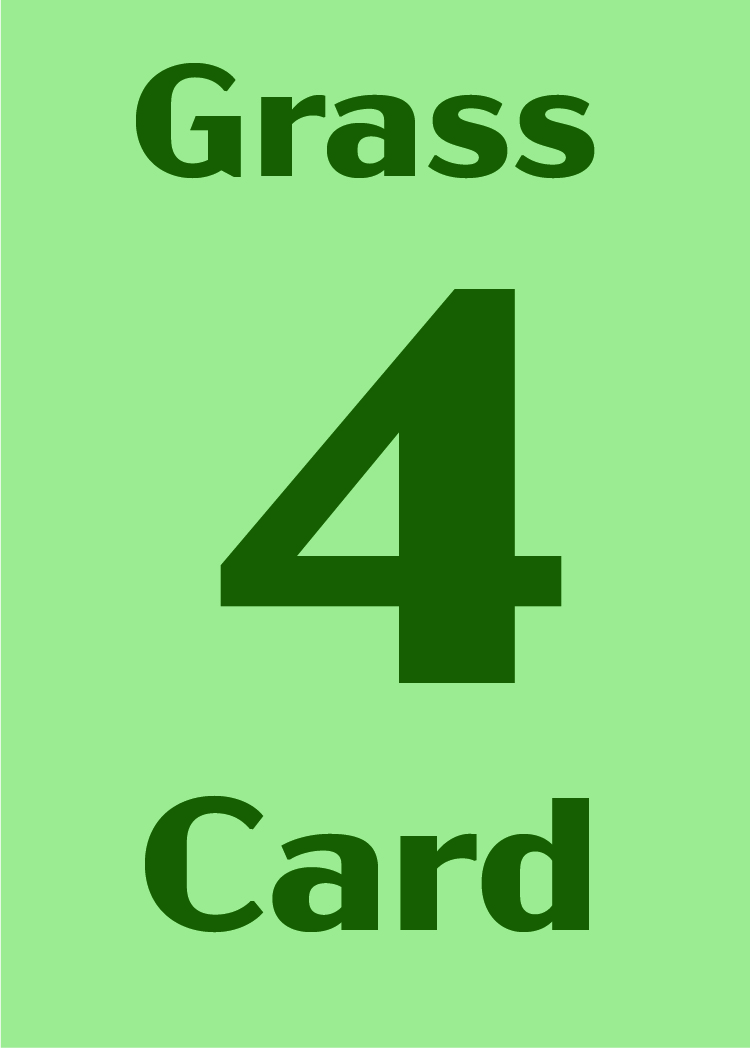
The objective of the game is to get as many grass points/cards as you and your opponent mow all the grass on the board in order to end the game.
Materials needed:
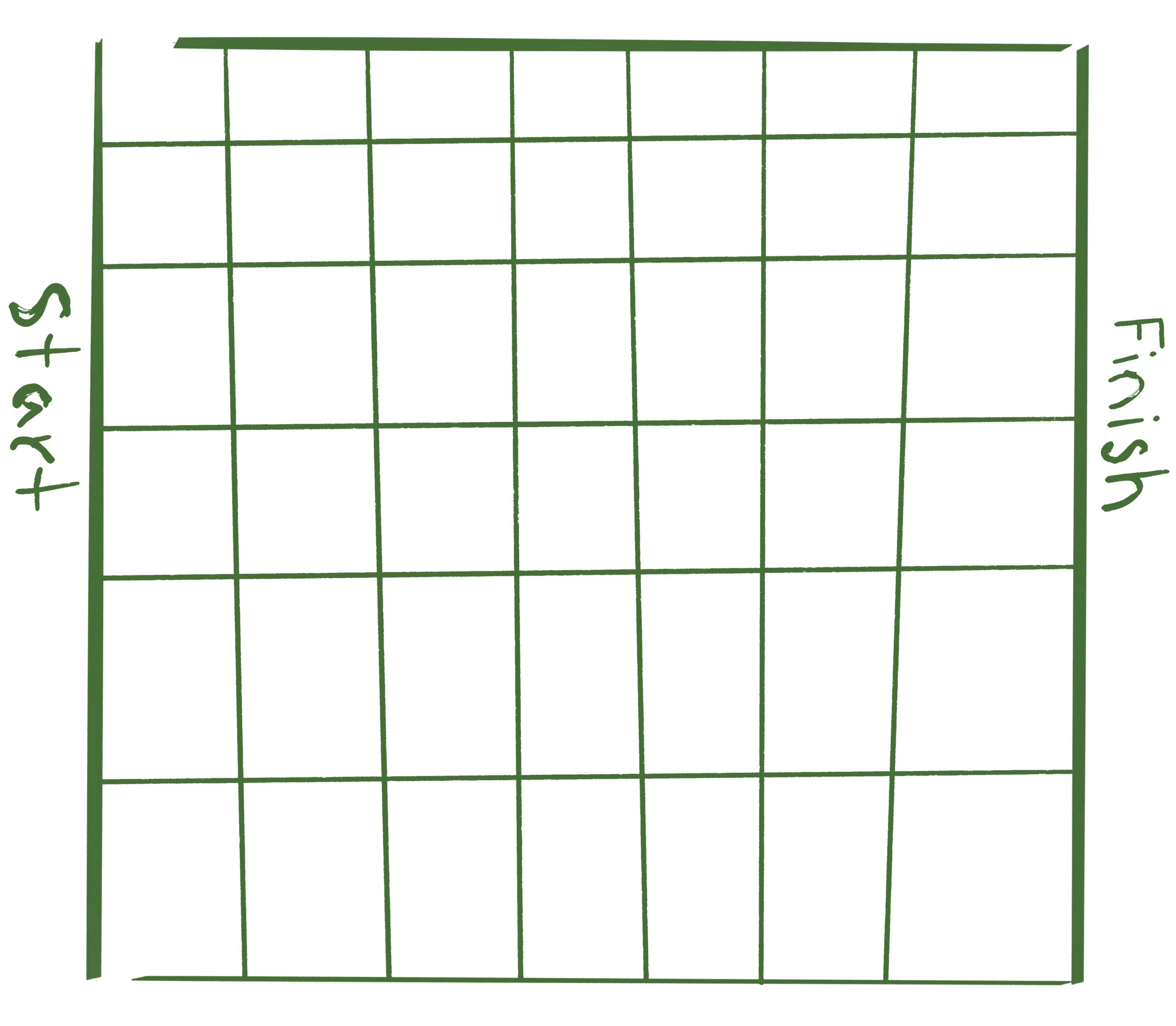
Board
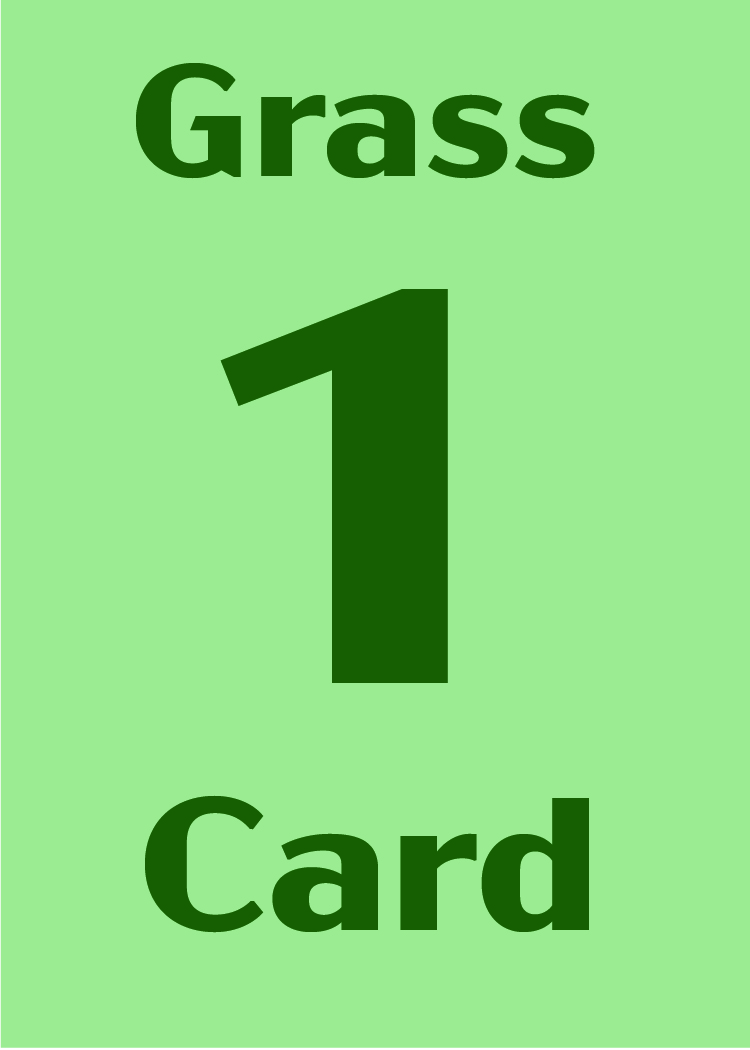
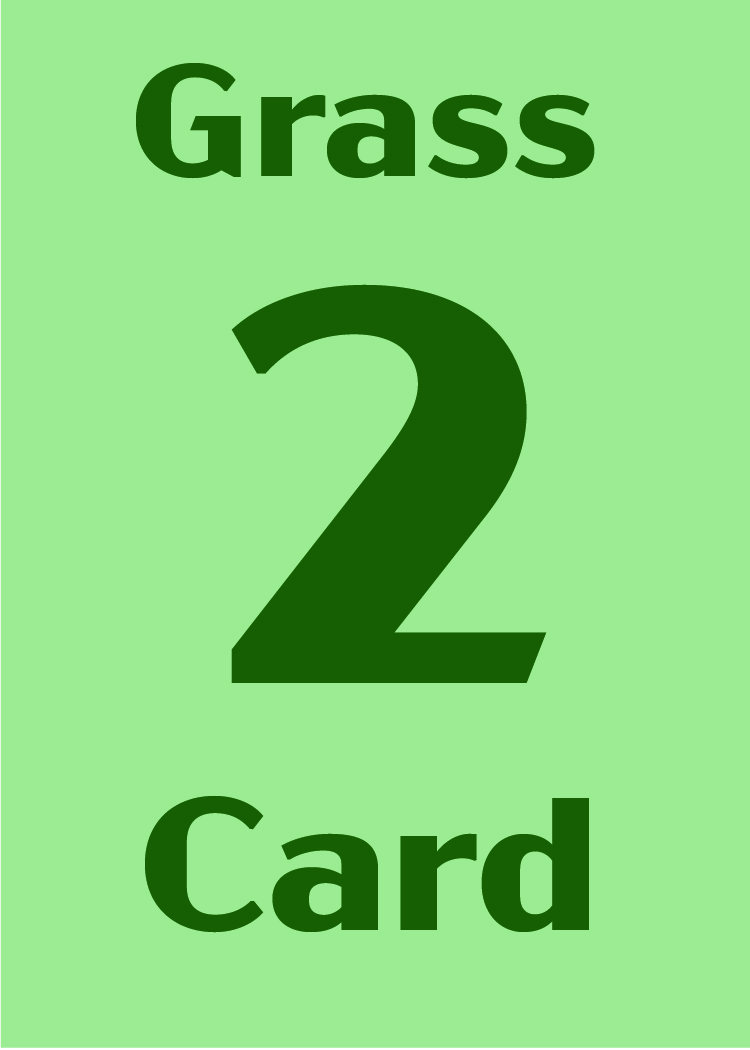
Grass cards
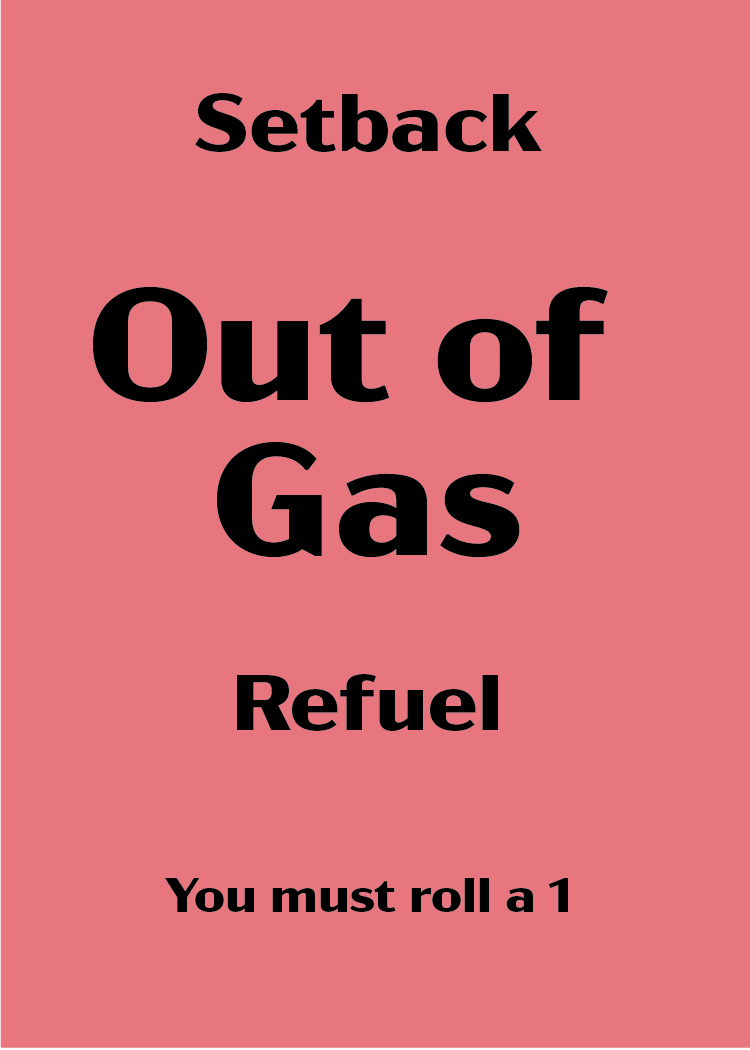
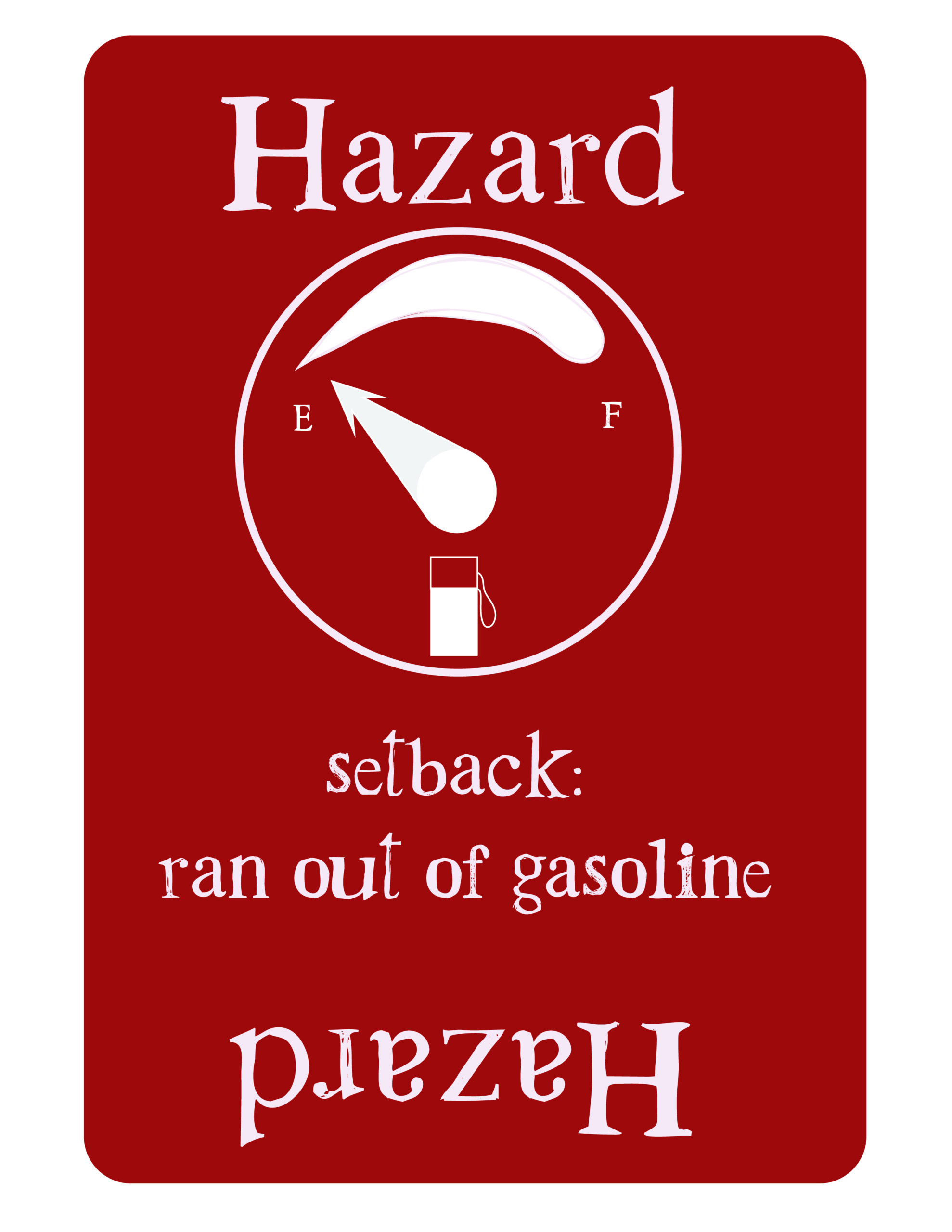
Setback cards
Two dice
meebles (marks which space/tile was mowed already)
Paper and pencil to keep track of score
Iphone timer
Setup:
Take all of the cards and shuffle them into one deck and place them in a empty space on the board.
The tallest player will start the game or be the first turn.
Turn:
Both players are going simultaneously
The player will roll one dice, and move the amount of spaces of that number on the dice.
The player can go anywhere on the board, no restrictions.
The player will pick a card for each space they move. For example, they roll a 2 and move 2 spaces hence pick up 2 cards.
After you have moved (mowed) a space, you will mark it with a x or a meeble.
(you can still use this space to move around in it but you can not get a card from it.)
Ex: rolls the dice and gets 3, but ⅔ spaces are mowed already. So, you can only pick up one card.
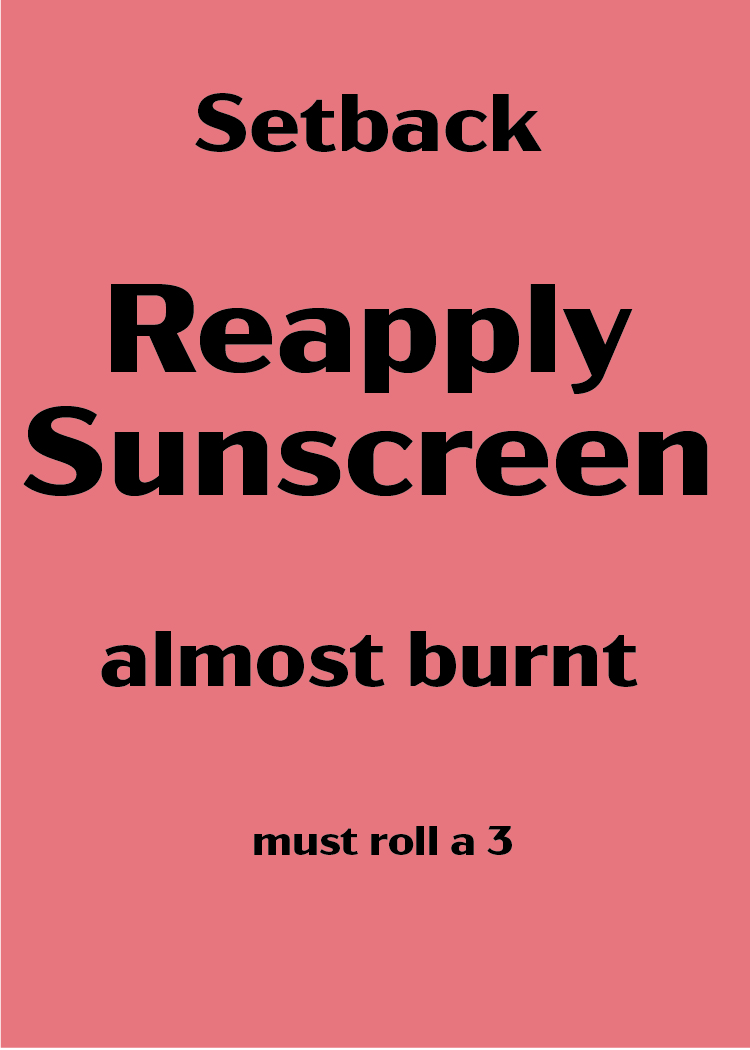
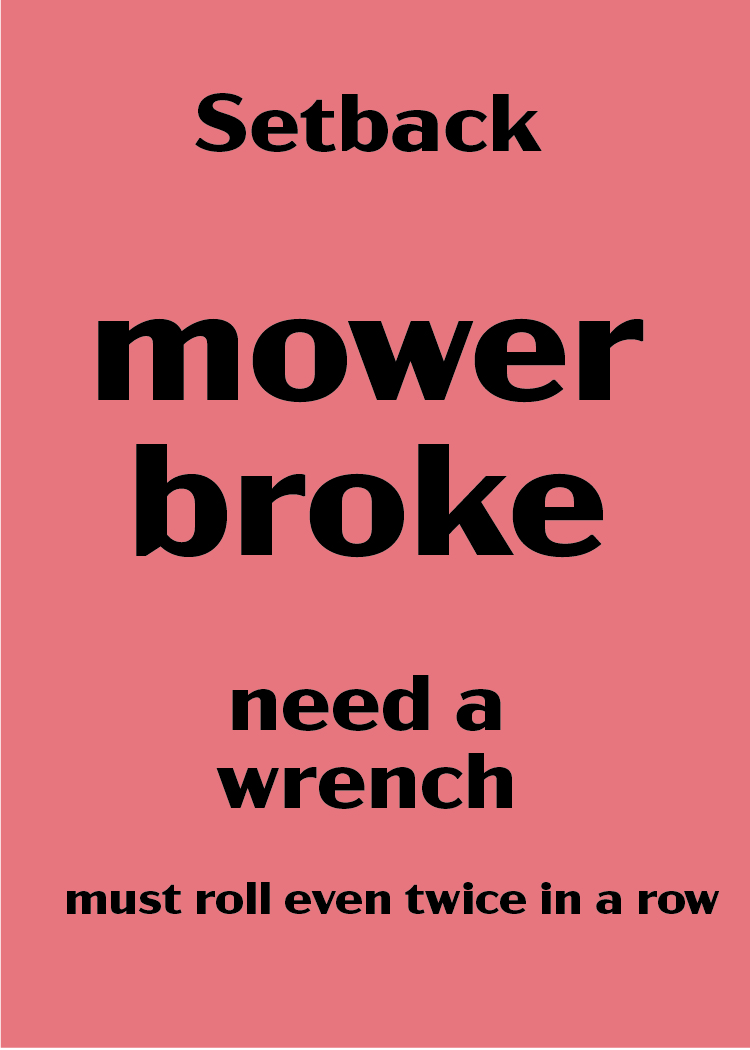
If you pick up a card that has a setback, you will have to complete the task on the card in order to continue.
You have approx. 25 seconds to complete the
Out of gas
Nebby neighbor
Dinner time
Reapply sunscreen
You do not have a time limit with:
Mower broke
Dog poop on the blade
If you do not complete the setback challenge within the time constraints then you have to remove one grass card point from your pile.
Winning/Losing:
Once the whole lawn is mowed, and there is no more space to collect cards then the game is over.
Count up your points, and the points win.
Some changes I made in Mow Masters was adding more setbacks and sabotages. A lot of the players gave me feedback on changing the setbacks since the game was too easy in a sense. I made a lot of alterations regarding the design of the board. I wanted to make it super unique and curvy, but it wasn’t making sense when the game was being played. So, I switched it around and changed the color which was to boring and wasn’t the best design. I finally stopped when the board was just in hashes to give the players a sense of what the board is and how it applies to game.
In the future, I would love to rework only roll 1 dice and two dice for challenges. As well as, adding a sand timer to pick up the pace in the game.
I would say that this is my least favorite game. The rules weren’t really making sense in my brain, and I kind of got frustrated with the design of the board. Overall, I did get get feedback so I was pleased with that.
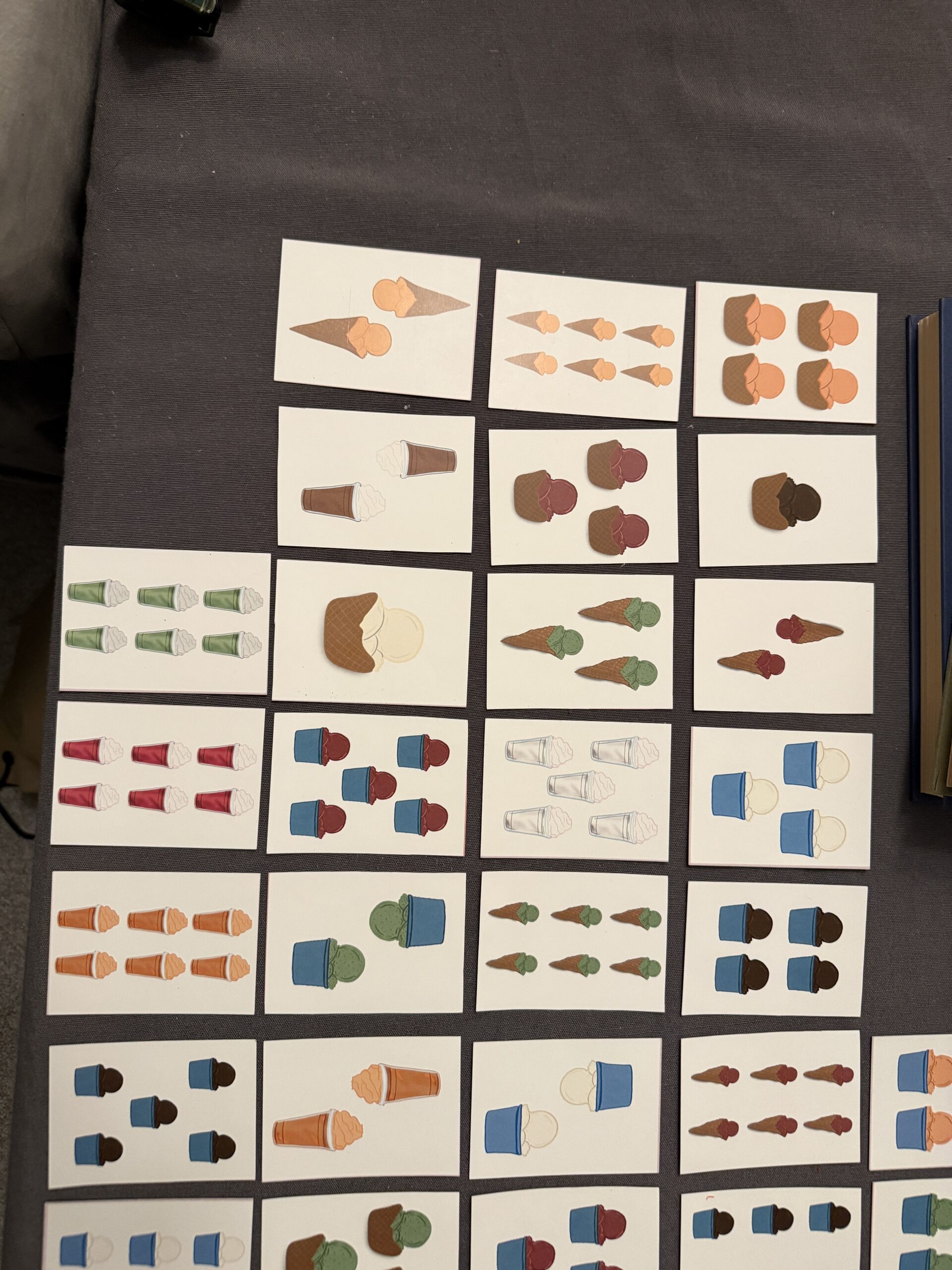
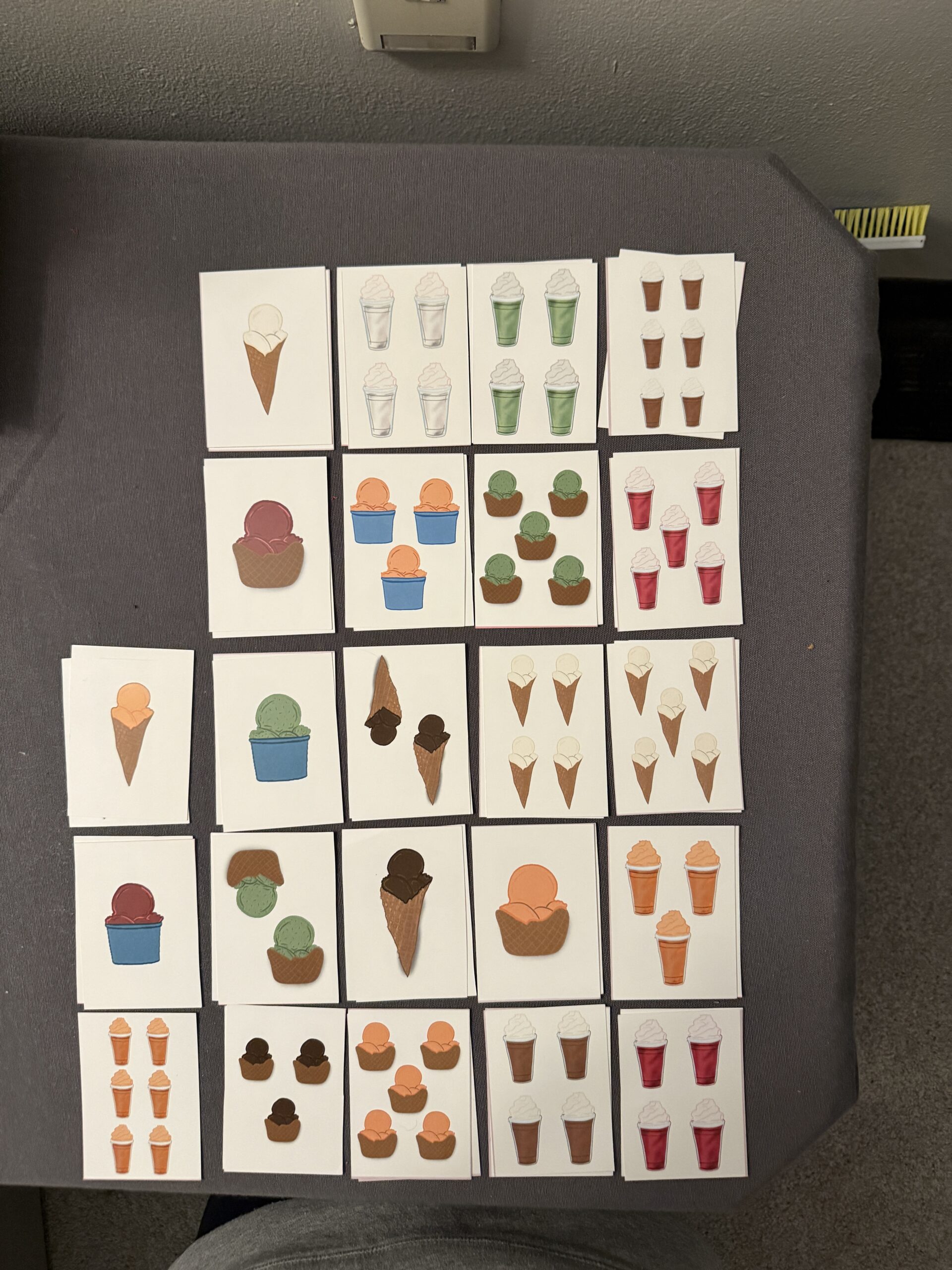
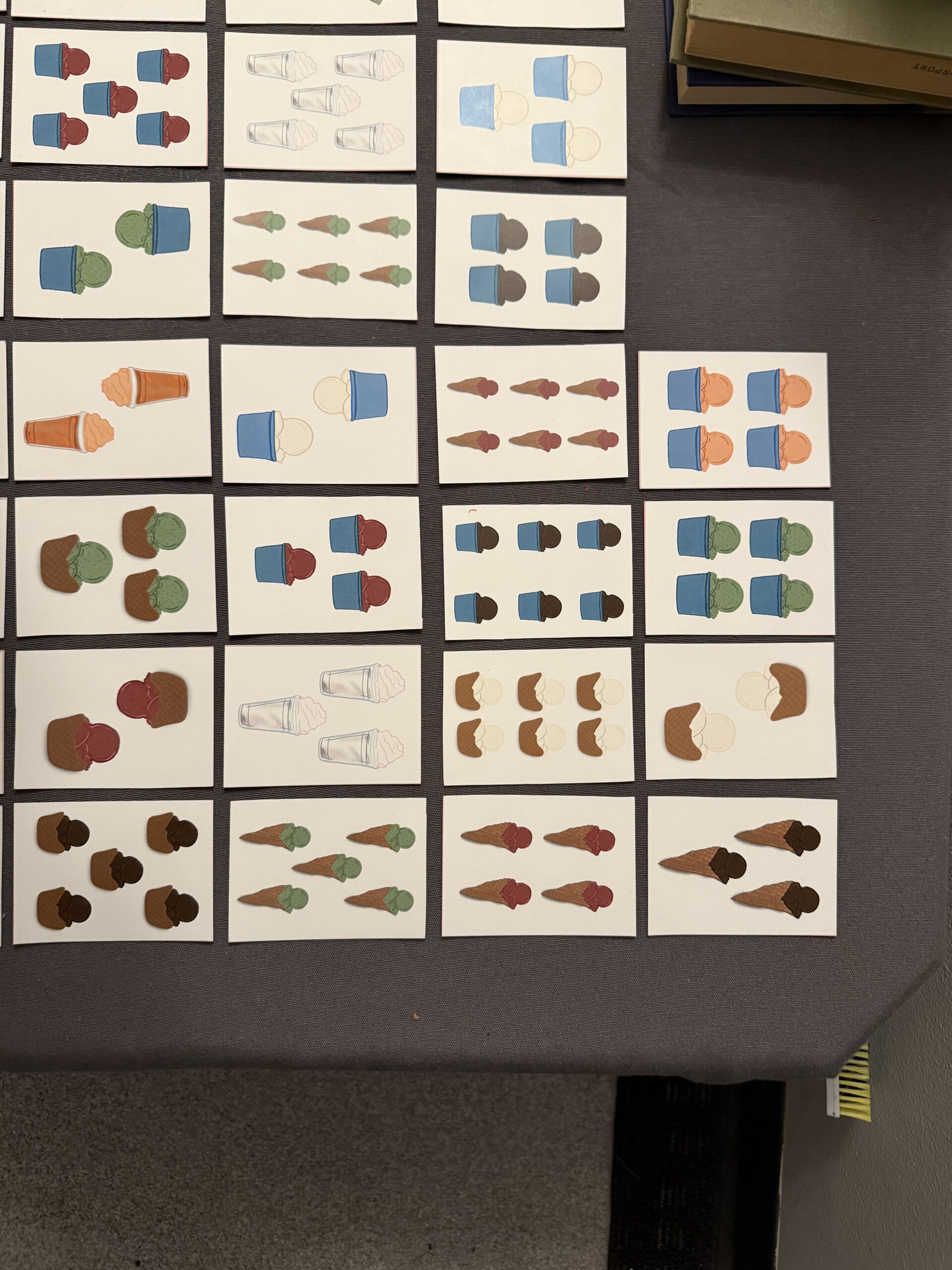
Be the first to finish your stack of ice cream dishes.
Materials:
1 deck of 60 cards
Setup:
Shuffle the Deck and deal each player 30 cards randomly
Gameplay:
Flip over two and place in between your deck of cards.
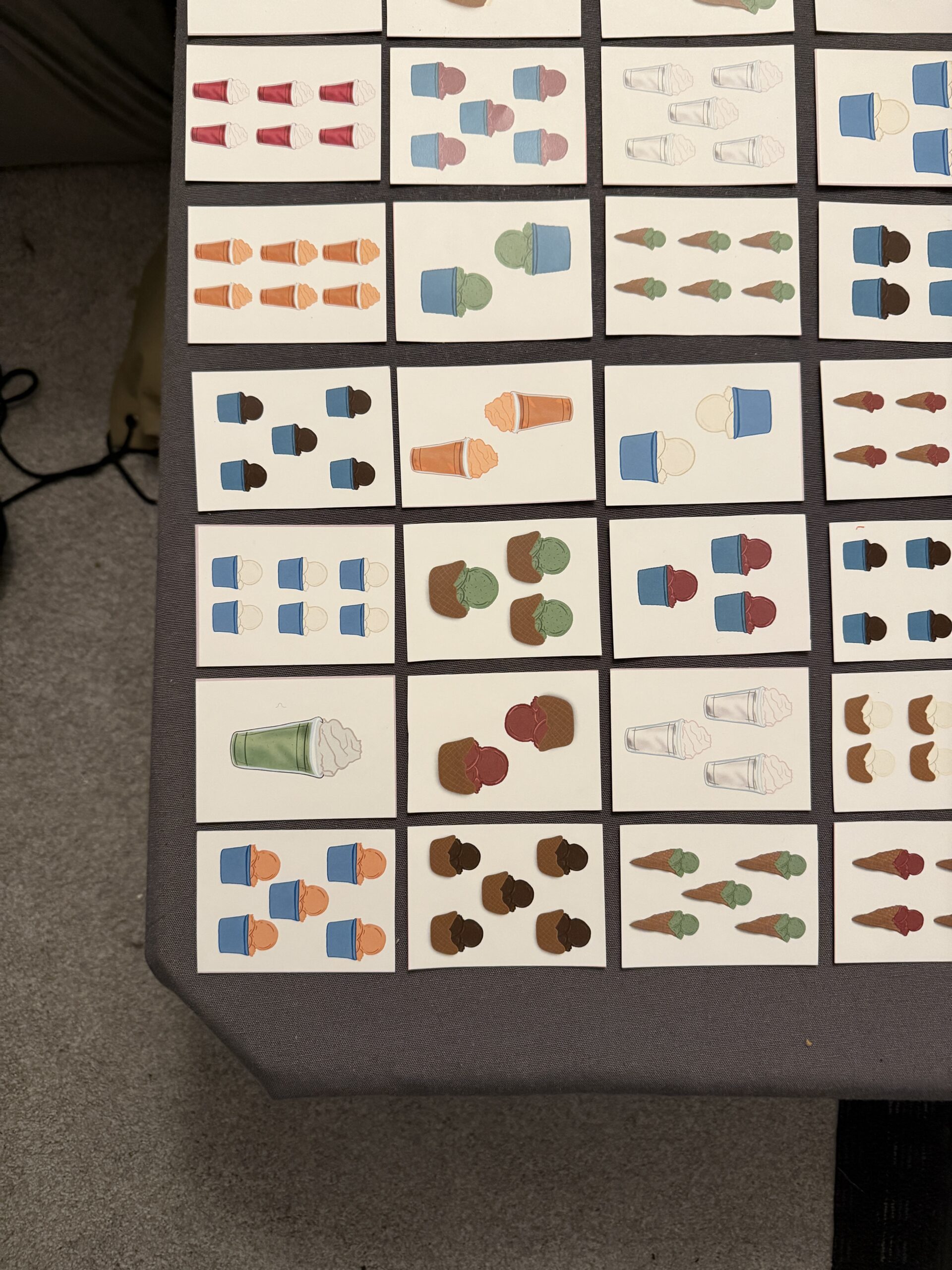
There are no “turns”. The players race to be the first to finish their deck by rapidly matching either the flavor, type of dish or number of dishes on their card to the respective ones on EITHER of the cards that are flipped up in the middle.
As the game progresses, obviously the cards will change based on what cards the players place on top. Keep placing matching cards as fast as you can, whenever you can.
Winning:
The game ends when one player finishes their stack. That player is the winner. Hooray!
Reedit of the Rules:
Objective: The first person to get rid of their deck of cards wins!
Setup:
1 deck of 60 ice cream cards in different color, shape, or type of ice cream holder variation
Shuffle the deck and deal each player 30 cards randomly
From your deck pile pull four cards to keep in your hand at the start of the game
then flip your deck pile so you cannot see the front of the cards.
Place two cards in the middle of you and your opponent (face down)
Gameplay:
there are no turn involved and both players are going simultaneously
The game will start when you and your opponent flip over the two cards in the middle
Both of you will try to match the cards in your hand with the one of the cards in the middle.
You match them by either matching shape, color, or type of bowl, shake, cone, or waffle bowl
after you found match, you will place the matched card in your hand over the matched card in the center (face up)
Continue to repeat this until your deck has run out
What if you get stuck?
if you get stuck, you get to pull 2 cards from your deck. And, if you are still stuck you must wait until your partner matches something, that opens it up for you!
Winning/Losing:
the fastest person to eliminate their deck wins!!
Some changes we made was actually rewriting the entire game. We thought that our game creation could our chosen amount players able to play our game. So, we changed it to a 2 person game. That changed the whole landscape of the game, and we went into the direction of making a fast paced game to get the heart pumping.
Some design alterations was to change the vanilla ice cream flavor to a different color to stand out more. I think in the future, I would also change the waffle bowl so it doesn’t look as similar to other cards. Which would make it easier to play at a fast pace.
Honestly, I really loved making these designs. Even though, they were extremely tedious to cut out and make each card individually, it was super rewarding and fun to see everyone play it. I think Kali and I had some frustrations and stress since we had to recreate a game with limited amount of time since we already had our whole entire game planned out.
Below, is some of our notes we took during the creation process.
brainstorming:
Ice Cream game
Game starts:
Objective: to complete tasks to keep your ice cream shop running and gain points.
Each player has the opportunity to sabotage the game (if you successful sabotage then you will gain more points) but you risk getting caught and lose points (depending on the round)
Materials needed:
Task cards
Sabotage cards
Problem cards
Points key
Melt down meter ( how you lose)
Two types:
Task cards
Sabotage cards
Problem cards
(the task cards will address the problem cards and the players will draw from the task cards)
Each player starts out with 4 task cards
Game prior
Melting Mystery
5 players
Objective:
Keep your ice cream shop running as the Staff while Problems arise throughout the day and ward off the Saboteur
Materials:
Problem Cards (diff problems) (15 cards max)
Task Cards (with Sabotage and Defend Cards) *** sabotage (all the same) (Defend all the same) (Task (fixing cards/cleaning))
Role Cards (4 Staff and 1 Saboteur) **all the same staff card and one saboteur card
1 Staff Points Meter and 1 Saboteur Points Meter
Setup:
2 stacks of cards – the Problem cards and Task cards (include sabotage and “diffuse sabotage” cards)
5 Role Cards – 4 Staff and 1 Saboteur – at the beginning of the game each player is given one of their cards to determine their role throughout the game.
Place the Staff Points and Saboteur Points meters within reach (designate one person randomly to be in charge of points)
Each player is dealt 4 Task cards into their hand (after shuffling).
Place Problem cards in the middle of the table and flip over 1 Problem card face-up.
Gameplay:
Each turn players draw one card into their hand (so that when they play one they will have 4 remaining)
Players will play cards to deal with problems that arise.
Based on the Problem, players discuss with each other what part of the Problem card they will address. Feel free to lie. Because someone is the saboteur.
FOR EXAMPLE:
The Problem card on the table says “Fix Soft Serve Machine” : Tasks to Complete: 2+ “Fix it” Task Cards and 1+ “Cleaning” Task Cards
Players will then discuss with each other what cards they plan to use to fix the situation and all place their cards face DOWN on the table. Someone then mixes them up and reveals the cards by placing them face up in a line on the table.
IF player does not like their hand they have the option to pass on a round and replace any number of cards that they like – but caution this can mess up resolving a Problem so make sure you are communicating with your fellow Staff (or enemies heheheehe)
Based on the order the cards are revealed in, if a Sabotage Card is played it sabotages the Task that is to the left of it
If the correct amount of Tasks are played (and not sabotaged) to resolve the Problem, the Staff wins the round. However, if the Problem is not resolved because of a sabotage card, the Staff loses the rounds and the sabotager wins. Each win is worth one point respectively.
NOTE: there are Defend Cards that “diffuse” Sabotage Cards and when played basically make it like there was never a sabotage card – wherever they land in the order when placed face up they automatically diffuse the sabotage.
At the end of every round, the table is cleared (whether the Problem is resolved or unresolved) and a new Problem card is put on the table.
The game consists of 7 rounds. At the end of 7 rounds, proceed to ending the game.
Ending the Game:
The end of the game is where the Staff tries to determine the Saboteur. Discuss amongst yourself who you think has been suspicious throughout the game. Again feel free to lie to the Saboteur to try to win the game. Each person votes who they think is the Saboteur.
If the majority votes the correct Saboteur, the Staff gets an extra point. If EVERYONE votes the correct Saboteur, the Staff gets 2 points.
If the Saboteur does not get voted off (needs a majority vote) they get 2 points.
WINNING:
Whoever has the most points on their respective points meter WINS. Congrats. You have successfully operated your ice cream shop.
Or not, the Sabotager melted all your products.
Additional Rules:
When Staff members get Sabotage Cards in their hands, they should keep them there.