Sara Estus – 5 Simulation Game Ideas

  1. VR Life improvement game, In this game, users will be able to go through a series of books that touch on various topics that some may not have the chance to learn, such as changing a car tire, tying a tie, and basic first aid, as well as how to make (various foods) This VR gives the idea of “hands on” without needing to rely on the help and coaching of others. The books allow users to choose from various tasks based on their personal goals, and then the “game” begins by putting users in a virtual setting where they will begin. Think of it as Duolingo, and Cooking Mama, but you don’t deal with a pesky bird, and no mom will be disappointed in you for messing up!
  • Plant Meditation, This VR game essentially allows the player to become a plant in simulation. They get to choose what plant they are, what color pot they are in, and a general location in the world, as well as the time of day and season. This game uses sensors to track heart rate and breathing and will give players the ability to unwind and meditate. The goal of the simulation is to have calm breathing, thoughts, and be still, once users match this state, their plant will slowly grow, begin to flower, and thrive.
  • To be with Fauna, This VR game allows players to experience forests and nature through the eyes of various animals. There is no solid goal in this game other than to walk around, see the sights and observe different animals and plants. Players can also switch between animals to get unique views, like going from a black bear to a hawk.
  • Depression Nap, this game creates a simulation of what it can be like living with extreme depression. The player starts the game by waking up in a dimly lit room that is almost completely trashed. Throughout the game, players will slowly get achievements by cleaning the room, reaching out to friends, and generally trying to get life for the character back in order.
  • A walk-through life, this is a collaborative game where various people will essentially record a day in their life and allow users to experience a different life, culture, and situation through the eyes of others. Think of this as a playable “A Day in the life” video. There can also be a feature where multiple choices are made so players have a more choice based experience depending on what interests them.

game reviews

overconsumption

  1. the most frustrating part of this game was moving. a lot of the cards were for moving backwards so it was hard to move forward.
  2. i loved the dialogue that was spurred from the reflecting parts of the cards.
  3. i wanted to be able to move more, we ended up with a lot of move backwards cards so we didn’t end up really moving off of start.
  4. i feel like the game would work better if you would start in the middle of the board. this would make it more like seeing your real impact and you would just go through all the cards.
  5. i feel the board need more stuff maybe colors more specific branding.
  6. the purpose was for people to speak and think critically about how people use things in the world and how it can affect our consumption.
  7. simple, informative, thoughtful

keep talking and nobody explodes

this game is very fun simulation of defusing a bomb. it works a lot with blind teamwork. one person ha the manual and one person has the bomb. they can not see each others objects forcing them to describe and decipher colors symbols and actions through nothing but speech.

Mother’s Wish Rules + Analysis

Making Process Pictures + Gameplay

Game Maker’s Play Test Notes

  1. What questions did your players have?
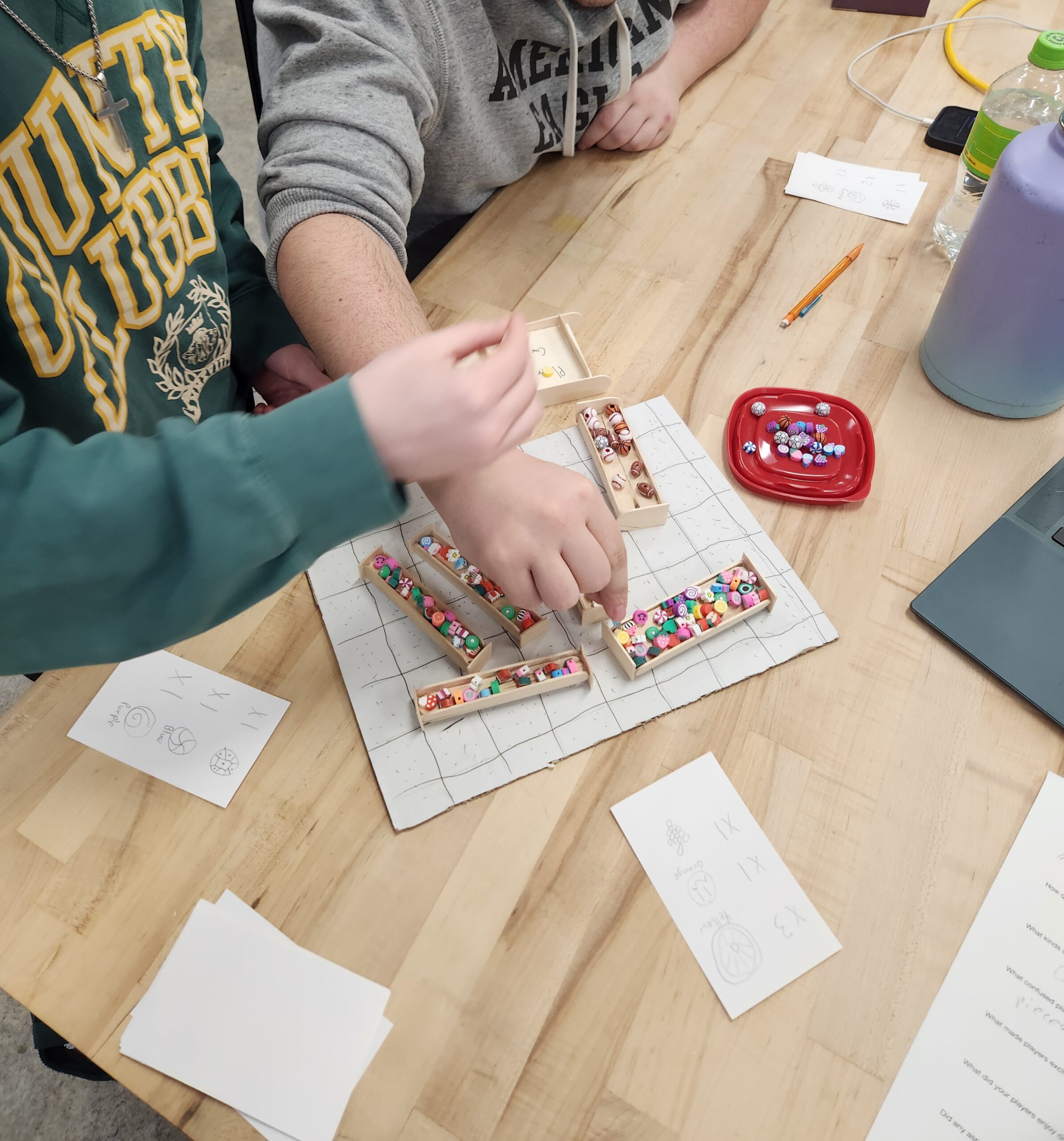
    • Some common questions that the players had were based on the rules, such as “What if you pick up and put back items?” or “Can I take from the other player’s bin?” Any of the questions were based on unspecifications that I will have to clarify in the rules, in order to prevent people from doing the wrong actions. Another question was “Am I allowed to block the other player?”
  2. How quickly did they learn to play?
    • It didn’t take long for the players to catch on to the ruleset. I’d say that this game has one of the easier rulesets I’ve made but nonetheless needs improvement. The players were able to play the game and adapt, but they still ran into complications that I will have to personally look over.
  3. What kinds of interactions did the players have?
    • This is a very competitive game, and the players were constantly at each other’s throat. From a direct interaction, the players clash tweezers and wrestle with pieces time to time, as well as striving to the first to earn points. However, not much talking is involved in the game, as players are dialed in to focus on what pieces to grab.
  4. What confused players?
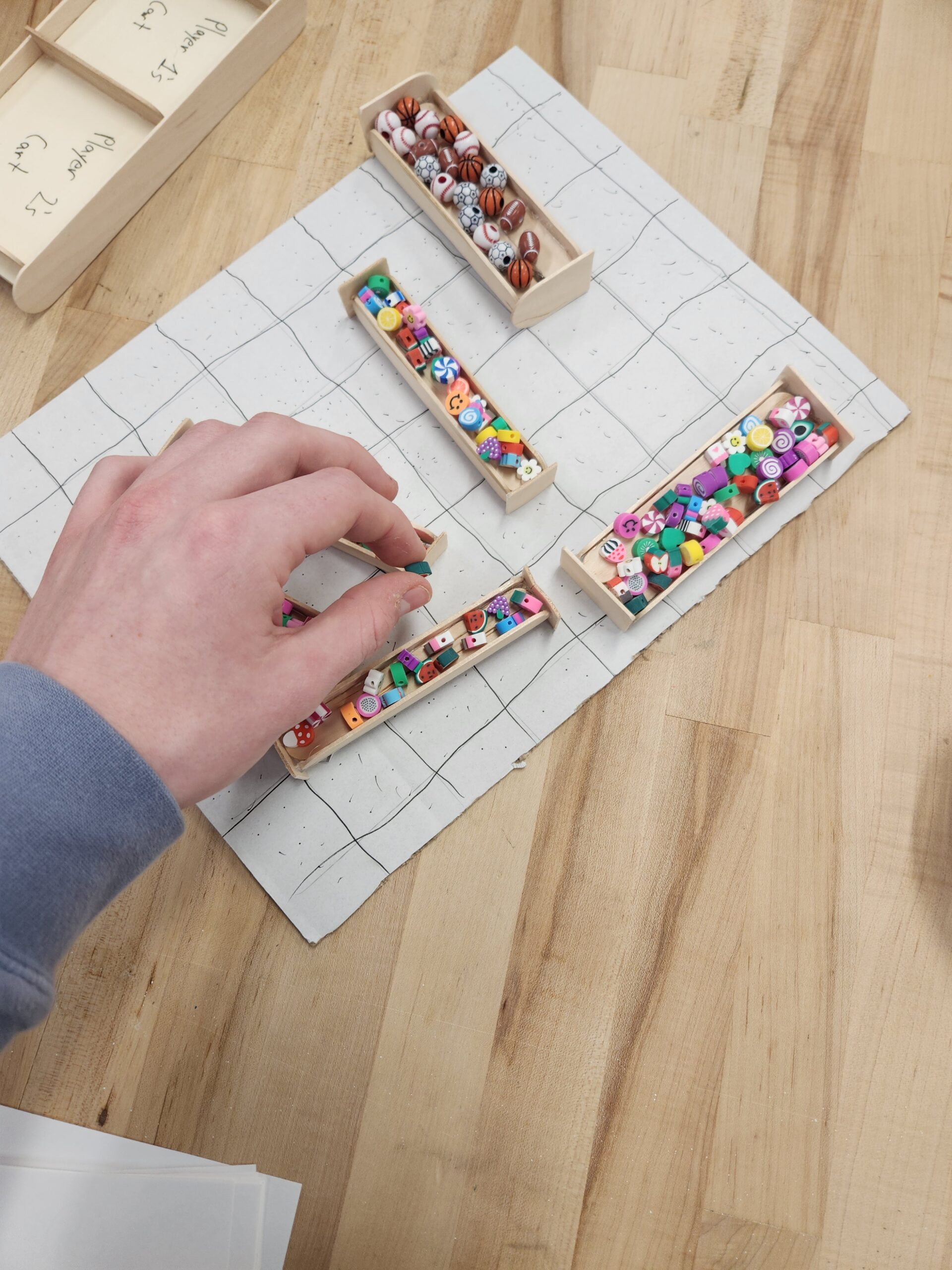
    • Players were less confused about the rules, and more confused about the pieces they had to grab. I’ve noticed that in the prototype, I did not do a good job of indicating what type of pieces they have to lookout for. This confused the players, as they sometimes grabbed the wrong pieces or mistakened items for something else.
  5. What made players excited?
    • The excitement mainly derived from the bulk of the gameplay, where players were rushing to earn points. When the points were earned, it was rewarding to the players too, complimenting their quick-thinking and observation skills. The anticipation of the manager flipping over the card evoked excitement as well, as the players eagerly awaited their next challenge.
  6. What did your players enjoy doing?
    • The players enjoyed using the tools (tiny tweezers and shopping carts) and competing with each other. They enjoyed navigating through the miniature store model, which gave them an environment to interact with.
  7. Did any aspect of the game frustrate players?
    • I wouldn’t say so, but the players suggested a mechanic to make things easier for the playing experience. I think it was more about a factor that they wish was a part of the game rather than frustration. For example, they suggested a clock/bell that could be hit to indicate that they are done with the shopping list, in order to prevent frequent ties.
  8. What did your players learn/take away from your game? Was that what you intended?
    • I’d say my players learned the aspects of keeping cool during a moment of chaos. This game really enforces the principles of maintaining composure and concentration, no matter how stressful the environment may be. This was sort of what I intended, since I was looking to create a fast-paced and competitive game.
  9. What is your plan to address player questions, confusion, and frustration?
    • Just as I’ve tackled criticism in the past, I plan on addressing the confusion, questions and frustrations of players through communication and/or feedback. Through frequent playtesting, I expect players to tell me the things that are wrong with my game. There have been instances where I thought the game was perfect from the start, until players have exposed its flaws in rules. I’ll also have to read over the rules of my game and make extra clarifications and changes to better the playing experience.
  10. If your players didn’t get your intended message, what will you change?
    • One thing I will point out is that this game is supposed to make the players feel empathy, as the premise of the game revolves around getting groceries for your sick mother. I don’t think the players understood that, at least I can do a better job at making that known. In order to fix this, I will add designs to the cards which will show a small picture of your mother asking for the specific groceries. This way, players will be reminded of their sick mother, making them more determined.

Potential Rule Changes/Iterations

  1. A needed change that I will have to make are little clarifications here and there in the rules. This includes rule changes such as:
    • No stealing from the other player
    • A restock session before each round by the manager
    • Something to do with picking back up items and putting it back on the shelves
    • No blocking players/no foul play
  2. Additionally, I should probably make some design changes, or rather add some things that can make the playing experience more organized. This can include:
    • Redesign of the cards, making it so that players can understand which items to pick out
    • More shelves, different types of shelving for more interesting playing fields
    • A clock or a bell, so that the player finished with the shopping list can indicate clearly that they are finished
    • Design to the cards, with the mother on the face of the cards drawn

Week 4 Questions

  • what learning games have you played? can you categorize them by the theory of learning types: behaviorism, constructivism, constructivism or social nature? if you played more than one which was the most effective?
    • I don’t usually feel inclined to play any learning games, but one piece of content that stands out to me is cool math games, it had plenty of games that you could either learn real math from, or social interaction (i.e. papas pizzeria etc.) in all honesty those games taught me to work well in retail and that’s all
  • is gamification bullshit, what is ian bogost’s argument and do you agree? where have you encountered it outside of class and what was your experience?
    • yes, I do believe gamification is bullshit, but too a limit, so many “bullshitters” use games as a means to spread their propaganda and profit off of it, usually I encounter new games when watching YouTubers play or I see it on PS Shop, but I tend to not play gamified content that isn’t really worth playing
  • What is a serious game and why aren’t they chocolate covered broccoli?
    • A serious game is ment to educate, they aren’t chocolate covered because it isn’t meant to exactly be “fun”

Play test for- Around the world in 80 days

Tester- Alana

Questions to consider during play and answer after play.

1.    What was the most frustrating moment or aspect of what you just played?

Not landing on a card space for many turns

2.    What was your favorite moment or aspect of what you just played?
Getting culture cards

3.    Was there anything you wanted to do that you couldn’t?

We couldn’t skip our turn when there was a group challenge so we implemented that even though it wasn’t in the rules.

4.    If you had a magic wand to wave, and you could change, add, or remove anything from the experience, what would it be?

Add

– who starts first in the rules,

– list of all countries or a list of the countries that start with a certain letter on the back of the group cards

– multiple choice?

– more cards

– penalty for repeated countries?

5.    What should be improved with the next version?

^^^

6.    What was the games message?

Geography education

7.    Describe the game in 3 words.

–       Advanced

–       Educational

–        

Raft Review

I have recently been playing the game Raft heavily, and at first I believed that it was a story about characters just trying to survive. But if you follow the story line then you can see that you are actually going and saving a whole town from a villain who locked all the people up, and terrorize them. You can personalize your raft so much and it is so much fun when you play it how you’re supposed to. 10/10 I highly recommend this game so much.

Keep Talking and Nobody Explodes

I really like this game. I remember watching this on YouTube a couple years ago when I watched markiplier play games. These collaborative games are really fun. This game is really stressful and requires a lot of clear communication. I played it with my friend today and there are a lot of complicated steps to each module. We played up to 2.2 “Double your money” and we got so much better at it throughout each bomb. The module with the two dots and the maze were the hardest for us because it takes a lot of visualization for the person with the manual, trying to guide the person with the bomb through the maze without hitting any lines. I also love that there is nothing repeated. When you fail and try again, nothing is the same as it was before. 10/10 game. Would highly recommend playing with a friend. Definitely worth the 10 dollar purchase.  

Overconsumption

Suggestions: Make game start in the middle of the board

  1. The most frustrating thing would probably be that when you start the game and you pull a backwards card, you can’t move anywhere
  2. My favorite moment would be the interesting conversations that came out of the game!
  3. I would love to see a more defined board
  4. I really think it would take a while to reach the end of the game, I would like to see maybe a timer for the coversations maybe?
  5. Putting the start in the middle
  6. To talk about how the world has overconsumption
  7. Unique, conversation starter, fun!

Maize Runner Game

Rules:

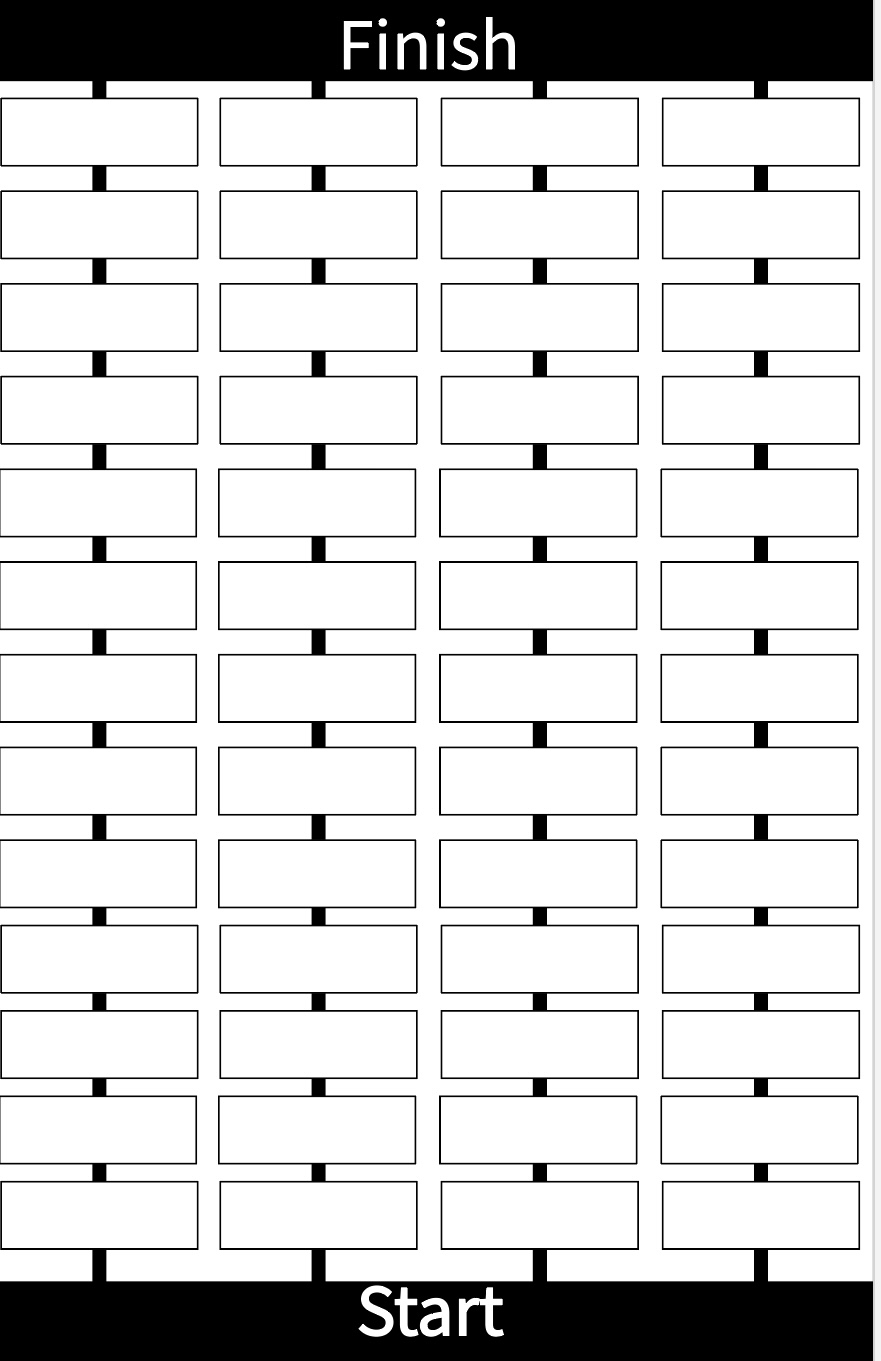
Each player will start in a different quadrant, signified by the openings on the end of the maze.

Players will roll to see who goes first, highest number goes first, second highest goes second, etc.

Players will roll a single dice to determine how many spaces they move.

If a player rolls a 6, they get to place a wall piece to block off another players path.

If a player lands on a green dot space, you get a card to remove a wall that can be used once.

First person to the end of the maze wins the game, game can continue for 2nd, 3rd, and 4th.

Week 5 – Notes, Playtests, Ideas

Game Maker’s Play Test Notes – Mindful Memorial Services

  • What questions did your players have? There weren’t a lot of questions, but they would ask each other about the requirements and what would happen with each tile. 
  • How quickly did they learn to play? They learned to play pretty quickly. The only thing that was a little difficult to get used to were the specific requirements and actions that happened with each tile, so a key would probably be helpful. 
  • What kinds of interactions did the players have? Players would influence the next player’s turns by taking up the different tiles. Players could max out the tiles, making the next person have to purchase a brand new tile. Players also would discuss about the people and their wants and needs
  • What confused players? I feel like the players didn’t really have that much confusion. 
  • What made players excited? I think players were excited when they satisfied both the deceased and the loved ones. 
  • What did your players enjoy doing? I think they enjoyed looking at the different character cards and how their needs and wants differed. 
  • Did any aspect of the game frustrate players? I think having to refer to the rules constantly frustrated players, also not being able to obtain more energy very easily so it made them not want to do cremation or human composting. 

Other playtest notes

  • clarify the way tiles are placed 
  • i think the human composting needs more benefits 
  • a way to yet more tokens
  • get more energy 
  • maybe something to mark that the tiles aren’t open when they are maxed out 
  • a key 
  • Maybe add how they died, with effects from that
    • extra card and it could effect if they get buried or cremated 
  • maybe green burial plots need to be separation 
  • maybe the green ones can’t be near a crematorium 
  • pretty easy to learn but there were a few things that they had to keep referring to

Sara’s Game Playtest – Don’t judge a book by its cover 

  • What was the most frustrating moment or aspect of what you just played? The end of the game became a little bit frustrating because it was essentially just trying every possible combination until we got the whole thing right, but it wasn’t overwhelmingly frustrating to the point where it ruined the game experience. I think maybe there could be a limit on the number of tries? Either way works though. 
  • What was your favorite moment or aspect of what you just played? Because I personally had a card in the game, it was really interesting to see what other people thought was my experience and belonged to me. I also knew a few of the other cards but I didn’t reveal it to the other players so it was really interesting to see what they thought too. 
  • Was there anything you wanted to do that you couldn’t? Not anything that I can think of, but maybe know a little more about the people on the cards? But I’m not sure if adding that would ruin the purpose of the game. 
  • If you had a magic wand to wave, and you could change, add, or remove anything from the experience, what would it be? I think I would make it so that anytime that anyone plays this game, they always have a connection to at least some of the people in the game (or know who they are). I think that aspect of the game made it more fun on my end. 
  • What should be improved with the next version? I feel like it’s pretty solid already ngl, but you could play around with some different potential things: having the answer on the back of the cards like those memory card games, having it be a game that is commissioned by people (maybe you have a website and you draw and send them all the cards??), maybe explore how the game can be created at a party (maybe players go to a character creator online, build themselves, and print out the cards and they can all submit their own facts/traumas), etc. 
  • Describe the game in 3 words. Thoughtful, personal, well-done!

Game ideas

  • protect our national parks – make it like the bob ross board game where there are different cards and pictures of the national parks and you must invest resources like staffing for search and rescues, trail cleanup, etc to preserve that specific national park
  • 2025 plane ride – a board game where you must navigate the treacherous landscape of riding a plane in 2025. you land on spaces and those cards can effect your plane’s ability to deal with certain conditions until you either reach your destination or crash
  • visit the national parks before it’s too late – try to travel to all the national parks or just the ones on your bucket list before the government (another player) gets to them. They will drill for oil, destroy animal habitats and biodiversity, and make the parks a much dangerous place for visitors. this could be like Battleship..
  • Giving credit where credit is due – a party or online game where people can share their accomplishments and things that they are proud of that they might not have been appreciated for or recognized from

Sara Estus – Playtest Review “Mindful Memorial Services” by Amber Holt

First, I want to say this is a clever and thought-out game. Amber is always very thorough with game rules and mechanics, and tying her abilities into something she is passionate about, like sustainability.

1.) What was most the frustrating moment or aspect?

I kept trying to guess what the deceased and the family wanted incorrectly in terms of burial type and I lost all my hearts mid-game. I did still end up winning the game somehow, but feeling like you have no chance to win is always not a great feeling.

2.) What was your favorite moment or aspect?

I loved the similarities in the game tiles being like Takenoko with the hexagonal tiles, and my favorite aspect was having to try and match with how the deceased and family wanted to be buried. Having a luck factor, along with trying to determine needs based on the few words stated on the cards was very enjoyable.

3.) Was there anything you wanted to do but couldn’t?

In terms of gameplay, I wouldn’t say there was anything in particular, but for organization, I wish there was a way to place the deceased cards into the tiles without having to put them in big piles as only a certain amount can fit in each plot.

4.) If you had a magic wand to wave, and could change, add, or remove anything from the experience, what would it be?

After the gameplay, we discussed that it would be interesting to have another card pile that included ways people have died, that way it changed the desires of the deceased a bit, like if they passed in a fire, they likely wouldn’t want to be cremated.

5.) What should be improved for the next version?

I’ve always been a big fan of Amber’s art so I’m excited to see what style she decides to take the game. And as I said above, adding new cards like we discussed would be cool!

6.) What is the games message?

“Green Disposition”

7.) Describe the game in three words

Sustainability, Macabre, Desires

Thank you Amber for letting me playtest your game! I’m excited to see where it goes!

play test for Don’t judge a book by its cover – sara

  1. the most frustrating aspect of this game was not having a lot of information to go off of to categorize people because in todays age it is normal to try and not judge people by how they look by having so little info forces us to make the decisions that society tells us we shouldn’t make.
  2. my favorite moments were the debating between players, hearing the reasons that people put i quote with a person was very entertaining at times, especially when its with the people we know that are in the game.
  3. no it wisent missing anything that i wanted to do.
  4. i wouldn’t add or remove anything to be honest. i feel like it was a fully finished game.
  5. a better way for people to know if they have gotten the correct pairings so sara doesn’t have to sit and be the game master.
  6. empathy, it was illustrating how easy it is to categorize people and make assumptions but it shows us how easy it can be to miss categorize someone based on age gender and looks.
  7. empathy, intriguing, simple.

Ambers game

  1. not knowing if the people you are choosing a method of being put to rest that they want but that is the whole point of the game it is supposed to be a challenge to make these decisions.
  2. having diverse amount of ways to be put to rest and finding out you can be composted.
  3. no, i feel everything was well balanced.
  4. nothing
  5. i feel like it was perfect.
  6. the games message was to inform people about death and processes you can take and to also show how sometimes their is disconnect between loved ones and the deceased.

Sara Estus – Game Prototype #1 Don’t judge a book by its Cover (Design Process and first playtest notes)

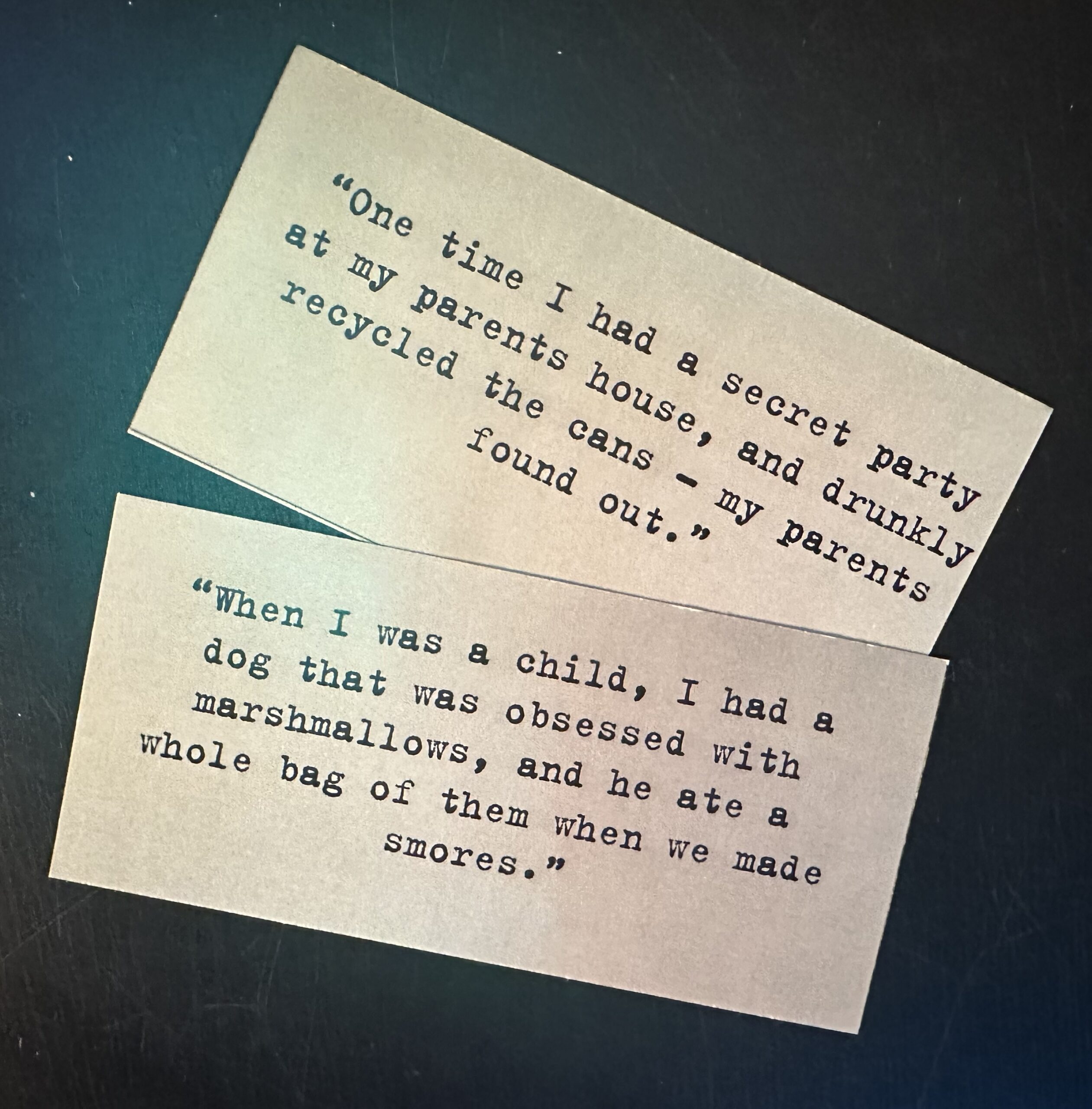
In a world where people are often easily stereotyped based solely on looks rather than the content of their character, Don’t Judge a Book by its Cover is a game that challenges this issue in today’s society. With digitally illustrated character polaroids and small cards that contain a short statement about a person’s life experience or story – players are tasked with stereotyping, assuming, and making generalized judgments on various real people to attempt to match a statement with the person who said it.

The goal of the game is to match all character polaroids, to their personal statement cards.

However, there is no true winner to this game, whether played with a single person, or a group of people – making judgments on others based solely on appearance is wrong, and this game is meant to spread awareness and provide players with a sense of empathy, as you don’t truly know what someone is going through.

Here are some photographs of my artistic approach, including drawings, final cards, and my process of gaining photos of people and their statements/stories:

RULES:

This is the game statement, and rules given to players along with a stack of fifteen character polaroids, and 15 statement cards.

Probably the most basic rules I have come up with in a game.

DESIGN AND ILLUSTRATIONS:

Using the image provided by the person I asked, I opened the image in Procreate and created two ‘copies’. Creating a basing sketch of their head shape, I then drew only the necessary loose details that were needed to make the sketch fit the person it was representing.

I chose to draw each person as I wanted to create a sense of consistency in the game, similar to the quick details we might get from a person when we pass them in a hall. Below is a quick time-lapse of my portrait for the game!

Next, let’s talk about the final character polaroid art that I printed out on cardstock:
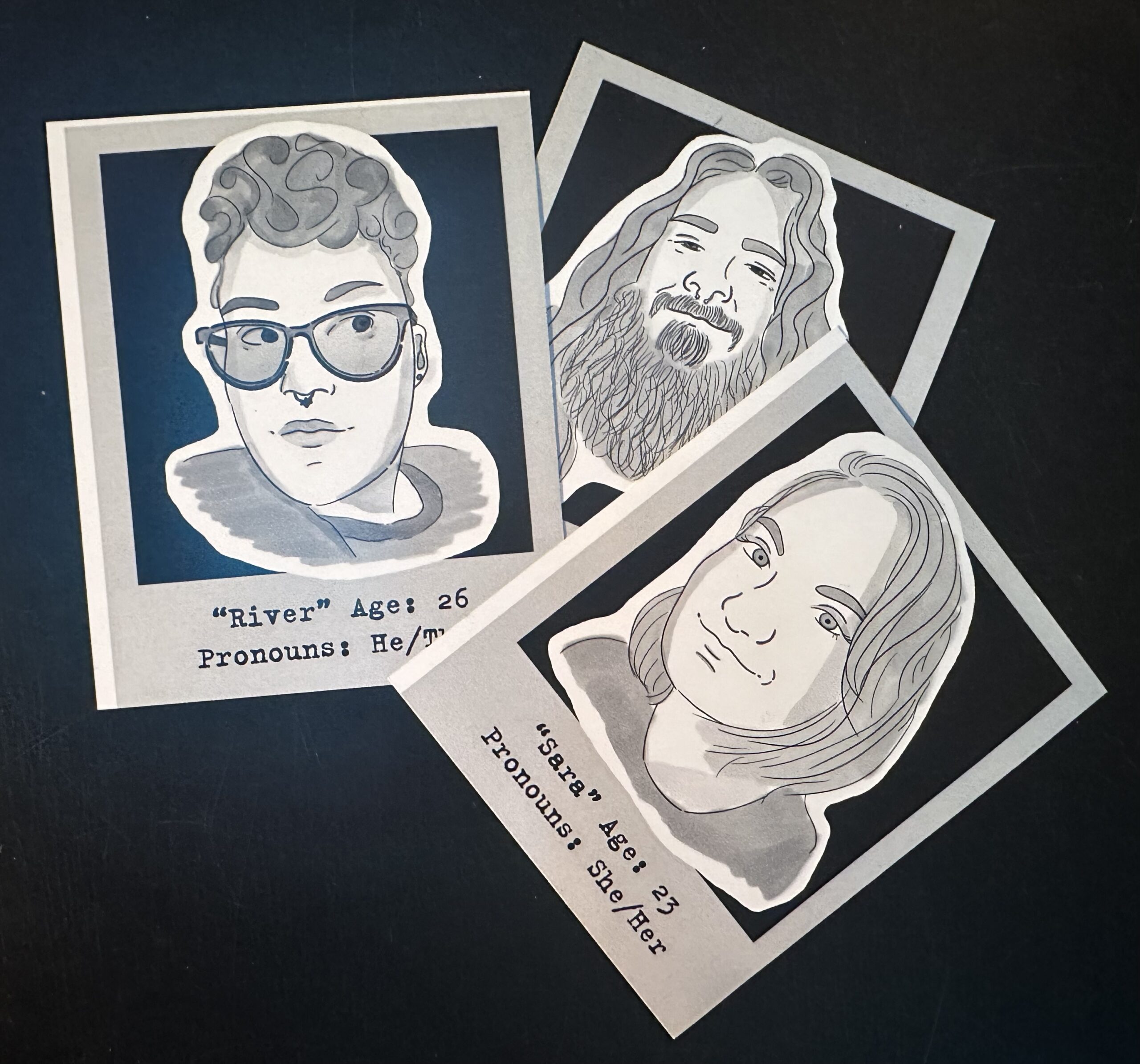
For the final card design, I wanted the cards to feel old like you had found them in a box hidden away. I wanted the monotone colors of the drawings to embrace the feeling as well, so by choosing Polaroids it gives the feeling of “who are these people? And where are they now?” I also chose the have the drawings be almost cut out on top of the Polaroids to give it a unique flair.

The only details written on the cards are the names/nicknames of the people, as well as their age, and pronouns. I decided that these would be the only details you would receive as it is often the bit of information you can get from conversations about other people, and through basic ice breakers.

STATEMENT CARDS:

Still following the “aged” mood I was going for, these cards are printed on cardstock with a yellowed background with a typewriter font to add more mystery. The font I used was LTR NCND Variable which can be found on Adobe Fonts.
Now let’s go through my process of how I got permission to use people’s photos and statements:

I decided from the start that I wanted about 30 people, first asking my friends, then family, and then reaching out through social media. It was an extremely time-consuming process, as people were quite picky about which photo to use, and they wanted their sentences to be “cool” or “meaningful.” So much so, that I ended up having my last entry turned into me around 11 pm the night before the project was due.

The other factor that was quite tedious was drawing everyone. For those I was closest with, I wasn’t as worried about making it perfect, but for some, I devoted over an hour or so to the basic sketch. As you saw from my sketch time-lapse, I made the basic form and practically traced the details, this process didn’t always work as some images were further away than others, and drawing open smiling mouths can be tricky! By the end of the design process, I ended up only really getting 15 people to agree to the project, and to give me all the materials I needed following this prompt I shared: I need one nice photo of you, your name/nickname, age, and pronouns and then a single sentence/statement about something that has happened in your life, it can be happy, sad, weird, or a mix. I also clarified that other people will be reading these statements and that their real pictures will not be shown (I asked River and Amber permission to use the pictures they gave me, as shown above.)

Following this, let’s talk about the first playtest!

1.) What Questions did your players have?

I had about five or so people play my game, and they approached it pretty excited, commenting on the art and unique concept. Early on players wanted to know who each person was, but I of course didn’t reveal this until all cards were matched respectively. A few players recognized some of the people who I drew, which didn’t add much to figuring out who said what statement, given most of the statements were pretty unique and broad. Also, two of my playtesters were in the game! They didn’t snitch on themselves either, thank you, Beck and Amber!

2.) How quickly did they learn to play?

Extremely quickly, and there was some unintended teamwork at play with a fairly large group. Following the basic principles of matching, agreeing on the match, and the I would check all of the cards, and set aside the correct matches.

3.) What confused players?

Players did seem to get a little annoyed after mismatching the same cards over and over, so mentally being able to keep track of who you matched with what card is key.

4.) What made players excited?

Players enjoyed finding out who did what, and the stories behind the people in the game. It was also fun to see the two players that were included in the game and see the reactions of other players to their statements.

5.) What did your players enjoy doing?

When they started to get the characters matched to the statement you could tell it was relieving and fun for players. They also enjoyed looking at the art and reading the statements since quite a few were fun and unique.

6.) Did any aspect of the game frustrate players?

Yes, it took about 4-5 times matching and changing which card belonged to which character, I could tell players were getting a bit frustrated with starting over each round.

REVISIONS FOR VERSION 2:

Based on the feedback I received, I think version two will give players a bit more information on the character polaroids, such as “occupation,” “relationship status,” and “hobby” though this takes away a little bit from the concept of knowing nothing about the people shown, it still provides the same depth of empathy and “you truly don’t know what someone is going through” still stands. Doing this also may reduce the number of rounds players must do to completely match all the cards. Furthermore, as I suspected, players also wanted to be in the game. So I am considering taking it from fifteen to about twenty or twenty-five character polaroids and statement cards. Though this will add more to match, many of the people I will be adding in are different ages than those initially in version one. (Version one was ages 20,40, and 80, version two will be 5, 20, 70, and 100). This variety can make it easier to match cards as well.

I hope everyone enjoyed playing my game as much as I enjoyed creating it. Thank you to those who were involved in the design process and gave me feedback before first playtesting!