
Short Summary
Roses are Red is an environmental game where players work to cultivate their gardens, collecting and maintaining resources and protecting against bad weather to successful grow beautiful flowers. This game is meant for mainly older children, perhaps teenagers, to adults of all ages due to its more complex gameplay and for anyone interested in strategy, lots of game pieces and environmental impact awareness games.
Design Process & Thought Process:
- Game Design Document (GDD):
The core of Roses are Red is collecting resources to be able to plant flowers (which are worth points) and use other various cards and tokens to also gain more points. The message is reflected in the game play. I wanted the game to make players aware of the effort and patience it takes to grow plant life. This game is split into four rounds, which are the seasons, where each round progressively requires more resources and “energy” to sustain your plant life which gains you the most points in the end.
The general mechanics involve passing hands around and collecting cards to be used to gain other cards. Cards generally “cost” other resources to obtain so it is a game of strategy in which cards you collect to gain other ones.
- Iterative Design:
Given the amount of cards and game pieces and rules, I had many trial and error attempts at making this game playable. Unfortunately, due to personal circumstances, I did not have time to fully develop the game, but went through several iterations of card design and mechanics and rulebook writing. The biggest struggle was determining the number of cards per round to make it competitive but not too short or too long. The balance of the game is something that still needs to be played out more but was interesting to experiment with.
Some cards design changes are as follow:
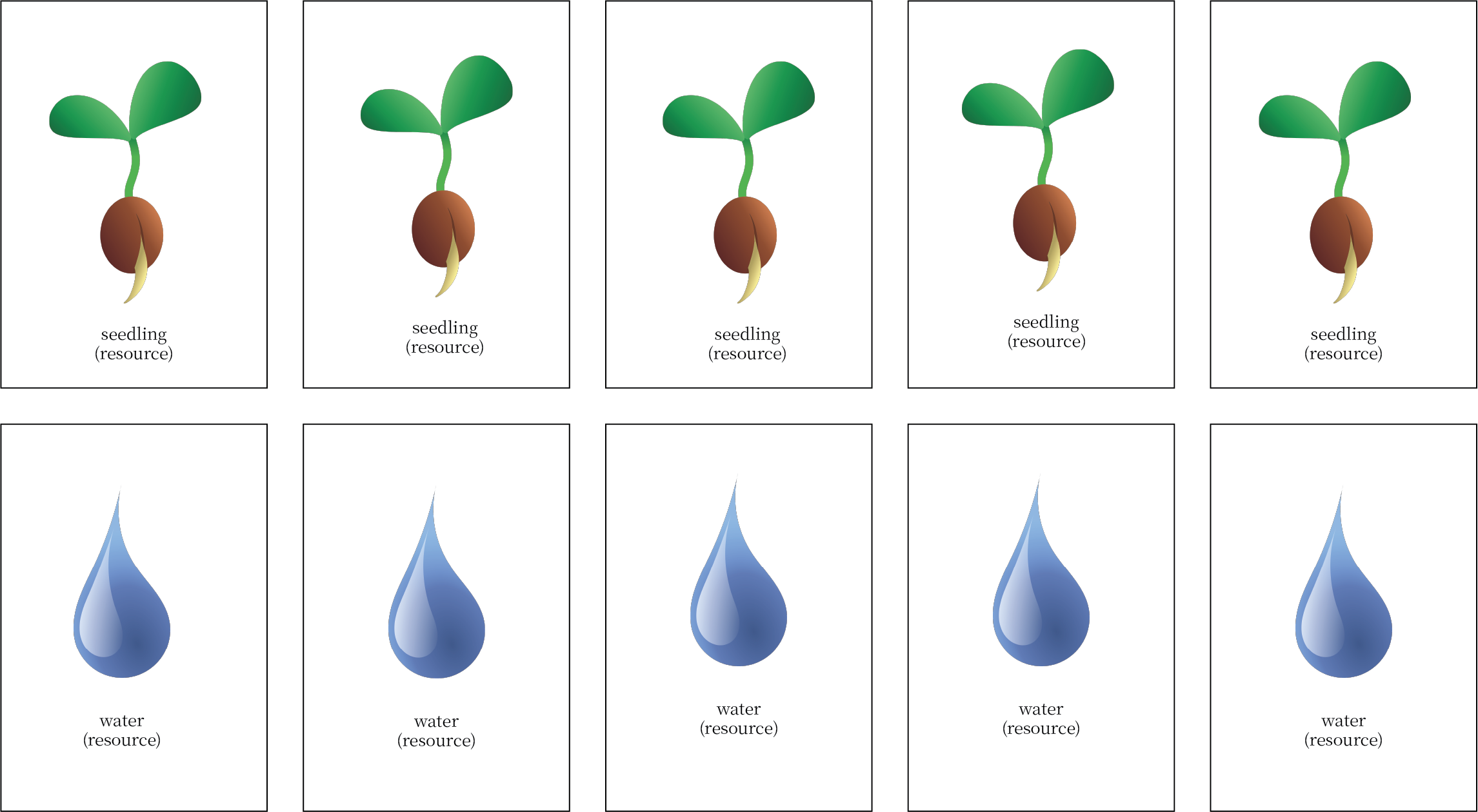
to
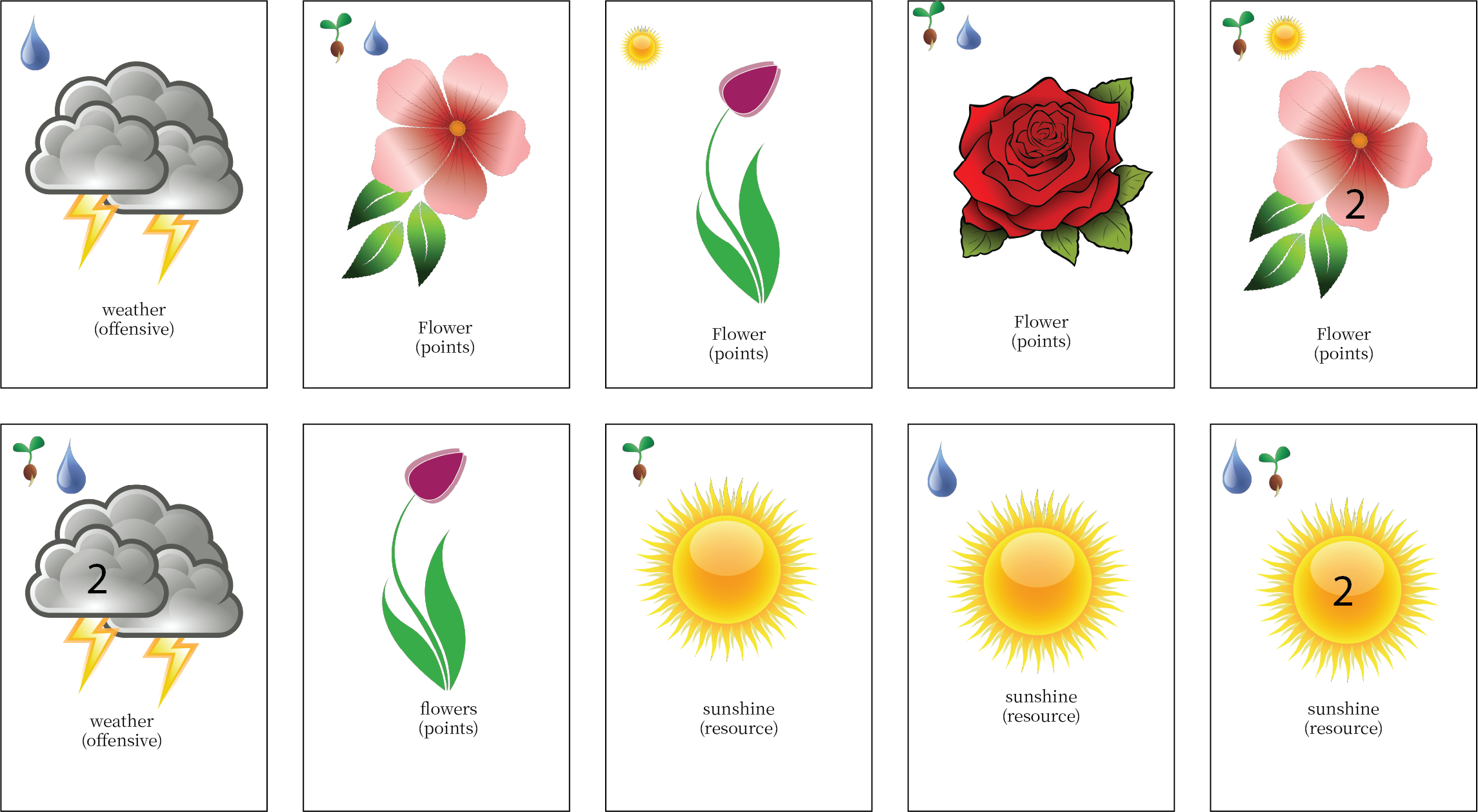
For the future, I would need to put more examples of gameplay in the rules to make it more clear how each move and round works.
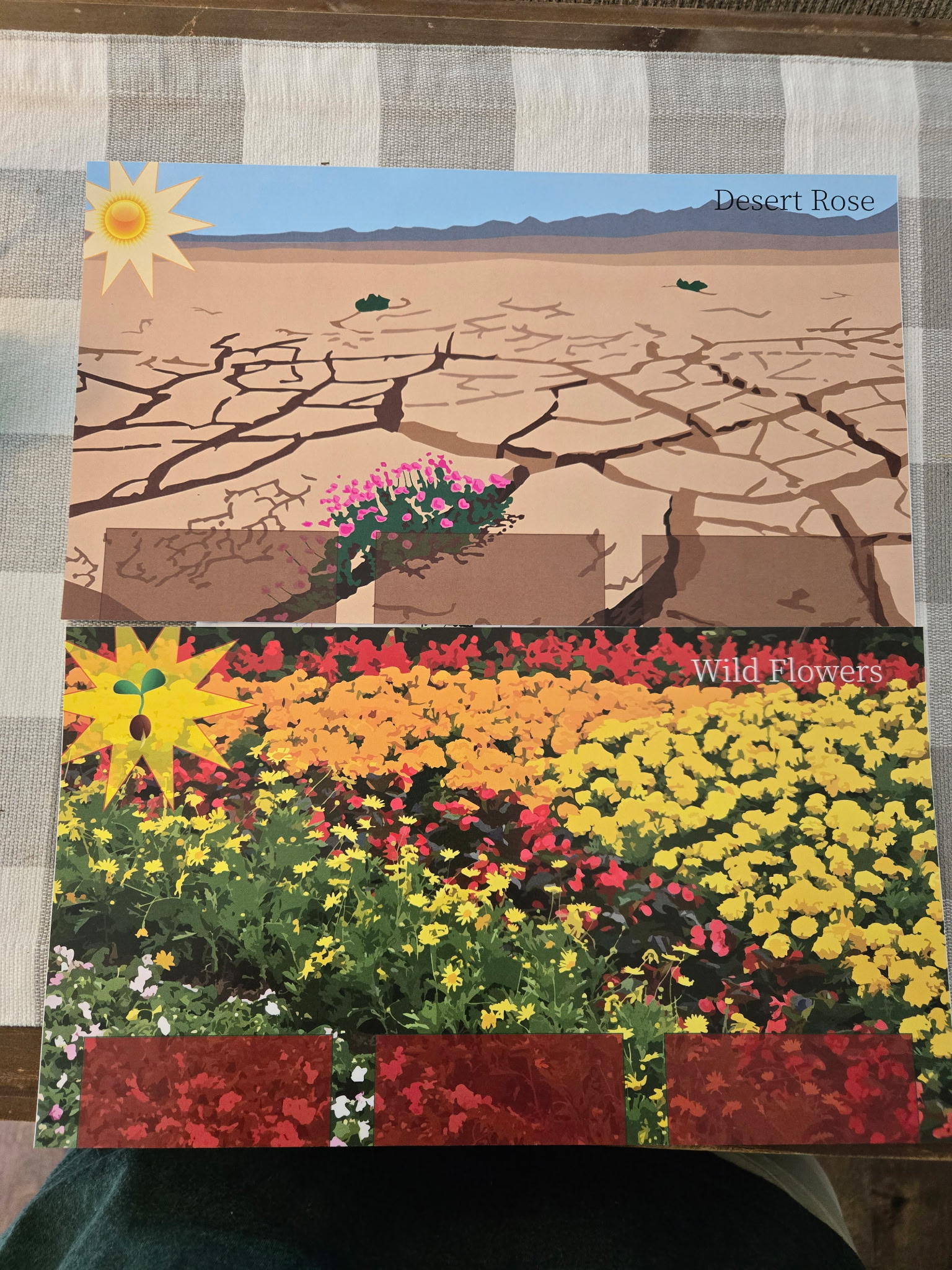
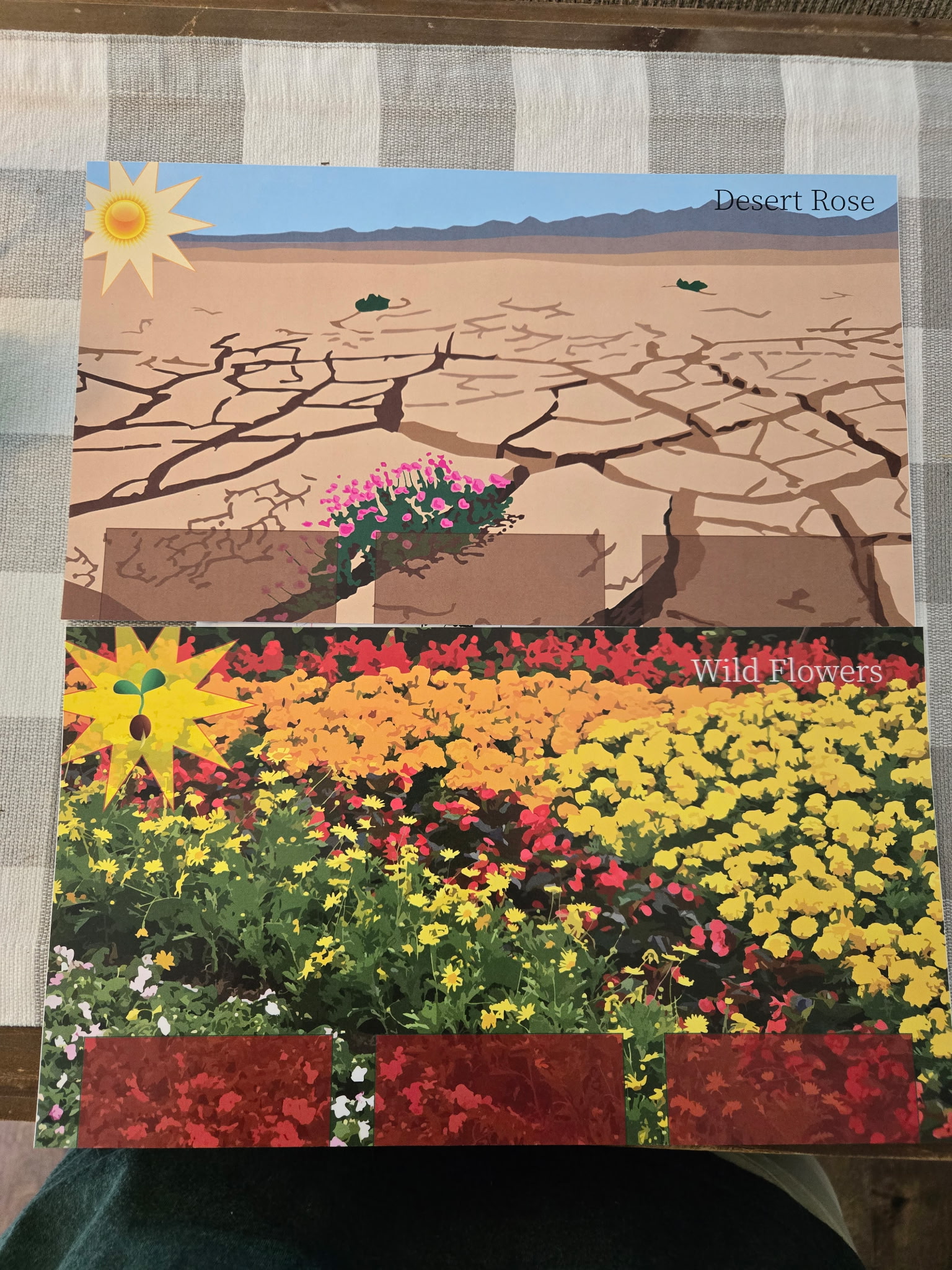
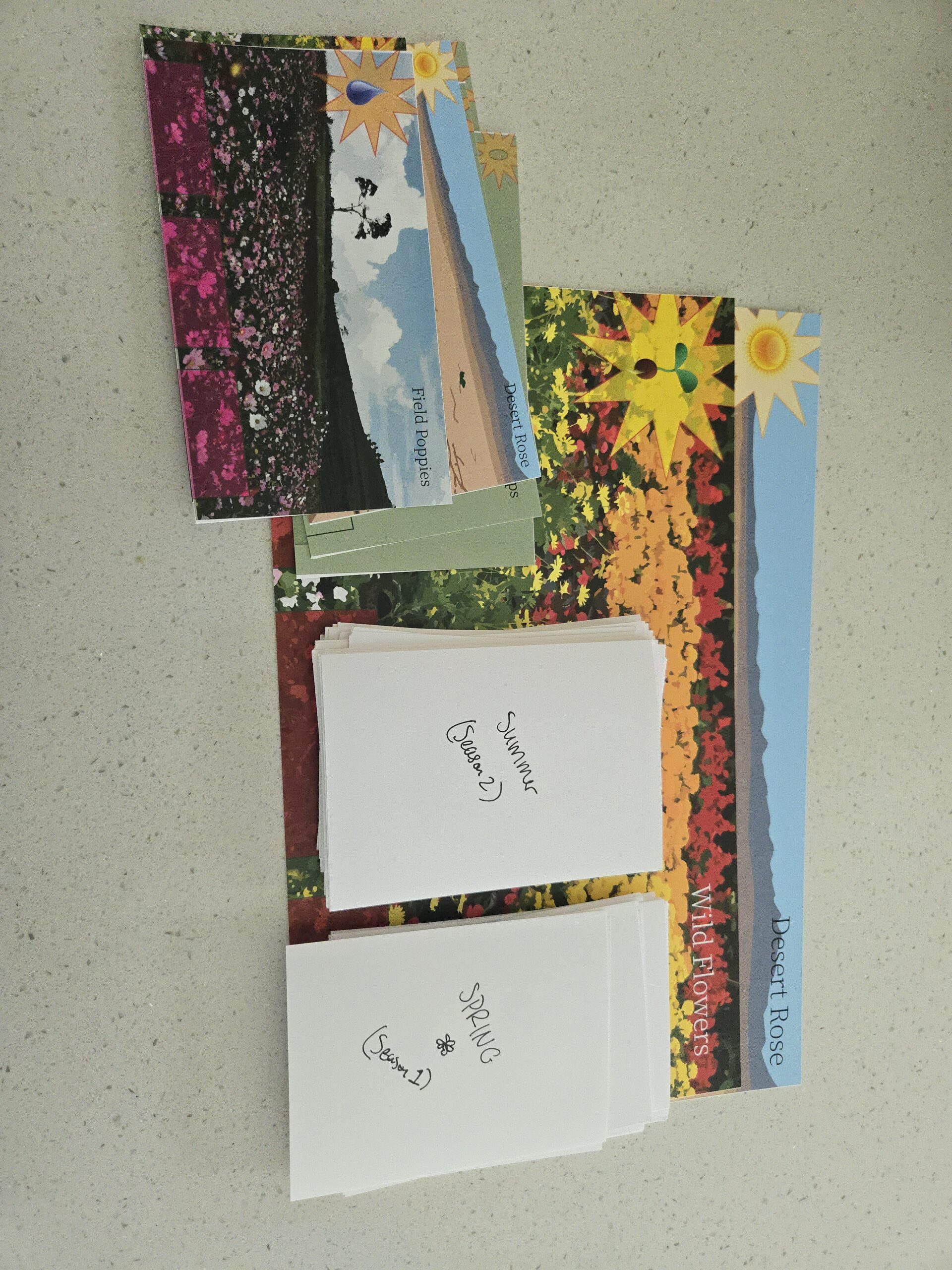
I spent a lot of time iterating on the effectiveness of the Flower Beds, which are the players main game boards which they collect all their cards on.
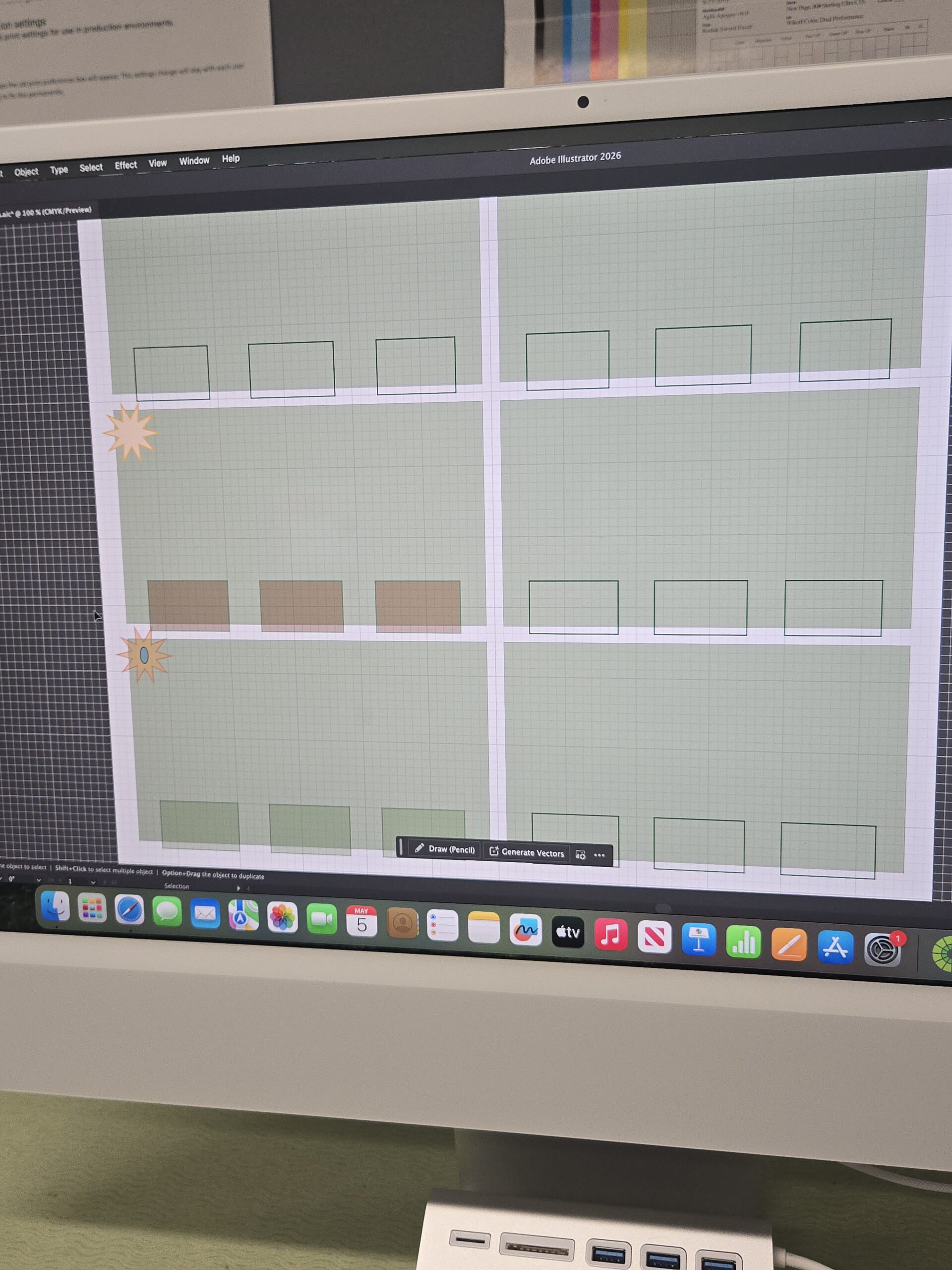
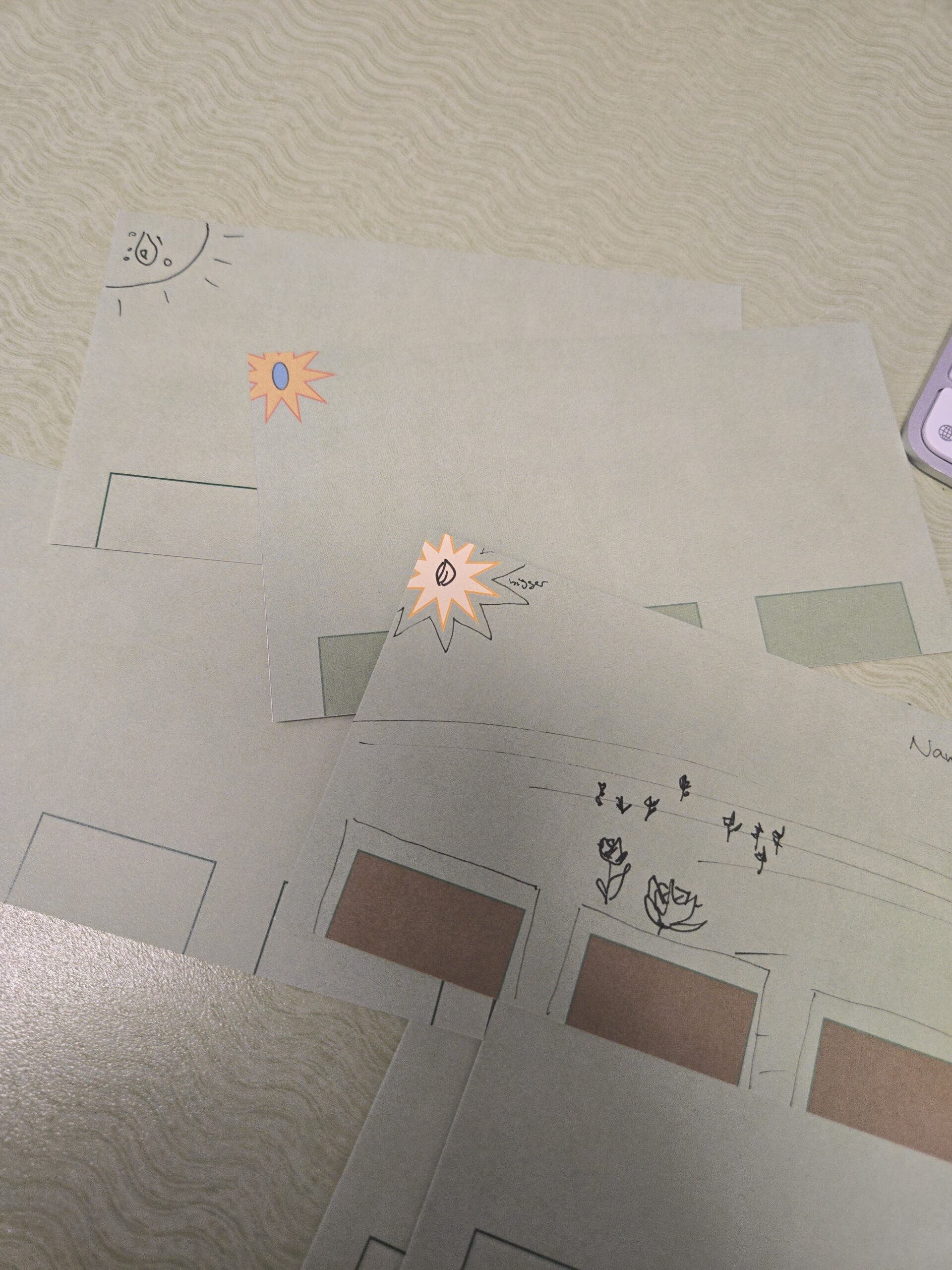
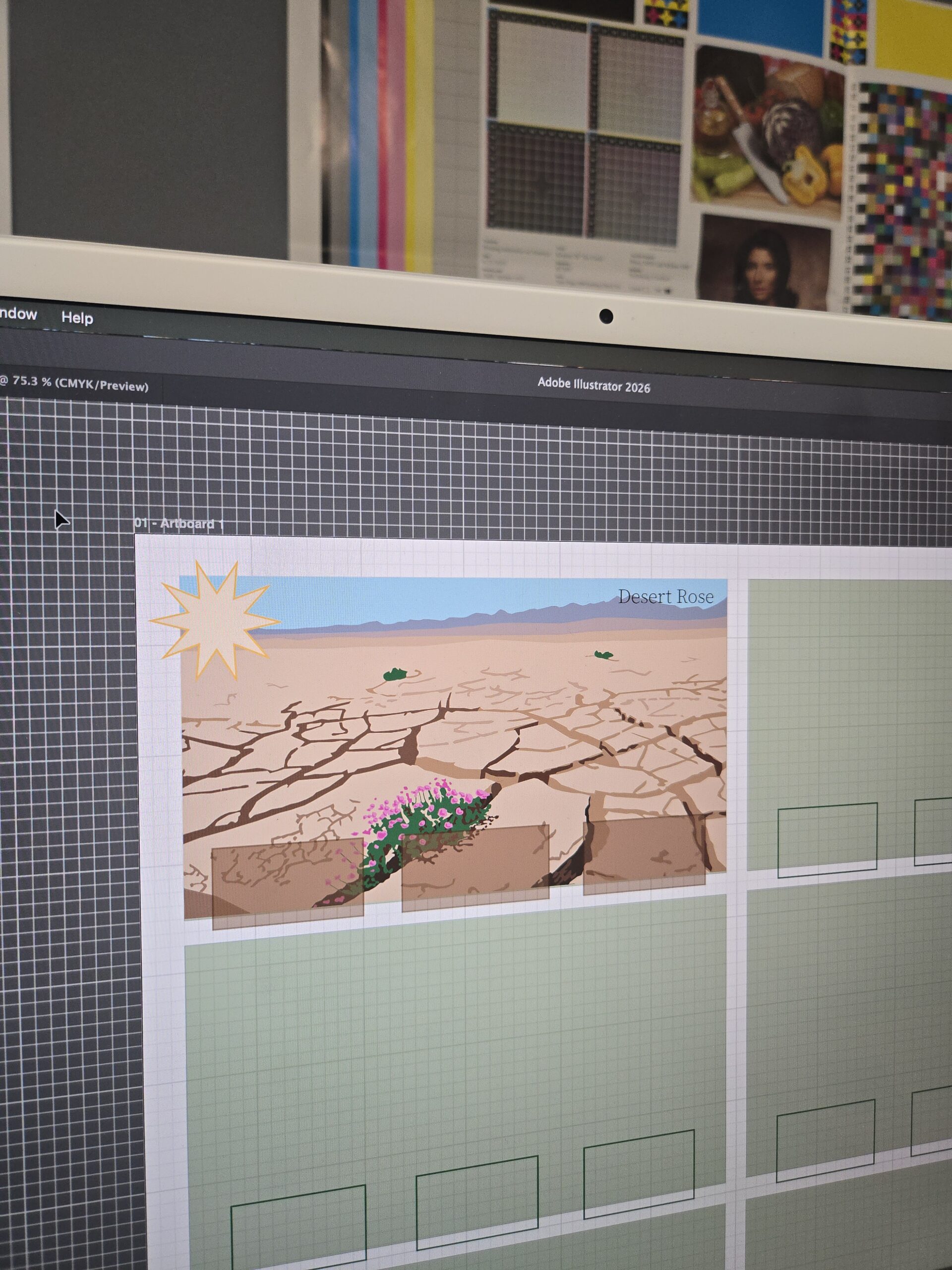
This is more what the actual game board Flower Bed would look like. It took a lot of work to get the right size and spacing and intuitiveness of where players would place their cards once collected:
Game Mechanics:
Each round follows the drafting style:
- take one card from your hand and pass the remainder of the hand to the player next to you
- pick up the next hand, take a card, and continue these actions until no cards remain.
After each round the direction of passing reverses.
- Spring & Autumn → pass left
- Summer & Winter → pass right
Each player is trying to collect and maintain their resources to “grow” more flowers (gain Flower Points)
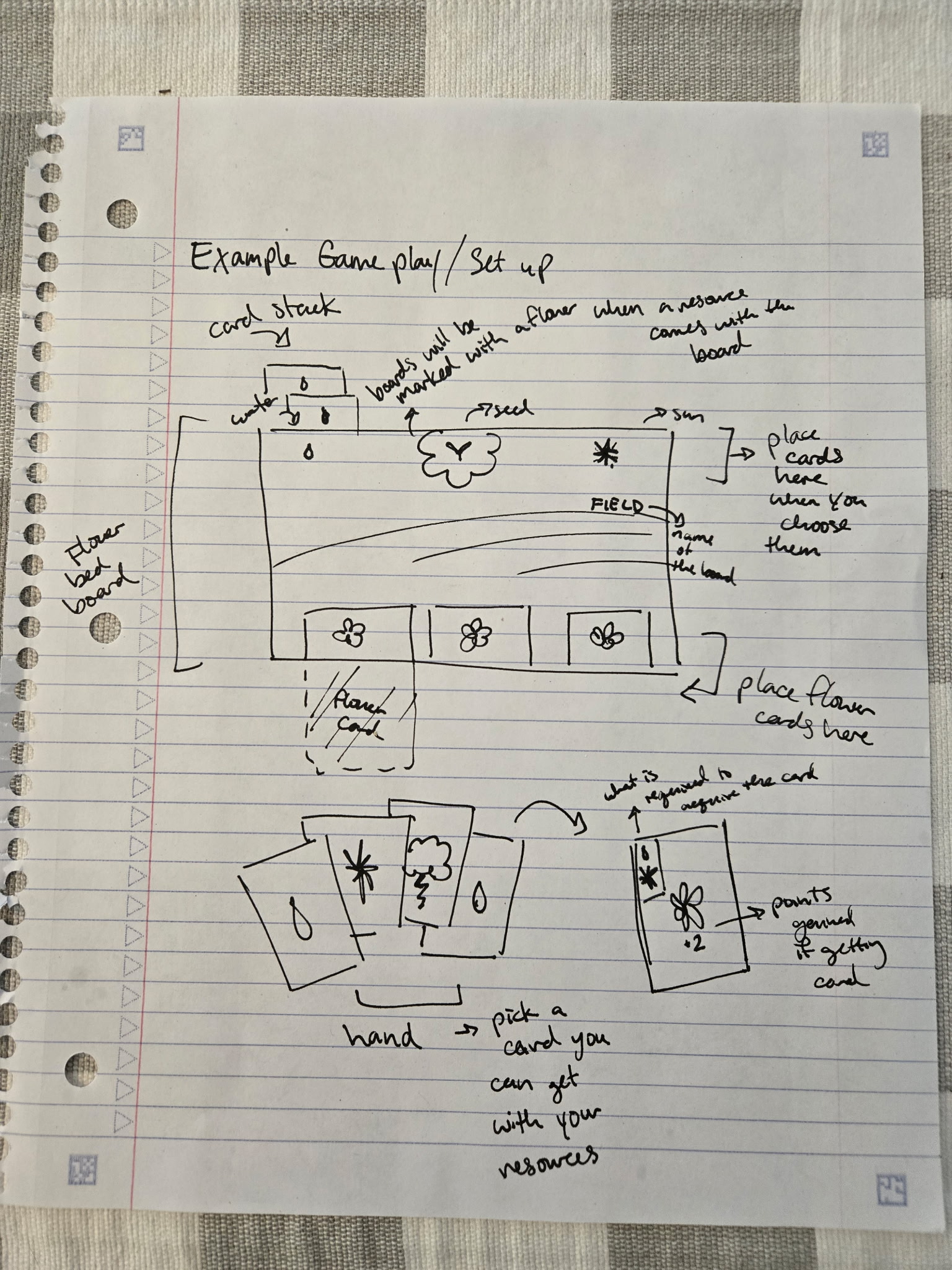
The example hand below demonstrates where cards go and how the mechanics of taking cards and passing works:
At the end of Winter:
- Add up all Flower Points from Flower Cards.
- Additional Points:
- +2 points for most remaining resources
- +1 point per token per player
- +3 points for most flowers
Player Goals: Players pass cards to try to collect resources in order to have the chance to also collect flowers based off of the resources they have and how much they are worth. Players are trying to get the most points. You can get points by collecting flower cards, winning weather “battles” (having the most weather cards) and having the most resources.
Gameplay Sequence:
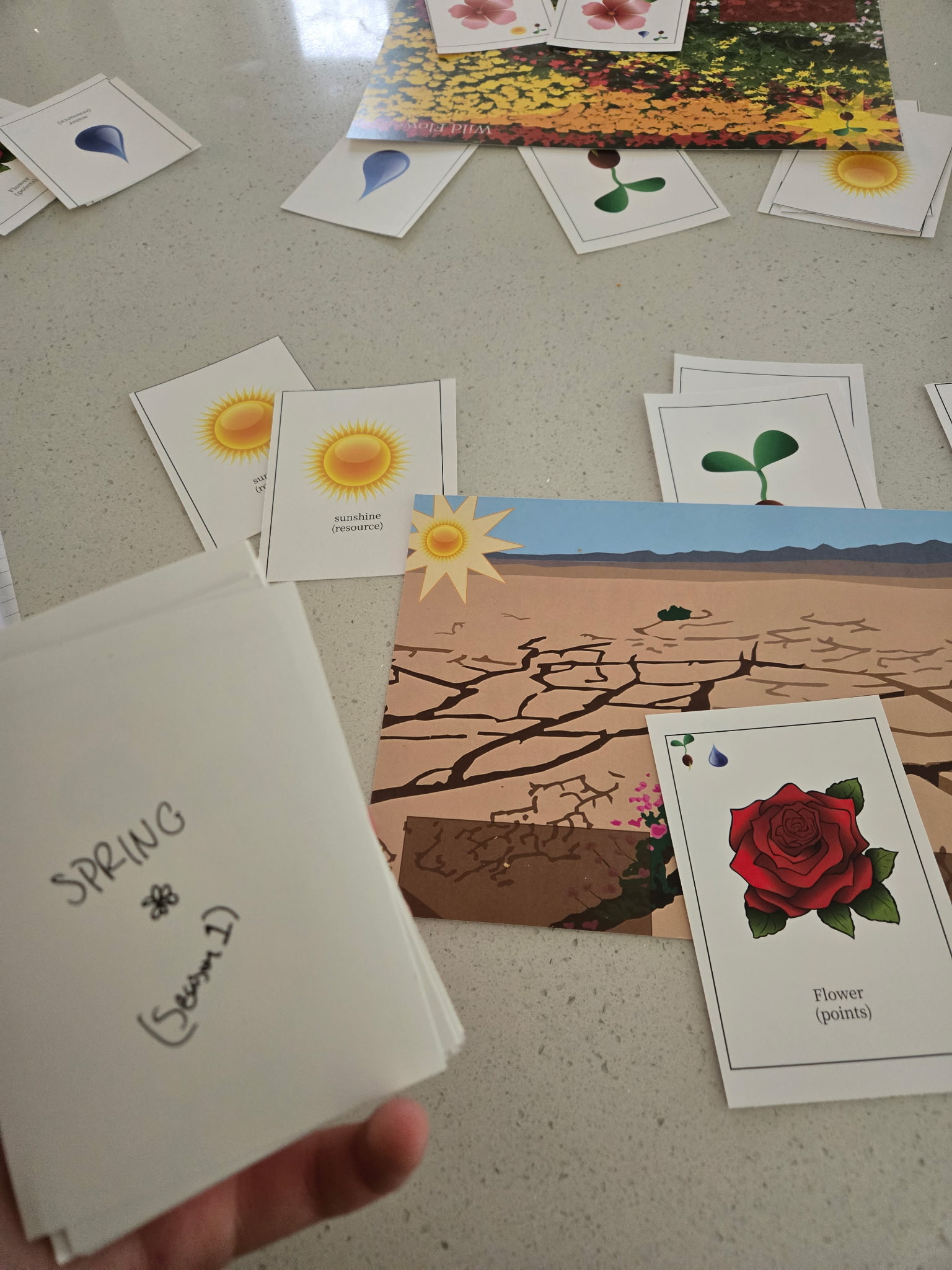
- Game Board & Components:
Each player is given a Flower Bed at random to grow their flowers on and collect resources. Each Flower Bed comes with a resource built in already. Flowers are collected on the colored rectangles at the bottom, resources are stored by partially sliding them under the board where the resource sun is in the top left corner. Everything else is placed on top of the board or above it to the right.
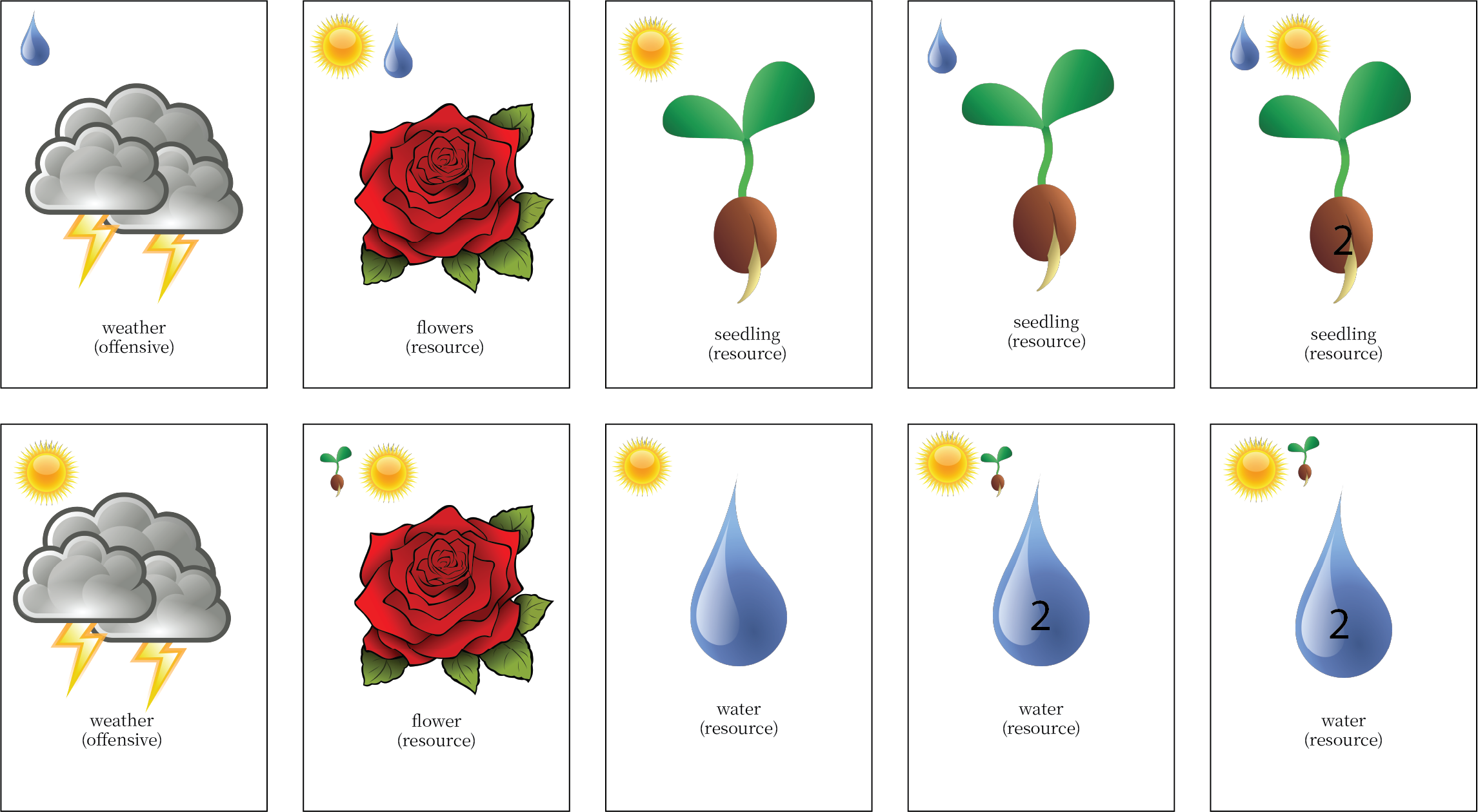
The cards have what is required to obtain them in the top left corner. What the card is is described and displayed in the center.
Seed Cards
- Required to grow flowers.
- Some flowers require multiple seeds.
Water Cards
- Used to “activate” seeds.
- Certain flowers require a set amount of water.
Sunshine Cards
- Required along with water to grow flowers.
- Some advanced flowers require extra sunlight.
Offensive:
Weather Cards
Only introduced in Season 2 – Summer
These cards rack up over the game and are used as essentially “battling” your team mates.
- They only affect the players next to you
- Place a weather card above your Flower Bed when selected from the hand.
- Whoever has more weather cards at the end of a season gets an extra token
Main points:
Flower Cards (Points)
- Gained when you meet the requirements.
- Some higher-value flowers require combinations (ex: 2 Seeds + 2 Water + 1 Sun).
- Put these cards at the bottom of your Flower Bed when collected
An example of some cards are displayed:
Rulebook & Playtesting:
- Rulebook Sample:
- Playtesting Notes:
My family helped playlets this game for me. They said it was playable from the two rounds that I was able to fully create. They recommended working on the wording for rules and making sure all the cards were accurate and aligned with each round correctly.
I worked on wording, but while I wasn’t able to work on the design of the cards and making sure they matched the difficulty of each round correctly, that is something that I would focus on in the future.
- Game Reflections:
I learned that the development process is long and hard for a complicated game with lots of mechanics. I would have given myself more time to iterate and be able to get more player feedback, cause that really helped me be able to get a direction that I needed to be able to put this all together. There are a lot of game pieces involved and it was fun to make a game like this come to life, even if just in the beginning stages.