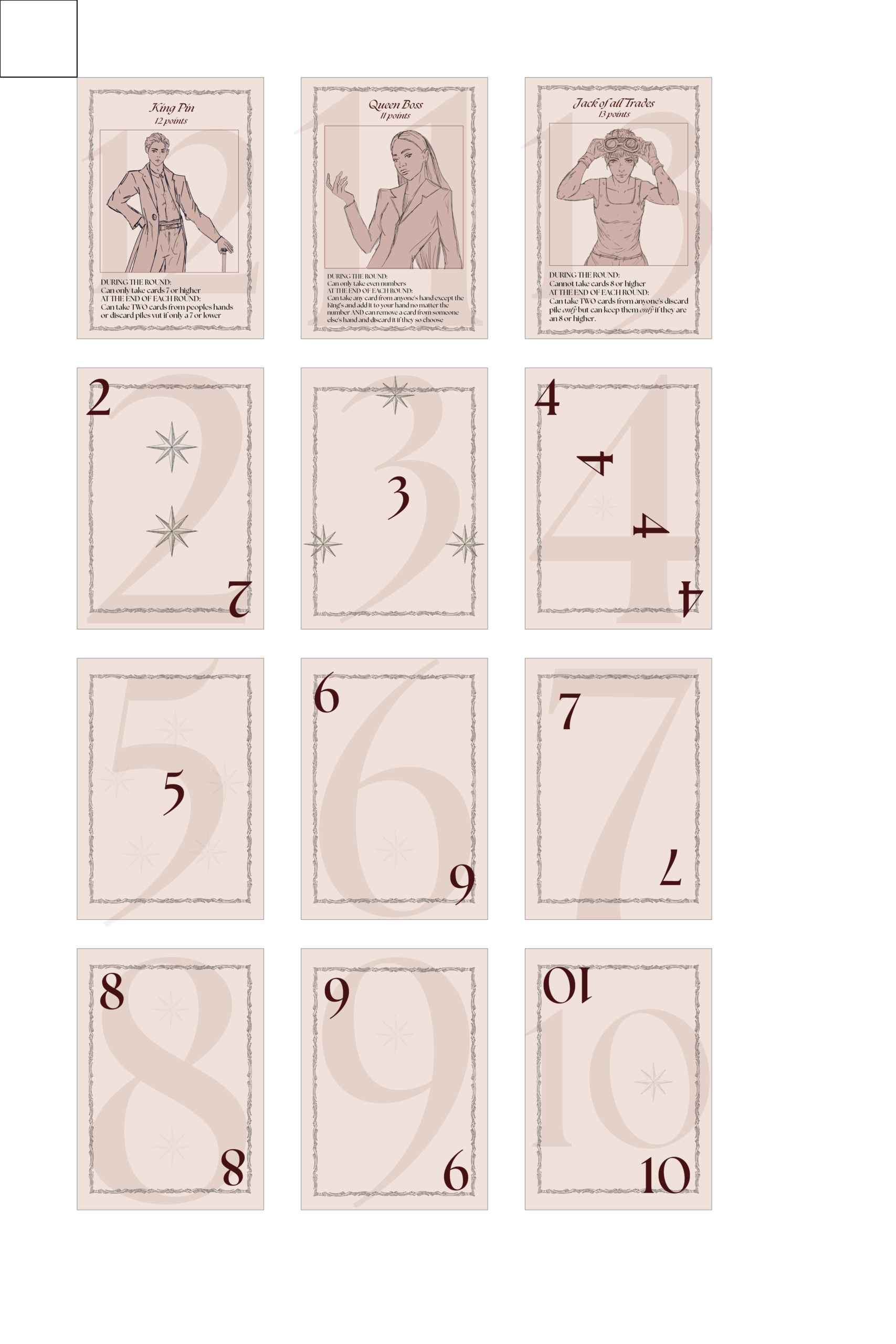
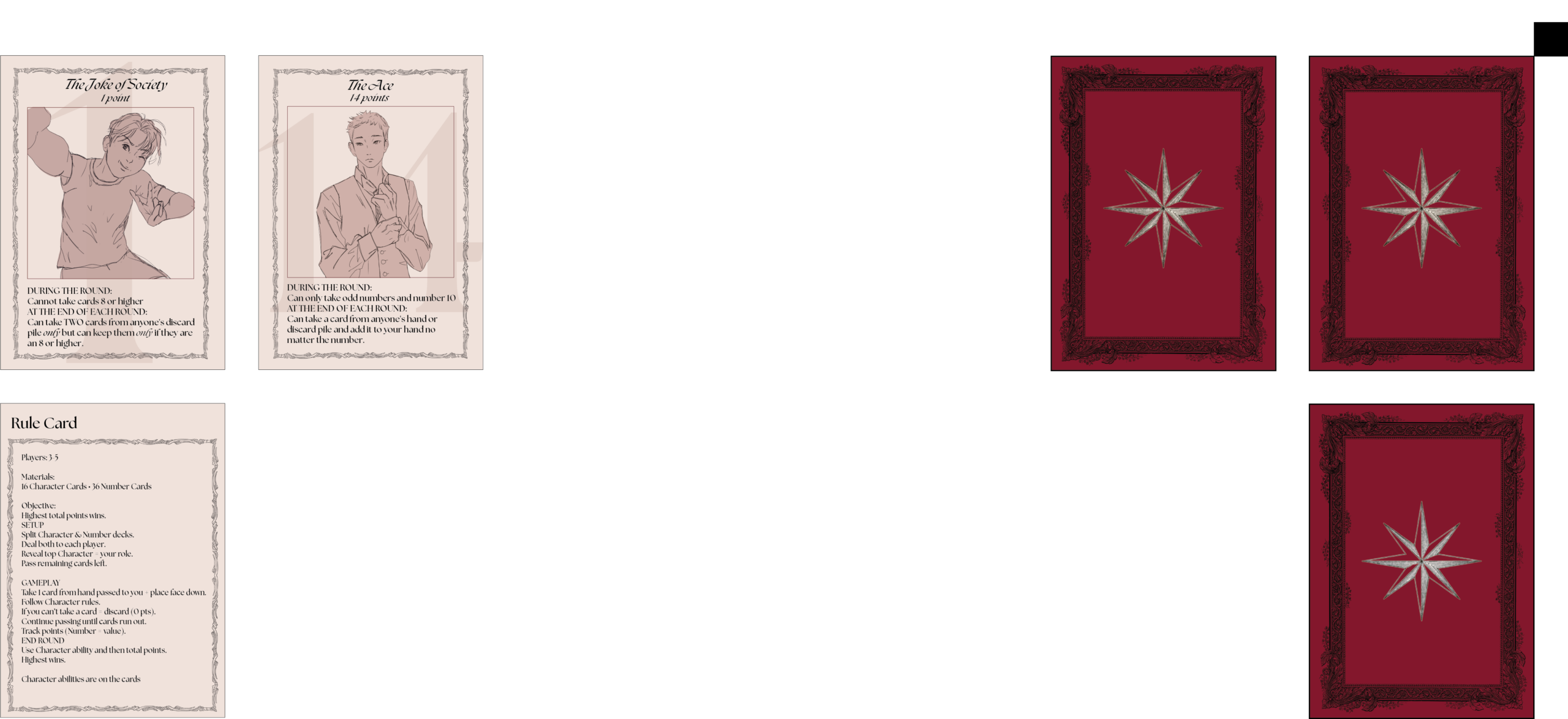
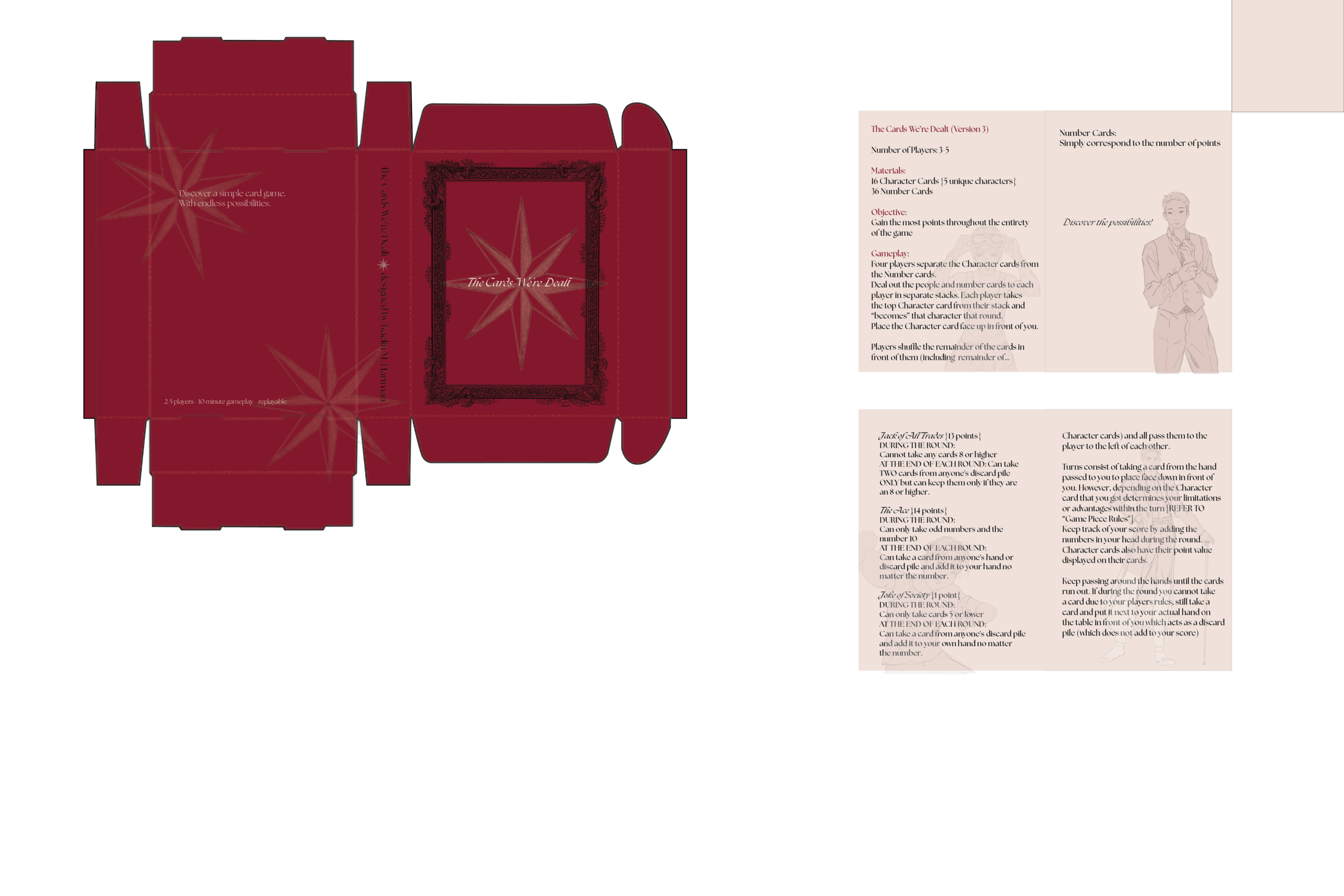
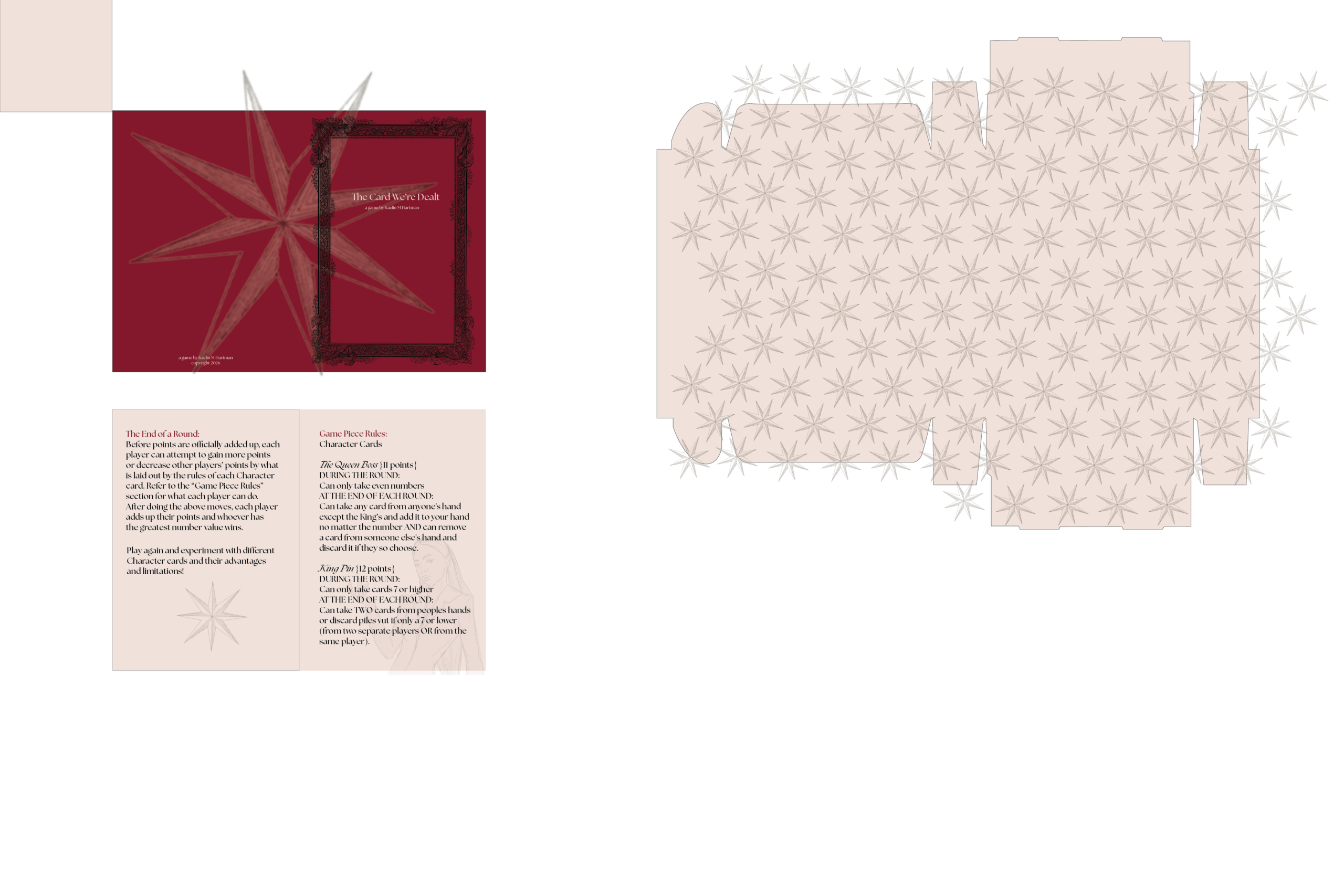
The Cards We’re Dealt is a card game that is meant to illuminate social imbalances by the abilities or disabilities of certain characters within the game. It consists of mainly one mechanic of taking and passing cards to add up the most points, but players’ actions are limited by the character that they assume.
Design Process & Thought Process:
Iterative Design:
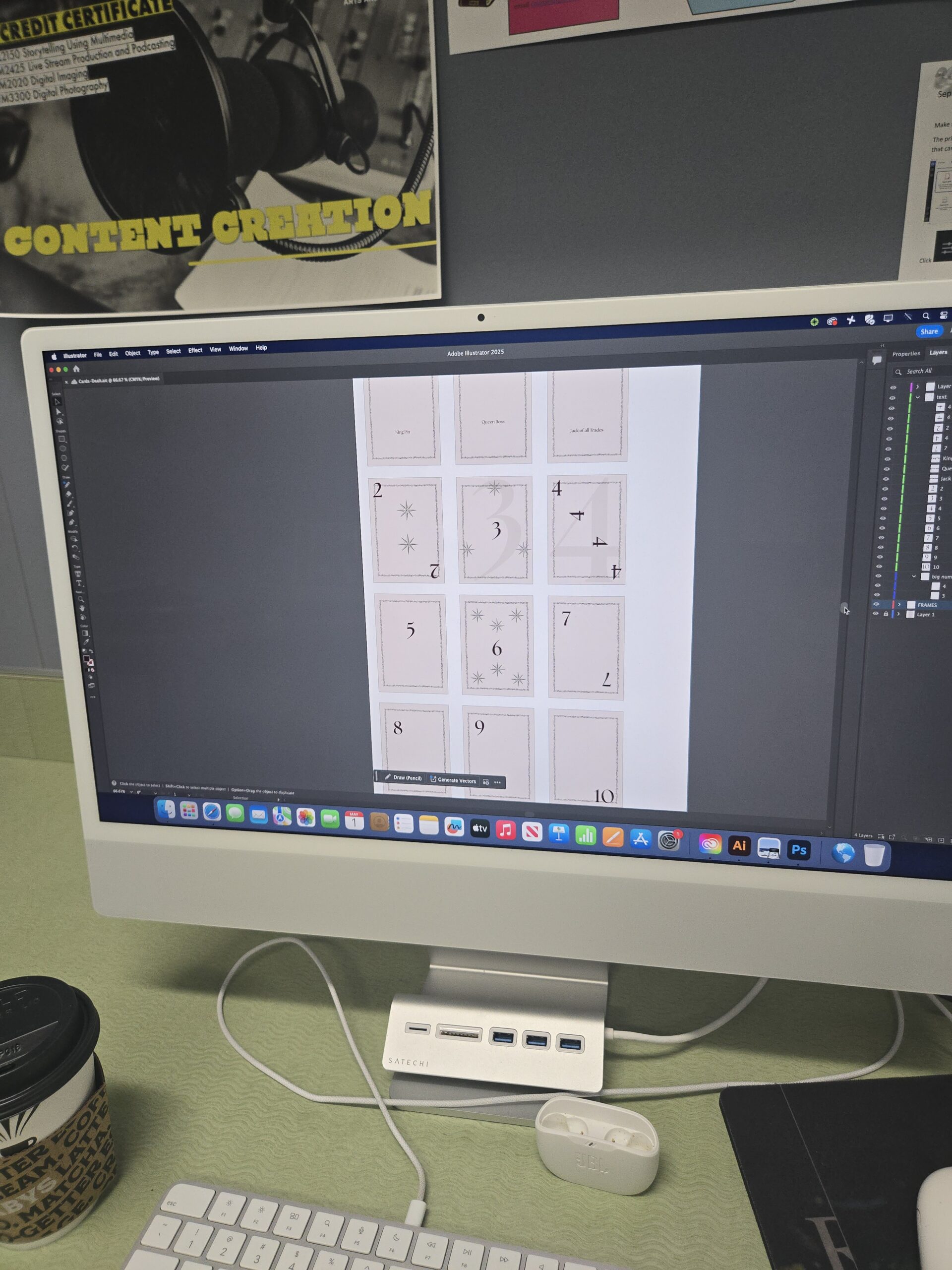
As this is the game I chose to present as my final game, I did a lot of iterating on the design, mechanics, rule book, and flow of the game. I went through three of four rounds of rule rewording and especially over the design and wording of the cards, mini rules and game box.
I faced challenges when it came to the practical side of printing and minor design issues of color and details. This just took a lot of trial and error to work out flaws.
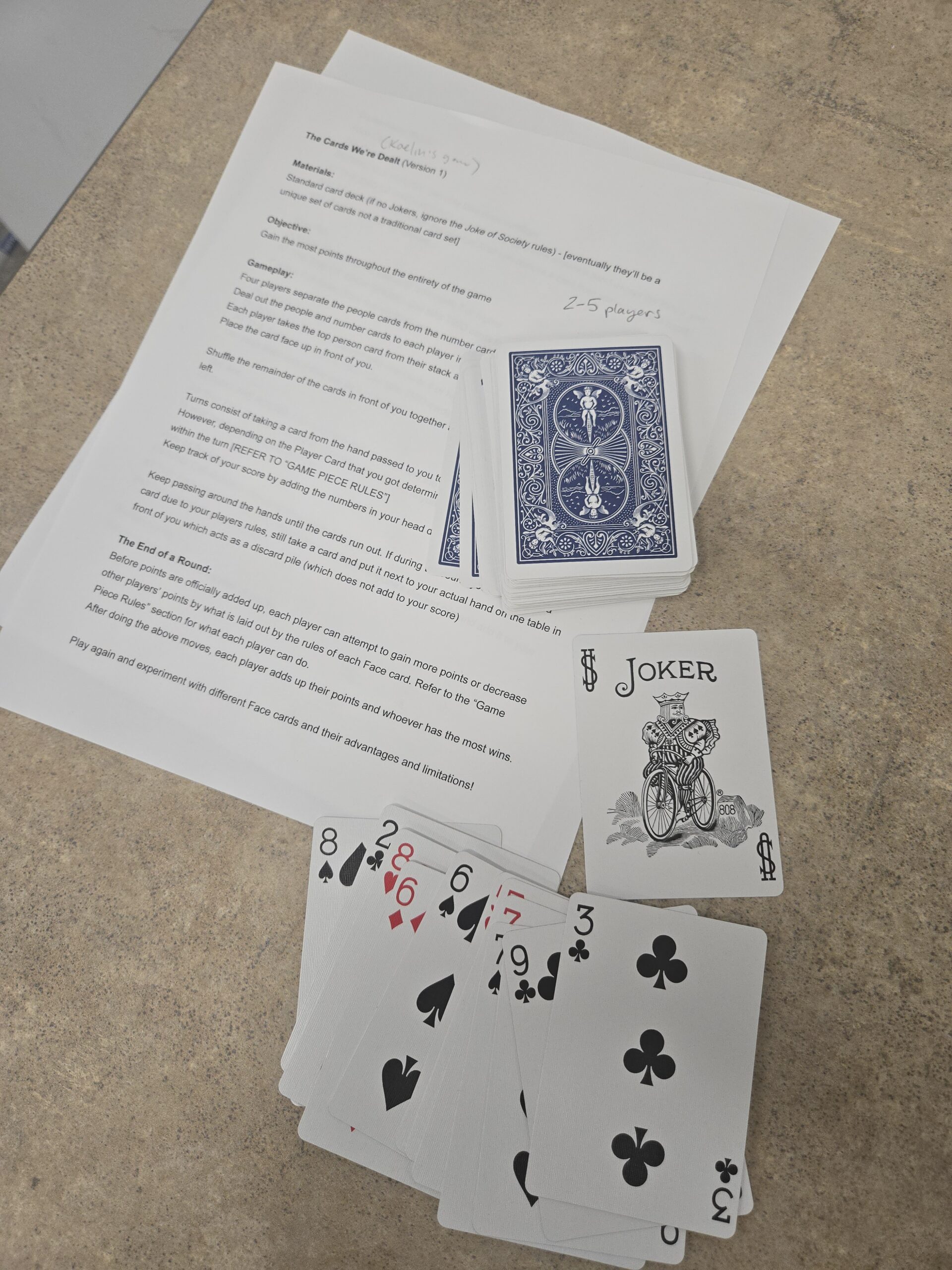
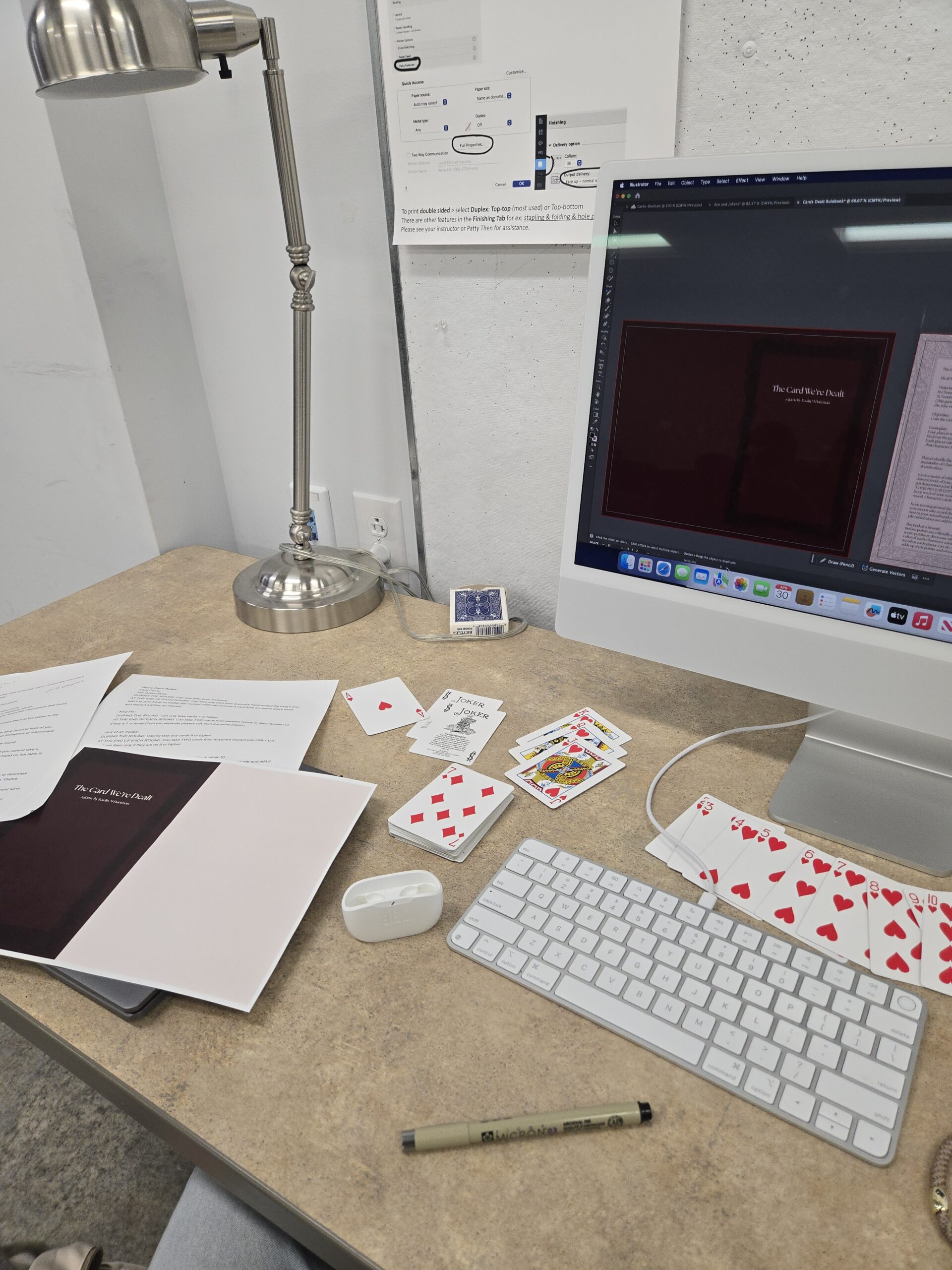
The first version with simple rules and a deck of classic cards:
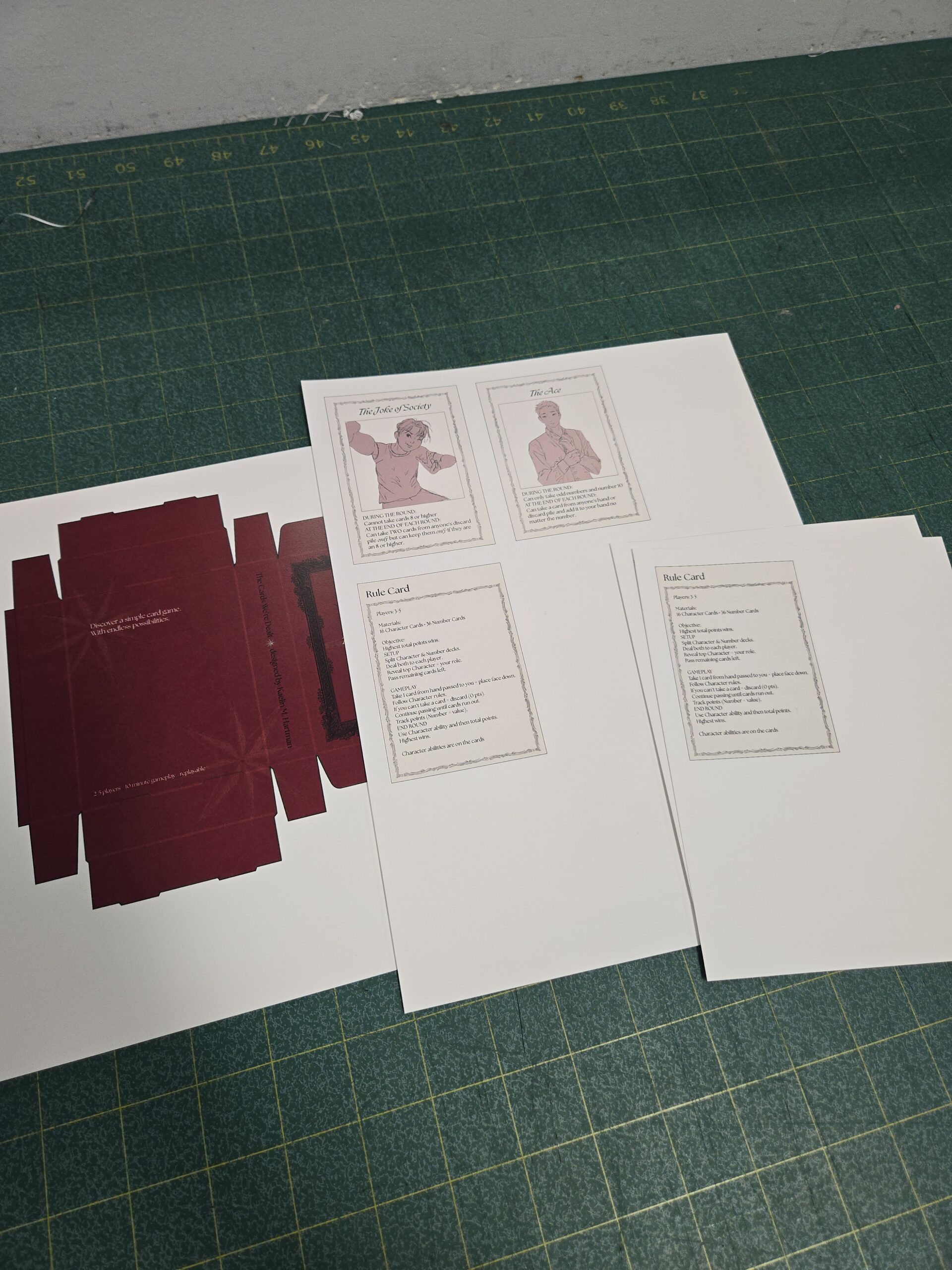
And then I created special characters with specific abilities:
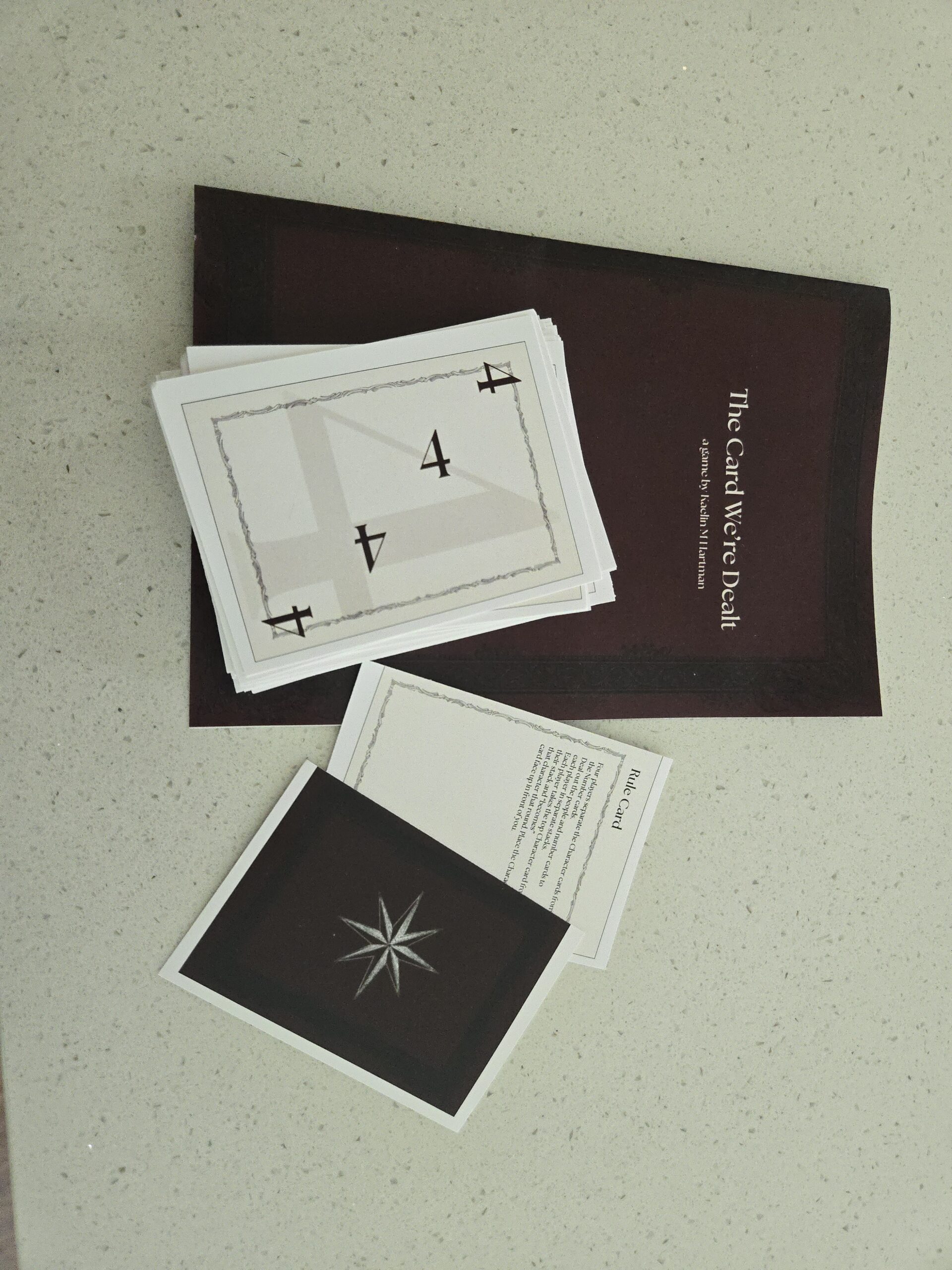
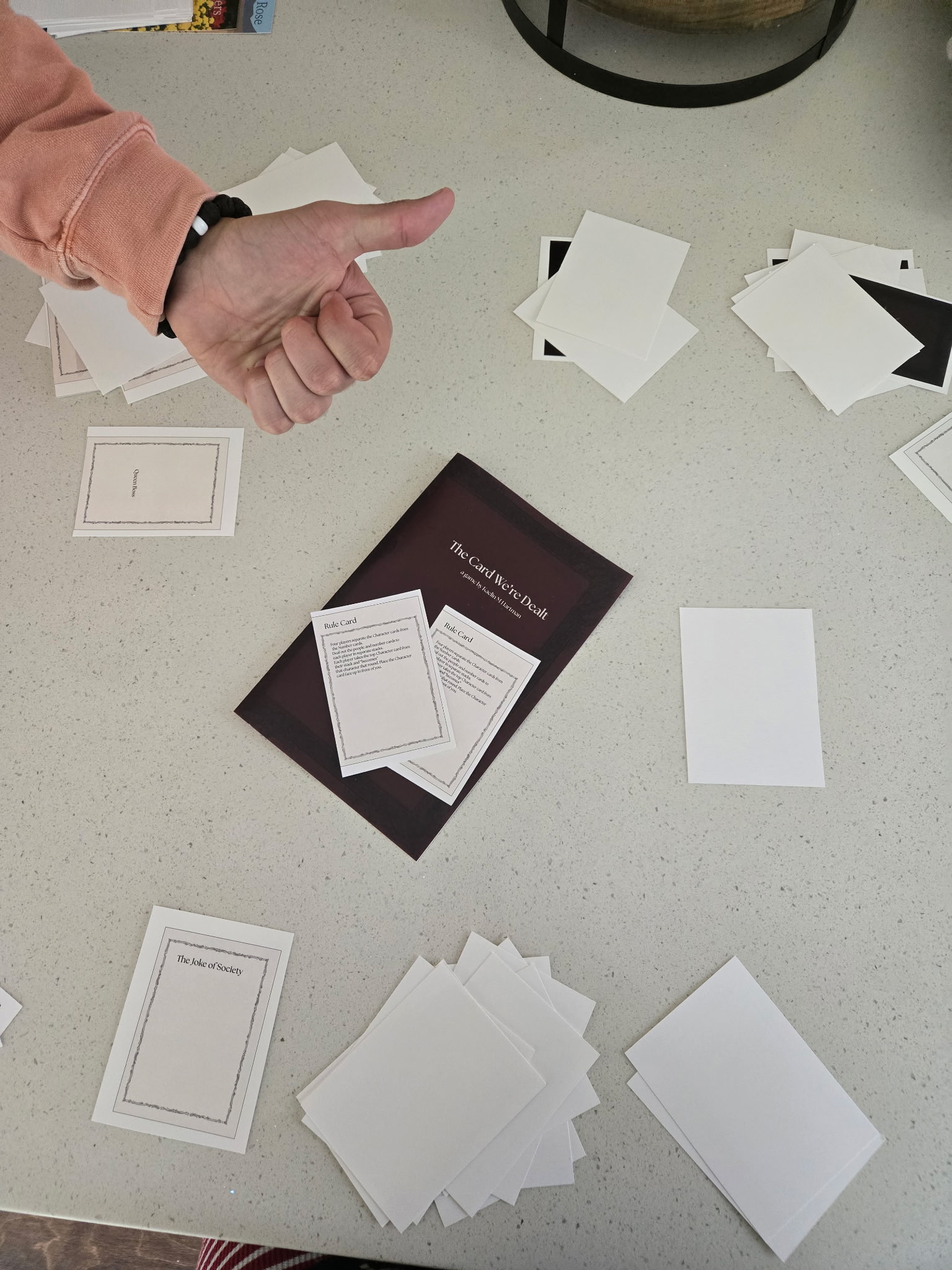
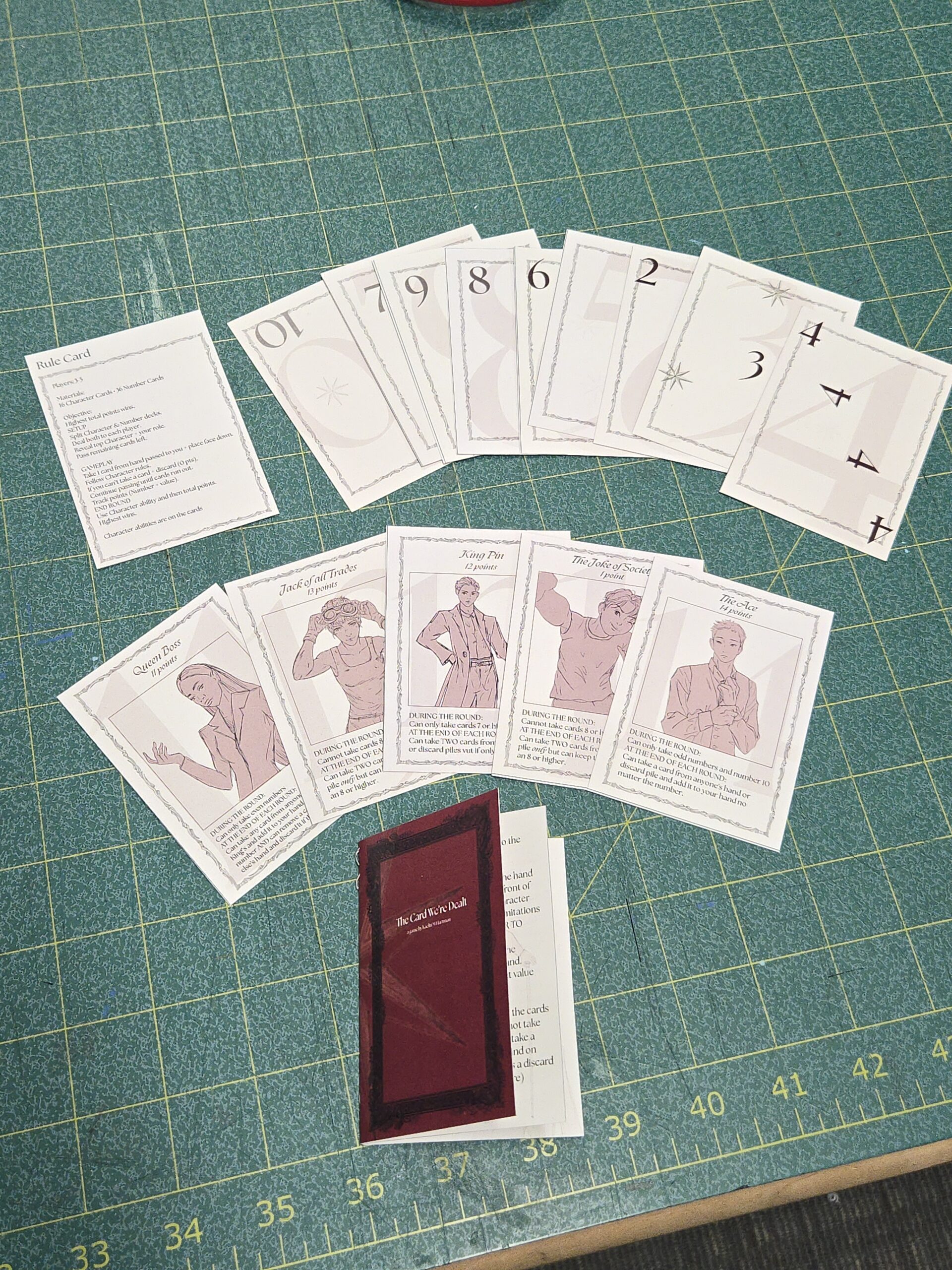
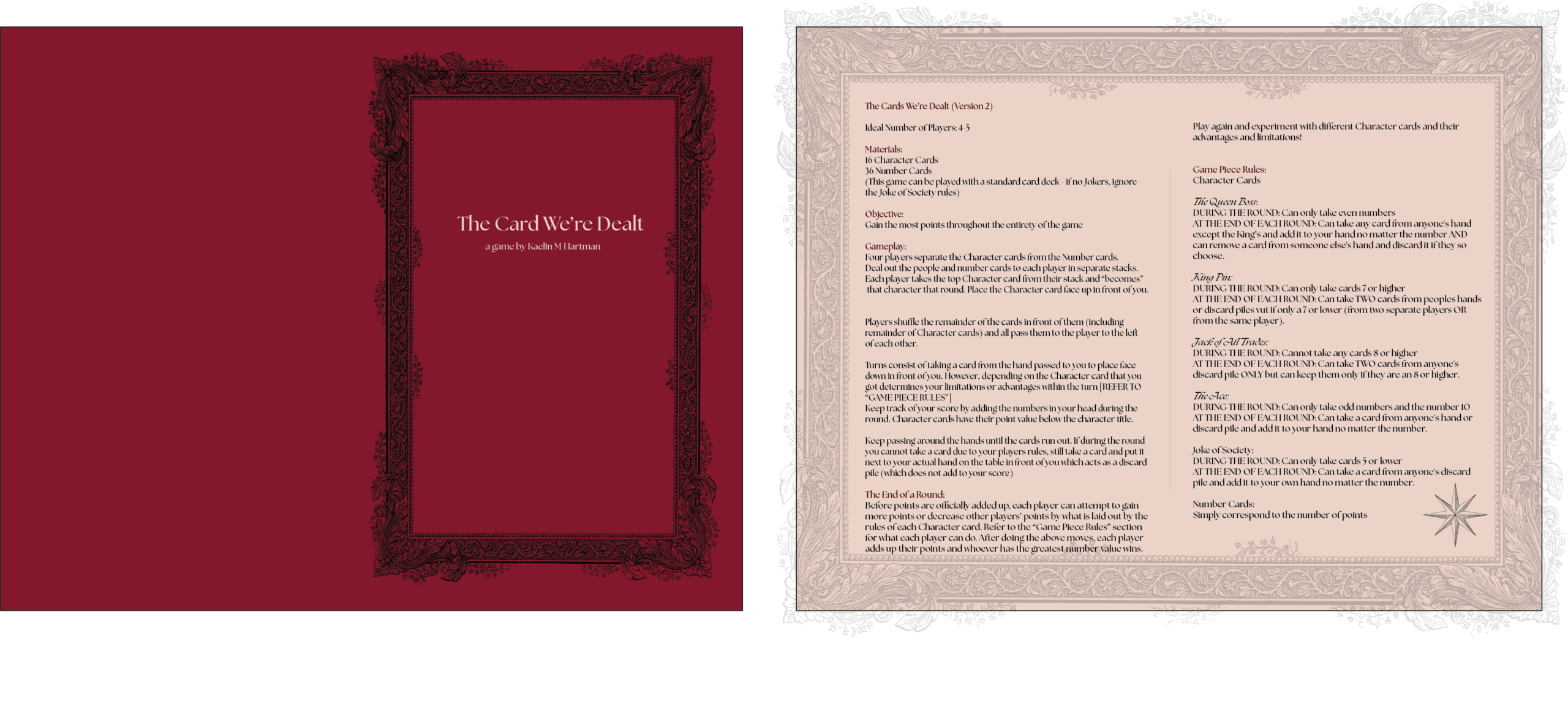
Then I made a rulebook with the design but then after that decided to consolidate the whole game into a little playing card size – so made the rulebook mini and with a special mini rule card (pictures are down in the game pieces section)
Game Mechanics:
Turns consist of taking a card from the hand passed to you to place face down in front of you.
Keep passing around the hands until the cards run out. If during the round you cannot take a card due to your players rules, still take a card and put it next to your actual hand on the table in front of you which acts as a discard pile (which does not add to your score)
each player can attempt to gain more points or decrease other players’ points by what is laid out by the rules of each Character card
Player Goals: Players are trying to get the most points by collecting the highest value cards they can based off of their characters.
Gameplay Sequence:
Game Board & Components:
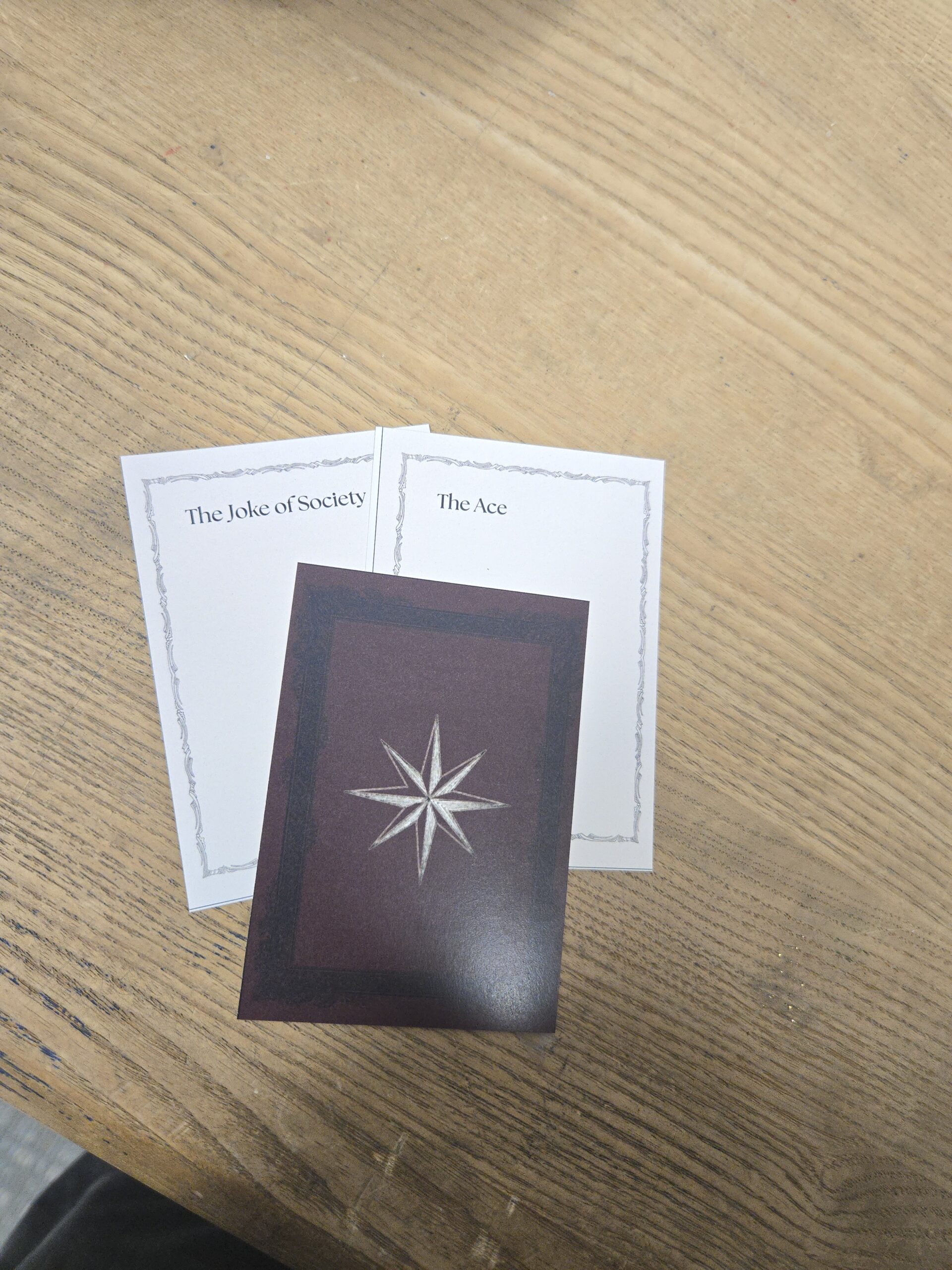
The cards which are the main catalysts of the game mechanics:
I learned a lot from making this game. It was a very fun process of coming up with a game concept around inequality and then creating an aesthetic for that message. Iterating all the different pieces made me think deeper about the message and how everything would work together. In the future, I would want to add more dynamic to the gameplay and continue to expand upon the illustration and design.
Roses are Red is an environmental game where players work to cultivate their gardens, collecting and maintaining resources and protecting against bad weather to successful grow beautiful flowers. This game is meant for mainly older children, perhaps teenagers, to adults of all ages due to its more complex gameplay and for anyone interested in strategy, lots of game pieces and environmental impact awareness games.
Design Process & Thought Process:
Game Design Document (GDD):
The core of Roses are Red is collecting resources to be able to plant flowers (which are worth points) and use other various cards and tokens to also gain more points. The message is reflected in the game play. I wanted the game to make players aware of the effort and patience it takes to grow plant life. This game is split into four rounds, which are the seasons, where each round progressively requires more resources and “energy” to sustain your plant life which gains you the most points in the end.
The general mechanics involve passing hands around and collecting cards to be used to gain other cards. Cards generally “cost” other resources to obtain so it is a game of strategy in which cards you collect to gain other ones.
Iterative Design:
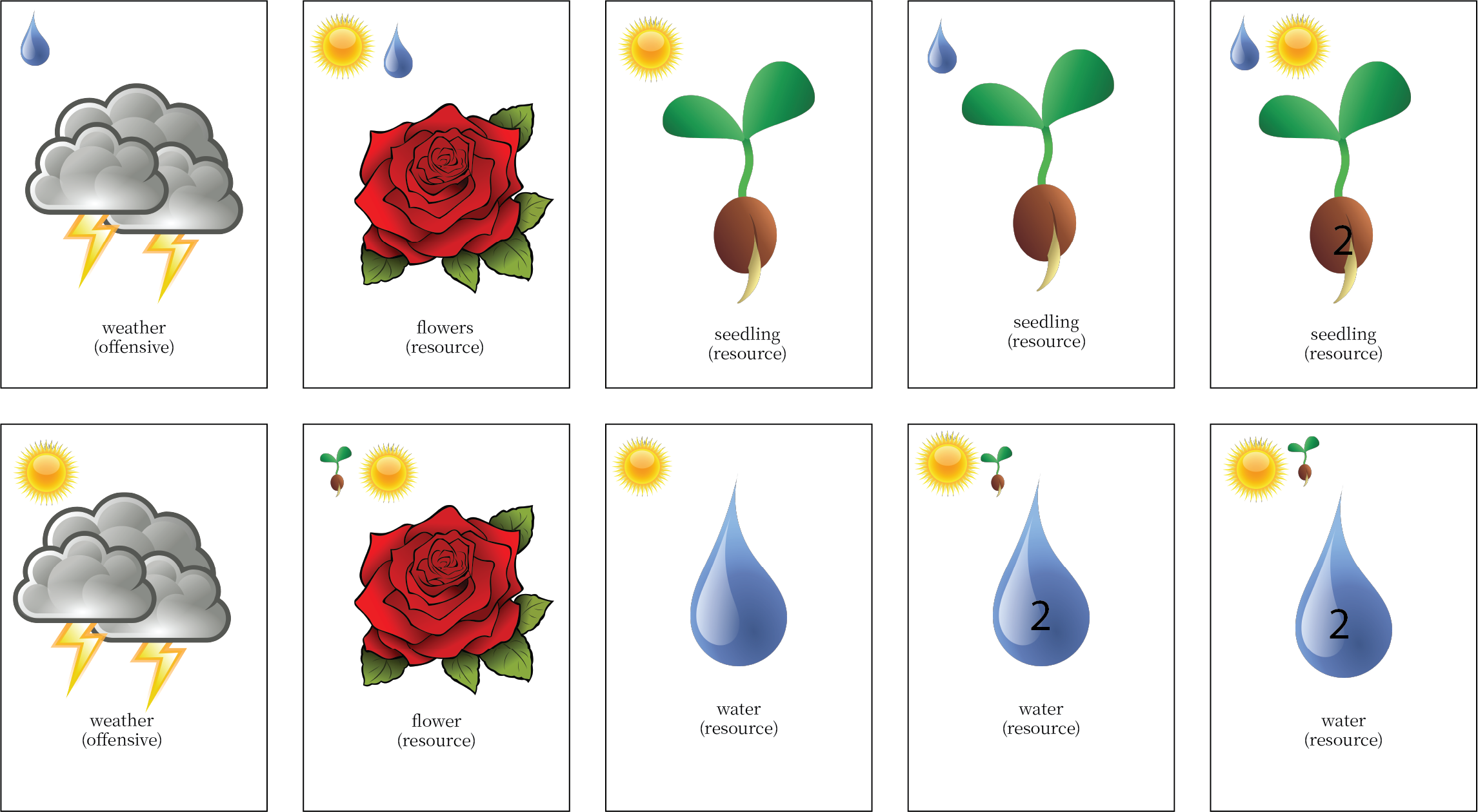
Given the amount of cards and game pieces and rules, I had many trial and error attempts at making this game playable. Unfortunately, due to personal circumstances, I did not have time to fully develop the game, but went through several iterations of card design and mechanics and rulebook writing. The biggest struggle was determining the number of cards per round to make it competitive but not too short or too long. The balance of the game is something that still needs to be played out more but was interesting to experiment with.
Some cards design changes are as follow:
to
For the future, I would need to put more examples of gameplay in the rules to make it more clear how each move and round works.
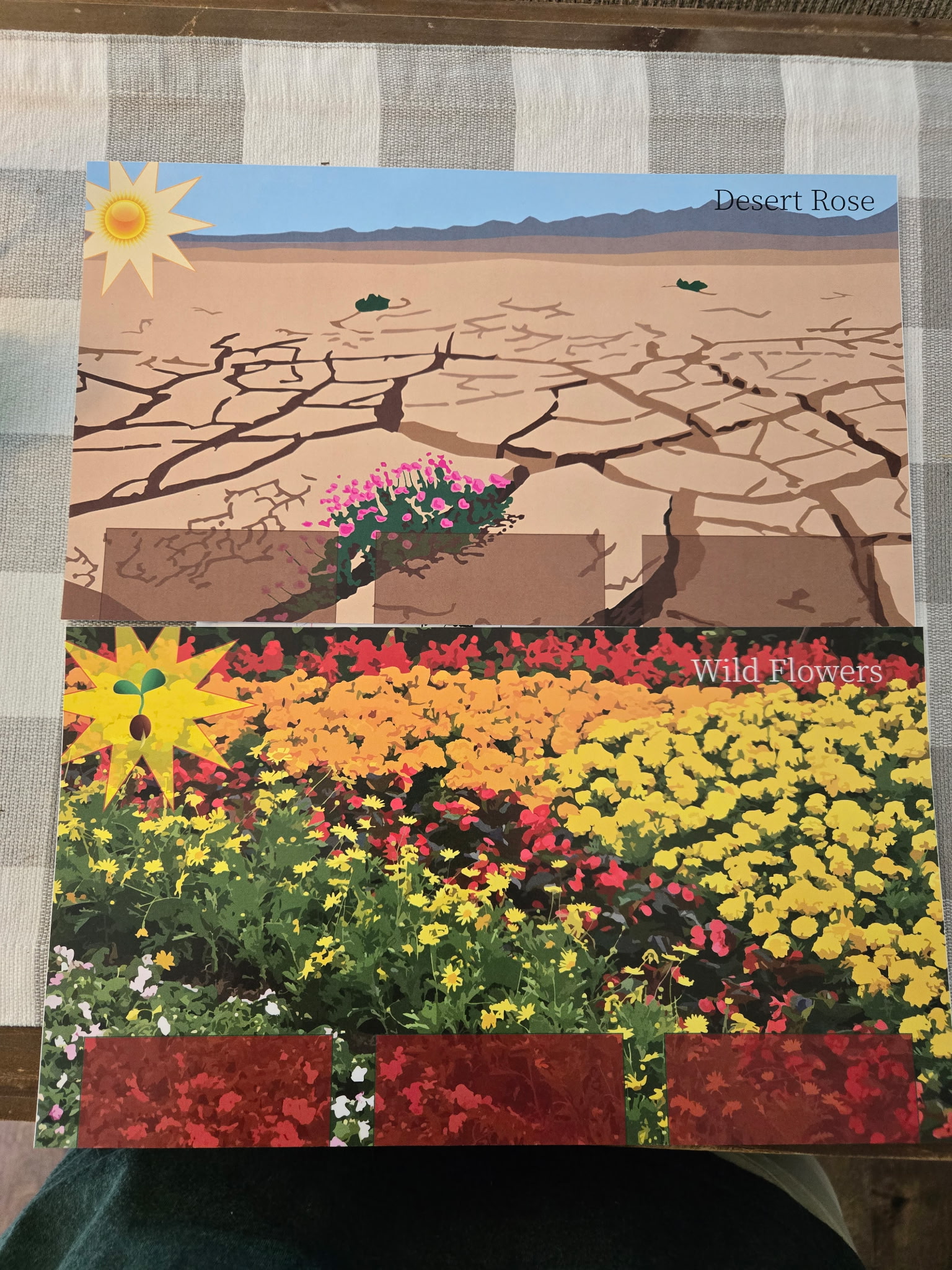
I spent a lot of time iterating on the effectiveness of the Flower Beds, which are the players main game boards which they collect all their cards on.
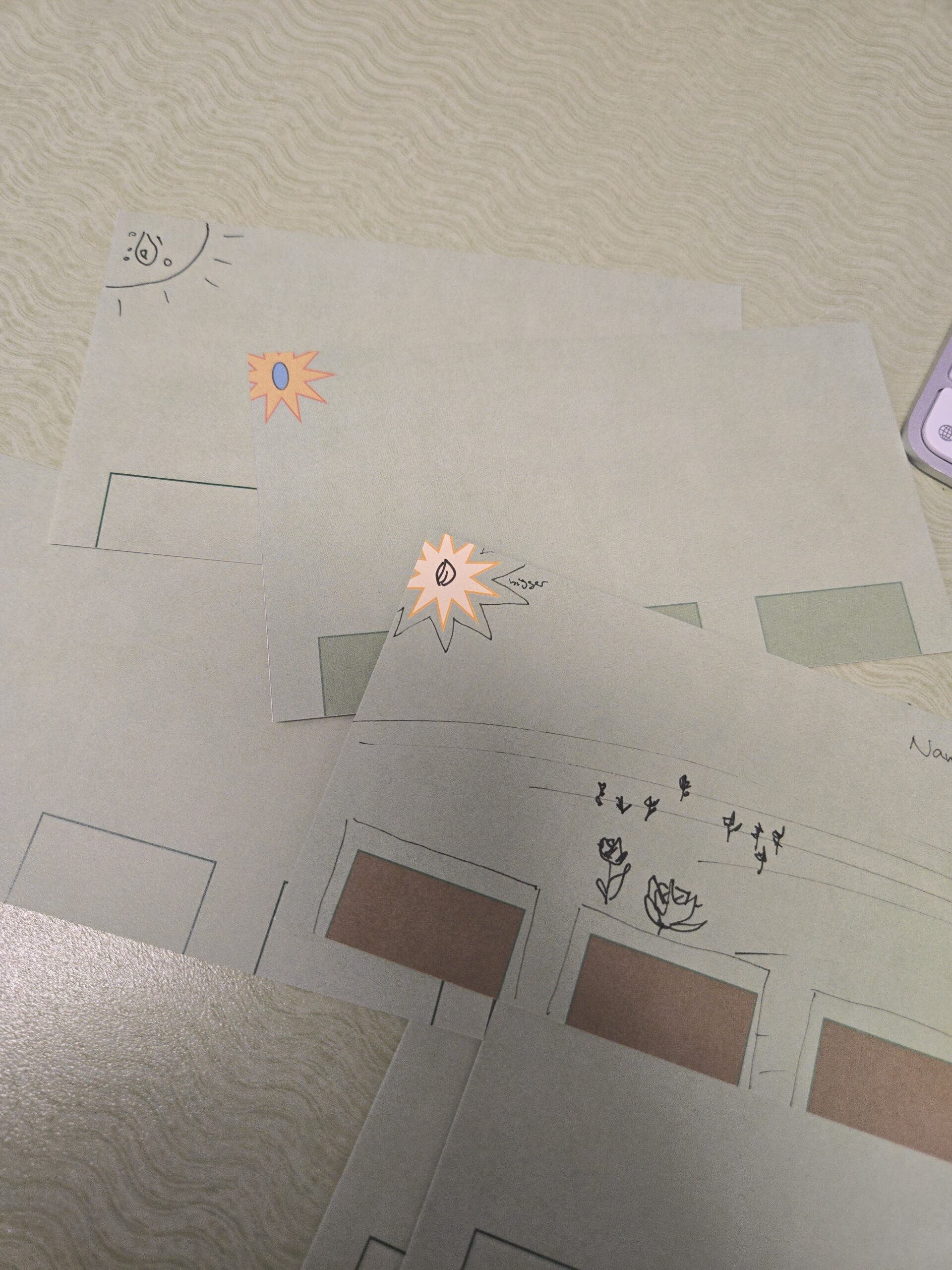
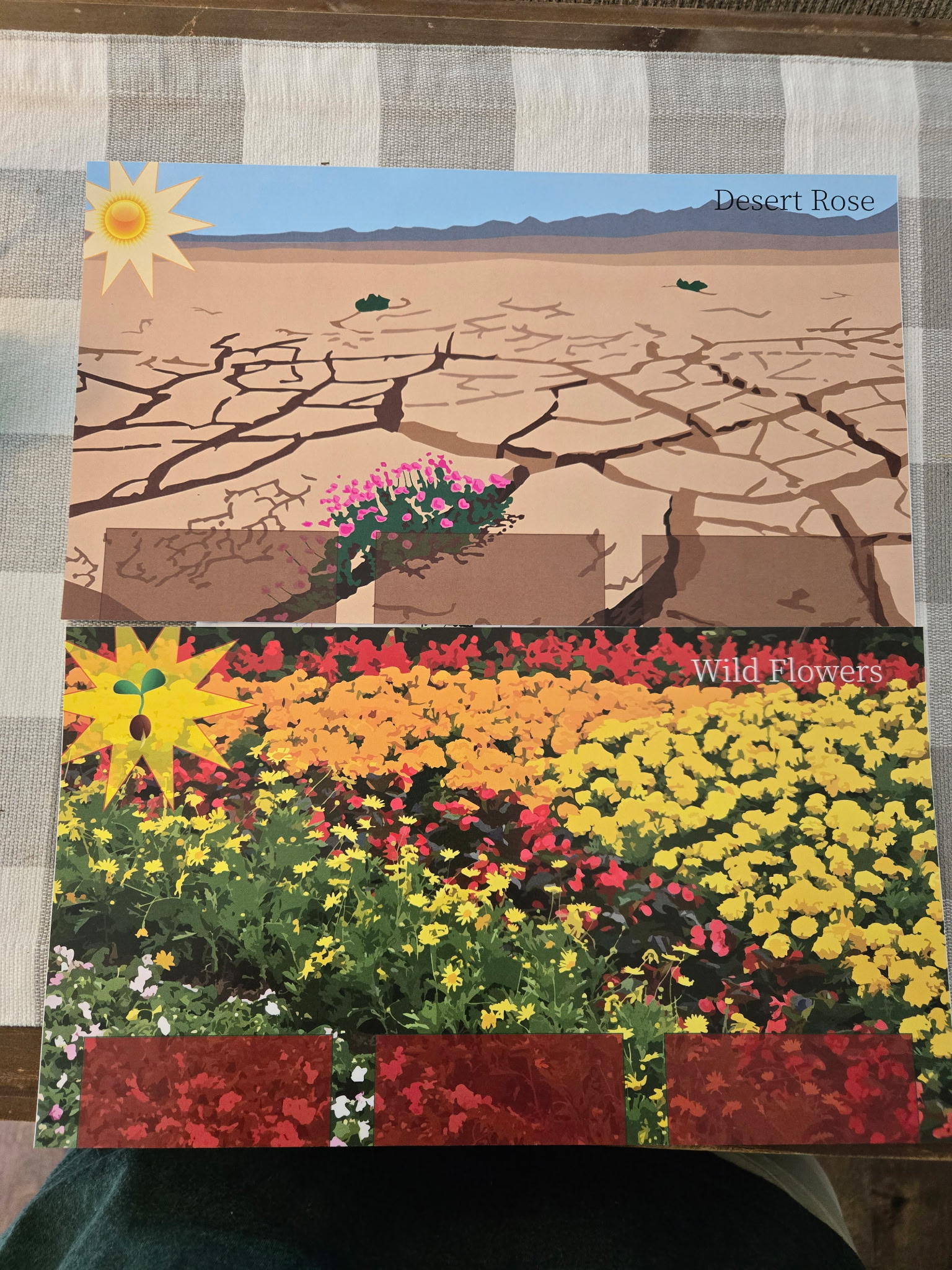
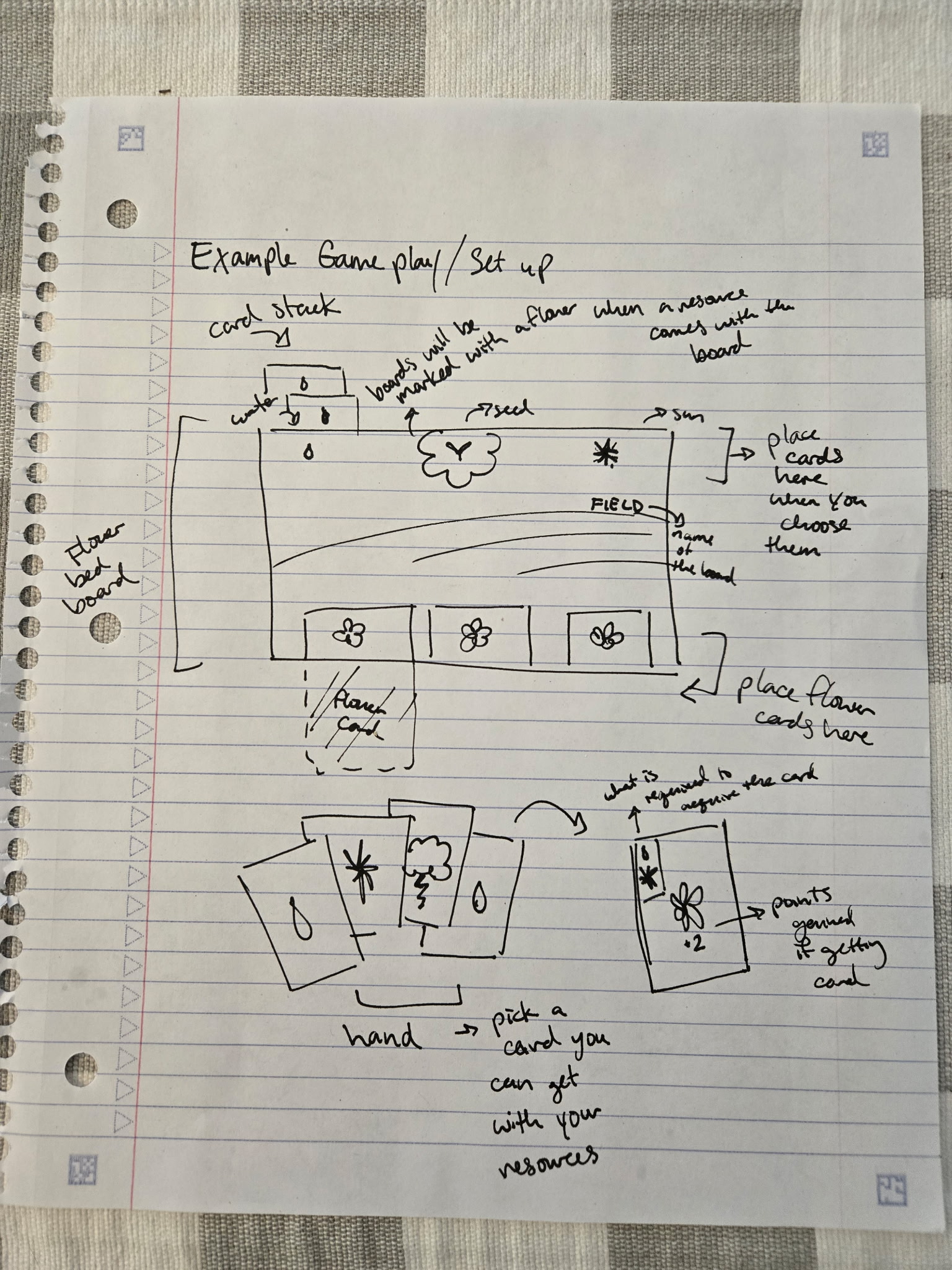
This is more what the actual game board Flower Bed would look like. It took a lot of work to get the right size and spacing and intuitiveness of where players would place their cards once collected:
Game Mechanics:
Each round follows the drafting style:
take one card from your hand and pass the remainder of the hand to the player next to you
pick up the next hand, take a card, and continue these actions until no cards remain.
After each round the direction of passing reverses.
Spring & Autumn → pass left
Summer & Winter → pass right
Each player is trying to collect and maintain their resources to “grow” more flowers (gain Flower Points)
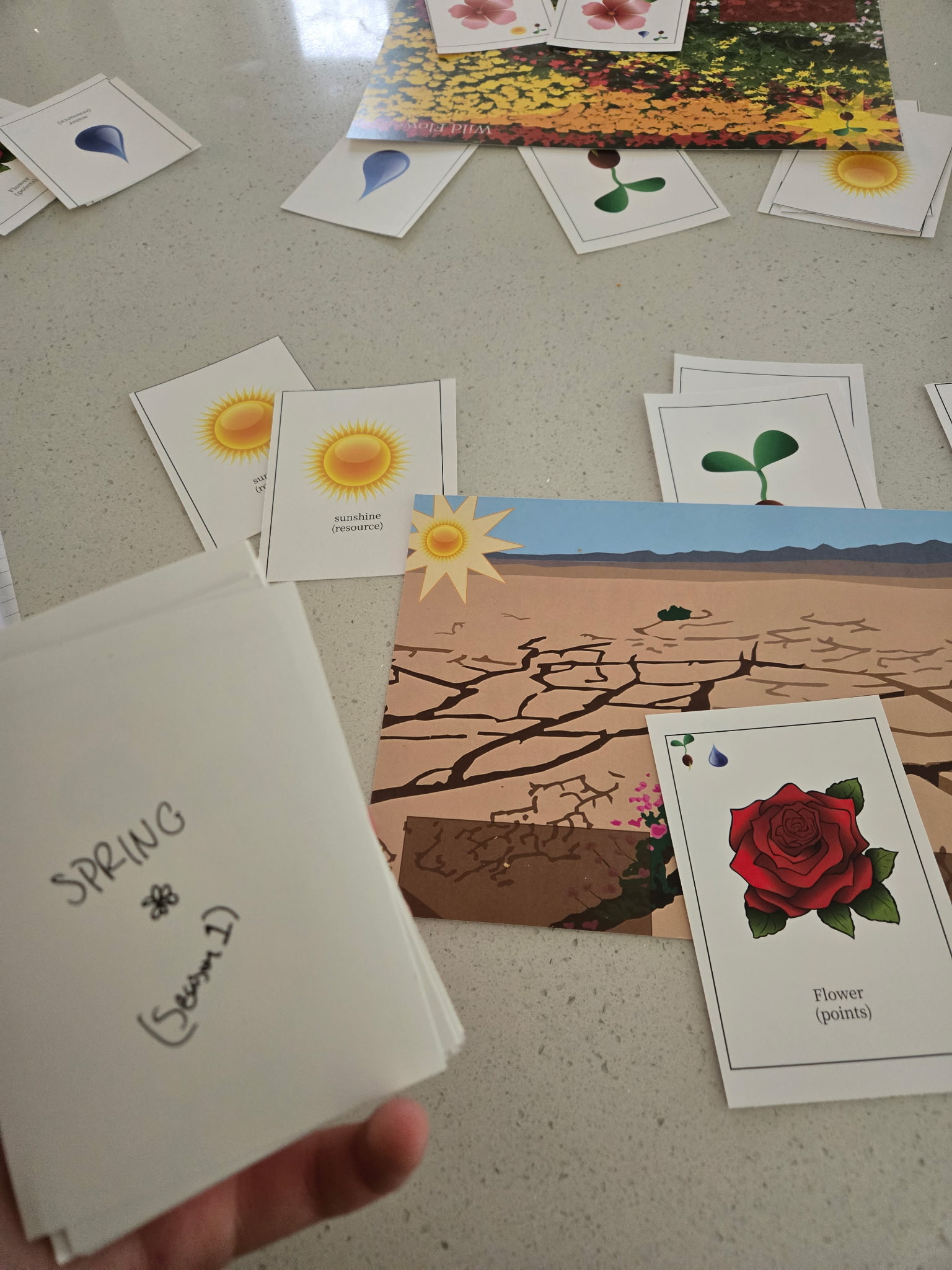
The example hand below demonstrates where cards go and how the mechanics of taking cards and passing works:
At the end of Winter:
Add up all Flower Points from Flower Cards.
Additional Points:
+2 points for most remaining resources
+1 point per token per player
+3 points for most flowers
Player Goals: Players pass cards to try to collect resources in order to have the chance to also collect flowers based off of the resources they have and how much they are worth. Players are trying to get the most points. You can get points by collecting flower cards, winning weather “battles” (having the most weather cards) and having the most resources.
Gameplay Sequence:
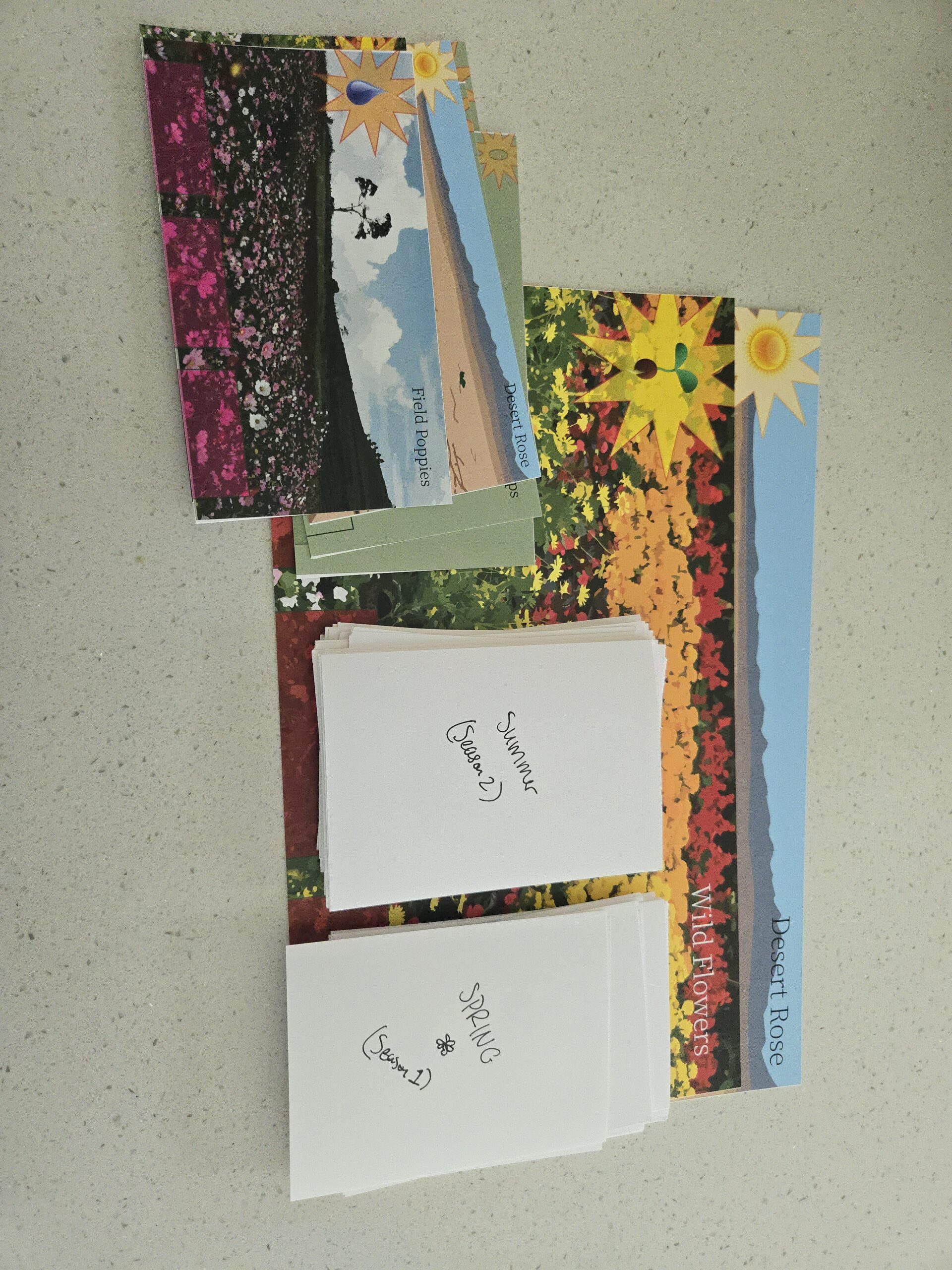
Game Board & Components:
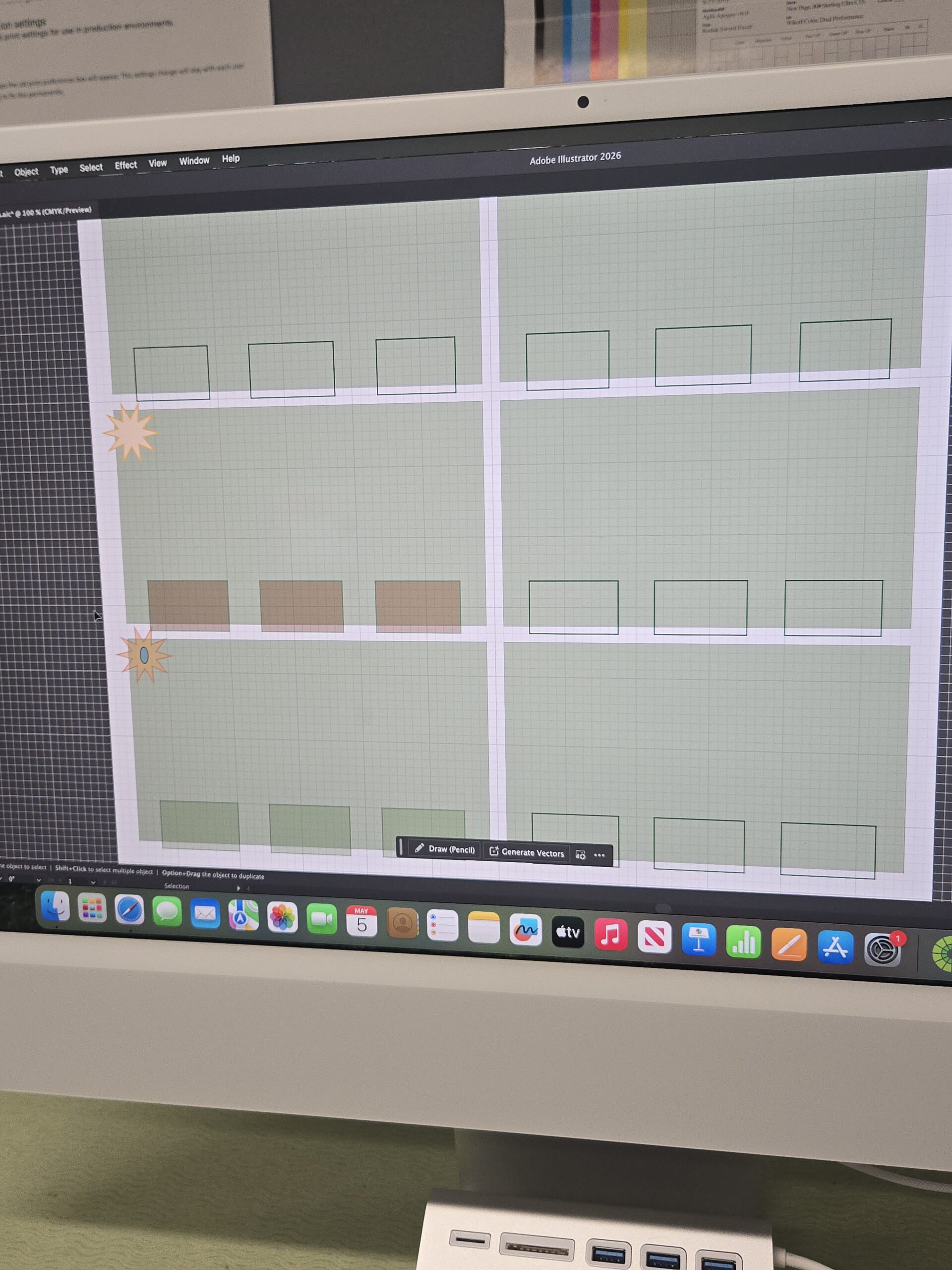
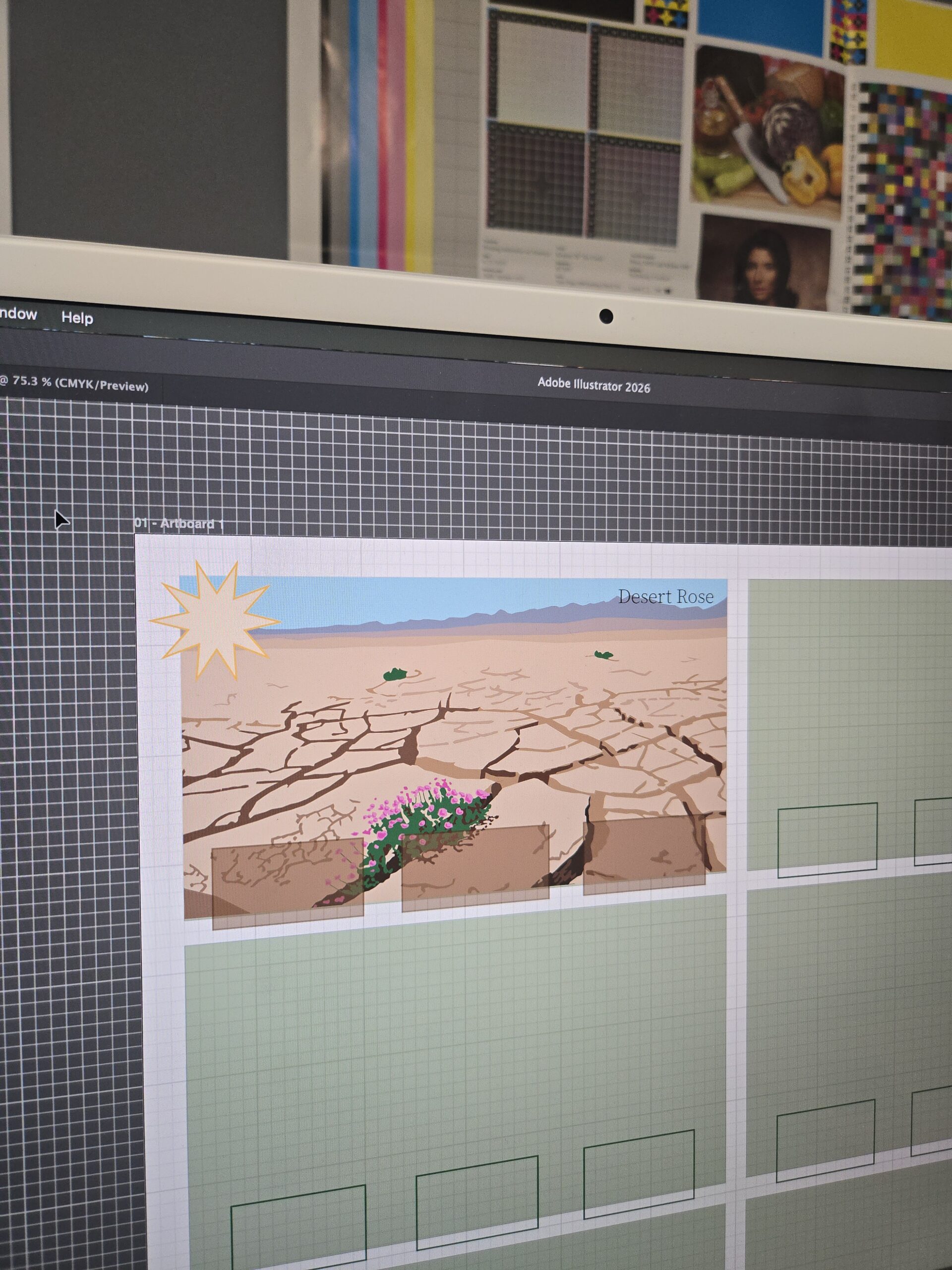
Each player is given a Flower Bed at random to grow their flowers on and collect resources. Each Flower Bed comes with a resource built in already. Flowers are collected on the colored rectangles at the bottom, resources are stored by partially sliding them under the board where the resource sun is in the top left corner. Everything else is placed on top of the board or above it to the right.
The cards have what is required to obtain them in the top left corner. What the card is is described and displayed in the center.
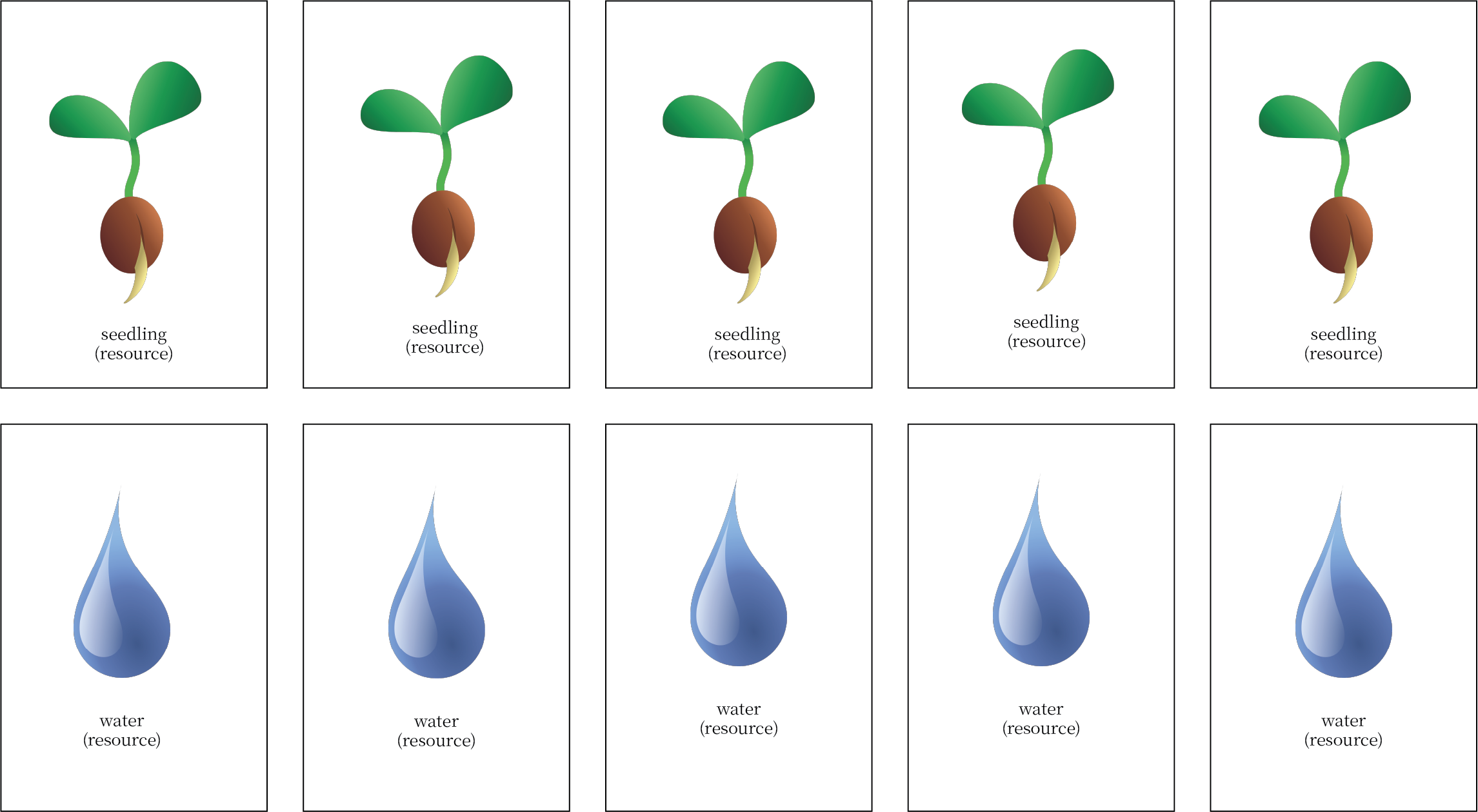
Seed Cards
Required to grow flowers.
Some flowers require multiple seeds.
Water Cards
Used to “activate” seeds.
Certain flowers require a set amount of water.
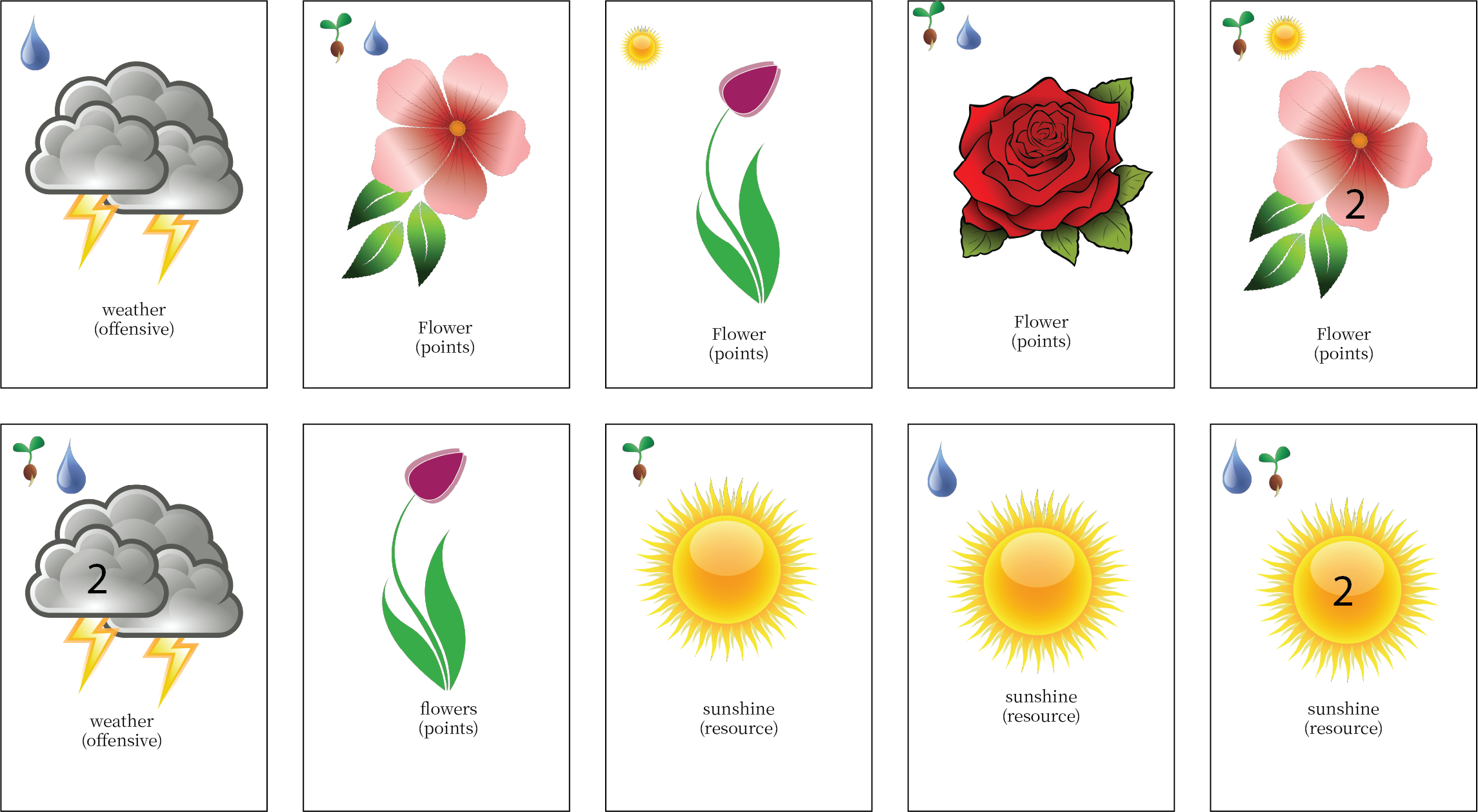
Sunshine Cards
Required along with water to grow flowers.
Some advanced flowers require extra sunlight.
Offensive:
Weather Cards
Only introduced in Season 2 – Summer
These cards rack up over the game and are used as essentially “battling” your team mates.
They only affect the players next to you
Place a weather card above your Flower Bed when selected from the hand.
Whoever has more weather cards at the end of a season gets an extra token
Main points:
Flower Cards (Points)
Gained when you meet the requirements.
Some higher-value flowers require combinations (ex: 2 Seeds + 2 Water + 1 Sun).
Put these cards at the bottom of your Flower Bed when collected
My family helped playlets this game for me. They said it was playable from the two rounds that I was able to fully create. They recommended working on the wording for rules and making sure all the cards were accurate and aligned with each round correctly.
I worked on wording, but while I wasn’t able to work on the design of the cards and making sure they matched the difficulty of each round correctly, that is something that I would focus on in the future.
Game Reflections:
I learned that the development process is long and hard for a complicated game with lots of mechanics. I would have given myself more time to iterate and be able to get more player feedback, cause that really helped me be able to get a direction that I needed to be able to put this all together. There are a lot of game pieces involved and it was fun to make a game like this come to life, even if just in the beginning stages.
Limitation is a game that requires the players to use themselves as the game pieces and work together to help those players with weaker abilities to get across the finish line at the same time as everyone else. Each player is assigned an age category which has certain movement abilities that can be shared with certain other ages. It is a game that plays with the ideas of sacrifice and giving of yourself for “weaker”/slower people. It is for all ages and types of people.
Design Process & Thought Process:
Game Design Document (GDD):
Limitation is a physical game where players move through a race to cooperatively get to the end together. It focuses on specific “age restrictions” that each player assumes which limits their actions throughout the game. It focuses on sacrifice for others and team play.
The rules and mechanics are very simple. They consist of each player rolling a dice for how many steps they can take, while also relying on their age card to tell them if there are any restrictions to their movements.
For example: If someone is “The Baby” they cannot move on their own. Only The Teenager or The Boomer can help them move by giving up one of their moves.
Iterative Design:
Since this game is dependent on the players as the game pieces and your environment as the “gameboard”, I chose to focus on iterating the game rules and mechanics, seeing how tweaking certain mechanics would impact player dynamics.
Changes in the Rules:
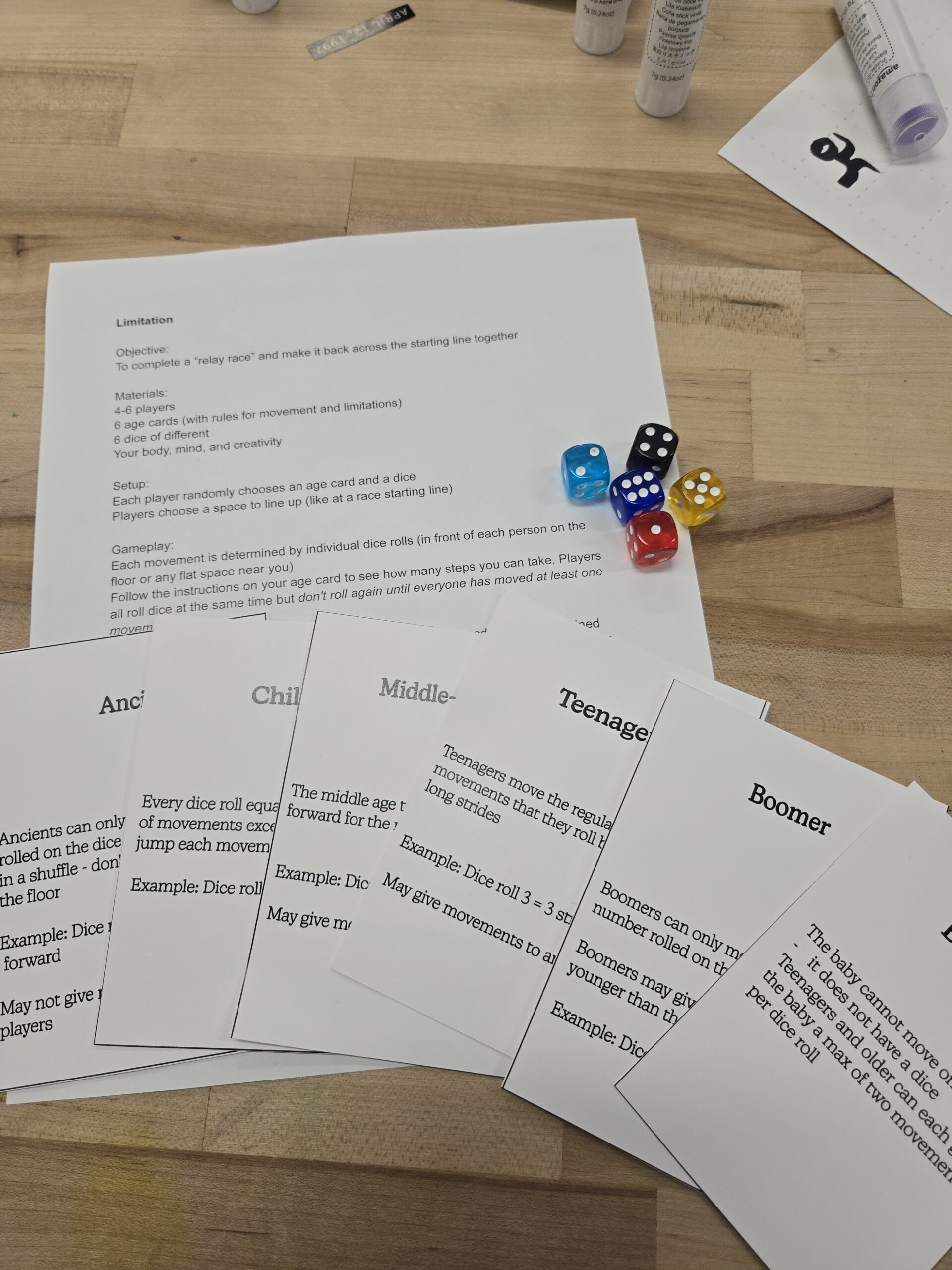
Rulebook Version 1 “ Objective: To complete a “relay race” and make it back across the starting line together
Materials: 4-6 players 6 age cards (with rules for movement and limitations) 6 dice of different Your body, mind, and creativity
Setup: Each player randomly chooses an age card and a dice Players choose a space to line up (like at a race starting line)
Gameplay: Each movement is determined by individual dice rolls (in front of each person on the floor or any flat space near you) Follow the instructions on your age card to see how many steps you can take. Players all roll dice at the same time but don’t roll again until everyone has moved at least one movement.
Continue rolling dice and making movements until you have made it to a determined end point and then turn around and make it back to your starting position. The starting position becomes the finish line.
This is essentially a relay race but with limitations
The catch is you must all cross the finish line together to win
Work together to help slower players and give up your movements so you can all successfully make it across the finishing line
Winning/Losing:
When all the players complete the “relay” together they win
If more than one player crosses the finish line before the others, you all lose and the player who went alone can be shamed and booed for leaving their fellows behind
In version 2, I clarified the gameplay and materials sections to make it more straightforward and clear.
Rulebook (Version 2)
Objective: This is essentially a relay race but with limitations. The catch is you must all cross the finish line together to win
Materials: 4-6 players 6 age cards (with rules for movement and limitations) 1 dice per player Open space for movement Optional: Tape, cones, markers for start/end line
Setup: Each player randomly chooses an age card and a dice This game can be played in any environment that allows you space to walk. Choose a space to line up like at the start of a race and mark an end line.
Gameplay:
At the start of every round:
Players all roll their dice
Players move according to
The dice number
Their age card limitations
don’t roll again until everyone has moved at least one movement.
The team must:
Reach the Turning Point
Reverse direction
Return together across the Starting Line
The Starting Line becomes the Finish Line on the return trip.
Work together to help slower players and give up your movements so you can all successfully make it across the finishing line
Winning/Losing:
The game is won when all the players complete the relay together.
If more than one player crosses the finish line before the others, you all lose and the player who went alone can be shamed and booed for leaving their fellows behind.
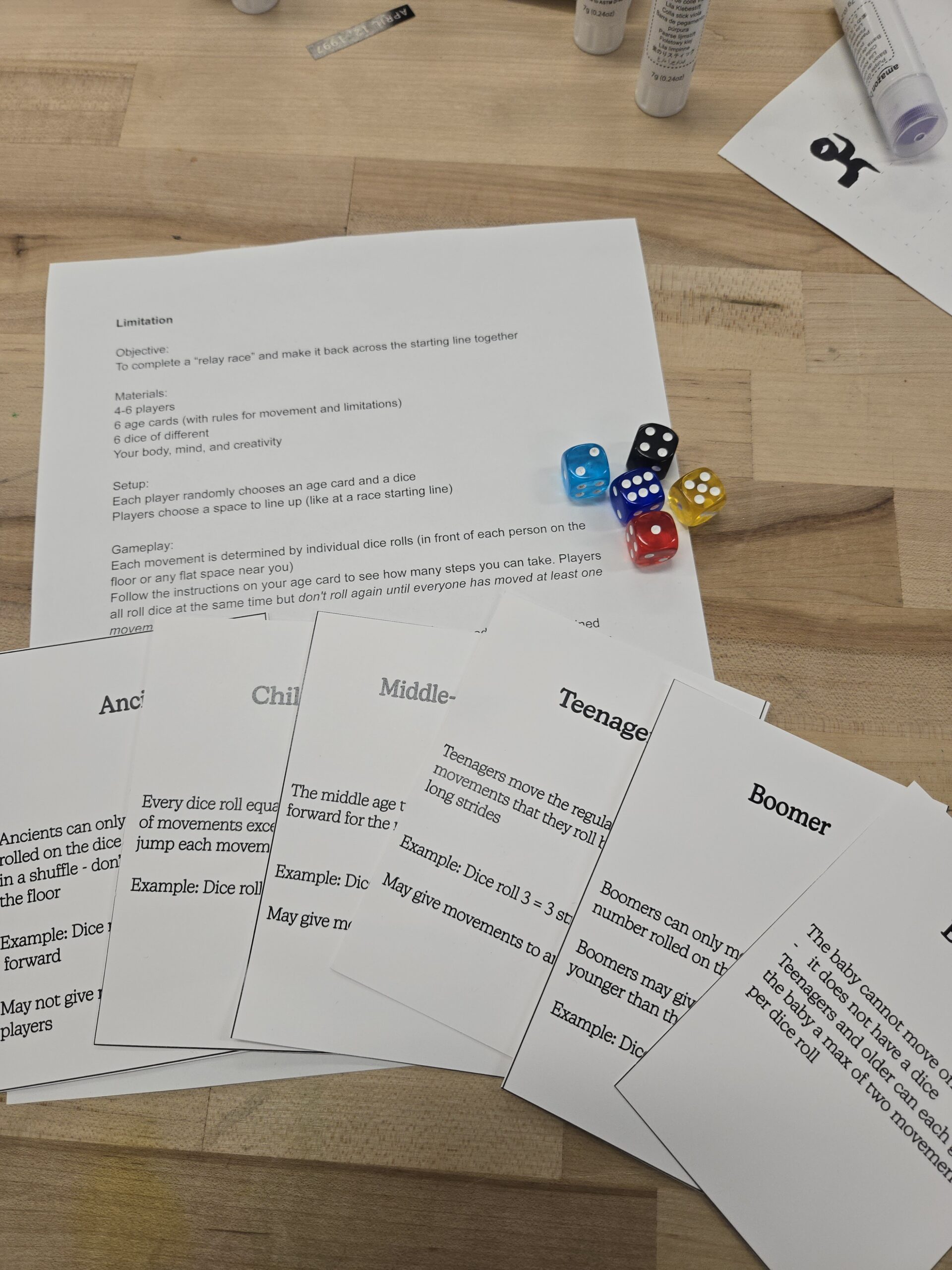
Version 1 is shown below:
For version 2, I kept with the same cards since I unfortunately ran out of time to improve them, but wish to do so in the future of developing the game.
Game Mechanics:
The game mechanics consist of rolling dice and moving according to what you are allowed based on your age card. There is an additional mechanic of giving up your own movements to help that of others.
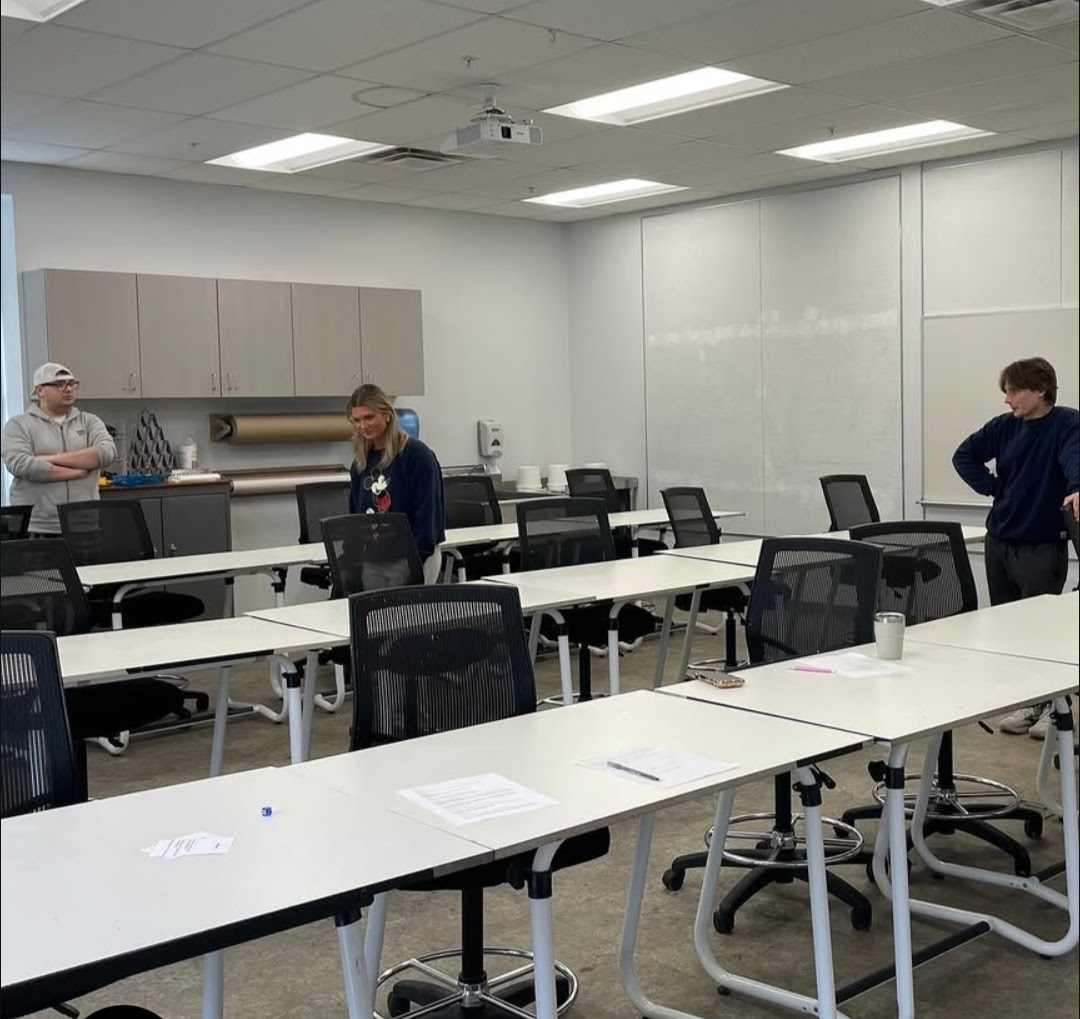
Example of gameplay below:
Player Goals: The players goals are simple – get to the end together. They are all trying to finish a race, but not to win individually but as a team. They achieve that by completing their actions but making selfless choices to give to others who can’t.
Game Board & Components:
The dice are what determines the number of movements that players can move. The people themselves are the player pieces and move on the “game board” of whatever environment they’re in. The age cards guide the characters in their specific limitations and how they can help other players.
One player found it pretty easy to play with little difficulty in achieving the end result. However, she thought that adding obstacles as an outdoor game could make it more difficult and intriguing.
Another player honestly enjoyed it and understood the narrative but thought adding obstacles again could be intriguing OR the ability to be “hurt” and move backward. I thought it was interesting that he thought being the “ancient” character was unimportant cause you couldn’t do anything – which was exactly the point.
Someone else said it made them happy and I think that’s kinda fun.
I took away adding an element of difficulty and moving backward for version 2.
Game Reflections:
Like what I said above, I would add more difficulty initially and then pair back in later versions so people can give more constructive feedback that I can take and develop more specifics better in making it intriguing enough in its strategy and not too easy.
I want to expand upon the age cards as well and give more specific direction. Adding the “consequences” that would come with helping someone else would also be added on the cards and design aesthetic would also be something I would work on for this game in the future.
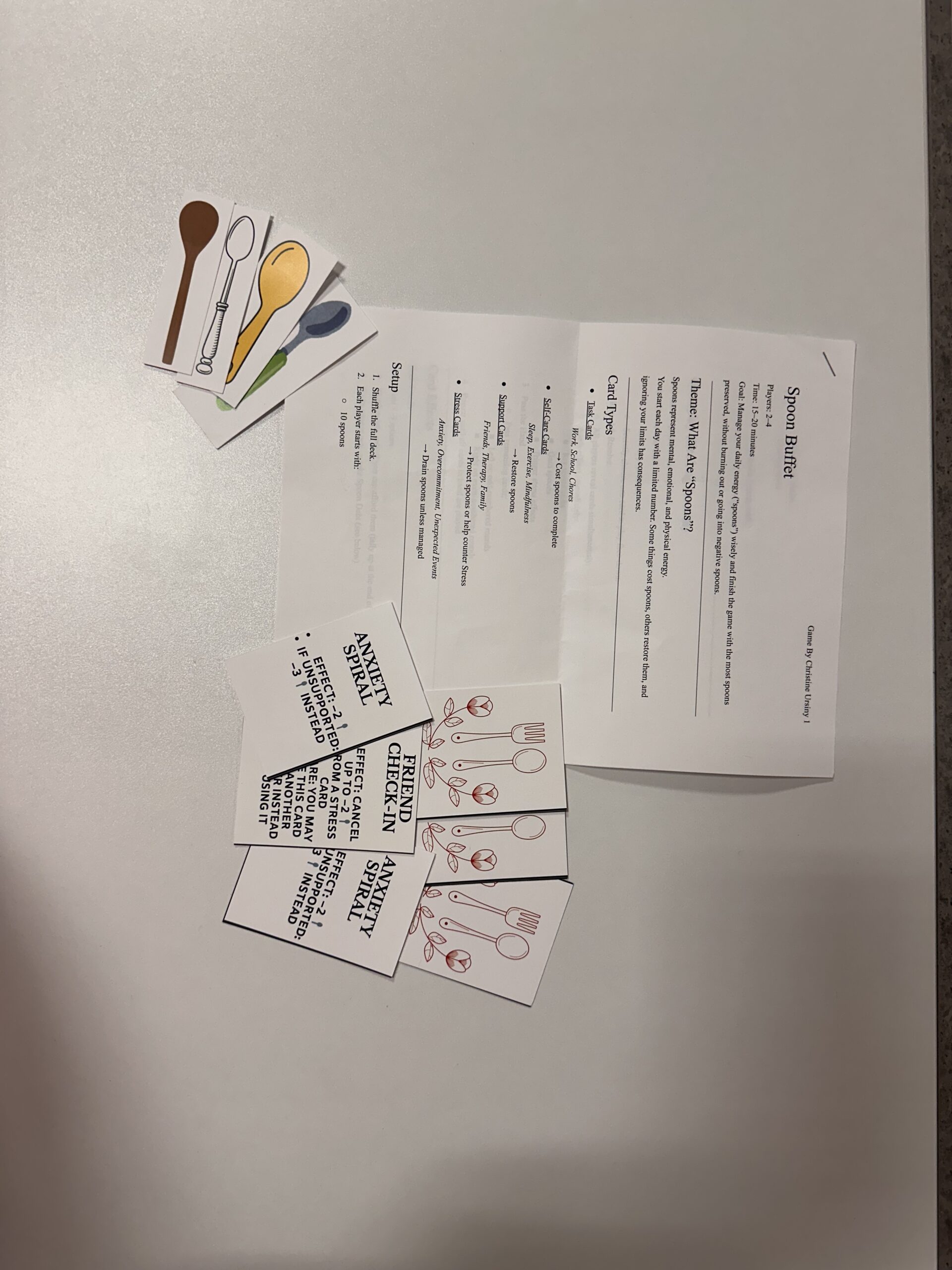
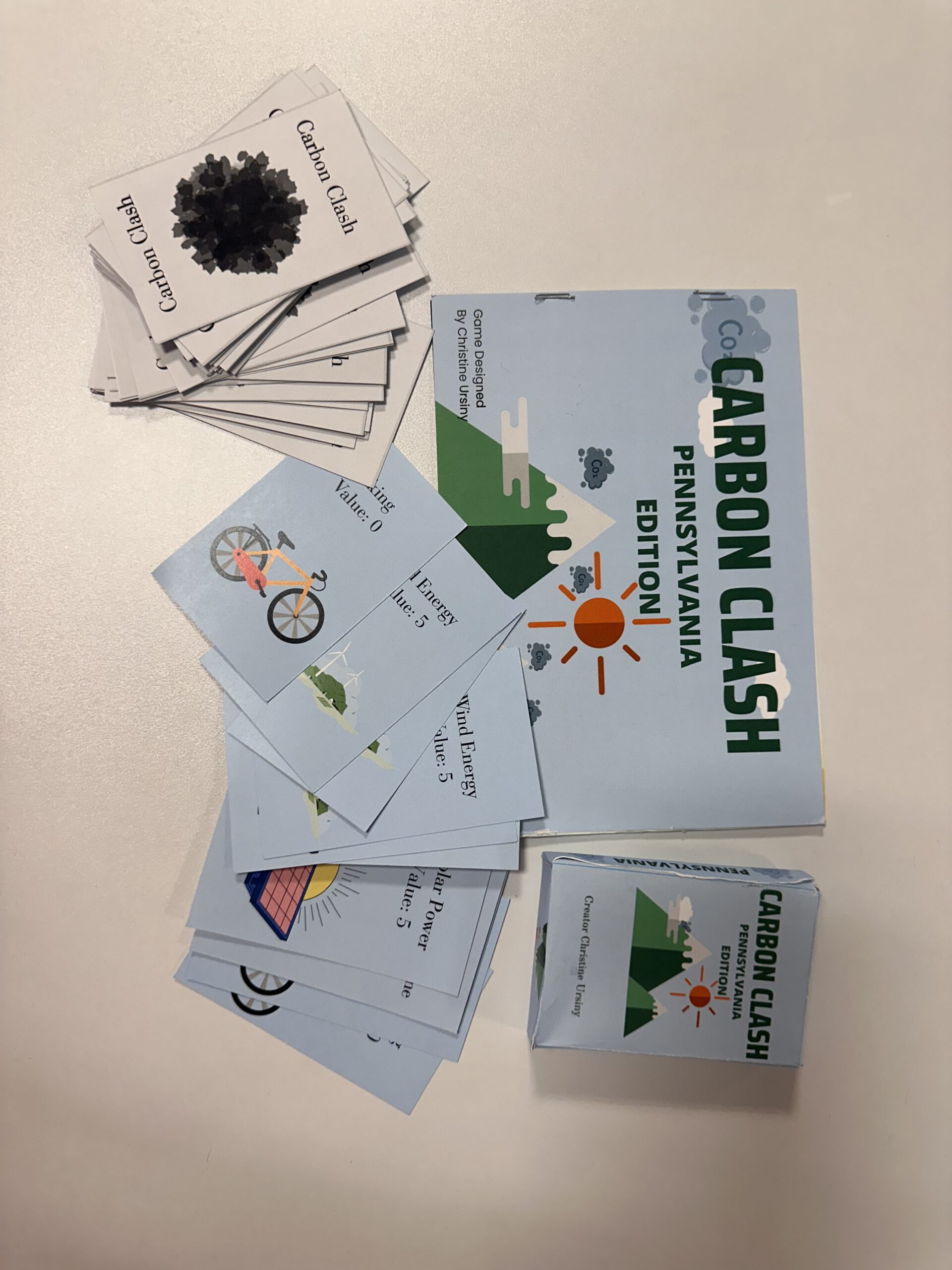
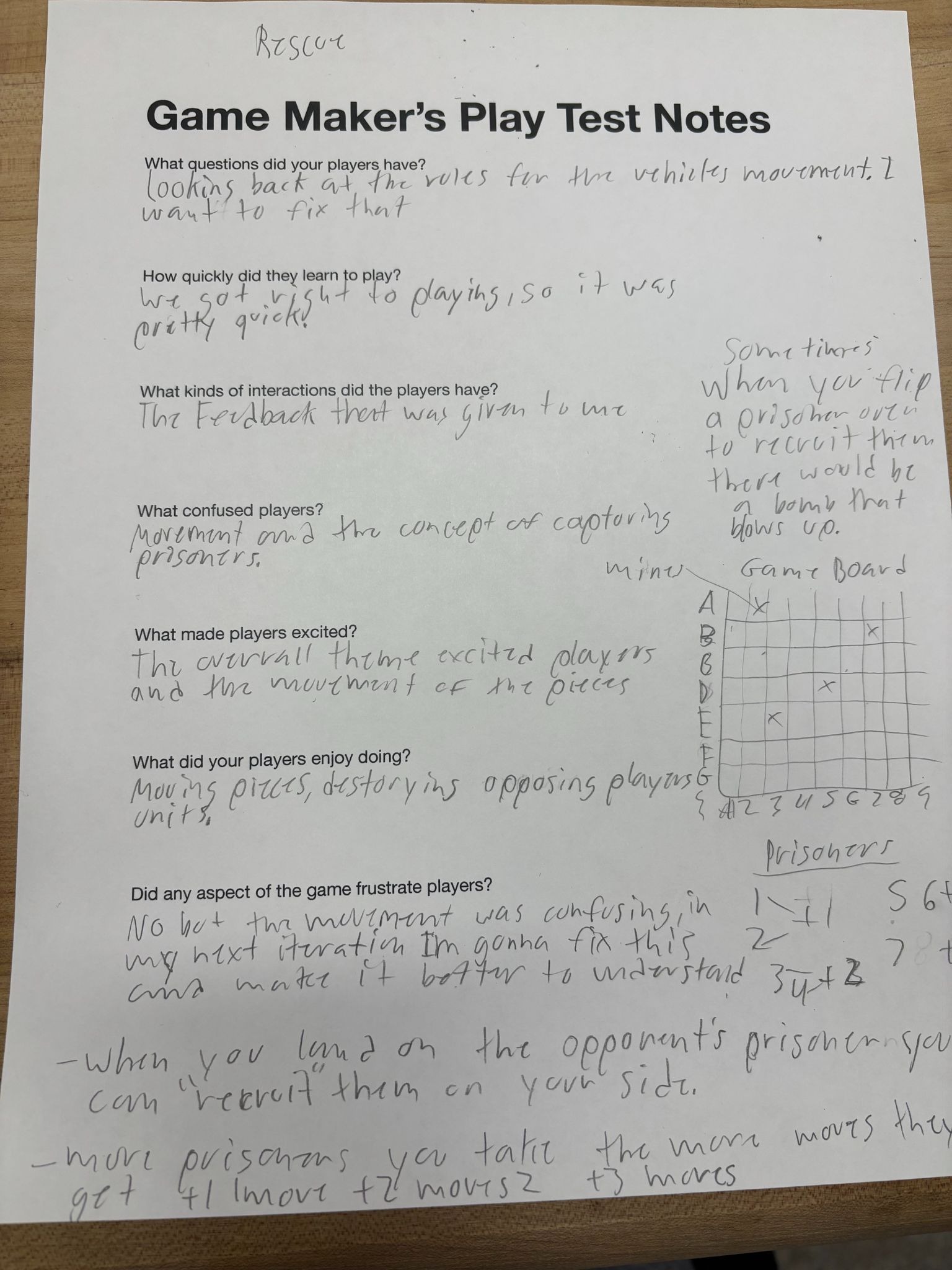
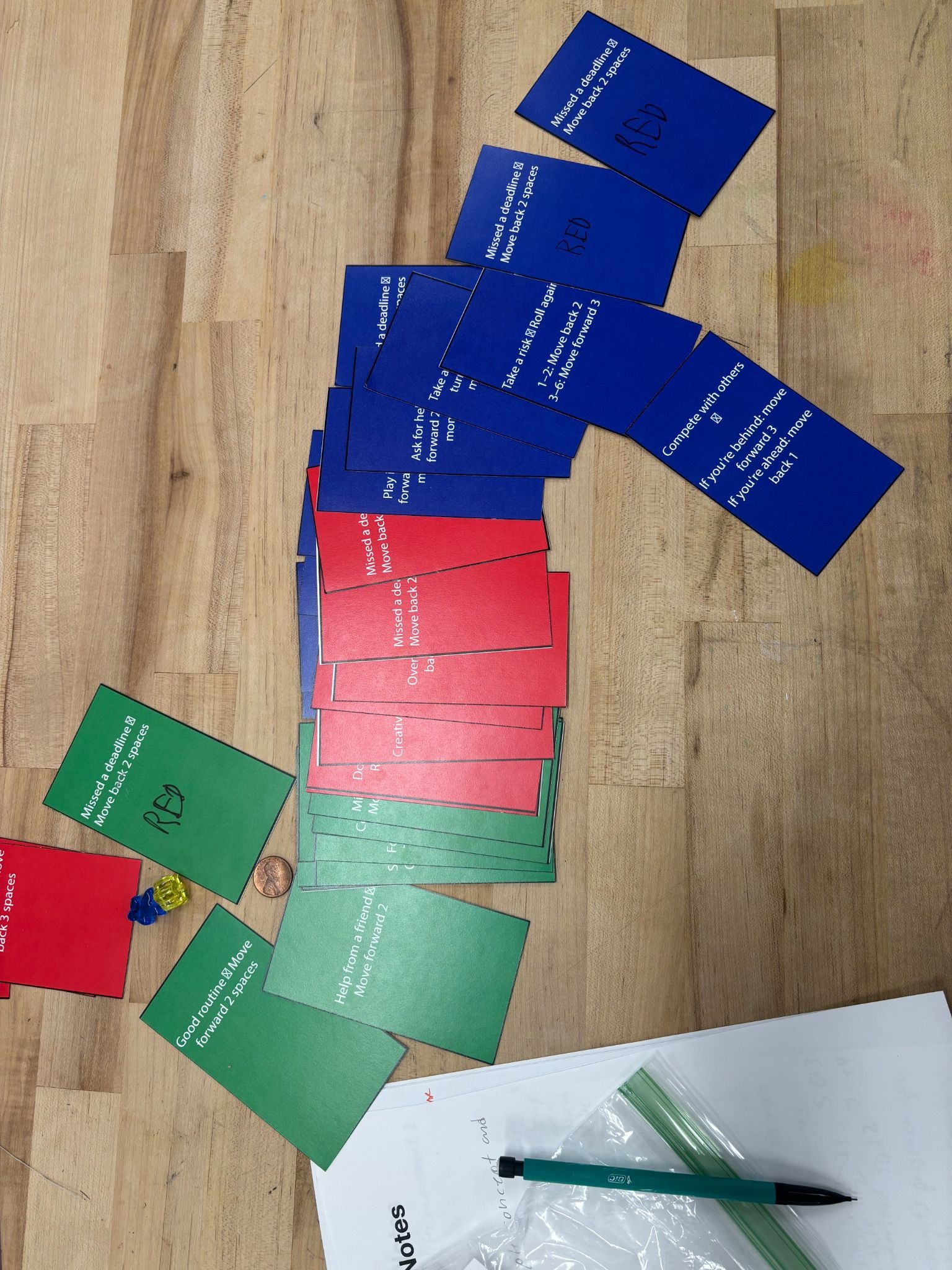
The color game was based on the simplicity of the game War and was used to teach players about color theory. When the game was played overall, there was some confusion about the color combinations, which was good since it allowed for a lesson to be taught about the game, which was the purpose. If I were to move forward with this game, I would focus on adding more color combinations worth more points and making the quality of the cards better.