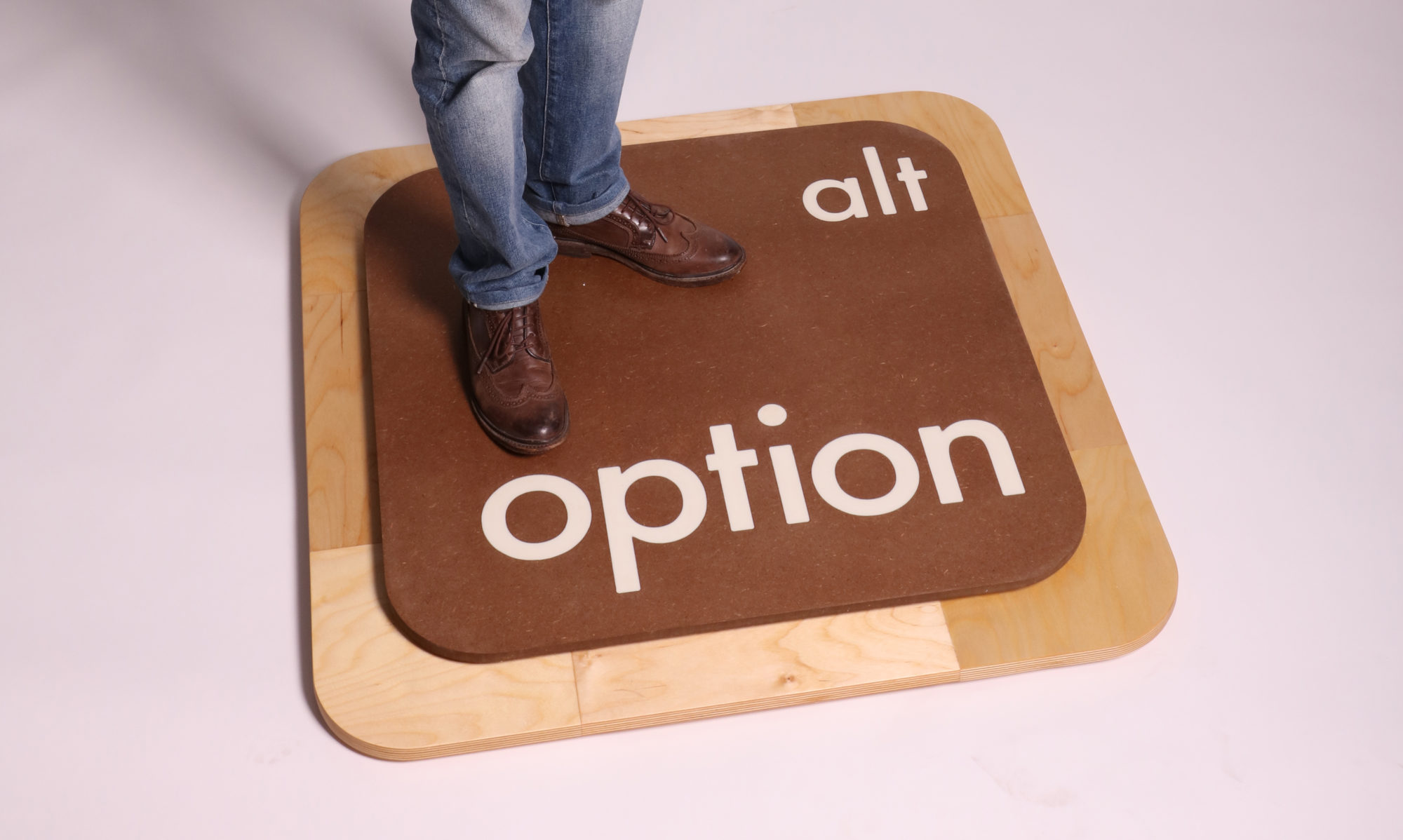
My idea is going to stem off my unboxing game where you unbox things satisfyingly and get cooler tools and cooler boxes to unbox. my wrinkle is going to be adding the amazon logo to everybox to get people to purchase things from amazon. Maybe if you unbox so many boxes in game then you get a free purchase from amazon under $20.
Week 1 Question Set
- Ian Bogost shows that social games such as Cow Clicker, are usually boring and overall repetitive. In this game, you click a cow every few hours which just relies on the players addictive tendencies.
- Games like Farm Ville use friends as resources, which can make friendships sort of more like a transaction / sale rather than a real connection or bond.
- Social games force players to check in once in a while or watch advertisements in order to skip timers. By doing this, you feeled tied up in the game since you are waiting for a timer to run out.
Week 1 Questions
What are the issues Ian Bogost raises about social games with Cow Clicker?
Ian Bogost critiques social games like Cow Clicker for several issues:
Enframing: Social games reduce friends and social interactions to mere resources to be exploited for in-game progress, rather than fostering genuine connections.
Compulsion: These games create addictive, repetitive behavior, drawing players back through manipulative design that exploits human psychology, much like slot machines. (boo gambling)
Optionalism: Social games often make gameplay optional and shallow, with actions that can be skipped by spending money, removing meaningful player effort.
Destroyed Time: Social games invade players’ time even when they’re not playing, creating anxiety about missed rewards and fostering a sense of constant obligation.
How do social games like FarmVille enframe friends?
Enframing refers to how the game treats friends not as people but as resources that players can use to advance in the game. (Don’t worry, I also had to look it up.) One example of this is as follows:
Externalizing Social Value: Rather than interacting with friends in ways that build genuine relationships, the game turns these interactions into transactions—asking friends for in-game help, sending virtual gifts, or recruiting them to join the game.
How do social games destroy time outside of the game?
Social games like FarmVille destroy time outside the game by creating a sense of obligation that lingers even when players aren’t actively playing. Some examples of this include:
Obligation to Return: Since social games are built around timers and rewards, players feel like they have unfinished business, leading them to think about the game when they should be focusing on other activities. It’s not just about the time spent playing but the time spent thinking about or planning when to play.
Interrupting Daily Life: The game’s mechanics make players feel like they need to constantly check in, and this can take away from time spent on more meaningful or productive tasks as they prioritize the game to avoid feeling guilty about missing out.
Week 1 Response | Dill DeSantis
Game Thoughts:
- Painstation: The concept is absolutely hilarious, but it’s honestly hard to say if I’d actually go through with playing it; On one hand, I don’t like being hurt – but on the other hand, it would be an extremely unique gaming experience.
- Getting Over It: I’ve had several opportunities to play this game, but i have deliberately chosen not to because I already know I wouldn’t have the patience for it. I don’t dislike it, I think it’s a good looking and well-designed game, but it’s simply not a game I want to play; it seems like you can either love or hate it, there’s no middle ground.
- Townscaper: I was pleasantly surprised by this game; the quality, sound design, and visuals were above what I expected from the pictures. I can certainly see the appeal, but I cannot imagine that I would stick with for long, as the options seem quite limited.
Questions:
- Ian Bogost critiques social games for their manipulative design. He argues that they reduce friendships to mere in-game assets, not genuine connections. Developers exploit this by integrating viral mechanics that encourage players to recruit others, not for fun but for engagement metrics. He also highlights how these games rely on compulsive loops, keeping players hooked with minimal effort yet endless repetition. The most concerning issue, however, is the sheer amount of wasted time—players may spend hours completing trivial tasks, reinforcing an artificial sense of progress.
- Social games like FarmVille turn friendships into transactional relationships. Instead of fostering genuine social interaction, these games treat friends as resources to be used for in-game progression. Players are encouraged to “invite” others to perform tasks like watering crops or feeding animals, making progress feel dependent on social obligation rather than personal strategy. While this mechanic can create a sense of community, it ultimately prioritizes engagement over meaningful social connections.
- These games seep into daily life, constantly demanding attention even when not actively playing. Push notifications remind players to check in, fostering a sense of urgency to return. Additionally, time-based mechanics—such as waiting for crops to grow or buildings to finish—keep players tethered, stretching gameplay across hours or even days. Many games capitalize on this by offering microtransactions to speed up progress, effectively monetizing patience and further reinforcing time-wasting mechanics.
Other thoughts on games played in class
Painstation
Painstation reminds me of a more intense version of those games where you would need to hold a metal stick thingy and it would randomly shock a player until everyone was eliminated. I like to think that I would play Painstation if I had an opportunity to, but I’m such a wimp about everything I probably wouldn’t if I saw someone else get hurt playing it. I never even played that shocking game because I was scared. I definitely know some people who would play this game now and it would be super entertaining, but I think some people could take it too far.
Getting Over it
I had never seen or played Getting Over It until now. I think I would enjoy watching other people play it, but I don’t even know if I would want to attempt to play it myself. I think that I would be really bad at it and I don’t want to experience the frustration.
Week 1
Ian Bogost points out that social games, like Cow Clicker, are often boring and repetitive. In Cow Clicker, all you do is click a cow every few hours, which highlights how these games rely on simple, addictive mechanics instead of meaningful gameplay.
Games like FarmVille treat friends as resources. , which can turn friendships into something more like a transaction than a real connection.
Social games often force players to check in frequently or wait for timers to run out. This can make people feel tied to the game.
Game Design 2 – questions w.1
- What are the issues Ian Bogost raises about social games with Cow Clicker? Ian Bogost doesn’t like social games for the following reasons: (1) Enframing contacts from social media is brought into gaming. Friends become resources; (2) The encouragement of compulsivity; (3) Optionalism – the fact players don’t have to play (4) they destroy the time we spend away from them.
- How do social games like FarmVille enframe friends? Connections and friends become resources to collect and harvest.
- How do social games destroy time outside of the game? They may punish players for not playing as much or for time away from the game.
Thoughts on games showed in class
Painstation: If I am being honest, I am not totally sure what my actual thoughts are on this game. In one sense I feel like my dare devil side would totally play this game. However, I feel at the same time that I would be hesitant to.
Getting Over It: I wasn’t even playing the game personally, I was justa watching other’s play and it was driving me crazy. I would not be able to play this game myself because it would drive me insane and make me want to throw my device across the room.
Townscraper: This was my favorite game out of all of them that was showed because it was just so oddly facinating. I would have played this game for hours when I was younger. My only complaint is when I went to go download the game I was upset because it’s not a free game.
Sara Estus – Week 1 Questions and Thoughts:
What are the issues Ian Bogost raises about social games with Cow Clicker?
The creator of “Cow Clicker,” Ian Bogost, raises multiple issues about social games. First, he states that they are “enframing,” as he states, “friends aren’t really friends; they are mere resources. And not just resources for the player, but also for the game developer, who relies on insipid, “viral” aspects of a design to make a system replicate.” Bogost also states that social games are built on compulsion, as players “obsess for more and more.” Furthermore, he states these games are seeping with optionalism, allowing players to play a lot, or a little with little effort. Of course, the main issue Bogost ends his statement with is that players who partake in social games experience a substantial amount of destroyed time. Players will obsess over tens of hours of playtime to complete simple tasks.
How do social games like FarmVille enframe friends?
Like Ian Bogost’s statement, social games enframe friends as a means of gaining resources for games. Farmville is a perfect example of such as you can “invite” your friends to help you tend to your crops and livestock on your farm, while also helping them in exchange. I have never played Farmville, but from my understanding of the mechanics of the game, a lot of time and effort from your friends is extremely important to help you move forward into the game.
How do social games destroy time outside of the game?
Social games destroy time outside of the game by being consistently prevalent in one’s day. If you play a game on Facebook and have notifications enabled, you will get update notifications from the game telling you that “something is ready!” and will feel enticed to come back to the game. However, there is also the factor of some games depend on time to unlock and “build” things. You may have to wait a day or two, etc. But many games also combat this by having a “pay to play” feature that now ruins the factor of spending time in the game, now your real money is being implemented too.
Game Thoughts: Painstation
I think it is interesting to see how artists and creators (manufacturers) can create such a unique game that can create such a unique experience. The game, Painstation compels its players to decide if playing a simple game of pong is worth getting whipped, burned, and electrocuted. I feel like I would be up to the challenge to play just to be able to say I tried it. (Though I feel like I wouldn’t last very long.)
Game Thoughts: Getting Over It
I have seen this game, and own this game on multiple platforms. It is such a silly but also aggravating game to play. But it is surely one you really can’t ever put down. You keep coming back telling yourself “I can do it this time!” but surely you never really do. Being able to say you have completed the game is for sure a bragging right.
Game Thoughts: Townscaper
I have played games similar to this one, such as “The Block” on Steam. I don’t personally enjoy neverending mindless games such as these. But I can appreciate the art style, sounds, visuals, and calming factor of the game.
Game Design 2 – Week 1 Questions
- What are the issues Ian Bogost raises about social games with Cow Clicker?
- He riases the idea about how social games can be rather addictive. Basically the game gives you a cow, that you can click on it and when you click it provides you with more clicks so that you can upgrade your cow. Many find it as a challenge to beat the time delay thus making it highly addictive.
- How do social games like FarmVille enframe friends?
- FarmVille enframes friends because you may be pressured by a friend or family tobplay the game so they can recieve an extra bonus. Farmville skillfully manages Social Pressure by giving players bonuses whenever they invite friends to the game.
- How do social games destroy time outside of the game?
- Many social games can destory time outside of the game bu consuming a lot of a person’s time. This can often lead to neglect in my other responsibilties and priorities.
Q n A
- What are the issues Ian Bogost raises about social games with Cow Clicker?
At first, what was originally supposed to be a commentary on how mind numbingly stupid and easy a game can be, after users began gaining a cult following to Cow clicker, its creator also raised awareness on the addictiveness of these types of games which led to copious amounts of stress on the creator to supply such cow clicking fiends with more cows.
- How do social games like FarmVille enframe friends?
I feel like there are both positives and negatives when it comes to playing with friends, whether that be together, or from far away on modes like co-op mode, theres always a way to engage with one another through the game. Though, in co-op mode, I hear things can get pretty nasty. Typically friends don’t screw one another over but greed and not playing by the house rules can sometimes cause friendships or bonds to break due to certain greedy players finding loop holes in the system.
- How do social games destroy time outside of the game?
We can get so wrapped up and engulfed in a “social world” that prevents us from being socially aware of our true surroundings. Though people can still have a social life on these virtual platforms, sometimes in extreme cases, we forget about the bonds we’re meant to grow naturally, as well as family relations and real world problem solving skills. Not to mention, nature is beautiful too and sometimes we’re not out there enough.
class one questions and assignments
Getting over it
i have seen many people play getting over it and have gotten the feeling of second hand annoyance and anger with the narrator and finicky game mechanics. Its a fun way to frame and test peoples patience. i personally don’t think i will ever play this game.
Game ideas
- you have an egg and you just sit and rub it so it stays warm. once you hit a randomized amount of rubes or time of rubbing you can get a random chicken or a dinosaur, or any animal that hatches out of eggs then you can feed the animals.
- flipping a coin and then you get a coin after every flip.
- use augmented reality so you can collect the objects and people and other things around you and you get points for getting things.
- just having a drop of water on a table and you can move it around and also add water with rain or other things and take it away as well.
- the indominable human spirit – have an AI come up with ways to to end the human race or just kill the player and you the player have to come up with ways to survive as the AI keeps trying to kill you.
Questions
- Ian brought a lot of the time wasting and reframing of skill to mindless play to even having more of an incentive to pay money to get out of having to play the game. in cow clicker you aren’t really playing in the way most people think about playing a game. it takes no skill at all to click on the screen or a mouse to make things happen its like sitting and refreshing your email in hopes to see something new.
- making games like Farmville rely on friends speed up process and progress makes friends less of fiends and more of a resource. when you have more friends you can get things from them and the game awards you to have as many “friends” as you can.
- compulsion is the biggest reason why social gams can erode your time away from the game. the time it takes in between things can get in your head and cause you to focused more on when the next time you need to click or collect or feed something you cant think of other things. you will sit and get on an off the game hoping to the thing the timer is counting down to is done.
Endless Game Ideas- Colin Kenny
Group: Gideon, Kelsey, Colin
- A computer game where you play as a drop of water on a table. You move around trying to gain mass and spread out.
- An AI powered game where you type in a scenario of your version of “the best day ever”, and it is the AI’s job to respond every time with a way to ruin it.
- A digital game where you play as an annoyed landlord who must keep fixing the stupid tenants’ problems.
- A phone game similar to Pokemon Go where you use a LiDAR Scanner to “collect” objects in the real world which can range from rocks to chairs to devices to locations and statues. Every item is worth a point value for a competitive league, or you can play on your own and just have a personal collection.
- An idle game similar to Cookie Clicker where you rub an egg with your computer mouse or on your touchscreen to hatch a bird. Alternatively, you spin a coin to gain money and upgrade it to more valuable coins such as a penny, then a nickel, then a dime, then a quarter, then a silver dollar, then a gold coin, etc.
Game Design 2
Week 1 – Motivation
Group: Connor and Rees
5 Never-ending game ideas:
- Conveyors grab n bag – Grab items that move along a conveyor…You have a list to follow, and you have to pick the right items to choose to bag from the conveyor. You can pick rare items, earning extra points. Patience is a virtue, and your points are based on how long you choose to play.
- Grass Grower – You are a grass farmer, growing different types of grass. you watch the grass grow, and when it gets too long you cut it. You can continue to upgrade the grass while planting different grass types. Your grass will always grow, even when you are AFK.
- 7-Impossi-roll – You are given a 6-sided dice, and your objective is to roll a 7. The game never ends, but you can upgrade your dice the more you roll (different colors and details, endlessly hoping to roll a 7. The number of times you roll is tracked to show dedication.
- Ant Antics – You are a part of a colony of ants, and you must maintain the food supply and grow your colony. If you run out of food, you move to the next tree. Each tree will always have a start amount of food supply, but you need to make it last before moving onto the next tree.
- College Builder – You build and customize a college campus. This is a sandbox game, in which you can always expand upon the campus while building food courts, stadiums, classrooms, etc.
Week 1 questions:
- What are the issues Ian Bogost raises about social games with Cow Clicker?
- Ian gives a list of issues that social games inhibit, such as enframing, compulsion, optionalism, and destroyed time. These factors, Ian believes, pose as a negative influence on the future of games. Along with these factors, Ian believes that the outward obsession social games inflict are tricks to disguise themselves as fruitfulness.
- How do social games like FarmVille enframe friends?
- In social games, friends aren’t really friends. People are considered to be resources, not for the player but for the game developer. Ian touches upon the point that social networks in general serve as “enframing apparatuses,” in the sense that people are things that will do what you want when you need them.
- How do social games destroy time outside of the game?
- The destruction of time revolves around the demand of “grinding” in order to reach new heights. Tens or even hundreds of hours in order to complete something can be enticing, giving the player the initiative to be the best. However, social games destroy the time we spend away from them. This includes obligation, worry, and dread over the missed opportunities of grinding.
Thoughts on what we played in class (Townscaper)
I think that Townscaper is a generally relaxing game, promoting creative expression with a calming atmosphere. The concept is simple, and so are the controls. Only by clicking, you can transform a vast wasteland of water into a thriving village. One thing I will criticize that Professor Ames’ daughter mentioned was the fact that there are no people walking around. It would be interesting to see how people interact with the transforming environment around them. I wonder if this game could inspire architectural projects. Very farfetched, but maybe this game could layout an idea for an inspiring architect. I like the diversity in creativity the game projects, including color, building types and even tiny gardens. I’d say Townscaper is a nice time-killer.
Townscaper Review
- Was it fun? Yes, this game is fun and relaxing. I enjoy being able to freely design my own town even with the limited mechanics. The best part is the noises that it makes when you add a section to your town.
- What were the player interactions? This game doesn’t really have any player interactions.
- How long did it take to learn? Like a minute MAX. This game is very simple, it is just clicking to place something and holding to remove something. You also have the choice to change the colors of the sections you add,. There are a few features that you are able to change that I didn’t notice at first—including changing the angle of the light source and adding a grid to better visualize where you place buildings.
- Would you play it again? Yes, I would. This isn’t the kind of game where I would spend hours upon hours captivated by it, but it is something I will definitely revisit when I’m having difficulty sleeping or am stressed.
- Analyze the game using the 3 act structure. The 3 act structure of the game is difficult to determine as this is a game that is very much play at your own pace and quit at anytime you decide. However, I would say that the first act begins as you load up the first world and begin placing and taking away buildings and “blocks”. The second act would often include when you start developing a “plan” to create the city that you want and you get ideas of how you can use the different combinations of building heights and colors to create something unique. The third act would be when you decide that your build is worthy of being “completed” or want to restart and begin a new town.
- What are the collaborative and or competitive aspects of the game? This game doesn’t really have specific collaborative or competitive aspects since it is a single player game.
- What is the game’s metaphor and which of the game’s mechanics standout? The game’s metaphor is that you are the “builder” and designer of a town in the middle of the ocean. The standout mechanic to me is the ability to change the way that your town looks by changing the color or light source angle. I also like how when you put certain buildings next to each other, they automatically combine and make unique shaped buildings. I particularly like making balconies.