- One frustrating aspect of the game was the lack of control over what cards were taken.
- I enjoyed collecting cards from others and getting a lucky break during a round. The high-risk, high-reward style of game play made the game easy to learn but difficult to master.
- I wished for more ways to affect my play. Discarding jokers is near impossible, almost always locking you into a situation where you lose points.
- I would tweak, or at least, reevaluate the way that points are calculated. Players are almost always trying for high cards (Jacks, Queens, Kings, etc.). Though this inherently makes getting runs/sets of high cards more dangerous, it does not balance out against the low value of the lowest cards. Three 2s will almost always be the worst hand to hold on to. I would balance some of the lower cards to keep up with higher sets/runs.
- I thought that mechanics were well designed. Rounds flowed into each other and the game play sped up as we understood the game more.
- I would really like to play Deadline again. As a person who enjoys card games, I think it blends a simple concept, a nice theme, and a high skill ceiling very well.
Tale Weavers – Play test (Version 1)
- One frustrating aspect of the game was trying to work within the strict scope of the cards provided. Many of them are extremely specific, meaning one must work really hard to spin the story of the card together. There were many instances of players changing the prompt so that the story fits better.
- Two events stuck out to me during game play. Reading the card prompts is quite funny, they’re witty and employ a dark or ironic style of humor. Many of the stories people created on the fly were very funny.
- I wanted a rule, similar to a house rule in Cards Against Humanity, where players can discard their entire hand and collect new cards to better match the prompt. It felt like my cards rarely aligned with the prompt.
- As mentioned before, I would remove some of the specific wording in some of the cards, and make them more vague.
- The mechanics are well thought out. Though I often struggled to flow my story cards together with the settings and characters, when they did align it made an incredible story.
- I would play this game again. It would make a nice party game for large groups of adults.
Broken Mime – Play test (Version 1)
- The most frustrating actions in Broken Mime was the inability to repeat actions done. Though the intent of this restriction is reasonable, it makes cards that depict specific actions difficult to re-enact.
- The charade’s style game play of Broken Mime lent to many funny moments. I also enjoyed the debate that happened after the card’s prompt was revealed.
- As mentioned before, some cards were incredibly specific, so it made not repeating actions difficult.
- I would add more clarity to some of the rules. For example, are players besides the participating two supposed to watch or look away?
- The charades mechanics work with the concept of Telephone well. Rounds often ended with hilarious debates of what the original card was.
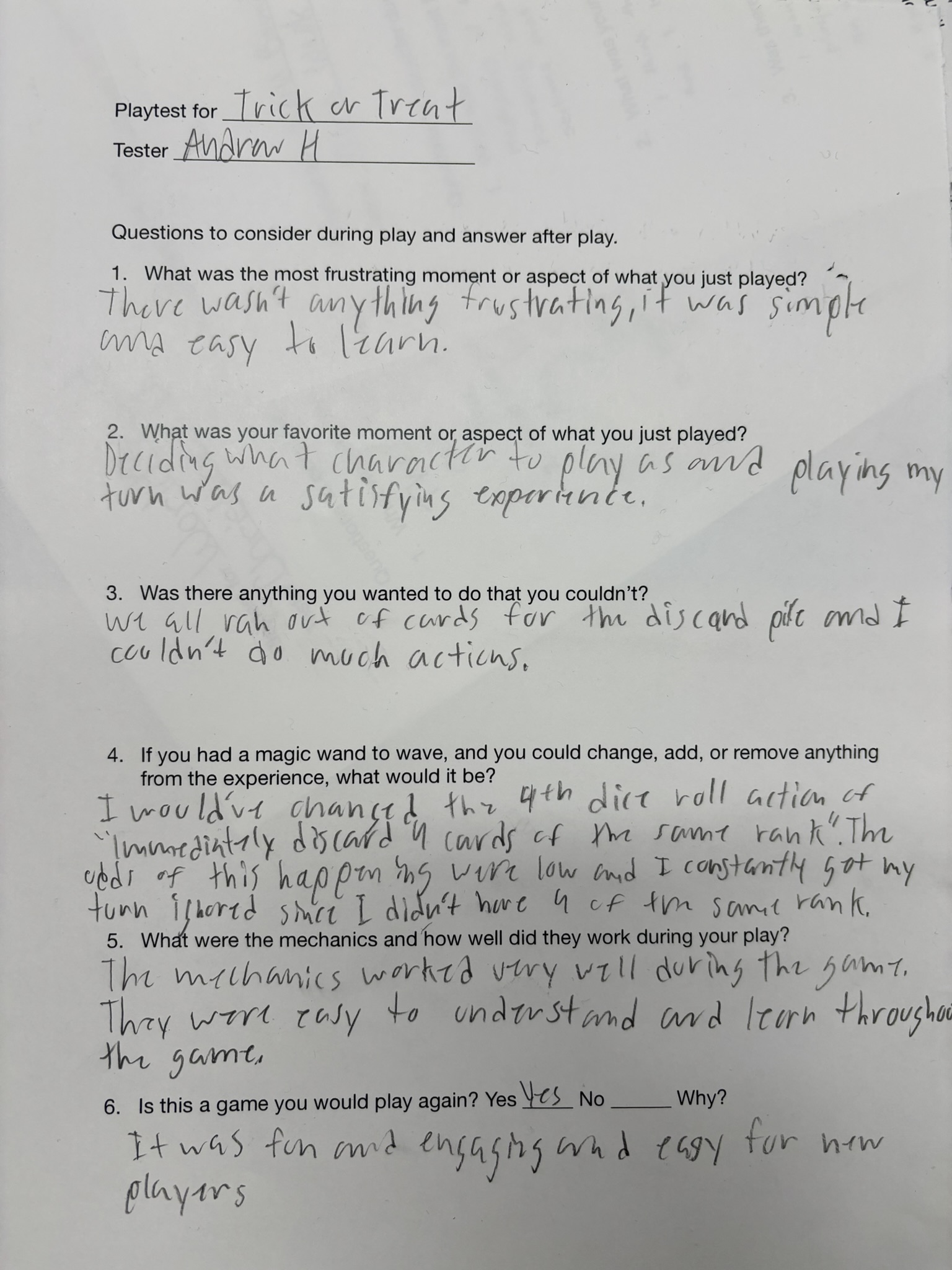
Game Play Observations to Improve – Trick or Treat
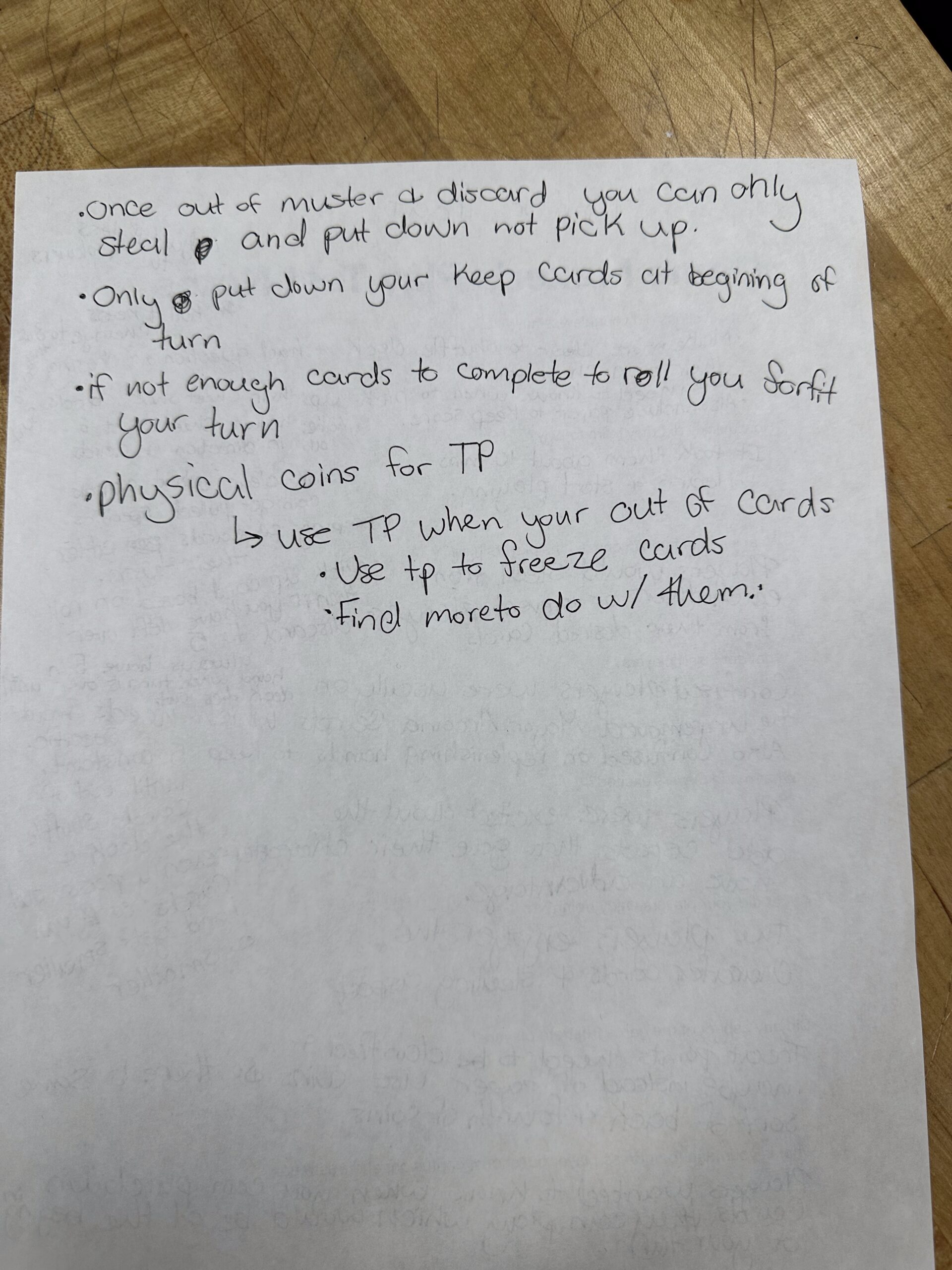
- Once out of the muster deck and discard deck, you can only steal and put down, not pick up.
- Only put down your Keep cards at the beginning of the turn
- If not enough cards to complete an action roll, you forfeit your turn
- Use physical coins for TP.
→ Use TP when you’re out of cards- Use TP to freeze other players from taking your cards
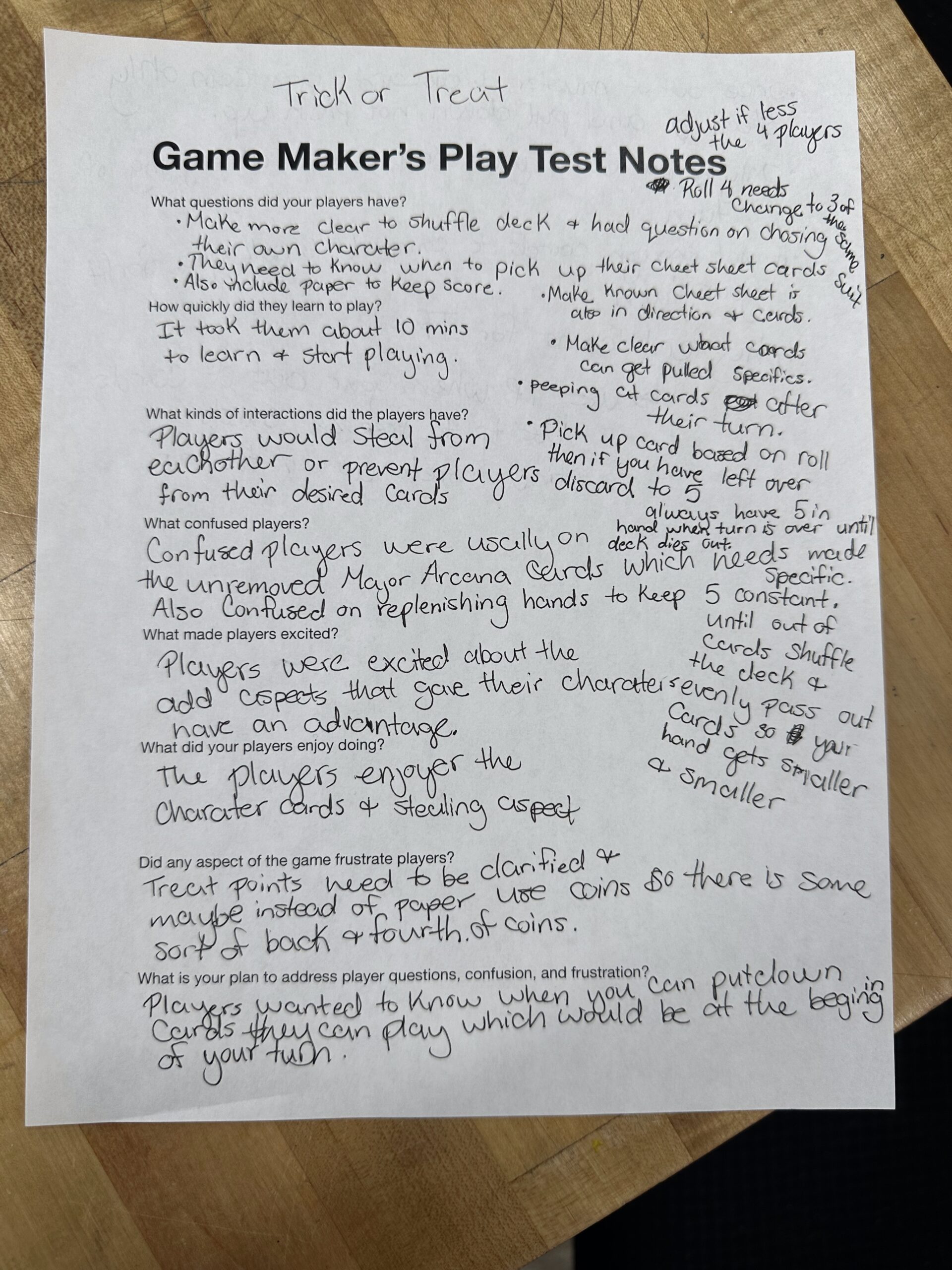
- Adjust the game if there are fewer than 4 players
- Roll 4 needs to change to 3 of the same suit instead
- Make it clearer to shuffle the deck and have something that allows players to know that when picking characters, you can’t choose those of the same element
- They need to know when to pick up their cheat sheet cards
- Change the treat Point paper with actual coins
- make known the cheat sheet cards in the directions, and the cards
- Make clear what cards get pulled specifically
- Make it clear in the directions that when allowed to be back, you would peek at the cards after you picked up
- Pick up a card based on Roll, then if you have left over, discard to five for your hand limit. Specifically, picking up after your turn is completed
- The hand limit no longer applies when both the discard and mustard decks are empty. Make sure to replenish your hands to keep a consistent five cards in your hand until both decks die out, then it is a free-for-all
- After the mustard deck is emptied and there is a discard deck left, make sure to shuffle the deck and use that as the new mustard deck until all cards are fully given out
- Three of one to be used and add more points to them, as far as what you can buy with treat points
- Make clear the order in which a player must play the game, with the first step being the roll and the last step being replenishing their hand.
Playtest – Honey Heist
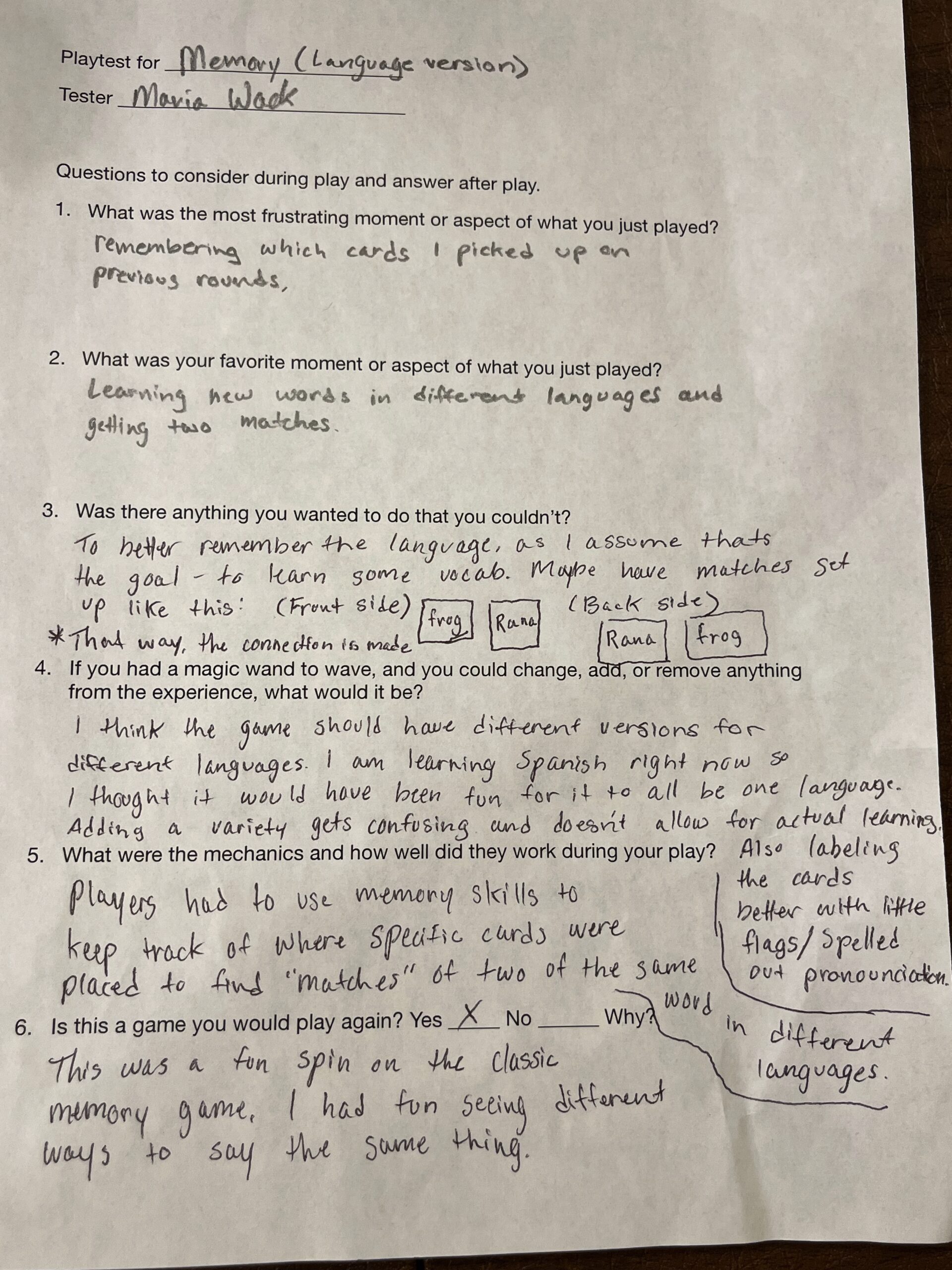
Playtest – Memory Language Game
Playtest – Power

Playtest – Trick-or-Treat

Playtest – Chakra Crusade

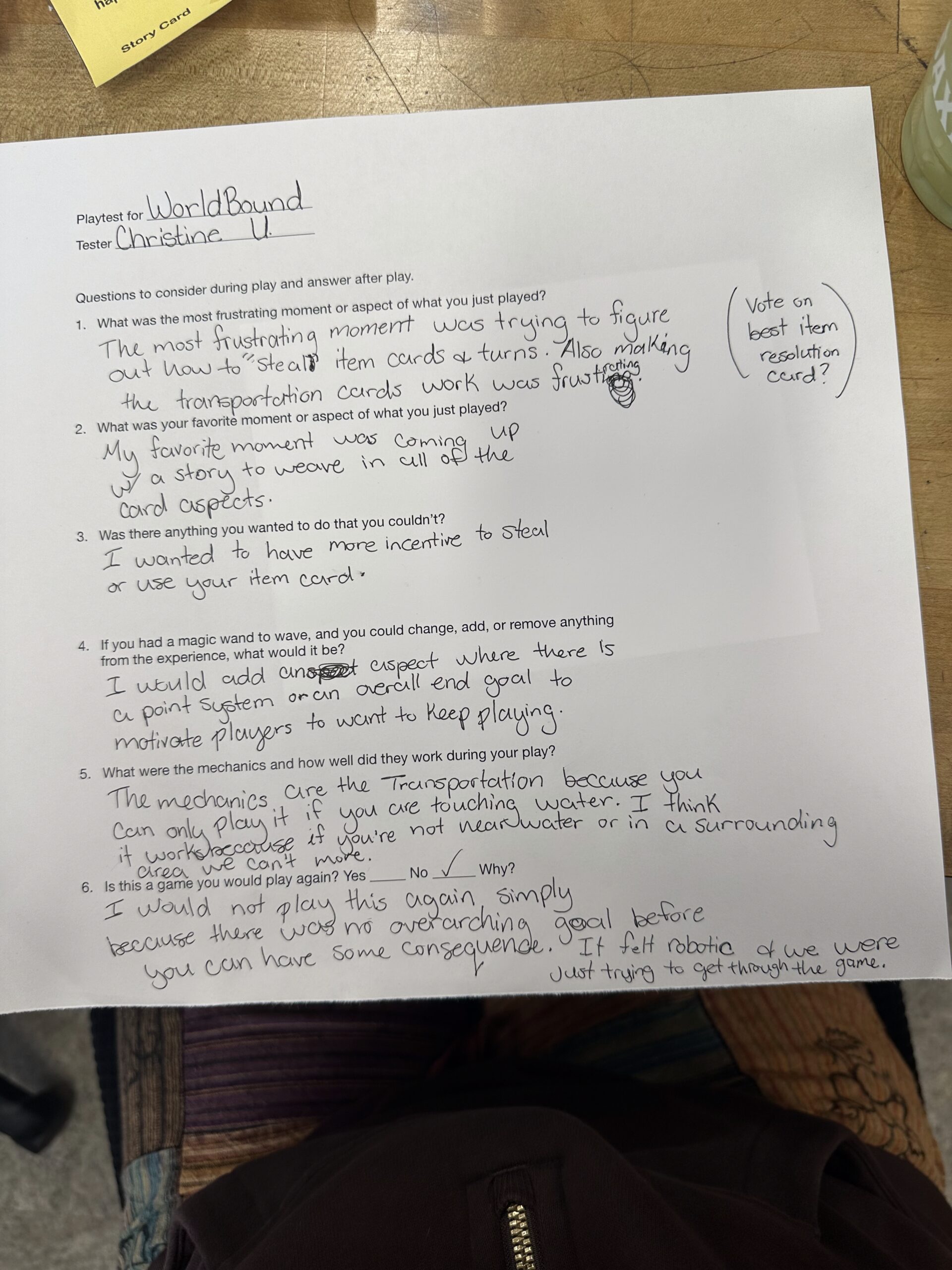
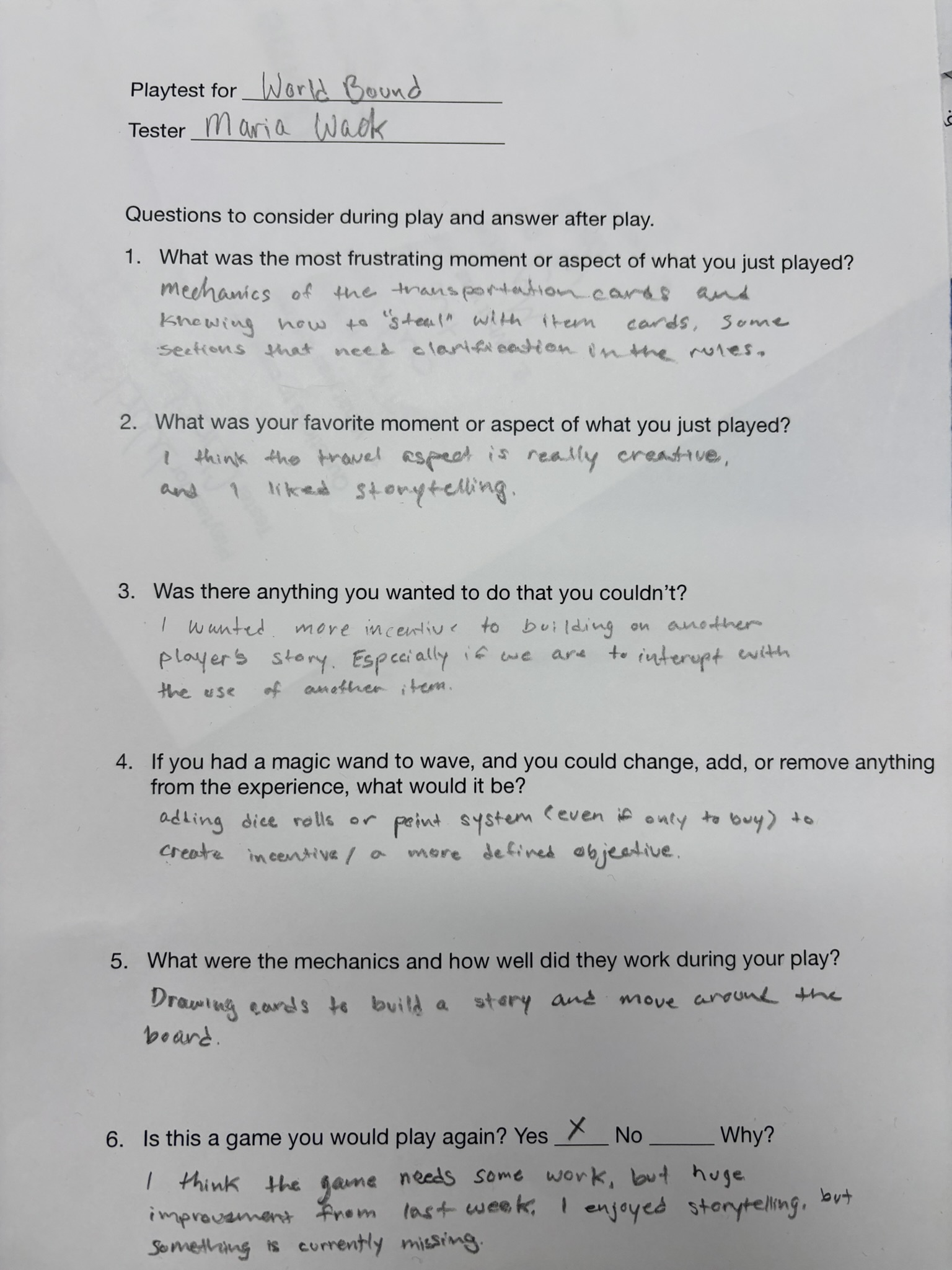
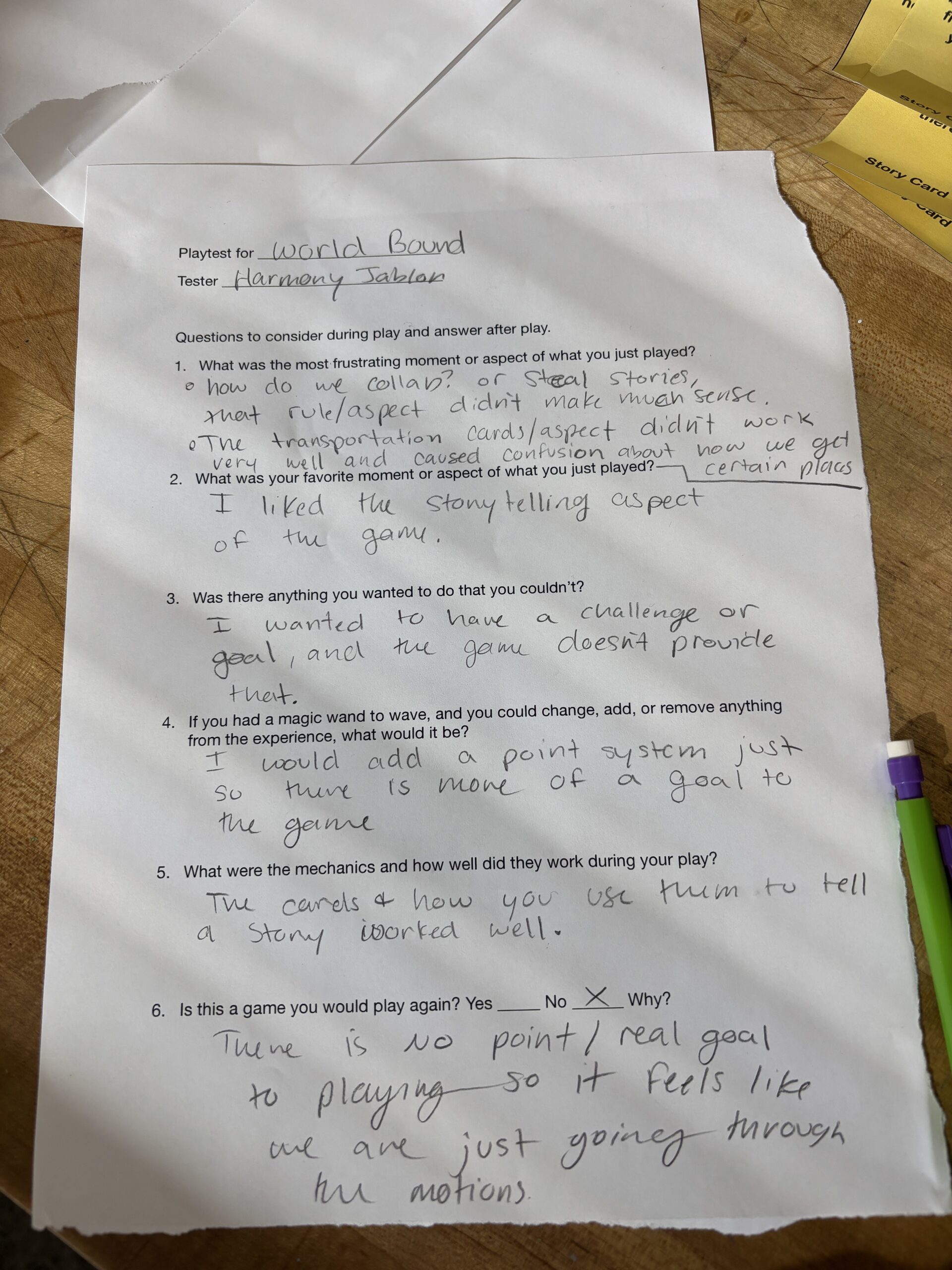
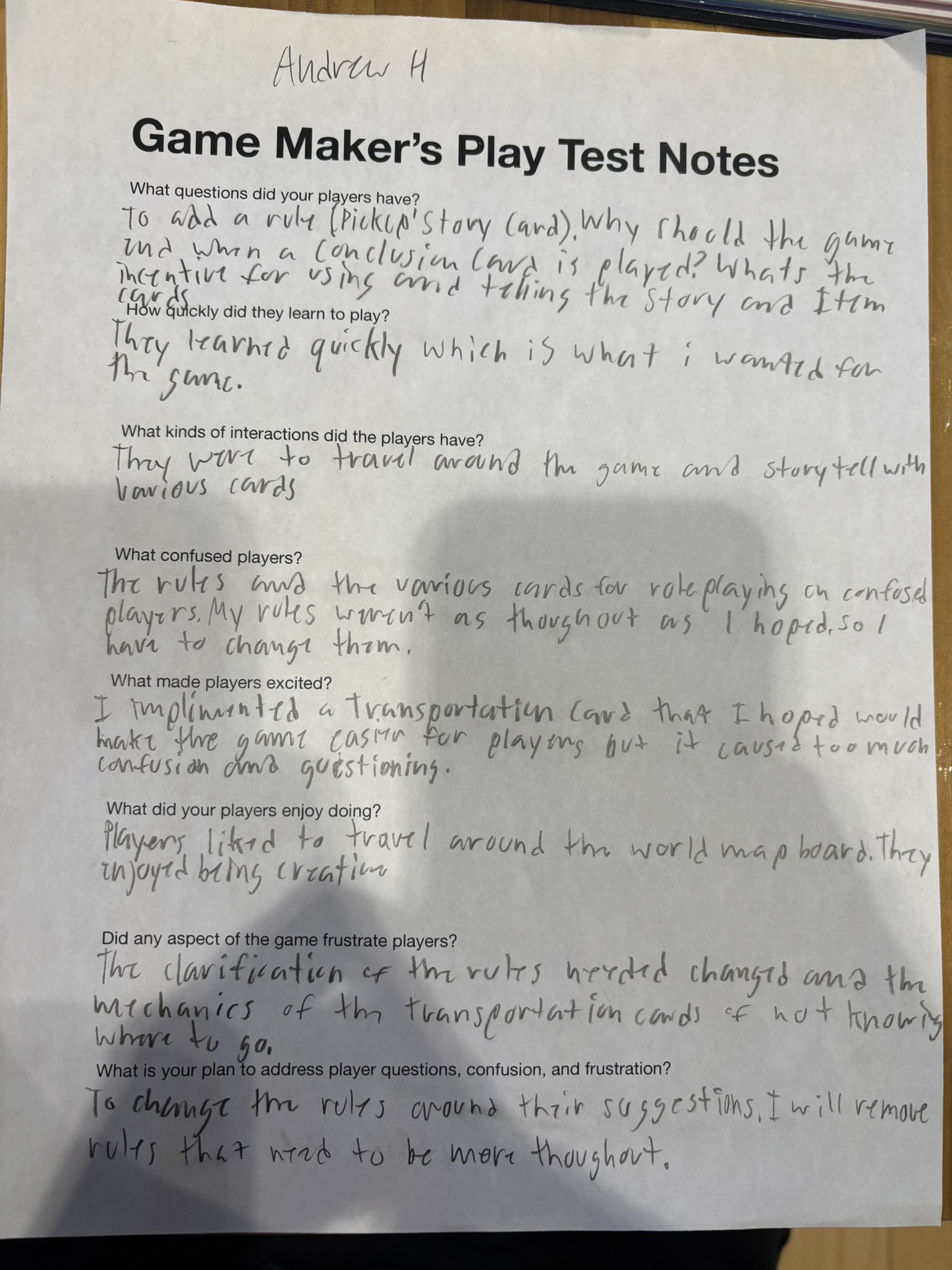
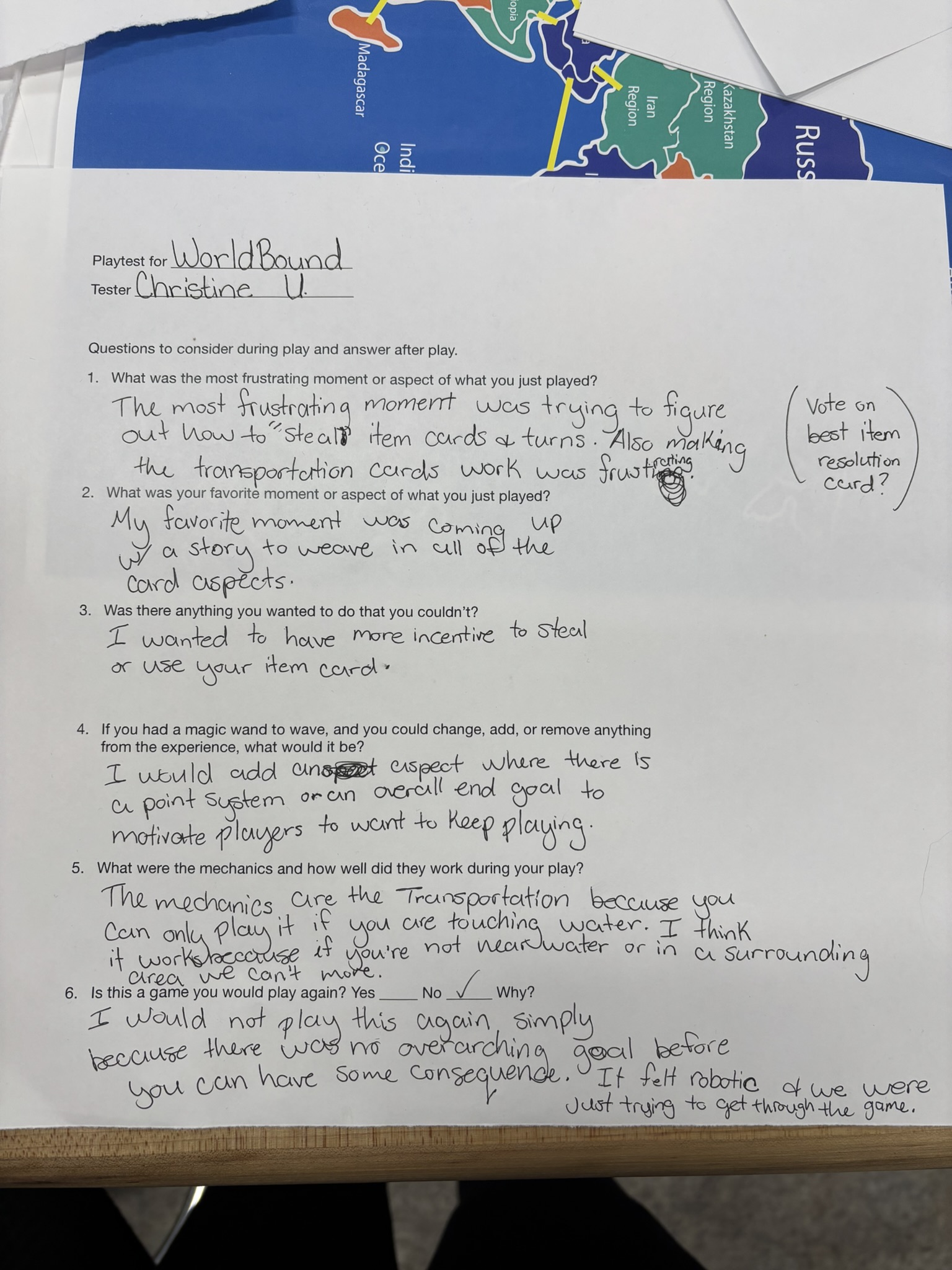
Playtest – World Bound Revised
Game Analysis 10/16- Harmony Jablon
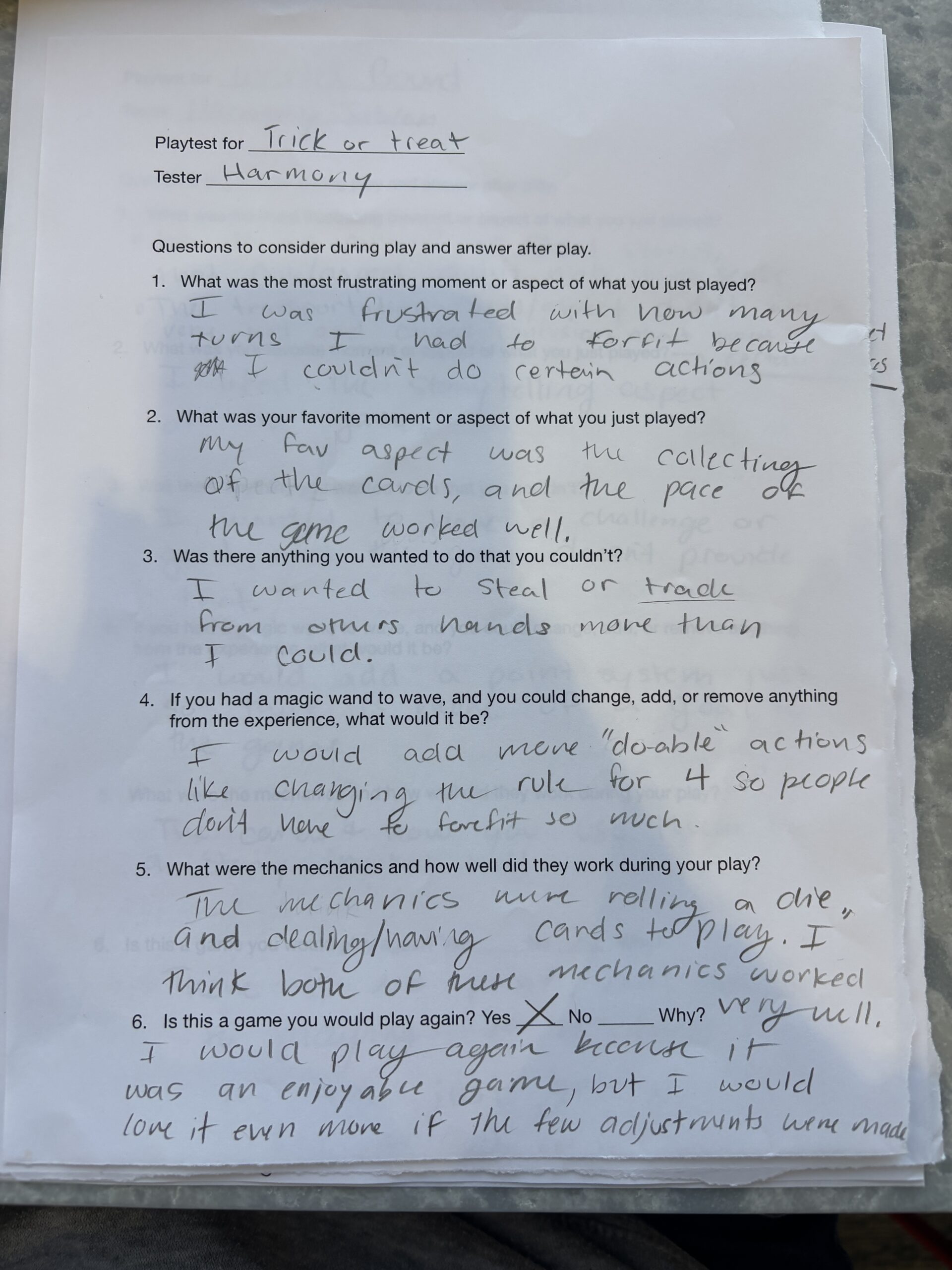
Trick or Treat/Play Test notes
Trick Or Treat Game Makers Playtest
Power Game Review
Worldbound Game Review