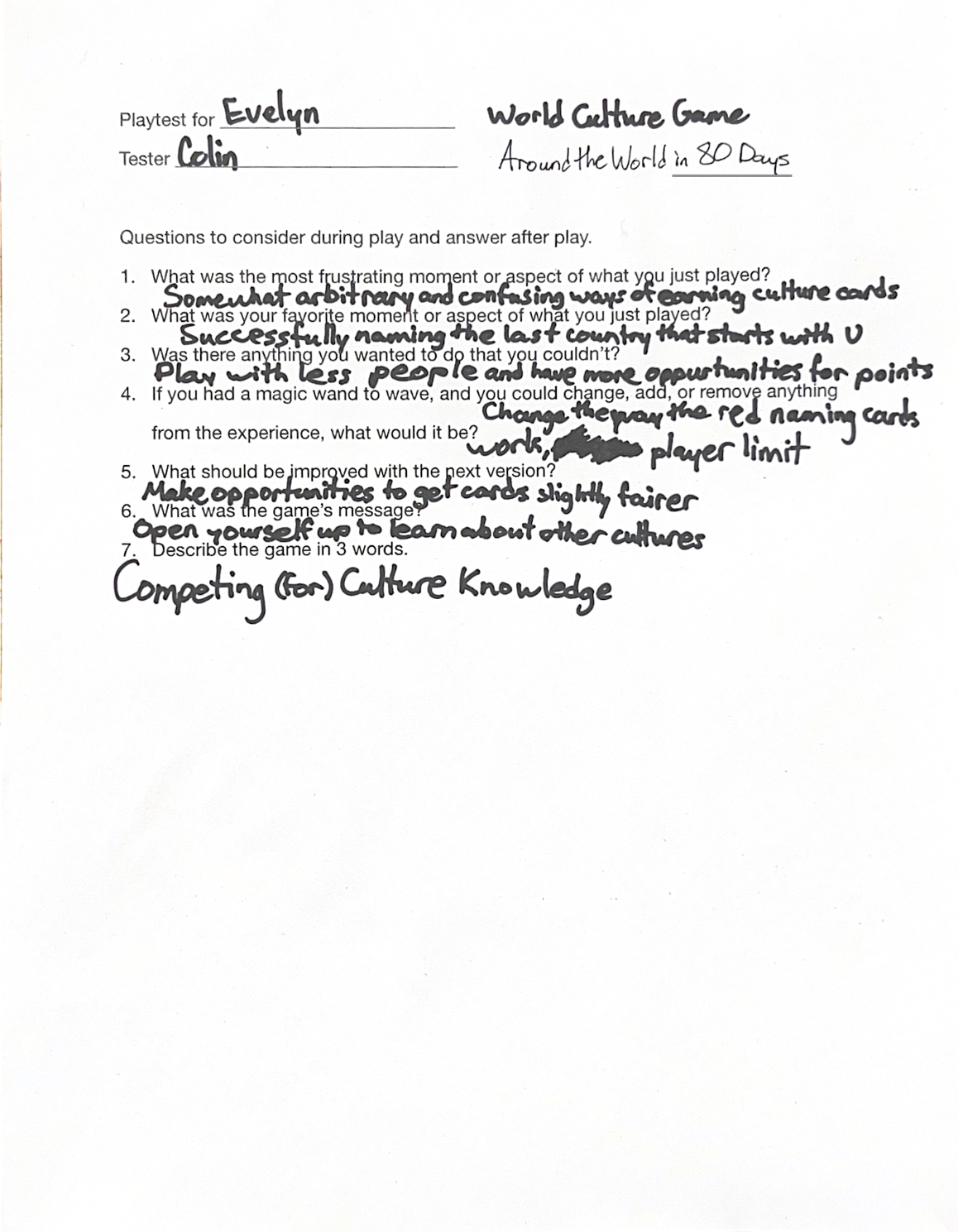
What was the most frustrating moment or aspect of what you just played? the most frustrating part was how I was dealt with a pretty bad hand to start. The good part about the game though is that even if you are dealt a bad hand you can still play smart and end up winning the game.
What was your favorite moment or aspect of what you just played?My favorite moment was when i took three of his guys worth one of my players. Games that have big momentum switches are really fun and always keep you in it.
Was there anything you wanted to do that you couldn’t?No, I was able to do everything I wanted to do.
If you had a magic wand to wave, and could change, add, or remove anything from the experience, what would it be? I don’t think this is really doable but i would love sound effects when you take over someone’s spot. You could just make it with your mouth but it would be cool if something played when you took over someone’s spot.
What should be improved with the next version?Next version should just include more spikes and more characters. The more players the more different outcomes there can be.
Describe the game in 3 words. Fun, Exciting, Competitive
2. The closeness between my opponent the entire game
3. I wanted to have a way to defend, even when I didn’t have enough spikes to win that round.
4. I would probably give more meaning to the cool lil drawings on each tile piece
5. Maybe add a tad bit more depth with how the characters can interact with other characters in a way thats more than being reliant on the spikes. Like special abilities or bonuses.
Player Questions: the players mostly had questions about how to start, on the board the start had 2 paths but in the rules it didn’t account for this so players were confused.
Learning Curve: the rolling of the dice, i didn’t have a 3 die but a 4 so they had to disregard the 4 but everyone was confused because they were not entirely paying attention to the game.
Player Interactions: most of the interactions were talking about the cards they got and their answerers which i what the game was designed for.
Confusion Points: i tend to write my ruled later in the night so my wording in the rules can tend to be confusing so it was mostly just understanding the rules when they were being read.
Player Enjoyment: i feel the players had more fun talking to each other than playing my game. but that is probably my games fault.
Frustrations: i couldn’t tell if anyone had major frustrations other than my grammar and handwriting but it was hard for players to know when to pick up a charity card because the board was smaller than it should be and i didn’t make the outlines as defined as they needed to be. also labeling the start and finishes.
Takeaways: my players didn’t play through the hole game so they didn’t get to the end to get the takeaway of making a difference by doing thing that help the planet.
The Campaign Trail
Player Questions: i don’t think any of the players had any questions that were not answered in the rules.
Learning Curve: having to do some of the math is a learning curve for players, but it is a different way to play for each player. their aren’t many things to learn this game is mostly about luck of the roll.
Player Interactions: no one landed on this space but stealing voters is one of the biggest interactions. mostly people were just talking about what was happening. i feel like this game has the best opportunity to make more interactions of losing and swapping around voters between players.
Confusion Points: when to lose and gain voters/ remembering what color you are.
Player Enjoyment: i think players enjoyed this game but we didn’t end up finishing it because others had to go work on things.
Frustrations: not landing on your color but no frustrations that i think i can really fix in later versions.
Takeaways: the takeaway of how political campaigns work would have worked better if i had done my initial thought of adding money and investors to help you either buy adds or other things.
Hear Me is a gentle, therapeutic browser experience. Players select how they feel (Happy, Sad, Lost, etc.) and are provided with a mood-matching song and a journaling space to reflect. It’s designed as a calming audio-visual tool.
Story
There’s no “win” condition. The game exists to support and calm. It’s about making space for feelings — especially for players who might not always feel heard. Whether sad or anxious, the design invites users to sit, listen, and write.
Process
I used HTML/CSS/JS and embedded music from SoundCloud. Originally, I tried YouTube, but due to embed restrictions I switched to SoundCloud playlists. The UI is bright and welcoming, and the layout includes a welcome page and journaling feature.
Final Product
A playable site that includes: • Mood-based background color and music • 1 SoundCloud track per mood • Journaling space with a “Save My Thoughts” option • A smooth intro screen that eases the player into the experience
True or Twisted? is a political fact-checking quiz game designed to help players separate truth from misinformation. Through a series of carefully crafted statements, players must decide if each one is true or false, but the twist is that the wrong answers reflect real-world misconceptions. It’s part game, part wake-up call.
Story/Intent
We live in a time when people often encounter fake headlines before real ones, and many vote or argue based on half-truths. This game challenges players to think critically and rewards informed awareness.
By including wrong answers based on popular conspiracy theories, the game simulates how misinformation travels — and gives players the tools to fight it.
The tone stays neutral, even when addressing controversial topics, to build trust across viewpoints. No lectures. Just facts and choices.
The Process
This project started as a reimagining of “The Election Game,” which focused on candidate knowledge. As the political climate evolved, the goal shifted: to educate players about current government actions, broken promises, and viral misinformation — whether they supported the ruling party or not.
Built using HTML, CSS, and JavaScript, the game features: • Dynamic true/false questions • Feedback after each answer with the correct information • A clean UI with bold fonts and visual clarity • A system prepared to expand with chatbot features or live fact updates in the future
The deeper you go into the game, the more surreal it becomes. The player unknowingly becomes complicit in a narrative they don’t understand. The experience asks: what happens when we blindly follow orders without understanding the consequences?
Premise
At first glance, The Sequence is a simple color-matching memory game. But as players complete more rounds, a hidden layer unfolds: each round reveals a disturbing real or fictional news clipping, making players question what they’re really participating in.
Process
The 1st version of the game was a card game that was made and tested The 2nd version of the game was built using HTML, CSS, and JavaScript. I started with basic sequence logic, then integrated mood-based design changes (ambient colors per round) and a modal system to trigger random headlines. I collected both real and imagined news clips and paired them with specific rounds.
INITIAL VERSION (CARD GAME)
The Sequence – Early Card Game Version Premise: Players drew and replicated color pattern cards, seemingly just to match them — but over time, those sequences triggered event cards (news clippings or real-world consequences), revealing that they were unknowingly participating in something much deeper or darker.
Gameplay Elements:
Color Pattern Cards: Cyan, Magenta, Yellow, Red — shuffled and drawn in sequences
Reaction Phase: After successfully copying a pattern, a news/event card was revealed
Narrative Twist: Players realized that their actions were feeding into hidden systems (e.g., political events, surveillance, or complicit behavior)
Goal: players kept going, but the real point was to notice the moral weight of their obedience.
FEEDBACK
Well put together but long in gameplay.( Colin ) Needed to provide premise to the game to give an idea to players (Kelsey)
A “FINAL VERSION”
A playable browser-based experience with: • 16 color patterns • 16 news clippings (mild to extreme) • A narrative twist through tone, glitch effects, and unsettling themes • Great for reflection, discussion, and emotional design critique
This card game centers on animal rescue, rehabilitation, and advocacy. Here’s a more detailed breakdown:
Core Concept
Players work as a team of animal welfare advocates managing an animal rescue organization. Your goal is to successfully rescue, rehabilitate, and rehome animals who have experienced abuse or neglect.
Components
Animal Case Cards (40-50): Each depicts a different animal with their story, specific needs, and recovery timeline
Resource Cards (60): Medical care, shelter space, food, enrichment, transport, training
Challenge Cards (30): Unexpected situations like medical emergencies, funding shortages
Community Support Cards (20): Donations, volunteers, adopters, educational campaigns
Gameplay
Setup
Each player receives a role (Veterinarian, Behaviorist, Shelter Manager, Outreach Coordinator, etc.)
Create decks for Animals, Resources, and Challenges
Set up tracking boards for shelter capacity, available funding, and public awareness
Round Structure
Intake Phase: Draw new Animal Case Cards that enter your shelter
Resource Allocation: Assign available resources to animals in your care
Challenge Phase: Draw and resolve Challenge Cards
Rehabilitation Progress: Track each animal’s recovery using progress tokens
Adoption Phase: Successfully rehabilitated animals can be matched with forever homes
Community Outreach: Players can invest in prevention programs and education
Animal Cards
Each animal has specific needs based on their situation:
A dog from a fighting ring needs medical care, behavioral rehabilitation, and legal advocacy
A cat from a hoarding situation needs medical attention, socialization, and proper nutrition
A horse from a neglect case needs specialized veterinary care and nutrition rehabilitation
Educational Elements
Cards include factual information about recognizing signs of animal abuse
Challenge Cards reflect real-world obstacles in animal welfare work
Success stories based on actual rescue cases
Information cards about animal welfare laws and reporting procedures
End Game
The game ends after a predetermined number of rounds. Players tally:
Number of animals successfully rehabilitated and rehomed
Community awareness level reached
Prevention programs established
Resources remaining
Winning
Successfully rehabilitate and find homes for 8 animals before the shelter becomes full.
Example Turn
Draw a new Animal Card: “Max, a dog rescued from a fighting ring”
Play Resource Cards to help Max (Medical Care, Special Training)
Draw Challenge Card: “Shelter Overcrowding” – must make room or lose resources
Check if any animals have met all their needs and can move to adoption
Expansion Ideas
Legislation Expansion: Add mechanics for advocating for stronger animal protection laws
Wildlife Rescue: Incorporate cases involving wild animals and conservation
International Cases: Address animal welfare challenges across different cultures and regions
The game strikes a balance between showing the reality of animal abuse while focusing on the positive impact of intervention, creating a challenging but ultimately hopeful experience that educates players about this important issue.
For my final I decided on an original story which is when a person gets killed at a party it’s up to a small group of people to solve the crime before the killer gets free. I feel that this would best fit the final as it combines animation (mainly stop motion) and game by needing the player to select choices that could affect the story (inspired by Telltale Games).
Shipping Craze is a fast-paced tabletop game where 4-6 players take on the roles of savvy merchants, racing to gather products, manage funds, and build the highest-value “house” by purchasing items from a shared store. Players roll dice, land on spaces to collect money, and make strategic purchases to build their collections. The goal is to be the merchant with the most valuable house when all store items are sold or no one can afford more products.
This game is perfect for players aged 12 and up who enjoy strategy, competition, and a bit of luck.
Design Process & Thought Process:
Game Design Document (GDD):
Game Design Document

Core Concept: The game is centered around the theme of product collection and strategic purchases. Players must manage their money effectively and plan their acquisitions carefully to maximize the value of their personal "house" before time runs out or the store empties.

Message/Purpose: The purpose of Shipping Craze is to engage players in a competitive environment where they must balance risk and reward, manage resources (money), and make strategic decisions. The game challenges players to think ahead and outsmart their opponents to accumulate the most valuable set of products.

Rules and Mechanics:

Dice Rolling: Determines movement on the board, creating an element of luck.

Product Cards: Represent money earned, creating a balance between luck (drawing cards) and strategy (spending money wisely).

Store Items: A shared resource that players can purchase from, encouraging competitive decision-making.

Bankruptcy: Forces players to rethink their strategies when they run out of money.

Double Rolls: Adds a layer of excitement and risk, providing an extra turn for lucky players but also the risk of losing a turn after three consecutive doubles.
Iterative Design: Showcase how you iterated on the game design, highlighting the challenges you faced and the decisions you made.
The design process of Shipping Craze began with the core mechanic of collecting products to build a valuable house. The initial iteration was quite simple, with players moving around the board and collecting items, but it lacked strategic depth. Early testing revealed that players often rushed to buy whatever they could, resulting in an unsatisfying game that didn’t reward long-term planning.

Key Decisions Made:

I introduced the concept of a "house" where players store purchased products to help them track their progress and give them a visual goal to work toward.

A store with limited products was added to introduce competition and prevent players from hoarding resources without challenge.

I added the rule for bankruptcy to add tension and prevent players from simply buying low-value items repeatedly.

The Double Roll rule was implemented to keep the game dynamic and prevent players from becoming complacent.
Game Mechanics: Explain the key game mechanics in detail, using diagrams or screenshots, or photos to illustrate them.
Game Mechanics

The game is centered around three key mechanics:

Dice Rolling: Players roll two dice on each turn to determine how far they move on the board. Rolling doubles gives players an extra turn, but rolling three doubles in a row results in forfeiting a turn.

Collecting Products: Players land on spaces to draw Product Cards, which provide them with money tokens. The money earned helps players purchase store products.

Purchasing Products: The products in the store are limited, and players must carefully choose which items to buy with their accumulated money. Items vary in price and value, requiring players to think strategically about when and what to purchase.
Player Goals: Clearly define the players’ objectives and how they achieve victory.
Players aim to build the highest-value house by purchasing items from the store. The value of each product is represented by the money it earns when collected. At the end of the game (when the store is out of products or players can no longer afford to buy), the player with the most valuable house wins. To achieve this, players must:

Collect money by drawing product cards.

Strategically purchase valuable items from the store.

Monitor the other players’ progress to prevent them from getting ahead.
Gameplay Sequence: Include images or videos demonstrating different stages of gameplay, highlighting key moments and player interactions.
Gameplay Sequence

The game unfolds in a series of turns:

Roll the Dice: The player rolls two dice to determine movement.

Land on a Space: The player lands on a space that might allow them to collect a product card or purchase from the store.

Product Collection: If a player lands on a "Pick up a Product" space, they draw a Product Card and receive money based on the card’s value.

Purchasing: Players may then spend their collected money to buy products from the store.

End Turn: Once purchases are made, or the player opts not to buy anything, their turn ends, and the next player takes their turn.
Game Board & Components: Show good pictures of the game board and components, explaining how they guide or influence player actions.
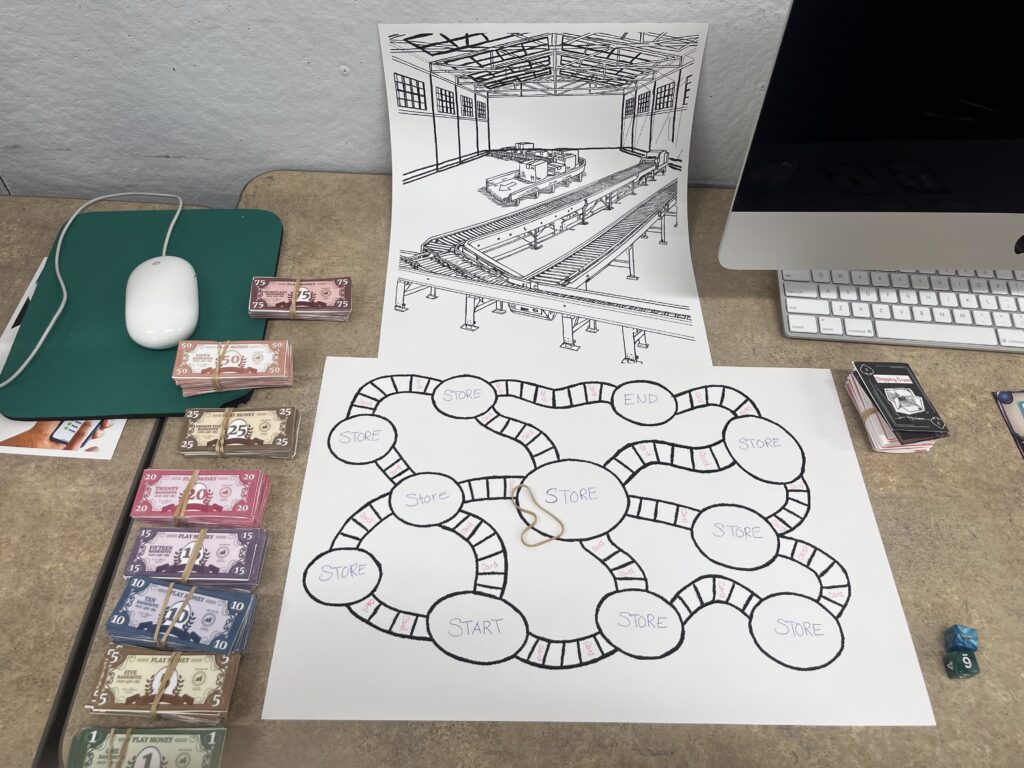
The Shipping Craze board includes spaces for dice rolling, product collection, and the store where players can buy items. The board is divided into different segments, such as "Start" and "Product Spaces," where players can land to collect products.

Components:

Dice (2): To determine movement.

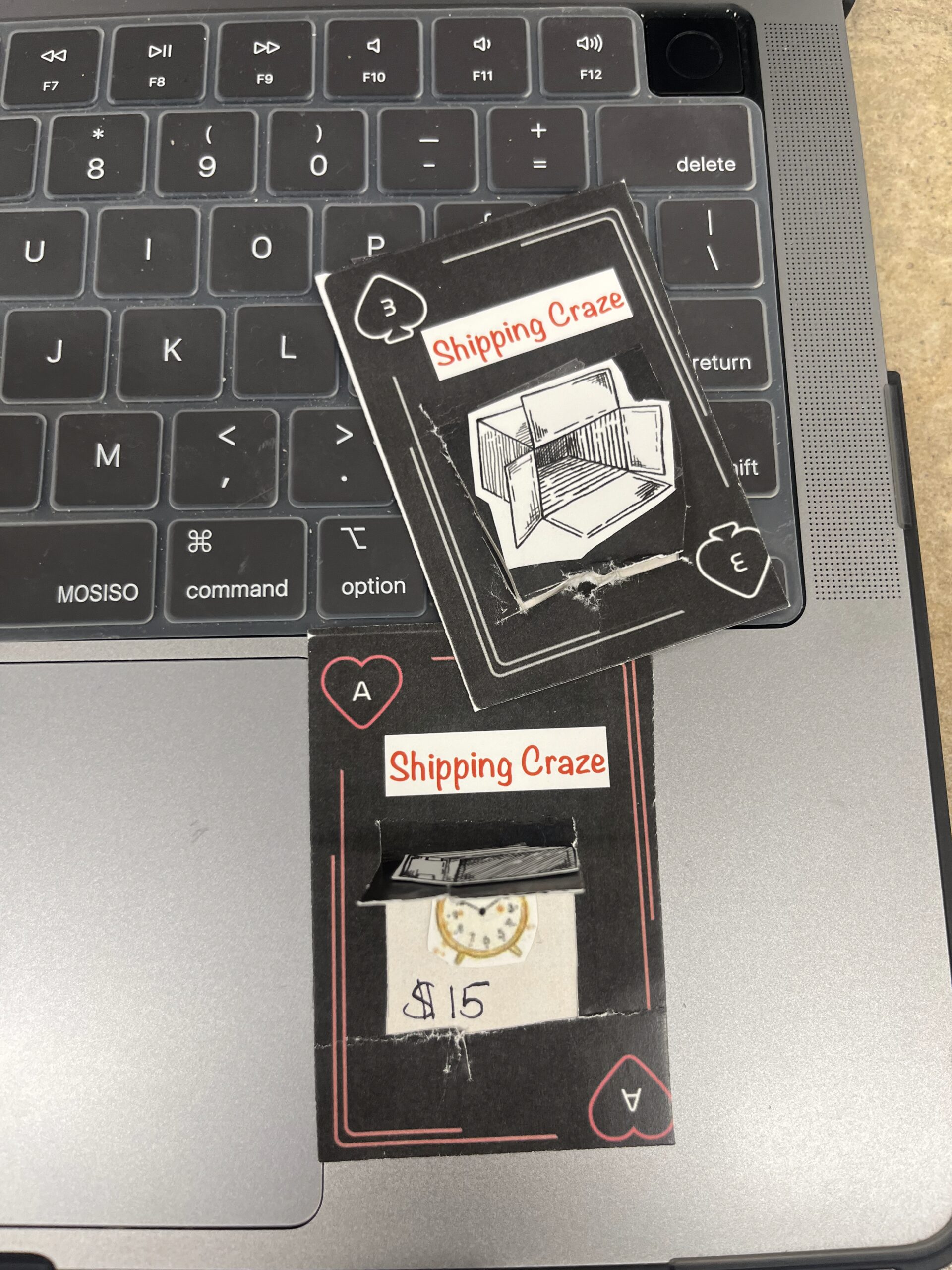
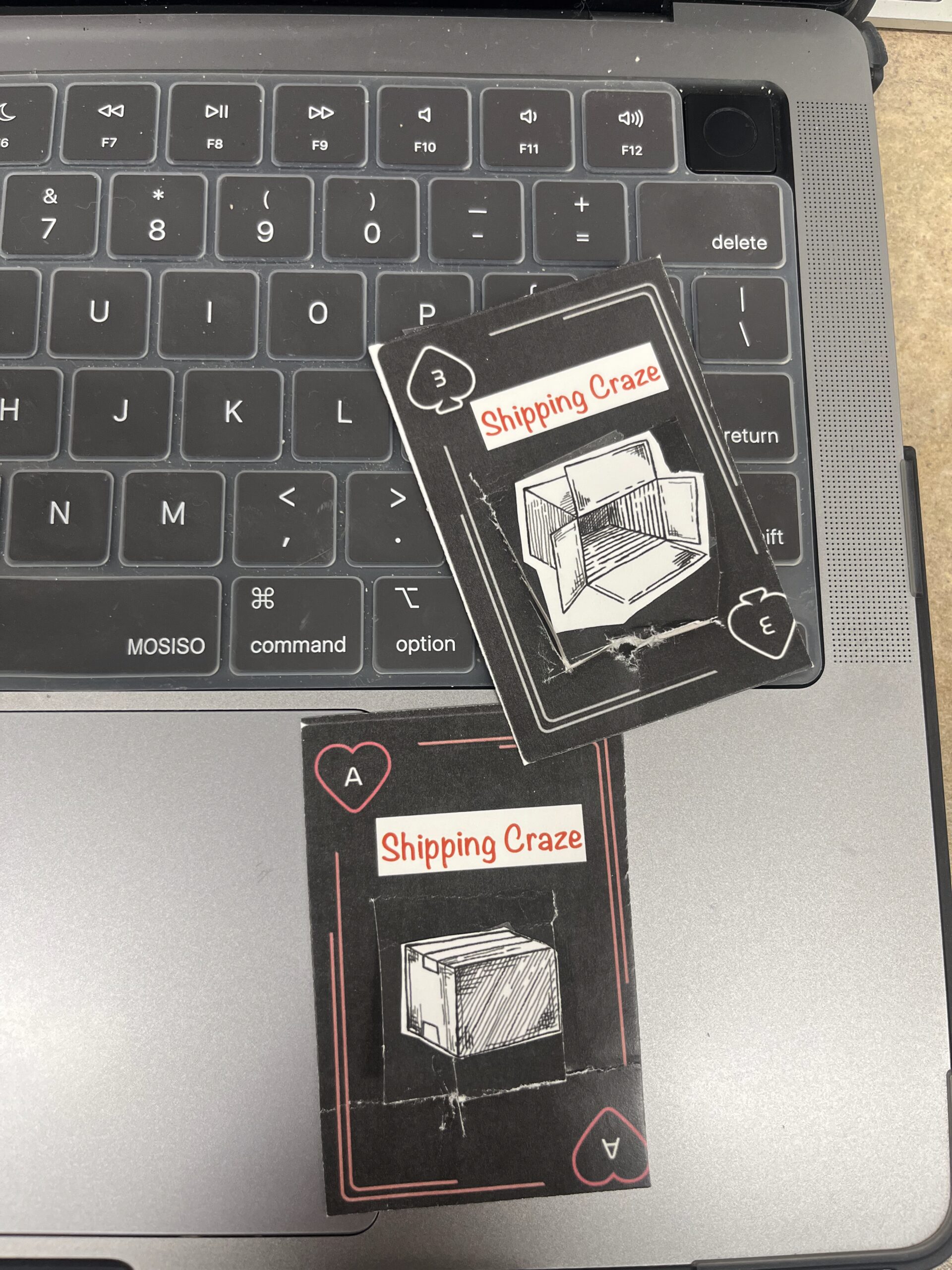
Product Cards (200): Cards representing products and the money earned when collected.

Store Items (150): Physical items for sale in the store, each with a price tag.

Money: Represent the cash players use to make purchases.

Player Markers: Used to track the player's position on the board.

Product Boxes (3): Store items are kept here for players to purchase.

The store is the focal point of the game’s strategy, influencing player decisions as they navigate the board and plan purchases.
Board/Set up
Store Items
Product Cards
Rulebook & Playtesting:
Rulebook Sample: Include a sample of your rulebook, demonstrating your writing and communication skills.
Playtesting Notes: Share any notes or feedback from playtesting sessions, showcasing your ability to identify and address issues.
Playtesting Notes

Player Questions:
Players were curious about potential player-to-player interactions, such as trading or sabotaging, which aren't currently part of the game. Others asked what happens when the Product Deck or store items run out, leading to minor confusion about the late-game flow.

Learning Curve:
Most players learned the game very quickly—within about 5 minutes of explanation. While the core mechanics (rolling, collecting, buying) were easily grasped, the strategic timing of purchases and resource management took a bit longer to click.

Player Interactions:
Interaction between players was mostly indirect—centered on competition for store items and comparing purchases. Some players added fun by joking about each other's earnings and choices. However, deeper interactions like blocking, stealing, or trading were missing, which some found limiting.

Confusion Points:
Players were unclear on when they could access the store. Some believed they could buy items as soon as they had the funds, not realizing they needed to land on a store space. Others weren’t sure what to do when they had no money or if the store was out of items.

Player Enjoyment:
Players really enjoyed collecting products, building their “house,” and anticipating dice rolls. Big moments—like pulling a high-value card or rolling doubles—sparked a lot of excitement.

Frustrations:
Players felt frustrated when stuck with low-value items or when they couldn’t make purchases due to lack of money. The bankruptcy rule, while useful in adding tension, could feel punishing and left some players with little to do. Some also struggled when the store ran out of products.

Takeaways:
Although the game wasn’t designed to teach lessons explicitly, players came to understand that hoarding money for expensive items isn’t always the best strategy. Many realized that buying multiple smaller items could be just as effective, aligning with the game’s intended message about balancing price and value.
Game Reflections: Discuss what you learned from the development process and what you would do differently next time.
What I Learned

The biggest takeaway from developing Shipping Craze is the importance of balancing strategy and player interaction. While players enjoyed collecting and competing for resources, they wanted more ways to interact beyond just racing for items. The excitement of dice rolls and product draws was strong, but the independent nature of play could sometimes make it feel solitary.

Addressing Feedback

To address confusion and enhance interaction:

I plan to redesign the store layout to make it more visible and accessible for all players.

I'll add a new "Chance Card" mechanic to bring more dynamic events into play. These cards could let players:

Steal items from other players

Take free products from the store

Freeze an opponent’s turn

Earn surprise bonuses

This addition will introduce risk-reward dynamics and promote more player engagement.


What I will Do Differently

In the next iteration, I will:

Refine rules around store access to make them clearer.

Introduce more layered strategy, like card combos or item synergies.

Possibly explore team modes or multiplayer challenges to enhance social gameplay.


While the game was successful in encouraging smart spending and value assessment, I want future versions to offer deeper player interaction and less downtime, especially when players fall behind.
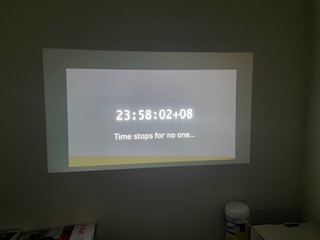
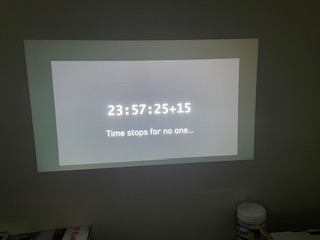
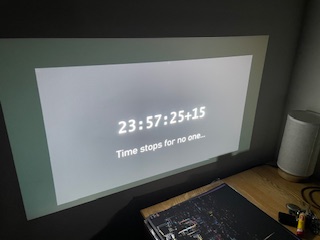
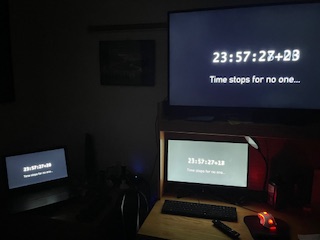
I was heavily inspired by the use of projectors to display text over large surfaces, like building walls, to convey a message. Unlike graffiti or murals, projectors create non-invasive mediums for art. My project was inspired by Guerrilla Projections, projections that spoke calls to action. Instead of a still image, I used my video, “Time Stops for No One”. The video is a timer that ticks down from 24 hours, with the text “Time stops for no one…”. The goal of the video (and the projection) is to remind people of the constant passage of time. The projection bypasses the limitations of a traditional screen by making surrounding surfaces, like the wall and ceiling, canvases. Oftentimes, we get so caught up in our lives that we forget that our time is limited.
I projected the video in the dark areas of my apartment: my closet, bedroom wall, and bedroom ceiling. I also copied the video to other media devices, giving the impression that it is spreading to more people. Below are images of the projections and snippets of video that I took.
All players are given a pen and piece of paper per round. On their turn, players draw a card and read it aloud to the group, as well as its category, either public or anonymous. If public, all players write their names in the corner of their paper. If anonymous, players should only write their answers. Once everyone is finished, they drop their papers into the barrel, the card drawer closes the lid, shakes it well, then removes the lid and reads all of the responses. Then, players are encouraged to discuss and have meaningful conversations regarding the topic and responses. Play continues clockwise. Play ends when players feel they know each other much better.
Players asked if the ball is allowed to ricochet off of the walls. This is unspecified in the rules, so it makes sense that this would be a valid question. Next, players wondered about if they had to move the maximum number of pegs. One of the players spun the wheel after their turn and got a 5, and they wondered if they have to use all 5 movement opportunities. Lastly, another question they had was based on an unspecified situation of hitting one of your own ballot boxes. The ball could ricochet back and hit your own boxes, so I will have to think of a way around that.
How quickly did they learn to play?
Players learned fairly quickly. The rules are simple, and the gameplay is very straight forward. After answering the questions they had about the rules, players were able to understand the game fully.
What kinds of interactions did the players have?
The players interacted directly with each other. Moving the pegs around made some interesting interaction, as players strategized what peg placement would benefit them while giving the other side a disadvantage. Furthermore, while a player would aim toward the other player’s ballot boxes, there was some tension arising on whether the peg placement was efficient.
What confused players?
Mostly just unspecified rules, which I ended up having to answer for them. These unspecified rules were discussed in what questions players asked, but another confusion was if they were allowed to hit multiple ballot boxes. One of the players made the interesting point that if more than one ballot box is knocked over during a turn, maybe the player can choose which ballot box to knock over. Of course, this is something else that will need clarified in the rules. There can be turns in which all three ballot boxes can be knocked over, ending the game in one turn.
What made players excited?
Most of the excitement came from spinning the wheel or getting bank shots. The wheel is luck-based, so excitement derived from whether players were going to spin on a big number. The bank shots were hype, as players not only got the ricochet but bypassed the pegs in the middle of the board.
What did your players enjoy doing?
Players enjoyed hitting the ball with the popsicle stick. It reminded them of knock hockey, using sticks to hit the puck to the other side of the board.
Did any aspect of the game frustrate players?
The only thing that mainly concerned players was the fact that there was no net to catch the marble after hitting the ballot boxes. This is something I’m surprised I haven’t thought of, but as players started hitting the ball, it flew off of the board.
What is your plan to address player questions. confusion and frustration?
In order to address most of the confusion and frustration, I will have to make some clarifications in the rules. Most things that confused the players were not touched upon in the ruleset, so it wouldn’t hurt to make the necessary clarifications. Although I will probably end up dealing with the ballot boxes, whether it is adding a net or completely revamping the mechanic.
This is an empathetic playing experience based on gathering groceries for your sickly mother. The game revolves around scoping out proper groceries on the shelves in order to add them to your cart. The first player to complete their shopping list and load up the cart wins the round, collecting the shopping list as a signifier. There are three rounds to each game, and whichever player has more shopping lists than the other wins. This game is for players who love competition, as well as quick reaction timing. This game also involves strict observation skills. Think of it as an Eye-Spy book, but you are competing against someone to find the hidden objects.
Design Process & Thought Process:
Iterative Design
I’ve had to think of ways to simplify the graphics of this game, in order to keep the players focused on the task at hand. I didn’t want to overcomplicate the design, so players aren’t distracted and are able to discern between items. For example, the setting of the game takes place in a store, so I designed a simple floor tile that doesn’t catch the players off guard.
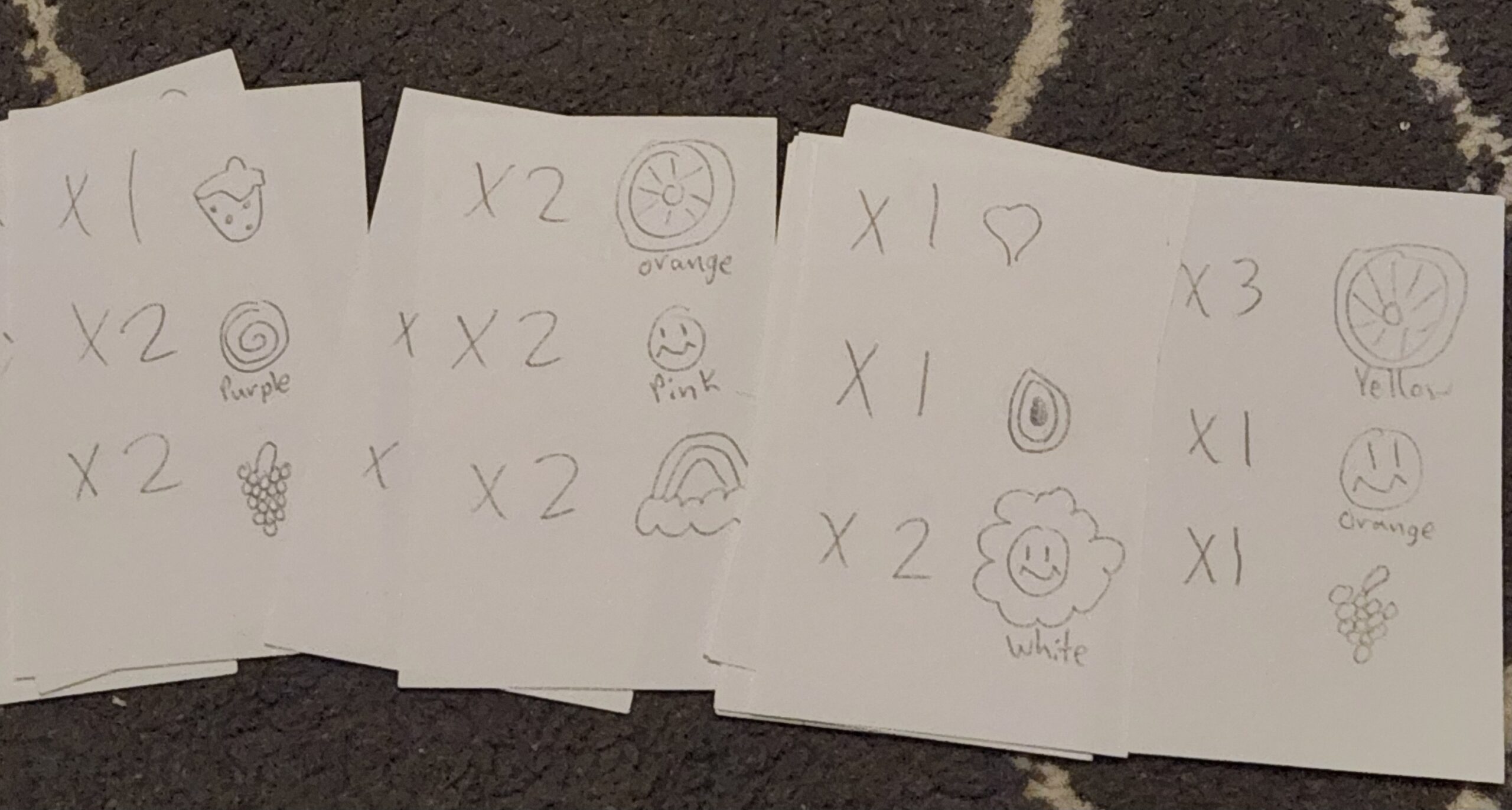
Designing the cards were tricky, because I had to think of a way to efficiently convey what products I wanted the players to grab off of the shelves. The main challenge to this was the fact that there are some products that are the same, but different color.
In order to address this, I specified under the drawing what color was to be sought out.
Although the cards are simple, they give a general consensus of the card layout and design. Taking the final iteration to photoshop, I will be able to photograph the items onto the cards maximizing recognition.
The last design iteration were the shelves. I thought about making the shelves look more like shelves, each with layers of items. The problem with this design was the fact that it would be very hard not to knock the shelves over, and it would be very hard to pull the items off of the shelves. In order to fix this, I made the shelves more like bins instead of actual shelves:
Game Mechanics
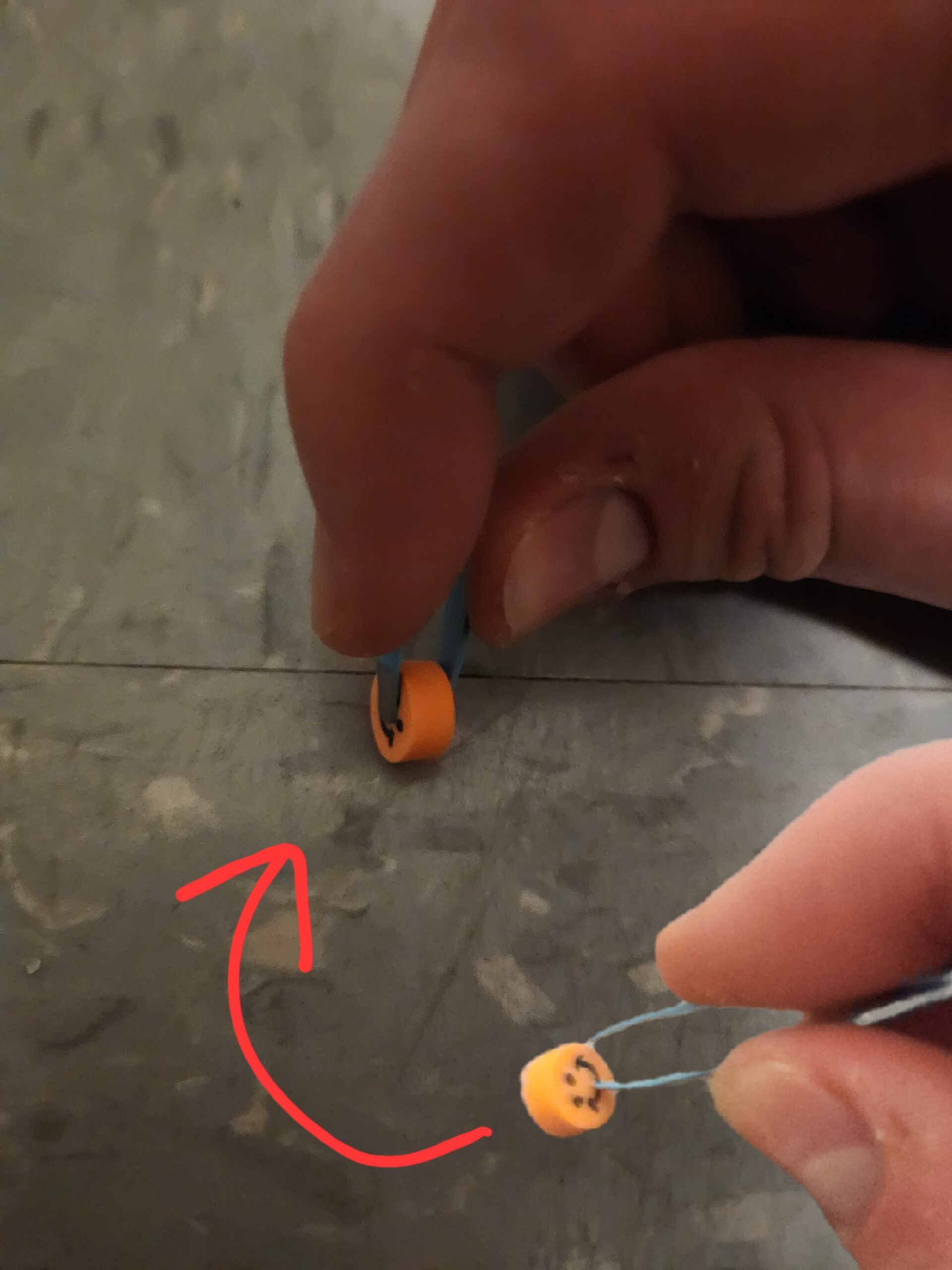
There are two different types of player roles for the gameplay, which are the shoppers and store manager. There are two shoppers that are competing against each other. The players are pulling items off the shelves, trying to be the first to complete the shopping list. The shoppers use tweezers in order to pull the items off of the shelves into their carts, shown in the image below:
They will keep going down the list. The first shopper that finishes the list, with all of the corresponding items in their cart, collects the shopping list card which signifies two points. The list in which the shopper completed are two points. In a round, there are 3 shopping list cards during a game for the players to compete for. One card after the other. The max number of points to earn in a game is 6. If a player knocks items off of the shelves as they are trying to grab an item, that is a point deduction. The number of items that are knocked off of the shelf doesn’t matter, it is only a one-point deduction per round.
The Store manager oversees the game and keeps track of the scoring system. They do not directly play in the game, but act as a “boss” or “moderator” of the gameplay. For example, if a player scores a point, then it is the manager’s job to keep track of who is winning. The store manager reorganizes the shelves between rounds, sets up and stocks the shelves. They flip the grocery lists over, in order to signify when the shoppers must start shopping. They run the store.
Player Goals
The manager doesn’t have any real goal compared to the shoppers, who have a direct goal to win. The only main task of the store manager is to make sure the game is running efficiently, as well as restocking the shelves between rounds. This way, the items don’t run out as the shoppers grab them off of the shelves.
On the other hand, the goal of the shoppers is to collect the shopping lists, which signify points. As stated in the game mechanics, the most points you can score during a game is 6. With each card being worth 2 points, the players must complete their lists, collect the card and snag the points. In the end, whichever player has more points wins. The number of points can also be affected by whether the shopper has knocked over items which is a point deduction.
Gameplay Sequence
After the store manager stocks the shelves and the cards are in placement, the game is ready to commence. The Store manager will flip over the first card, which will have a list of items to take off of the shelves. As soon as the card is flipped over, both shoppers scurry around the store to pick the items off of the shelves. Once a shopper finds an item, they pick it off of the shelf with their tweezer and put it in the cart. They will keep going down the list. The first shopper that finishes the list, with all of the corresponding items in their cart, collects the card which signifies two points.
Once all 3 grocery list cards have been gone through, it is time to tally up who has earned the most points based on how many cards they have kept. If the player has knocked items off of the shelves, that is a single point deduction. This is one of the jobs of the store manager, making sure who is in the lead (point tracking). If by chance both shoppers have the same number of points and there is a tie, then both shoppers must compete an additional round to determine who is the final winner.
Player Interaction/Gameplay:
Game Board & Components
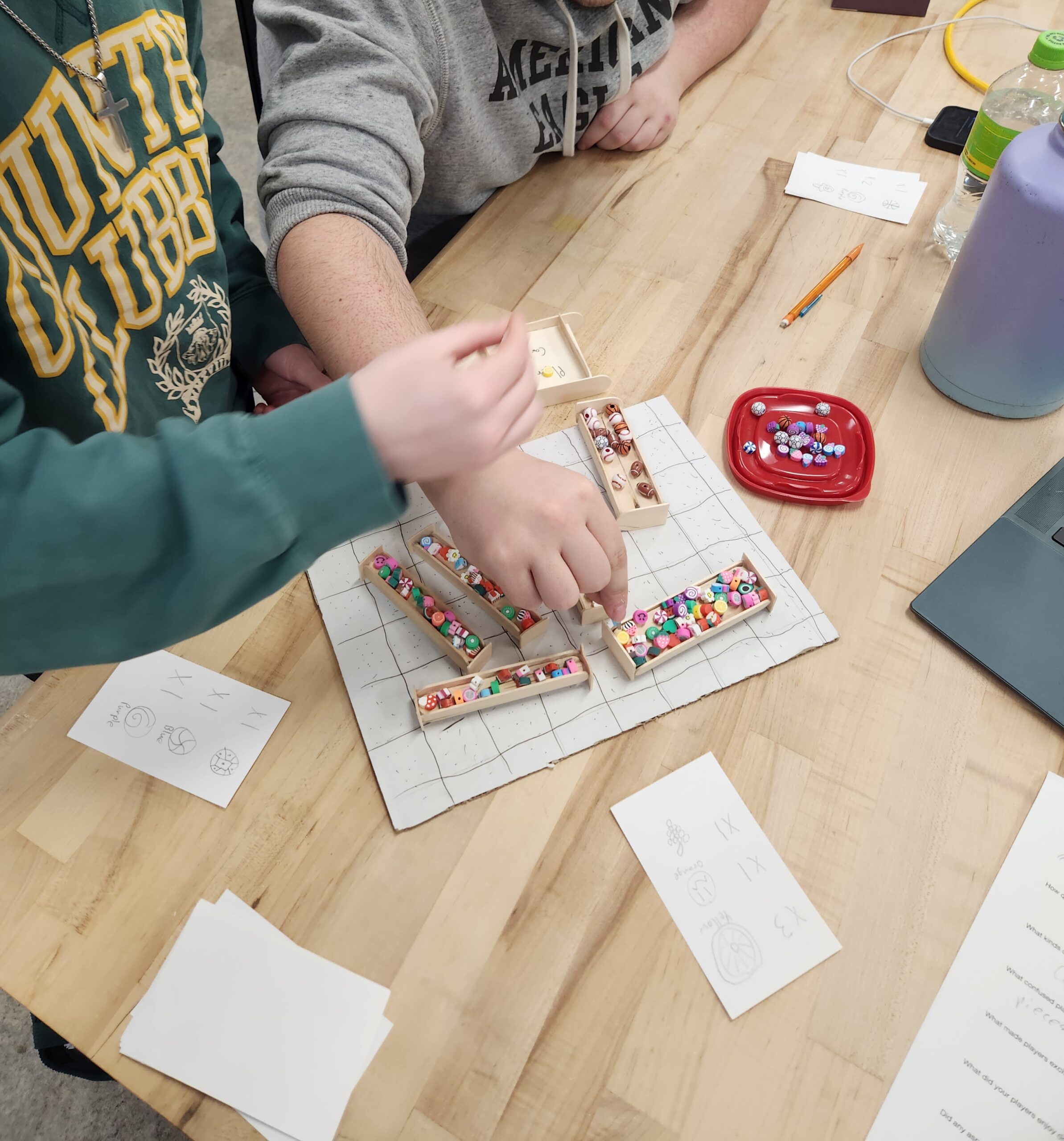
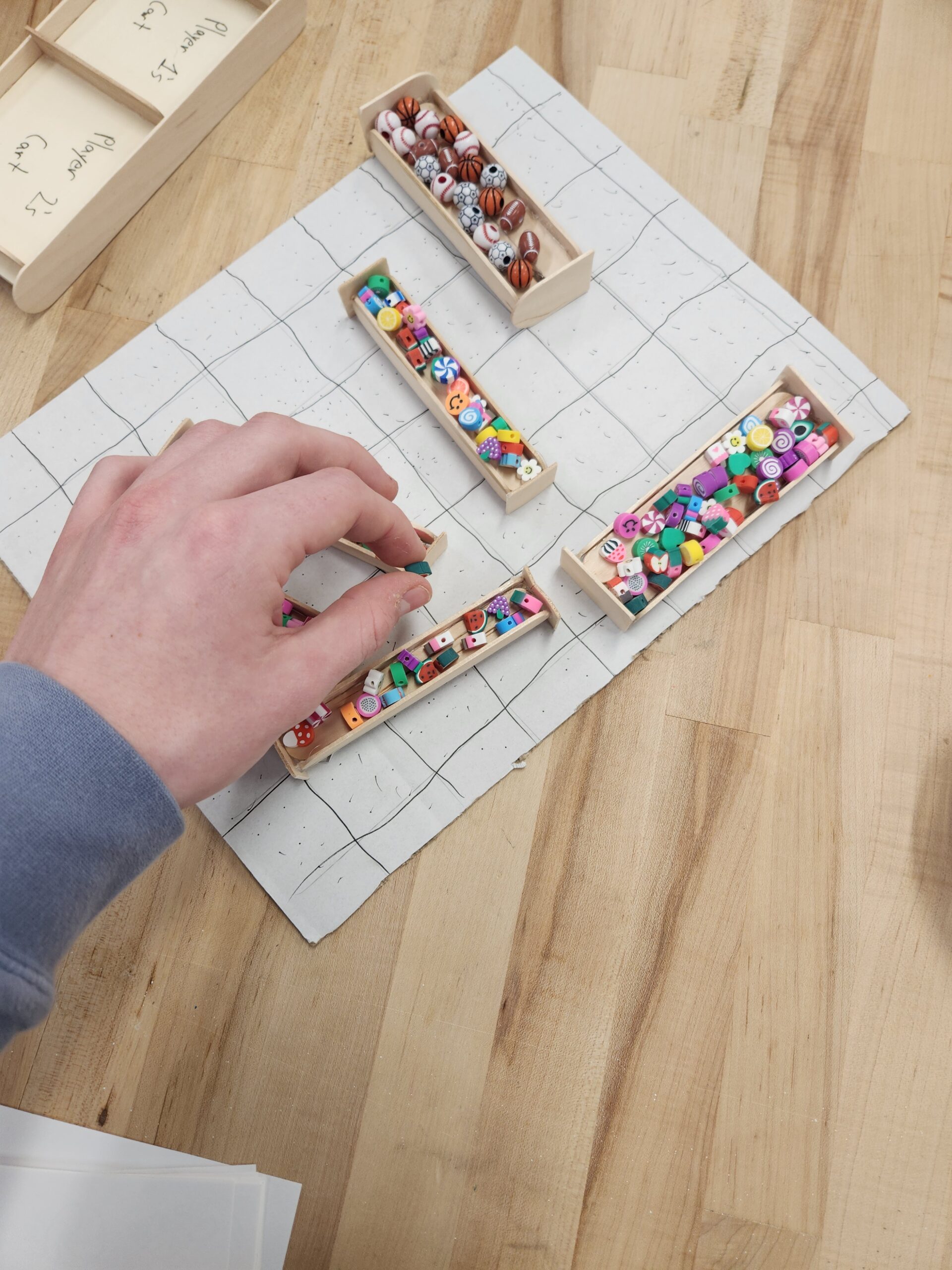
The game board – simple in design, allows the players to maintain focus on picking out the items. Since the board is simple, the colors of the items stick out, making it easier to differentiate between the groceries. This is what the game looks like set up:
As mentioned in the iterative design section on the shelving, I made sure that the shelves were more like bins. If I were to make the shelves stand up like typical store shelves, players would be more inclined to knock them over and scatter items everywhere.
Furthermore, a feature I added in the game was the ability of the manager to organize the shelves in any way they want on the game board. This allows the manager to not only control the flow of the game but potentially make things tricker or harder for the shoppers.
Tools
The two shoppers use a tweezer in order to pick the items off of the shelves. Players cannot use their fingers because the challenge of the tweezers makes it more interesting. Both shoppers have a shopping cart that they also put their groceries in. In the beginning of the game, the two players decide who is who (between players 1 and 2).
Some common questions that the players had were based on the rules, such as “What if you pick up and put back items?” or “Can I take from the other player’s bin?” Any of the questions were based on unspecifications that I will have to clarify in the rules, in order to prevent people from doing the wrong actions. Another question was “Am I allowed to block the other player?”
How quickly did they learn to play?
It didn’t take long for the players to catch on to the ruleset. I’d say that this game has one of the easier rulesets I’ve made but nonetheless needs improvement. The players were able to play the game and adapt, but they still ran into complications that I will have to personally look over.
What kinds of interactions did the players have?
This is a very competitive game, and the players were constantly at each other’s throat. From a direct interaction, the players clash tweezers and wrestle with pieces time to time, as well as striving to the first to earn points. However, not much talking is involved in the game, as players are dialed in to focus on what pieces to grab.
What confused players?
Players were less confused about the rules, and more confused about the pieces they had to grab. I’ve noticed that in the prototype, I did not do a good job of indicating what type of pieces they have to lookout for. This confused the players, as they sometimes grabbed the wrong pieces or mistakened items for something else.
What made players excited?
The excitement mainly derived from the bulk of the gameplay, where players were rushing to earn points. When the points were earned, it was rewarding to the players too, complimenting their quick-thinking and observation skills. The anticipation of the manager flipping over the card evoked excitement as well, as the players eagerly awaited their next challenge.
What did your players enjoy doing?
The players enjoyed using the tools (tiny tweezers and shopping carts) and competing with each other. They enjoyed navigating through the miniature store model, which gave them an environment to interact with.
Did any aspect of the game frustrate players?
I wouldn’t say so, but the players suggested a mechanic to make things easier for the playing experience. I think it was more about a factor that they wish was a part of the game rather than frustration. For example, they suggested a clock/bell that could be hit to indicate that they are done with the shopping list, in order to prevent frequent ties.
What did your players learn/take away from your game? Was that what you intended?
I’d say my players learned the aspects of keeping cool during a moment of chaos. This game really enforces the principles of maintaining composure and concentration, no matter how stressful the environment may be. This was sort of what I intended, since I was looking to create a fast-paced and competitive game.
What is your plan to address player questions, confusion, and frustration?
Just as I’ve tackled criticism in the past, I plan on addressing the confusion, questions and frustrations of players through communication and/or feedback. Through frequent playtesting, I expect players to tell me the things that are wrong with my game. There have been instances where I thought the game was perfect from the start, until players have exposed its flaws in rules. I’ll also have to read over the rules of my game and make extra clarifications and changes to better the playing experience.
If your players didn’t get your intended message, what will you change?
One thing I will point out is that this game is supposed to make the players feel empathy, as the premise of the game revolves around getting groceries for your sick mother. I don’t think the players understood that, at least I can do a better job at making that known. In order to fix this, I will add designs to the cards which will show a small picture of your mother asking for the specific groceries. This way, players will be reminded of their sick mother, making them more determined.
Game Reflections
Through the development of this game, I’ve spotted out a lot of design potential that can be put into a final iteration. This game can be polished, and rules can be specified in order to maximize gameplay. Photoshop will carry this game to victory, as item recognition will be much easier on the cards. Next time I will make sure to not only improve upon the graphics, but to word the rules better. I believe that I can definitely word things in order to help the players understand the mechanics further. Overall, both graphics and rule iterations can help me consider the players better and their playing experience.