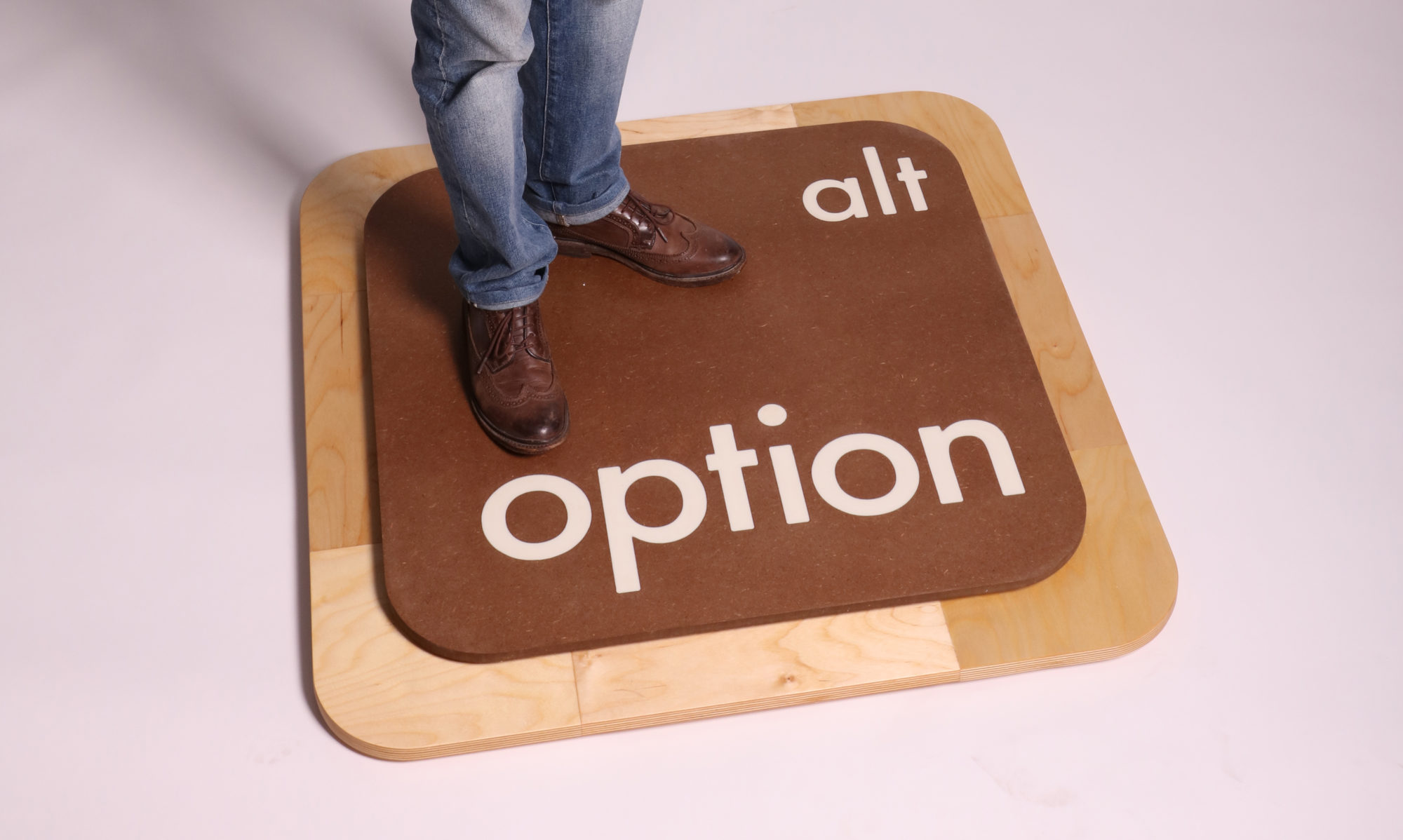
- Impairment: Each player either can’t 1 – see 2 – hear – 3 touch normally 4 – talk and you play a simple game (like Uno or something) and then reflect on the experience and switch “impairments” to feel what they other person goes through
- Similar to the above game but specifically finding empathy for people who have a hard time with too many stimuli (autism, adhd, etc) Each player adds or takes away a noise/distraction each turn as well as playing the game and can give or take “relief” from the chaos to understand the need for sensory rooms or quiet spaces
- A game that has to do with learning to be empathetic for language differences – I feel like especially in the U.S. people immediately form opinions about people based on their accent/language difference. Creating a game where people have to live in that reality and deal with those differences would be really intriguing – i have ideas like a card game but everyone has different sets of words with part English/part foreign language and they have to play with those differences
- Dealing with Grief – card game where players work through people dealing with any sort of sadness – the cards reveal scenarios for each player and each player must give correct responses and learn to interact with grieving people “correctly” and empathetically
- Interactive/Physical Game – being understanding towards elderly people is the message the game is meant imply – basically a relay game except players are assigned ages which inhibit how fast or slow they can walk/run/move to the goal and how they interact with other players
Prototype Response – Week 5
Bad Advice – Christine’s game
What made the experience fun or not? The content was intriguing – I like games with objective responses to fun prompts
What is the motivating factor to get or keep players playing? to see what the new prompts would say and new advice cards would match up to the prompts
what was frustrating about game? Just the rules not being fully developed so we had to assume the rules and make them up as we go
Is the game persuasive, and what is it trying to get you to do outside of the game? I wouldn’t say it’s persuasive per say but it makes you think about hard challenges in people’s lives and how to deal with them better or how not to deal with them
What is the game’s metaphor and which of the game’s mechanics standout? The metaphor is dealing with people’s mental and situational problems – the mechanic of being rewarded for bad advice and then giving good advice to counter it is intriguing
How does the gameplay make you feel? Who does the game make you feel empathy for? There was a lot of the gameplay that we assumed from similar games since the rules weren’t written super clearly so when it is written well it’ll be a smooth gameplay – it let me have fun but also makes me think of real-world situations and how I’d actually deal with them, it makes you feel empathy for the person going through these things
Is the game an activist game? If so what does the game play advocate for? I’d say yes it is an activist game, it’s advocating for people who are struggling with mental health issues or just going through difficult times – it’s helping people know what to do and not to do
Describe the game in 3 sentences or in the form of a haiku
advice, good or bad
help people who struggle
others will determine
Star Sailor – Meredith’s game
- What made the experience fun or not? it’s succinct and makes sense – a cute idea that is not overly complicated
- What is the motivating factor to get or keep players playing? trying to get to the end to win
- Is the game persuasive, and what is it trying to get you to do outside of the game? If it is persuasive, it is very subtle – i think the metaphor is ethical consumption of resources vs. destroying nature to what extent to survey but it’s space themed so it’s a little abstract
- What is the game’s metaphor and which of the game’s mechanics standout? ethical consumption of resources vs. destroying nature to what extent to survey but it’s space themed, the mechanic of blowing up planets for resources is intriguing from the metaphors standpoint
- How does the gameplay make you feel? Who does the game make you feel empathy for? It was intriguing, it made me want to know what blowing up a planet would do, it didn’t really make me feel empathy just wanting to find out how fast I could run out of resources without blowing up planets
- Is the game an activist game? If so what does the game play advocate for? Slightly – I think it was intended to be an activist game about resource management and ethics of destroying the environment to advance
- Describe the game in 3 sentences or in the form of a haiku.
Spaceships through space
Fuel is gone planets are gone
Trading fuel for food
Game Design 2 Week 5 Game Documentation
Aleah, Mason, and Lauren
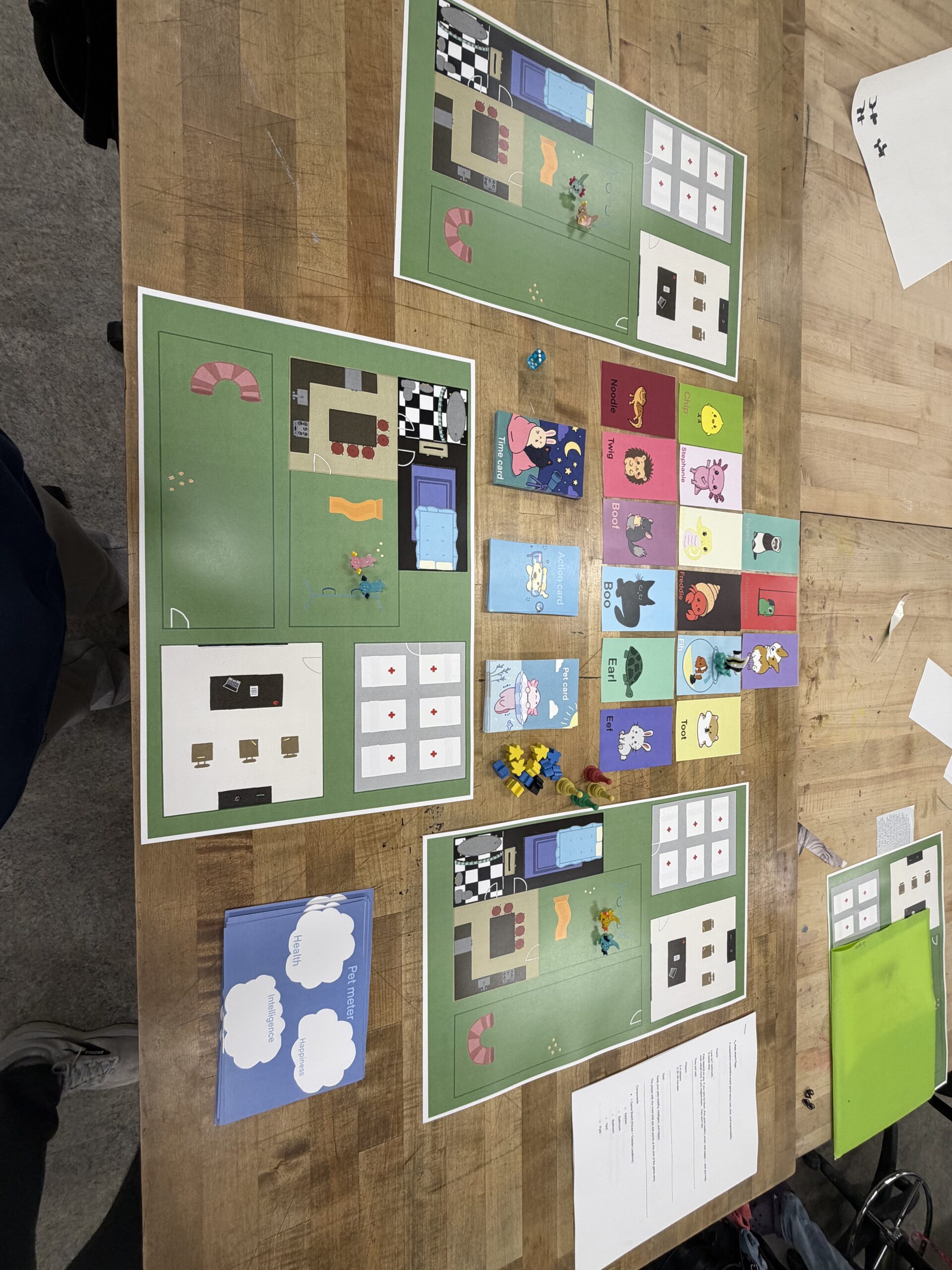
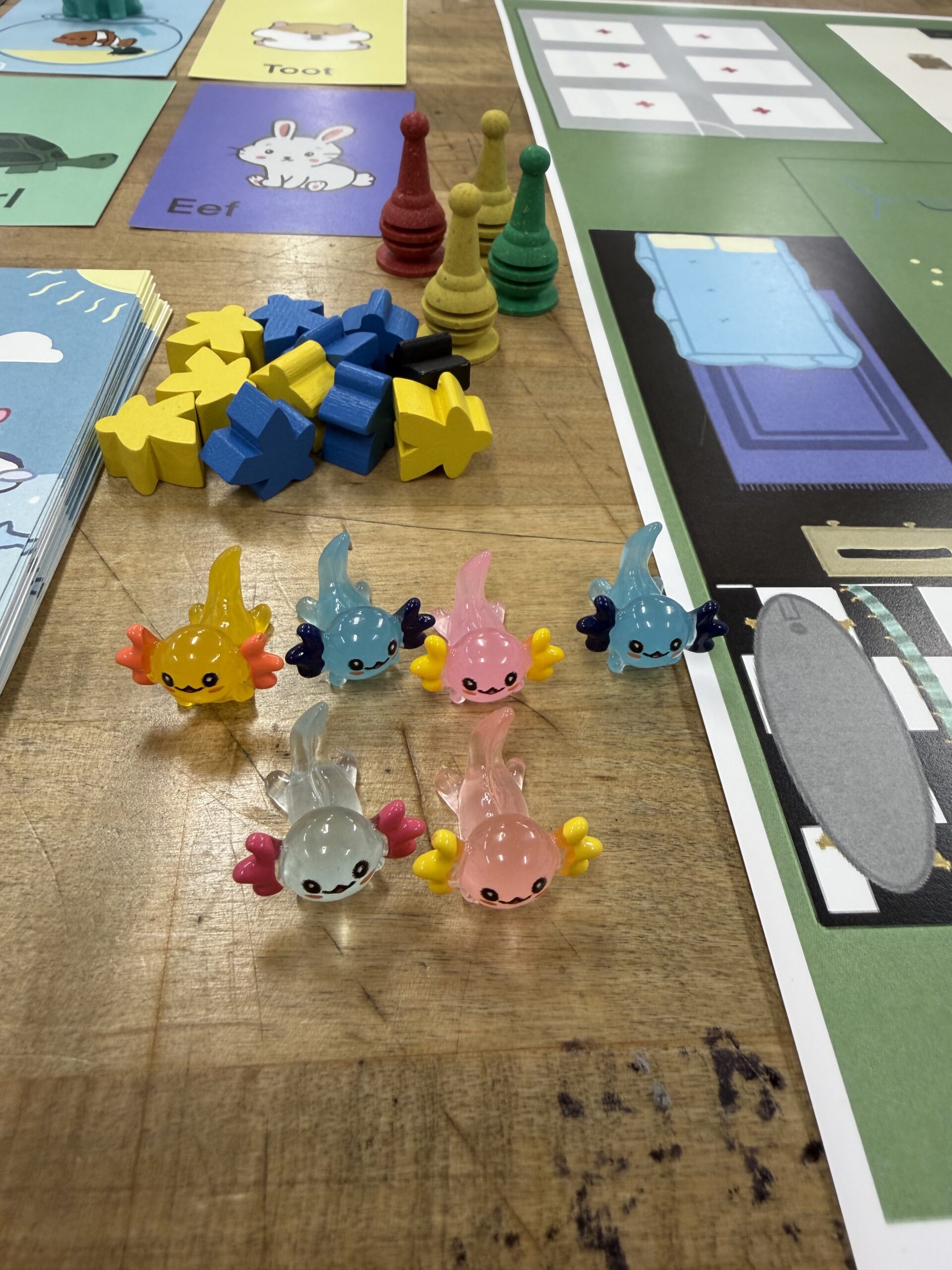
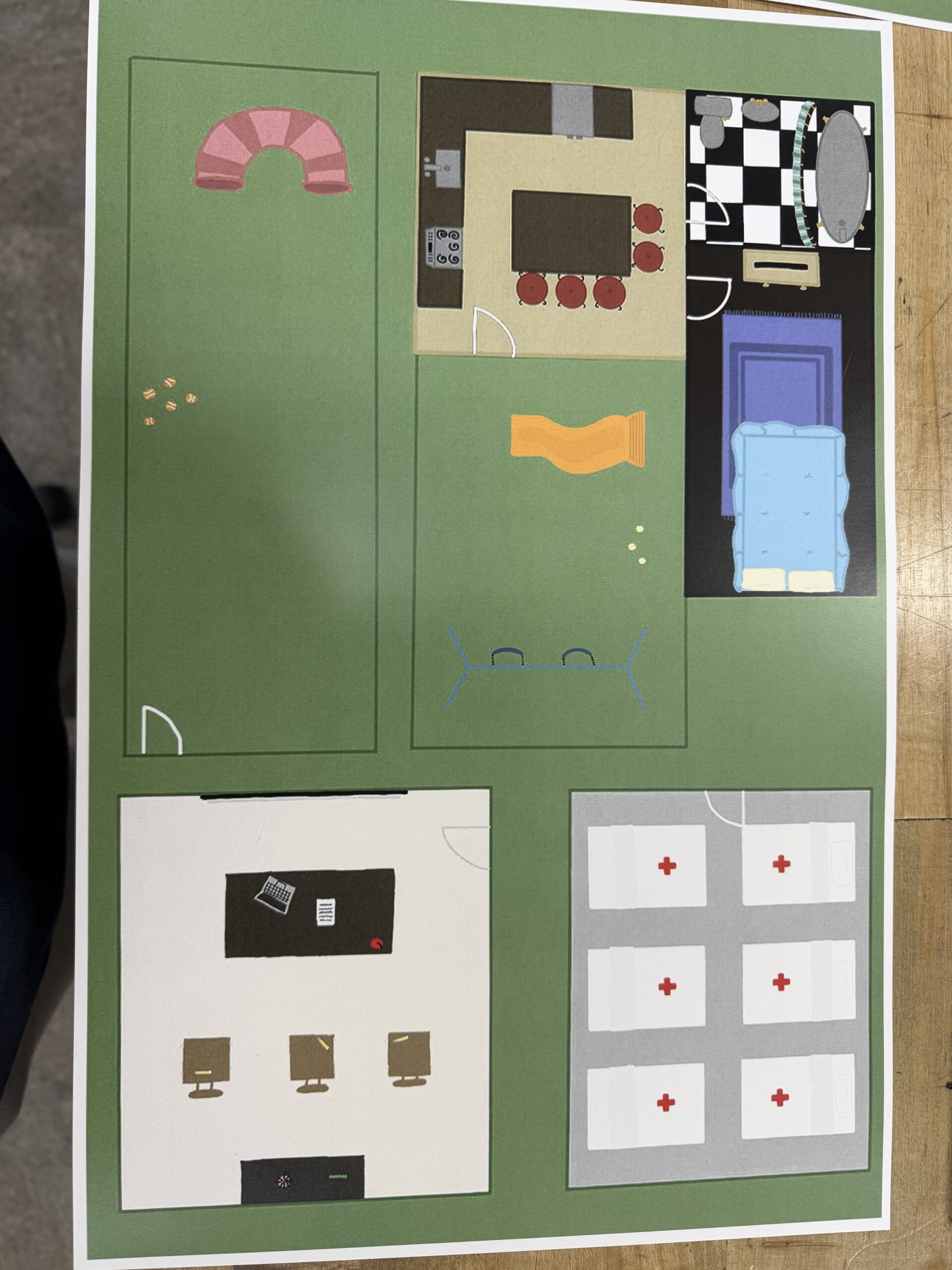
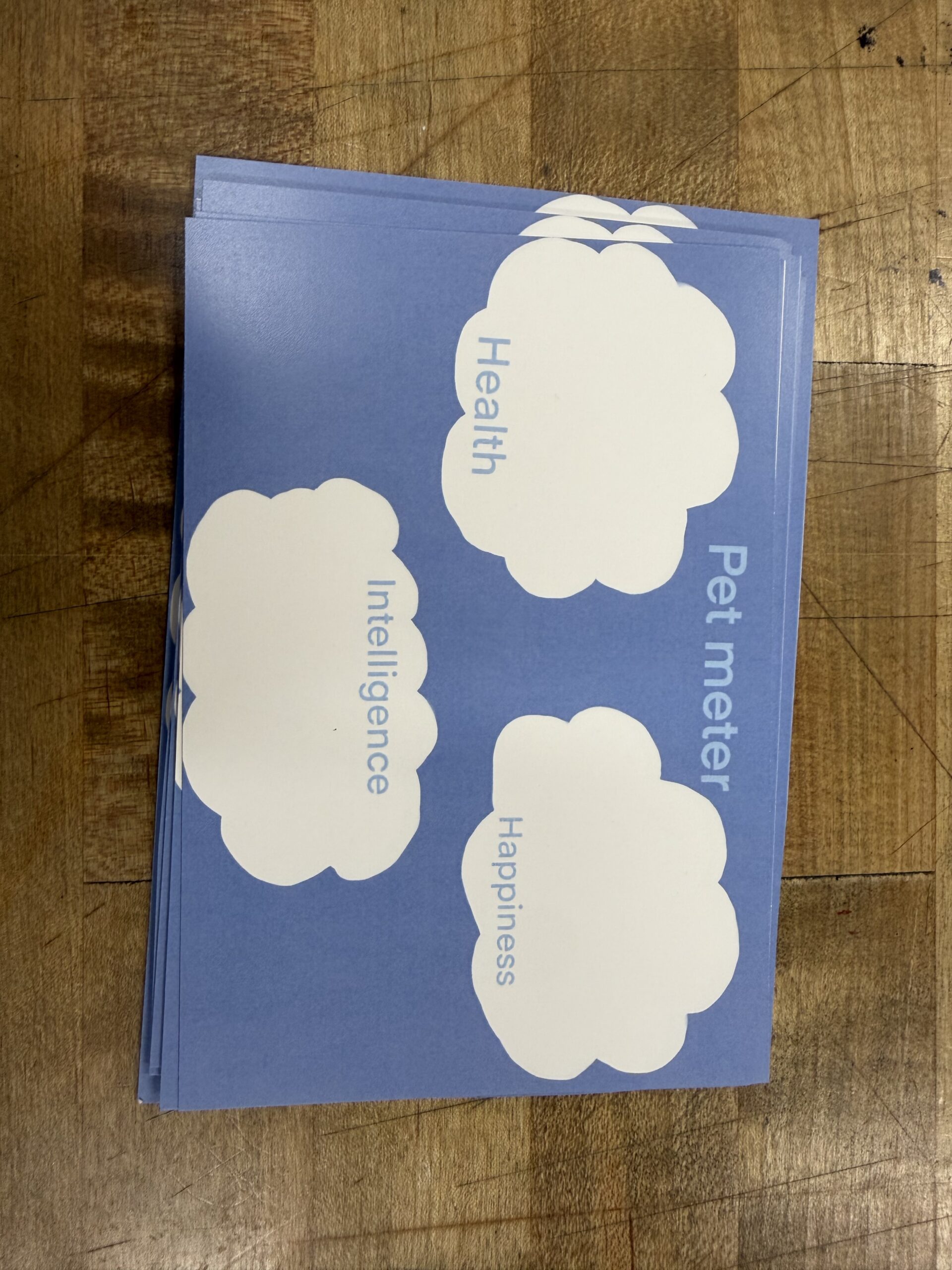
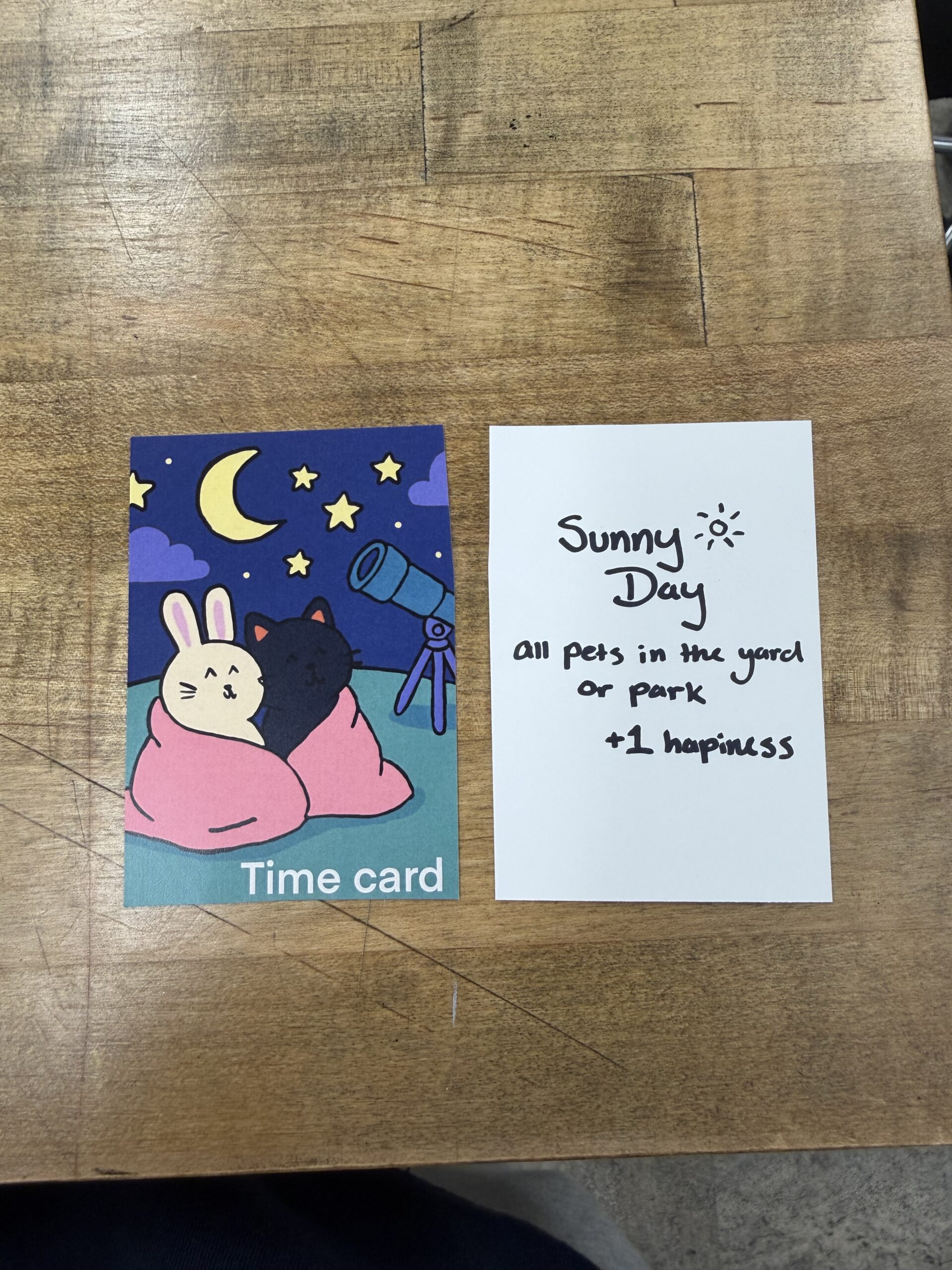
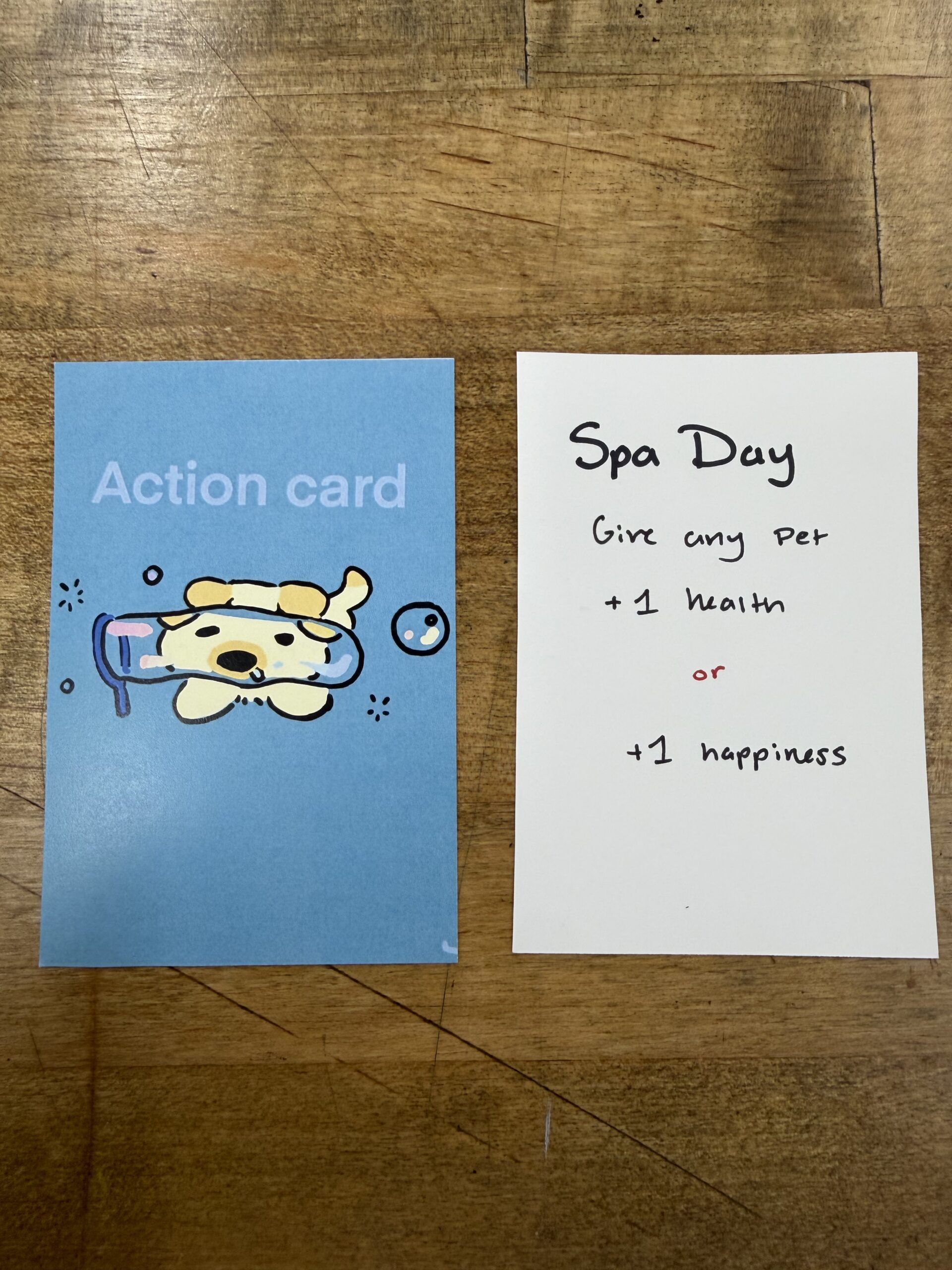
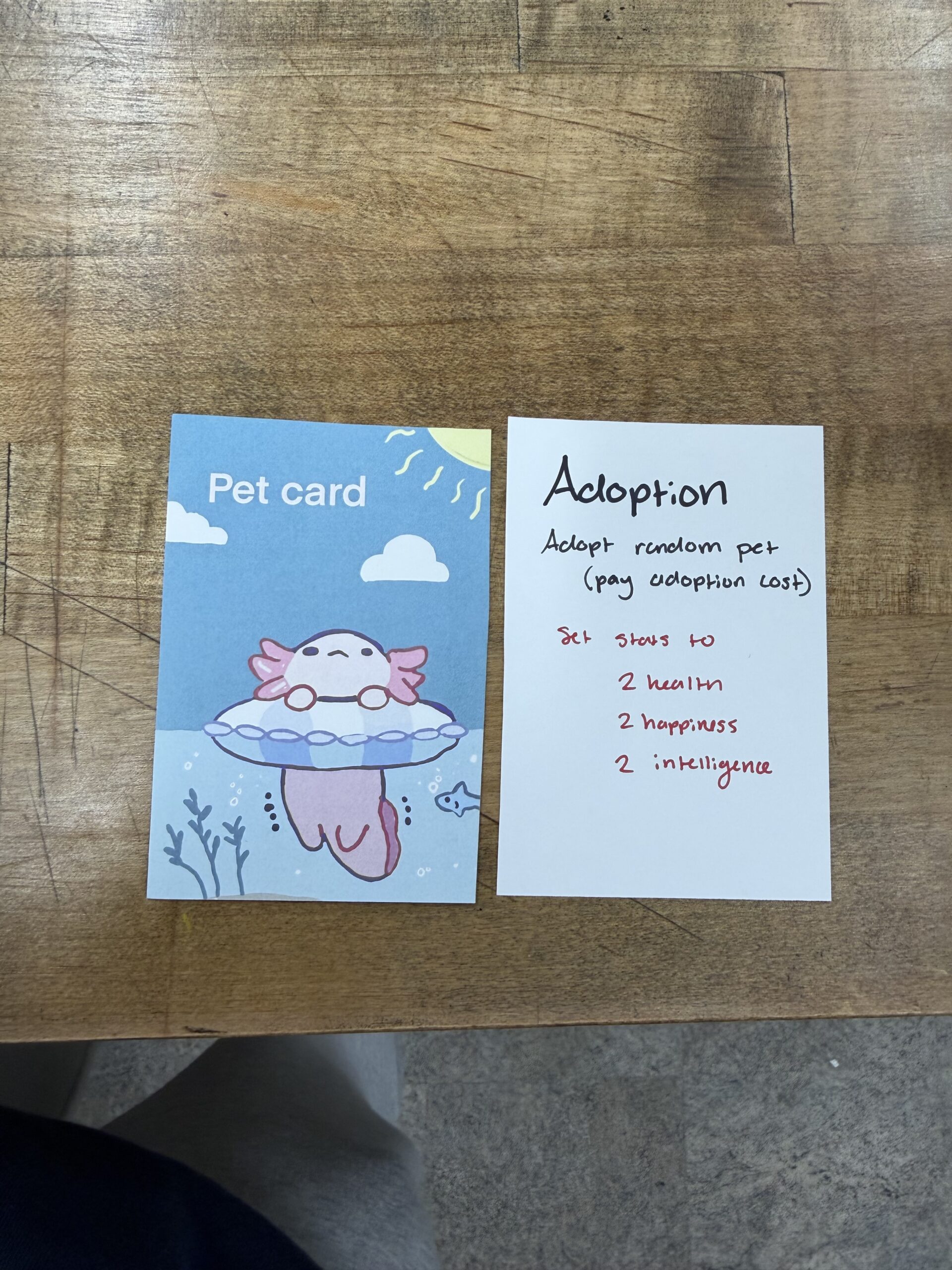
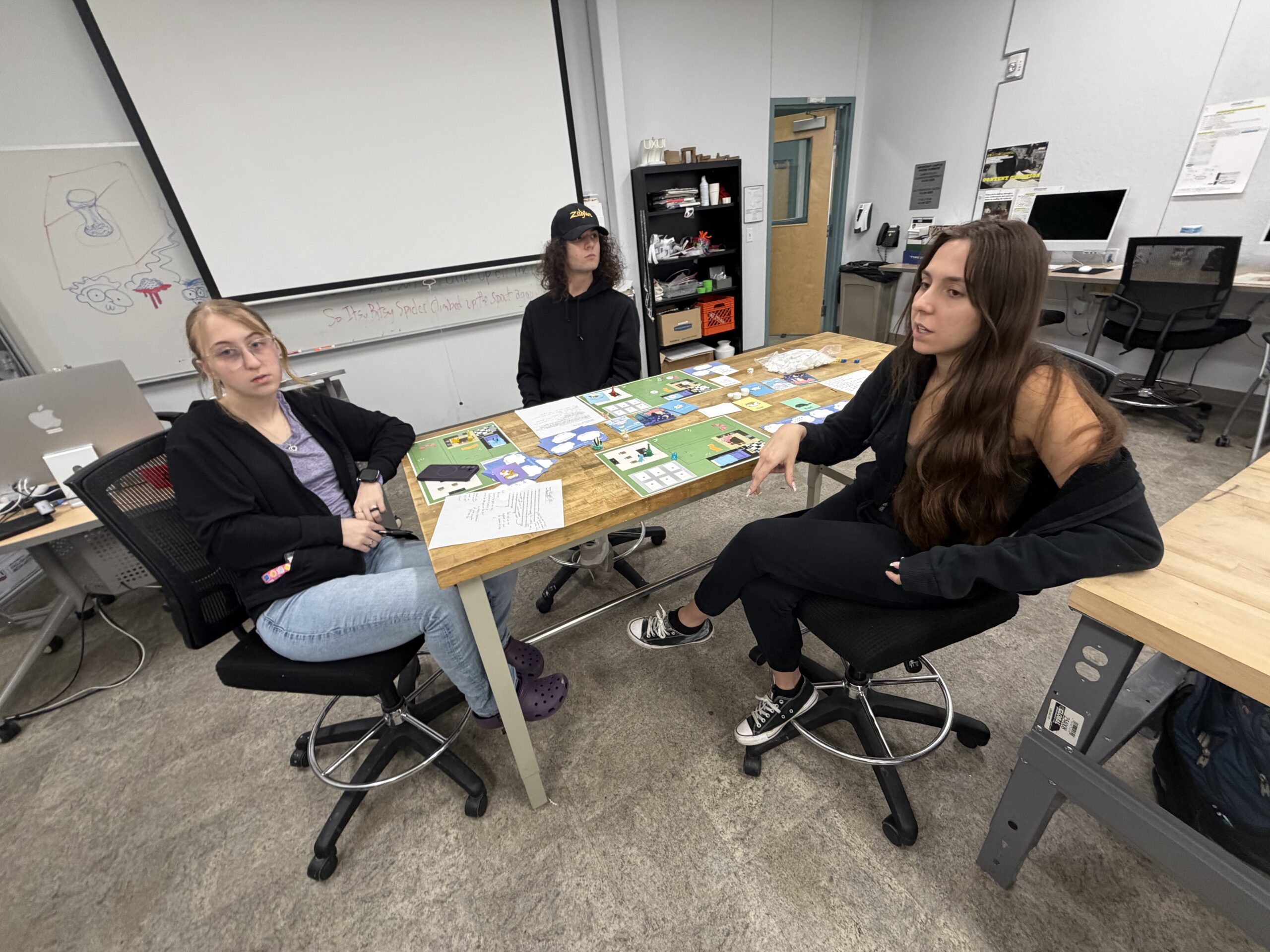
Game Design 2 Week 5 Game Reviews
Aleah Dudek
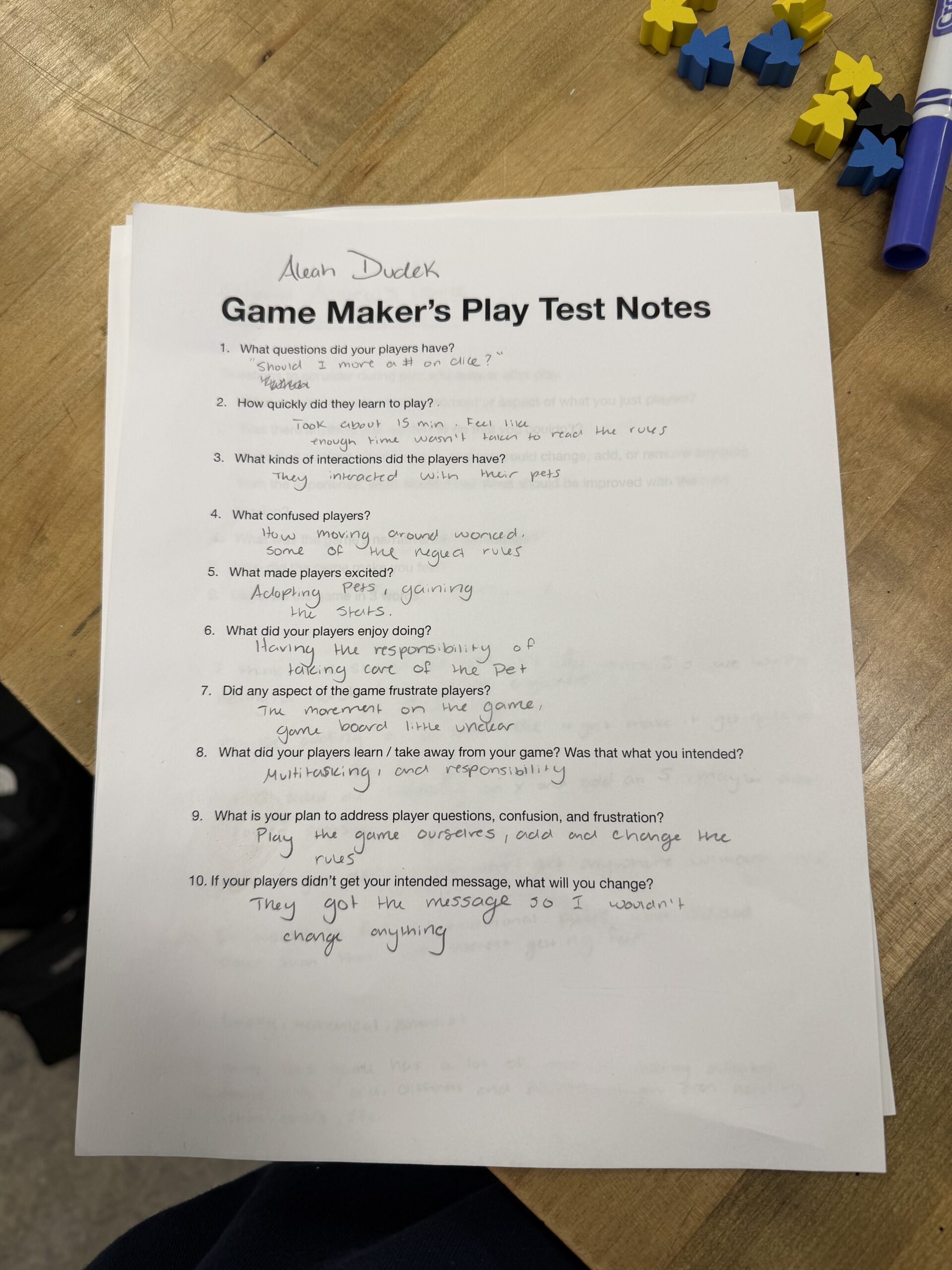
Podcast idea Game Design 2
Aleah Dudek: A Fold Apart
Week 5 Play test Questions
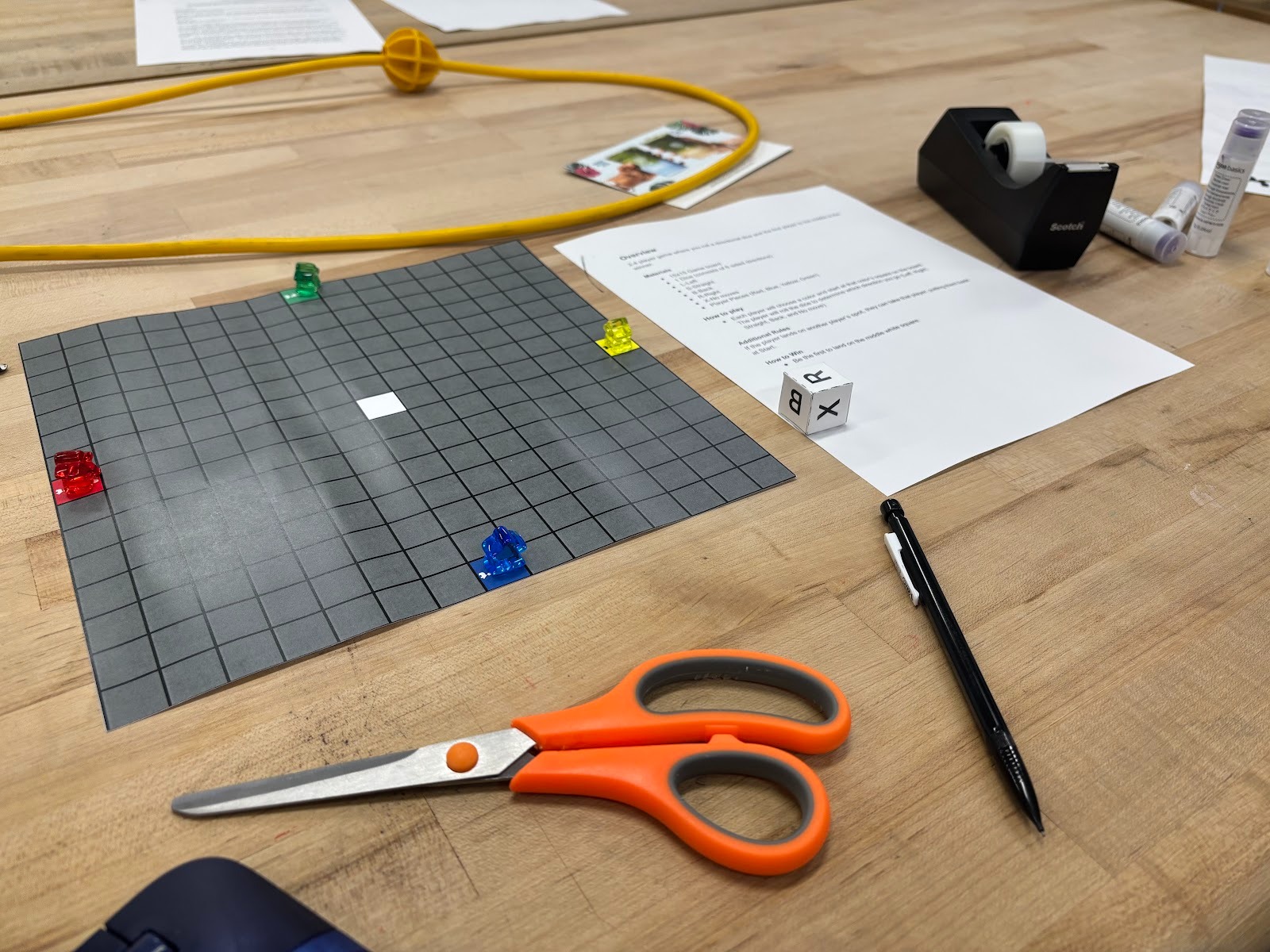
Prototype/Ruleset Game #1 – iteration 1
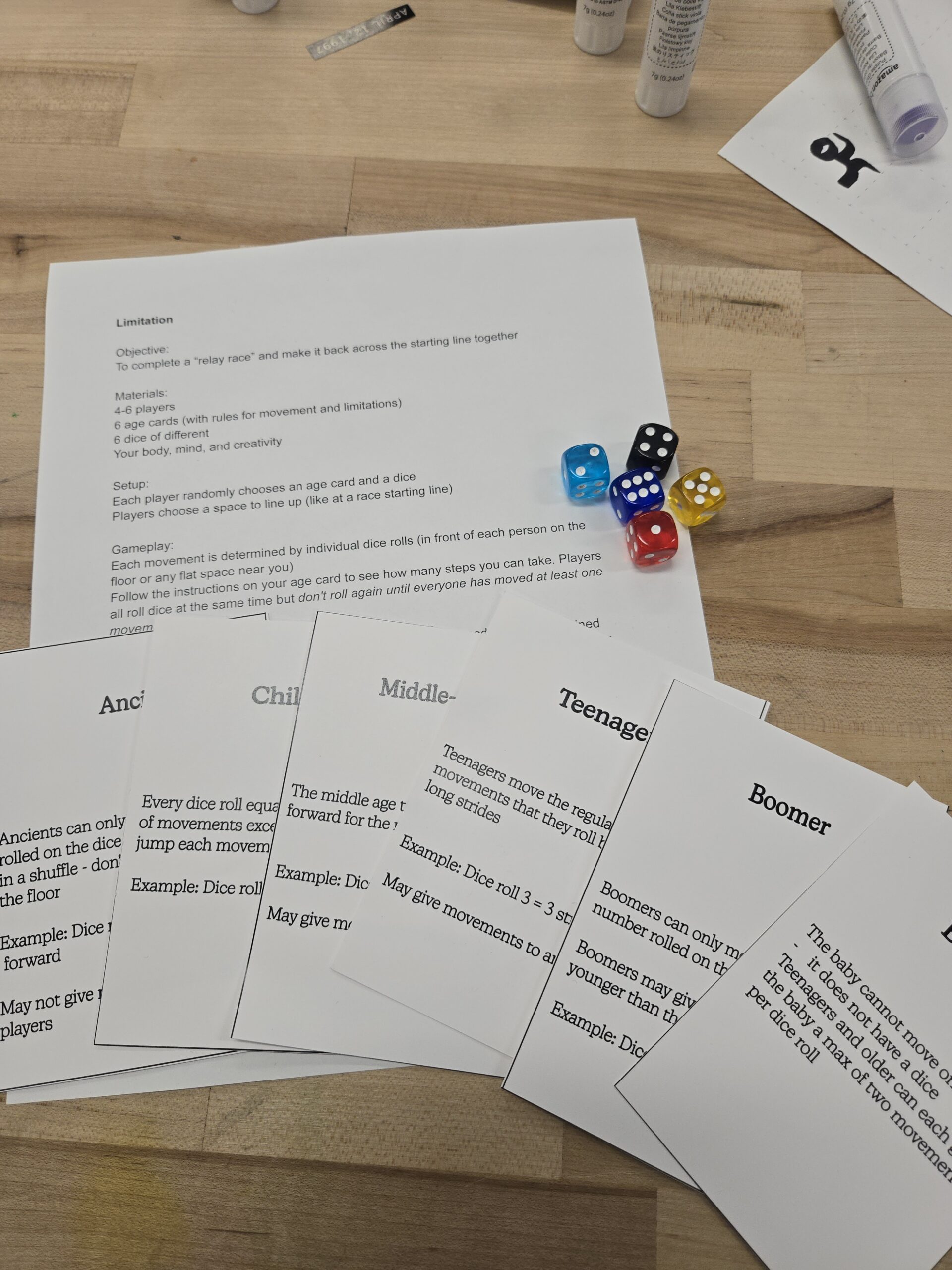
Limitation
Objective:
To make it back across the starting line together
Materials:
4-6 players
6 age cards (with rules for movement and limitations)
6 dice of different
Your body, mind, and creativity
Setup:
Each player randomly chooses an age card and a dice
Players choose a space to line up (like at a race starting line)
Gameplay:
Each movement is determined by individual dice rolls (in front of each person on the floor or any flat space near you)
Follow the instructions on you age card to see how many steps you can take. Players all roll dice at the same time but don’t roll again until everyone has moved at least one step.
Continue rolling dice and making movements until you have made it to a determined end point and then turn around and make it back to your starting position. The starting position becomes the finish line.
This is essentially a relay race but with limitations
The catch is you must all cross the finish line together to win
Work together to help slower players and give up your movements so you can all successfully make it across the finishing line
Winning/Losing:
When all the players complete the “relay” together they win
If more than one players cross the finish line before the others, you all lose and the players who went alone can be shamed and booed for leaving their fellows behind
Week 5 Game testing MASON TOSADORI
Playtest notes
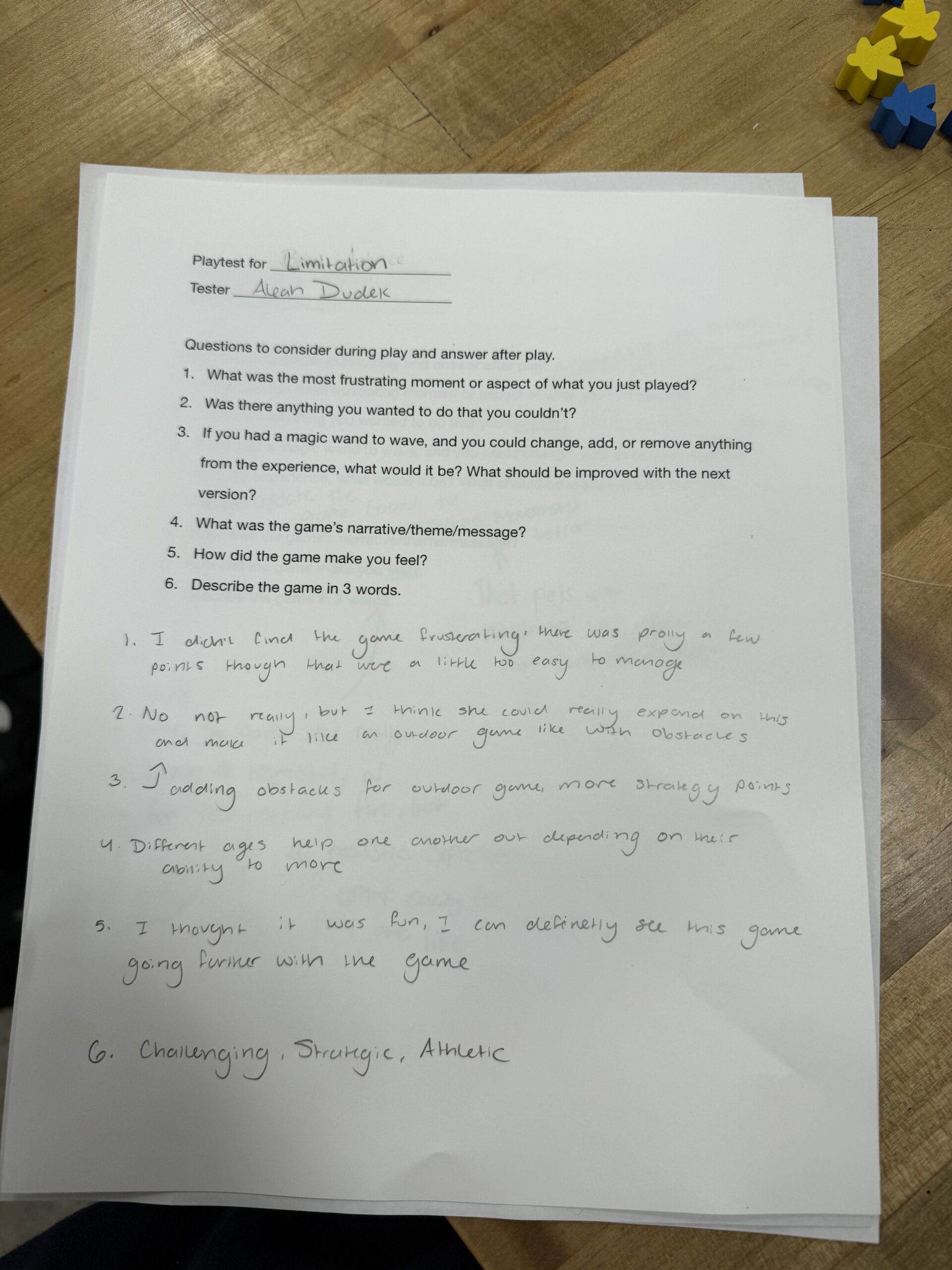
Limitations
What was the most frustrating aspect of the game? Honestly none, I thought the game was really fun and that theres a lot of room to move forward.
Was there anything I wanted to do but couldnt? No
What would I change or add? Honestly I feel like obstacles or something like that could be interesting.
What was the games message? To show the way different generations interact and be active.
How did the game make you feel? Honestly made me very happy. I thought the game was very fun and would play it again.
Describe the game in 3 words. Active,Fun, Educational
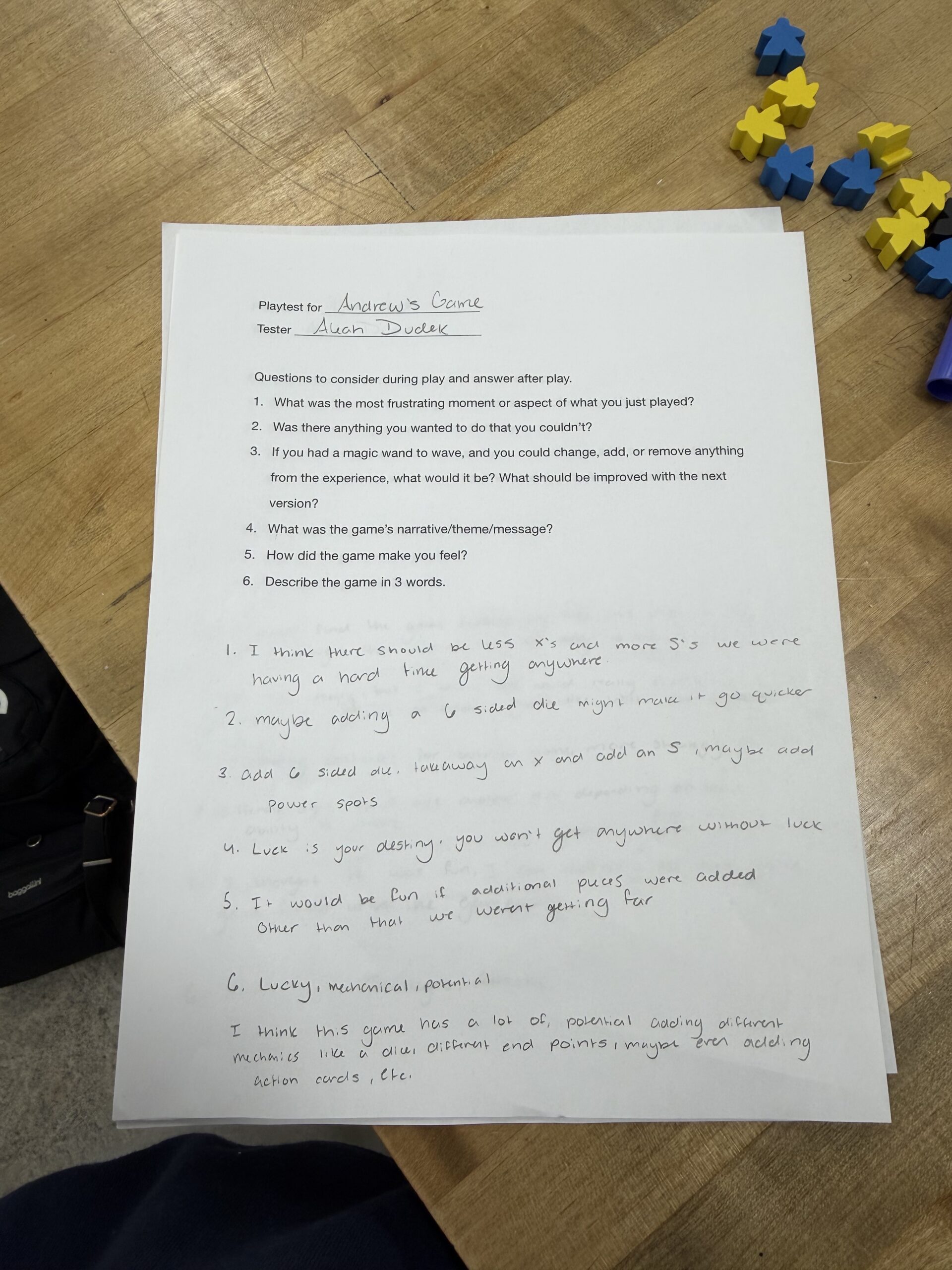
Playtest Notes
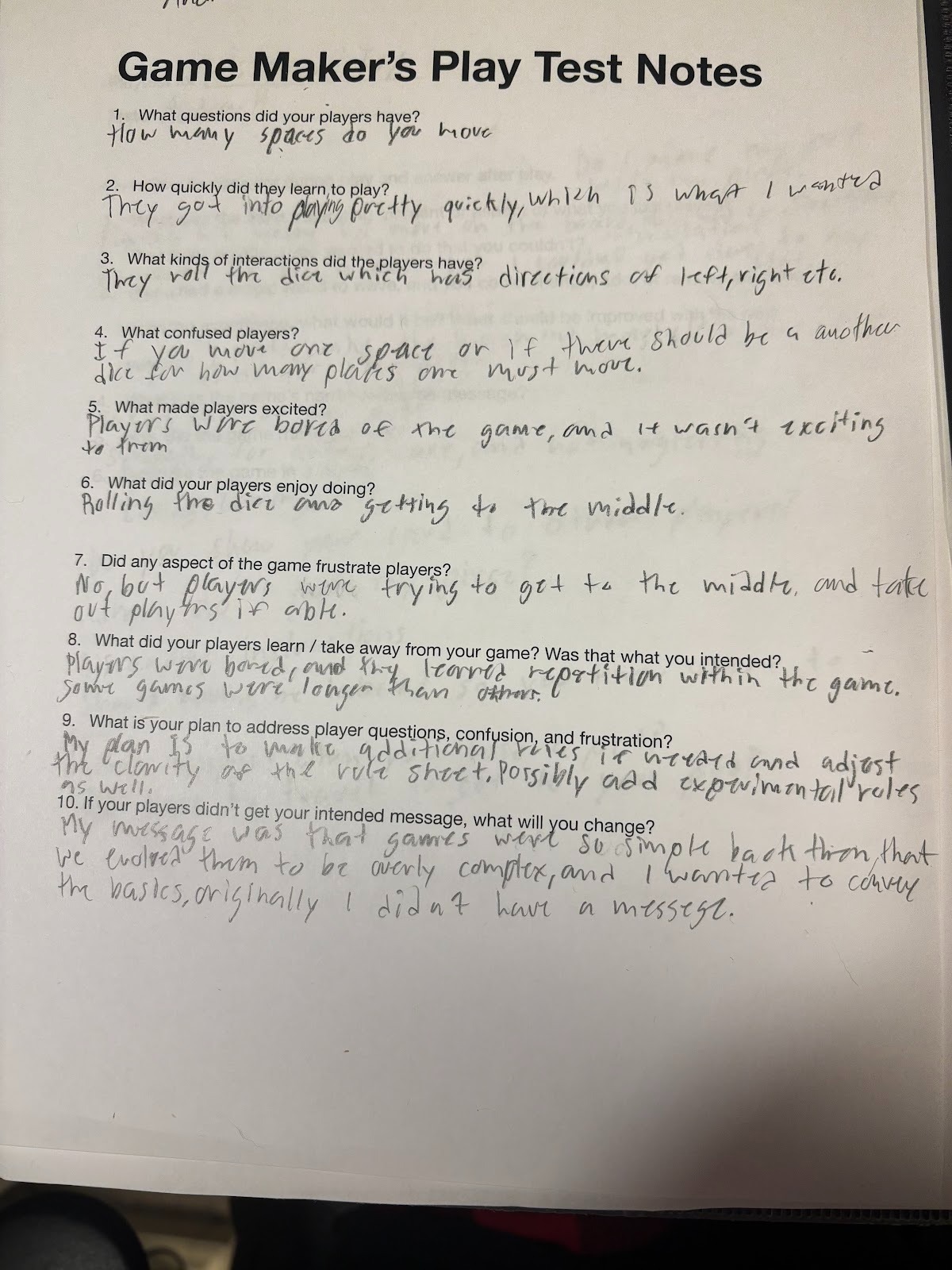
Andrews Game
What was the most frustrating moment or aspect of the game? The most frustrating aspect is that the game goes very slow. Its pretty much that you play for 10 minutes and nobody makes any progress.
Was there anything I wanted to do but couldnt? At some points I wanted to cheat and move my piece forward.
What would I change? I would add in spaces on the board that benefit each color in a different way to get to the center faster. I would also maybe consider using two different die. One for the direction and the other for the amount you move.
What is the games message? Not 100% sure because the game does not have a name.
How did it make me feel? Bored and frustrated
Describe the game in three words? Slow, directional, Colorful
Playtest notes
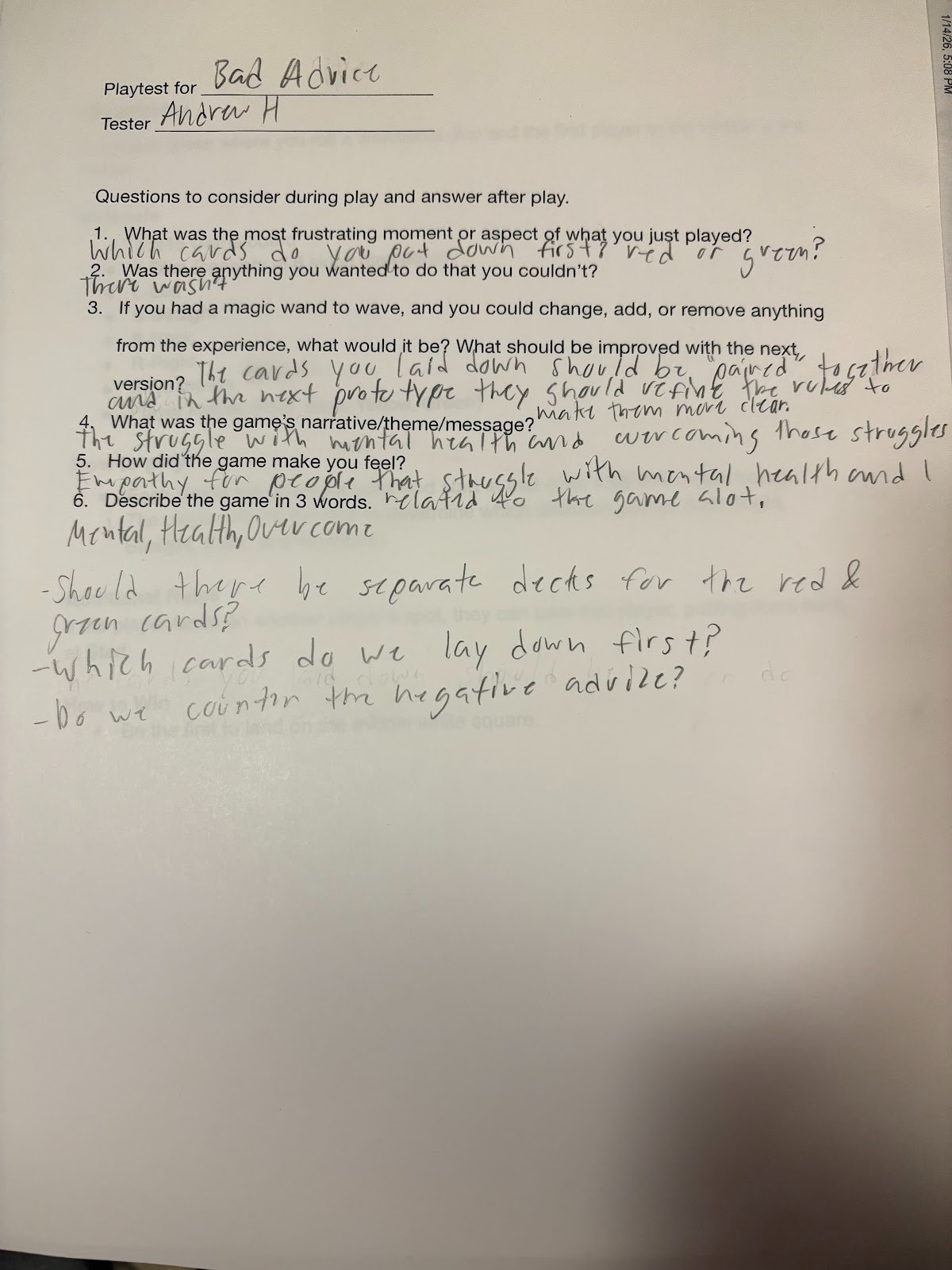
Bad Advice
Whats Frustrating? Not really frustrating at all, just a little confusing with the order of how to play.
Was there anything you wanted to do but couldnt? Not really
What would I change or add? I honestly love the bad advice part of the game the most because I think its really funny. I wish you can do more about that.
Games message? If I had to guess it would be positive and negative ways to deal with mental health.
How did it make me feel? It made me feel pretty relaxed. I thought it was a funny and laid back game.
Three words to describe the game? Fun, informative, supportive
Game Design 2
(2.12) Serious Games
Discussion: Train, Crosser & La Migra, Ludoztil, Oregon Trail, Last Resort
Train (Brenda Romero)
Train is impactful because it keeps its context hidden until the end. The mechanics are straightforward and focus on moving pieces efficiently, but the reveal reframes the entire experience. It demonstrates how games can involve players directly in systems rather than simply explaining them. The lesson is conveyed through participation instead of dialogue, and that discomfort becomes the central learning experience.
Crosser & La Migra
Both games simulate border crossing and the pressures of immigration. What stands out is how procedural rules express vulnerability. Randomness, restricted movement, and pursuit mechanics create tension and stress. Rather than explaining immigration systems abstractly, these games simulate constraint and risk, allowing players to feel instability and fear firsthand.
Ludoztil
Ludoztil critiques the manipulation embedded in gamification systems. By satirizing reward structures, it reveals how points and incentives shape behavior even when players are aware they are being influenced. This connects directly to Bogost’s argument that gamification often prioritizes shallow motivation over meaningful engagement.
Oregon Trail
Oregon Trail remains one of the earliest examples of serious gaming. It teaches through consequence, using disease, weather, and scarcity to illustrate the realities of westward expansion. The learning model relies heavily on repetition and feedback, reinforcing behaviorist learning principles through trial and error.
Last Resort
Last Resort addresses homelessness and economic instability. What makes it effective is the absence of easy solutions. It highlights systemic barriers rather than individual failure, showing how serious games can expose structural issues instead of reinforcing personal blame.
Overall Reflection
Across all of these examples, systems communicate meaning more effectively than lectures. Players learn by experiencing constraint, uncertainty, and moral tension.
Play Reflection: Crossing the Bridge and Observance
Crossing the Bridge
This game centers on ethical decision making. It does not reward efficiency or optimization. Instead, it forces players to confront the consequences of their choices. The discomfort created by those decisions becomes the learning moment. Reflection occurs after action rather than during gameplay optimization.
Observance
Observance relies on ambiguity and environmental interpretation. It encourages attentiveness and emotional awareness rather than traditional goal completion. Without clear objectives, the experience feels less like a challenge and more like an immersive reflection.
Combined Takeaway
Both games demonstrate that serious games prioritize reflection over reward systems. The emotional or intellectual impact often happens after the play session ends.
Prototype Concept: The Last Hunt
Core Concept
The Last Hunt is a survival-focused serious game inspired by Appalachian folklore. A small hunting party becomes stranded after signs of a Wendigo attack during winter. As resources diminish, the main threat becomes fear, mistrust, and the decisions players make to keep the group alive.
Player Role
The player acts as the group’s decision-maker, balancing survival needs with social stability.
Prototype Mechanics (Paper Version)
Players track four core resources:
- Food
- Warmth
- Trust
- Fear
Each round includes:
- Resource Phase — supplies decrease and environmental conditions worsen.
- Event Phase — cards introduce challenges such as storms, disappearances, or strange tracks.
- Decision Phase — players choose responses like rationing food, holding a campfire talk, hiding bad news, or honoring the dead.
- Consequence Phase — decisions create long-term effects on group trust and fear.
Deaths are significant and introduce ethical choices around corpse management, such as burial, abandonment, or using resources for survival. These choices affect morale and trust.
Learning Objectives
The game explores:
- Group decision making under stress
- Survival ethics and scarcity
- Fear and social cohesion
- How leadership choices shape group dynamics
The Wendigo serves as both a folkloric threat and a symbolic pressure that reflects the group’s psychological state.
The Last Shift
A simulation of emergency room triage focused on ethical resource allocation and time pressure.
Witness Reports
Players analyze conflicting cryptid sightings to explore misinformation, bias, and evidence evaluation.
Signal in the Pines
A narrative game in which players respond to rural distress signals and must decide how to act under uncertainty.
Cryptid Conservation Agency
Players manage environmental preservation efforts for endangered mythical creatures, balancing public perception and ecological sustainability.
Archive of the Unseen
Players curate fading folklore and decide which cultural stories are preserved or forgotten, exploring how history is shaped.
Each concept uses systems to examine themes such as ethics, media literacy, environmental stewardship, and cultural memory.
Reading Responses
Learning Games and Learning Theory
Oregon Trail aligns with behaviorism because players learn through reinforcement and repeated feedback loops of success and failure.
Minecraft Education Edition reflects constructivism since players build, experiment, and discover solutions through exploration.
Collaborative simulation games align with social constructivism because knowledge develops through communication and shared problem solving.
Among these, constructivist approaches feel the most effective because players actively construct understanding instead of responding to rewards.
Is Gamification Bullshit
Bogost argues that gamification reduces games to points, badges, and superficial incentives, stripping away depth and transforming engagement into manipulation.
I partially agree. Gamification can encourage short term behavior, but without meaningful systems it becomes shallow.
Examples outside class include fitness apps that track streaks, corporate training platforms that award badges, and productivity tools that gamify tasks. These systems often lose effectiveness once novelty fades because they lack intrinsic motivation.
What Is a Serious Game and Why It Is Not Chocolate Covered Broccoli
A serious game is designed primarily for learning, awareness, or reflection, using gameplay mechanics to communicate meaning.
Farber argues that serious games are not chocolate covered broccoli because the learning is embedded within the mechanics. Players do not pause the game for instruction. Instead, the interaction itself creates understanding. When designed well, the system becomes the lesson.
Final Reflection
This week reinforced that serious games rely on systems, constraints, and player agency to generate meaningful learning. The strongest examples do not preach. They simulate. My revised prototype, Cryptid Commune, applies this approach by using folklore aesthetics to explore leadership, belief, and social influence through interactive systems.
Question Set Week 2
- What advergames have you played? Did they influence a purchase outside of the game? I mean i have played tons of games that ARE advertisements for the games themselves and they have never influenced me to get the game – I have also played games like Pepsi Man for other products and no they generally do not influence me
- Why do the advergames ”tooth protector” and “escape” work? What makes ”chase the chuckwagon” and “shark bait” fail? According to Bogost, it is how well the game integrates the message of the game into the actual mechanics which make the games run. In the last two games, the gameplay doesn’t have to do with what the product actual is or does so the message falls flat
- What does volvo’s “drive for life” accomplish? It forces the player to experience Volvo’s motto – instead of speed like most racing/car games, the game mechanics enforce “driving for life” by enforcing safety, safe speeds and awareness. It makes the player live the motto
- What company used in-advergame advertising: Massive Incorporated
- What was one of the first home-console advergames and what beverage was it for? Pepsi Invaders – which was for Coca-Cola as a dig at their competitor
- What makes “the toilet training” game sophisticated and do you agree? It is “sophisticated” because of the values and management skills that are engrained in the rules of the game – it teaches something and allows users to experience a structured, manageable process of parenthood duties. I think I mostly agree – the subject matter makes it slightly less so but I haven’t actually played the game so I would have to see if Bogost’s justification is correct
- What do advergames and anti-advergames have in common, and what principles do they share? Bogost argues they have quite a lot in common actually. Similar mechanics, which are intended for different purposes, but often act similarly. They also both are trying to persuade people to do, or not do, something. This is a key component and biggest principle they follow to say they have things in common