
- Questions
- what learning games have you played? can you categorize them by the theory of learning types: behaviorism, constructivism, constructivism or social nature? if you played more than one which was the most effective?
- I’ve played many different learning games, mostly for school in the past. These include:
- Study Island: Behaviorism game, as it is a game that rewards correct responses and reinforce learning the more it is repeated/also gives the player results.
- Assassins Creed Discovery Tour: Constructivism – due to the ability to explore the map to learn more about history.
- Legos: not sure if this is a game to everyone but its a game to me: Constructionism – due to the playability of building things.
- For Social Learning: I’d have to say Kahoot, as even though I wouldn’t always get to collab, the ability to play with a partner VS the whole class is a potential for some fun collab work.
- Constructionism is my favorite but that’s also because I’m a sucker for Legos.
- is gamification bullshit, what is ian bogost’s argument and do you agree? where have you encountered it outside of class and what was your experience?
- Ian argues that gamification is BS due to the fact that instead of working on making a game interesting or engaging to the player, a lot of times people just attempt to make a game with win and loose mechanics rather than engaging the player and making them feel a certain way. This reminds me of the type of games I’ve had to play for school, such as study island, where the games were more fun than the tests sure, however they were the least bit of engaging.
- What is a serious game and why aren’t they chocolate covered broccoli?
- A serious game is a game designed with the soul intention of being worth more than just entertainment to the player. This means that there is typically a deeper message or meaning behind the gameplay itself. Its not chocolate covered broccoli because that’s just veggies covered in desert (AKA learning in disguise that isn’t that great at hiding it)
Week 4 Questions
Reading Response questions
- what learning games have you played? can you categorize them by the theory of learning types: behaviorism, constructivism, constructivism or social nature? if you played more than one which was the most effective? I forget the game name, but in high school, we used this grammar and punctuation website and we had to complete learning modules in it by fixing sentences. They tried to make this more fun by having the sentences tailored to your specific interests and you could pick musical artists, movies, and cartoon characters that would be featured in your sentences. Another one that I remember playing was the games based on the Super Why show on PBS. I remember having to spell out certain words to do things in the game, but not much more than that. I think that these games were mostly behaviorism because it was very much rinse and repeat and not necessarily fully integrated into making the experience as a whole good. While I can’t think of many more examples, I don’t think that behaviorism would be the most effective, and I think that constructivism or social nature could be much more effective.
- is gamification bullshit, what is ian bogost’s argument and do you agree? where have you encountered it outside of class and what was your experience? Bogost says, “More specifically, gamification is marketing bullshit, invented by consultants as a means to capture the wild, coveted beast that is videogames and to domesticate it for use in the grey, hopeless wasteland of big business, where bullshit already reigns anyway.” Essential Bogost says that gamification is something that companies do to try to sell more product, expand their audience and they just do it as a way to expand themselves. This can be done in a very sloppy manner. I think that I would tend to agree with Bogost. One example of where I have encountered this are the playable ads that I see Progressive using quite often. To me, they don’t really seem very effective and are just poor quality ads that don’t make me want to get Progressive anymore. It also just feels exploitative because it seems directed towards younger children, and I don’t know why they would do that except to increase brand awareness UNTIL they grow up and can purchase insurance.
- What is a serious game and why aren’t they chocolate covered broccoli? According to the article, “Serious Gaming is used to teach and train K-12 students or as professional development”. You want to avoid chocolate covered broccoli “serious games” that are just education with a sweet coating trying to make it a little more fun as an afterthought. It’s not really effective of convincing people that the topic as a whole should be enjoyable and engaging and its not as fun unless the game fully integrates mechanics with problem solving, for instance.
Games from the games for change site for podcast
- I particularly looked at the free games on the site because they would be most accessible to myself and a larger audience. Here are some that stood out to me:
- A Blind Legend – a game designed for the visually impaired
- Datak – A Serious Game About Personal Data
- Gamer Girl
- Harmony Square
- Heirloom
- Quandary
- Sky: Children of the Lights
- Syndesi
- Tendar
Reviews and Thoughts on Games in Class – Week 4
Observance Game Review
- Was it fun? Yes, this game was fun. The gameplay is a lot like Battleship and I quite enjoy that game normally.
- What were the player interactions? For me, I played as the US border patrol side and I got to do different search patterns to try to find the people that were trying to cross the border. I would call out the space that I was out and what search formation. If I found someone, they were captured and taken out of the game. I also got to hide the churches and green card like you would with the ships in Battleship, and kept it a secret from the other player. The other player from the Mexico side would ask me for coordinates to search for the churches and the green cards. When they found them, it allowed them to have a safe space to rest and be able to safely cross the border.
- How long did it take to learn? This game didn’t take very long to learn at all, thanks to it being very similar to Battleship.
- Would you play it again? Yes, I would play this game again. I liked the games message and gameplay and I would like to see who would do better if the roles were reversed.
- Analyze the game using the 3 act structure. In the first act, the US border patrol side places the churches and the green card without letting the Mexico player know. Players take turns moving their characters in and out of and around the board, each searching for different things. The second act would have been after the first few turns and when there were significantly more characters out on the board. The US border patrol player started to place a few walls that blocked both players’ path, and each player started to find a few of what they were looking for. The third act of the game was when there was only 1-2 characters from Mexico remaining. That meant that they would either safely cross the border or be captured from the US side. When all the characters were captured or safely crossed the border, the game ended.
- What are the collaborative and or competitive aspects of the game? This game was definitely competitive, as players played as the US border patrol vs citizens from Mexico looking to get a better life. The players directly opposed each other, with the US side trying to remove the Mexican characters from the game, and the Mexican side just trying to safely survive.
- What is the game’s metaphor and which of the game’s mechanics standout? The game’s metaphor is about illegal immigration between Mexico and the United States. I liked that each of the characters had their own backstory about what led them to be in that position for either side, as it really humanized the situation and gameplay. The standout mechanic for me was being able to pick different search formations, and I somehow always seemed to pick the wrong one, where I would have caught them had I picked the other one.
Thoughts on Ames’ chess game
While I didn’t get to play and I don’t really know much about normal chess, I really like that message of this game of chess. I found the mechanic of the bomb to be super interesting and would love to see how the game plays out if someone decided to use it. I also thought that it was super clever and interesting to include the little citizen pegs in the sandy parts of the chess board. I think that helps people think about the citizens that are often caught up in the middle of war, as opposed to just having the chess game stacked in the favor of one side.
Thoughts on Train
I think that this is a super effective and clever way to communicate the message of the Holocaust in a game format. I find it interesting that this game is something that would really only work in a gallery setting. I also like how the designer made it so that players were compliant in making bad decisions, but they didn’t know until the very end of walking through the exhibition. I would really like to experience this in person, but I don’t really want to personally play the game myself, but I would love to watch others’ reactions to this experience.
Thoughts on Síochán Leat (aka The Irish Game)
I really love how this designer decided to make a game to teach their kid about their background. It makes me think about how cultural education could be taught even more so through games. I also think that the design of the game board looks super interesting with some of the pieces almost appearing to float above the ground.
Week 4 – 5 Serious Game Ideas
- Drag Queen Dress Up – In this game, you play as drag queens getting ready for shows and events. You get to pick hair, makeup, and outfits, but you also have to attend events like visiting a children’s hospital, doing a book reading, brunch, etc. This game is to reduce the stigma that drag queens have, with the media believing that all drag queens are sexualized (some definitely are, but not all), etc.
- Realistic Driving Sim – A driving simulation where there are lot of random road things that come up that will potentially damage your car—potholes, random objects, etc. The lower the car that you drive in the game, the harder it is to drive without getting some serious damage.
- Summer Camp – a game where you play as a teen day camp counselor that needs to navigate the tricky world of caring for and watching children with 0 prior experience. You don’t have training for children with intellectual and physical disabilities, which makes caring for those children even harder, all while managing 20 other children. Your goal is to make sure that all children have a happy and good time. The game would expose some of the children’s “backstories” throughout the game, like what their athome life is like, and you may need to make the decision to report some not great things you hear. This game is based on my experience with being a day camp counselor and seeing that some of the children that I worked with really needed that experience and that that was what they had to look forward to during the day. I learned about some of the backgrounds of abuse that they had and it absolutely broke my heart. However, it was a difficult experience because I wanted to try to make sure that all the children had a great time, but I was unprepared for a lot of the situations that arose, since I was just a teenager myself. (Sara also helped inspire this game with her prototype about not knowing what others are going through!!)
- Safe Food Practices – a tabletop game where you interact with actual food pieces (very interactive like the children’s play food sets or interactive children’s books) to complete certain cooking tasks to make a dish. Another player plays as the inspector as you complete these tasks and they won’t tell you what they are looking for, but they will let you know when you failed to complete the task in an unsafe manner. In this way, players must be extra careful with how they handle the food, as anything they do wrong could get their restaurant shut down. While this sounds like a silly game, I think this game could be important if I incorporate actual safe and unsafe food practices into the game and provide a little bit of background information on it.
- It Could Be Anyone of Us – A game (very vague at this point) about not to trust everyone that you meet. You must make decisions to go along with different strangers, however you don’t know their actual backgrounds. Someone could be a serial killer, or just a flat out mean dude. Based on who you decide to trust, your actions will have consequences. I see this as a card game, but other than that, I’m not sold on any mechanics.
Mindful Memorial Services Rules
This game is to educate people about different methods of final disposition, and hopefully encourage people to consider more “green” options!
Evelyn [prot.1] Around the World in 80 Days

Sara Estus – Week 4 Response
Game Reviews:
Observance: This game is a response to the July 28, 2007, rejection of the U.S. Senate to revise the Immigration Reform Bill. Though it could be considered outdated by the unknowing, illegal immigration is still a very impactful subject 17 years later. When I played this game with Amber, it was fun to figure out the rules, setup, and character backstories; however, after some time it begins to feel wrong when you think about the ‘lives’ you are playing with (literally). And even though I appreciated the reskin of “Battleship” having a game with such an emotional impact on a simple mechanic like “Battleship”, brought down to the chance of two die – made the impactfulness of how serious illegal immigration seem less serious.
All in all, I enjoyed the game, but I felt like I was more focused on ‘winning” than I was on understanding how illegal immigration works and what happens to illegal immigrants.
Serious Game Ideas:
- The Trash: This game is about minimizing the garbage you throw away each week. Typically, about one to half a bag of garbage is made per person for each person living in a household. But it is possible to break that number in half! By playing this game, users will learn how to reduce, reuse, recycle, and compost scraps, all while having an impact on how much litter they make. The goal is to halve the amount of trash thrown out, by the time two weeks have passed.
- Sustenance: In this game players manage a farm or agricultural region, balancing the needs for food production with sustainable farming practices that minimize environmental impact and enhance biodiversity. Some ways may include composting, hydroponics, and not using pesticides.
- We are Global: Players create a “profile” for themselves and are then matched with another person in a third-world country who is similar in age, gender identity, and interests. Players are then tasked with learning more about this person and their culture to understand the possible impacts of war, starvation, lack of education, etc.
- The Shelters: This game is about spreading awareness of “full” shelters. Thousands of animals are euthanized each year due to no room at shelters. It is the player’s job to spread awareness, gain donations, upgrade shelter amenities, and reduce euthanasia numbers by using fosters, creating adoption days, and preventing backyard breeding.
- Compliment Race: Though this game seems simple and easy, the concept goes into the impact of self-love and appreciation for others. To play, players are given multiple cards from a huge stack that have different rules for who they must go up to and compliment. Players cannot compliment other players, and must try to find people, and genuinely make them feel good.
Podcast- Games for change Ideas:
Minecraft Education: Minecraft Java is one of my favorite games, it’s one of the few I can always return to, no matter how long I don’t play. Minecraft Edu, I also feel strongly about it, as I played it back in high school before it was even half the content it is today. I even had the opportunity to speak in other local high schools about the impact of STEM and Minecraft on students. So, this has a special place in my heart.
Spiritfarer: I have a few hours into this game and feel that I have experienced a lifetime of grief in the last 5 years. The impact of this game feels like a good discussion to have.
Papers, Please: First of all, this game is INSANE. The rich lore, the complicated mechanics of checking passports and papers for immigrating and visiting a country under dictatorship. This game has so much to offer and is truly a game people should play or watch a playthrough of. It takes a keen eye, a great attention span, and a willingness to take notes.
Plague: I have played this game one too many times, and now it feels wrong given my experience in the COVID-19 pandemic. But I feel that it can be a really rich discussion about the pros and cons of ruining and saving the world – whether you play as the cure or a disease.
Reading Questions:
- What learning games have you played? Can you categorize them by the theory of learning types: behaviorism, constructivism, or social nature? if you played more than one which was the most effective?
As a child, I grew up with an old Windows 98 computer. It was chunky, and slow, and only worked well when you worked as slow as it did. I played a lot of games like the “Jumpstart” series, which went based on age, and learning basics that were taught in school. The games focused a lot on basic principles of problem-solving, like winning a race by building a cool car, but you had to solve math problems first, and when I was younger it was based on color coding, and motor skills. As an adult, I have played two behaviorism games, Kahoot and Quizlet, which both required me to think about my choices to pass or win. And lastly, a game that contained a social nature was surely Club Penguin. There were many instances where players could collaborate and play games to win in-game currency or go against each other.
- Is gamification bullshit, what is Ian Bogost’s argument, and do you agree? Where have you encountered it outside of class and what was your experience?
I would argue that Gamification IS bullshit, it feels like a trend companies just jump into as an excuse to be “with the trends” As Ian Bogost argues, gamification reduces the complexity and richness of video games to a mere transactional system, where engagement is treated as a point-to-point system of rewards and punishments. Ian views gamification as a cheapening of the power of games—an attempt to commodify something that has far more potential. In my experience, gamification has often been included in fast-food restaurants like McDonald’s. Throughout the years they have attempted to make consumers play “Monopoly” to coax them into purchasing more, just for the reward of being a free small fry.
- What is a serious game and why aren’t they chocolate-covered broccoli?
A serious game is a game that is designed for a more educational purpose other than just for entertainment though it can also be used for training or addressing real-world issues. These games use elements of gameplay to engage users and help them learn new skills, solve problems, or simulate complex scenarios. Serious games are not chocolate-covered broccoli, as when created correctly, they easily blend education or training with enjoyable gameplay. Instead of feeling like a forced or disguised educational experience
Five New Ideas for Serious Games
“Under the Surface” puts players in the role of marine biologists, tackling ocean decline. By studying marine life and tracking pollution, players witness the impact of human actions and learn how small changes can protect ecosystems. This game emphasizes environmental awareness and the importance of conservation.
“Echoes of the Past” delves into forgotten historical narratives. Players piece together lost stories, revealing biases in historical records and highlighting the importance of diverse voices. Through detective work and interactive storytelling, players confront historical events shaped by conflict and displacement. This game promotes cultural preservation and challenges traditional historical perspectives.
“Bias Breakdown” tackles media literacy. Players navigate a digital news landscape, learning to identify bias and misinformation. By taking on roles within the media, they understand how algorithms and narratives shape public perception. This game aims to teach critical thinking and awareness of media influence.
“Prison Pipeline” addresses systemic injustice. Players follow the lives of young people, making choices that illustrate the impact of socioeconomic disparities on their futures. This game exposes the consequences of racial and economic bias within the criminal justice system, highlighting how policy affects real lives.
“Silent Signals” focuses on mental health awareness. Players learn to interpret non-verbal cues and provide support to someone experiencing mental health struggles. By mimicking the difficulties of communication, this game fosters empathy and understanding. These game ideas all demonstrate how games can be used to educate, raise awareness, and promote positive change, moving beyond simple entertainment.
WEEK 4
Responses to Readings
What Learning Games Have You Played? How Do They Fit Into Learning Theories?
Games teach in different ways. Typing Club uses repetition and rewards to build typing speed, but not deep thinking. Minecraft: Education Edition lets players learn by creating and problem-solving, needing some teacher guidance. Foldit uses teamwork for real science, but needs background knowledge. Minecraft is likely the best, as it encourages hands-on learning and problem-solving over simple repetition.
Is Gamification Bullshit? What is Ian Bogost’s Argument?
Bogost thinks gamification is a trick. Companies use points and badges to control people, not to make things fun or educational. They add game-like things to make people keep using their products, but without real value.
I agree. Things like Duolingo streaks and Starbucks rewards make people do things without really learning. But, some gamification, like Khan Academy’s, can be good if it’s used to help real learning. I’ve seen it myself: reward programs feel like marketing, and Duolingo focuses too much on streaks, not learning.
What is a Serious Game, and Why Aren’t They Chocolate-Covered Broccoli?
Serious games teach, not just entertain. Bad games try to hide learning, like boring math games. Good games teach through playing, like “Papers, Please.” Good games are fun by themselves. Gamification can be bad, but good for real learning. Learning games are best when players explore, create, and work together.
Evelyn: Week 5 Game Ideas
- Stocked – A game that teaches users about choosing merchandise specifically for a Boutique storefront. They must learn the balance between budgeting, displaying new lines of products, and investing in other areas of the business.
- Geared Up – A puzzle game that teaches players about vehicle mechanics. Depending on the mode, players could choose to either inspect the car to diagnose the problem, or assemble/dissemble vehicles. Players could interact with and learn about parts, their technical terms, and mechanical process.
- Wall Street Warriors – A stock market simulator where players are given an initial amount of (fake) money to invest into the market. Stock market trends can reflect reality. There could also be an option with time leap (based off predictions) to see how investment decisions played out in the long run. The goal of this game would be for players to learn about the stock market and gain financial literacy.
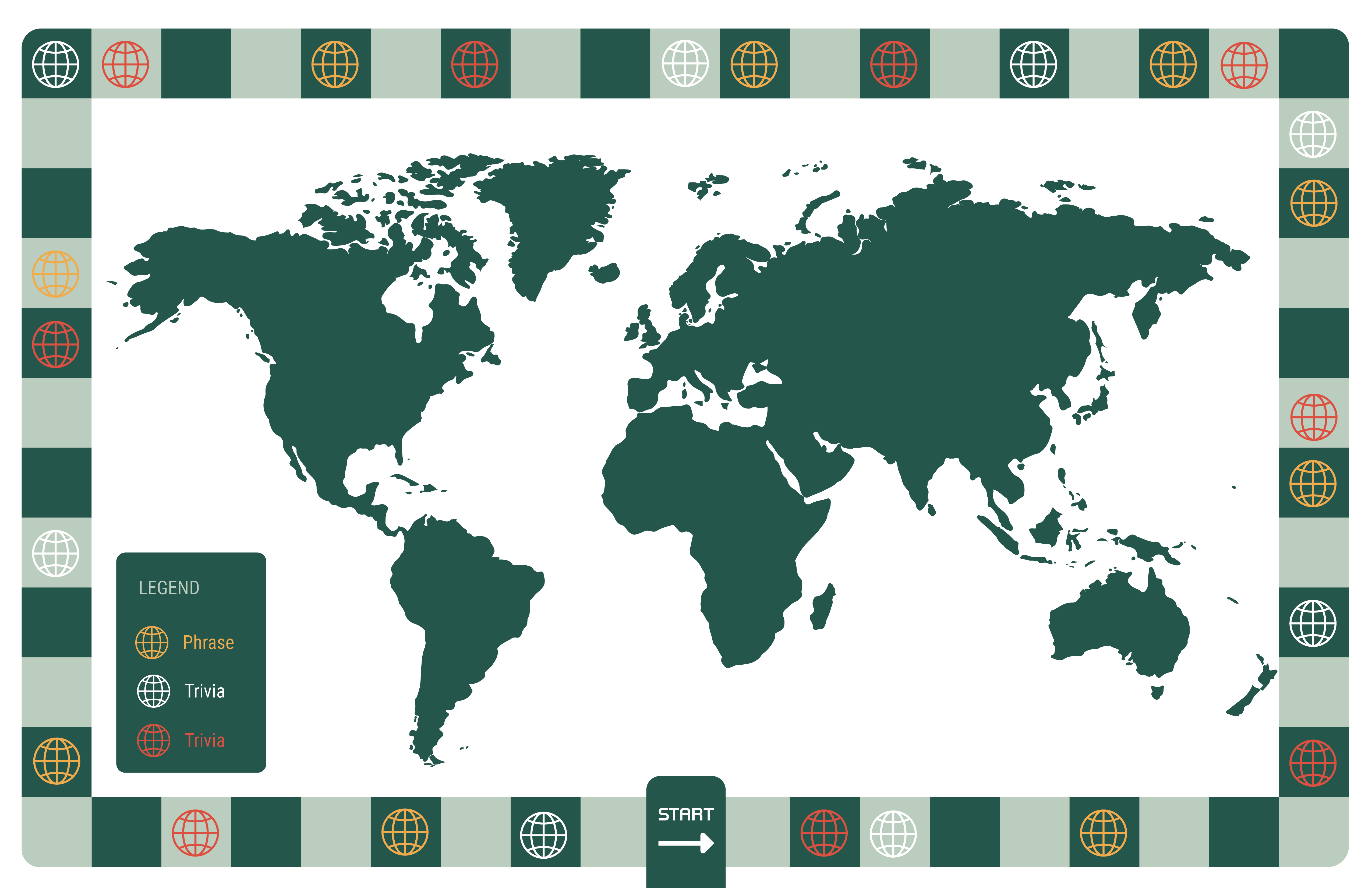
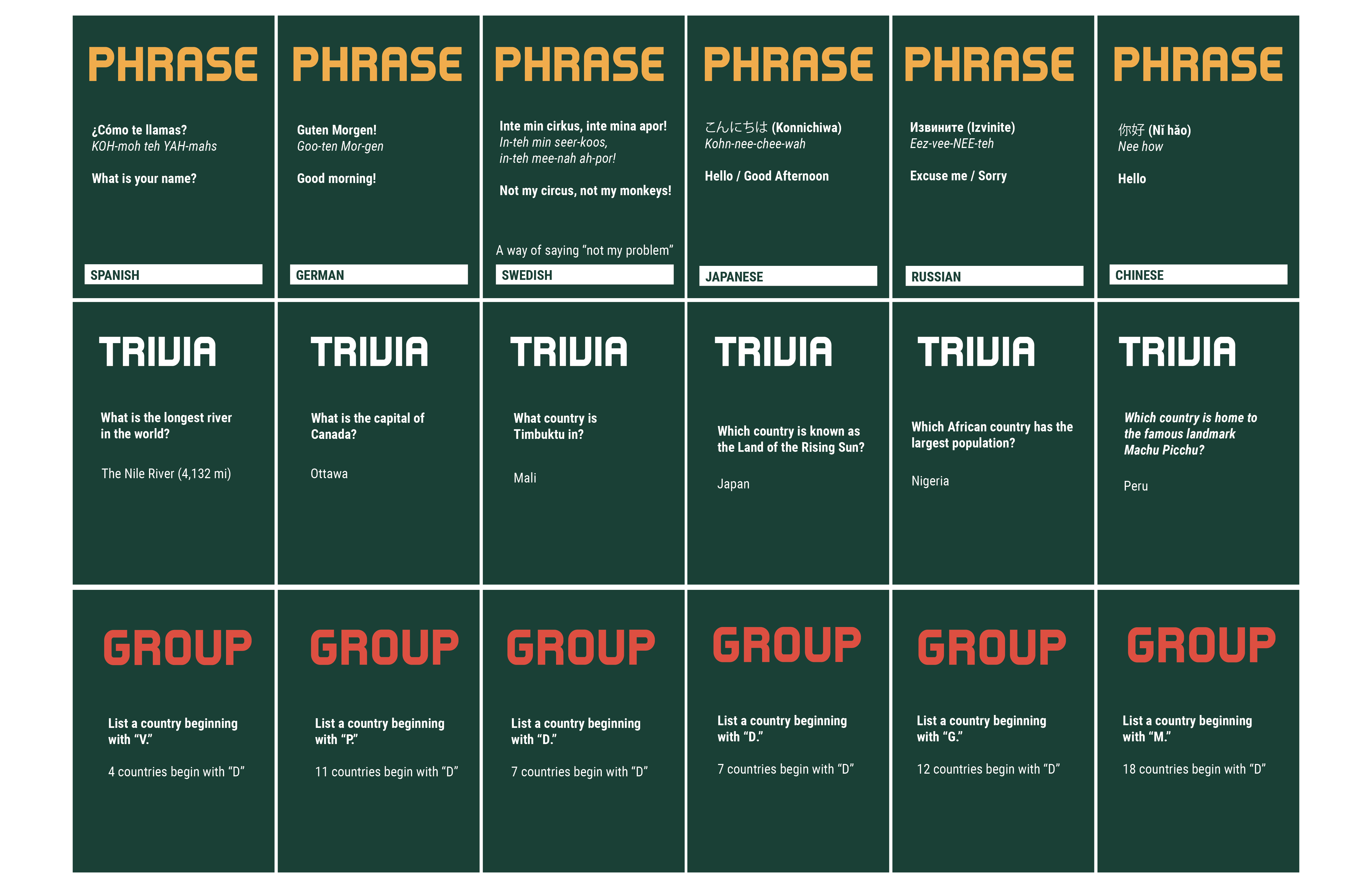
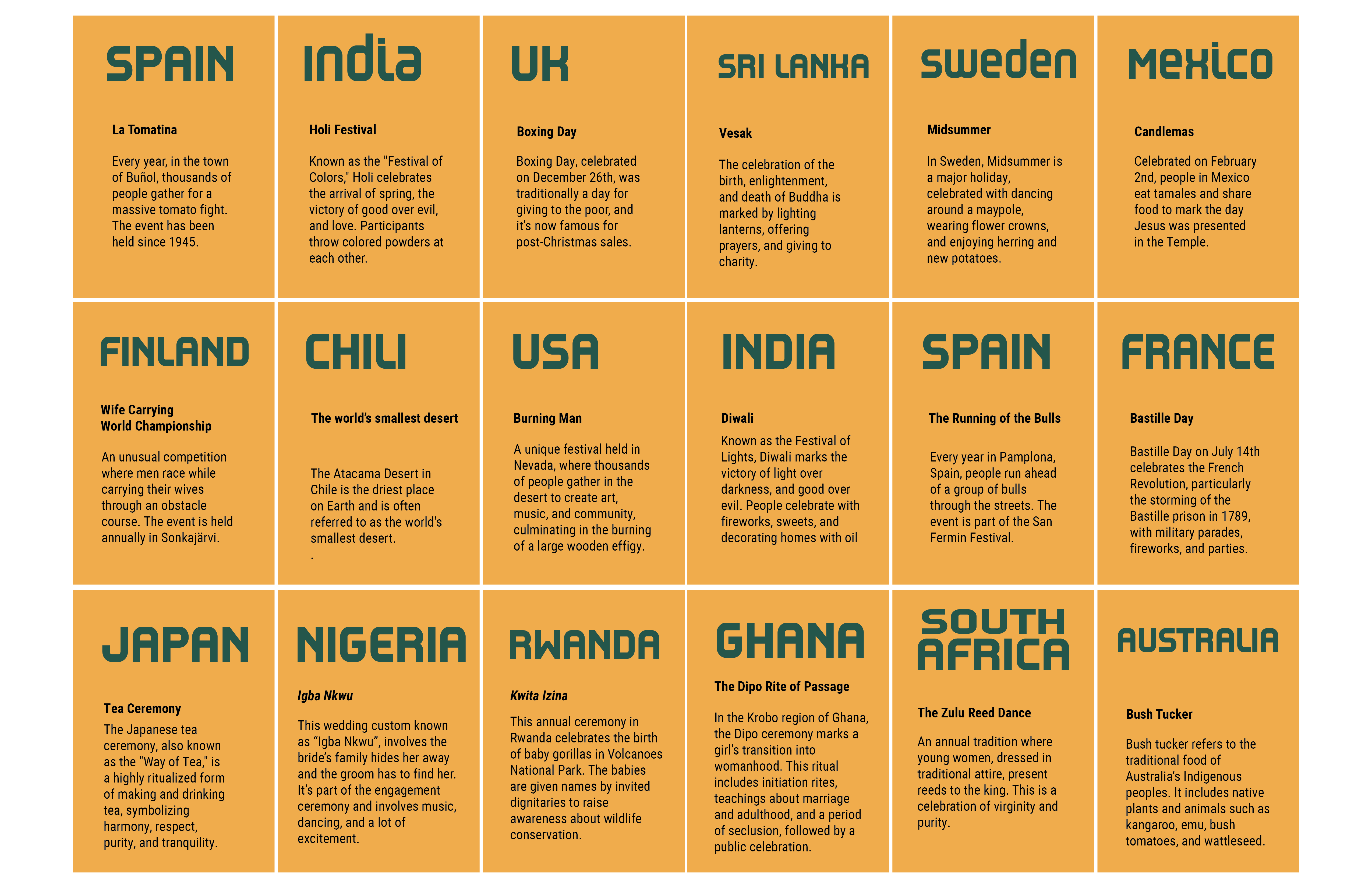
- Around the World in 80 days – a game intended to bring awareness to different cultures and their traditions. Players must travel to a specified number of locations around the world and collect a culture card from that destination. There are additional spaces along the way that invite players to play mini games, language competitions, or other puzzles.
- Diagnostic – A learning aid for medical students. Players are given a list of symptoms through a chat box and must come up with a diagnosis. They may ask the patient chat box questions to try to narrow down their solution. This could also be used for trauma patients – players see a list of symptoms and must take immediate action. quickly gather evidence to make the right call.
Week 4 Questions
- what learning games have you played? can you categorize them by the theory of learning types: behaviorism, constructivism, constructivism or social nature? if you played more than one which was the most effective? the most memorable was Mavis Beacon Typing and speed math tests in elementary school. Both of these were behaviorist. Essentially, the goal of both was to make you more effective and fast at a skill.
- is gamification bullshit, what is ian bogost’s argument and do you agree? where have you encountered it outside of class and what was your experience? Bogust believes that marketing has abused the use of gamification in their business strategy. I disagree with him. I think that applying gamification to business strategy motivates workers and sets practical goals and milestones. Outside of class, I have seen gamification in some e-commerce apps – specifically temu and shein. They utilize mini games in apps to trick users to think they can earn and win free items (when in reality they need to share the app or do some outside marketing for them to win the items). They also use check-in bonuses and points systems.
- What is a serious game and why aren’t they chocolate covered broccoli? a serious game is a game are intended for education or professional development. Matthew Farber believes chocolate-covered broccoli games are those that poorly engage users and have bad design. Perhaps they do not have game mechanics that are on par with main stream games.
Week 4 Post
Alana Tush
Crossing the bridge thoughts- I wasn’t in class so I didn’t get to see it played, but I looked up images and it looks similar to some of the other games as have looked up where you have to walk and maneuver through things with the character. It also looks similar to some modern-ish games like stick ninja or something.
What learning games have you played?
Cool math games is still fun and sum dog used to be the shit in elementary school. At the time I didn’t think I was actually learning anything or at least practicing math but it is an effective way to keep kids sharp. While I liked cool math games better, I think sumdog was a better learning game because it wasn’t as broad as cool math games.
What is ian bogost’s argument and do you agree?
His argument is that “gamification is marketing bullshit, invented by consultants as a means to capture the wild, coveted beast that is video games and to domesticate it for use in the grey, hopeless wasteland of big business, where bullshit already reigns anyway.” I agree with him, while I’m not well versed in the game community, all marketing has some twisted/ or un-true element to entice consumers.
What is a serious game and why aren’t they chocolate covered broccoli?
Serious Gaming is used to teach and provide a message. “Games that blur the line between fun and education”…can be called chocolate covered broccoli. “A coating of sweet does not make the learning suddenly fun.”
New ideas for a serious game
1. Match statistics/facts with things in nature to learn about how the environment is being effected by humans
2. Fill out a bingo card of common items that are over consumed and see the amount of over consumption you participate in. For example- owning more than 5 reusable water bottles
3. kids game where they have to practice multiplication to collect items in the grocery store to complete a recipe card. The reward is being able to cook or bake the recipe
Game Ideas: Week 4
- RGB: A game where players race to create a specific color pattern using colored tiles. Each player has a small board and a deck of color cards, each showing a different pattern. The goal is to match the pattern shown on the card using the tiles, but the tiles are drawn randomly.
- Maize: Players try to escape from a maze before the other players, but they can only move based on a limited number of dice rolls that tell them how far they can move and in what direction. If a 1 is rolled, the player doesn’t move but gets to draw a card for certain items that can be used in game.
- Stack’d: A competitive stacking game where players must stack objects based on a random card. The challenge could be stacking in specific patterns, building the tallest tower, or balancing objects.
Week 3 Game Ideas
- Players take on the roles of characters who are experiencing challenges outside their usual reality. Each level is a different scenario where the player must complete tasks while dealing with the limitations of their character’s situation. The objective is to navigate the world and its challenges by understanding and overcoming barriers that others face every day.
- This narrative-driven game lets players experience stories of various characters from different backgrounds. Each character has a backstory, and players interact with them to build relationships, solving puzzles or helping them through life challenges. Players must learn to listen and respond, using dialog choices that reflect understanding and compassion.
- Players are tasked with conflicts between two groups or individuals who have opposing beliefs. They must facilitate understanding, find common ground, and propose solutions that benefit both sides. Success in the game depends on the player’s ability to listen to both sides.
- In this puzzle game, players connect pieces of a heart-shaped puzzle by guiding the emotions of characters. Each piece of the heart represents a different character’s journey, and players must work through these emotions to heal relationships. Players must navigate through obstacles, building empathy by learning the motivations, fears, and desires of the characters they encounter.
- Players experience the same events from the perspective of multiple people, where each character is affected by the situation in different ways. For example, during a natural disaster, players might experience it as a rescuer, a survivor, and a displaced family member. The game asks players to switch between perspectives and understand how individuals perceive the same event differently, teaching players to view the world through others’ eyes and make decisions that consider multiple viewpoints.
Week 3 Questions
- how does mary flanagan’s definition of game differ from chris crawford’s as well as the definition crafted by katie salen and eric zimmerman?
Flanagan emphasizes that games can be seen as a form of cultural expression, while Crawford sees games as systems of interaction, focusing on the idea that games are interactive stories. Salen and Zimmerman define games more formally as structured activities
- what is an activist game?
An activist game is a game designed with the intention of making a political, social, or cultural statement.
- go and chess are examples of games that feature “perfect information”, what other games share that feature?
Checkers, Tic tac toe, connect four
- why might chance or gambling games hold spiritual or religious importance to ancient cultures?
Chance or gambling games may have held spiritual or religious significance because they represent the unpredictability of life or the will of the gods.
- when was the earliest battle between government/ religious groups and games? what modern games can you think of that have been banned or demonized?
One of the earliest recorded battles over games can be traced back to ancient Rome, where authorities sought to limit or ban games of chance like dice. In more recent years, D&D has been demonized.
- what is a fox game, and what would be a modern example?
A fox game refers to a game that involves trickery, manipulation, or misdirection. A modern example would be Mafia.
- what was the purpose or intent of the game: Mansion of Happiness?
Mansion of Happiness was a board game that was designed to teach children about virtue and the consequences of their actions.
- Why do artists from the Fluxus and Surealist movements play games? Why did Surealists believe games might help everyone?
Fluxus artists were interested in the breakdown of traditional art forms and the idea of making art part of everyday life, while Surealists believed that games could reveal the unconscious mind and inspire creativity.
- Changes in what can signal profound changes in games?
Changes in the social, cultural, or political environment can signal changes in the design and purpose of games.
- What statements did Fluxus artists make by reskinning games like monopoly and ping pong?
By reskinning games like Monopoly and Ping Pong, Fluxus artists were challenging the commercialization of play.
- How are artists like Lilian Ball, Marcel Duchamp, Takako Saito, Yoko Ono, Gabriel Orozco and Ruth Catlowusing war games?
These artists have engaged with war games as a means of avoiding traditional understandings of conflict and violence.
- Why is it important for players to have agency in a critical or serious game?
Agency in serious games is important because it allows players to feel that their actions have consequences.