design courses, syllabi, schedules, resources and policies
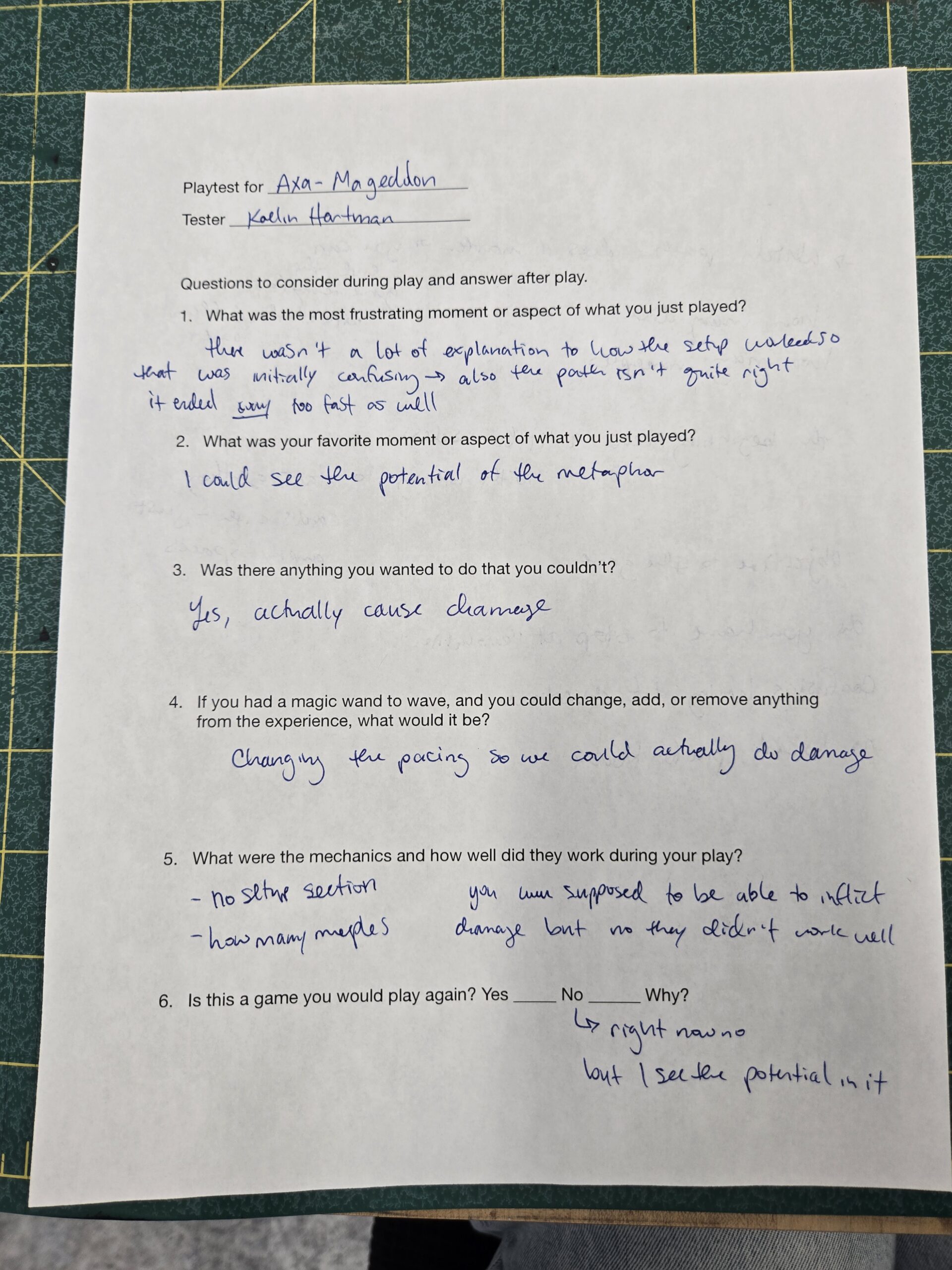
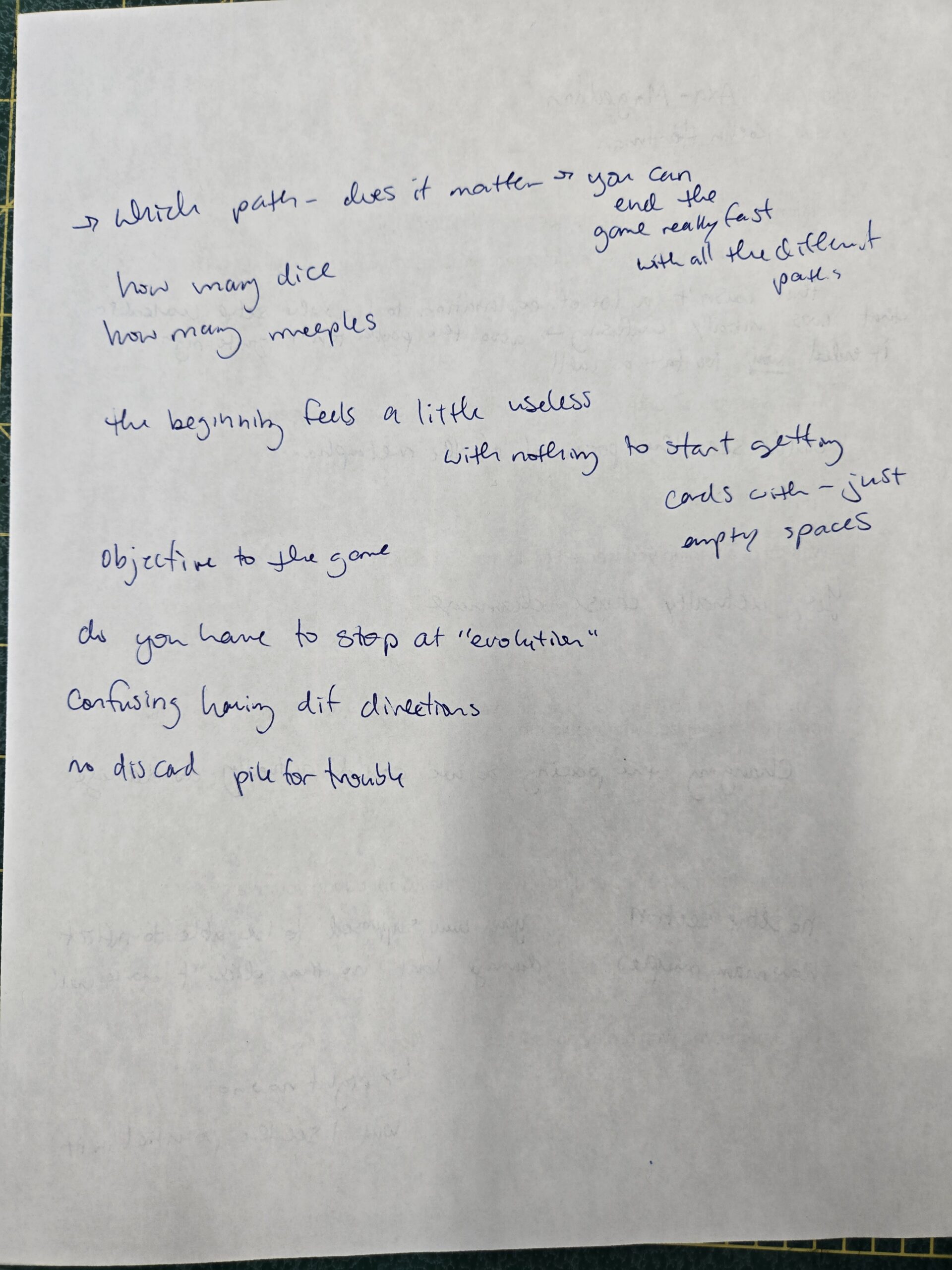
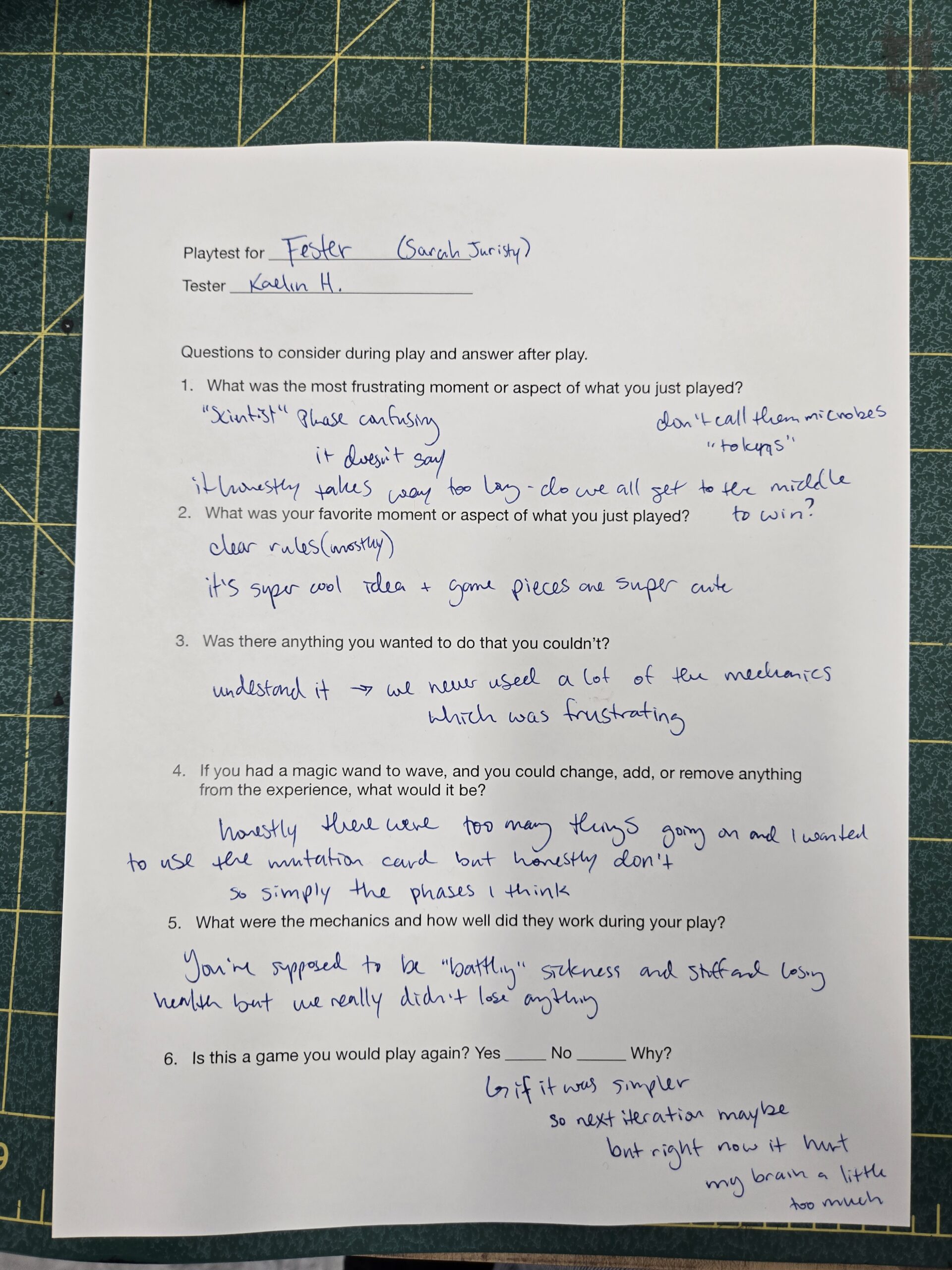
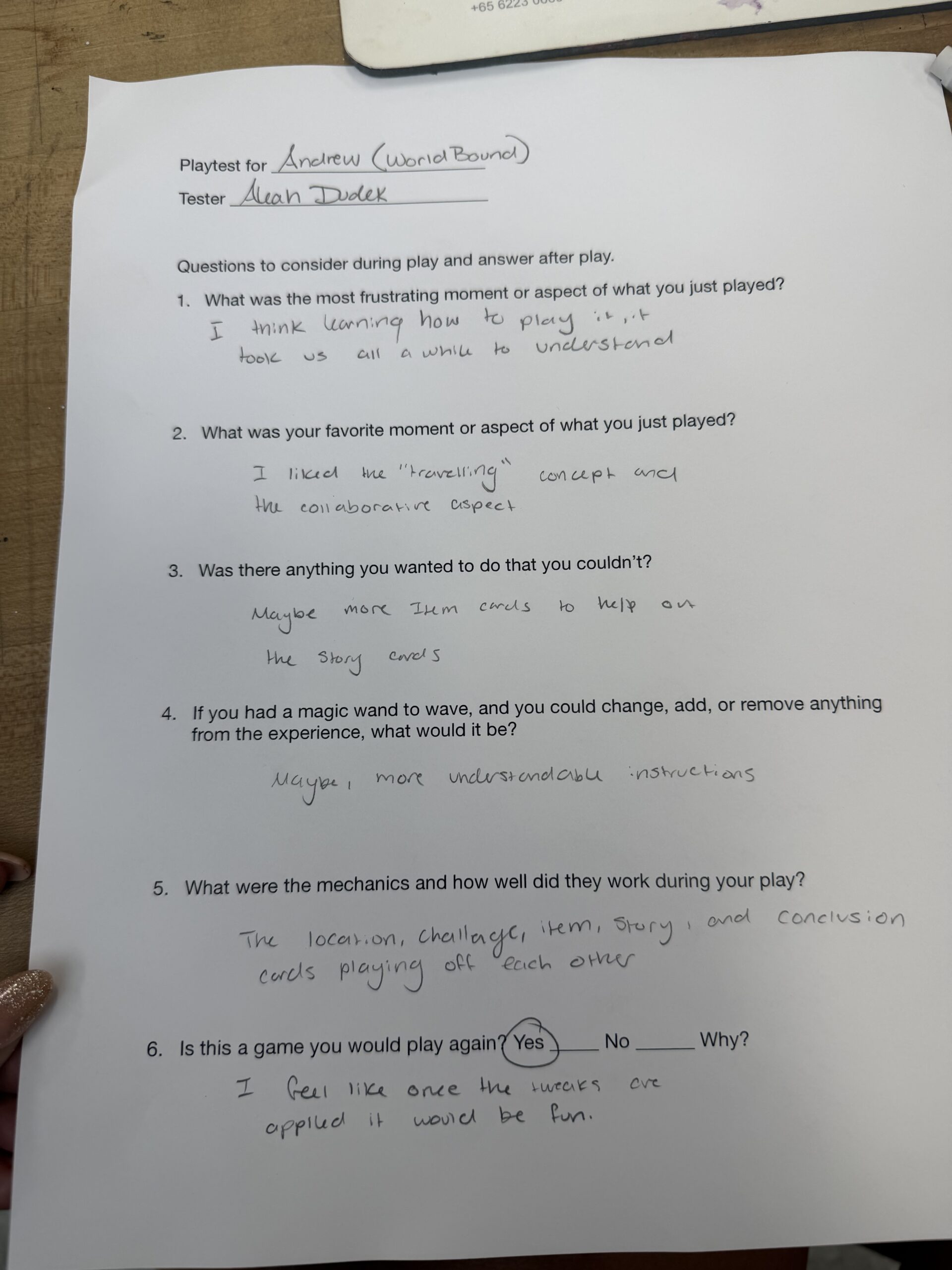
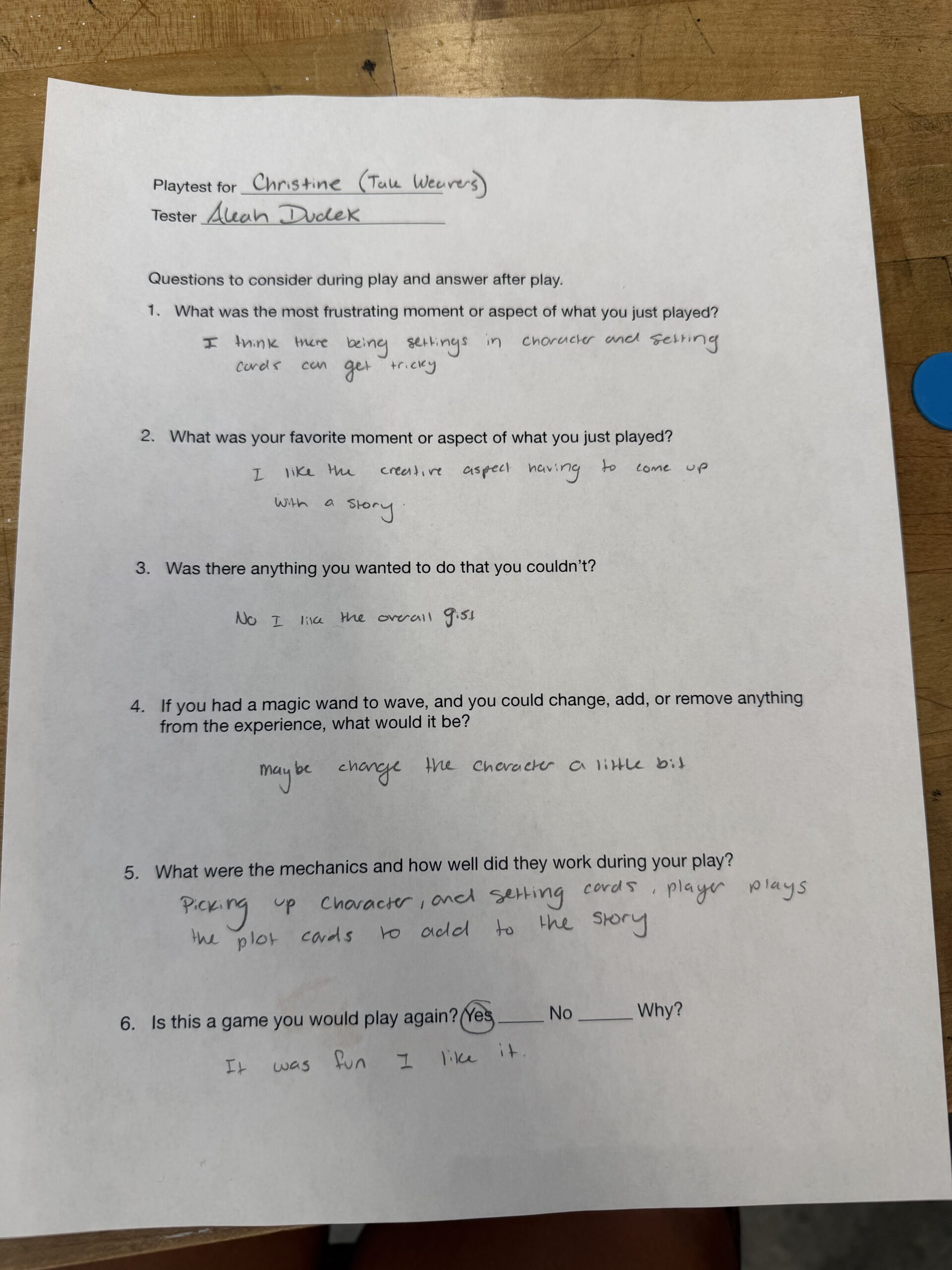
Really fun concept but currently way too much that made my brain hurt
Aleah dudek
languages are a hobby of mine and any “gaming” i usually do by myself has to do with learning languages – i wanted to be able to incorporate this into some of my games in this class since I enjoy them so much and would love to share with others
2. like TacoCatGoatCheesePizza and War combined but different greetings in languages – each player has a hand of cards and when they match you must shout that greeting and whoever has the closest pronunciation to what it actually means gets that round (have google translate at the ready)
3. Accent game – very simple trying to guess languages by sound – more collaborative with less “winning” just having a good time
4. National Market/Menu Game – each player has a menu/list they must complete by drawing ingredient cards BUT CATCH they’re not in english – there’s also tokens and event cards mixed in to spice it up – you accumulate a hand as you play and place ingredients that match to your menu/list and finish by completing it first and have money and stuff. Each list though is a different language/nationality and you must complete it in that language. So sort of go fish/bartering sort of game
5. For people who already know a little bit of a language, there are different language stacks that basically work as vocab review so obviously is a very niche game since you’d have to have a rudimentary understanding of a language… as many players as possible, single players to collective playing, racing to point out the words fastest.
Aleah Dudek
Madison Hurst
Was it fun? I felt that Carcassonne was fairly good. I enjoyed the concept of placing the tiles to build a unique and creative map. I liked the simplicity of the mechanics but it was not the most engaging game. It was enjoyable at times but it took a long time to complete and there were lots of moments where not much was occurring.
What were the player interactions? The player interactions were based on chance, whether that was what tile you picked up or how people chose to place their tiles. You can’t really affect other players’ decisions but depending on how you play your tiles and meeples, it can impact how other players might choose to play.
How long did it take to learn? It didn’t take too long to learn, the rules were very straight forward as well as the point system.
What was the most frustrating moment or aspect of what you just played? I would say that the most frustrating part of the game was the length and scale. The winner was whoever had the most amount of points after all the tiles were played. This took up lots of space and time. Also the pieces were very easy to knock out of place, which could cause confusion because the flow of roads and buildings mattered.
What was your favorite moment or aspect of what you just played? My favorite aspect of the game was that it was a simple game. There were set rules for how to play and how to keep score. There were a lot of moving parts but the simplicity made it easy to follow.
Was there anything you wanted to do that you couldn’t? I wish that you could complete different structures without having to have all sides match. This would have a new strategy to the game because you could sabotage what other people are trying to create and how they have placed their meeples.
If you had a magic wand to wave, and you could change, add, or remove anything
from the experience, what would it be? I would add the ability to complete a structure or road without needing to match all sides.
Is this a game you would play again? No, because in the long run it was not a very engaging game. There were fun parts of it but over all across the whole game there was not a lot that kept us players fully focused on the game. It was easy and flowed but not an entertaining pace. In the pandemic it was hard to learn but every turn there was something different that could throw players off or help us get closer to winning.
Analyze the game using the 3 act structure. In the first act of the game we are just setting up the game and board, there were not many tiles on the table or points being scored. Just players setting up different avenues for where they might be able to gain points in the future. Players are also learning how to place their tiles and meeples to build connections and earn points.
In the second act of the game players are creating more strategy when it comes in as players start to expand their tiles and start to earn points. The board is growing and more meeples are placed to hopefully gain points in the future. Players are more specific about where they are placing their tiles to help benefit themselves.
In the third act players are incorporating farming and adding up their points. The board has become quite large with many different complete roads, monasteries, and castles. At the very end all tiles should have been played.
What are the collaborative and or competitive aspects of the game? Carcassonne has a lot of competitive aspects but not many collaborative ones. The competitiveness comes from the players fighting to score the most points and “out meeple” other players to restrict them from gaining points. There is a little bit of collaboration between players because a player’s action can influence where someone else places their next tile.
What is the game’s metaphor and which of the game’s mechanics stand out? The game’s metaphor is about shaping and claiming the landscape. As if you are watching a countryside develop piece by piece. A mechanic that stood out to me was how unfinished tiles like half built roads and cities can still influence the game. This created different routes of strategy choosing between getting guaranteed points or to keep building for more points in the future.
[Game name] is a [category of] game in which [the players or their avatars] [do or compete or collaborate for some goal] by [using tools the game provides them].
“Scrapworld” is a board game in which players act as robots that compete to be the only settlement standing using the scrap they collect in the wasteland.
“Ghostly Gather” is a board game in which a paranormal investigator must collect as many haunted items possible, and escape, before being haunted, using the tools in their arsenal and the items they collect.
“Shuffled” is a memory-based card game in which players compete to build the largest deck of cards by memorizing and matching cards.
“Sheltered” is a card game in which survivors in a zombie apocalypse must collaborate to fortify their base and survive the waves of zombie attacks by using the items they collect.
“Quads” is a card game where players compete to have the highest poker hand by collecting cards and bluffing other players.
Madison Hurst
[Game name] is a [category of] game in which [the players or their avatars] [do or compete or collaborate for some goal] by [using tools the game provides them].
Taste Test is a card game in which players have to collect unique ingredients or food to make (various ingredients hold different values), and they have to decipher whether or not that ingredients is cursed/poisoned by other opponents.
The Alleyway Pharmacy is a card game in which the players are drug dealers competing against other drug dealers where they have to collect various drugs to resell. The kick to it is, the drug dealers have to make sure whether the drugs they collected are real and not candy. If they are caught using candy (x amount of times) then they will go to jail (lose).
Recycle Go! Is a card game in which players are collecting and sorting what trash is recycled properly and efficiently. They are to sort plastic, trash, glass, etc and the faster player to do so wins.
Blink and Collect is a card game in which the player has a set amount of time to look at a card that is a picture filled with random junk/objects that contain various things that could potentially earn them points. They have to remember as much as they can from that card to pick cards that gives them points (they saw a chair in the picture, so they would pick up a chair card that is 1 point).
The attic is a memory/collection game in which players are going through their attic while flipping tiles that match the items they found. They have to avoid different setbacks (mice) that affect your collections of matches.
I found King of Tokyo pretty fun to play. The art was flashy and creative, and the game play was very unique.
Players had to trade damage and play “King of the Hill” for Tokyo City to gain points and win either by score or attrition.
King of Tokyo was simple to learn. The dice rolling, health, score, and battle mechanics made sense.
I believe that the energy system was nearly useless. There were not enough opportunities to gain enough energy to buy the cards necessary for a leg-up. You are mostly focusing on healing, fighting, collecting score, or a mixture of the three. Energy felt like an unpolished mechanic beside the other systems.
What was your favorite moment or aspect of what you just played?
I enjoyed the dice-rolling aspect of the game. Determining your next action based on how lucky you are is always slightly annoying, but the re-rolling allowed players to recover from bad luck.
I wanted more energy to buy items. However, I felt too preoccupied with keeping enough health and damaging my opponents enough to force them out of the center.
I would make the energy economy less demanding, allowing players to come across energy more often. Less than 5 cards were bought during our game.
No. Even though I enjoyed the art and concept of the game. I did not believe that the mechanics were fully used or tuned to make the game enjoyable to play.
In the first act, players develop their initial strategy. A few players rushed to the center and tried to hold on to it as much as possible. Other players held back and were able to out heal the damage and collect energy. In the second act, exchanges of control over the center happened more often, and players may start using items to get ahead. In the final act, players gather enough points, either by fighting or using cards, to win.
There was little collaboration in the game. Due to the fighting mechanics, players cannot choose who they strike and the damage is divided into “In Tokyo” and “Outside of Tokyo”. The game is a free-for-all with very little ways or reasons to work together.
I believe that the overall metaphor is “King of the Hill”. Players must work against each other to hold a piece of territory for the longest time, all while preventing others from reaching it. This “there can only be one” style of game is unlike other games played in this class.
Rules Update
Madison Hurst
Mow Masters!
Objective:
Materials needed:
Setup:
Turn:
(you can still use this space to move around in it but you can not get a card from it.)
Ex: rolls the dice and gets 3, but ⅔ spaces are mowed already. So, you can only pick up one card.
Winning/Losing:
I found Citadels to be a uniquely fun game that relies on player interaction in a way unlike any other cardboard game I have played so far. The game play loop encourages hiding your strategy while constantly changing it to remain elusive from other player’s.
After players understood the game. IT became clear that, to win, offensive attacks were required to prevent others from gaining a lead. Before, players would seek the character cards that allowed them to build more, or gain more wealth. Later on in the game, players picked cards that harmed others more often.
Citadels was one of the harder games to technically understand. Learning its flow, and the intricate set of steps needed was slightly frustrating, especially because the game often failed to justify why we needed to perform these actions initially.
To me, the most frustrating aspect of the game was learning it. I believe that the game did not fully explain its mechanics well to new players. We spent a significant amount of time trying to understand what cards meant, and how the round was supposed to start. We also complained, as mentioned before, that the game did not explain the reason as to why things happened the way they did. The sense of discovery finding out what the game’s intentions were was satisfying, but it took us a while to get there.
My favorite aspect about playing the game was trying to fool other players into assassinating cards they believed I had. I drew a different character card, because I knew that I would be targeted if I picked a king. I was able to fool the assassin into targeting the wrong person, allowing me to stay ahead.
I wanted a purple character card in the original deck of characters. Since there are no purple cards in the standard character deck, and the cost of purple cards are high, it did not feel worth the effort sometimes. I would also add more cards that benefit players regardless of their character.
I would add more fun characteristics to many of the character cards. It did feel as though players only picked 4 of the 8 cards we had.
Yes. Citadels offers a unique pseudo-role based experience unlike many other games that I have played. The strategies that people develop in the endgame pit them against each other nicely.
The first act is centered around the initial setup and the first round. Players understand the basics and pick whichever card they think is best, usually a Merchant, Bishop, or King. In the mid game, players have around half the cards needed to win, so players must choose to play defensively or offensively (depending on the character cards they get). In the end game, players attack and sabotage more often in the race to the end.
There was little collaboration in our game. We did not feel as though players could successfully collaborate much beyond choosing to attack one player over another. There were many competitive aspects, however. The role-based system allows players to use their own means to succeed, and players are called in a specific order to prioritize players who take offensive actions first.
In my opinion, the highlight of this game is the dynamic turn order. Players do not proceed in any set fashion, but are called to act by the “king” of the round. The character you chose determines your sequence. This means that players can study the cards drawn and deduce who they think their opponents are, and act accordingly. I used this method to discover a hidden Warlord and steal their resources. The game rewards players who take risks and play offensively. The game’s metaphor describes the unique roles everyone plays to build an empire.
Theme: Chakras
Chakra-enga- this game is a version of jenga, and is a collaborative game, rules are the same as regular jenga. But there are special blocks with chakra labels on them and all players must gather all the chakra blocks to win without making the tower fall, but if it falls players lose.
Carcassonne is a world building game where players take turns placing random tiles and meeples to connect their real estate to gain points.
Was it fun? It was alright
What were the player interactions? Player interactions consisted of sort of chance on what the other people would do and where they would place there tiles.
How long did it take to learn? Not very long
What was the most frustrating moment or aspect of what you just played? As the game progressed, not being able to place meeples on unclaimed land that you didn’t just place
What was your favorite moment or aspect of what you just played? It was simple and kinda cute
Was there anything you wanted to do that you couldn’t? Yes, place meeples on unclaimed land you didn’t just place
If you had a magic wand to wave, and you could change, add, or remove anything from the experience, what would it be? Same as the previous answer
Is this a game you would play again? Maybe, it is a maybe not a yes because it wasn’t quite engaging enough to play a lot
Analyze the game using the 3 act structure. Setup, placing tiles and meeples and accumulating points and land, farming should be the third act but none of use really wanted to do it and count all those points so someone won before we got to act 3
What are the collaborative and or competitive aspects of the game? Collaborative on an unofficial level where you can try to convince people where to put their tiles to either help you or other players, competitive in the fact that well you are trying to simply get the most points and win
What is the game’s metaphor and which of the game’s mechanics standout? The metaphor is around medieval estate collecting and establishing kingdoms, i liked the mechanic of chance of what tile you place and needing it to match up with tiles on all sides.