- Was it fun? Yes, this game is fun and relaxing. I enjoy being able to freely design my own town even with the limited mechanics. The best part is the noises that it makes when you add a section to your town.
- What were the player interactions? This game doesn’t really have any player interactions.
- How long did it take to learn? Like a minute MAX. This game is very simple, it is just clicking to place something and holding to remove something. You also have the choice to change the colors of the sections you add,. There are a few features that you are able to change that I didn’t notice at first—including changing the angle of the light source and adding a grid to better visualize where you place buildings.
- Would you play it again? Yes, I would. This isn’t the kind of game where I would spend hours upon hours captivated by it, but it is something I will definitely revisit when I’m having difficulty sleeping or am stressed.
- Analyze the game using the 3 act structure. The 3 act structure of the game is difficult to determine as this is a game that is very much play at your own pace and quit at anytime you decide. However, I would say that the first act begins as you load up the first world and begin placing and taking away buildings and “blocks”. The second act would often include when you start developing a “plan” to create the city that you want and you get ideas of how you can use the different combinations of building heights and colors to create something unique. The third act would be when you decide that your build is worthy of being “completed” or want to restart and begin a new town.
- What are the collaborative and or competitive aspects of the game? This game doesn’t really have specific collaborative or competitive aspects since it is a single player game.
- What is the game’s metaphor and which of the game’s mechanics standout? The game’s metaphor is that you are the “builder” and designer of a town in the middle of the ocean. The standout mechanic to me is the ability to change the way that your town looks by changing the color or light source angle. I also like how when you put certain buildings next to each other, they automatically combine and make unique shaped buildings. I particularly like making balconies.
Week 1
Getting Over It review: This game was incredibly frustrating to me. I might have missed it, but is there a backstory to why he is in a pot? Why isn’t he using the sledgehammer to smash the pot he is in? Does he even want to be out of the pot? IDK. I was annoyed that the narrator was rambling, but when he stopped, I missed having something to listen to other than the hitting of a rock. My body was very tense watching the game being played.
Pain station thoughts: I can see what draws people to play this game, but it’s weird at the same time. Is kind of a form of punishment when you do something wrong, but also it’s fun. It’s like touching your tongue to a 9V battery; you know it’s going to send a shock, but you’re anticipating it. (Am I the only one who did this?)
Townscaper review: I can see why this is entertaining, creating stories of who might reside at the houses you are building, but at a certain point I think I’d get bored. I guess that’s what the game is all about: close it and restart another day when you remember the game exists. The sound effects are amazing.
Fair Food Maker review: OMG! I thought this was the best game ever when I was a kid. Tori mentioned playing this game, and I got flashes of memories of this game that I could sort of remember, but I wasn’t positive. You basically select a machine you would see at a fair and make the food. Ex.: lemonade, funnel cake, snow cone, corn dog, etc. This game has no end state; you make the foods and eat them, and you can start over with another food or be done.
Slither.io review: This is another example of a game without an explicit end state. I still love this game and play it to occupy my short attention span. You collect food, grow bigger, and eventually die. Then you start again. There is no progress saved other than a past high score. Every time you die, you start new, as small as everyone else when they start.
What are the issues Ian Bogost raises about social games with Cow Clicker?
- Enframing- friends are resources
- Compulsion- psychological manipulation, exploiting human psychology in order to make money
- Optionalism- the game’s meaning comes from the choices a player makes; gameplay is optional
- Destroyed Time- “Social games so covet our time that they abuse us while we are away from them, through obligation, worry, and dread over missed opportunities.” It’s the disrespect of time that we could be being more productive, other than wasting it on a game.
How do social games like FarmVille enframe friends?
- Friends are used as perks. “Get 100 coins by inviting 1 friend”
How do social games destroy time outside the game?
- “Social games so covet our time that they abuse us while we are away from them, through obligation, worry, and dread over missed opportunities.” It’s the disrespect of time that we could be being more productive, other than wasting it on a game.
Week 1 Questions
- Questions
- What are the issues Ian Bogost raises about social games with Cow Clicker?
His issues were Inframing, Compulsion, Optionalism, and Destroyed time.
- How do social games like FarmVille enframe friends?
They make it so that friends arent really your friends they are just resourses for you to help yourself and the game developer.
- How do social games destroy time outside of the game?
In the article Bogot says “Social games so covet our time that they abuse us while we are away from them, through obligation, worry, and dread over missed opportunities.”
Week 1 Questions and Reviews
Week 1 Questions
- What are the issues Ian Bogost raises about social games with Cow Clicker? In this article, Bogost specifically lists 4 issues that he has with social games—enframing, compulsion, optionalism, and destroyed time. Enframing is basically like turning your friends and family into a resource that can be exploited by both you and the game developer. For compulsion, Bogost claims that social games prey on humanity’s compulsiveness and how we can easily become obsessed with something, such as a game like Cow Clicker or FarmVille. Optionalism is something that Bogost explains is having the option to actually “play” the game. FarmVille is based on waiting on crops, but you can get rid of that part by just spending your real money. You don’t really have to do much to actually advance in the game. Finally, Bogost claims that social games destroy your time as there isn’t really an objective, it is an endless cycle of playing a rather meaningless game that makes you feel bad when you stop playing it.
- How do social games like FarmVille enframe friends? Social games like FarmVille enframe friends by getting you to invite friends to the game so that you can get certain perks or more resources in the game to your benefit. In fact, Bogost states in the article, “In social games, friends aren’t really friends; they are mere resources”. This also helps get more people into the game, it helps build a network that can make the game become “viral”.
- How do social games destroy time outside of the game? Social games are neverending, and so, essentially, an infinite amount of time could be spent playing them. Bogost says, “Social games so covet our time that they abuse us while we are away from them, through obligation, worry, and dread over missed opportunities.” Anytime spent away from the game is time wasted where you could be increasing your level on the game, and increasing your progress. It doesn’t help if it is on a game such as Facebook, you can also see some of your friends’ levels and achievements, which may make you feel bad for stepping away from the game.
Bang! Game Review Part 2
- Was it fun? Replaying Bang was so much fun, although I played with my family and it took them a little bit to get a hang of the rules and mechanics. It also sucks because I was the first one out, but I still really enjoyed watching them play and rooting for the other outlaws to follow through.
- What were the player interactions? Players put other players in jail, shot them, commenced duels, as well as stole cards from each other and forced others to discard cards. My favorite player interaction is when we kept passing around the dynamite to see if anyone would blow up.
- How long did it take to learn? Since I was just replaying this game from playing in class the first time, it didn’t take me very long to relearn the rules. Even playing a second time, however, I would say that it was still a little bit of a learning curve to get to know all of the different cards and special rules (like being able to drink beer when you take a fatal hit). For my family, my mom and brother seemed to catch on to the basic rules and mechanics very quickly. My dad, however, found the game kind of confusing, especially with all of the different cards (he would much prefer a game like UNO).
- Would you play it again? Yes, I received this game as a Christmas gift because I loved it in class so much. I just need to find enough players!!
- Analyze the game using the 3 act structure. The first act of the game begins during the setup of the game, including receiving a role and character. Players take their first few turns, each drawing 2 cards each turn, taking any number of actions they wish, and discarding cards. The second act commences as the game picks up speed, when players begin to devise and understand who they may want to “go after” and take shots at them. The third act is when the game is dwindling down, either 2 people are essentially standing off to see who will win, or a key player, like the sheriff, is close to taking a critical hit. The game officially ends when the sheriff dies or is the last one left standing.
- What are the collaborative and or competitive aspects of the game? This game has both competitive and collaborative elements. The collaborative element comes from the fact that some players have shared goals, for instance, both outlaws and the renegade want to kill the sheriff, but it’s also competitive because it’s every man for himself and you don’t necessarily know each other’s roles.
- What is the game’s metaphor and which of the game’s mechanics standout? Bang’s metaphor is that you are set in the wild west and you are essentially playing as a character from that world. The sheriff wants to keep law and order, the renegade wants to take the sheriff’s place in the town, and the outlaws want to kill the sheriff. The mechanic that stands out the most to me are the unique character abilities that allow you special advantages throughout the game.
The Graveyard Game Review
- Was it fun? I’m not sure if I would call it fun, but more or less intriguing. I liked the aesthetics of the game because it kind of looked like an old black and white film, but there wasn’t much substance to the game overall. But it was still interesting to see if anything exciting would happen (although I presume if I played anything other than the trial version it would be a little more exciting, because apparently it includes death).
- What were the player interactions? You can move the old lady in a straight line through the graveyard (very slowly) and have her sit on a bench.
- How long did it take to learn? Not very long at all because I just had to move her in a straight line and wait for her to sit on the bench, plus the game had instructions that told me to do just that.
- Would you play it again? It depends. I think I would try out the non trial version if someone else bought it for me, but I’m not going to spend my own money to see this lady die.
- Analyze the game using the 3 act structure. (This may differ because I only played the trial version.) The first act starts when you enter the graveyard where you will see the title sequence and you just slowly make your way to the bench that is illuminated at the end of the path. The second act would be once you sit down on the bench you get a close up shot of this old lady presumingly reflecting on the gravestones around her and the concept of death. She points out how some other people there have died and she wishes that the next time she visits the graveyard she will “stay for longer”. You could choose to stay there as long as you like, but the song is only a few minutes long. You can choose to wander around the graveyard if you really want, but there’s not really many places you can move to, the game sort of beckons you to the bench. The third act would be exiting the graveyard and ending the game when you desire. In the non trial version, I presume that this act would also include the lady dying.
- What are the collaborative and or competitive aspects of the game? This game isn’t really competitive or collaborative, it is more of just following a story.
- What is the game’s metaphor and which of the game’s mechanics standout? The game’s metaphor is about an old lady who visits the graveyard and she reflects on death and almost wishes for it herself. Since there really aren’t many mechanics, the most standout mechanic is that when you are positioned with your back to the bench, she will eventually decide to sit down.
Thoughts on the games we played in class.
My favorite game by far was Townscrpaer. I love it when a game is really simple, yet you can build or do insanely complex things within it. I was dissapointed when I saw it was 4.99 in the app store 🙁
The first game Getting Over It was cool. there was a similar game that blew up last year that was a similar concept of trying to get to the top without falling. I was not a fan of Getting Over It but i do like the one that blew up this year because I am better at that running mechanic.
Endless Game Ideas
Game 1: Collect cans on the street and go from homeless to rich and try and see how rich you can get.
Game 2: Amazing Amazon. Fill boxes and complete orders to get cooler boxes and more complex orders.
Game 3: Unboxing game where you unbox packages and get new tools to unbox it.
Game 4: you are given a prompt with materials and you have to go out and find those recourses to build that certain thing
Game 5: Pop it. If you do it before the timer runs out then you get a cooler pop it.
Endless Game Ideas – Amber, Sara, Beck
- Plant growing
- Never ending cycle with propagation
- Video game or IRL
- Mark off the people who die in your yearbook until either you die or everyone else dies
- Endlessly decorating your room (always buying new things, seasons, etc.)
- This could be a video game too, keep buying and decorating your room
- Some kind of merging game
- Layering clothing game until it essentially fills up the whole screen
- Buying a hamster, dies in a weird way, get a new hamster video game
- Squirrel endless falling game, avoid branches
- Game where you add tiles, take away, and rearrange tiles
- Maybe where you make an artwork
- Tabletop game where you have a canvas where you just keep taking turns building an artwork
- Neverending grading simulator
- Just mixing paint colors
- Blowing out birthday candles every year, you just keep gaining more and more
- Fill a bowl of rice, constant clicking
- Making a sauce, with other sauces and ingredients and keep adding ingredients forever but still trying to get it to taste good
- Based on Good Mythical Morning
- Could be a video game
- Mixing potions in the bathtub with a million soaps and perfumes
- Couch just keeps accumulating toys
- Endlessly changing your hair
5 Games Ideas with no ending.
Game 1: Collect cans on the street and go from homeless to rich and try and see how rich you can get.
Game 2: Amazing Amazon. Fill boxes and complete orders to get cooler boxes and more complex orders.
Game 3: Unboxing game where you unbox packages and get new tools to unbox it.
Game 4: you are given a prompt with materials and you have to go out and find those recourses to build that certain thing
Game 5: Pop it. If you do it before the timer runs out then you get a cooler pop it
5 Games without end
Brayden, Carson, Tori, Alana
Nightclub Simulator
Whenever you tap, your character dances to the beat. Doing so long enough will reward you with a drink to continue dancing.
Paper Shredder Simulator
The player taps the screen in order to put paper into the paper shredder. Once the bin is filled you can sell the scrap paper to purchase a bigger bin or fancier paper to shred
Song Creator
User will tap an instrument of their choice to play to the audience. You gain money by getting tips and use that to buy other instruments that pay out more. You can invite your friends to combine the instruments together to make a band that results in a higher payout.
Happy Cat
You tap to feed the cat lasagna until the cat pops. You get money for each cat popped. New cats can eat more and earns more money per click
Counting Up
The player clicks their screen, which starts as a blank white with a black “0”. For each time they click, the number goes up in value by one. The game will save your number if you close it, and will continue to go up one number for each singular click you give it. There is no limit to how many times you can click.
9-5
You are an assembly line worker at a factory. You must work your shift in real time (from 9-5) doing a single monotonous task. The player can choose what point of the assembly process they want to work that day, but are stuck to the position they choose once selected.
Water Bucket Simulator
You tap the screen for a drop of water to fall into a bucket. Once you fill the bucket up you get a new one and do it again.
Trolls Riddle Run
Trolls Riddle Run
Players: 3-5 Players
Game Pieces:
Character piece
6-sided dice
3-sided dice
Chance cards
Chance coin (for sneaking over bridges)
Starting the game:
Youngest player starts the game.
Turns move clockwise.
Moving Through the Board:
Roll the 6 sided dice to determine the number of spaces you move in a turn.
If an even number is rolled on the die, pull a chance card from the pile after you have moved the correct amount of spaces. When pulling a chance card, the card must be completed that turn unless otherwise stated.
Bridges:
Slimy Swamp
Billy Goat Bridge
Thorny Thicket
Fae Forest
When you land directly on a bridge you must answer a riddle and if you get it right you can roll again. If answered incorrectly, pull a chance card then can move forward or backwards after that.
If you come upon a bridge in the middle of a move, you flip the chance coin to determine your ability to sneak across the bridge unnoticed by the troll. Landing on the noisy side means you have to answer a riddle to complete your roll, the muted side means you can sneak across unnoticed and complete your turn. If you answer the riddle incorrectly you are stuck on the bridge until your next turn (no need to answer a riddle on your next turn, just move across the bridge). If the riddle is answered incorrectly pull a chance card from the deck
Riddles:
When answering a riddle, riddle cards should be drawn by a different player than the one answering the riddle. If the riddle is answered incorrectly by the player do not say the answer allowed (in case, it comes back around). Place the riddle card at the bottom of the pile if answered incorrectly, discard if answered correctly. Players get 45 seconds to complete a riddle but they can guess twice during that time limit. The Easy Riddles are for bridge crossings, the Hard Riddles are for the final battle.
Chance Cards:
1 of each bridge in the chance deck, if pulled, move to the chosen bridge even if it is behind you on the board. There are 8 kinds of beneficial chance cards and 7 kinds of damaging chance cards.
Lucky Charm – Hold onto to skip one chance card in the future
Forest Guide – Roll 3-sided die to move forward extra spaces
Battered Map – Look at the next 3 chance cards and put them back in any order you would like
Mischievous Fairies – Swap places with person closest to troll
Playful Pegasi – Everyone player moves forward 1 space
Troll Call- Hold onto to get past any 1 riddle. (can be used in the final battle against the troll)
Riddle Swap- Hold onto to swap 1 hard riddle for an easy riddle.
Clever Camouflage- Hold onto to bypass a bridge of your choosing without having to flip a coin, or answer a riddle.
Whispering Woods – Roll 3-sided die to move backward.
Goblin Tricksters – Swap spaces with the person furthest from the troll.
Sudden Darkness – On your next roll attempt to move the correct amount of spaces forward with your eyes closed. If you land on an incorrect spot, move backwards to the closest bridge
Trolls Footprints – All players move backwards 1 space
Spooky Fog – Move backwards for your next roll
Echoes of Doubt – Move backwards for your turns until you roll an odd number. (If you roll an odd number on your immediate next turn you can continue to move forward)
Gift of Generosity- If you have any stored beneficial chance cards, give one away to a player of your choice.
Final Battle With the Troll:
When you reach the end space with the troll, you will stay there for 3 rounds and you have to answer a riddle correctly each round to win. If you get 1 riddle wrong your turn ends and your correct riddle tally goes back to 0 for the battle.
First player to answer 3 riddles correctly wins the game.

Strike Force Presentation
Strike Force: Shooter card game
Strike Force is a turn-based, team card game where players strategize to attack or defend, using a variety of weapons, specials, and items to eliminate the opposing team. Each team has a total of 100 health points, and the goal is to reduce the other team’s health to zero first.
Setup
1.Teams: Divide players into two teams. Each team shares a health pool of 100 HP.
2.Decks: Shuffle the deck of weapon, special, and utility cards and place it in the center.
3.Starting Hand: Each player draws 2 cards.
4.Turn Structure: Each turn has a Buy Phase and an Action Phase.
Phases of Play
1. Buy Phase
- At the start of each round, players can use the Buy Phase to draw or discard up to 2 card for each player on the team to improve their hand. This allows players to strategize based on their role (offense or defense).
2. Action Phase
- Teams decide to attack or defend based on the cards in hand.
- Attack: Players choose weapons and special cards to deal damage to the opposing team.
- Defense: Players use defensive cards to protect their team’s health pool.
Weapons
- Assault Rifles (ARs):
- Ammo: 10 shots
- Damage: 1 damage per shot
- Special Rule: Discard after use
2. Submachine Guns (SMGs):
- Ammo: 10 shots
- Damage: 1 damage per shot
- Special Rule: Discard after use
3. Shotguns:
- Ammo: 1 shot
- Damage: 10 damage
- Special Rule: Discard after use
Specials
- Grenades: 1 throw
- Damage: 10 each player total of 20 (splash damage)
- Special Rule: Single-use, discard after use.
2. Rocket Launcher:
- Damage: 15
- Special Rule: Single-use
3. Riot Shield:
- Defense: Blocks 5, 10, or 15 damage based on the specific shield card. (note, if you use the 15 strength shield for a 5 or 10 damage attack you dont get to keep it and save the remaining heath on it. you must discard it.)
4. Smoke Grenades:
- Special Effects: saves both teammates.
- Defense: Avoid all damage for one round.
- Special Rule: Single-use, discard after use.
Gameplay Example
- Turn Start: Each player draws 1 card.
- Buy Phase: Players can choose to exchange their card to help their team. (1 card change per player.)
- Action Phase:
- Team A decides to attack with one player using an Assault Rifle (10 shots for 10 damage each) and one using a grenade (20 damage).
- Team B decides to defend, with one player using a Riot Shield that blocks 20 damage and another using a Shotgun to deal +10 damage
- Damage Resolution:
- Team A deals a total of 30 damage (10 + 20), but Team B’s Riot Shield blocks 20, so they only take 10 damage.
- Team B’s shotgun deals 10 damage, so at the end of the round both teams lose 10 health.
- End of Round: The round ends, and the next turn begins with each team adjusting their strategy based on remaining cards.
Winning the Game
- The game continues until one team’s health reaches 0 HP. The remaining team is declared the winner.
Playtest #1
My first playtest encountered several challenges that highlighted areas for improvement in the game design and rule set. From the start, players had numerous questions because the rules lacked sufficient clarity . This not only slowed the pace of play but also disrupted the overall experience.
One key issue was the lack of detailed instructions regarding how the ammunition system worked, which created confusion and impacted gameplay mechanics. Additionally, a significant misprint on the shotgun card caused further imbalance. The card stated that the shotgun had 10 shots, each dealing 10 damage. This gave it the potential to deal 100 damage in total, which far exceeded the damage output of any other weapon in the game. This oversight inadvertently created an unfair advantage and disrupted the intended balance of the game.
The feedback from the playtest was crucial for identifying areas to improve and ensuring a smoother, more engaging experience in future iterations.
Playtest #2
The second playtest showed significant improvement in the mechanics, as the initial issues were resolved. With those addressed, new feedback emerged regarding the frequency of certain cards appearing during gameplay.
Initially, I included four shield cards, each offering protection against 5, 10, 15, or 20 damage, and gave them equal representation in the deck. During play, however, it became apparent that the abundance of shields made it difficult for players to deal meaningful damage, which disrupted the game’s balance and pacing. So I removed the 5 protection shield completely. and reduced the amount of shield cards that occured.
Another area of concern was the smoke grenade card, which caused confusion among players. Initially, the card dealt damage when thrown, leading players to interpret it as an offensive item. However, my original intent was for it to be used defensively, allowing players to avoid incoming damage for a single round. To address this, I removed the damage aspect entirely, and during subsequent use, the card functioned as intended, enhancing strategic play.
These adjustments have clarified gameplay mechanics and improved the balance of the card distribution. The playtest provided valuable insights, and these changes have brought the game closer to its intended design. Future iterations will focus on refining the deck composition further to ensure an optimal balance between offense and defense.
Playtest #3
The third playtest marked a significant milestone in the development process, offering a vastly different experience compared to the first two sessions. With the rule set clarified and all prior mechanical issues resolved, gameplay proceeded seamlessly, and no complaints or concerns were raised by the players.
The feedback was overwhelmingly positive, with players fully engaged and enthusiastic about the game. Many offered creative and constructive suggestions for expanding its mechanics, including ideas for introducing new weapons and incorporating features that allow players to influence or control each other’s actions. These suggestions reflect the players’ deep interest and investment in the game.
This successful playtest confirmed that the core mechanics and overall balance are now well-established. It also provided an exciting opportunity to consider future expansions and enhancements. Moving forward, I plan to evaluate these suggestions and explore ways to further develop the game while maintaining its accessibility and appeal.
Whats Next:
Next, I plan to enhance the depth and strategic complexity of the game by introducing special abilities for players. These abilities will include, but are not limited to:
• Sabotage: Temporarily disable an opponent’s weapon for one round.
• Stealth: Prevent the player from being targeted or attacked for one round.
• Overwatch: Automatically launch a counterattack when the player is attacked.
These abilities will add a new layer of strategy by encouraging players to time their usage carefully. To maintain balance, each special ability will have a cooldown period, becoming available for use once every five rounds. This recharge mechanic ensures thoughtful gameplay and prevents overuse of these powerful abilities.
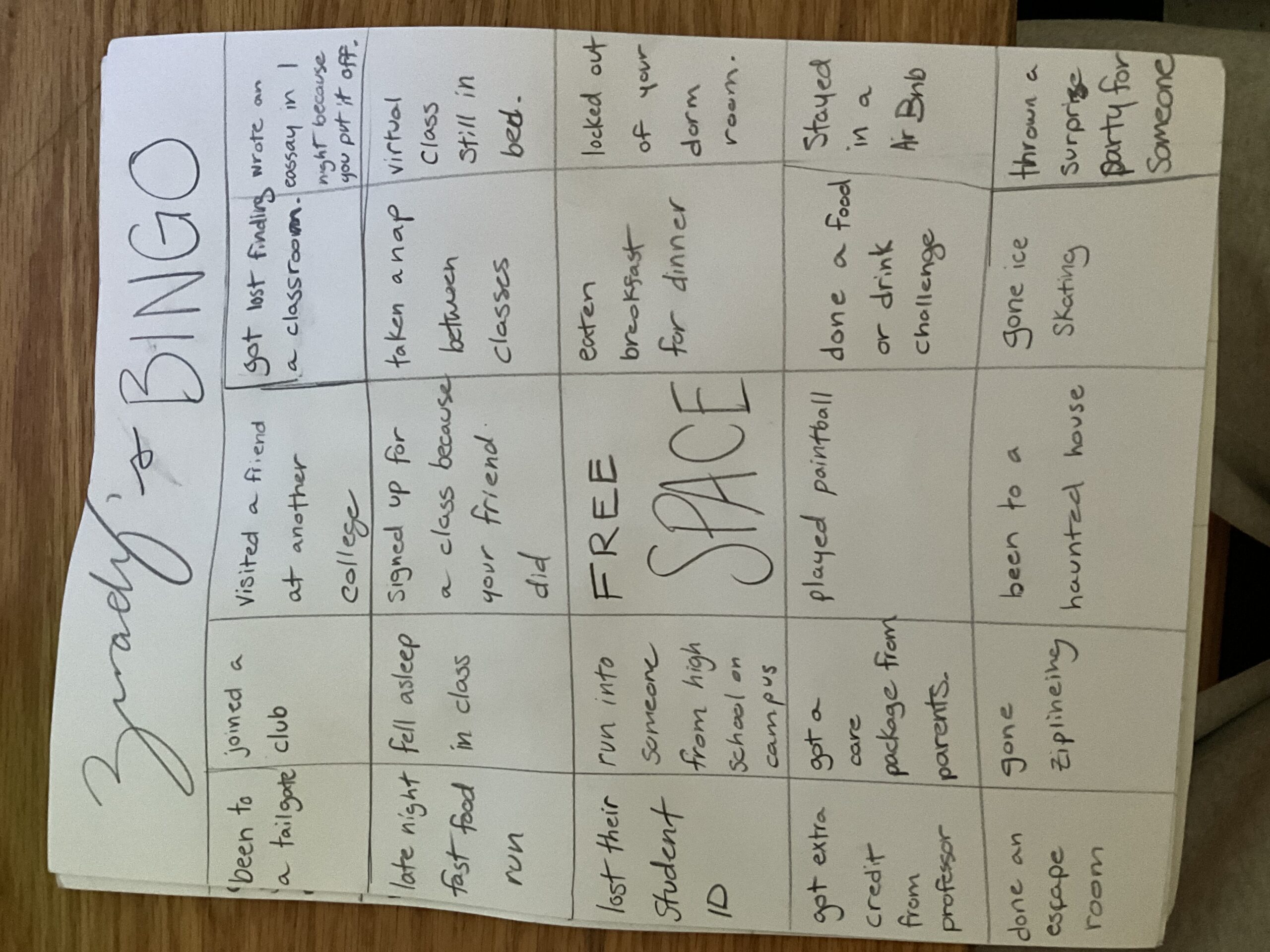
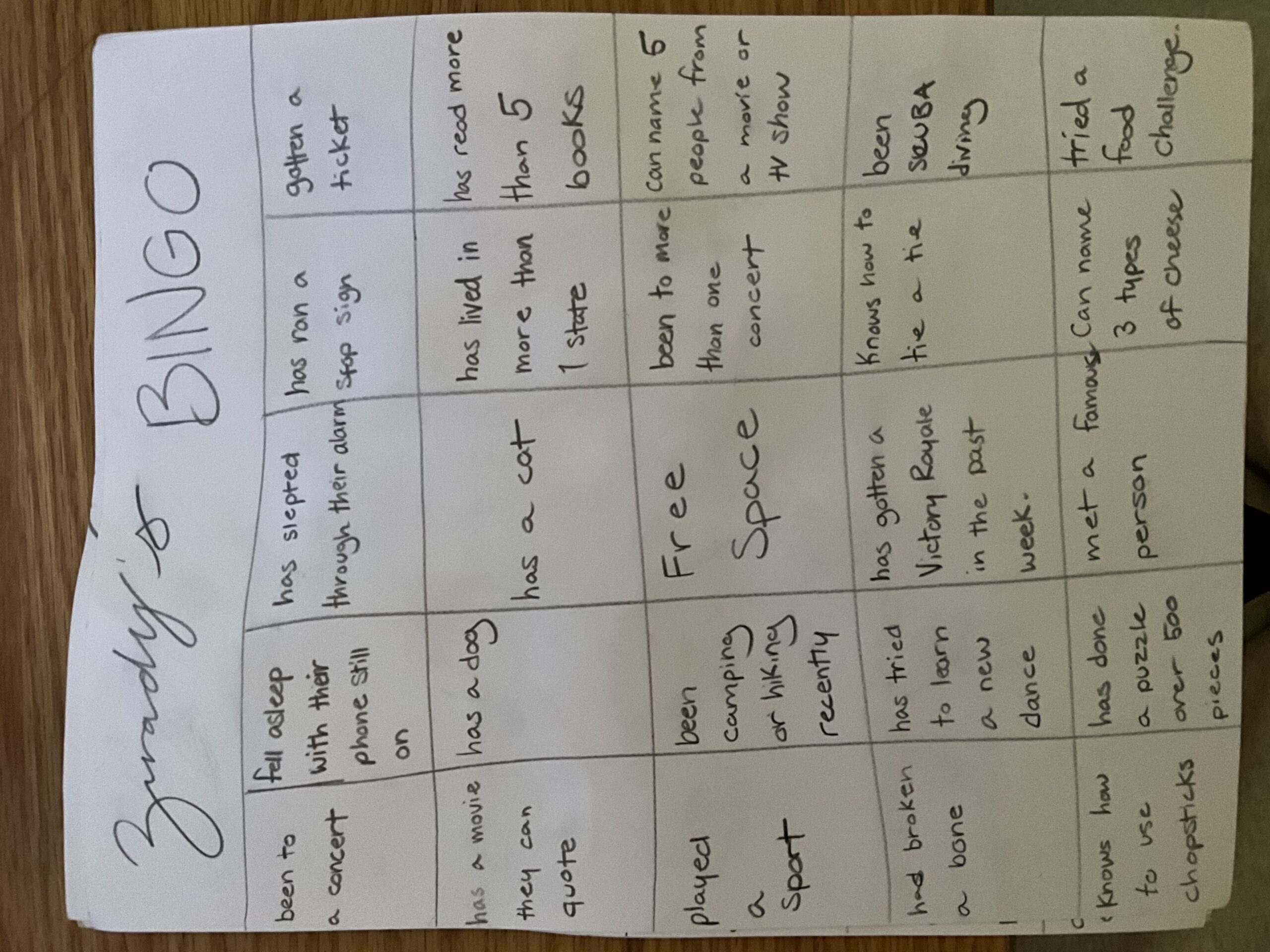
Bradys Bingo Cards


Bradys Bingo Rule Set
in bradys bingo the oldest of the group starts off my choosing an event on thier board and reading it out to the group. if someone in that group says they have done that then whoever asked the question puts a chip on thier board covering that event. once you cover 5 events in a row says BINGO! and they win. if no one has done it then you dont put any chips on the board.
Strike Force Cards


Strike Force Rule Set
Strike Force is a turn-based, team card game where players strategize to attack or defend, using a variety of weapons, specials, and items to eliminate the opposing team. Each team has a total of 100 health points, and the goal is to reduce the other team’s health to zero first.
Setup
1.Teams: Divide players into two teams. Each team shares a health pool of 100 HP.
2.Decks: Shuffle the deck of weapon, special, and utility cards and place it in the center.
3.Starting Hand: Each player draws 2 cards.
4.Turn Structure: Each turn has a Buy Phase and an Action Phase.
Phases of Play
1. Buy Phase
- At the start of each round, players can use the Buy Phase to draw or discard up to 2 card for each player on the team to improve their hand. This allows players to strategize based on their role (offense or defense).
2. Action Phase
- Teams decide to attack or defend based on the cards in hand.
- Attack: Players choose weapons and special cards to deal damage to the opposing team.
- Defense: Players use defensive cards to protect their team’s health pool.
Weapons
- Assault Rifles (ARs):
- Ammo: 10 shots
- Damage: 1 damage per shot
- Special Rule: Discard after use
2. Submachine Guns (SMGs):
- Ammo: 10 shots
- Damage: 1 damage per shot
- Special Rule: Discard after use
3. Shotguns:
- Ammo: 1 shot
- Damage: 10 damage
- Special Rule: Discard after use
Specials
- Grenades: 1 throw
- Damage: 10 each player total of 20 (splash damage)
- Special Rule: Single-use, discard after use.
2. Rocket Launcher:
- Damage: 15
- Special Rule: Single-use
3. Riot Shield:
- Defense: Blocks 5, 10, or 15 damage based on the specific shield card. (note, if you use the 15 strength shield for a 5 or 10 damage attack you dont get to keep it and save the remaining heath on it. you must discard it.)
4. Smoke Grenades:
- Special Effects: saves both teammates.
- Defense: Avoid all damage for one round.
- Special Rule: Single-use, discard after use.
Gameplay Example
- Turn Start: Each player draws 1 card.
- Buy Phase: Players can choose to exchange their card to help their team. (1 card change per player.)
- Action Phase:
- Team A decides to attack with one player using an Assault Rifle (10 shots for 10 damage each) and one using a grenade (20 damage).
- Team B decides to defend, with one player using a Riot Shield that blocks 20 damage and another using a Shotgun to deal +10 damage
- Damage Resolution:
- Team A deals a total of 30 damage (10 + 20), but Team B’s Riot Shield blocks 20, so they only take 10 damage.
- Team B’s shotgun deals 10 damage, so at the end of the round both teams lose 10 health.
- End of Round: The round ends, and the next turn begins with each team adjusting their strategy based on remaining cards.
Winning the Game
- The game continues until one team’s health reaches 0 HP. The remaining team is declared the winner.