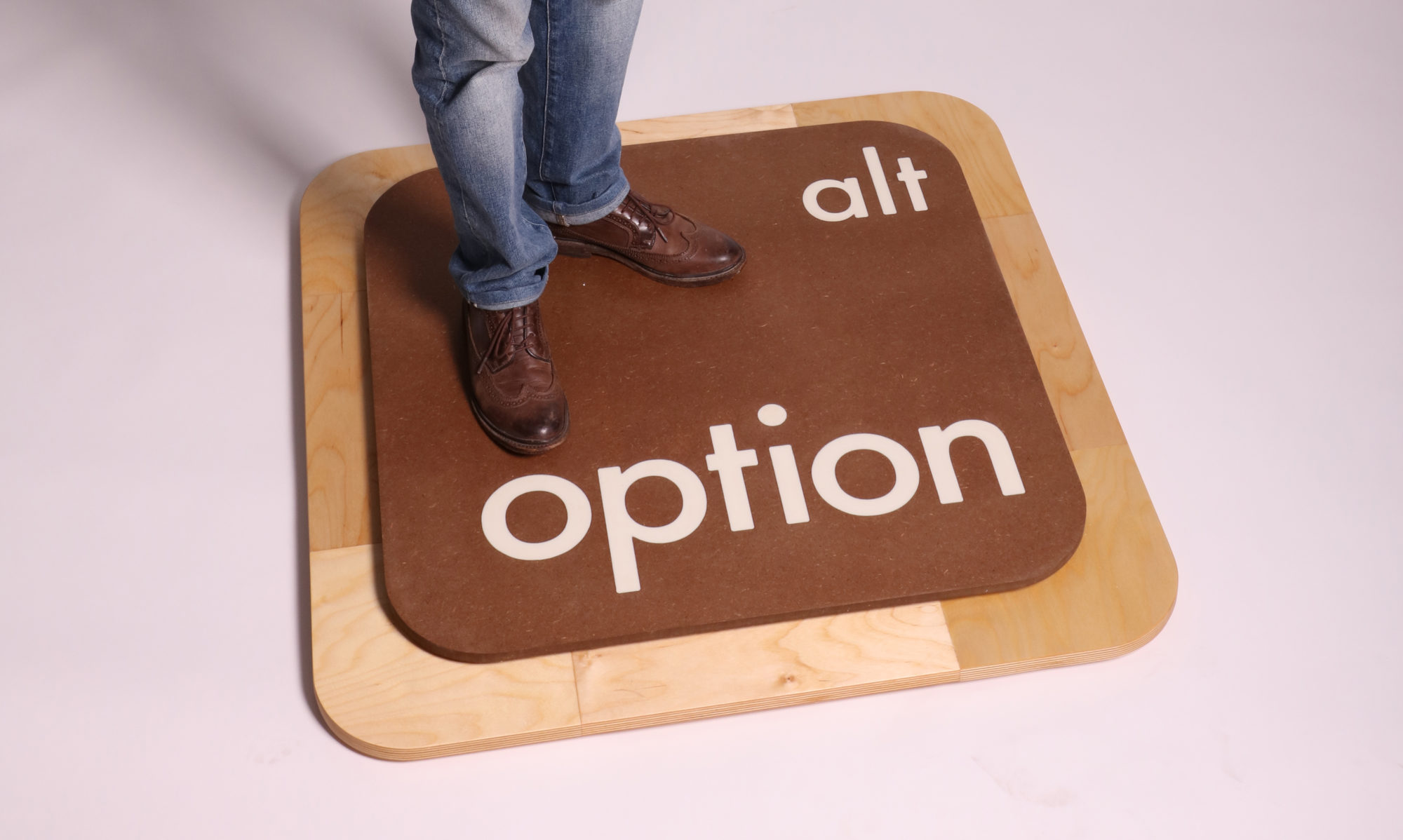
I really agreed with Dieter Rams when he said that users act positively when things are understandable. I feel that some people over design products because they want to make something new and out there but it is not going to do well if the people buying the product do not understand how to use it. Some notes I wrote down about how the designers from the movie define design as “ways to improve the way people do things,” “are the things we are going making change?,” and “every object tells a story if you know how to read it.” I think the one things that really struck me about design is make the people move, not the product. The whole movie kind of just blew my mind since I have not really sat down and just thought about design and how powerful it can be.
Interaction Design Chapters 3/4/5
What information can ethnographic tools give you to improve the interactivity of an online banking website? (pp. 48-54)
By using ethnographic tools, the designer can collect important information about their designs. As a designer, you inherently have bias towards your own thoughts and ideas based on how you perceive the design. An ethnographic study, watching a user utilize the online banking website, can expose flaws in the design that were a result of the designers bias. For example, the designer may not utilize the mobile check deposit feature very often, so he/she buried the feature inside of a menu. But when performing an ethnographic study, it is revealed that most users heavily use the mobile check deposit feature. After performing this study, the designer might find that the feature should be placed in a more prominent area of the website, where the user can more easily access it.
At what point is a design finished? What makes it a success? What is its purpose? (pp. 54-62)
After reading the assigned chapters in “Thoughts on Interaction Design,” I have come to realize that there is much more to design than aesthetics alone. Although aesthetics still plays a role in overall design, there are many more aspects and concepts a designer must keep in mind when creating.
In my opinion, a design is finished and purposeful when the designer:
- Creates an argument and effectively persuades users to agree
- Conscientiously decides what things should look like (Form and Function)
- Takes Semiotics into consideration
When a designer designs something it is critical that a rhetorical argument is made. All designs should prompt people to believe that the design is useful and also persuade users of a specific attitude. For example, the design of a cell phone may be prompting people to engage in technology because it is extremely useful. With this, the designer is also stating that, “This cell phone looks cool,” attempting to develop a specific attitude towards the phone. If the call phone looks cool, the user must be cool too.
Form and function must also be taken into account when designing. In today’s society, form no longer has to follow or even relate to function. Previously, function and form went hand-in-hand with design. With this new view, a designer has a new opportunity to convey a form to both emotional and social qualities instead of function alone.
Because of this the Semiotic Movement has begun. Words are embedded with semantic meaning and stand for other things. The text uses the example of a chair. The word chair is associated with the idea of sitting and the idea of the object that we sit on. A designer must consider if their design relates to what people may associate their product with, both attitudes and physical products.
In my opinion, a design is finished and serves its purpose when these principles have been extensively analyzed and executed. The purpose of the design is not only to please the eye, but to enrapture specific attitudes and ideas of the designers choosing. With this, a design is successful when this is accomplished. It is very difficult to predict what users will say or think about something, but based on research and observation, one can conclude generalities amongst the population. Design reaches way beyond aesthetics.
Identify a product family you use regularly (can be anything from technology to consumables except for coffee). How has its branding effected your use, relationship and experience with the product? (pp. 78-84)
For years I have used Herbal Essences hair care products. Branding has affected my long-time use. The text describes three key components to branding: honesty, mindfulness and sensory detail. In regards to honesty, the integrity to the consumer was brought up a few times. I feel that the company is being honest with me when speaking of their products. For example, when I see an Herbal Essences commercial on television showing voluptuous, shiny hair bouncing around the TV with a narrator saying your hair will smell delicious and stay clean for hours, I trust them. Because of my use, I know that what they are saying is true, and that the company is being honest with me.
Mindfulness has often been cited as the primary state of mind necessary to accomplish meditation, or an awareness of the present moment. When I use my shampoo and conditioner in the shower I do not meditate. I do, however, realize the familiar red raspberry smell as I put the product in my hair everyday. Because of this, when I shower at places other than my apartment, I do not feel clean. When I shower using hotel shampoos and conditioners, my hair doesn’t feel “normal”.
Because of the branding of Herbal Essences products, I have become loyal. At first I bought shampoo and conditioner, then I bought hair spray and without me noticing, Herbal Essences is the only hair care products I buy. Clearly, I have had positive experiences with their products developed into a loyal relationship.
Week 6 Reading
What information can ethnographic tools give you to improve the interactivity of an online banking website? (pp. 48-54)
By understanding the habits and customs of a user, a bank can design its website to most quickly serve the greatest number of users. For example, the majority of visitors to a bank’s website will be looking for their personal account. They need to be able to get into it immediately. The rest of a bank’s visitors are probably either looking for information on the bank, or for a service the bank offers that solves a problem they have. Therefore, the site should also have helpful features that help users determine what products they need.
At what point is a design finished? What makes it a success? What is its purpose? (pp. 54-62)
Since a design exists in the context it is designed to be used in, and the context is always changing, no design for a given product category can be regarded as final. A successful design is one that seamlessly and elegantly integrates into the cultural context and solves a users needs in an intuitive manner.
Identify a product family you use regularly (can be anything from technology to consumables except for coffee). How has its branding effected your use, relationship and experience with the product? (pp. 78-84)
I recently bought a camera, and in the process of making the purchase decision, evaluated many variables and brands to choose one. Ultimately I went with a Pentax camera, because they were known as rugged, affordable, and played nicely with older lenses. The branding of being reliable gives me confidence that I can use the camera in most situations and not have to worry about it.
Objectified Review
There are very few movies or documentaries that require a tremendous amount of thought and concentration while watching; However, Objectified is an exception. From the very beginning of the film, images and clips were shown that made the viewer think and the context had a profound impact on my views of design. There are many professionals that appeared in the documentary who had opinions on design and views of society that I had never heard before or thought of on my own. One of the first ideas the film mentioned was the fact that every object has a story behind it. Everything one uses on a day-to-day basis has been strategically designed, yet no one thinks about it. Maybe here or there someone ponders why a toilet looks like a toilet, or why a door looks like a door, but it is a rarity. In my opinion, the people shown in the flick have molded their minds to automatically think about these background stories and incorporate that knowledge into modern design. Because of this, effective designers know what people need or want before everyday people realize it. For example, a company designed a new handle for hedge clippers without anyone even bringing up the fact that they were hard to use. By having a grasp of the stories behind products you haven’t created, one can incorporate this knowledge into other products – ultimately improving performance by design without anyone noticing or thinking about the change.
Someone in the film stated that good design is “un-designed”. Allowing users to say, “well of course it is this way.” A person using said hedge clippers would assume that having notches in the grip for your thumbs would be an obvious feature, but at one point it was not. Some designer had to have an “ah-ha” moment and realize just how obvious that feature was, and eventually implement it.
Being inventive and ultramodern is an important aspect of design in general, but someone in the film mentioned that one of the hardest parts of design is removing what is unnecessary. Although having a lot of features can be attractive, it is not always user-friendly. The documentary emphasized this point a lot. It is all about the user, and that must be kept in mind at all times while designing. A good design should be unobtrusive, easy to use, self-effacing. A good design should have as little design as possible. I completely agree with this statement. When things don’t work properly, individuals automatically assume that they are too stupid to use the product, but it is the design that is actually stupid. Design is supposed to allow humans to interact subconsciously, while producing the expected result of some object.
Watching this film has really changed my view on everything I touch. I have begun thinking, “Why is that the way it is?” and, “Who decided that that looks ‘right’?.” Before watching Objectified, I had always thought of design as simply aesthetics. Much of design still pertains to aesthetics, but even more of it has to do with usability. I had always thought that much of those aspects of design were left to engineers, architects or inventors, but it dawned on me that we are all people, living in the same world, using similar products. Anyone from a plumber to a doctor to a pilot to a small child has insights to usability, but it is how you train your mind to acknowledge potential changes. Being a designer, the world is virtually in your hands.
Reading Response #2
1. What makes up interaction design and what are some of the industry’s challenges?
Interaction design is defined as the process of finding the issues of design through user testing and reviews. Many of the common challenges with interaction design come from a lack of understanding from clients. This means that it is up to the designers to help clients define their own needs and describe the end product accordingly.
2. What is interaction design, how its evolving. What fields does it draw knowledge from?
Interaction design is design focused on the user and how they are dynamically interacting with the piece. Interaction design draws from many types of art and beyond. While it is often made up from graphic, web, or game design, it also draws upon sociology and psychology to build compelling experiences.
Reading Response #2_AWolfe
1. What makes up interaction design and what are some of the industry’s challenges?
Interaction design is a process of creating and defining what the issues of design are through tests and getting user reviews. There are many steps that go along with this; define, discover, synthesize, construct, refine, and reflect. Some challenges that the industry faces is that many people do not understand what interaction design is and therefor put a lot of strain and difficulties on those who work with it daily. A lot of problems that occur are also a direct result of communication and resources, some might lack one or both of these.
2. What is interaction design, how its evolving. What fields does it draw knowledge from?
Interaction design is a user-oriented field of study that focuses on meaningful communication of media through cyclical and collaborative processes between people and technology. In order to have a successful interactive designs, setting clearly defined goals, a strong purpose and intuitive screen interface. It is evolving through the sociological and psychological field. These people study consumers use with certain products. How the encounter with it went, whether negative or positive. It draws in knowledge mainly from sociology and psychology.
ecarrington_Week 5 Reading
- What makes up interaction design and what are some of the industry’s challenges?
Interaction Design is the process of creating and defining what the issues of design are through testing and asking users. The steps may sound formal (Define, Construct, etc.) But it comes down to who you are solving a problem for, and whether or not your solution works. Through designing interactive products, the process of interaction design makes more sense. Consumers and clients alike do not understand what interaction design is, resulting in a lack of straightforward communication and limited resources. The client cannot know what they want unless they are shown what is possible.
- What is interaction design, how its evolving. What fields does it draw knowledge from?
Interaction design is creating for people and understanding the process in which people interact with digital products and environments. The fact that interaction is reliant on the consumer means sociology and/or psychology are applied to this activity. By anticipating what users will do, what errors they may encounter and the paths they take will enhance their overall experience. Social engineering is factored in as we naturalistically observe their interactions and act upon them.
Week 5 Reading
What makes up interaction design and what are some of the industry’s challenges?
Interaction design is a system of design that focuses on people by defining a problem, then investigating and designing based on the way people use things. Challenges for the industry would include a lack of understanding of the process or its importance. Because of this lack of understanding, designers are often not given the space, time, or resources to conduct proper research, and their input may not be taken if other specialists have different opinions.
What is interaction design, how it’s evolving. What fields does it draw knowledge from?
Interaction Design is a design philosophy that focuses on people. It is interesting in that it is actively evolving in both academic and business settings, with universities and companies making advances independently and jointly. It draws from more conventional, ‘fine art’ style design philosophies, as well as social sciences (e.g. sociology) and applied sciences like engineering.
SMild_Thoughts on Interactive Design Chapters 1&2
- What makes up interaction design and what are some of the industry’s challenges?
Define, Discover, Synthesize, Construct, Refine, and Reflect make up interaction design. Designers rarely start with a blank slate and they have to convey/understand what the client is asking for/wants.
- What is interaction design, how its evolving. What fields does it draw knowledge from?
Interaction Design is a creative process focused on people. It draws knowledge from fields such as engineering and marketing.
2_ecarrington_Scope
The overall strategy of FuelPass is reliant on its goals. It is, quite simply, an EZ-Pass for gas, with goals to be intuitive, simple, powerful and reliant. Intuition stems from an easy-to-use interface, simple explanations for detailed use-cases and a well-designed information architecture that shows where the user is, relative to the home page. Simplicity and powerfulness relate when an action can callback to a powerful function or method. These facets will be apparent when the user pulls up to get gas and do not have to go through the normal routine. Reliant technologies can be created as infrastructure is built up on a scalable, relational database. Once users are feeding in exponential data, and this data is crunched algorithmically, reliability will be improved. Even on a small scale, reliableness may stem from talking to users on a case-by-case basis, to ensure technology is working as it should.
The user wants to easily purchase gas, and can do so without the use of cash or a card, with FuelPass. They may not even have to leave their car, in applicable cases. They may hope to gain insight into what FuelPass is. In their case, they will need pictures of the product, explanations, a shopping cart for purchasing, a login system for saving their information, etc. As the creator of the website, I hope that all interactions leave the user with a positive feeling about the site and product, and do not automatically turn users off with gimmicks or useless pages, features, etc. The point would be to consolidate information, eliminate redundancies and elicit positive emotions.
The strategy and features of a site align themselves clearly. The creation of the mobile website or application will match the goals defined above, such as simplicity and intuitiveness. Technology will be cloud-based, to update profiles and balances on the fly. A user will see their balance, where they purchased gas from, a sheet of electronic receipts, and their rewards score. A function that sends this data will be based on pings from the chip, embedded in FuelPass. Once a secure connection is established, the user is able to get gas, to their chosen amount, and this data is fed to the cloud-connected servers, which update the user’s account.
There will be geo-relative chips embedded in the actual product that also relay information to the cloud, resulting in a heat map of your most used locations. This will be useful for showing most popular locations, giving increased rewards for return customers and showing where other users were able to use FuelPass. These chips will only transmit location data relative to gas stations, as laid out in the terms of use and privacy policies.
A rewards system, also available on the site, will be available to save money on gas automatically. This reward percentage is shown in the app, and this data is also provided by a simple calculation, server-side, based on amount of gas purchased, at what price, and from what provider.
Choosing to use a separate payment system, percentage saved based on location and relative notifications are available as additional features within the website. The creation of the site will provide useful information on the product, locations, rewards, and a consolidated login system. Users can learn more, order FuelPass and check their profile using this site.
Project 1a: Scope and Strategy
The strategy for SmartCloset (internal development name) is three-fold. First, the website needs to establish a connection with the target audience. Second, it should educate the prospective customers about what our product does and how it can help them. Third, it will pitch the customer on the product, allowing them to either buy or fund it. Because SmartCloset, our innovative new wardrobe-management system, solves a problem that not everyone has, it is important that our site appeals to our target audience. Realistically, we would already be looking at a slim conversion rate, so getting every customer we can is important. If our website turns potential customers away, our bottom line would take a significant hit. Once customers are dedicated to reading our site, they will be wondering what our product does and how it functions. The bulk of our main page will be devoted to breaking down the advanced technology and intuitive, useful features built into each part of the system. Finally, if our customers find that SmartCloset is a good match for them, we’ll close with a call to action, enabling them to either fund or purchase our product.
The scope of SmartCloset’s website directly supports the three elements of its strategy. In order to connect with potential customers, the website’s look and feel should demonstrate the future-minded fashion-tech brand of our business. It can do this by using an uncluttered design with visual elements and a calm color scheme. In order to inform the audience, we will feature a commercial-style video to introduce the product to the consumer, along with pictures and copy explaining the features of the system’s components, and optionally an interactive prototype of the SmartCloset app. Finally, our call to action would need either a link to our funding campaign and a description of the rewards or a store–with a product database, credit card processing capabilities, and a shopping cart– to purchase different packages.
Project 1a – Scope and Strategy
Scope
Our site is boiled down to four main elements. The first is a simple video that begins by introducing our product and explaining the problem. From there, the video will show how our product solves that problem via a side by side scene of an average morning with and without our product. This part of the video will explain each element of the system and how it works. Finally we will ask visitors for their help in funding our product.
Secondly, we have section of copy and graphics that breaks the system down to each of its physical parts as well as companion app that works with the system. The point of this section is to drill down into the details of our system and educate the user as thoroughly as possible. While most of this section will consist of simple text and graphics, we plan on building an example screen of the app in javascript that the user can interact with on the mobile site as if it was running on their phone.
Another tertiary, but still very important part of our website will be the contact portion. Here users can engage with us on social media, sign up for a newsletter, or even pose a question to the creators of the product.
Finally, our call to action is represented with a simple button prompting the user to fund our project. This section goes hand in hand with the final one: a list of rewards supporters will receive based on their contributions. These could range from a simple thank you or t-shirt all the way up to a limited edition version of the product once it is completed.
Strategy
The main strategy of this site will focus on educating the user of the problem statement our product hopes to solve and how it goes about doing so. From there, we can move on to motivating them to fund our project as a call to action. On the face of it, our product sounds simply enough: applying the “smart home” movement to your closet to bring it into this century. However, this idea quickly breaks down into complexities that could leave potential backers with a lot of questions. How do you record your clothes? How does it signal clothes to take off the rack? How does it know which piece of clothing is tied to which hanger? All of these questions could bring one to wonder if it is really worth the trouble for a product that could easily be seen as extravagant. For that reason, are designing a step by step description that will leave visitors of our site with a solid explanation of how our product solves the problem at hand. After seeing all of the capabilities of our product laid out, our target audience of clothing junkies with expendable income will easily be able to validate the purchase.
Fortunately, this structure leads us to a logical call to action. After we explain why this product is needed, we give the easily understandable explanation of the process, followed finally by a prompt to support out project along with the rewards backers can plan to receive up on funding
SmartCloset Strategy Scope
Woodrow Hawk
Stradegy and Scope
1/29/15
Stradegy:
Our product is SmartCloset. It is a technological dresser of sorts that organizes and picks out clothing for the user. The main goal of our business is to make money in order to fund the creation of our product. Our target audience is somewhat diverse because a young fashionable teenager might find uses in this and also busy adults that don’t have time to find specific articles of clothing. As a business, we would also like to have the goal of customer satisfaction so that when we make money, we wont be losing it to bad quality. Since our product is not up and running yet, we also would like to give rewards for those who are supporting our business before any real physical purchase is available yet. Plain and simple, we want our business running smoothly, making money, and making customer progress in satisfaction and reliability. A user’s need for this product would be depending on the person. Age, location, occupation, and culture are big factors because anyone could find a use in a closet that organizes and quickly pulls out pre-made outfits for you. Our main focus is on people who want to have outfits easily pre-made and quickly accessible. This would be adults with jobs that require changing of clothing often or professional attire. Teenagers that have a sense of fashion might enjoy this product more than any because of how one could choose between outfits they create without having to search for the clothing stashed in drawers.
Scope:
Our product, SmartCloset is meant to make life easier when choosing clothing. How do we make that easier? We found that it takes a lot of time to find articles of clothing or even making a decision of what clothing to wear. People still fold and organize their own clothing and we thought that technology is improved enough for that to not be needed anymore and therefore, save time. In order to makes these kind of situations easier, we decided on a closet fitting technological box that holds and organizes clothes into their own specified places chosen by the user. After clothes are put in, using the touchscreen on the SmartCloset or the App being developed, clothes can be group and pulled out at any time by a push of a button. We wanted people to be able to access the SmartCloset without having to be in front of it so we are developing an app for a phone or tablet to control the device from anywhere in the house. Clothes are pulled out and neatly presented to you on a drawer that the user would open when the SmartCloset has completed pulling out the clothing the user chooses. There are many options within the SmartCloset that allows any means of organization and grouping. Say the user wants everything organized by color or fabric. SmartCloset will be able to organize that for you. If the user does not know what to wear, the machine can allow you to manually search each organized drawer he/she chose. We are looking at 6-8 chambers for organization, but in the future we can look into smaller or bigger options for people to purchase or even add-ons depending on how the demand turns out.
Elements User Experience Questions
Woodrow Hawk
Elements of the User Experience
1/28/15
1.) The goals of Apple’s website are to grab attention of users to their products, quickly and simply allow people to find what they need, and to share information about their products. And of course selling products and support customers. For someone who just purchased their first macbook, their websit has online manuals, support, and contact information. The audience for a mac is, I assuming, vast and diverse so finding the needs for people buying a mac for the first time could be difficult. Taking consideration of customers whom are not knowledgable of technology and computers, having information like they do on their website for customers to find answers to their problems and struggles is very successful as a solution to the user’s need. Basically, any problem encountered can idealy be solved through their website, either by browsing their webpages on macs, using the searchbar to find answers, or by contacting them directly.
2.) I do not have a facebook. The sign up page is the first page you see. Theres a quick and easy explanation of what facebook can do for the user and then the signing up requirements such as name, email, and such. A website like facebook has advantages for being known. I feel like people who go on to facebook to sign up know what it is so there isnt much needed on the homepage. I wonder how someone would view the homepage not knowing anything about facebook. i feel like it’d be unappealing. The simple information given barely sheds enough light for a newbie to understand what facebook really does, but it is enough to get someone started i suppose. The information that is wanted to be noticed first to direct the user’s interest are altered to be more noticeable. Such as on top of the sign up section it says this is free and always will be in bigger letters than most the page. “sign up” and “connect with friends” is the first thing I see.
3.) Four architectural approaches are hierarchical, matrix, organic, and sequential. Here are examples of each:
-Organic: http://www.eclipse-creative.co.uk/#home.
-Hierarichal: www.apple.com
-Sequential: www.foxnews.com
-matrix: www.battle.net.com
4.) For Huffington Post Index page has mostly navigation with content to gather interest direct people’s attention. Thier navigation itself is content is some means. A user would go on to this website to find updates in current news so the page has pictures and generalized titles to grab attention and also made them clickable to direct them to a page designated to show all the content of what was described in the smaller content. Wikipedia, after searching is mostly content. Although almost every word in the content is a link to another page, its still content for the current page you are on. But if a user is curious about a certain word or idea, it can quickly be navigated to content of that specification.
5.) Landor’s website uses color and transparency to guide our eyes. There are bolder words to gather more interst to that specification. There are big boxes of bright colors and harder to see smaller boxes to direct our attention to certain things. Because basically everything on Landor is box of itself with a picture, it would be easy to manipulate attention across the webpage. What bothers me is thats there is a lot of dim boxes that i have no clue what they are about. I feel my eyes being guided, but i dont know to what; very little information at first.
Strategy & Scope
Madison Kozlowski
ARTM2220 Project 1a – Strategy & Scope
The product that my team came up with last week is a high-tech luxury shower that bathes you, washes your hair, dries you off and does all other shower activities while you relax. Along with the basic protocol of showering, our invention is voice activated, allowing users to turn on music, adjust water temperature and give the shower specific commands. Along with this, the shower can also be a sauna. Our product is highly customizable and extremely efficient. As a start-up, we are marketing our product to high-income individuals who are willing to complete major renovations in their bathrooms and take part in a technological revolution.
By creating a mobile website for our product, my teammates and I are will accomplish three main goals: educate the world about our shower, promote and persuade people to make an inquiry and sell our showers to as many individuals as possible. While creating our company goals for the website we also explored what users of our website would want and need as well. Investigating this is very crucial in developing a website for such an innovative and shockingly futuristic product. As a user visiting our site, an information page is essential. A page that explains exactly what our product is, using precise details and leaving the user with no questions. A user also wants to know a price. Being that our product is customizable, one must call for a quote in order to know a personalized price. However, we need a step by step process explaining how quotes are determined and explain that a contractor would have to come and measure your bathroom. Along with this, we will provide a price range based on some specific shower dimensions as a guide. Again, it is important that all content on the site is extremely clear and leaves the user with no unanswered questions. Another goal of the site would be to establish our brand identity. Our product is luxurious, innovative and cutting edge. Portraying these values is also a goal of the site.
To determine the scope, we used our goals as a guide. As a company we wanted to educate users about our shower, promote and persuade people that they won’t be disappointed with our shower and finally to make sales. In order for us to sell our product, we are going to provide a specialists number that can be contacted and also a list of distributors that can be contacted. With this, potential customers will be able to provide us with their basic information including their name, address, email address, age ect. allowing us to put them on file and provide them with information. Another asset that will promote selling is to provide a “Find a Location Near You” feature. By simply entering a zip code, the users nearest distributor will be shown.
Another goal for the site is to educate our users. A simplistic way to do this is to create an information video that includes the details about our product, how to use it, images of our product, before and after pictures and quotes from the many celebrities who have converted to our showers. Along with this, like I mentioned above, we will have an informational page where users can read more about our shower.
The video explained above also helps achieve our last goal: to promote our product. With this, we are going to display many customer reviews and user experience stories. Anyone is free to write a review. We have many stories from celebrities that we are eager to share on our website – in hopes that celebrity influence may increase sales. We also are planning on implementing a 3D customization page that can be used to give a customer the freedom to choose size, features and how they want the shower to look.
To accomplish the look of innovation, we will use a blue, black and silver color scheme and simple type.
Overall, we want this site to be clear and informational. We want users to leave the site with substantial knowledge about and interest in our luxury shower. If people exit the site with these two things, we will make an impact in the bathroom industry and produce valuable sales.