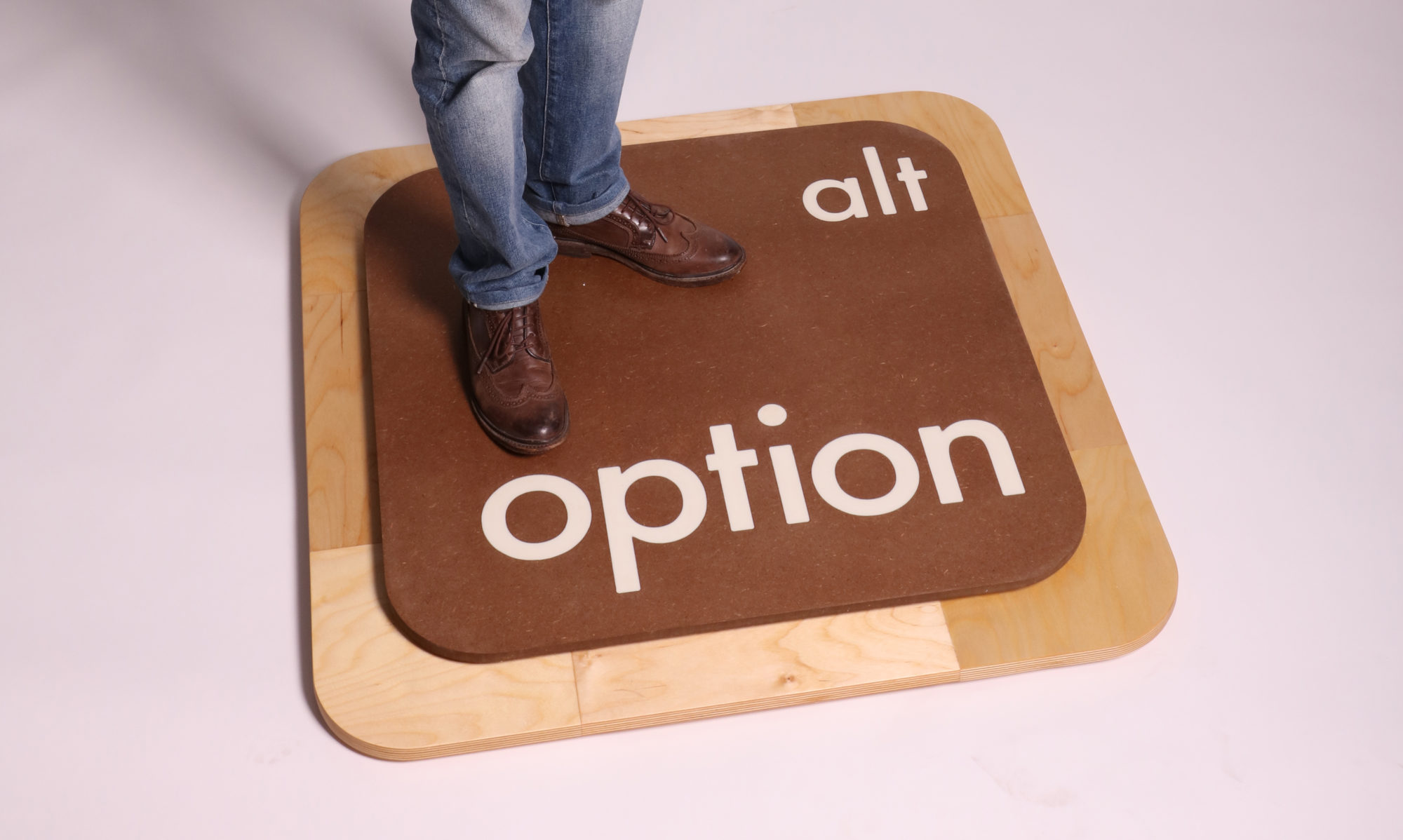
5 Game Ideas – Week 4
week nine questions
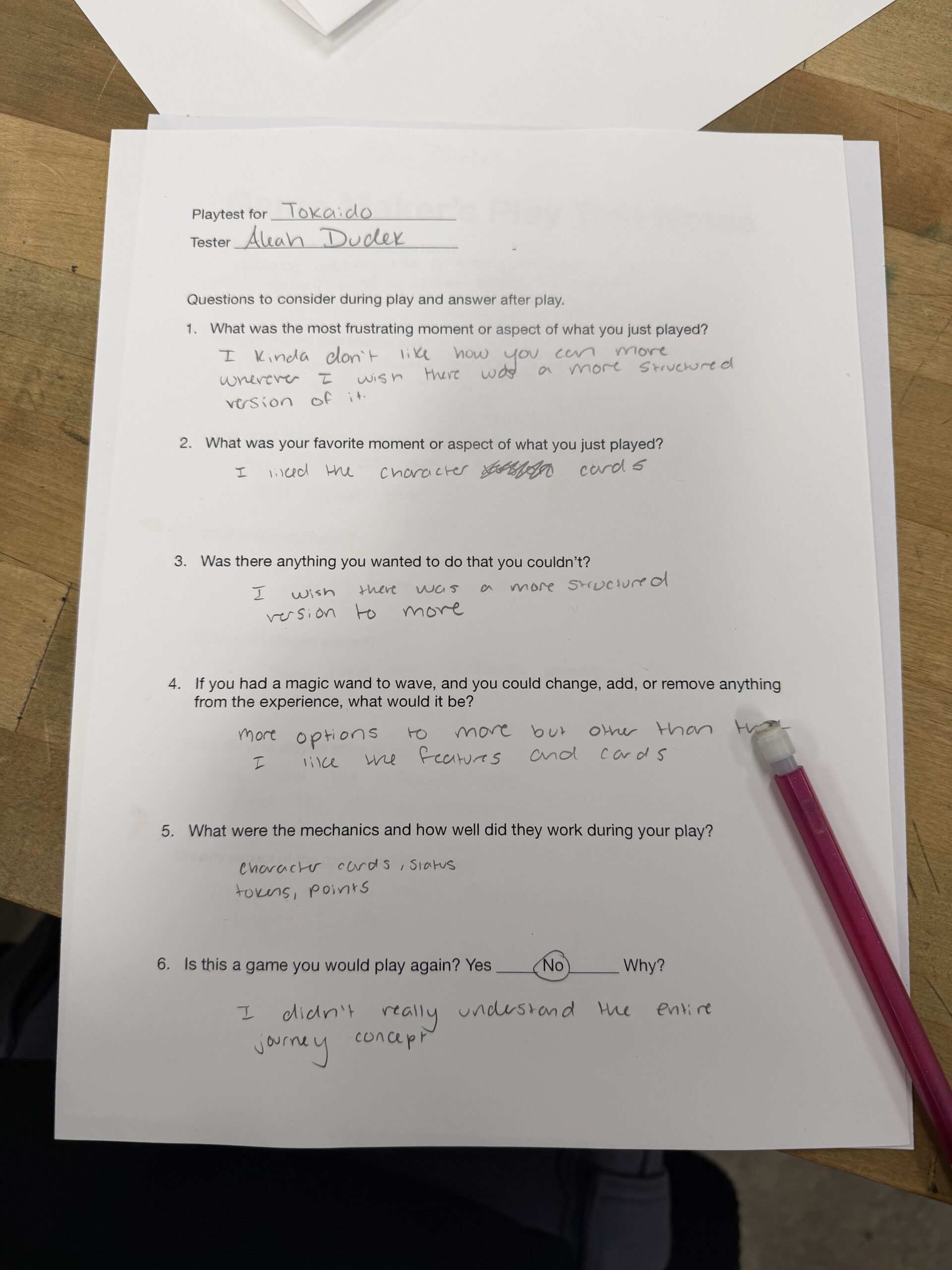
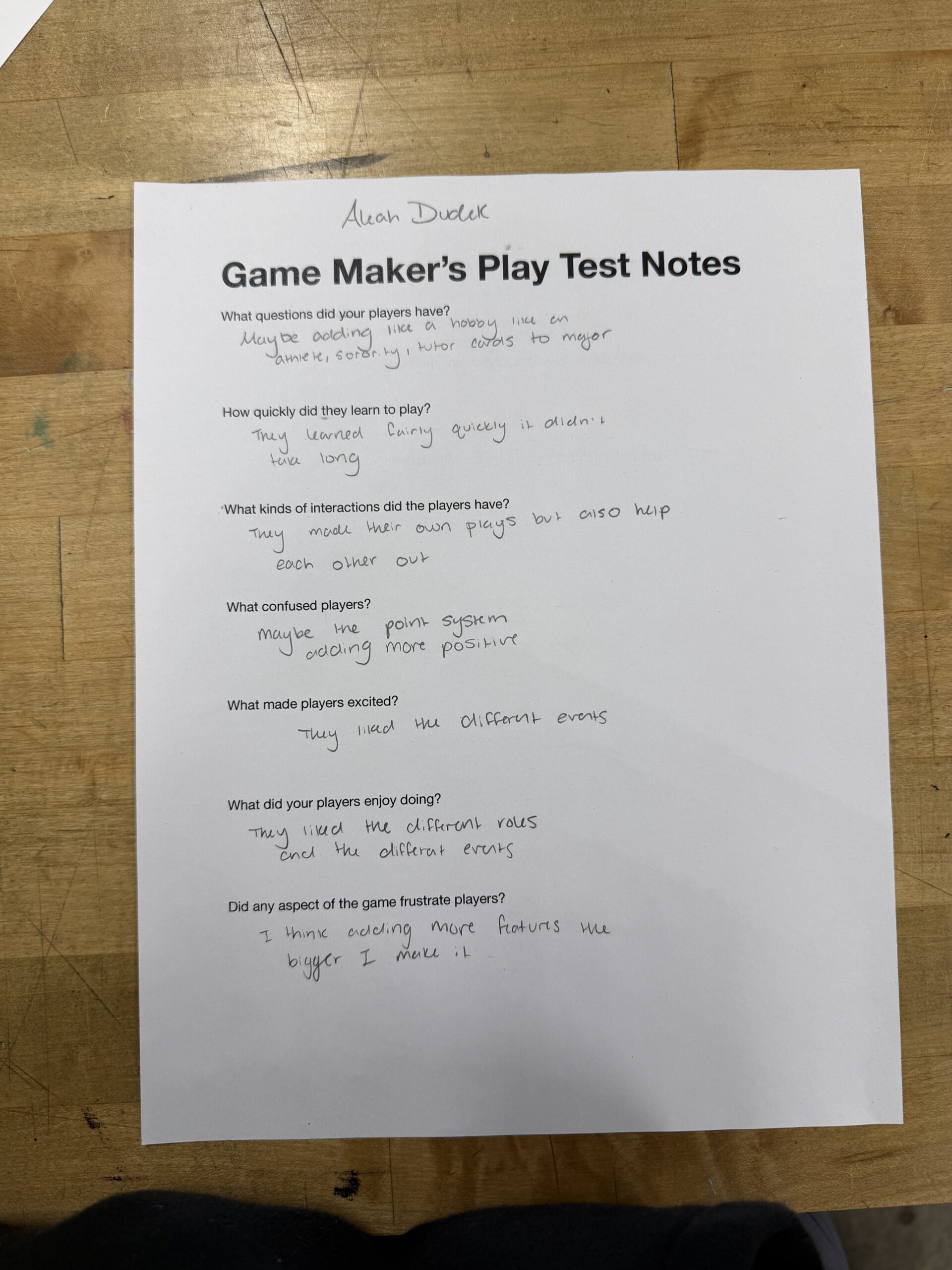
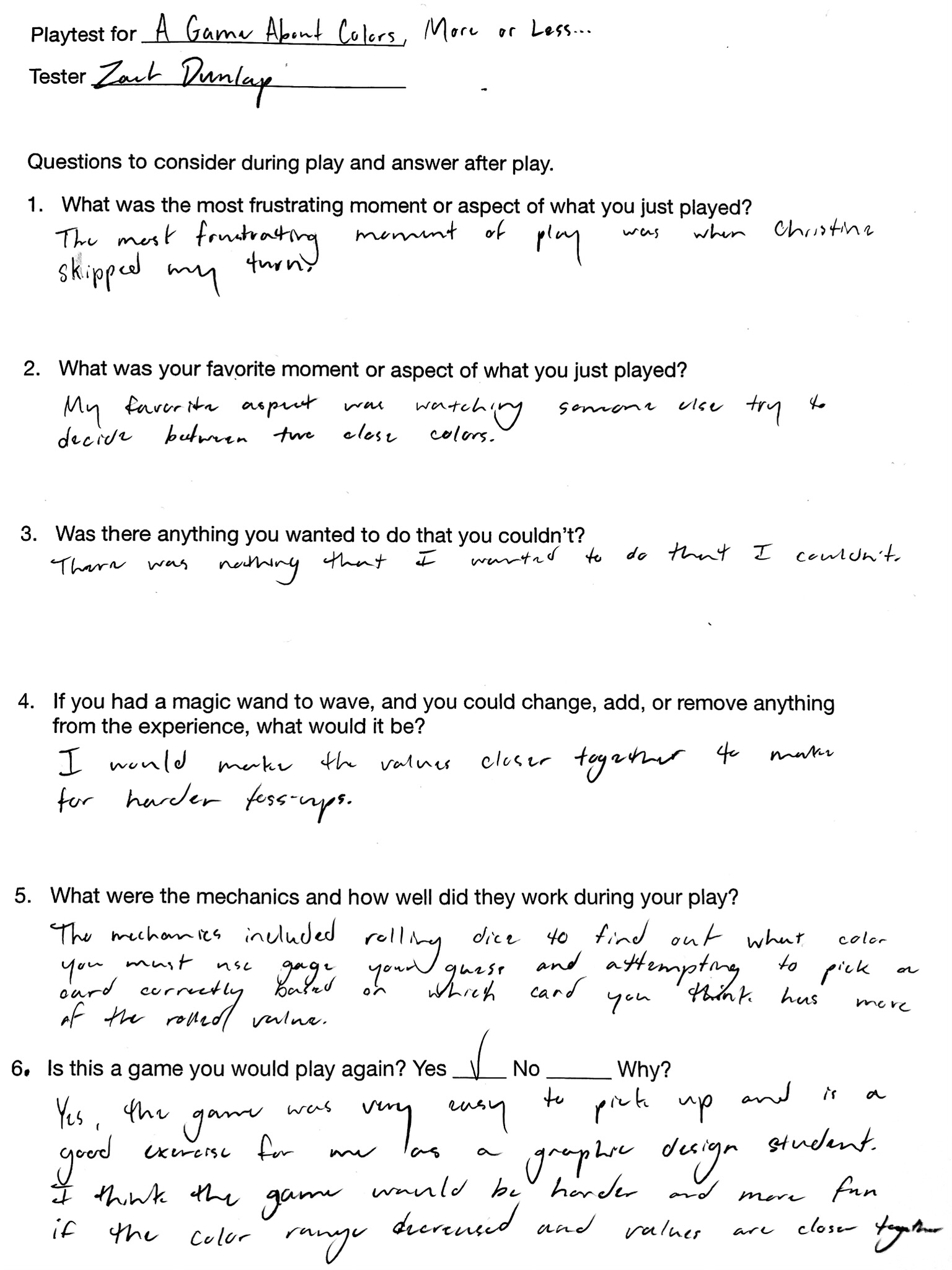
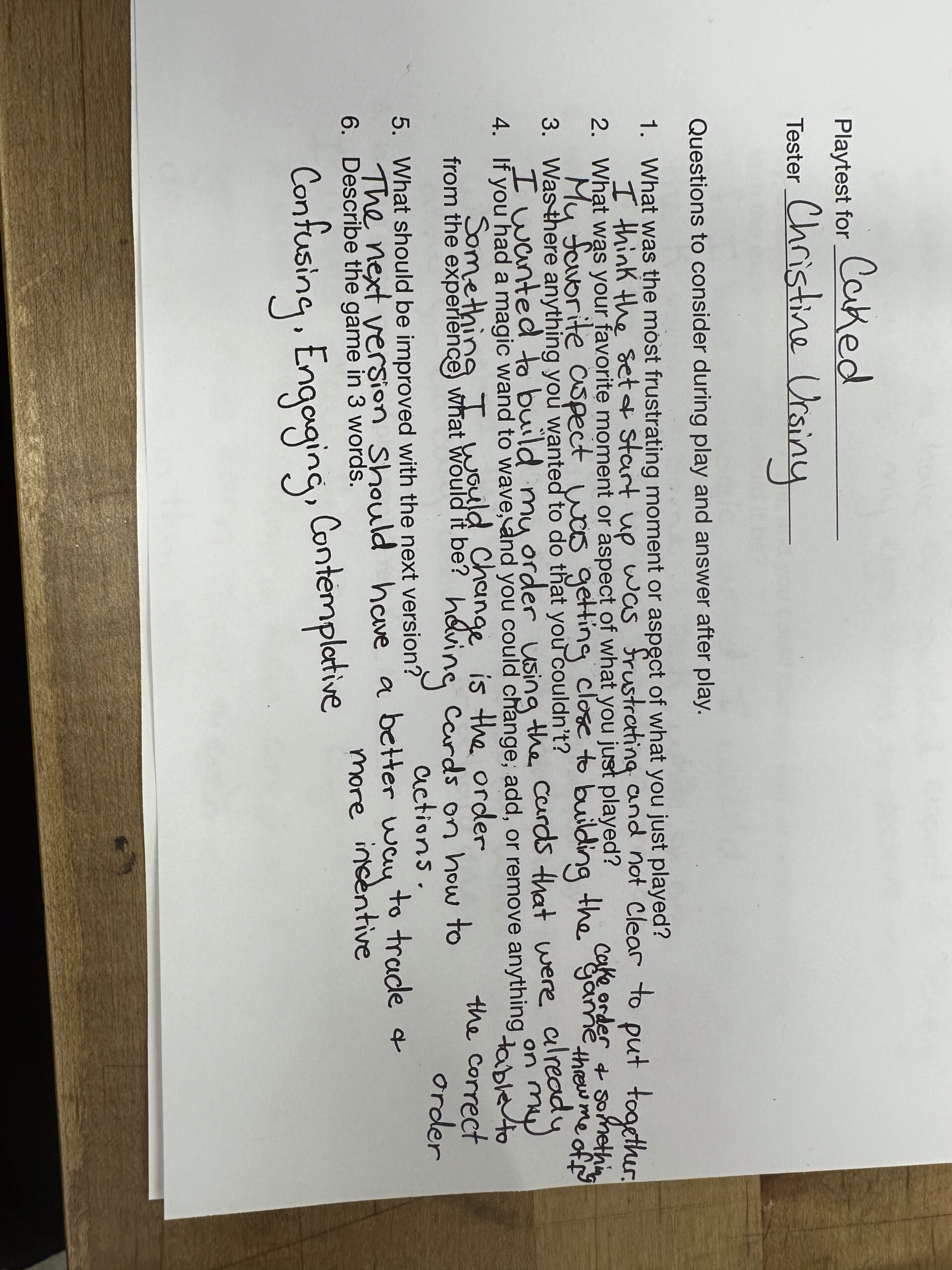
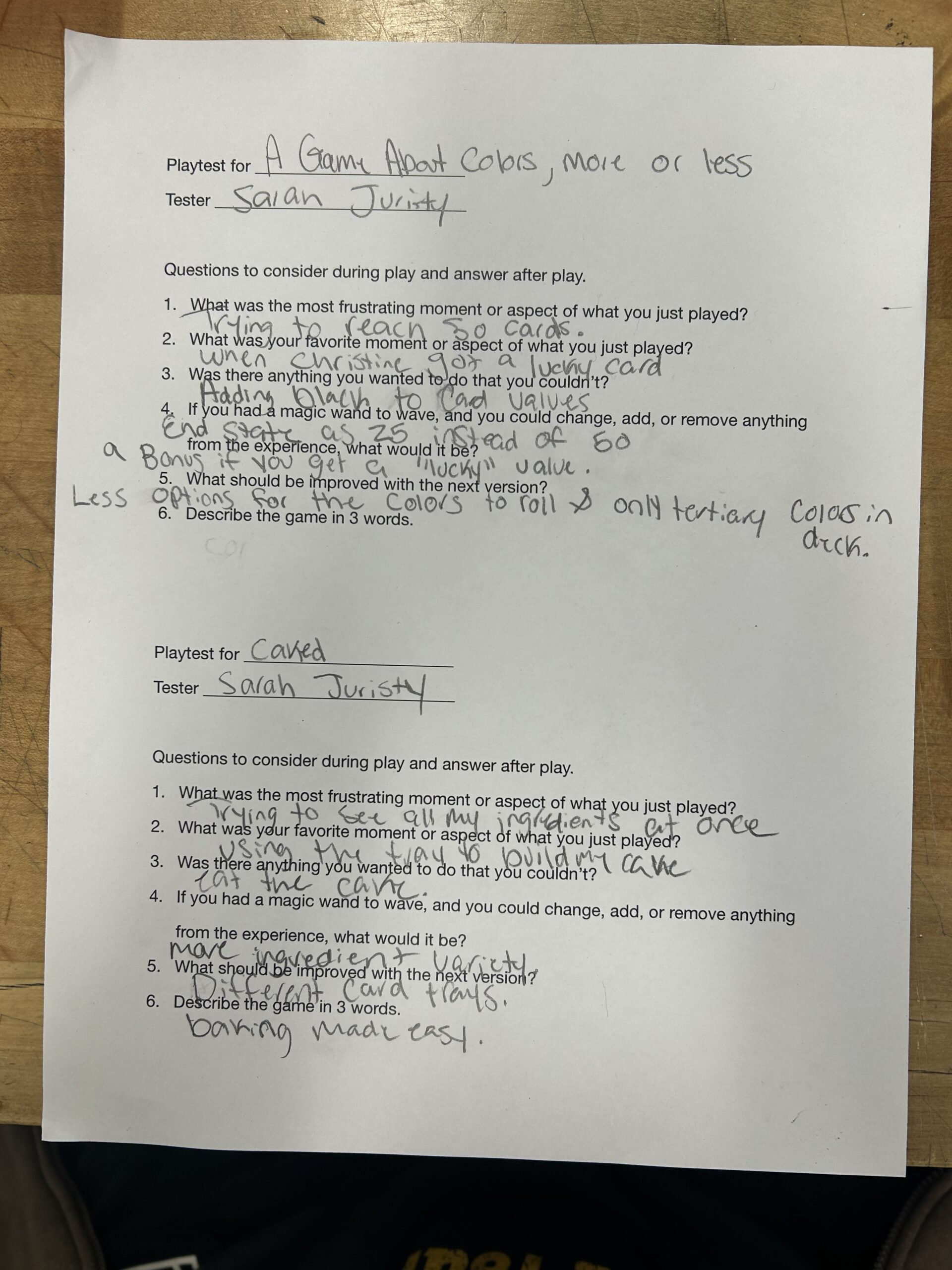
Playtest Questions: A Game About Colors, More or Less…, Caked
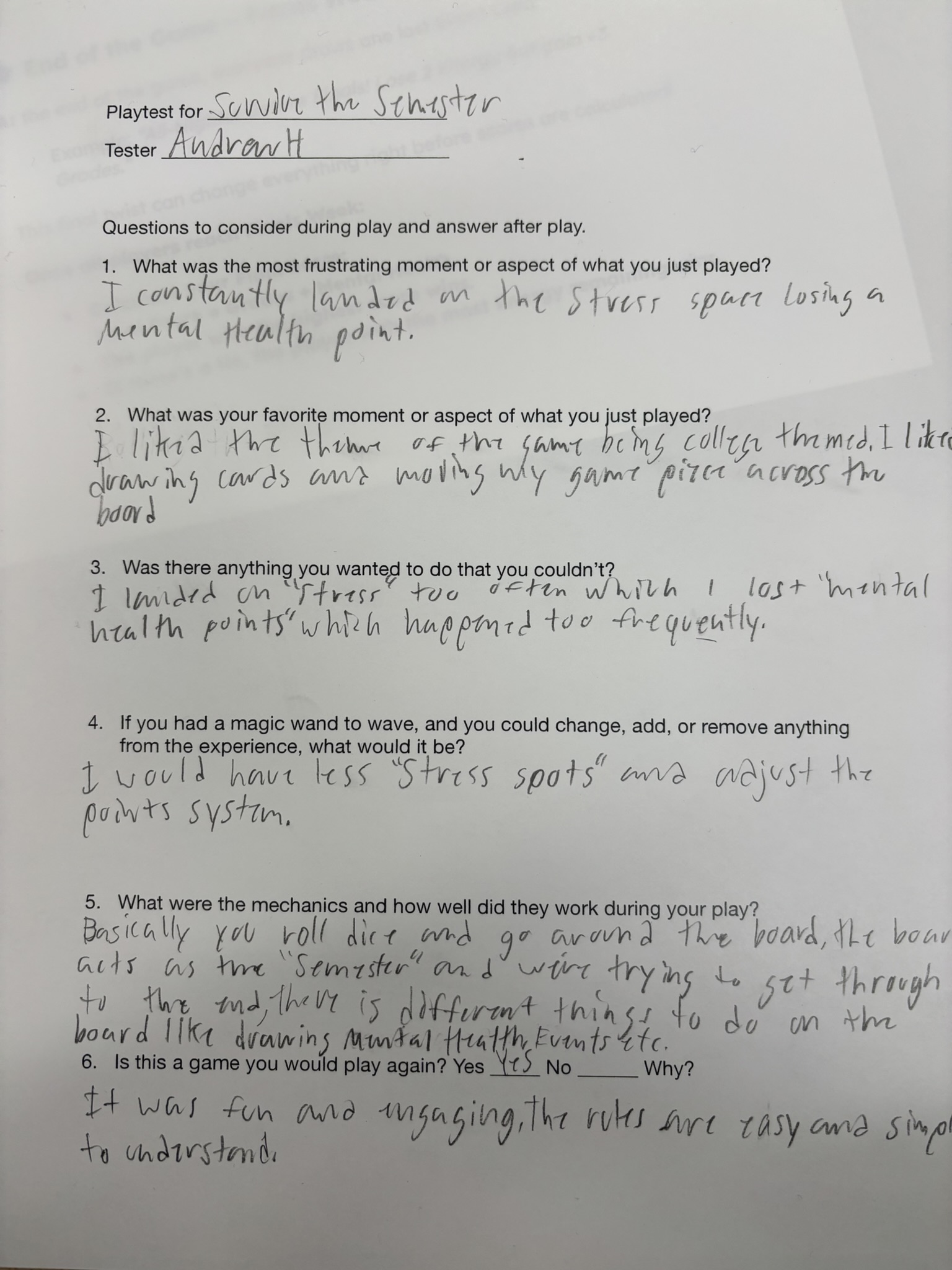
Survive the Semester Play test Questions
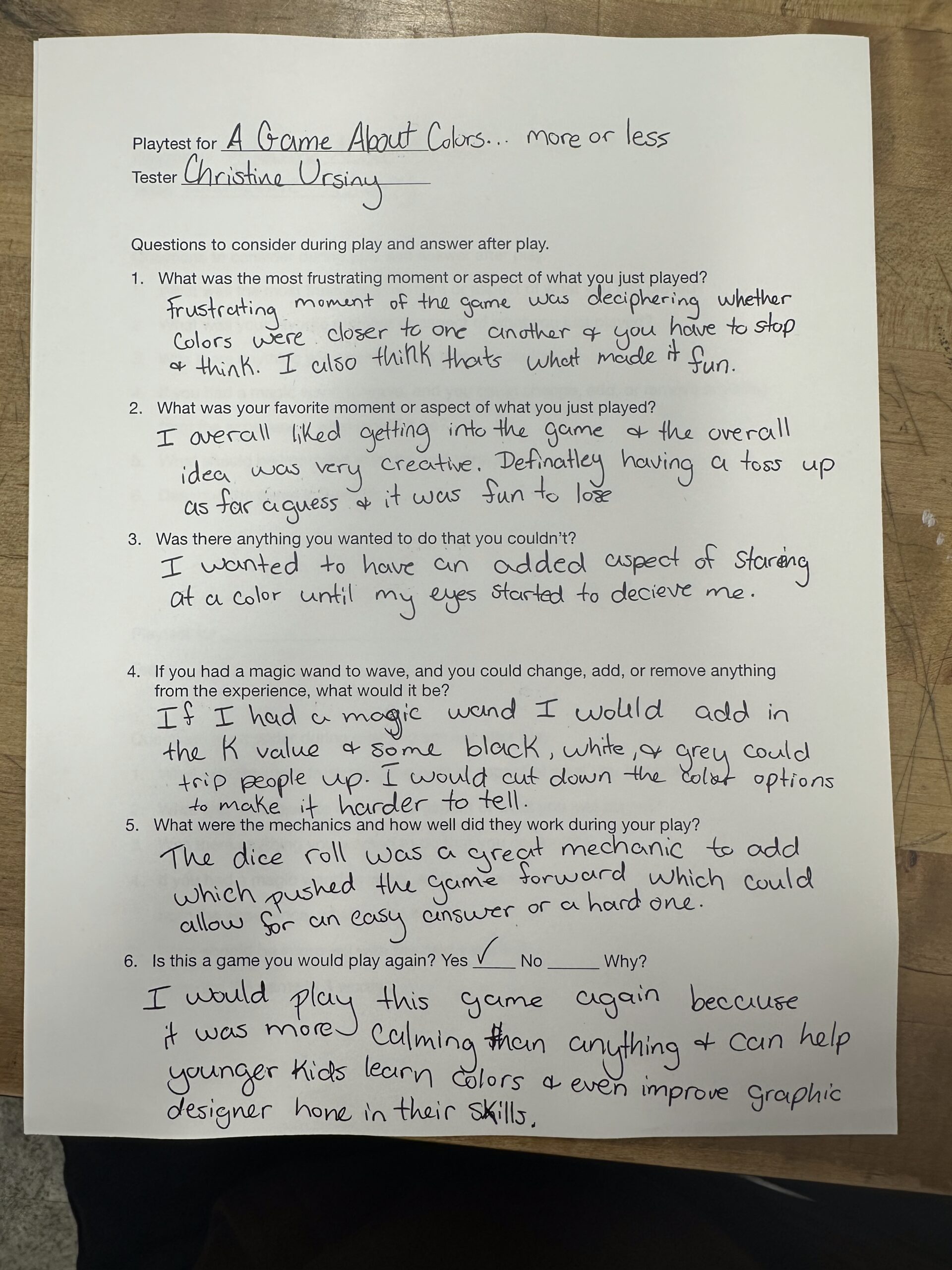
A Game about Colors… more or less Review
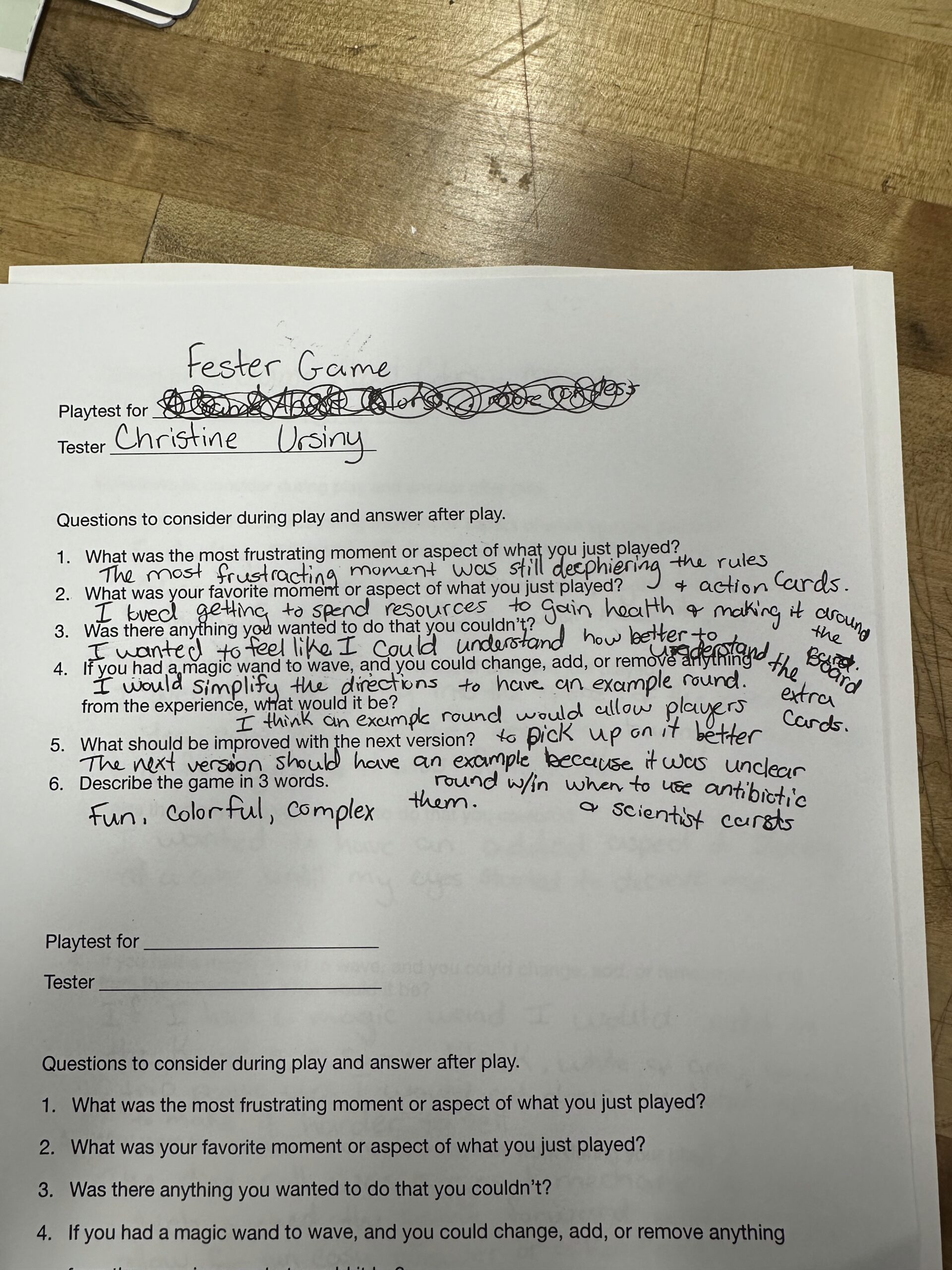
Fester Game Review
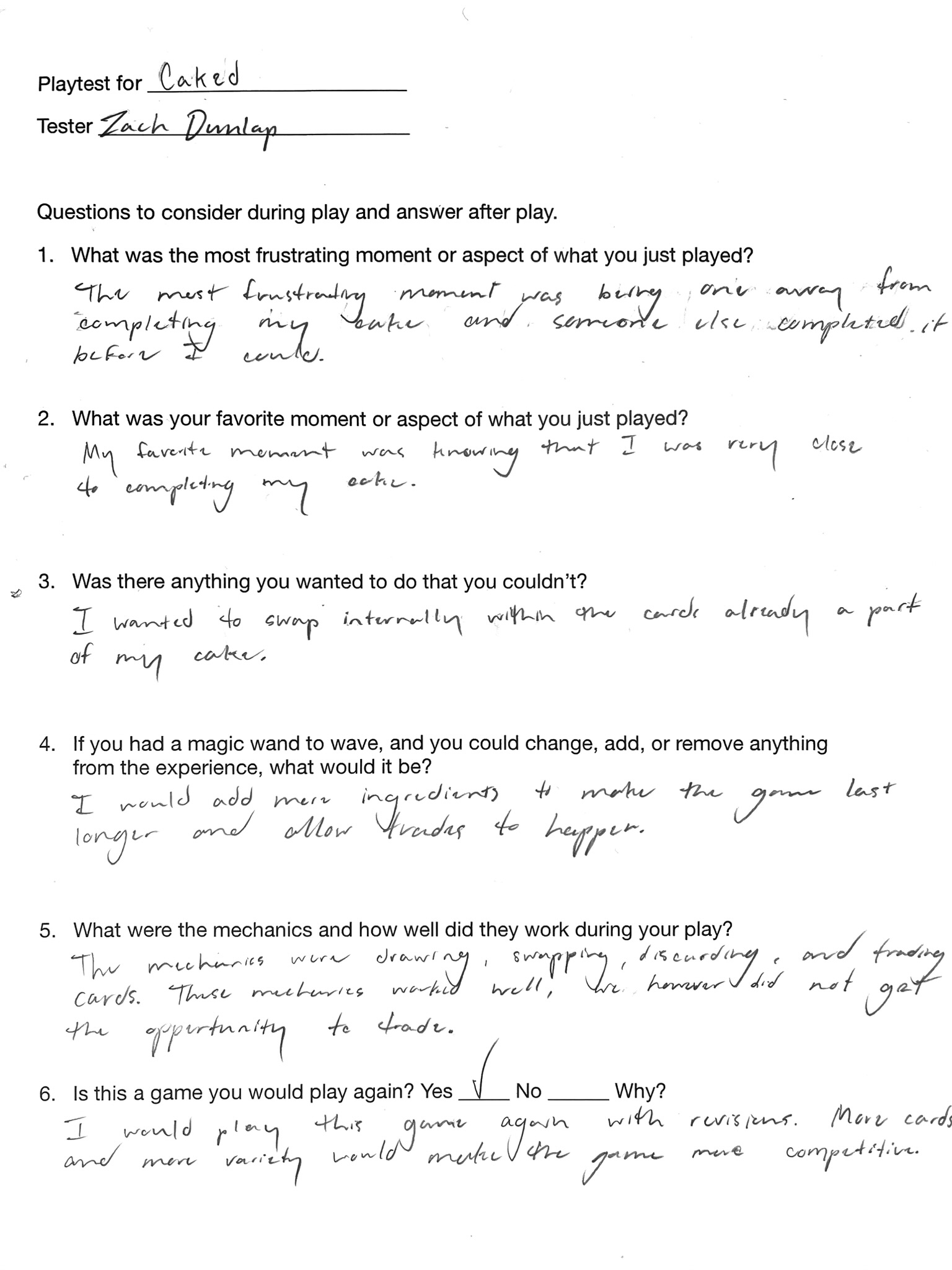
Caked Game Review
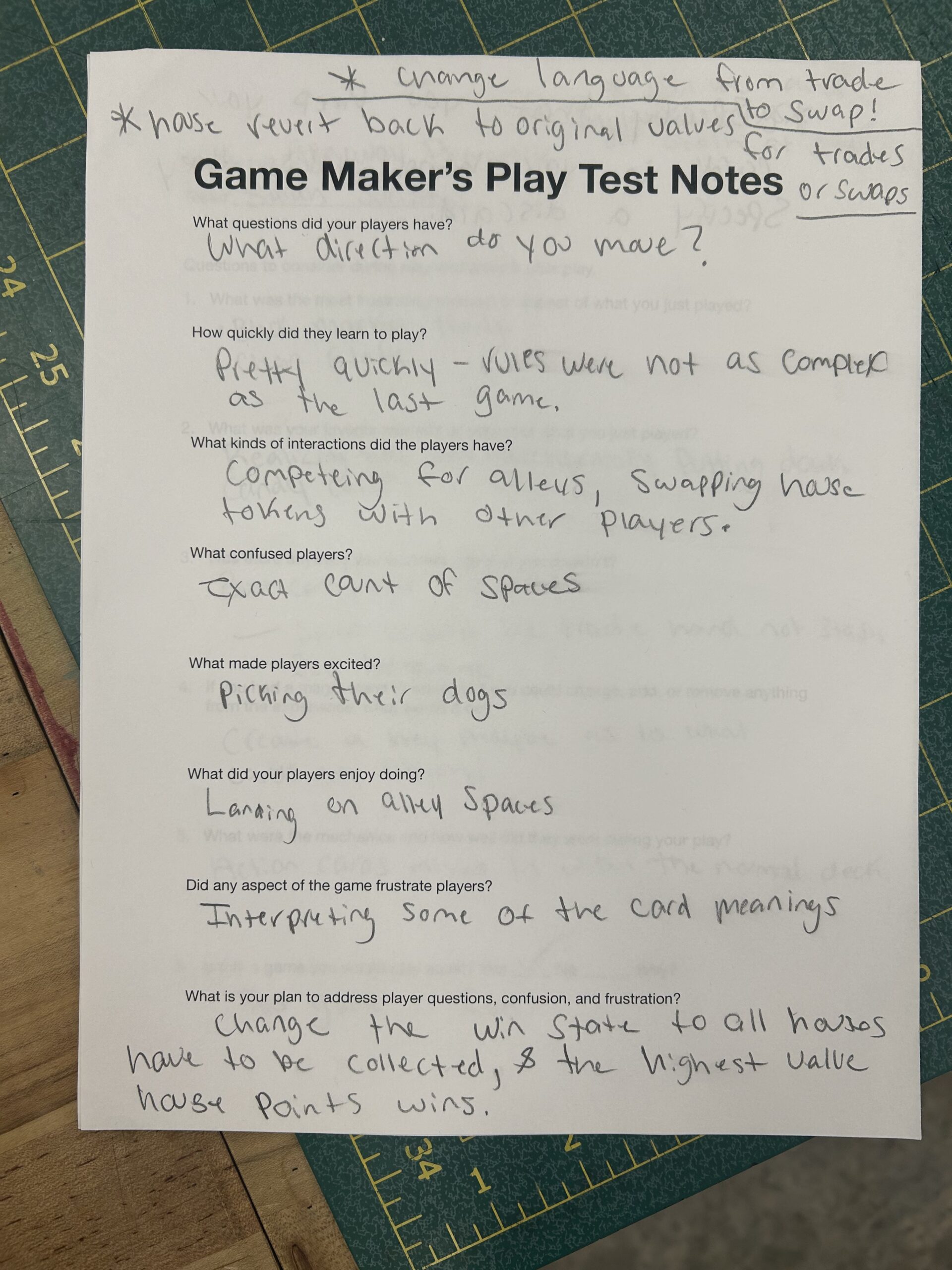
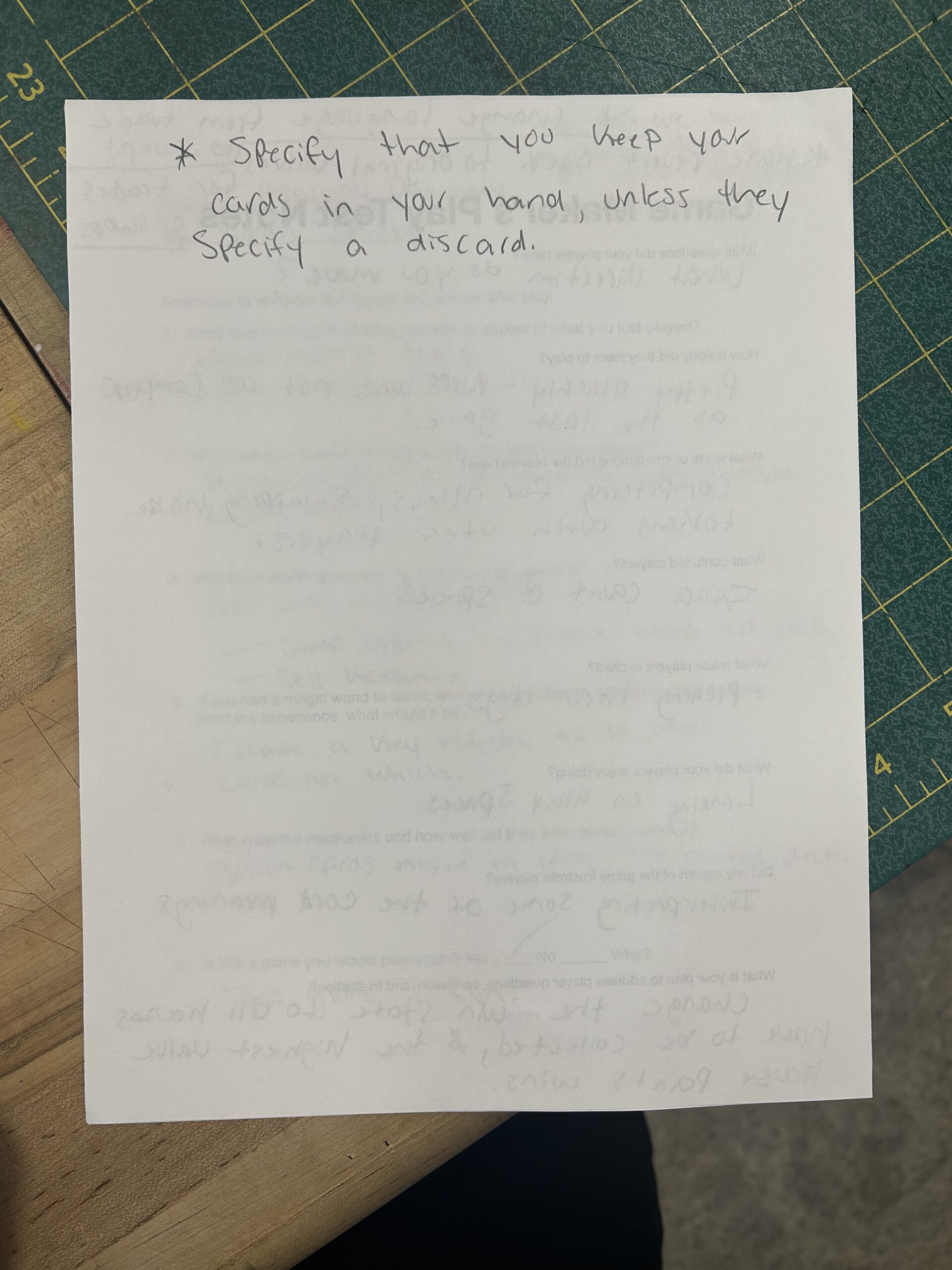
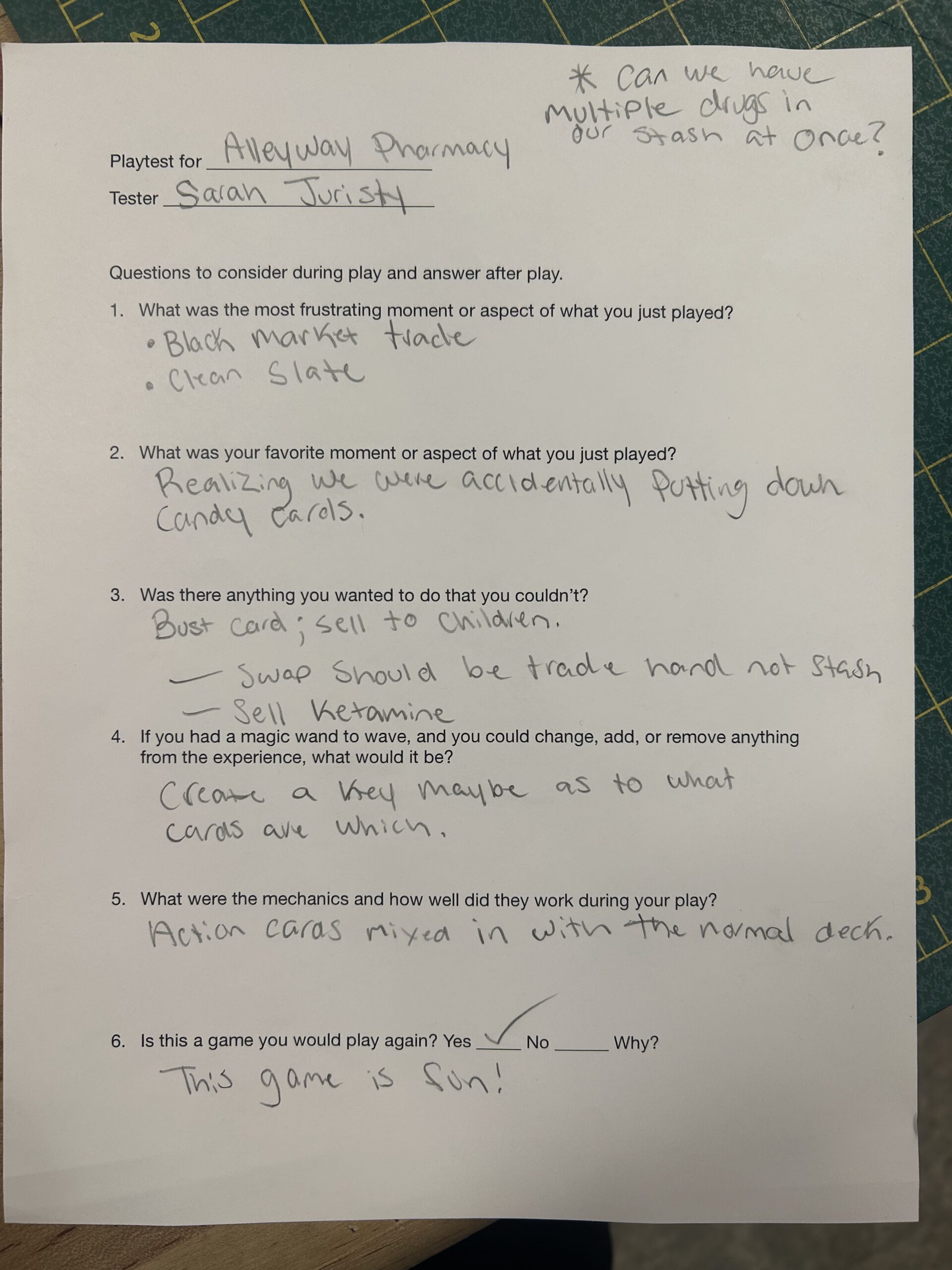
Part 3 Question Set
- Question Set 1
- what is the difference between a game designer and a game developer? – The difference between a game designer and game developer is the game designer creates the mechanics for the game and figures out rules and development of the game. The designer creates the finished Skelton of the game which is then sent to a game developer who makes the game more marketable. The whole point of a game developer is make the game better. In part 3, they refer to game designer as the author and a game developer as the book editor (game editor to make it better). A game developer has the power to change a designers mechanic if it will lead to the game to be more efficient and fun.
- what commonly occurs during the game development process?
- – What commonly occurs in game development process is initial play testing, rules, blind play testing, and titles/theming. In initial play testing the designers main focus to see the game from a “newbie” perspective. They are trying to figure out the major flaws in the game and fix the flow of it. This stage is where the game maker sees how much they can simplify the rules in order to avoid the players having an automatic bad experience with the game. Rules come into play where it helps the mechanics of the game flow better and more comprehensible. They are supposed to be eye catching to the player and make it easy for them to understand the game. The rules are acting as a communicator and a reference for the users. Blind testing is when the game is polished enough for a group of people to pick up the game and be able to fully grasp the game and play it. The maker is taking notes of what needs to be tweaked. Finally, there is titles and theming which is theme that the game is revolved around. For example, Dominion is a deck building game. The game has a story or theme behind it. We talked briefly about my last prototype theme and why its ok to play it (talked about Breaking Bad and the crossing the boarders game).
- what are the challenges of balancing a game?
- – The challenges of balancing a game is ensuring that no action is completely unjust or unfair. There must be different ways to combat a negative action and making sure a positive action is too much. For example, adding a time restraint in your game or adding difficult cards in the deck will help with balancing the easier/hard parts of the game. The second challenge is balancing the game with the idea of cost. No card should be unfair or too overpowered. Peterson highlights that the card can be used in the game but must be developed extremely well.
- what should every player of your game believe? why?
- – Every player of a game should believe that they are able to win. No player should feel that they don’t have an opportunity to win right off the bat, and if so that’s where there is a problem in the format of the game or in the rules. Peterson highlights that this is VERY important in when designing a game. When a player loses interest in losing then the game is over in their head, and you have no longer engaged this user. Not giving the user an opportunity to feel confident in winning is the moment the game lost its engagement.
- how can you avoid stealing players fun?
- – You can avoid stealing players fun by getting players to interact with each other. Peterson believes that the players should be able to choose who the winner is. This gives each player the opportunity to be more engaged in the game and feel more control over how the game ends.
- what 10 maxims should you follow when writing rules?
- Use no intermediary terminology: “Call things what it is.” Avoid made up names or labels of people (call people, people or dice, dice).
- Use real words: make rules easy to understand and they must be consistent throughout the game
- Make no more work than necessary: don’t overcomplicate the mechanics and rules of the game. Cut out all the rules that make it harder to learn or uneccesscary to learn
- Add flavor (but not too much): Be aware of how much flavor you can add to your game, and make sure its the right amount (not too much, not too little)
- Make your text no smarter than your reader: make it easy to read the rules, players are more willing to play a game that is easier than confusing.
- Discard rules that cannot be written: Remove a rule if it is too complicated or complex to write. You may want to write the rules because you like how it goes with the game, but for the players sake it has to be able to explain.
- Take a breath: if text is getting complex and long, break it up
- Go easy on the eyes: rules must be readable
- Play test your final version: look over your rules in a final playtesting and make sure everything is easy to understand.
- Fix it in the FAQ: Make clarifications
- Question Set 2
- how has play testing changed your game?
- – Play testing has changed my game because it allowed me to see the speed of the game and come up with different actions or rules to improve the game. Playtesting highlights all of the issues in your game that you didn’t think of when preparing it. So, playing the game and taking notes allows you to make changes to the game so its is better.
- who from class would you like to play test your next game or version 2 of your first game?
- – I would like to play test with a different group of people and have one person from the group prior to join and see the alterations of the game. I think having one person from the first testing will allow feedback to me, and see what they liked/disliked in the first testing and the second.
- who is the audience for your game?
- – The audience that my game is for is high school and up. I think especially my second prototype game was more rated and not kid friendly. I am aiming to target the audience that is interested in a GTA ish world or enjoy that kind of games.
- who should play test your game outside of class?
- – My soccer friends are really excited to play test my games outside of class. They have been constantly asking me to bring it over when I have the time.
Question Set Week 8
- Question Set 1
- what is the difference between a game designer and a game developer? A designer generally creates and actually designs the original game concept and prototypes. Developers take those designs and make them better. They test them and improve them over many iterations and ultimately finish the game.
- what commonly occurs during the game development process? Tweaking rules and concepts within games to make them better and more cohesive.
- what are the challenges of balancing a game? Primarily, “Numbers” and the cost of making decisions. The detailed challenges stem from these things but these are the overarching categories. Basically, controlling and balancing “imbalance” without completely eliminating it.
- what should every player of your game believe? why? (I couldn’t directly find it in the readings) but they should believe that your mechanics of the game will work and it is possible to win – i think having a believable metaphor is also very important so the players are immersed in the environment
- how can you avoid stealing players fun? Well there are quite a few ways, but it basically comes down to not making it complex and eliminating extra confusing stuff.
- what 10 maxims should you follow when writing rules? No intermediary words, use real words, make no more words than necessary, add flavor (but not too much), make your text no smarter than the reader, discard rules that can’t be written, take a breath, go easy on the eyes, get your final version, fix it in the FAQs
- Question Set 2
- how has play testing changed your game? it exposes flaws and fine tunes rules
- who from class would you like to play test your next game or version 2 of your first game? Well if it is version two, I would like at least two people who played it first (like Harmony or Zach or Maria) and at least two other new ones. I think same for my new game honestly – I think Brice also gives honest and constructive advice
- who is the audience for your game? well the game i have for this week is probably for older kids who understand card games to adults of any age
- who should play test your game outside of class? mmmm, I guess I might give it to some of my friends to play. I’d also like to see how my family would react to it with a wide range of ages and types of gamers.
Week 8: Question Set 2
- Play testing my game taught me not to be too invested in how I believe the game should be played. I had the thought to force players to act a certain way, and was slightly frustrated when reality did not match my expectations. With this, I learned to give my players more leeway, especially when just starting the game. I believe I created a nicer, more player friendly, rule set because of the feedback from my first play test.
- I’d like to replay my game with the same play testers as last time, so that I can gather their thoughts on the differences that they noticed. But I am also able to play test with new players, so I can get different perspectives on the core game play, as well as the changed rules.
- My initial target audience was fast-paced card players. I enjoy cards, and games where speed is integral, so I wanted to create a game that blends the two together. Creating this game taught me that many players are unfamiliar with cards, which meant that I had to change my game to accommodate.
- I would like to play test the game with my friends outside of class. As card players, I feel like they would be not only more excited to play, but also more familiar with the process of drawing cards, understanding sets/runs, and betting on their hand.
Week 8: Reading Question Set 1
- According to Kobold’s Guide to Board Game Design the author states that the difference between game developers and game designers are their positions in the process of a game’s creation, from inception to release. Game designers create the skeleton of the game: the theme, mechanics, game play, and initial rules of the game. Upon finishing a working draft, developers then take the game and polish it to make the game more inciting to publishers and players alike. Dale Wu, and Mike Selinker, in their review of Dominion’s mechanics and development, equated designers to book authors and developers to editors who make suggestions and revisions before the publisher.
- Using Dominion’s development as inspiration, Selinker mentions four key events that occur in game development: Initial play testing, rule setting/refining, blind play testing, and theming/titling. In the initial play test, the designers ensure that the game is playable, and lacks key flaws missed during development. Rule setting is when the rules are drafted that better interact with the mechanics. Blind testing is putting the game in front of new players to test whether they can understand the game’s mechanics and uncover any oversights. Titling and theming is developing the core metaphor or theme that the game is based around. These events to not always happen in the same order. The theming can come before the play test, and the blind test can come before key rules are developed.
3. Two key challenges that Paul Peterson mentions in game balancing is accounting for every combination of actions, and understanding the cost of each action. A large challenge in game design is ensuring that every action is balanced around so that a sequence of actions or cards, does not create an unfair situation. Doing this is time-intensive and difficult with more complex games. The solution is to test the most unfair combinations. Another challenge in game design is balancing around the cost of an action, like playing a card or taking an action. All games have an inherent cost, and I associate with risk. If the cost of an action is not justifiably high or low, actions will feel overpowered or under powered. Peterson’s solution was to lean into the imbalance, but develop around it.
4. Every player in the game should believe that they have an equal chance to win. Dave Howell cites this as one of the most important principles of game design. Without the belief, even a small one, that any and all players can win, players will psychological divest themselves from the game and become apathetic to the outcome. In short, players must feel like they can win up until the end, because if they don’t they can become apathetic.
5. There are many things designers can do to avoid stealing players’ fun. Many of them involve how players interact with each other, rather than how players interact with the game. One of these things is avoiding “Kingmaking” (allowing players to choose winners), because “Kingmaking” leaves the fate of the game to the players, which often relies on chance and not skill. Games should also not reward winners and punish losers too much, as they create situations where momentum keeps players ahead or behind. They also create situations where hopeless players grow apathetic.
6. The ten maxims Mike Selinker mentions(along with my interpretations) are:
- Use no intermediary terminology: “Call things what they are.”
- Use real words: “Make your rules understandable from the get-go, and ensure that they are consistent”
- Make no more work than necessary: “Do not over complicate core processes of the game”
- Add flavor (but not too much): “Understand how much flavor your game needs”
- Make your text no smarter than your reader: “Do not obfuscate rules”
- Discard rules that cannot be written: “If a rule is too complex to understand (or even write), remove it or alter it.
- Take a breath: “Break your text up if it is getting to long”
- Go easy on the eyes: “Make your rules readable”
- Playtest your final version: “Review your rules in a final play test to fully understand their interpretations.”
- Fix it in the FAQ: “Make subsequent clarifications later (do not ignore them).”
Playtest Questions: ESPN Fantasy Football
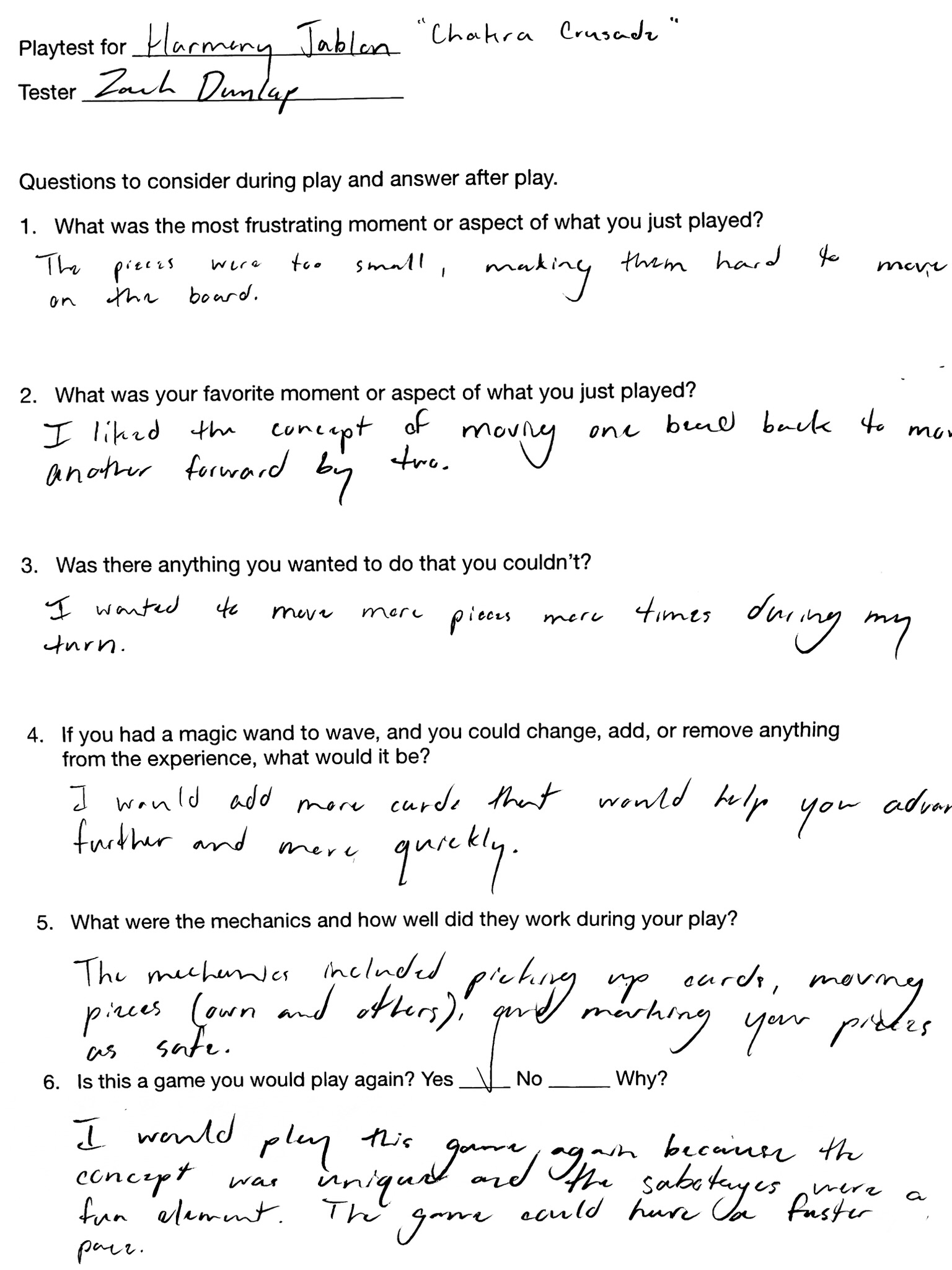
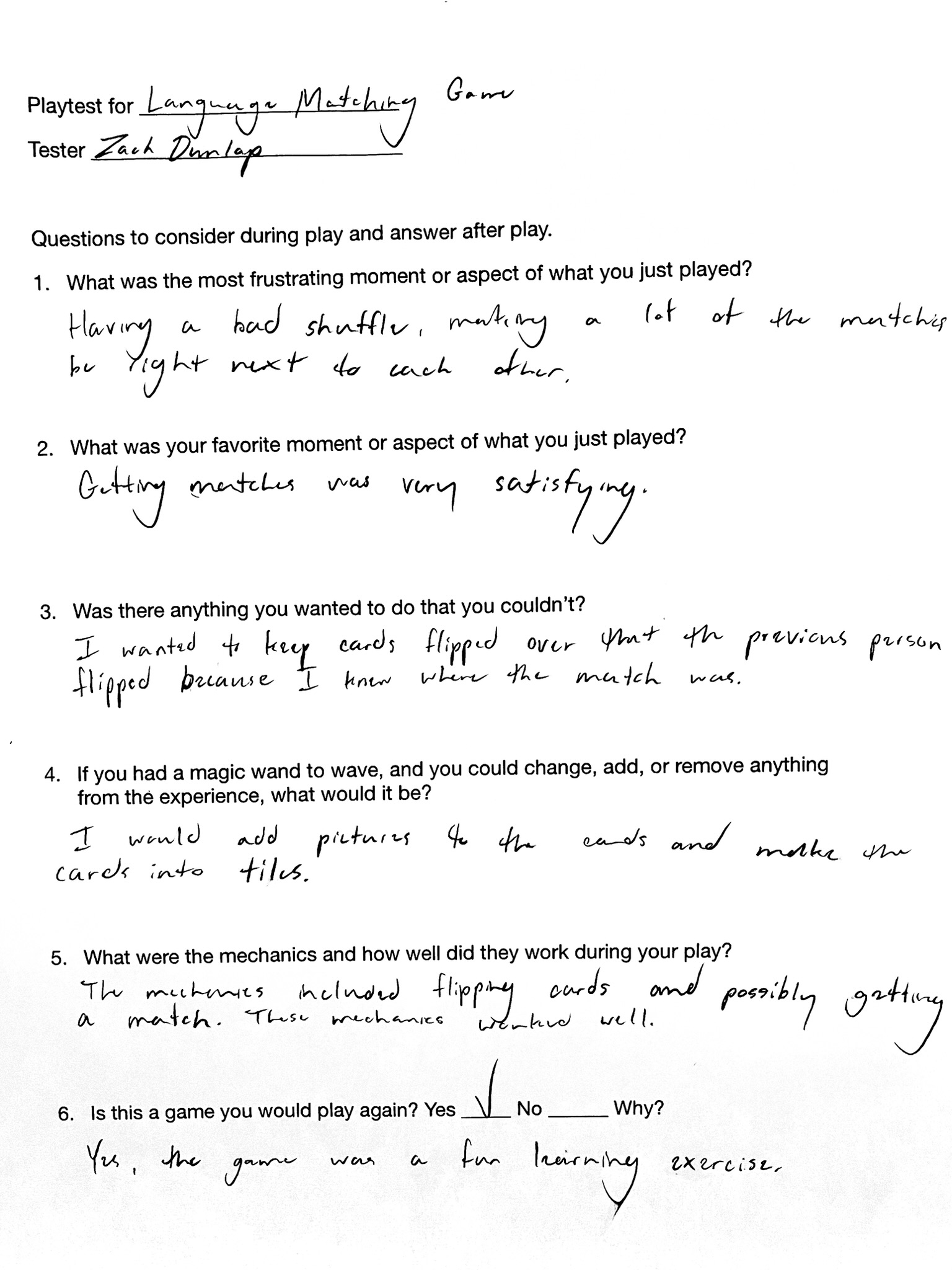
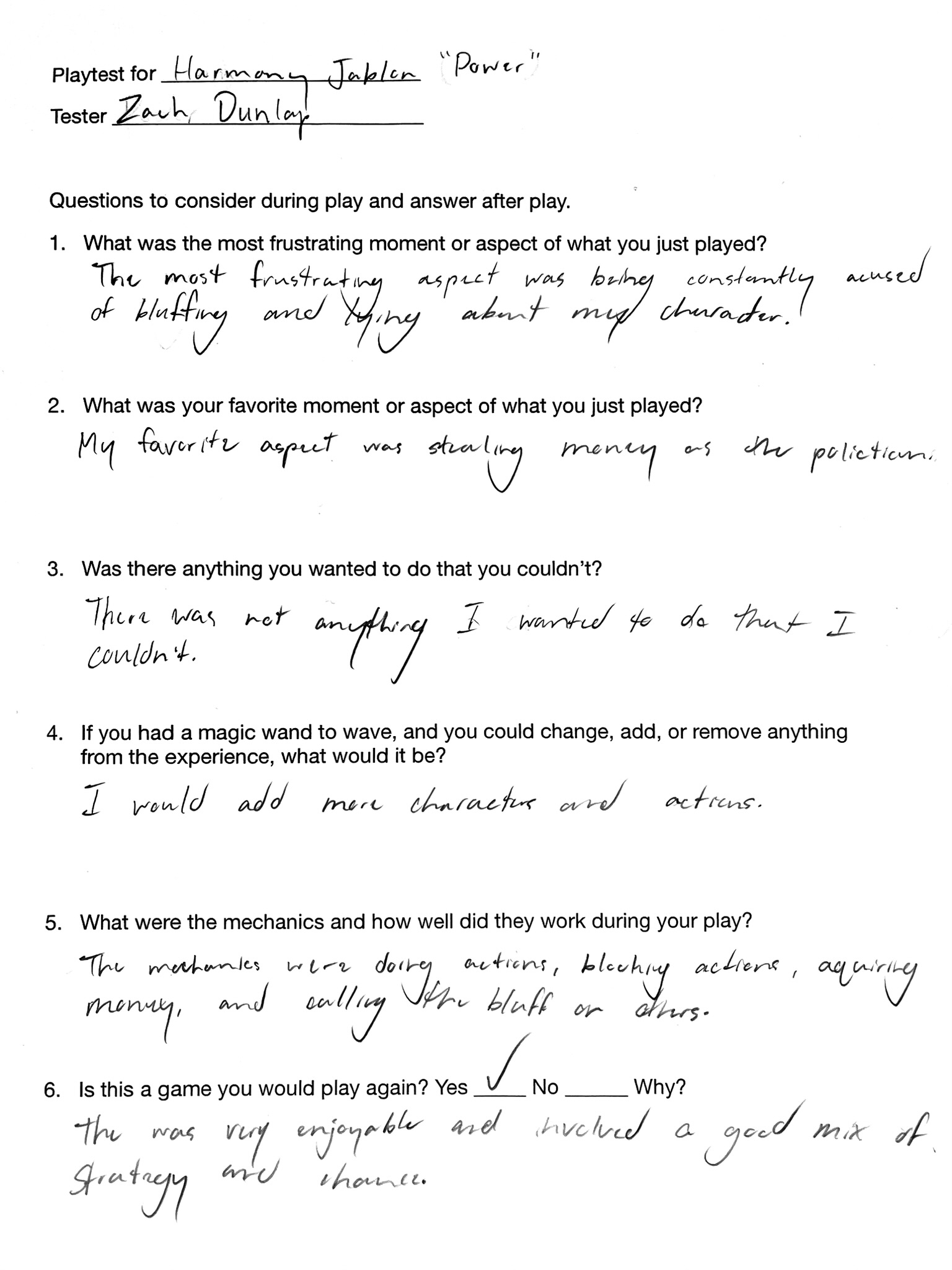
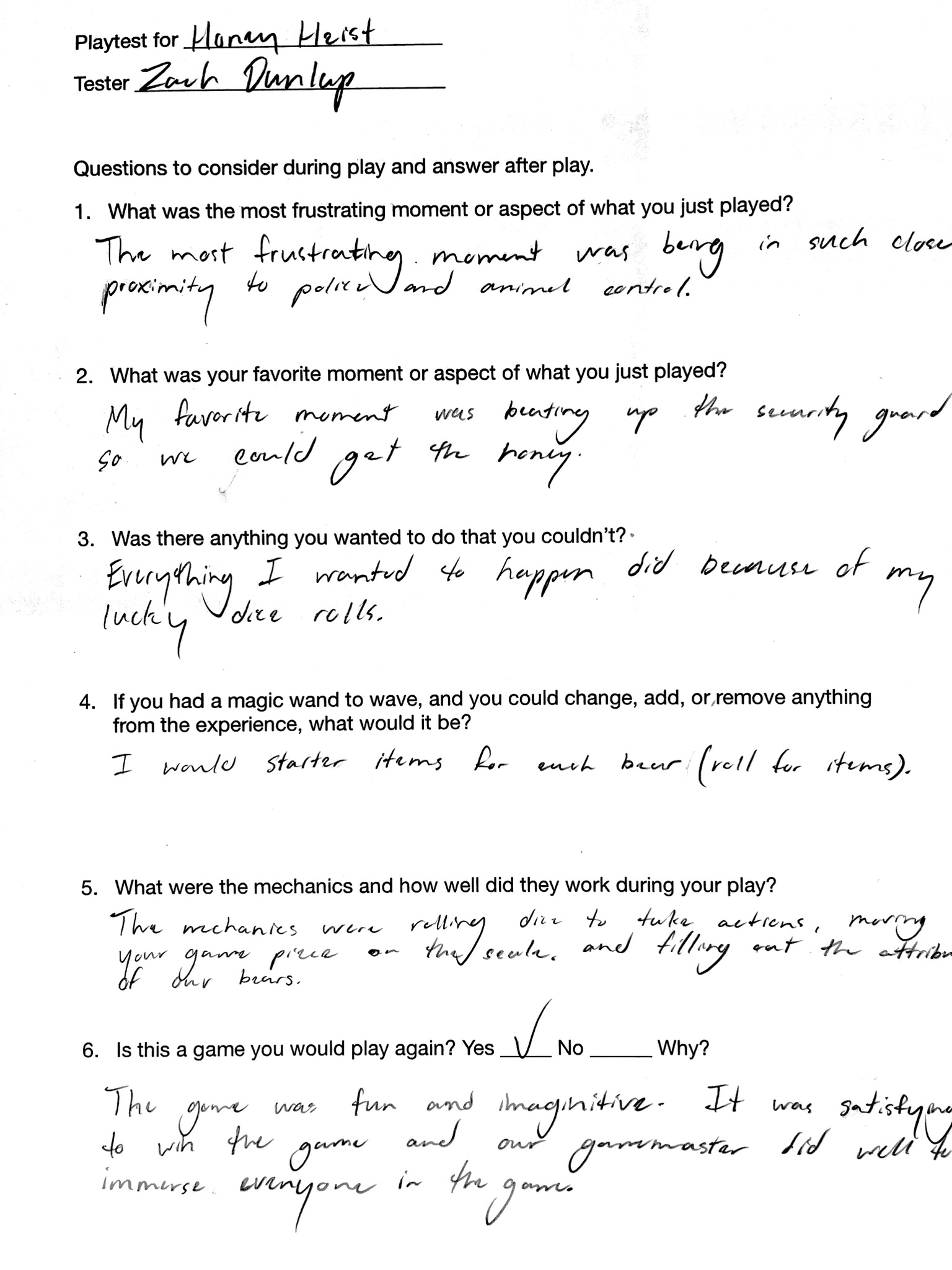
Playtest Questions: Chakra Crusade, Language Matching Game, Power, Honey Heist