Game Ideas Week 3

5 game ideas that revolve around the theme of empathy. Wrinkle: Take one of the five ideas and make it an alternate reality game.

  1. Recently I’ve been thinking of the childhood movie The Fox and the Hound. I’d like to make a game built on this concept. Early in the game, players work together with shared abilities. Eventually, there is forced separation via different objectives/ rewards for betrayal. The player’s loyalty, and empathy for others, is tested.
  2. A memory game that explores the life of a dementia patient. Players go through an older woman’s last memories of home. Different objects bring up memories, but how they are remembered changes over the course of the game. Players begin to understand the person’s life empathetically via storytelling and exploration. What starts as a problem solving game becomes potentially unsolvable due to the patient’s mental deterioration.
  3. A game that makes you question empathy within a romantic relationship. Players switch perspectives between two characters in conflict and play strategically while having to understand the other person’s reasoning and emotions. The game encourages players to think about how to deal with misunderstanding.
    • (Alternate Reality Game: In an AR version, the game records your chosen responses to the other character and mirrors the projected arguments back onto you. The other character turns out to be you at a different time. )
  4. An empathetic game that revolves around the theme of hunting. One player plays on the side of a family of deer, and the other side is the hunter. Again, thinking of empathetic movies like Bambi.
  5. I was considering a building game last semester that would utilize card towers. It would be interesting to circle back to this concept and explore fragility to push an empathetic message. I believe this could go in a lot of different directions.
Game Ideas Week 2

5 new game ideas that explore changing players’ minds about (climate change, energy, politics, etc.)

  1. A game about exposure to harmful chemicals in our environment. Players would have to handle decision making and learn how difficult it is to avoid microplastics, PFAS, and pesticides in everyday life. The goal would be to reduce exposure by making informed choices.
  2. A game that simulates the impact of addiction to social media and being on our phones. There are applications that use the same addictive methods to positively motivate users to adopt better habits, maybe this game would be more from the perspective of the developer, similarly to how the McDonald’s game forces the user to consider the ethics of what they’re consuming. The player would work against a character’s attempts at productivity, maintaining relationships, and sleep, rewarding them with dopamine, to illustrate the impact of these algorithms.
  3. A game that explores changing a player’s mind about AI. Players take the role of an AI model that is being developed and must make fast paced ethical decisions that train the kind of responses you can generate.
  4. A game that addresses the concept of propaganda and political media. I’m not sure how this would work yet as a game, but I like the idea of challenging the current political climate since everyone seems to be positioned against each other.
  5. A game that changes a player’s mind about reality and makes them question their perception of others. The players would be exposed to a range of other characters with different personalities and backgrounds, maybe based on observable traits like that of the Myer’s Briggs personality test. The objective would revolve around finding similarities with other players and reflection.

Rewrite of endless game idea (from week 1) now made into a persuasive game:

  1. ‘Pire: lets you build and evolve an empire, and as natural disasters happen, the empire falls and keeps going, pick a time period.
  2. Antique-coon: A tycoon game that allows you to get more items as the years progress, there will be more and more items to sell, hence it never ends
  3. Star Sailor: A planet exploring simulator with randomly generated planets to explore and gather materials from
  4. Minimum wage simulator: Work at a restaurant to get out of debt, never ends
  5. Charon: You are the person that takes people across the river to the underworld, allowing you to talk to people while you sail across.

Rewrite of ‘Pire: Players build and evolve an empire in different historical time periods, but the overuse of natural resources leads to potential collapse. This theme would emerge later in the game, exposing how unsustainable expansion and poor environmental decisions can cause the fall of an empire. I would consider historical factors such as the collapse of the Mayan Empire to add to the persuasiveness of the game.

Game Design – Final Documentation

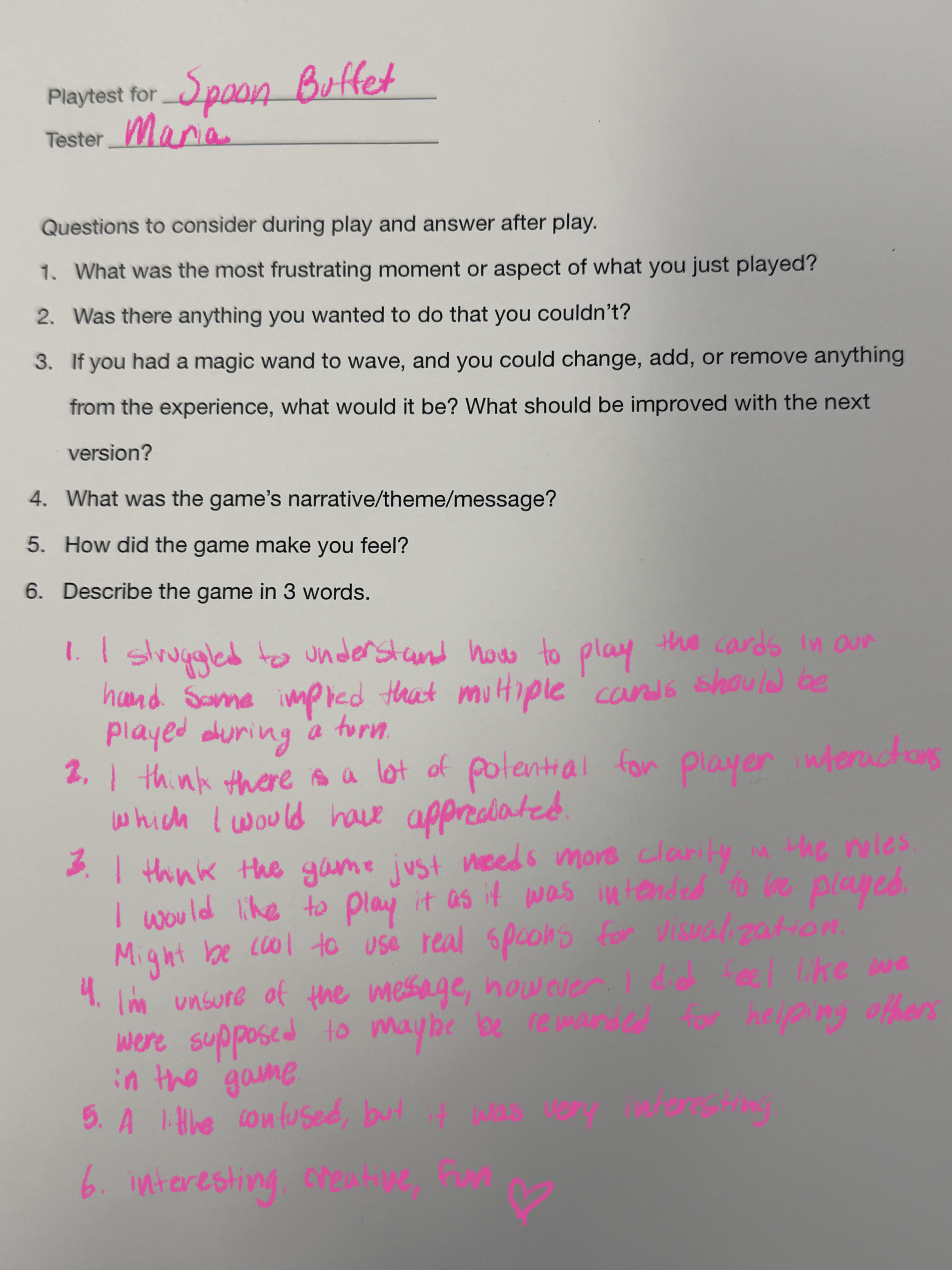
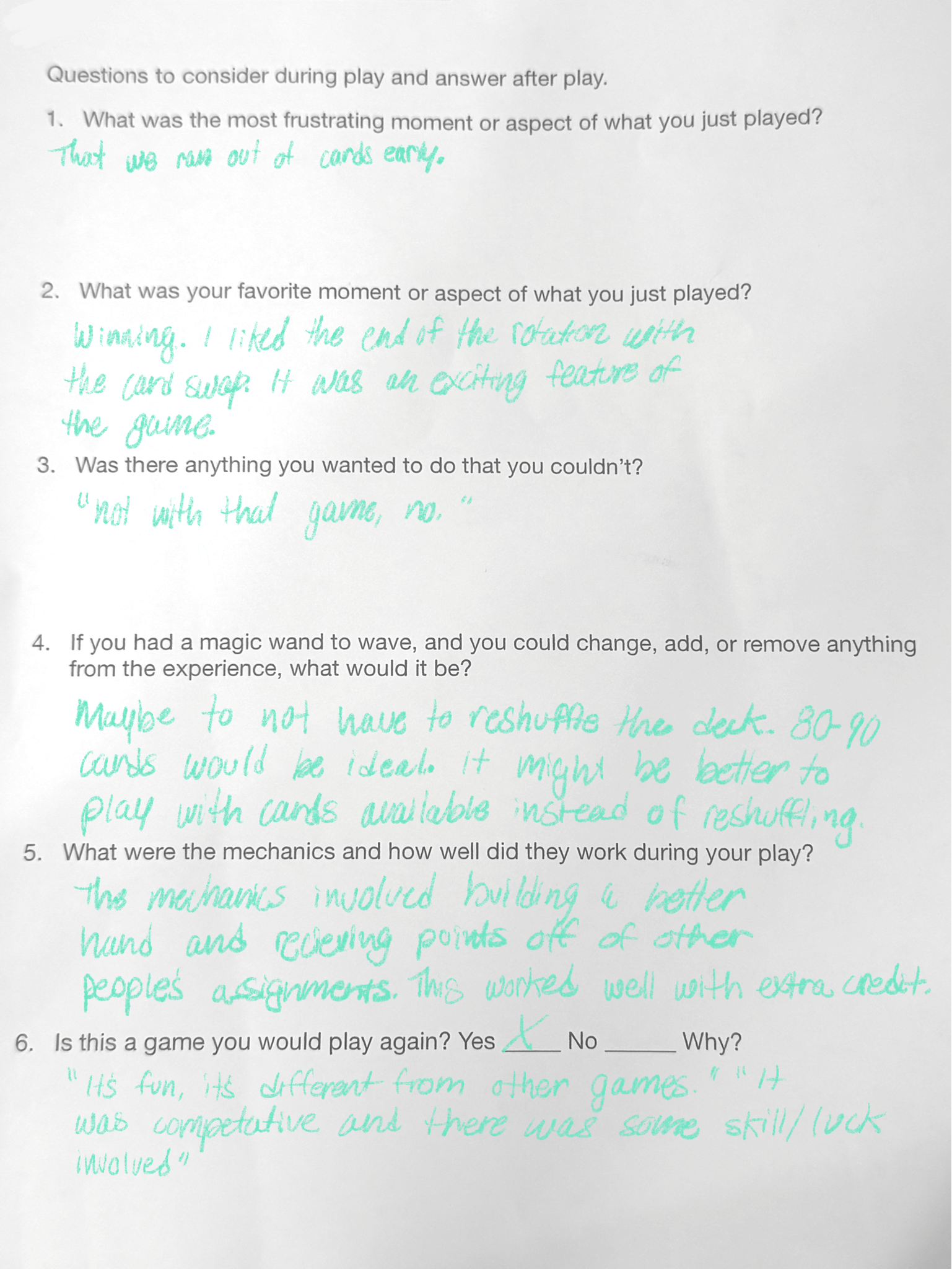
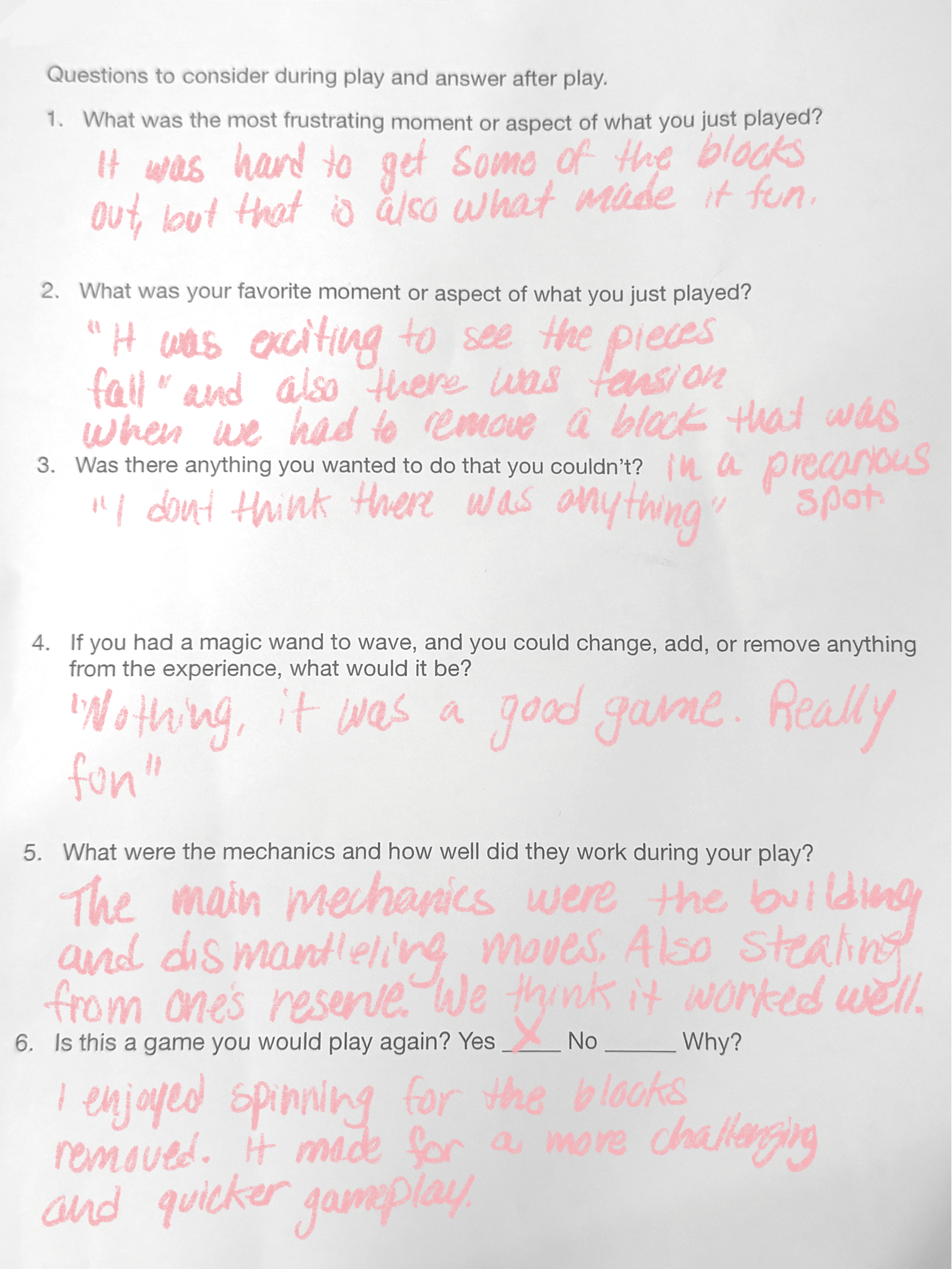
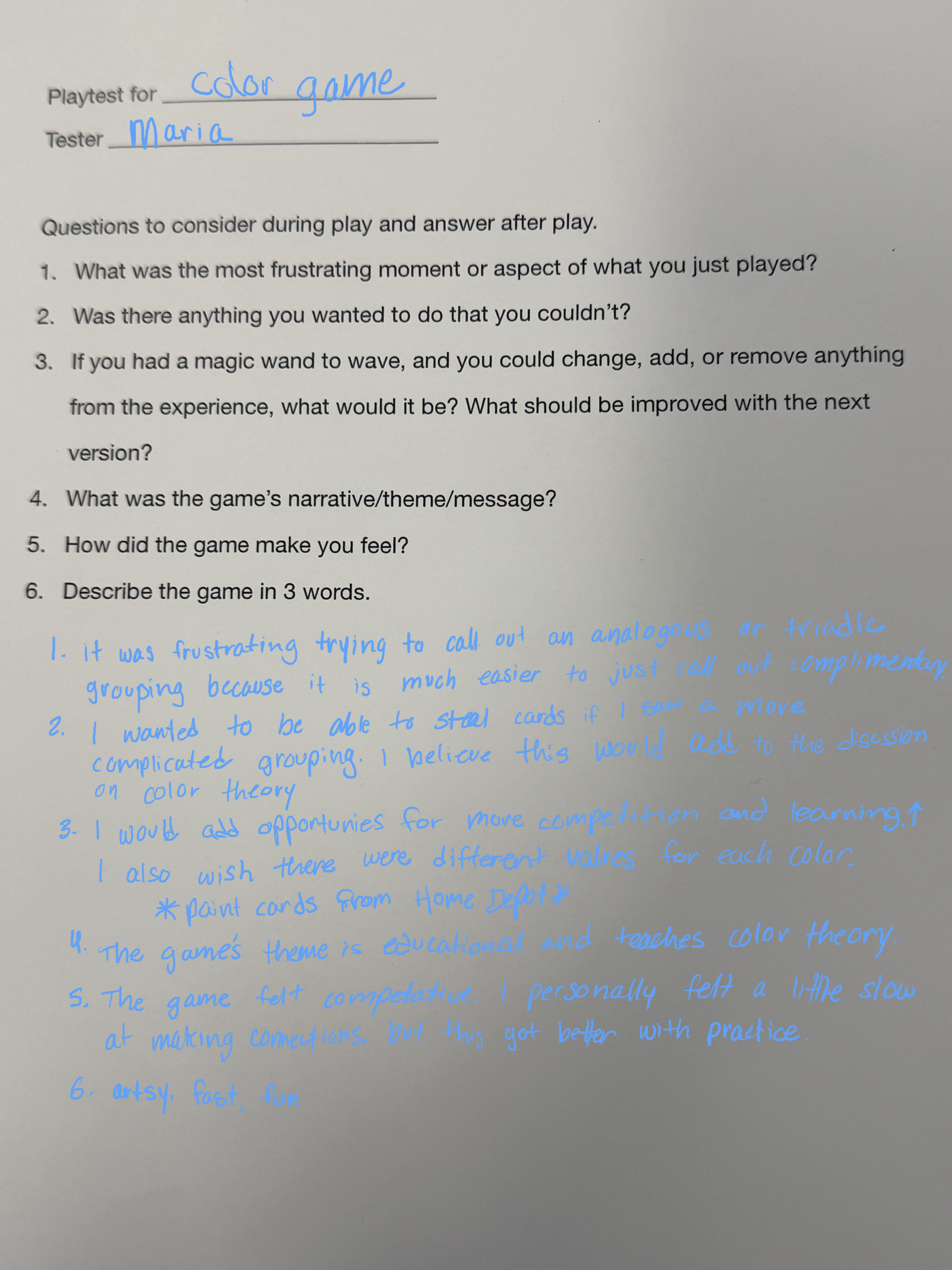
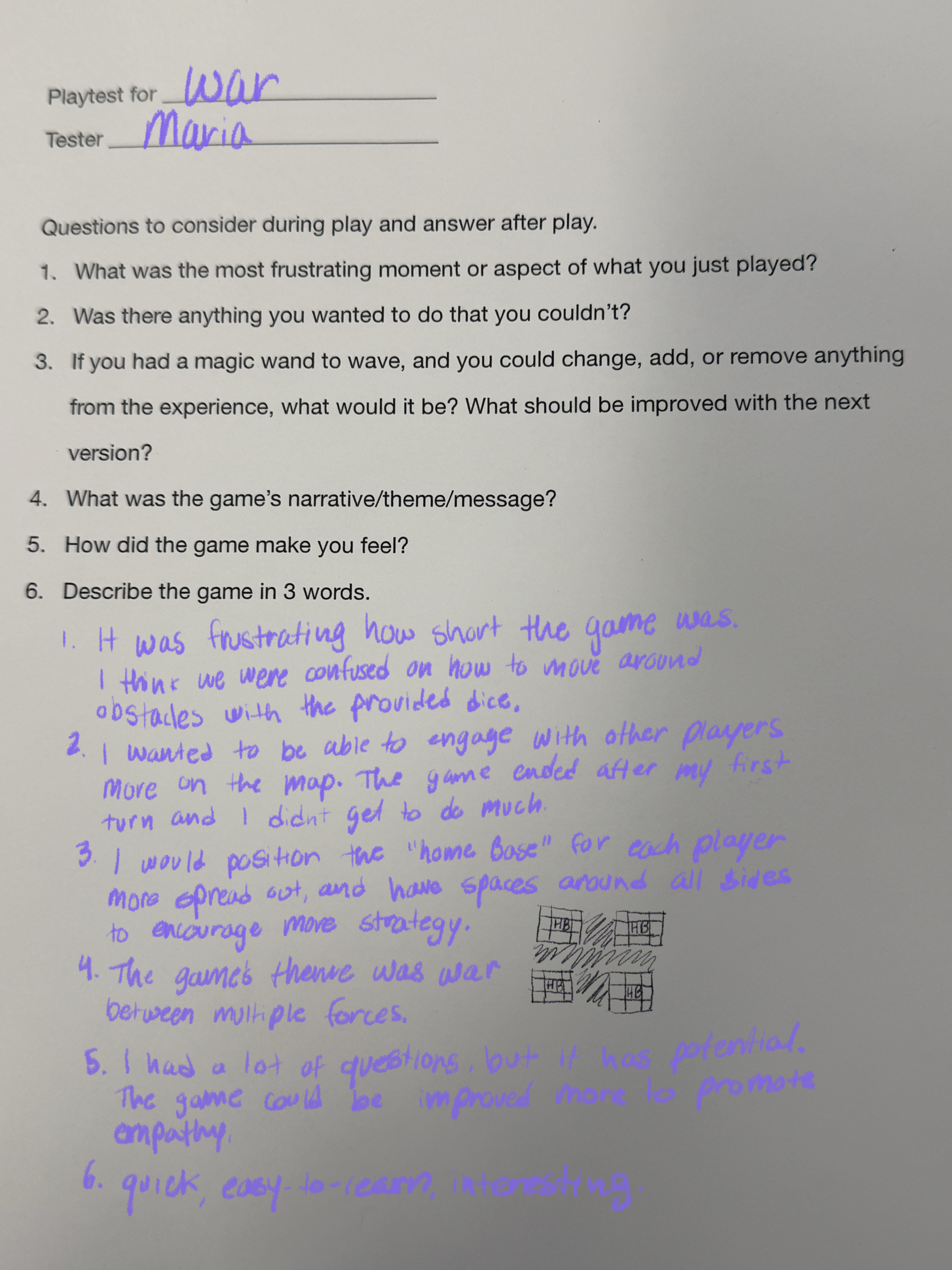
Attached is also a player’s review sheet for both of my competed games. I asked my family for their feedback and took these notes before my final revisions.

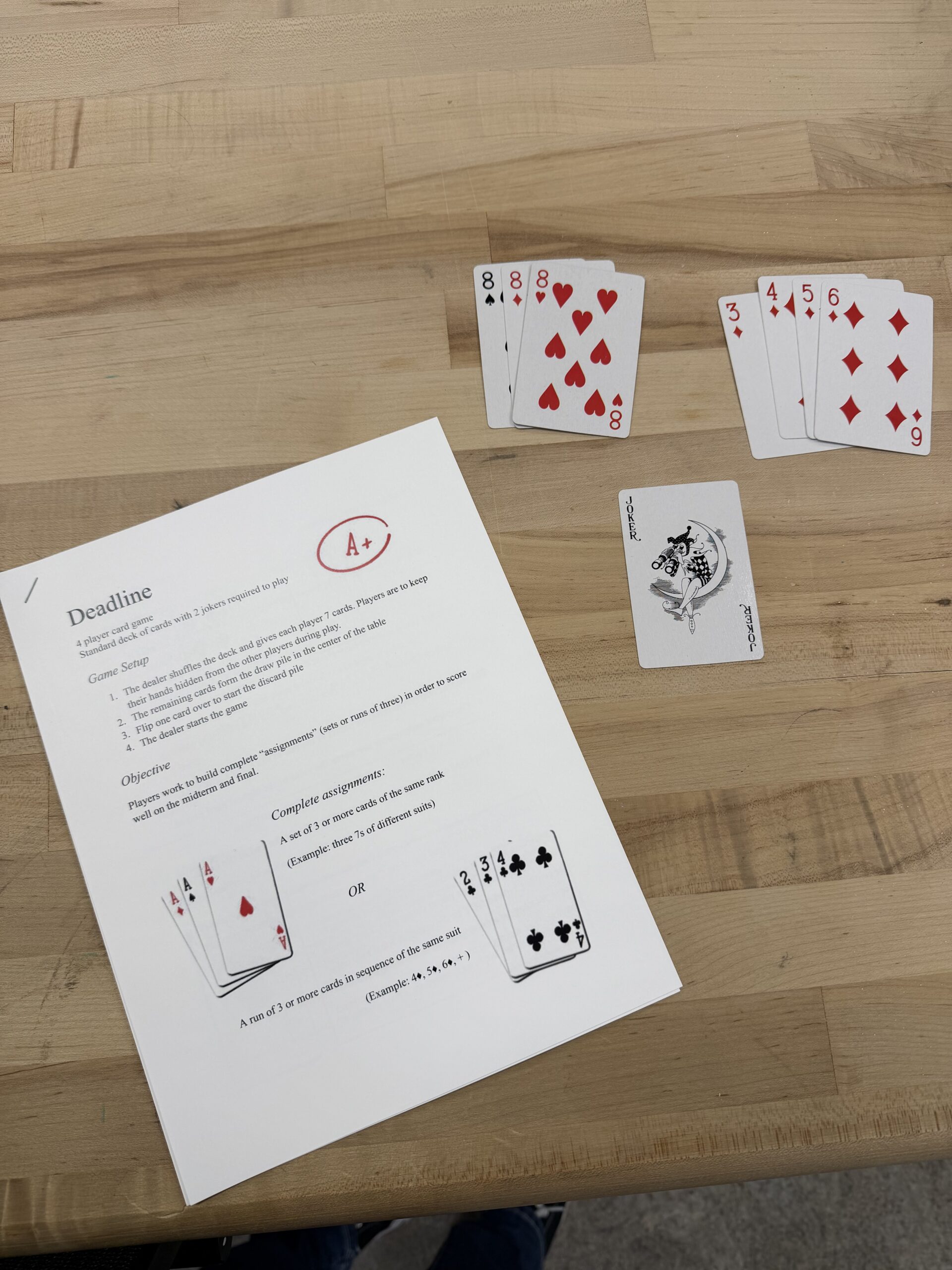
Game 1 – Deadline:

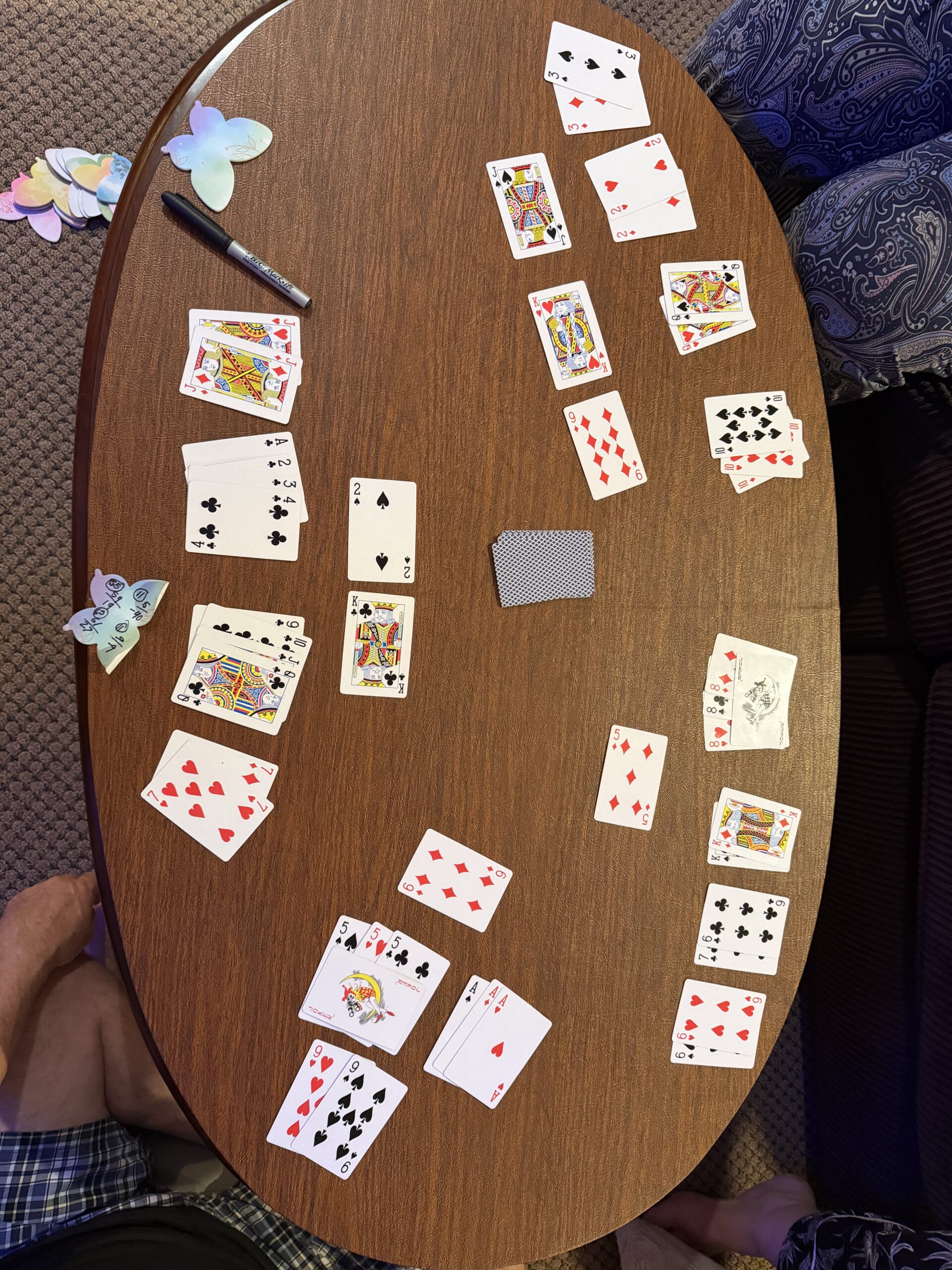
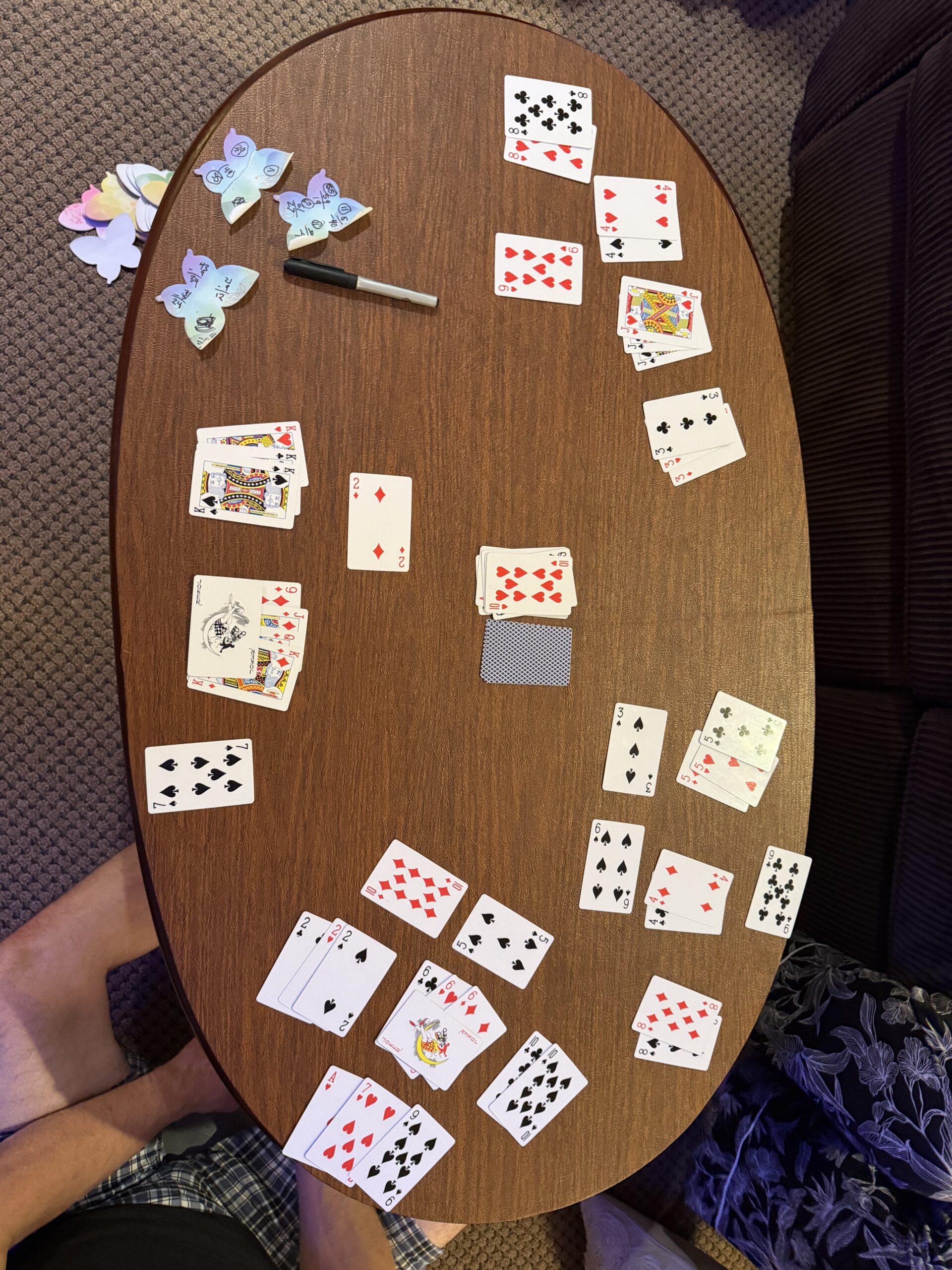
The biggest changes I made to my card game throughout the semester was clarifying the rules and balancing the final scores. I learned that adding illustrations was a more effective way of conveying the layout and specific objectives. I also took note of any confusion during the gameplay experience and made sure that my updated rule sheet reflected these notes from playtesting. In my next iteration I would test out the scoring of consecutive cards of different suits, as well as creating a specialized deck of different classes (Math, English etc.). I also need to expand on the rules regarding extra credit, and building off of extra credit to accumulate points for a “completed assignment” in the game. Playtesting my first game taught me to be thorough with filling these gaps and anticipate questions players might have, especially if they have no experience with Gin Rummy suit building mechanics.

Game 2 – Witch’s Brew:

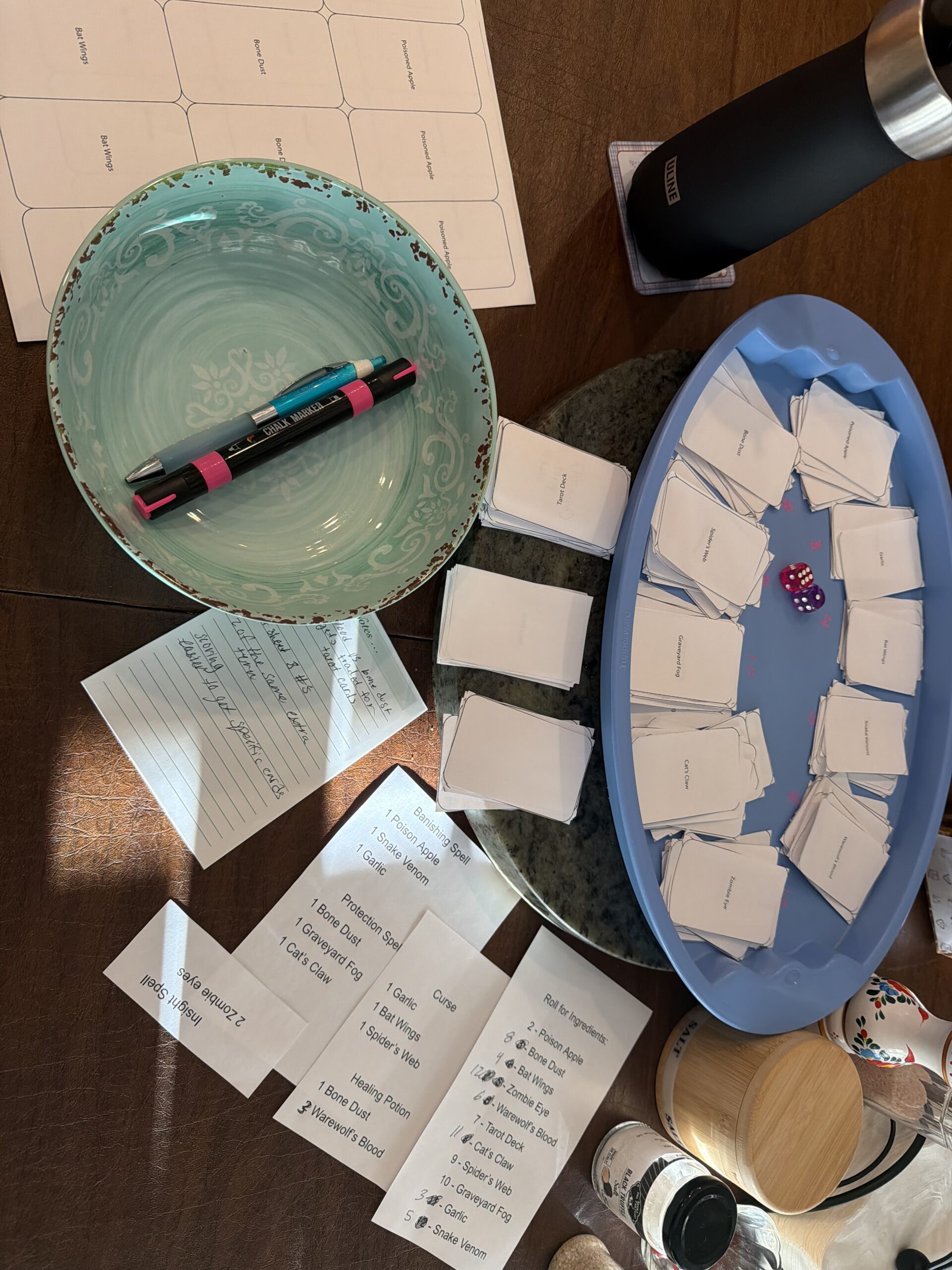
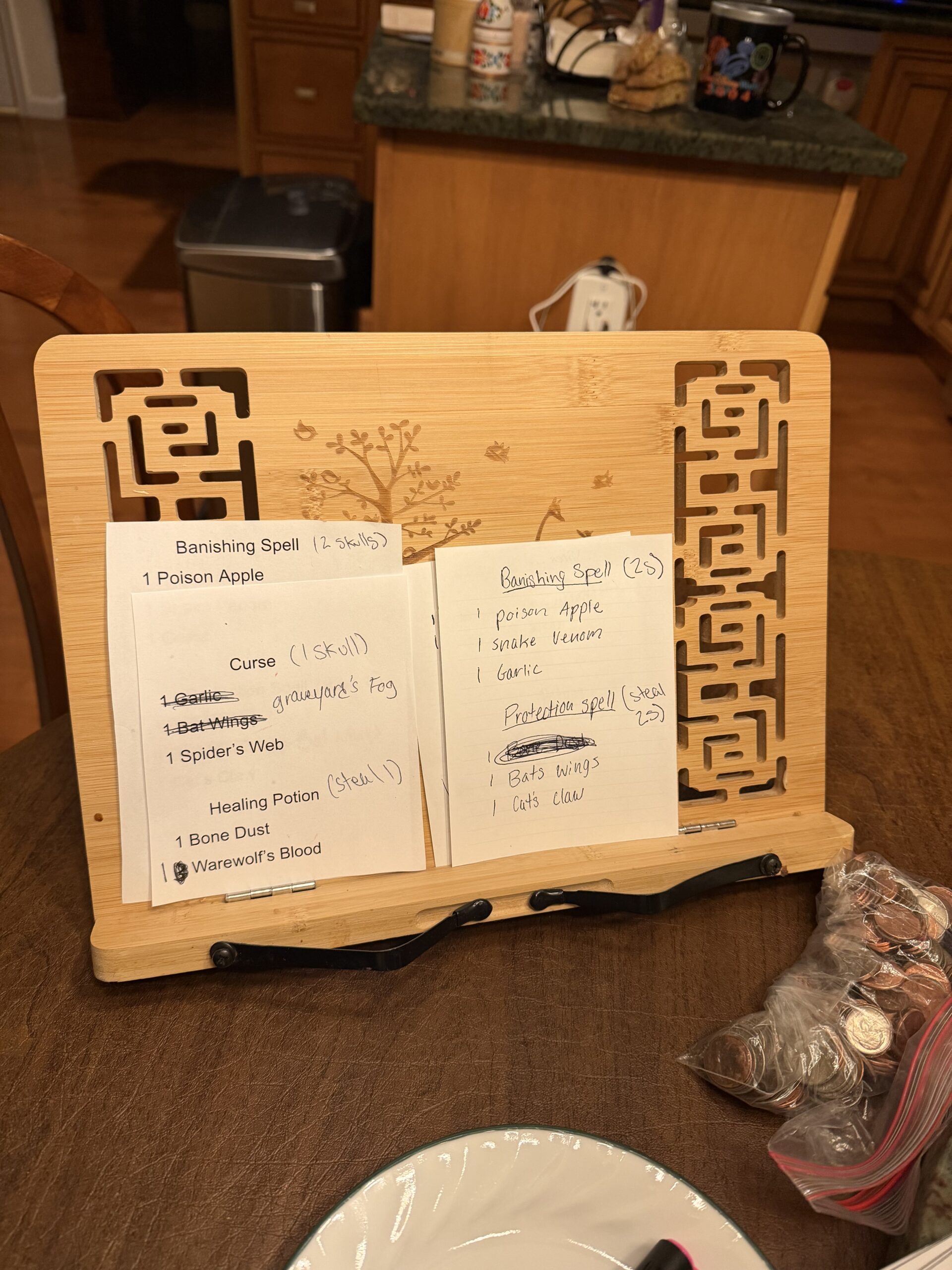
The first iteration of this game had a lot of room for improvement. I explored the use of dice, inspired by Catan, as well as an alternative version using a Game of Life board game spinner (1-10). Though the spinner would have worked for gathering the necessary ingredients, I attempted to balance the game with the probability curve of using two dice. I ended up simplifying the spells, adding action cards for rolling a 7 (the most common combination), and adding special benefits for rolling a 1 or 12 (the most rare combinations). In the next version of this game, I would test out a board more similar to Catan for balancing. Playtesting I learned about game pacing, and managing player frustration.

Game 3 – Takedown:

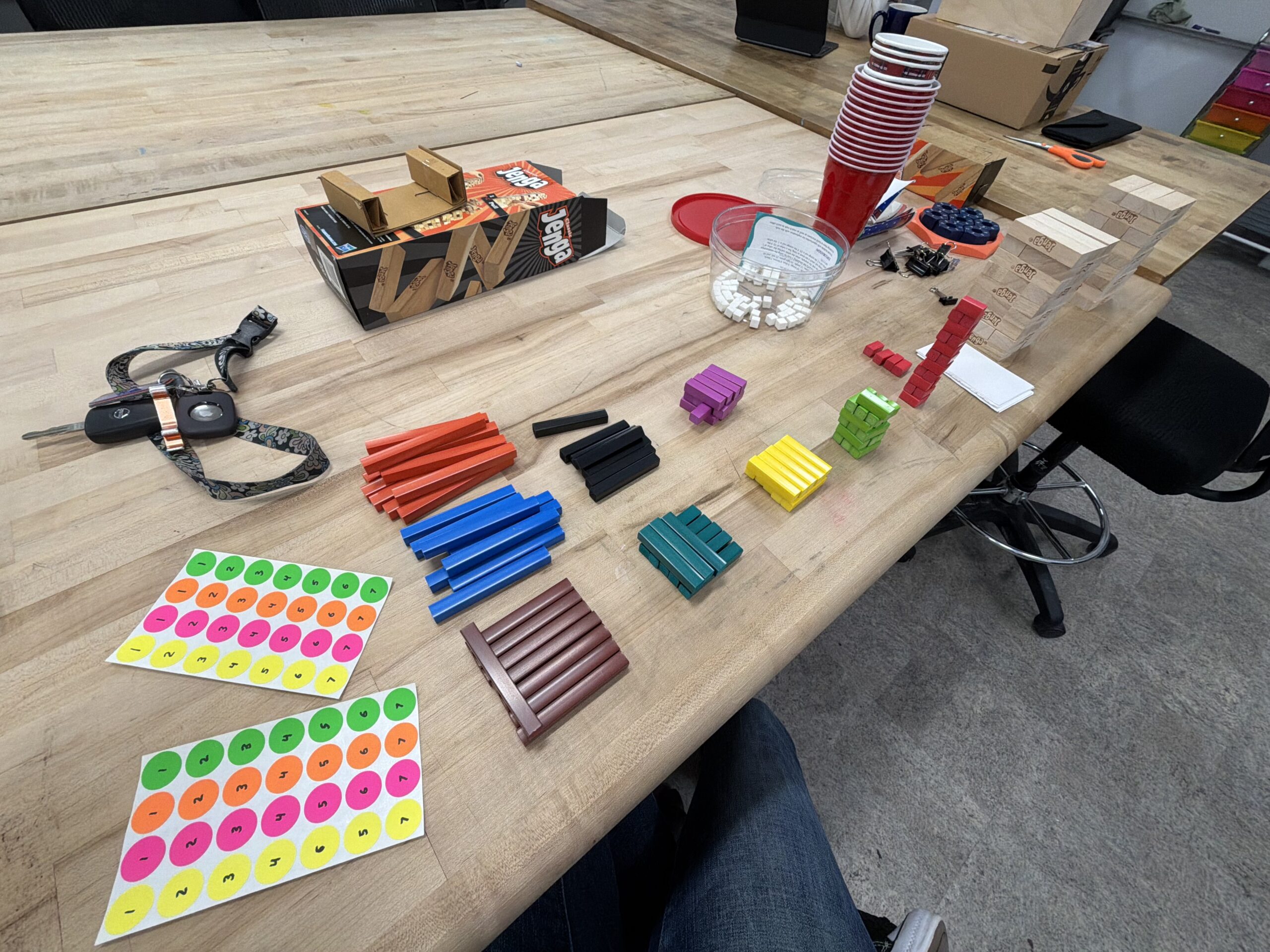
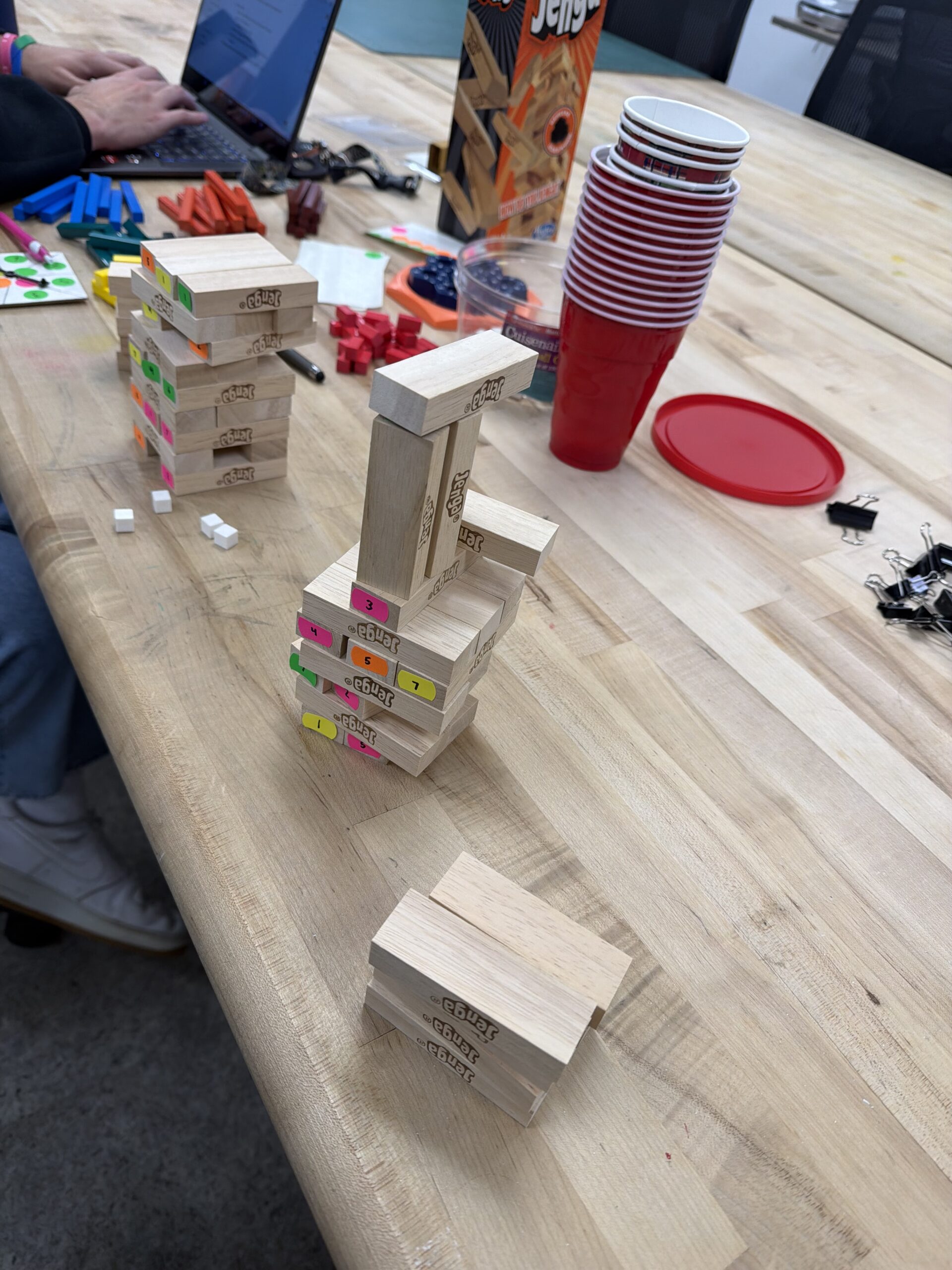
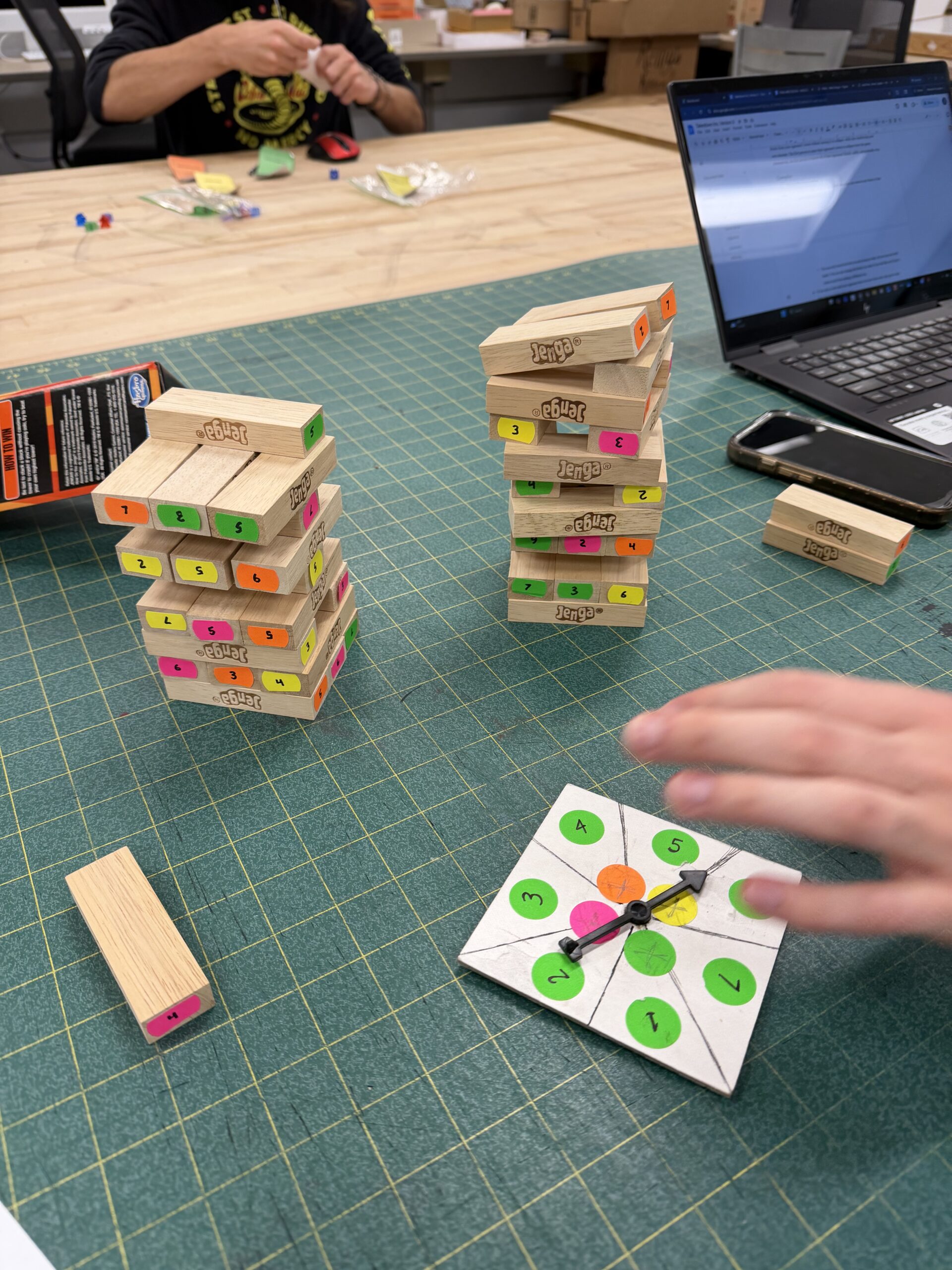
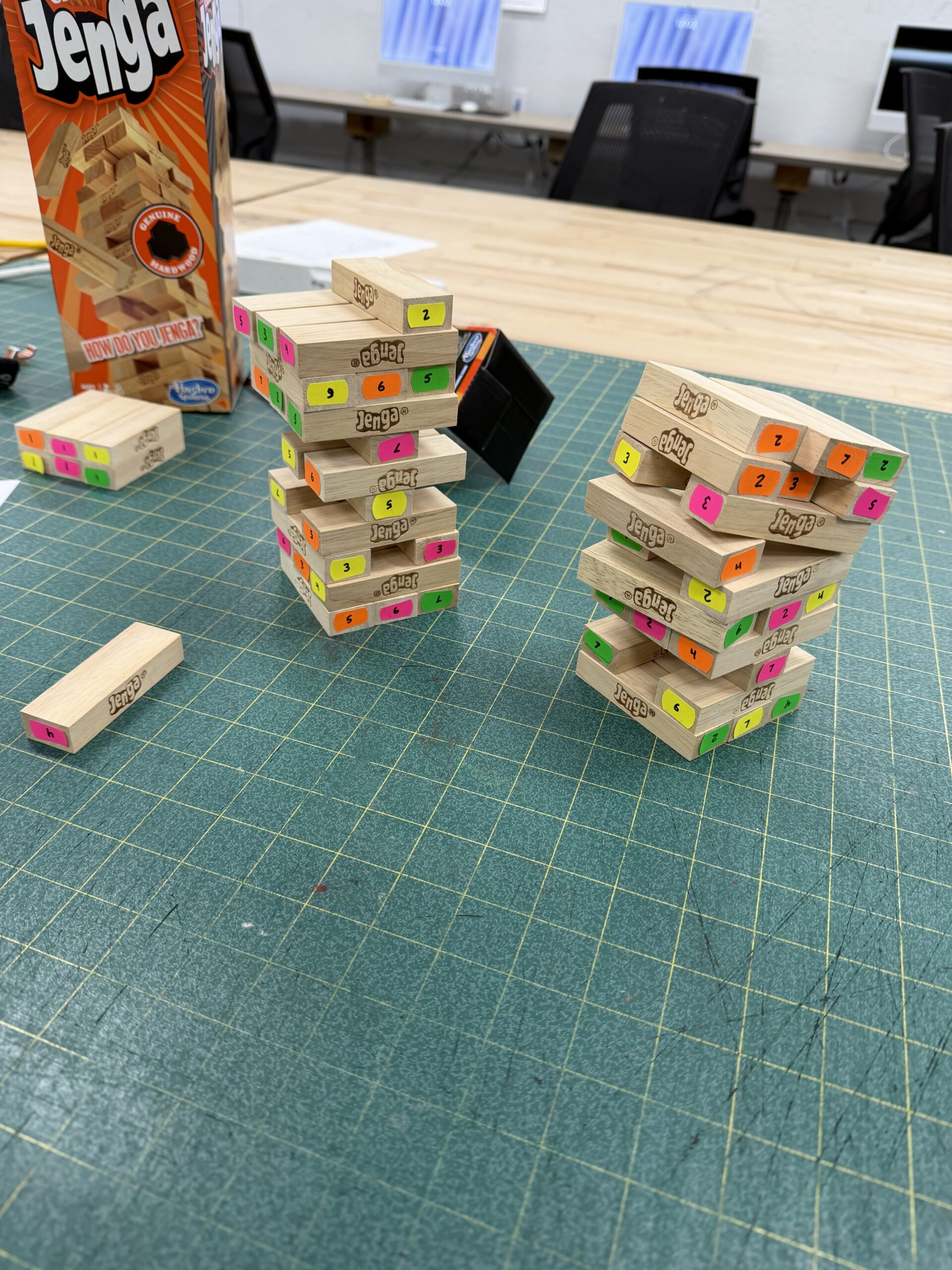
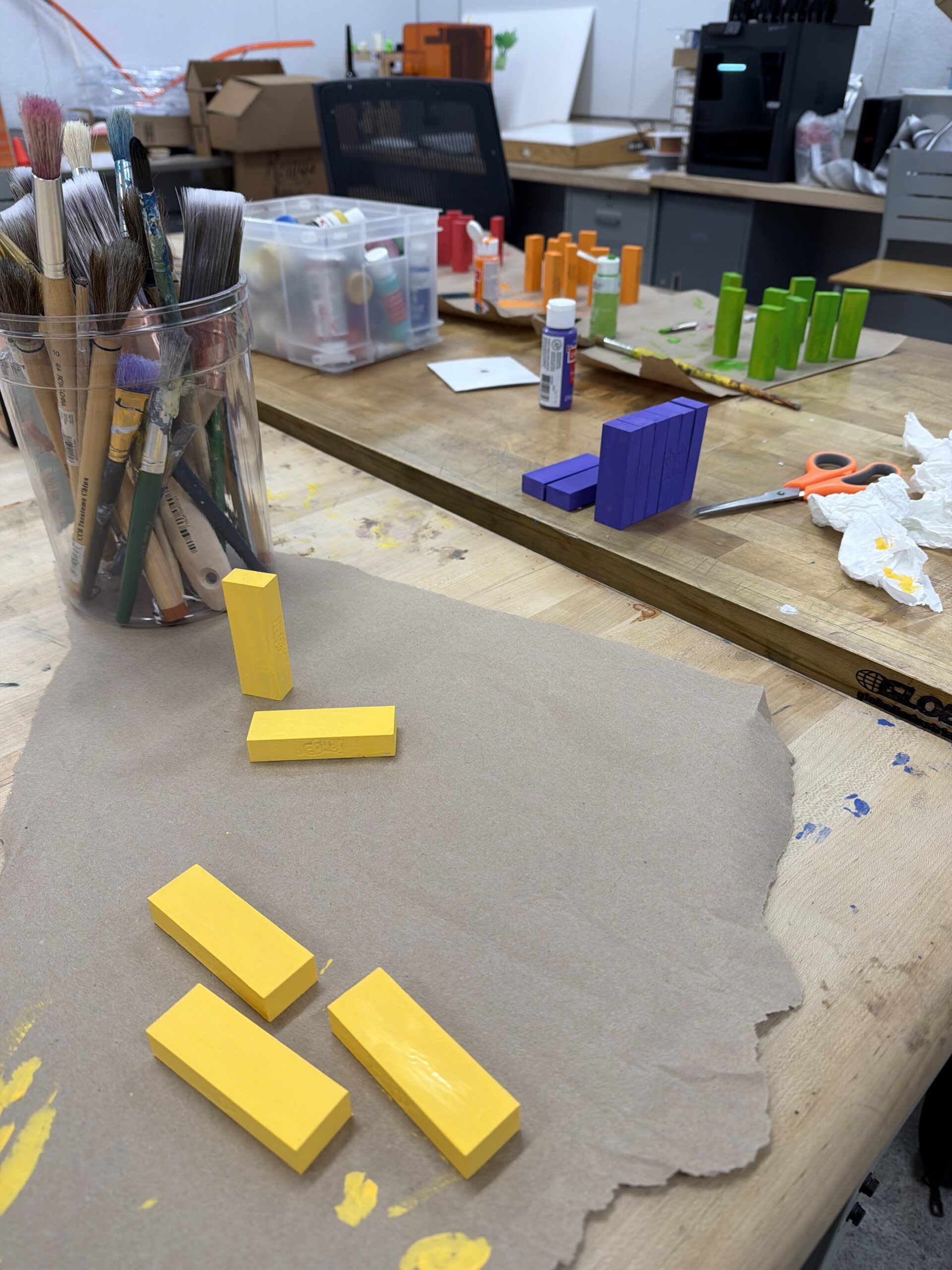
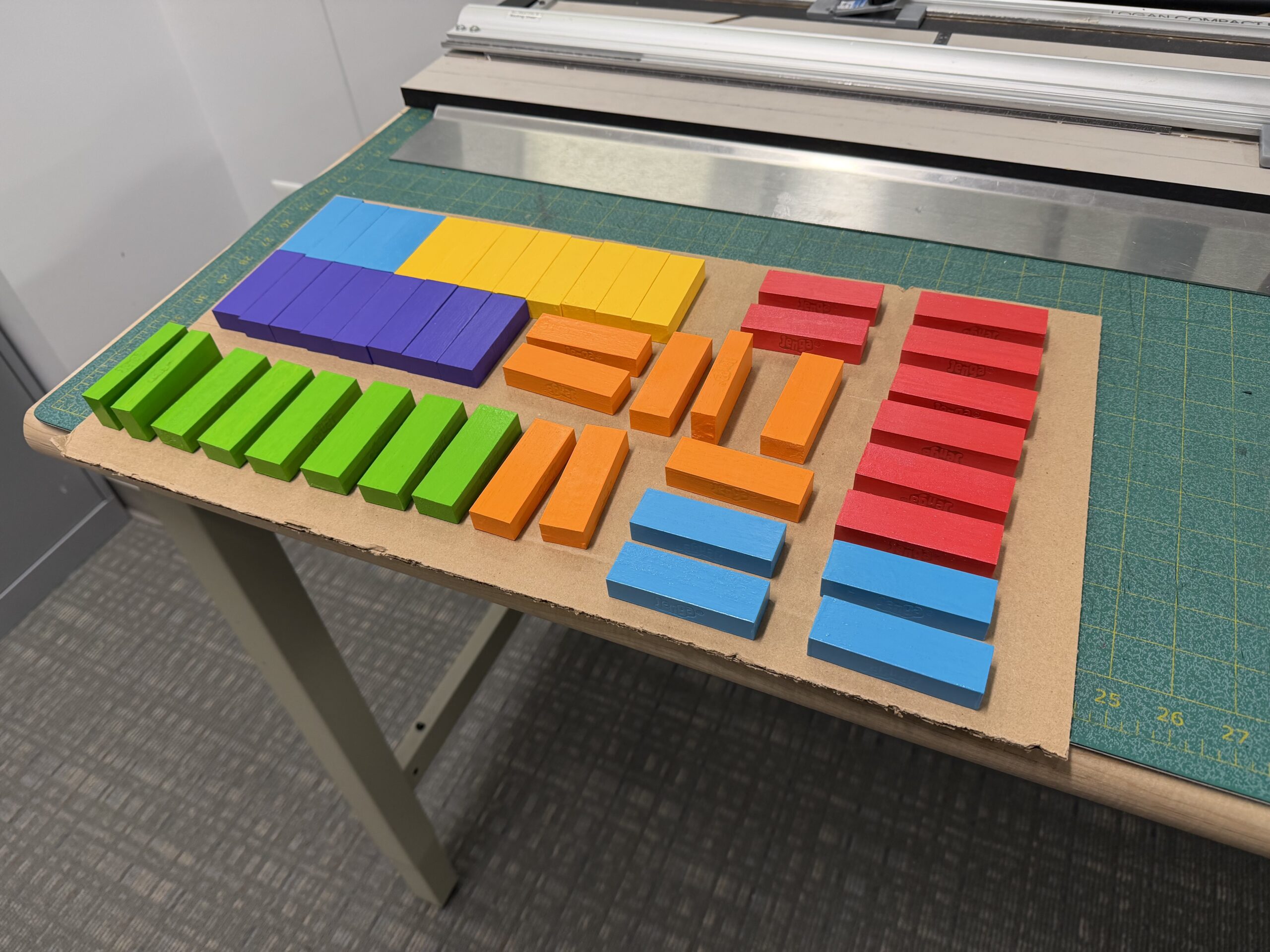
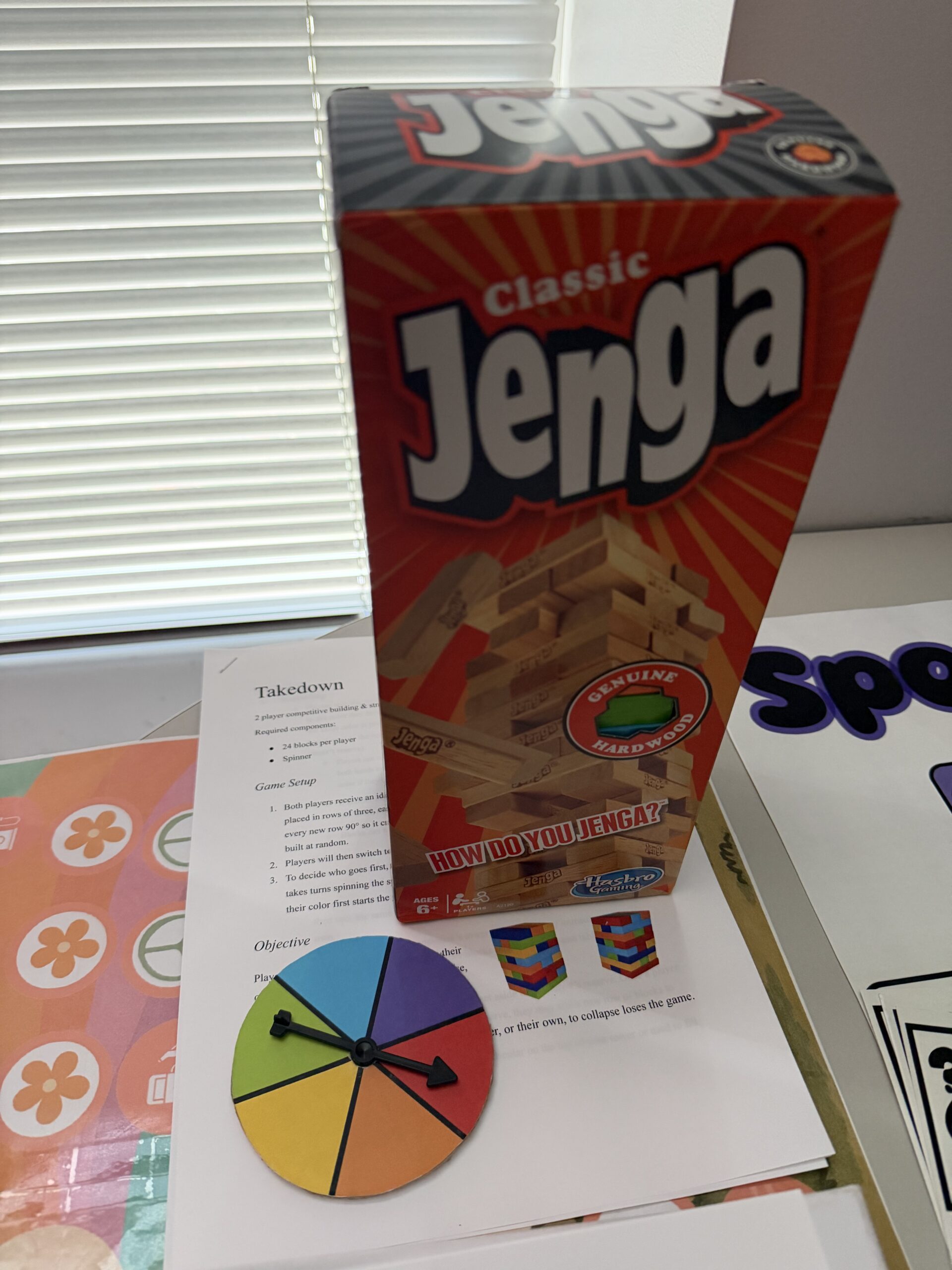
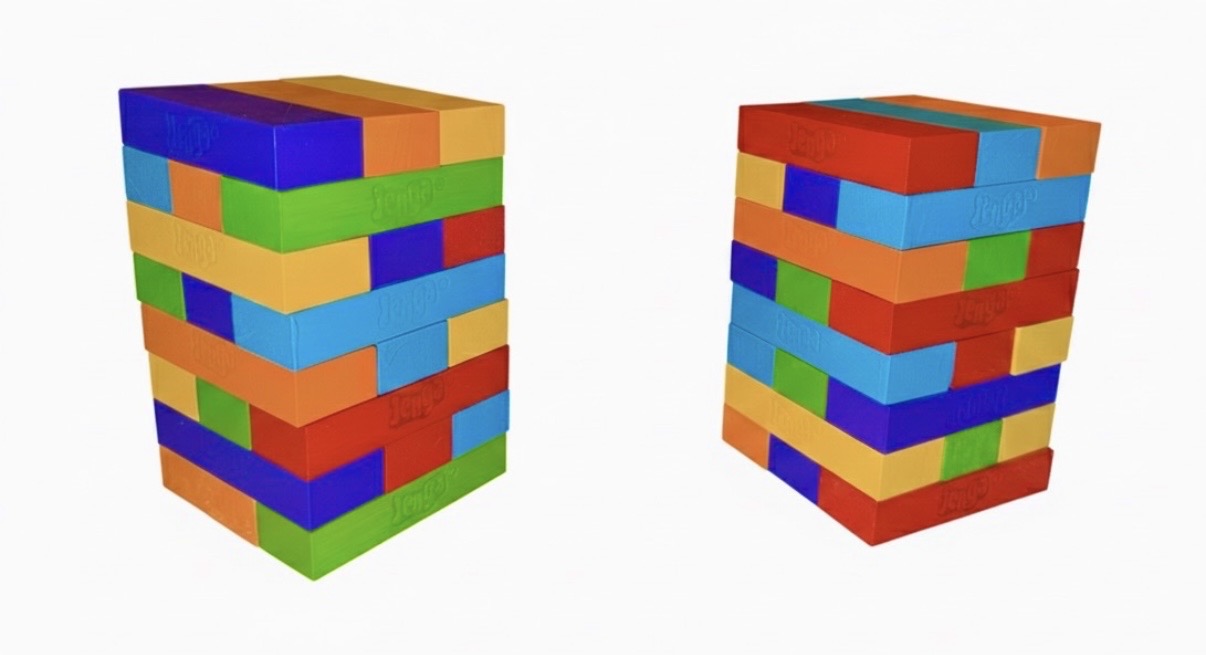
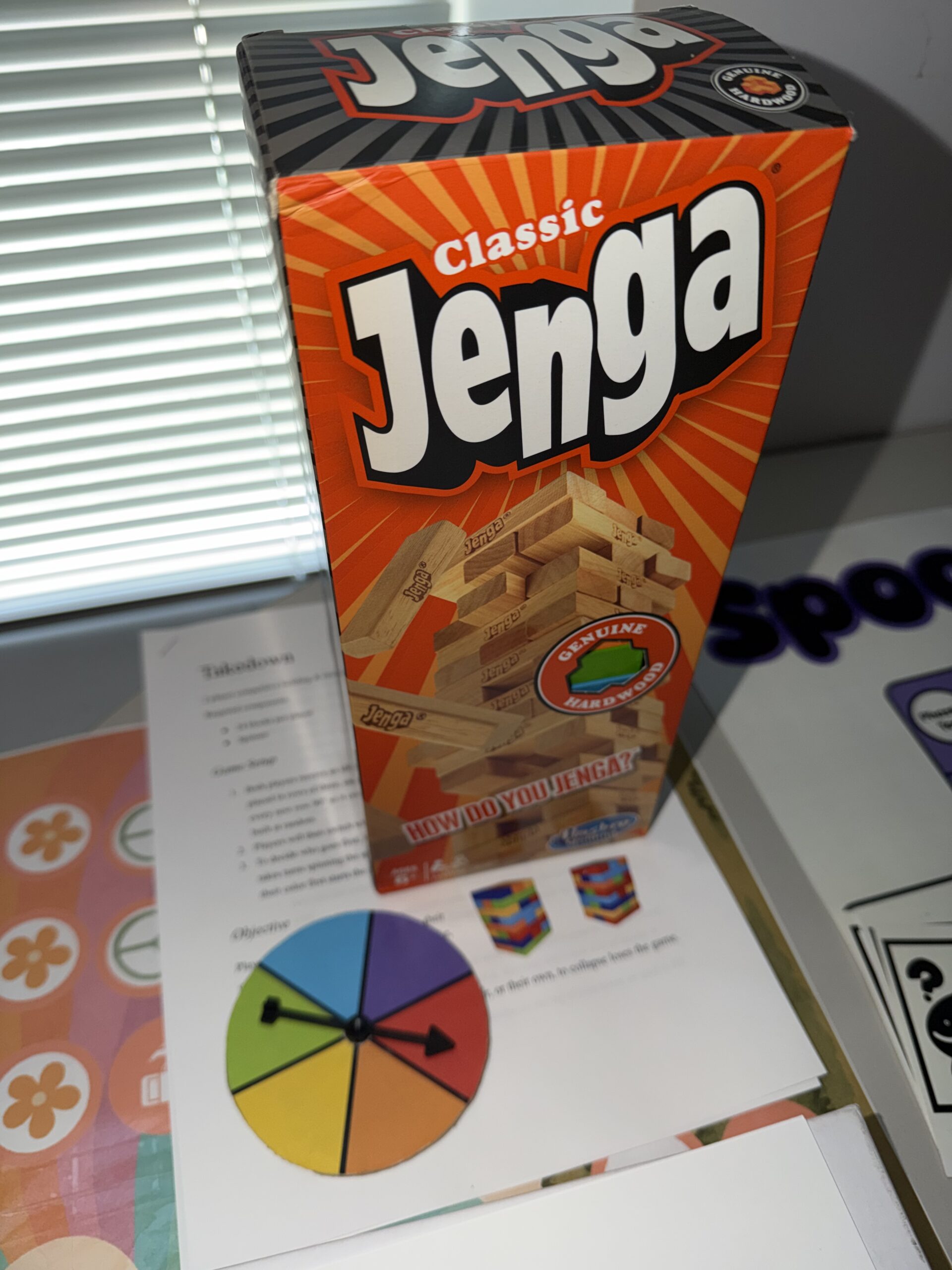
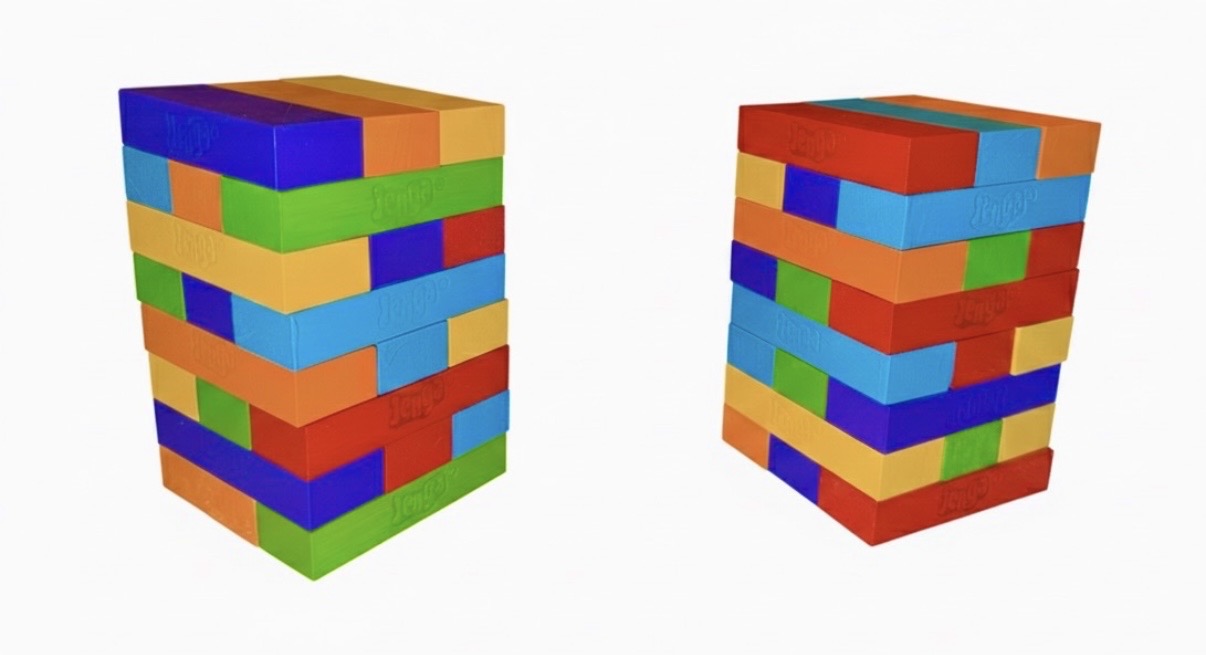
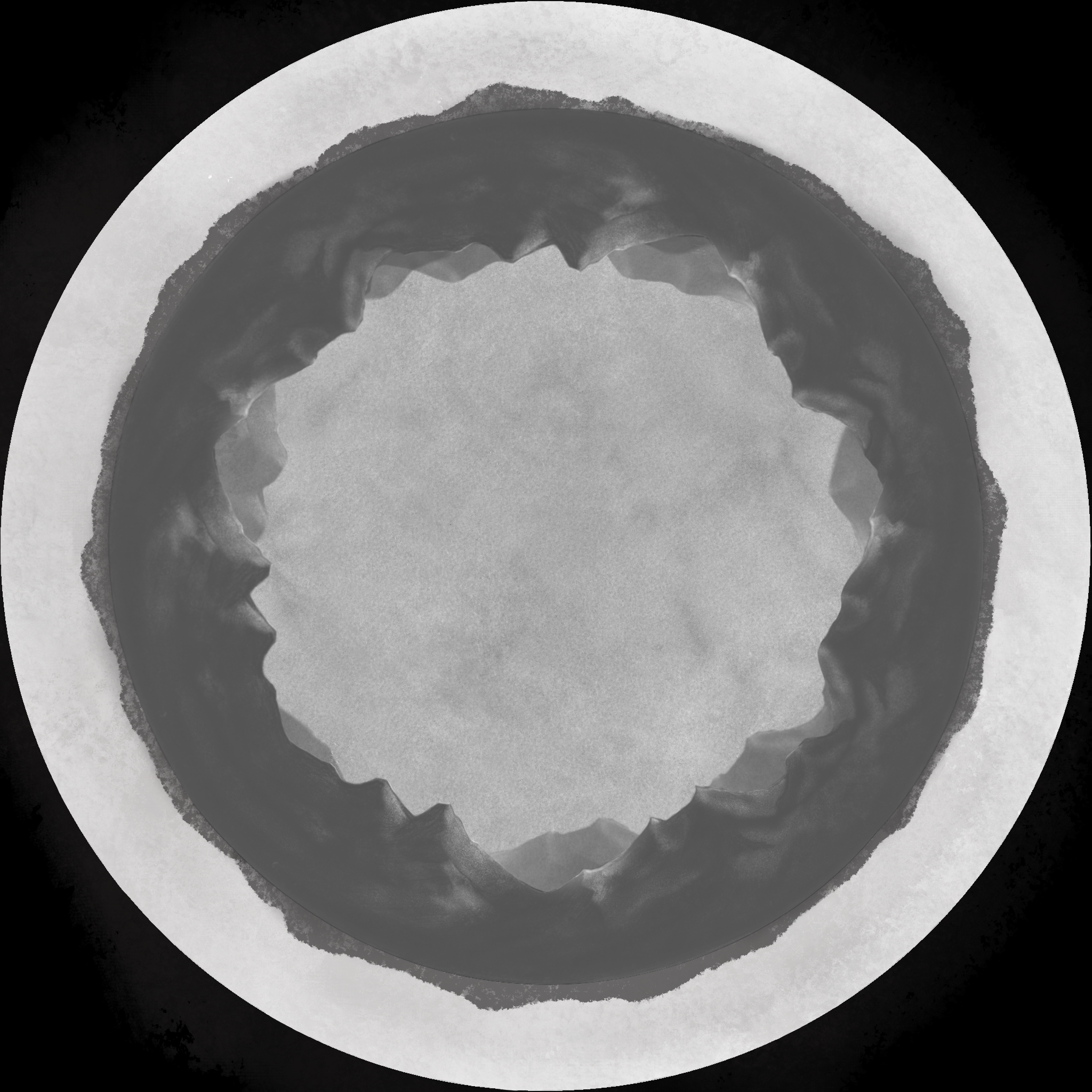
This was our two player game. Originally we used a number system for the blocks, but found that colors would be easier to identify on all sides of each block. We also removed six blocks from the original Jenga game to account for the height of the towers and chosen number of blocks per color. We then worked on crafting the blocks, which were painted with acrylic and then spray painted with a satin finish, and our matching spinner. For the spinner, I used a heat reactive glue sheet (I forget what this process is called) and baked a printed image onto the surface. This was easier than I would have imagined, and I believe it game the prototype a finished look. As for the gameplay, we defined and redefined how many blocks would have to fall for the players would lose the game, and how blocks could be stacked. In the next version, I would like to incorporate wedge blocks like we had talked about, and maybe special weighted blocks so that support the building mechanic and potential for sabotage.

Screenshot
Screenshot