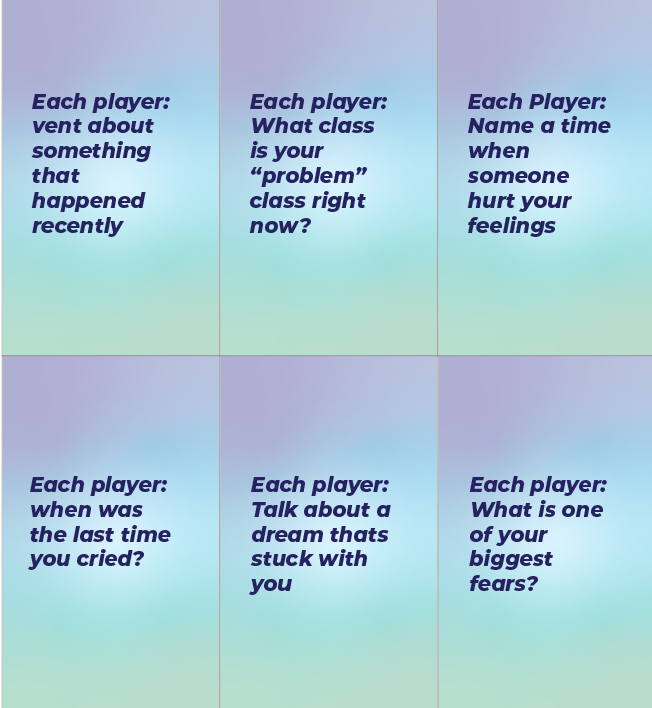
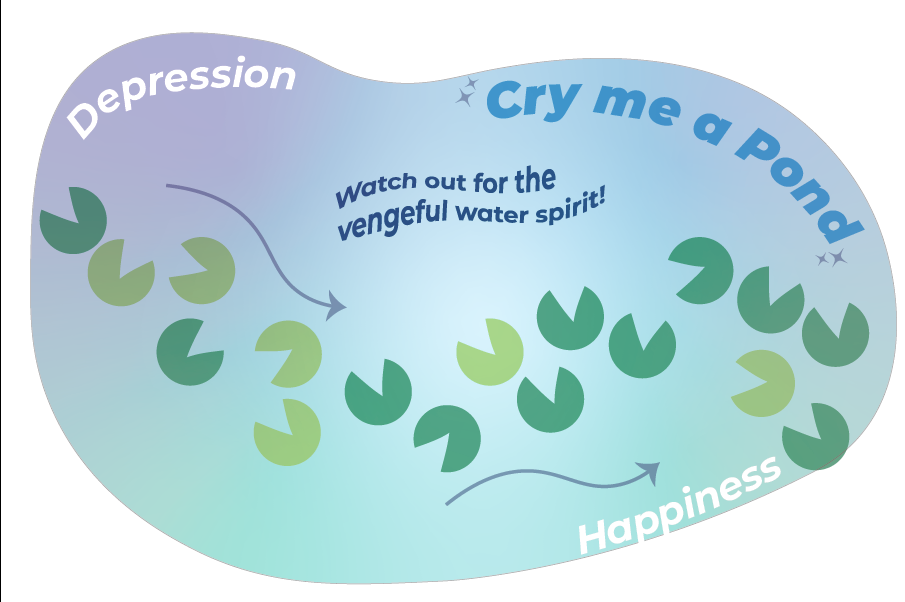
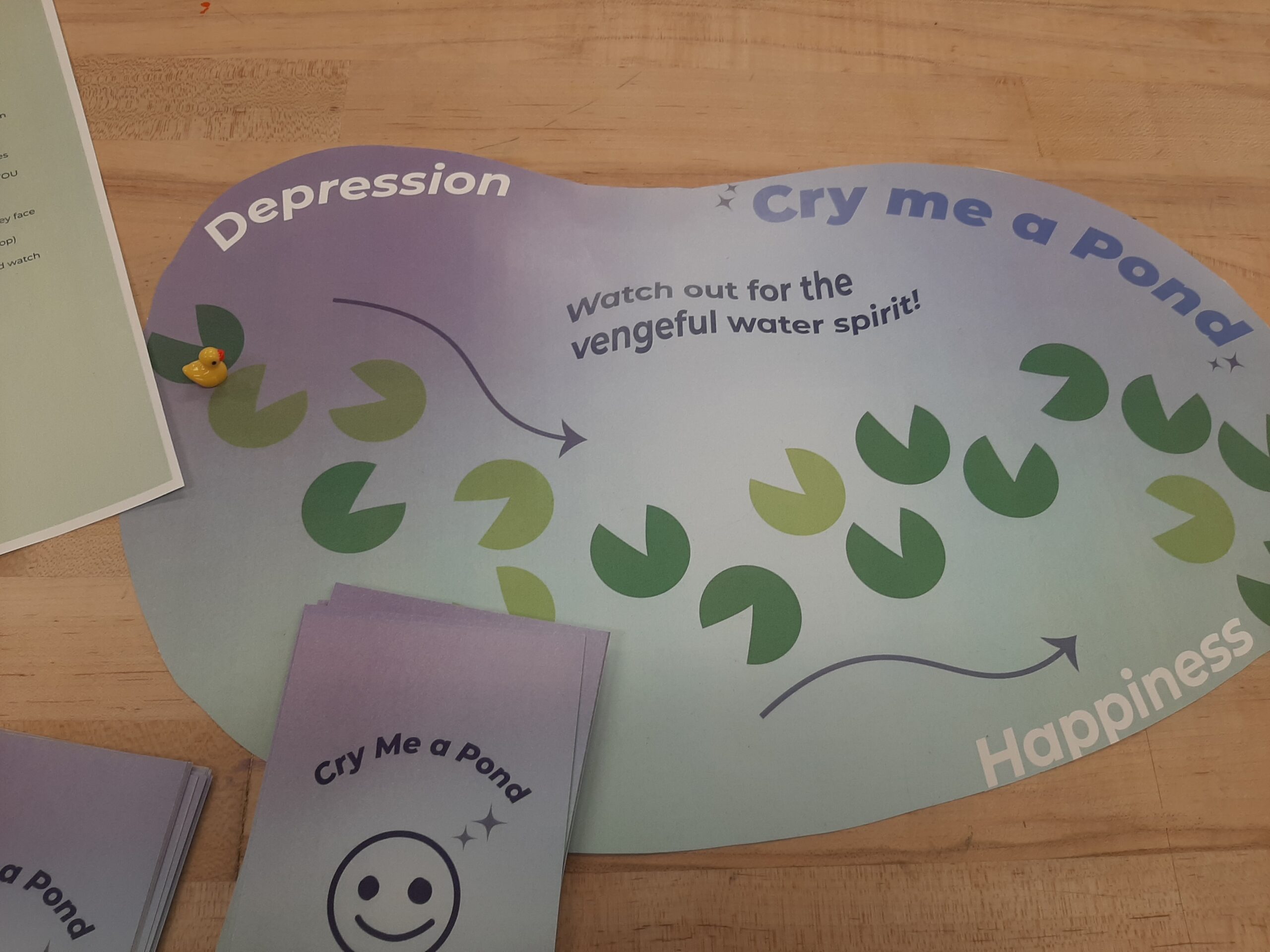
To develop this game, Sara and I really just wanted to make a game that kind of mimicked how we felt about life at the moment (probably more so myself, though). Somedays you really just need to talk it out when you’re having a bad day, but there are also good days along the way (hence the happy cards). However, on top of all of these overwhelming emotions doing schoolwork can also become a lot, which is where the frustration of the game design questions comes. This game is definitely not made out of hate of game design, but more of the disappoint that we can’t put effort into the class because we are already so drained from other stuff.
A big part of the process for this game was the brainstorming we did on the whiteboard (what we wrote is a secret though). We originally thought of having Ames having laser eyes or flames that dry up your pond and then you have to “cry” (or really just talk about your emotions) in order to fill it back up and hop along the lily pad spaces. We elected for something that fit with the pond theme a little bit better, but having spaces disappear and reappear may be something we revisit for future prototypes.
For the design, I did the basic card templates and the pond design. Sara did the fabulous drawing of Ames as the Vengeful Water Spirit.
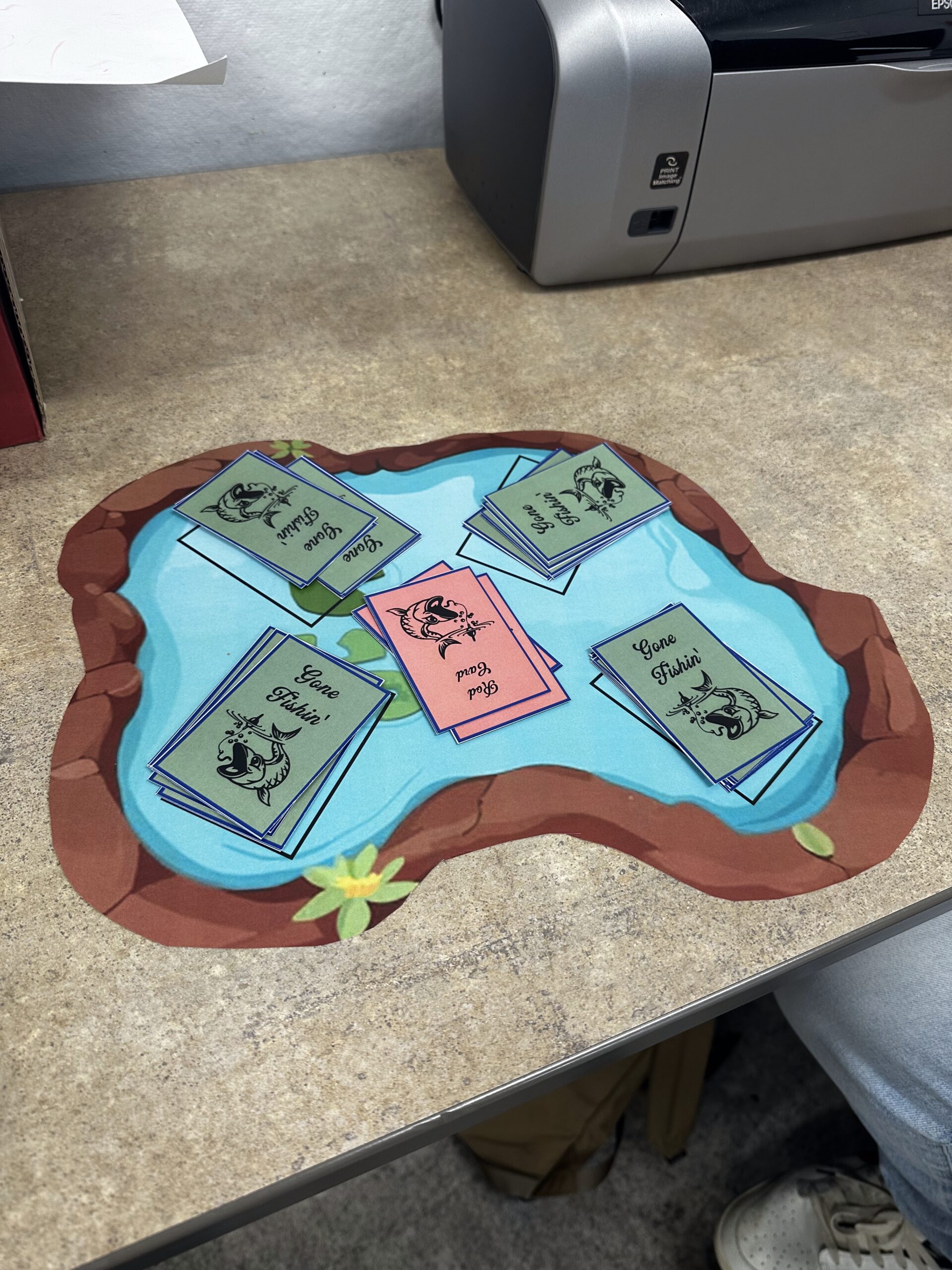
Each player selects their choice of rod and players collectively agree which location they want to fish at (Each Location has different types of fish to catch). Shuffle the deck of fish cards and place 5 at each “honey hole” on the map.
Game Play:
To start the game, roll a 6 sided die in order to determine the order of play. Each player will roll their dice and if they roll the correct numbers corresponding to their rod, they get a chance to pick a fish from the “honey hole” they choose. You must pick which honey hole you want to fish from before rolling your dice. Some cards have no fish on them and you may catch a “junk” item which does nothing.
If you catch a fish you get to put it in your cooler. You may only have three fish in your cooler at a time. If you want to continue fishing once you have 3 fish in your cooler, you must release a fish back into the wild (discard pile). This must be done strategically since you may release a fish and catch a worse one.
Winning The Game:
The way you win the game is by catching the biggest fish for that type of species.
EXAMPLE: You have the largest crappie and bass of all the players, so you get 2 points.
The player with the most amount of biggest fish wins, so it is important to try and catch multiple big fish and not just a singular one.
Victim Olympics – This could be an interesting board game that plays off of the idea of the term “victim olympics” where one group of people or demographic tries to put their struggles and challenges over those of someone else, trying to be more so the victim. The game could also incorporate olympic type events and sports to make the experience more fun. For instance, maybe there is a sprint that involves trying to outdo the other team. I think it is also important to acknowledge that this term can sometimes be thrown around in a context where they are saying it because they believe that people just want to feel like a “victim” or that they “want attention”, but in reality, their struggles should not be downplayed. Ultimately, this game would try to make the point that everyone’s struggles are valid and unique, and there is no need for competitive comparison.
Pink Tax Game – Play as corporations that are trying to make the most money off of their female customers. You need to upcharge for feminine projects, or simply if the product is “girly” or pink. This game could also be competitive where it is the females against the corporations.
Swift Logistics – Taylor Swift game about her flying from city to city (think logistics of her lifestyle and concerts and environmental impact) but try to not necessarily bring down her successes as a female artist but acknowledging that there are some downsides. This game could be about managing going from place to place and concert to concert and show the extensive resources that go into concerts and energy consumption. Thus, this would be a resource management-based game.
The Parasite Class – based on the post on x that elon musk shared that anyone receiving financial assistance from the government is leeching off the resources, except the game would really highlight how that the opposite is true of most members of the lower class and it would showcase individuals experiences stories and situations to humanize it. Players would have to grant funding to individuals who need it.
Project 2025 or a bunch of lies – This game is essentially a trivia game that helps familiarize people with the contents of Project 2025 since it is very relevant to American citizens. Since the original document is hundreds of pages long, this would help increase understanding.
We Didn’t Start The Fire – a trivia game based on the song “We Didn’t Start the Fire” by Billy Joel. This sound contains newsworthy events and pop culture references from the 40s to 1989. This would also include the updated Fall Out Boy version that covers events up to 2023. The back of the cards could have pics of the different artists on the back so people can identify what song it’s from and roughly what time frame they are working with. I think this is important for people to be educated about both pop culture and historical events, because I personally don’t recognize a lot of the references in the song, but I know that they are in reference to history that is pretty important.
blue collar monopoly – working on dangerous job sites, looking dirty, etc. (idk my boyfriend suggested this idea and I can’t remember what else we talked about this idea)
Realistic Game of Life- Some of the editions to make it more realistic: insane medical bills, your dog died as a card, layoffs but you don’t get a new job immediately, unemployment denied, job applications. Essentially just make the game less fun and cheeky and a little more serious and grim.
Candyland, but it’s a critique on diabetes and the consumption of junk food. Cards would provide statistics about diabetes, obesity, and other negative health implications. The game would still be very visually appealing with lots of sweets, but the gameplay would help you realize some of the negative consequences.
Operation but it is about plastic surgery and botched operations. You would have to give people lip filler, perform liposuction, BBLs, rhinoplasties, etc. If you touch the side like in normal Operation, you have botched the person’s appearance forever.
No before you go driving simulator – This would be a driving simulator for people who have driving anxiety and it could help them practice routes that they may need to drive so that they are already familiar with the roads and the surroundings and any interesting traffic situations. The game would not include any crashes or really any consequences because I want the driving experience to be presented in a way where it is not this scary terrifying thing where you feel like you’re going to die. I think there also could be a mode where you can practice certain situations and other things. For instance, one situation could be what do you do when you get pulled over by a cop or what do you do if there is an ambulance coming or your windows fog up. For a little more context, I have experienced driving anxiety and I often study and try to memorize my routes before I even take them on Google Maps and Streetview. This would help people like myself and even first time drivers. To gear the game even more towards anxiety, I think the game could include tips to help reduce anxiety while driving, especially because judgment can become impaired at a certain point.
City Girl Simulator – This game would simulate what it’s like to be in a city alone as a woman, including the catcalling and dangerous situations that a lot of women unfortunately experience. This would be mostly for men to emphasize with women.
Get a Job – A simulation about the process of trying to get hired as a minority (especially relevant now)
Overstimulation Simulator. simulating what its like to be overstimulated in different situations to show people what its like who don’t really experience that feeling as much as other people.
Food allergen simulator. people would try to live like they have specific food allergies and dietary restrictions to see what other people go through, especially those who have celiac disease and may need to worry about food cross contamination. This could be something that is playtested irl.
Other game ideas
Garden Sabotage from last semester but it’s with a native plants and flowers and invasive bugs to teach people about the importance of biodiversity and maintaining a good native plant garden and why invasive bugs are bad
State park conservation game this is similar to my National Park game idea but It would focus on more local parts even though those aren’t going through a lot of stuff right now with laws but it would teach people the importance of maintaining them and what they’re good for and it would get people to know about some of the different outdoor spaces that are in Pennsylvania and in particularly the side of the state and I think it would be effective because it would present some more local effects as even national effects can feel really distant from people
Turning my mural into a game of hide experience where people can learn about the stuff that I’ve studied with myspace and a can show the benefits of trees it can show how art can be a powerful tool for social change and really just get people to experience my work on another level instead of seeing and reading about it
Game about managing your emotions and daily tasks. You can only manage so much and do so many things so you have to make difficult sacrifices like do you do your homework or do you go to someone’s funeral it’s the really difficult decisions whenever you have a busy life and you are a college student and you have a lot going on
A 2 player or 2 team game about one side being the government the tries to surprise the general public’s protests and revolts and tries to stop it from reaching mainstream media and the general public just wants their causes to be heard they want to be seen and they want change to be made so it’s just a battle between these 2 opposing forces
we all make mistakes – party game where you share something you’re ashamed of, embarrassed about and regret. leads to an open discussion that its okay to make mistakes.
Elderly Simulator: a VR simulation experience to build empathy for the experience of the elderly. Movements and actions would be altered to resemble the reality of their situation.
Civil Engineering Simulator: build bridges, roads, and other constructions and see the simulated effects on the environment and community. Experiment and alter traffic signs to better regulate traffic flow.
Detective Investigation Simulator: see the clues, solve the crime. the game simulates the experience of investigators. Investigate the crime scene, interrogate witnesses, and do outside research to solve the crimes.
History Time Travel Game: travel through history in VR and experience that time period. Perhaps players could be sent to a time period and observe happenings to answer trivia questions.
Hurricane Relief Simulator: See the immediate effects of a hurricane on both the social wellbeing and physical state of the community. Help initiate recovery and rebuild the communities with proactive measures to prevent further destruction.
VR Life improvement game, In this game, users will be able to go through a series of books that touch on various topics that some may not have the chance to learn, such as changing a car tire, tying a tie, and basic first aid, as well as how to make (various foods) This VR gives the idea of “hands on” without needing to rely on the help and coaching of others. The books allow users to choose from various tasks based on their personal goals, and then the “game” begins by putting users in a virtual setting where they will begin. Think of it as Duolingo, and Cooking Mama, but you don’t deal with a pesky bird, and no mom will be disappointed in you for messing up!
Plant Meditation, This VR game essentially allows the player to become a plant in simulation. They get to choose what plant they are, what color pot they are in, and a general location in the world, as well as the time of day and season. This game uses sensors to track heart rate and breathing and will give players the ability to unwind and meditate. The goal of the simulation is to have calm breathing, thoughts, and be still, once users match this state, their plant will slowly grow, begin to flower, and thrive.
To be with Fauna, This VR game allows players to experience forests and nature through the eyes of various animals. There is no solid goal in this game other than to walk around, see the sights and observe different animals and plants. Players can also switch between animals to get unique views, like going from a black bear to a hawk.
Depression Nap, this game creates a simulation of what it can be like living with extreme depression. The player starts the game by waking up in a dimly lit room that is almost completely trashed. Throughout the game, players will slowly get achievements by cleaning the room, reaching out to friends, and generally trying to get life for the character back in order.
A walk-through life, this is a collaborative game where various people will essentially record a day in their life and allow users to experience a different life, culture, and situation through the eyes of others. Think of this as a playable “A Day in the life” video. There can also be a feature where multiple choices are made so players have a more choice based experience depending on what interests them.
Game Maker’s Play Test Notes – Mindful Memorial Services
What questions did your players have? There weren’t a lot of questions, but they would ask each other about the requirements and what would happen with each tile.
How quickly did they learn to play? They learned to play pretty quickly. The only thing that was a little difficult to get used to were the specific requirements and actions that happened with each tile, so a key would probably be helpful.
What kinds of interactions did the players have? Players would influence the next player’s turns by taking up the different tiles. Players could max out the tiles, making the next person have to purchase a brand new tile. Players also would discuss about the people and their wants and needs
What confused players? I feel like the players didn’t really have that much confusion.
What made players excited? I think players were excited when they satisfied both the deceased and the loved ones.
What did your players enjoy doing? I think they enjoyed looking at the different character cards and how their needs and wants differed.
Did any aspect of the game frustrate players? I think having to refer to the rules constantly frustrated players, also not being able to obtain more energy very easily so it made them not want to do cremation or human composting.
Other playtest notes
clarify the way tiles are placed
i think the human composting needs more benefits
a way to yet more tokens
get more energy
maybe something to mark that the tiles aren’t open when they are maxed out
a key
Maybe add how they died, with effects from that
extra card and it could effect if they get buried or cremated
maybe green burial plots need to be separation
maybe the green ones can’t be near a crematorium
pretty easy to learn but there were a few things that they had to keep referring to
Sara’s Game Playtest – Don’t judge a book by its cover
What was the most frustrating moment or aspect of what you just played? The end of the game became a little bit frustrating because it was essentially just trying every possible combination until we got the whole thing right, but it wasn’t overwhelmingly frustrating to the point where it ruined the game experience. I think maybe there could be a limit on the number of tries? Either way works though.
What was your favorite moment or aspect of what you just played? Because I personally had a card in the game, it was really interesting to see what other people thought was my experience and belonged to me. I also knew a few of the other cards but I didn’t reveal it to the other players so it was really interesting to see what they thought too.
Was there anything you wanted to do that you couldn’t? Not anything that I can think of, but maybe know a little more about the people on the cards? But I’m not sure if adding that would ruin the purpose of the game.
If you had a magic wand to wave, and you could change, add, or remove anything from the experience, what would it be? I think I would make it so that anytime that anyone plays this game, they always have a connection to at least some of the people in the game (or know who they are). I think that aspect of the game made it more fun on my end.
What should be improved with the next version? I feel like it’s pretty solid already ngl, but you could play around with some different potential things: having the answer on the back of the cards like those memory card games, having it be a game that is commissioned by people (maybe you have a website and you draw and send them all the cards??), maybe explore how the game can be created at a party (maybe players go to a character creator online, build themselves, and print out the cards and they can all submit their own facts/traumas), etc.
Describe the game in 3 words. Thoughtful, personal, well-done!
Game ideas
protect our national parks – make it like the bob ross board game where there are different cards and pictures of the national parks and you must invest resources like staffing for search and rescues, trail cleanup, etc to preserve that specific national park
2025 plane ride – a board game where you must navigate the treacherous landscape of riding a plane in 2025. you land on spaces and those cards can effect your plane’s ability to deal with certain conditions until you either reach your destination or crash
visit the national parks before it’s too late – try to travel to all the national parks or just the ones on your bucket list before the government (another player) gets to them. They will drill for oil, destroy animal habitats and biodiversity, and make the parks a much dangerous place for visitors. this could be like Battleship..
Giving credit where credit is due – a party or online game where people can share their accomplishments and things that they are proud of that they might not have been appreciated for or recognized from
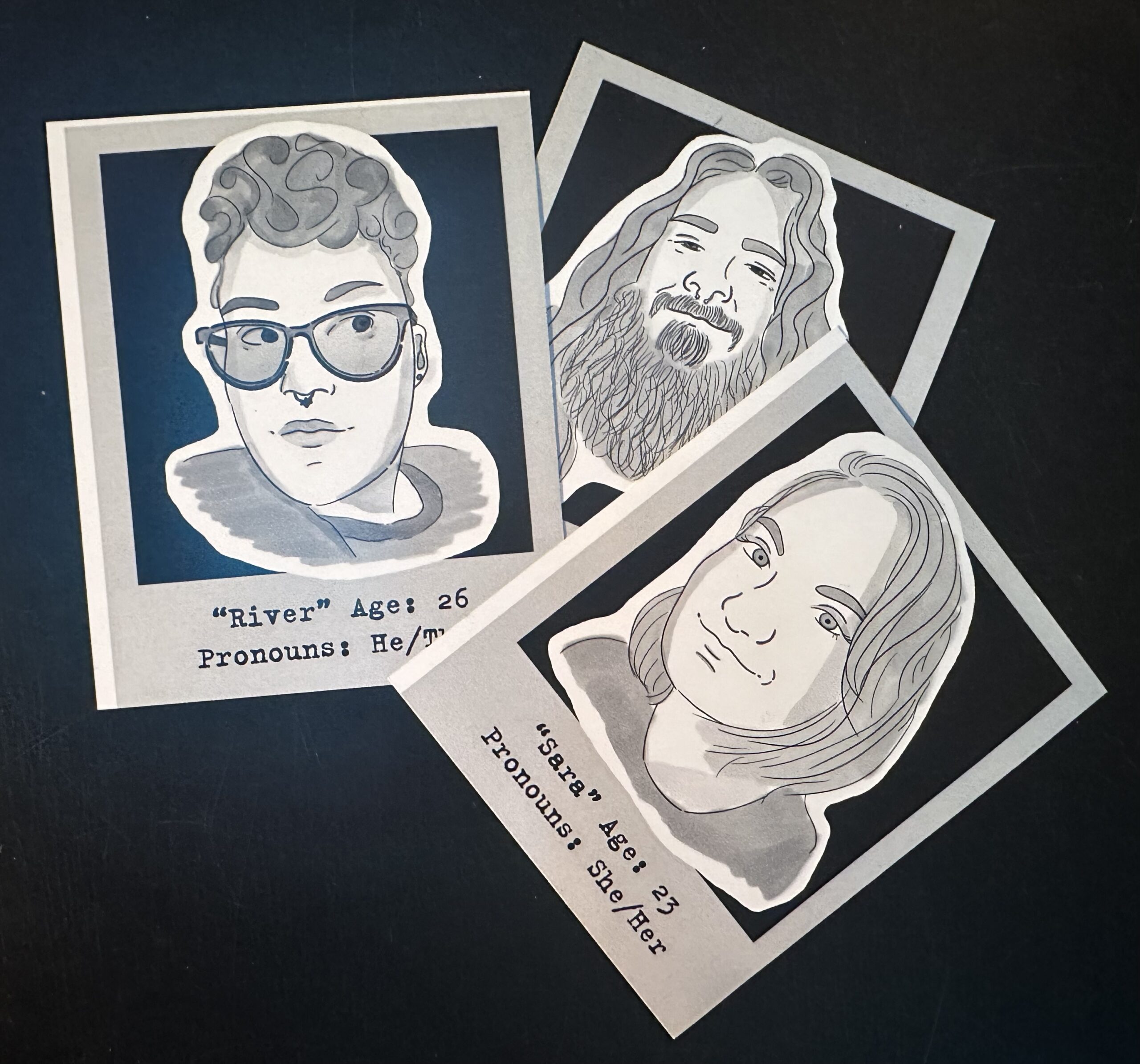
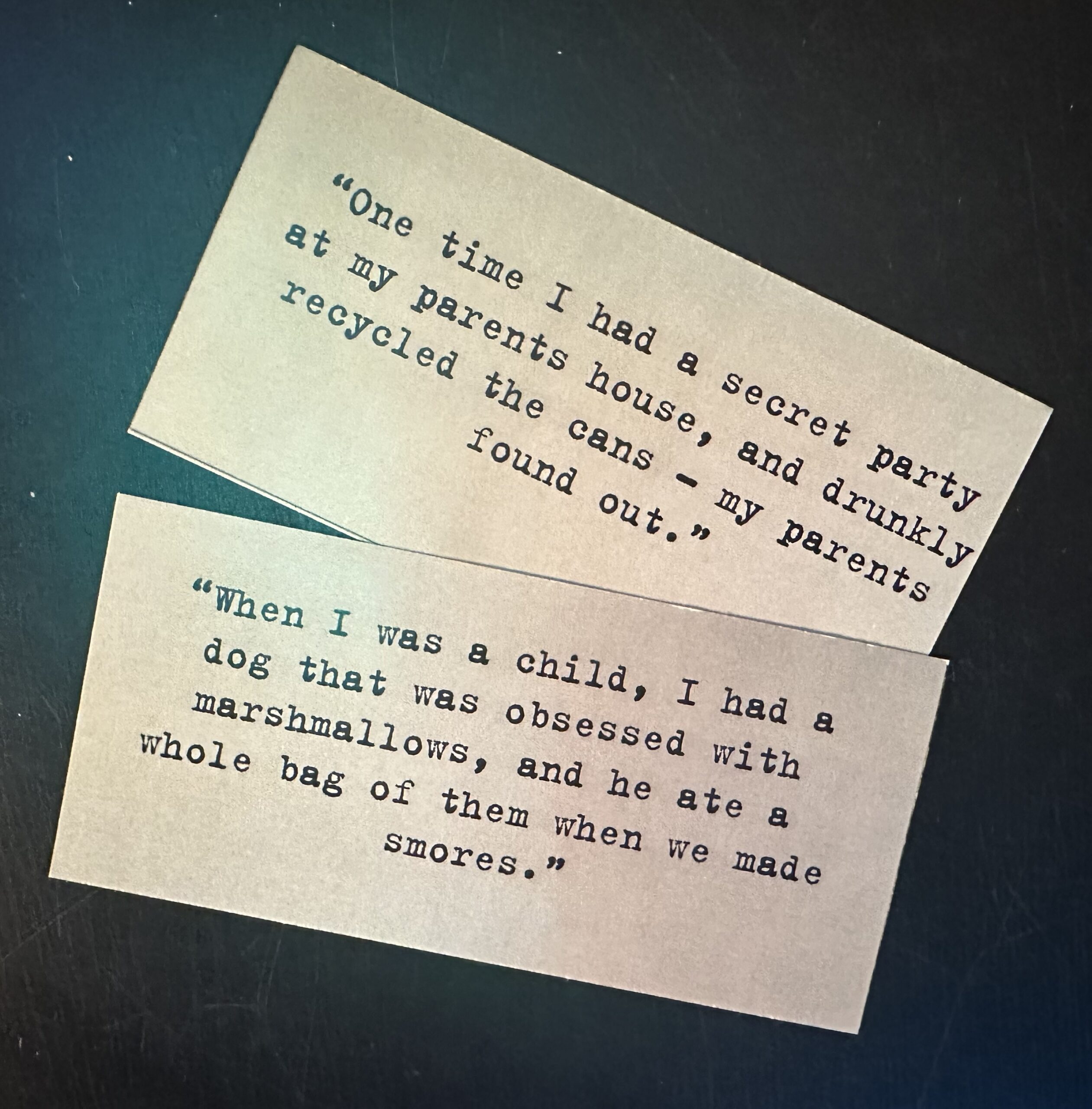
In a world where people are often easily stereotyped based solely on looks rather than the content of their character, Don’t Judge a Book by its Cover is a game that challenges this issue in today’s society. With digitally illustrated character polaroids and small cards that contain a short statement about a person’s life experience or story – players are tasked with stereotyping, assuming, and making generalized judgments on various real people to attempt to match a statement with the person who said it.
The goal of the game is to match all character polaroids, to their personal statement cards.
However, there is no true winner to this game, whether played with a single person, or a group of people – making judgments on others based solely on appearance is wrong, and this game is meant to spread awareness and provide players with a sense of empathy, as you don’t truly know what someone is going through.
Here are some photographs of my artistic approach, including drawings, final cards, and my process of gaining photos of people and their statements/stories:
RULES:
This is the game statement, and rules given to players along with a stack of fifteen character polaroids, and 15 statement cards.
Probably the most basic rules I have come up with in a game.
DESIGN AND ILLUSTRATIONS:
Using the image provided by the person I asked, I opened the image in Procreate and created two ‘copies’. Creating a basing sketch of their head shape, I then drew only the necessary loose details that were needed to make the sketch fit the person it was representing.
I chose to draw each person as I wanted to create a sense of consistency in the game, similar to the quick details we might get from a person when we pass them in a hall. Below is a quick time-lapse of my portrait for the game!
Next, let’s talk about the final character polaroid art that I printed out on cardstock:
For the final card design, I wanted the cards to feel old like you had found them in a box hidden away. I wanted the monotone colors of the drawings to embrace the feeling as well, so by choosing Polaroids it gives the feeling of “who are these people? And where are they now?” I also chose the have the drawings be almost cut out on top of the Polaroids to give it a unique flair.
The only details written on the cards are the names/nicknames of the people, as well as their age, and pronouns. I decided that these would be the only details you would receive as it is often the bit of information you can get from conversations about other people, and through basic ice breakers.
STATEMENT CARDS:
Still following the “aged” mood I was going for, these cards are printed on cardstock with a yellowed background with a typewriter font to add more mystery. The font I used was LTR NCND Variable which can be found on Adobe Fonts.
Now let’s go through my process of how I got permission to use people’s photos and statements:
I decided from the start that I wanted about 30 people, first asking my friends, then family, and then reaching out through social media. It was an extremely time-consuming process, as people were quite picky about which photo to use, and they wanted their sentences to be “cool” or “meaningful.” So much so, that I ended up having my last entry turned into me around 11 pm the night before the project was due.
The other factor that was quite tedious was drawing everyone. For those I was closest with, I wasn’t as worried about making it perfect, but for some, I devoted over an hour or so to the basic sketch. As you saw from my sketch time-lapse, I made the basic form and practically traced the details, this process didn’t always work as some images were further away than others, and drawing open smiling mouths can be tricky! By the end of the design process, I ended up only really getting 15 people to agree to the project, and to give me all the materials I needed following this prompt I shared: I need one nice photo of you, your name/nickname, age, and pronouns and then a single sentence/statement about something that has happened in your life, it can be happy, sad, weird, or a mix. I also clarified that other people will be reading these statements and that their real pictures will not be shown (I asked River and Amber permission to use the pictures they gave me, as shown above.)
Following this, let’s talk about the first playtest!
1.) What Questions did your players have?
I had about five or so people play my game, and they approached it pretty excited, commenting on the art and unique concept. Early on players wanted to know who each person was, but I of course didn’t reveal this until all cards were matched respectively. A few players recognized some of the people who I drew, which didn’t add much to figuring out who said what statement, given most of the statements were pretty unique and broad. Also, two of my playtesters were in the game! They didn’t snitch on themselves either, thank you, Beck and Amber!
2.) How quickly did they learn to play?
Extremely quickly, and there was some unintended teamwork at play with a fairly large group. Following the basic principles of matching, agreeing on the match, and the I would check all of the cards, and set aside the correct matches.
3.) What confused players?
Players did seem to get a little annoyed after mismatching the same cards over and over, so mentally being able to keep track of who you matched with what card is key.
4.) What made players excited?
Players enjoyed finding out who did what, and the stories behind the people in the game. It was also fun to see the two players that were included in the game and see the reactions of other players to their statements.
5.) What did your players enjoy doing?
When they started to get the characters matched to the statement you could tell it was relieving and fun for players. They also enjoyed looking at the art and reading the statements since quite a few were fun and unique.
6.) Did any aspect of the game frustrate players?
Yes, it took about 4-5 times matching and changing which card belonged to which character, I could tell players were getting a bit frustrated with starting over each round.
REVISIONS FOR VERSION 2:
Based on the feedback I received, I think version two will give players a bit more information on the character polaroids, such as “occupation,” “relationship status,” and “hobby” though this takes away a little bit from the concept of knowing nothing about the people shown, it still provides the same depth of empathy and “you truly don’t know what someone is going through” still stands. Doing this also may reduce the number of rounds players must do to completely match all the cards. Furthermore, as I suspected, players also wanted to be in the game. So I am considering taking it from fifteen to about twenty or twenty-five character polaroids and statement cards. Though this will add more to match, many of the people I will be adding in are different ages than those initially in version one. (Version one was ages 20,40, and 80, version two will be 5, 20, 70, and 100). This variety can make it easier to match cards as well.
I hope everyone enjoyed playing my game as much as I enjoyed creating it. Thank you to those who were involved in the design process and gave me feedback before first playtesting!
Drag Queen Dress Up – In this game, you play as drag queens getting ready for shows and events. You get to pick hair, makeup, and outfits, but you also have to attend events like visiting a children’s hospital, doing a book reading, brunch, etc. This game is to reduce the stigma that drag queens have, with the media believing that all drag queens are sexualized (some definitely are, but not all), etc.
Realistic Driving Sim – A driving simulation where there are lot of random road things that come up that will potentially damage your car—potholes, random objects, etc. The lower the car that you drive in the game, the harder it is to drive without getting some serious damage.
Summer Camp – a game where you play as a teen day camp counselor that needs to navigate the tricky world of caring for and watching children with 0 prior experience. You don’t have training for children with intellectual and physical disabilities, which makes caring for those children even harder, all while managing 20 other children. Your goal is to make sure that all children have a happy and good time. The game would expose some of the children’s “backstories” throughout the game, like what their athome life is like, and you may need to make the decision to report some not great things you hear. This game is based on my experience with being a day camp counselor and seeing that some of the children that I worked with really needed that experience and that that was what they had to look forward to during the day. I learned about some of the backgrounds of abuse that they had and it absolutely broke my heart. However, it was a difficult experience because I wanted to try to make sure that all the children had a great time, but I was unprepared for a lot of the situations that arose, since I was just a teenager myself. (Sara also helped inspire this game with her prototype about not knowing what others are going through!!)
Safe Food Practices – a tabletop game where you interact with actual food pieces (very interactive like the children’s play food sets or interactive children’s books) to complete certain cooking tasks to make a dish. Another player plays as the inspector as you complete these tasks and they won’t tell you what they are looking for, but they will let you know when you failed to complete the task in an unsafe manner. In this way, players must be extra careful with how they handle the food, as anything they do wrong could get their restaurant shut down. While this sounds like a silly game, I think this game could be important if I incorporate actual safe and unsafe food practices into the game and provide a little bit of background information on it.
It Could Be Anyone of Us – A game (very vague at this point) about not to trust everyone that you meet. You must make decisions to go along with different strangers, however you don’t know their actual backgrounds. Someone could be a serial killer, or just a flat out mean dude. Based on who you decide to trust, your actions will have consequences. I see this as a card game, but other than that, I’m not sold on any mechanics.
RGB: A game where players race to create a specific color pattern using colored tiles. Each player has a small board and a deck of color cards, each showing a different pattern. The goal is to match the pattern shown on the card using the tiles, but the tiles are drawn randomly.
Maize: Players try to escape from a maze before the other players, but they can only move based on a limited number of dice rolls that tell them how far they can move and in what direction. If a 1 is rolled, the player doesn’t move but gets to draw a card for certain items that can be used in game.
Stack’d: A competitive stacking game where players must stack objects based on a random card. The challenge could be stacking in specific patterns, building the tallest tower, or balancing objects.
Players take on the roles of characters who are experiencing challenges outside their usual reality. Each level is a different scenario where the player must complete tasks while dealing with the limitations of their character’s situation. The objective is to navigate the world and its challenges by understanding and overcoming barriers that others face every day.
This narrative-driven game lets players experience stories of various characters from different backgrounds. Each character has a backstory, and players interact with them to build relationships, solving puzzles or helping them through life challenges. Players must learn to listen and respond, using dialog choices that reflect understanding and compassion.
Players are tasked with conflicts between two groups or individuals who have opposing beliefs. They must facilitate understanding, find common ground, and propose solutions that benefit both sides. Success in the game depends on the player’s ability to listen to both sides.
In this puzzle game, players connect pieces of a heart-shaped puzzle by guiding the emotions of characters. Each piece of the heart represents a different character’s journey, and players must work through these emotions to heal relationships. Players must navigate through obstacles, building empathy by learning the motivations, fears, and desires of the characters they encounter.
Players experience the same events from the perspective of multiple people, where each character is affected by the situation in different ways. For example, during a natural disaster, players might experience it as a rescuer, a survivor, and a displaced family member. The game asks players to switch between perspectives and understand how individuals perceive the same event differently, teaching players to view the world through others’ eyes and make decisions that consider multiple viewpoints.
An empathy game disguised as a dress up game – In this game, you literally see what it’s like to be in someone else’s shoes. You dress your character up for different occasions and events however your outfit options will be limited based on who you are playing as, as some characters may have more resources than others. This game could also explore dressing for different religions to not only provide a little bit of education about different religions but make people more familiar with religious garments and their purpose.
Wrinkle: You play this game IRL and report your findings. You are assigned or choose the lifestyle of another person to emulate and your clothing choices must reflect that to see how you may be treated differently or not. For instance, there are certain items of clothing that you may not be able to wear as they would be out of the price range for your particular persona.
Dog’s Life – This game explores empathy through the perspective of a dog. You are home alone almost all day until your human comes back home (where did they even go??) and your human accidentally steps on you, but to you it felt purposeful. Your human decided to go on a run without you (ultimate betrayal). This game would explore the little interactions that humans have with their animals that humans don’t often think about. To the dog, you are their whole world, they absolutely need you. For a human though, they obviously love them, but their lives also have so much more.
Blindness Platformer – A platformer game where you play and experience the game first normally, then will replay levels or the whole game with limited visibility with different types of blindness and color blindness. You see how this affects the game and you learn a little bit more about the different types of blindness. This is designed to get people to be more empathetic towards people with these disabilities.
Underdeveloped Country Simulator – This game would allow you to play as someone growing up in an underdeveloped country. You want to stay alive as long as possible, but you will be faced with many challenges. This could include food and water scarcity. This game will also explore different forms of cultural entertainment, because you still want to “enjoy” life. Players will learn more about the country and their culture, as well as some of the unique challenges of underdeveloped countries. This will make people consider the things that we often take for granted.
Realistic Food Service Game – This game will present the food service industry in a more realistic manner to make players more empathetic of the people who are serving them and greeting them at restaurants. It will explore what it is like to have to live off of tips, how poorly some customers treat servers, etc.
Walk in My Shoes: Players live as someone different (refugee, single parent, etc.). They make tough choices about daily life and see the consequences.
Echoes of War: Players are civilians in a war. They make moral choices and see how war affects everyone.
Through Their Eyes: Players see the world with disabilities (blindness, deafness, autism). They learn to understand different abilities.
Chain of Kindness: Players do kind things that affect the game. It shows how small acts matter.
The Stranger’s Story (ARG): Players get messages from someone who needs help. They solve puzzles and work together to help. It mixes real life and fiction to build empathy. It uses real-world clues and actions to make the story feel real and encourage players to care.
The Stranger’s Story
How It Works: Players receive a cryptic message, email, or social media post from a person who seems to need help. Using real-world interactions (e.g., visiting a certain location, researching online, or collaborating with other players), they uncover pieces of the person’s story. The game changes dynamically based on how the player responds—offering support, ignoring the message, or taking different paths.
Core Themes & Impact: Players become part of a living narrative where their choices determine how the “stranger” (a fictional but believable character) overcomes their struggles. Designed to promote real-world awareness, such as homelessness, mental health, or immigration challenges. Uses player collaboration and real-life locations to foster engagement, making empathy an active and immersive experience.
Why do the advergames Tooth Protector and Escape work? Tooth Protector and Escape are effective because they are engaging and interactive, successfully blending entertainment with their marketing goals. Tooth Protector works by using a fun, competitive game format to promote dental care, while Escape leverages narrative and decision-making, keeping players engaged with the brand. Both games create memorable experiences that associate positive emotions with the advertised product.
What makes Chase the Chuckwagon and Shark Bait fail? Chase the Chuckwagon and Shark Bait fail because they lack depth and meaningful engagement. These games do not build a strong connection between the player’s actions and the brand, and they don’t create an experience that resonates beyond the gameplay. The focus on simplistic mechanics instead of interactive storytelling or strategic depth makes them forgettable and ineffective in achieving their marketing objectives.
What does Volvo’s Drive for Life accomplish? Volvo’s Drive for Life campaign uses a strong narrative to promote the safety features of their vehicles. By incorporating real-world scenarios and demonstrating how the car’s safety features work, it engages players in a way that highlights the brand’s commitment to safety. It accomplishes the goal of connecting the brand with reliability, trust, and concern for consumer well-being.
What company used in-advergame advertising? Coca-Cola is one example of a company that used in-advergame advertising. By creating branded video games, they aimed to connect their product with interactive experiences, making the brand more engaging for younger audiences.
What was one of the first home-console advergames, and what beverage was it for? One of the first home console advergames was Pepsi Man, which was released for the PlayStation in 1999. The game was used to promote Pepsi, using its mascot in a platformer format to create a memorable link between the beverage and the game.
What makes the toilet training game sophisticated, and do you agree? The toilet training game is sophisticated because it tackles a real-world challenge in a meaningful way, using interactive mechanics to mirror the emotional journey of learning and success. It blends entertainment with practical life skills, which makes the experience educational yet engaging. I agree that its sophisticated design mirrors how games can influence behavior beyond simple entertainment.
What do advergames and anti-advergames have in common, and what principles do they share? Advergames and anti-advergames share a focus on influencing consumer behavior through interactive media. Both aim to shape perceptions, either by promoting or critiquing products and behaviors. They also utilize persuasive principles, whether to endorse a product’s value or challenge its perceived impact on society.
Here are five game ideas designed to change players’ minds about important topics like climate change, energy, and politics:
Five Ideas:
Eco City Builder (Climate Change) In this game, players take on the role of city planners tasked with building a sustainable, eco-friendly city. Players must balance resources, manage waste, and prevent pollution while growing the population and economy. As the game progresses, players face challenges like rising sea levels, extreme weather, and resource shortages. The goal is to show how small, everyday decisions in urban planning can have long-term impacts on the environment.
Energy Quest (Energy) Players are tasked with managing the energy needs of a fictional country, with the challenge of transitioning from fossil fuels to renewable energy sources. They can invest in solar, wind, and other green energy sources, but must balance economic growth with environmental responsibility. The game highlights the trade-offs between different energy sources and educates players about the importance of sustainable energy and the consequences of continued fossil fuel use.
Political Debate: The Voter’s Choice (Politics) This game simulates an election cycle where players take on the role of a political candidate. Players must craft speeches, create policies, and navigate debates while facing opposition from rival candidates. The catch: The player must engage in real debates with other in-game characters, all while learning about the real-world issues their policies would impact. The game encourages critical thinking and understanding the broader consequences of political decisions.
The Last Forest (Climate Change) Set in a near future where deforestation has led to severe climate consequences, players must work together to preserve the last remaining forest on Earth. Players play as environmental activists who are tasked with stopping illegal logging, creating protected areas, and educating communities on the importance of forests. The game focuses on raising awareness about biodiversity loss and the role forests play in climate regulation, pushing players to see the value of conservation efforts.
Green Revolution (Food & Sustainability) In this farming simulation game, players are challenged to grow crops using sustainable farming techniques. Players must deal with climate change effects like droughts, floods, and soil depletion while learning how to implement solutions like crop rotation, water conservation, and organic farming. The goal is to teach players about the challenges of modern farming and the impact that unsustainable agriculture has on the environment, encouraging smarter, more sustainable choices.
Thoughts on games played:
McDonald’s Game: Playing the McDonald’s game made me think about how the fast-food industry operates. It’s a commentary on how profit-driven motives often overlook the health of workers, the environment, and consumer well-being. The game highlights the lengths corporations go to in order to maximize their reach, pushing a product that may not always be in the best interest of society.
Intergroup Monopoly: Intergroup Monopoly offers a powerful social commentary on inequality and privilege. It shows how some groups are at an advantage simply by existing within a particular social or economic framework. The game reveals how systems of power are embedded even in something as simple as a board game, emphasizing that success isn’t just about individual effort, but also about the structural conditions we’re born into.