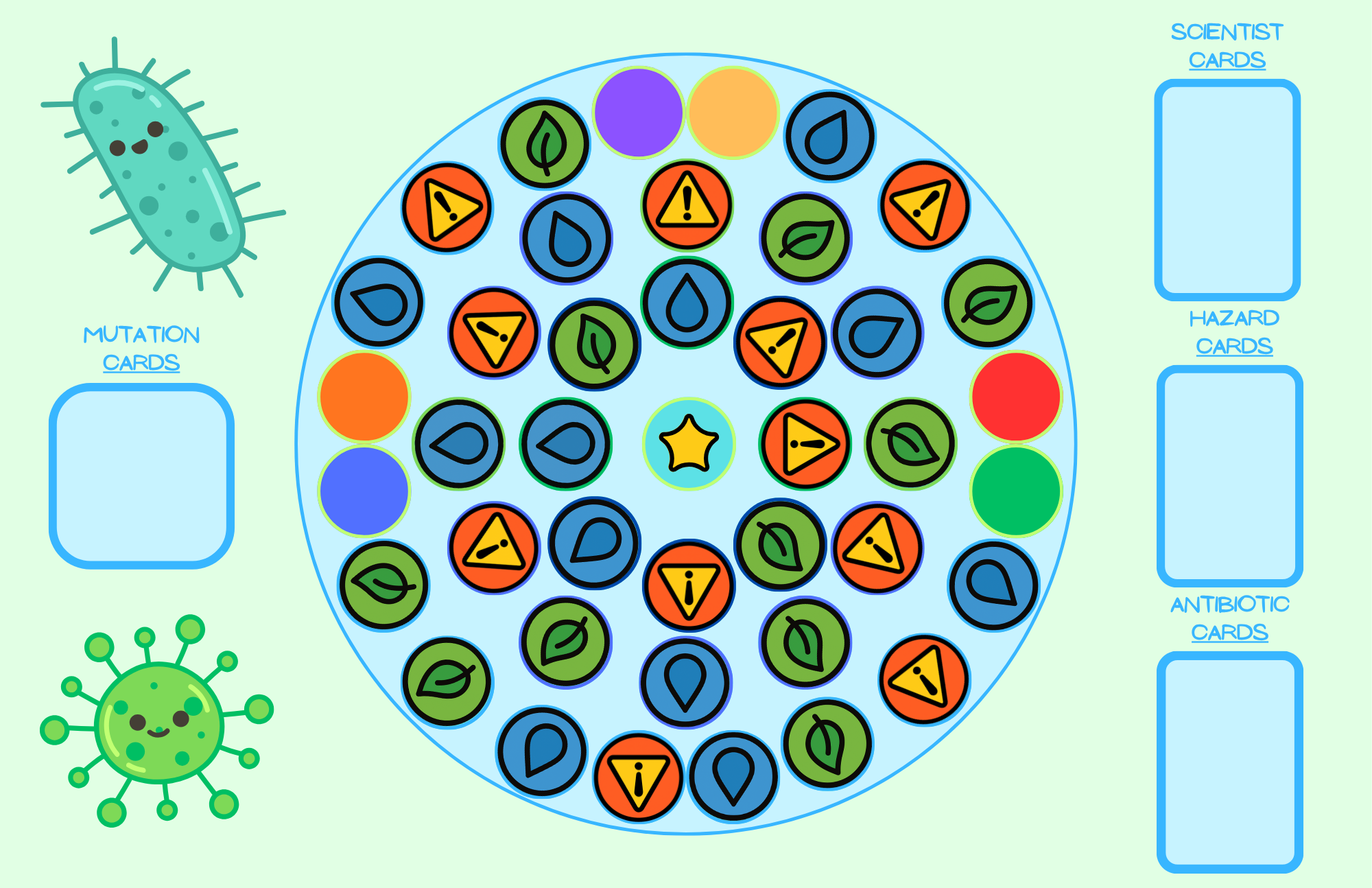
Game 3: The Trial of the Taming: Aspirant Handbook

Created by Christine Ursiny

1. The Game: Bond or Die

Welcome to The Eyrie, the cutthroat military academy where you and your fellow Aspirants have formed a Fated Bond with an ancient magical creature. This RPG is focused on high-stakes teamwork under pressure to graduate; you must survive the brutal, lethal trials of The Reckoning and work together to expose the dark secrets of the oppressive Staff.ย 


2. Character Creation: Set Up

Step 1: Roll for Your Identity

Roll on the table below to determine your: Descriptor, Species/Skill, and Sector.

Roll 1D61-2: Descriptor (Your Personality)3-4: Creature (Your Power)5-6: Sector (Your Academy Niche)
1Rookie (Terrified, but fast)Great Wyrm (Fire Breath, Burn)Wing Leadership (Command & Tactics)
2Washed-Up (Skeptical, but wise)Gryphon (Piercing Shriek, Shatter)Archives Guard (Security & Surveillance)
3Unhinged (Aggressive, reckless)Sky-Lion (Air Magic, Soar)Scouting & Recon (Stealth & Intelligence)
4Ambitious (Political, slick)Drake (Heavy Armor, Shrug Off)Healer/Scribe (Lore, Medicine & Support)
5Reluctant (Relatable, empathetic)Shadow Serpent (Illusion, Vanish)Weapons Master (Gear & Melee Combat)
6Grizzled (Experienced, damaged)Tempest Owl (Lightning, Stun)Logistics/Wartime Engineer (Supply & Defense)

Step 2: Set Your Stats (The Bond)

You have two opposed stats. Both start at 3.

StatFocusWhen to use this stat…
RIDERDiscipline, Cunning, ControlLying, persuading rivals, carefully piloting your creature, remembering academic lore, or solving puzzles.
BEASTInstinct, Raw Power, SpeedMauling, flying recklessly fast, using elemental magic, shrugging off damage, or terrifying enemies.

3. Action Resolution

When you attempt an action and the outcome is uncertain and has real consequences, the Game Master (GM) will tell you which stat to use, and you roll a single.

  • Succeed: If your roll is equal to or under the stat, you succeed!
  • Fail: If your roll is over the stat, you fail!

 The “Expert Edge” Rule (Specialized Skills) 

If you use one of your character’s unique strengths, you get a significant edge:

  • Creature Skill: If you invoke your Creature’s unique Species Skill (Burn, Shatter, Vanish, etc.), you may treat your BEAST stat as 4 for this single roll (even if it is lower or higher).
  • Sector Niche: If you use an action directly related to your Sector (Weapons Master with gear, Archives Guard spotting a trap), you may treat your RIDER stat as 4 for this single roll (even if it is lower or higher).

4. The Shifting Bond (The Core Mechanic)

Your stats are never safe; they shift based on your successes and failures. Keep the two numbers balanced!

TriggerEffect on Your StatsThe Story Behind the Shift
Pride (Success)Move 1 point from BEAST to RIDERYou succeed flawlessly through intellect and showboating. Your ego grows; you rely more on cunning.
Guts (Failure)Move 1 point from RIDER to BEASTYour plan fails, and panic or instinct takes over. You ditch tactics and rely on raw, animal survival.
Voluntary: Yell at your CreatureMove 1 point from RIDER to BEASTYou willingly give in to anger or fear, forcing your creature to obey. You gain wildness, but lose control.
Voluntary: Flashback to StudyMove 1 point from BEAST to RIDERYou interrupt the action to recall an academic insight, bringing logic to the chaos. You rein in your wildness.

The End of the Line: When a Stat Hits 6

If either stat reaches 6, you have gone too far and are out of the game!

  • RIDER reaches 6: You become corrupted by self-serving ambition. You betray your squad to join the oppressive Staff.
  • BEAST reaches 6: You have completely Lost the Bond. Your creature flips out and rejects you. You are expelled (or killed).

5. Quick Q&A: 

QuestionAnswer
When do I roll?Only when the outcome is uncertain and a failure would create a consequence (danger, lost time, etc.).
What happens if I fail?The GM will give you a Narrative Setback (losing time, attracting Staff attention, your creature suffers a temporary trouble). A Stat Shift only happens if that failure triggers Guts (forces a panic response).
How does the Expert Edge work?If you use your special skill, you treat your stat as 4 for that one roll. This is the simplest way to gain a powerful, reliable advantage without rolling extra dice.
Why is a high stat bad?A high stat makes you better at those actions, but puts you closer to the End of the Line. A BEAST of 5 is an unstoppable force, but one failure could mean they lose their creature forever.
Who controls the creature?You do! It’s an extension of you. If you want to fly carefully, that’s RIDER. If you want to use elemental fire, that’s BEAST.

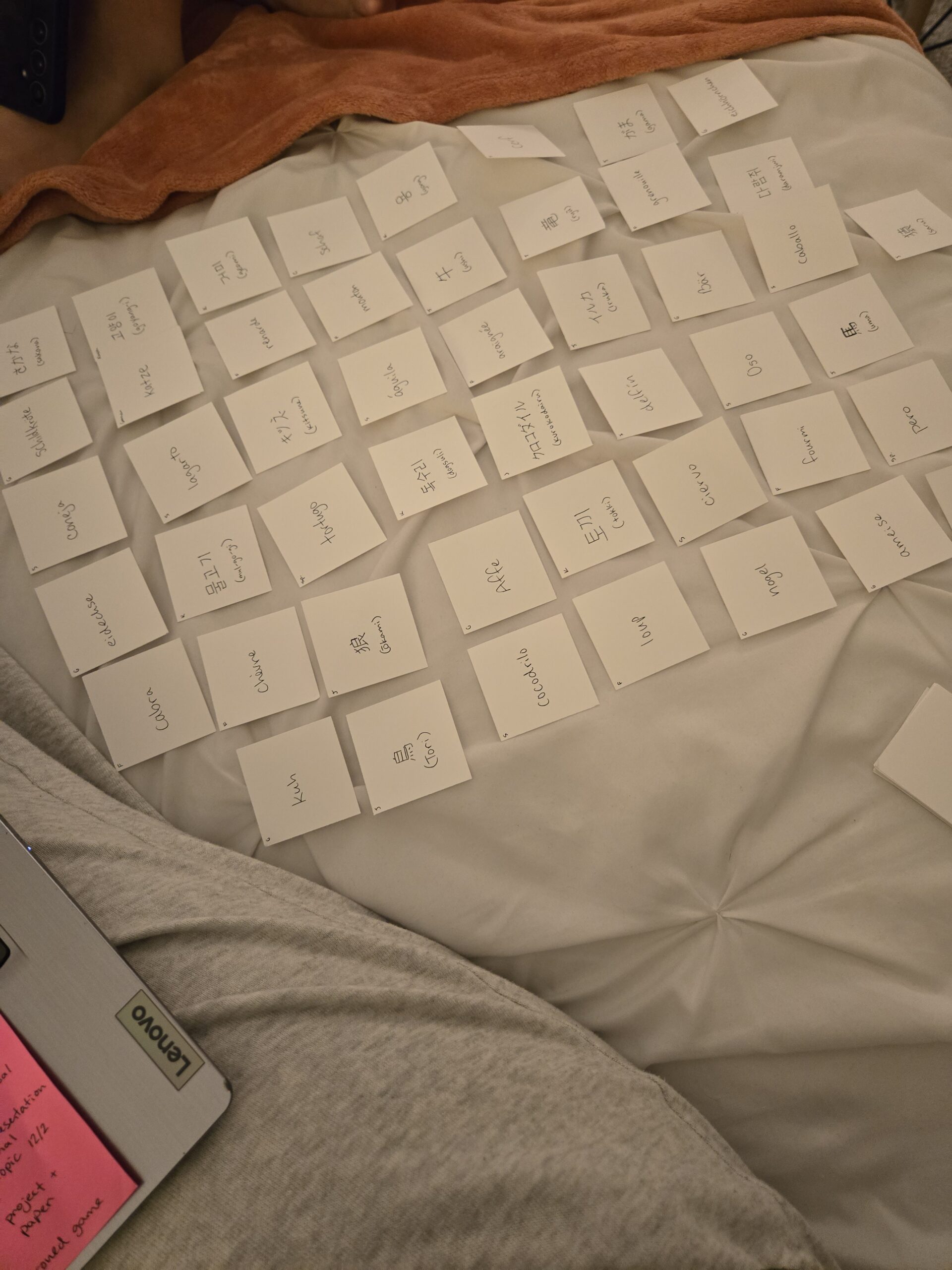
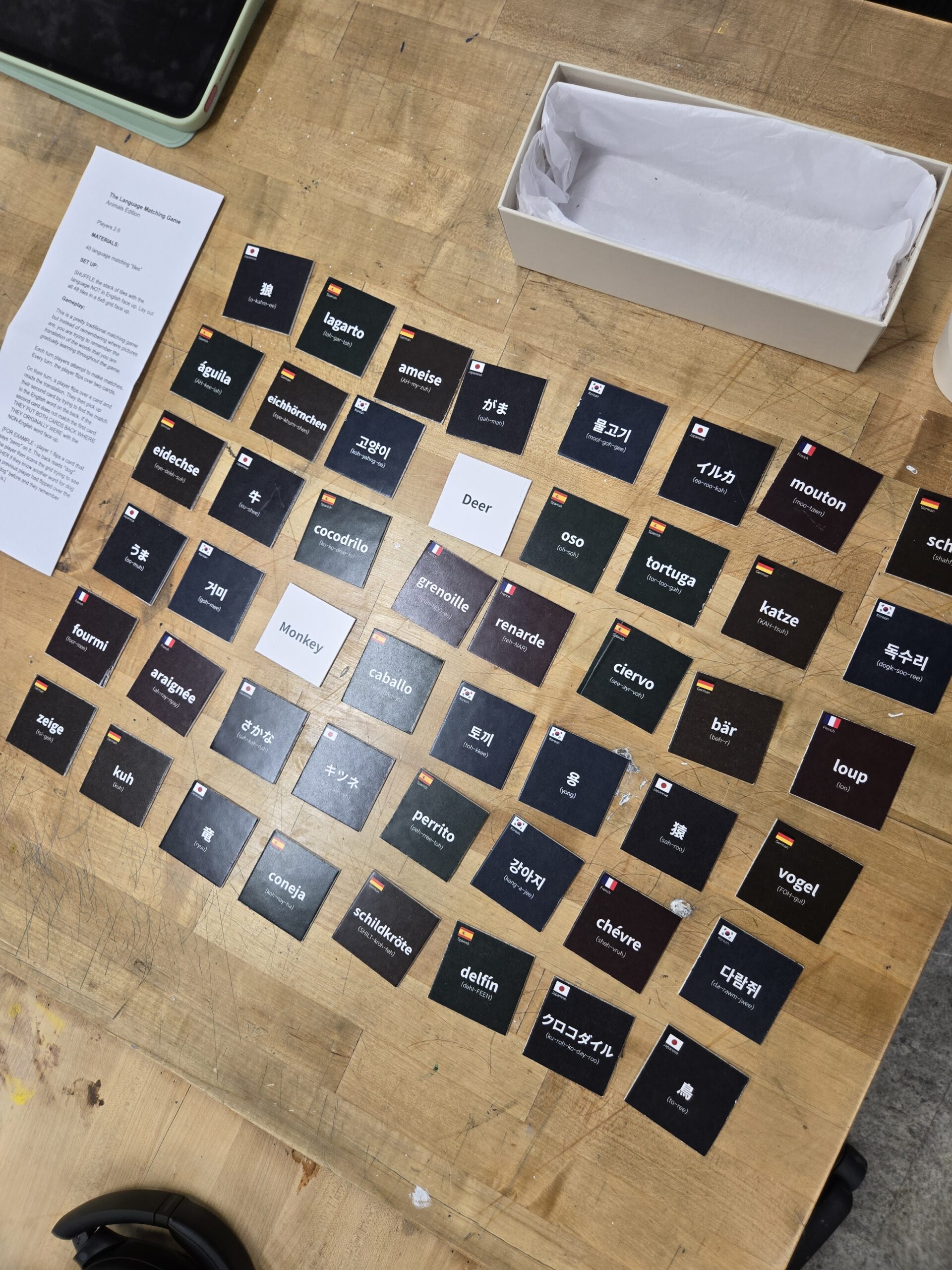
Rule Set for Matching Language Cards

Players 2-5

SET UP: Pick the stack that you want to play with and shuffle them with the language NOT in English face up. Lay out all 50 cards in a grid face up

Gameplay:

This is a pretty traditional matching game but obviously instead of remembering where pictures are, you are trying to remember the translation of the words that you are gradually learning throughout the game.

Each turn players attempt to make matches. Every turn, the player flips over two cards.

On their turn, a player flips over a card and reads the translation. They then pick up their second card by trying to find the match to the English word on the back. If the second card does not match the first card THEY PUT BOTH CARDS BACK WHERE THEY ORGINALLY WERE with the NON-English word face up.

FOR EXAMPLE – player 1 flips a card that says “perro” on it. The back reads “dog”. The player then scans the grid trying to see EITHER if they know another word for dog or if a previous player had flipped over the word “dog” before and they remember where it is.

Players take turn attempting to make matches until the grid has been completely matched.

HOW TO WIN:

Players with the most matches wins.

Congrats! You either already know another language or are good at memorizing places on a game board!

possible ALTERNATIVE PLAY:

1. If a matching game seems too boring, here’s another idea to spice it up a little bit.

Instead of taking a turn by trying to find a match by flipping over two cards, there will be an extra “hard” section of words above the matching grid that IF YOU KNOW OR CAN GUESS THE WORD counts as an additional match in your hand. However, guessing wrong does not remove the card from the game but you must reveal your guess and put it back above the grid if you guess incorrectly. The potential then is that other players have the opportunity to steal these bonus cards, narrowing down the meaning. 

2. If there is a tie OR just if you want to keep the matches with the NON English words face up and shuffle the card and whoever remembers the most meanings gets an extra point or the number of points for that number of cards guessed right (by the players discretion)

Changes to be made (for the final):

delete the previous alternative endings – they’re not very natural

ADD possible ALTERNATIVE PLAY/ENDING:

At the end of the traditional matching game, shuffle all cards back together and designate one player to flip a card over in front of all players with non-English side face up and whoever correctly remembers (or guesses) the most English translations

create pictures of English words and put translations on all non-english words for people to pronounce

clarify that you take another turn (limit 2 extra turns) after getting a correct match – what to do when there is a tie

comments were made about different versions being fun potentially

NO GOOGLE TRANSLATE

little flags in the corner for design purposes and countries of origin for the words

Thoughts on Playtesting:

I play tested this in class and with my sister and it went similarly both times – i think it flows nicely but could be a lot of fun with different versions – i tried several different alternative endings with my sister which was informative on how i want to “finalize” it – both times people wanted pronunciations for all words which I definitely will do.

Trick or Treat Game 2

Game Overview *The Following Condensed version of the game was summarized by ChatGPT*

The game is a race to complete a 10-card collection of your chosen suit. It blends strategic character selection with random six-sided dice-powered actions.

AspectSummary
ObjectiveBe the first player to collect all 10 numbered cards of your suit (Imp, Bat, Ghost, or Pumpkin).
MaterialsThe 40 numbered Minor Arcana cards form the central Muster Deck. The 16 Court Cards (Prince/Knight/Queen/King) are used only for character drafting. You also use a single D6.
Starting StatePlayers draft one unique Court Card to become their character, which defines their goal suit and unique power. Each player starts with 5 cards in hand and 1 Treat Point (TP).

How a Turn Works (The D6 Roll)

On your turn, you roll the D6, and the number determines what you must do:

RollAction TypeWhat it Does
1 or 6DrawYou get new cards from the Muster Deck. (Roll 6 lets you draw 3, but you must discard 2.)
2 or 3AskYou choose an opponent and ask for 2 (Roll 2) or 3 (Roll 3) specific cards. If they don’t have all the named cards, the request fails, and you only get 1 consolation card.
4FortifyYou discard four cards of the same rank (ex., four Aces) to immediately gain 4 Treat Points.
5StealYou name one specific card (ex., “The 9 of Bats”) from an opponent. If you are right, you take the card and get 2 TP. If you are wrong, your turn ends immediately.

The Key to Winning: Character Powers and Treat Points

Character Powers

The Court Card you draft (Page, Knight, Queen, or King) gives you a unique, scaled power that modifies the D6 actions for your suit:

  • Imps (Action): Powers revolve around getting extra turns or free actions after a successful Steal (Roll 5). They are the most aggressive suit.
  • Bats (Intellect): Powers upgrade your Ask (Roll 2/3) actions, letting you ask for cards by Rank (ex., “all your 5s”) or even by Suit (ex., “all your Ghost cards”), instead of naming specific cards.
  • Ghosts (Emotion): Powers revolve around resource resilience. They gain Treat Points when they fail an Ask or when another player successfully Steals from them.
  • Pumpkins (Material): Powers revolve around controlling the Muster Deck and gaining huge amounts of Treat Points from Draw actions (Roll 1/6) or guaranteeing a Draw by spending TP.

Treat Points (TP)

TP is your hidden weapon. Its primary use is to give you control over the card supply:

  • Currency: You can spend 3 TP to perform a powerful Search action (once per turn) where you swap a card from your hand with any card in the discard pile. This is how you snag that one card you know your opponent got rid of.
  • Tie-Breaker: In the extremely rare event that two players complete their 10-card set at the exact same moment, the player with the most Treat Points wins the game.

Rules for The Alleyway Pharmacy

Madison Hurst

The AlleyWay Pharmacy

Idea: The Alleyway Pharmacy is a card game in which the players are drug dealers competing against other drug dealers where they have to collect various drugs to resell. The kick to it is, the drug dealers have to make sure whether the drugs they collected are real and not candy. If they are caught using candy (x amount of times) then they will go to jail (lose).

Objective: 

  • Players are rival dealers that are fighting for the same street block. They are competing to make the most profit by reselling drugs while avoiding fake ones (candy). To win, the player must be the first to reach the profit goal ($20,000) or by the last one that didnโ€™t get busted.ย 

Materials needed:

  • Deck of cards:
  • Drug cards
  • Candy cards
  • Action cards
  • Profit tracker (score pad)
  • Busted disk trackers
  • Rules sheet
  • Your hand for your cards
  • Stash (faced down pile on the table)

Setup:

  • Shuffle cards into one deck which will become the draw pile
  • Each player will draw 3 cards that will be their starting handย 
  • Give each player 3 busted tokens
  • Have a space for the discard pile
  • Discuss what the profit goal will be for this game (default is $20,000)
  • The tallest player will go first

Insight:

  • Hand: these are the cards you can see and choose from (max. Card limit is 5)
  • Stash: cards you placed face down on the table (max card limit is 6)
  • Profit tracker: how much money you are at
  • Busted tokens: track how many times you had a candy drug (3=jail and you lost the game)

Turns:

  • Draw 1 card from the draw pile

You will then move into your action part of your turn:

  • You can choose one action play
  • Options:
  • Play a drug: place 1 card from your hand to you stash pile (face down)
  • Play an action: use it immediately (sneak, inspect, etc)
  • Slip a fake drug (sneak): Put a card from your hand (candy or real drug) to an opponents stash pile (face down)ย 
  • Pass (take no action)
  • Resell (You can resell if you think you have 3 of the same cards in your stash)
  • If you have all 3 of the same drug, then you will earn a profit based on the value of the drug type. After, you have collected your points you will discard this set

1 Candy drug:

If you have a 1 candy drug  in your stash during RESELL, then your resell fails (even if you have 3 of the same drug) and the player will take a penalty. 

Penalty: Lose ยฝ of the profit or discard 1 random hand card

  • Discard the candy card afterย 

2 or more Candy drug:

If the player has 2 or more candy drugs in their stash during resell then resell fails, and collect 1 bust token. Discard all candy cards 

Check hand and stash number:

  • If you have more than 5 cards in your hand, discard extras
  • If you have more the 6 cards in your hand, discard extras

Out of turn options:

Players are able to play an action card during another players turn

  • Inspect: peek at only one card in a players stash
  • Steal: Force a player to reveal one of their stash cardsย 
  • Snitch: take one random card from an opponent’s handย 
  • Hideout: block a sabotage or inspection against youย 

Win/Lose:

  • Be the first person to reach the profit goal
  • Be the last person standing, if the other opponents went to jail
  • Player is out of the game if they received 3 bust tokens

Card Meanings:

  • Inspect: peek at only one card in a players stash
  • Steal: Force a player to reveal one of their stash cardsย 
  • Snitch: take one random card from an opponent’s handย 
  • Hideout: block a sabotage or inspection against youย 
  • Sneak: place 1 card from your hand to an opponentโ€™s stash
  • Swap: trade 1 card from your stash with 1 from an opponentโ€™s stash (face down)

Drug Values:

  • Weed set: $3,000ย 
  • Pill set: $5,000
  • Coke set: $7,000
  • Heroin set: $10,000

NEW UPDATED RULES – CHRISTINE URSINY

Tale Weavers: Official Rules

Game Description

Tale Weavers is a competitive storytelling game, with cards that you might find in Apples to Apples or Cards Against Humanity, in which a group of players builds a narrative by drawing from a deck of character, setting, and plot cards to create and build a story amongst players. 

Objective

The main goal is to collaboratively build a story. The player who contributes the most compelling or humorous plot points, as judged by the Storymaster each round, wins the game. The player with the most successful Plot Cards, represented by Point Tokens, is the winner.

Setup

  1. Gather 3-5 players.
  2. Shuffle the Character, Setting, and Plot decks separately and place them face down.
  3. Deal five Plot Cards to each player. This is your starting hand.
  4. Place the Point Tokens in a central pile.
  5. Designate one player to be the Storymaster for the first round. (The player who most recently read a book for fun.)
  6. Use a 30-second sand timer to add urgency in selecting plot cards.
    • 30-second timer โ†’ wait until the timer runs out to start the round
    • Everyone has to have a card placed down by the end of the sand timer
    • What happens when the timer runs out and you donโ€™t pick? โ†’ You take the top card

Card Color Key:

Coral Color – Character Card

Magenta Color – Setting Card

Lavender Color – Plot Card

How to Play:

The game is played in rounds, with the role of Storymaster changing after each round.

1. The Storymaster’s Turn 

  • The Storymaster draws 2 cards from the Character deck and 2 from the Setting deck.
  • They choose 1 Character and 1 Setting card from their hand to use and then discard the others.
  • The Storymaster begins the story with an opening sentence or two, introducing the character and location.

Example:
If the Storymaster draws:

  • Character Cards: โ€œA paranoid motherโ€ and โ€œA surprisingly eloquent badgerโ€
  • Setting Cards: โ€œThe inside of a zoo food courtโ€ and โ€œA wizardโ€™s tower turned into a daycareโ€
    • “Once upon a time, a paranoid mother who frantically scoured through the jungle known as the zoo food court…”

Note: Everyone has to have a card placed down by the end of the sand timer

2. The Players’ Turn 

  • Starting with the player to the Storymaster’s left and going clockwise, each player takes a turn.
  • On your turn, place one Plot Card from your hand, play it face-up, and read it aloud.
  • Weave the card’s concept into the story, building only on the setting and character card, not any other players’ plot cards
    • Plot cards are independent of other players’ plot cards.
  • After playing your card, draw one new Plot Card to replenish your hand to five.

3. The Storymaster’s Turn (Judgment)

  • After every player has played one card, the Storymaster considers all the Plot Cards that were submitted.
  • The Storymaster selects the most compelling or entertaining Plot Card as their favorite for that round.
  • The Plot Cards that were not chosen are placed in a discard pile. If the draw deck runs out, shuffle the discard pile to create a new one.

4. End of the Round 

  • The player whose card was chosen collects 1 Point Token.
  • The winning player becomes the new Storymaster for the next round.
  • The new Storymaster can then decide to either continue the existing story or start a completely new one by drawing a new Character and Setting card.

Ending the Game

1. Point-Based Victory 

  • First player to reach 5 Point Tokens wins.
  • Optional twist: If multiple players hit 5 in the same round, the Storymaster chooses the funniest/most creative winner.

Mow Masters

Rules Update

Madison Hurst

Mow Masters!

Objective:

  • The objective of the game is to get as many grass points/cards as you and your opponent mow all the grass on the board in order to end the game.ย 

Materials needed:

  • Board
  • Grass cards
  • Setback cards
  • Two dice
  • meeblesย  (marks which space/tile was mowed already)
  • Paper and pencil to keep track of score
  • Iphone timer

Setup:

  • Take all of the cards and shuffle them into one deck and place them in a empty space on the board.
  • The tallest player will start the game or be the first turn.

Turn:

  • Both players are going simultaneously
  • The player will roll one dice, and move the amount of spaces of that number on the dice.
  • The player can go anywhere on the board, no restrictions.
  • The player will pick a card for each space they move. For example, they roll a 2 and move 2 spaces hence pick up 2 cards.ย 
  • After you have moved (mowed) a space, you will mark it with a xย  or a meeble.

(you can still use this space to move around in it but you can not get a card from it.)

Ex: rolls the dice and gets 3, but โ…” spaces are mowed already. So, you can only pick up one card. 

  • If you pick up a card that has a setback, you will have to complete the task on the card in order to continue.ย 
  • You have approx. 25 seconds to complete theย 
  1. Out of gasย 
  2. Nebby neighborย 
  3. Dinner time
  4. Reapply sunscreen
  • You do not have a time limit with:
  1. Mower broke
  2. Dog poop on the blade
  • If you do not complete the setback challenge within the time constraints then you have to remove one grass card point from your pile.ย 

Winning/Losing:

  • Once the whole lawn is mowed, and there is no more space to collect cards then the game is over.
  • Count up your points, and the points win.

Matician Rules

Setup

  • Shuffle the โ€œEquation Symbolsโ€ deck and the โ€œNumbers and Symbolsโ€ deck separately
  • Dealer deals 1 face-up โ€œEquation Symbolsโ€ card to each player and 6 face-down โ€œNumbers and Symbolsโ€ cards to each player
  • Each โ€œEquation Symbolsโ€ card is placed in front of the player it was dealt to

Objective(s)

  • Create the equation with the highest solution with your given โ€œNumbers and Symbolsโ€ cards
  • Attempt to lower the solution of other playersโ€™ equations with your โ€œNumbers and Symbolsโ€ cards

Actions players take

  • Once cards are dealt and each player has their โ€œEquation Symbolsโ€ card in front of them face-up, the round starts
  • First, players evaluate their hand and play the cards they believe will yield the highest possible solution. One card will go on one side of the symbol, and one will go on the other side, both face down (ex. 6 + 15)
  • After each player places their cards face down on each side of the symbol card, players have the option to add a card that they think will sabotage another player (if they have any in their hand)
  • Once all players have made their final moves, every player flips the cards in front of them over to reveal their numbers and the card another player may have placed

Ending the game (win, lose states)

  • The player who first reaches 3 points wins the game. 1 point is granted for each โ€œhighest solutionโ€. The game can either end, or play can resume to determine the place of all other players

Example

  • A player could have the equation โ€œ4 + 13โ€, but after those cards are placed face down, another player could put a โ€œ-โ€ face down in front of the 13 to make the equation equal -9 instead of 17

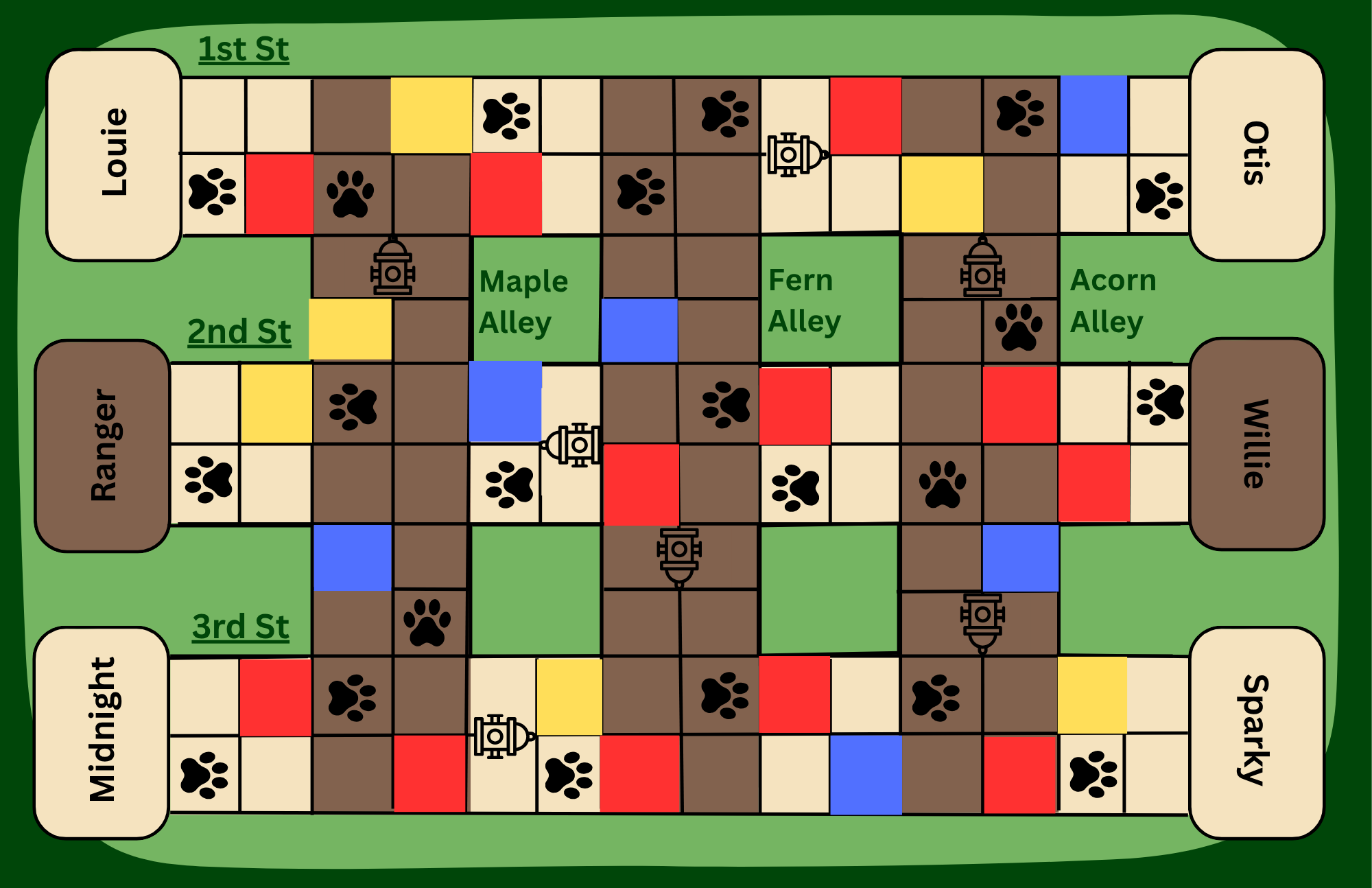
Rules For Mow Masters

Madison Hurst

Grass mower is a board game in which you are racing your opponent and you are trying to mow the most grass as you endure different setbacks (ex: a wrench in the grass that breaks your mower). You have to fix these setback before you move forward in the game. The tools used in the game is a board, two-four mini mowers, cards, and a dice.

Objective: The first player to get their mini mower across the entire board or mow the most grass as they endure various setbacks wins.

Players: 2-4 players

Materials:

  • one game board
  • 4 mini mowers
  • 6 sided dice
  • 45 Grass Cards (green)
  • 20 setback cards (red)
  • 15 tool kit cards (purple)

Setup:

  • Place board in the center of the players
  • Each player is to pick a mini mower piece of their choosing
  • Shuffle all three deck of cards
  • Each player will roll the dice, and whoever has the highest number will go first. If two players have the same number, they will roll until one player has the highest.

How to Play/ Players turn:

  1. Player is to roll the 6 sided dice to see how many spaces their mower will move on the board
  2. After the playerโ€™s mower lands on a space, they will need to check the space to what card they may have to pick up next.
  3. There are 3 deck of cards: Grass cards, Tool kit, and Setbacks
  4. If the space has a green tile, then the player will pick up a grass card that will determine how many patches of grass is on that space.
  5. If the space is red, the player has hit a setback and will pull from the setback deck
  6. In random spaces, they player will have the opportunity to collect a tool kit card. This will help them with their setback cards.
  7. But, if you have a setback in your hand you will not be able to roll the dice until they solve the setback.
  8. They player will have to manually fix it by skipping their turn, matching one of their tool cards with that setback, or remove one of their grass cards in order to roll the dice.
  9. After the players turn they will add up their points

Additional Rules/Actions:

Rule 1: Player can tool trade with their opponents. This can benefit or sabotage either player.

Rule 2: Players can use their turn twice in the whole game to setback their opponent. If they decide to go through with it, they will roll the dice and thatโ€™s the amount of spaces the opponent will go back. The opponent will not be able to collect any grass cards until the surpass their initial starting point prior.

Winner: The game will end once the player crosses the finish space. All players will count up how many grass cards they mowed. Additional points will be added to the player that finished the game first.

A grass card will have a number ranging from 1-7 on it. For instance, a player receives a grass card and on the right hand side it has a 4 on it. This means that the player has gained 4 points because they mowed 4 grass patches in that space.

A setback card will have various issues the player will have to solve before moving forward. The card will state what happened to the mower, and what tool kit card the player will need in order to resolve this issue. One example, of a setback card is โ€œa wrench was left in the yard and broke your mower. Fix mower by matching a tool kit card.โ€ The tool kit card will have an image of a brand new mower and says โ€œnew engineโ€ and on the back it will say what the card can match to.

“Caked” Rules Draft

Setup: There are little slotted trays (the cake table) given to each player to hold main card stacks. Each player gets dealt 7 (for now if that makes sense) cards from the main deck and places them in order in the cake table. Then they are dealt 5 more cards to hold in their hands.

Objective(s): To be the first to complete your “cake” in the slots and also accumulate the most “ingredients”

Actions players take: Every turn players can (1) choose to replace a card from their cake table by taking a new card from the card pile, the discard pile or a card in their hand OR (2) replace 1-3 cards in their hands from the card pile.

The point of the game is to correctly order the fillings of your cake. The different cards have different types of fillings on them and the order they go in indicated on the card. Players must work to order their cakes correctly. You also create mini hands for extra points out of ingredient cards. (I might do different types of card piles that once you ‘finish’ and ingredient stack you can get higher valued ingredients that are worth more we’ll see) It is part of the strategy to either focus on more cake table cards or the mini hands.

Ending the game: The game ends when correctly fills up their cake table or the card piles run out.

Game Idea Rules – POWER

  1. Setup
    • All players get 2 character cards that say what they can do throughout the game, and remaining cards get put into a pile in the middle. Then they all get 4 dollars to start the game, and the rest of the dollars get put into the middle of the game.
  2. Objective(s)
    • The objective of the game is to be the last player standing, and overthrow all your opponents. By collecting dollars, BLUFFING, and spending dollars to โ€œoverthrowโ€ your competition you can win.
  3. Actions players take
    • All players can perform ONE action per turn, and there are basic actions without using a special position. These actions include: collecting 2 dollars per turn, and spending a total of 8 dollars to overthrow someone.
      • Overthrowing: Once you have overthrown another player, they must flip one of their cards, that they choose, up and keep it there the remainder of the game, and this card is dead and cannot be used.
    • Calling Bluff, an action anyone can perform after any playerโ€™s action is called bluff, but cannot be done to another player if it is not their turn performing an action.
      • If you call bluff and they are NOT bluffing, one of your character cards becomes dead
      • If you call bluff, and they ARE bluffing one of their character cards becomes dead and cannot be used.
    • But, each player is equipped with 2 characters that have different actions they can perform:
      • Lawyer: Can call a person’s bluff without losing one of their cards.
      • Banker: Can take more than up to three dollars per turn
      • Politician: Can go through the extra deck of cards and swap one character for another
      • CEO: Can overthrow someone during their turn for 4 dollars
      • Businessman: Can block someoneโ€™s “overthrow” to themselves
  4. Ending the game (win, lose states)
    • The ending of the game is when there is one person left who is not overthrown, and that is the winner. Players are only out of the game if both of their cards are flipped.
  5. Examples
    • During your turn, you would say โ€œI am the Banker, so I am going to take 3 dollarsโ€ and if weather or not you are bluffing you can take the 3 dollars, UNLESS someone calls your bluff.
      • If you ARE the banker, you would flip your card and reveal you are not lying, so your opponent who called you out would lose one of their positions, and flip one of their cards face up for the remainder of the game
      • If you are NOT the banker, you would flip whatever card you would rather lose, and since you lied and was caught you only have one position the rest of the game.

(9/18/2024_MeredithB) Homework/Rules

5 game ideas:

  • Shell Sprint is a racing game in which players control turtles who compete to reach the ocean first by navigating hazards, riding ocean currents, and using power-ups like speed boosts and shell shields.
  • Turtle Tactics is a strategy game in which players lead turtle clans who battle for territory in a shrinking pond by placing defenses, outmaneuvering rivals, and evolving their shells for specialized advantages.
  • Tide Travelers is a cooperative adventure game in which players are time-traveling turtles who work together to restore balance to aquatic ecosystems by solving puzzles, cleaning up pollution, and recruiting ancient sea creatures as allies.
  • Shell Shocked Arena is a multiplayer battle royale game in which players control armored turtles who fight to be the last one standing by collecting weapons, crafting shell upgrades, and mastering the art of shell-sliding combat.

Game rules: Axo-Mageddon

Must team up or fight to cause the most damage, leading to global domination.

Starting game/Setup

  • Place cards and setup board as shown
  • Pick gamepeice and put them into starting tank

Cards

  • Classes
    • Pick a role, Barbian, Technician, Arsonist
    • Barbian adds and extra points of damage added on to every
    • Technician gets a free extra upgrade every 5 turns
    • Arsonist, all flammable damage gets multiplied by 2
  • Destruction
    • Pull a card and it has a set $ amount of damage, and some will have a multiplier on that
    • Can have extra multipliers added on
  • Upgrades
    • ย Can be used to make your axolotl have damage multipliers, stringer, or avoid a โ€œtroubleโ€
  • Trouble
    • Other animals, the government, aliens and outside forces that will affect and slow your destructive streak

How to play

  • Roll to see who goes 1st, then each player picks 3 class cards and picks their class
  • Roll a dice to move, get cards and follow along the board, gain damage and upgrade cards.

Winning

  • Player who caused the most destruction wins!

Week four engine building homework

Aleah Dudek

  • Homework: begin writing rules for at least 1 of your top ideas
    • Rules must include:
    • Setup
    • Gatherย 3โ€“8 playersย and sit in a circle or line so everyone can see each other.
    • Prepare a stack ofย Message Cardsย (each card has a short phrase, word, or sentence).
    • Have aย timerย (1โ€“3 minutes depending on group preference).
    • Choose one player to be theย Message Starterย for the first round.
    • Objective(s)
    • Players work together toย successfully pass the secret message from the first player to the last playerย without speaking or writing.
    • The group wins if the last player says the correct message before time runs out.
    • Actions players take
    • Message Starterย draws a Message Card and secretly reads it.
    • Using onlyย gestures, sounds, or nearby objectsย (no words, letters, or mouthing allowed), the Message Starter communicates the message to the next player.
    • Each subsequent player thenย translates what they understoodย into gestures/sounds/objects for the next person in line.
    • Players canโ€™t repeat what they saw exactly โ€” they must interpret and pass it on.
    • When the message reaches the final player, that person mustย say the message out loud.
    • Ending the game (win, lose states)
    • Win:ย The final playerโ€™s spoken message matches the original Message Card.
    • Lose:ย The group runs out of timeย orย the final message is incorrect.
    • After each round, rotate theย Message Starterย role to the next player. Continue until everyone has had a turn or a set number of rounds is complete.
    • Examples
    • Original Message:ย โ€œPizza Delivery.โ€
    • Player 1 mimes eating.
    • Player 2 pretends to drive a car and hold a box.
    • Player 3 knocks on an invisible door.
    • Final Player guesses:ย โ€œPizza Delivery.โ€ย (correct is a win).
  • Original Message:ย โ€œDancing in the Rain.โ€
  • Player 1 twirls with arms out and pretends to splash in puddles.
  • Player 2 spins around, flaps arms like an umbrella.
  • Player 3 mimes singing.
  • Final Player guesses:ย โ€œSinging in the Rain.โ€ย (close, but not exact is a lose).

Rules for Tale Weavers

Tale Weavers is a collaborative storytelling game, with cards that you might find in Apples to Apples or Cards Against Humanity, in which a group of players builds a narrative by drawing from a deck of character, setting, and plot cards to create and build a story amongst players.

Rules

Setup

  1. Gather 3-8 players.
  2. Shuffle the Character, Setting, and Plot decks separately.
  3. Each player draws five cards from the Plot deck. These are the cards you’ll use to move the story forward.
  4. Place the Character and Setting decks face down on the table.
  5. Make sure the Storymaster keeps track of points.
  6. Designate one player to be the Storymaster for the first round. This role will pass clockwise each round.ย 

Objective

The main objective is to come up with the most convincing or funniest story picked by the Storymaster. The player with the most successful plot cards wins the game. While there isn’t an objective winner, the game allows all players to judge what the best narrative is. The best part is it leaves all players laughing.

Actions Players Take

  1. The Storymaster’s Turn:
    • The Storymaster draws one card from the Character deck and one from the Setting deck.
    • The Storymaster then begins the story, using the two cards they drew to introduce a character and the location of the story.
    • Example: If the Storyteller drew a Character card for “A paranoid squirrel” and a Setting card for “The inside of a shopping mall,” they might start with: “Once upon a time, a paranoid squirrel scampered nervously through the fluorescent aisles of a shopping mall, __(Filled in the blanks by the rest of the players)__.”
  2. Adding to the Story:
    • Starting with the player to the Storymaster’s left, each player takes a turn.
    • On your turn, choose one of the five Plot cards in your hand and play it face-up on the table.
    • Read the card aloud and integrate its concept into the story, building on what the Storymaster said. You can add new characters, introduce a conflict, or reveal a twist.
    • After everyone has played their plo,t the Storymaster will look through the pile and choose their favorite plot.
    • After you’ve played a card, draw a new one from the Plot deck to replenish your hand.
    • Example: A player might have a Plot card that says “A mysterious package arrives.” They would then integrate this into the story: “The squirrel, in its haste, bumped into a mysterious package left in the food court. It began to tick.”
  3. Round Progression:
    • Players continue adding to the story, going around the table until everyone has had a chance to play a card.
    • The role of the Storyteller then passes to the next player to the left.
    • The new Storyteller has the option to start a new story by drawing a new Character and Setting card or building on the previous story that can introduce a subplot, depending on the group’s preference.

Ending the Game

The game can end in a few ways, decided by the group:

  • A Grand Finale: When one player feels they have the perfect Plot card to end the story, they play it and declare “The End.” The group then votes on whether the ending is satisfying.
  • Time’s Up: The group can agree to stop after a certain number of rounds or once a specific number of stories have been told.
  • Spontaneous Conclusion: The story naturally reaches a hilarious or dramatic conclusion, and the group decides to stop there.

Examples of Cards

  • Character: A reclusive gnome, an astronaut who loves disco, an overworked accountant, a talking teacup.
  • Setting: A haunted laundromat, the moon’s dark side, a wizard’s tax office, a very dusty attic.
  • Plot: A long-lost sibling appears, a cursed object is found, a sudden rain of frogs begins, a terrible secret is revealed.