Q & A yo

Question Set 1

  1. What is the difference between a “working” and a “display” prototype?
    • A working prototype is designed for the soul purpose to have working mechanics and overall have all its features be playable and cohesive with itself. A display prototype is what the name says it is… “for display” its just a model of something, an idea of the final product without any functionality put into thought. Mainly designed for the investors or marketers rather than actual playtesters, developers, or designers which would be the ones playing a working prototype.
  2. What is required of a working prototype, and what might cause one to fail?
    • A working prototype must ensure that the player is able to play the game how the game is intended to be played. This means there can’t be any bugs or loopholes within the mechanics of the game itself. If there are bugs or loop holes in the mechanics, a working prototype is no longer playable and is a failure. (Back to the drawing boards)
  3. What makes for a good prototype according to Dale Yu?
    • Functionality Over Perfection, Clarity and Simplicity, Adaptability (how easily modifiable it is), Focus on Core Mechanics, Playability and Durability.
  4. What advice from Richard Levy will help you pitch your game?
    • Know Your Audience, Highlight the Hook, Keep It Simple, Demonstrate Gameplay, Prepare a Strong Visual Presentation, Be Ready to Answer Questions, Practice Your Pitch, Show Passion and Confidence, Understand the Business Side, and don’t forget to follow up. Also, while pitching your game, remember to tell a story with it. present your game in a way that captivates the audience and makes them want to learn more.
  5. Where might you pitch your game?
    • I’ll definitely pitch my game in class, but if it’s good enough who knows, I can pitch it even further
  6. What do publishers look for in a game?
    • they look for qualities in a game that give it it’s commercial potential, aligns with their brand, as well as appeals to their target audience. Who is this game made for depends on who your publishers are, no different from record labels. Each game has its own genre.
  7. What makes a good set of Rules?
    • Clear, concise set of descriptions on how to play aligned with visuals and detailed step by steps on how to start and how it will end.

Question set 2

  1. Describe the best game you’ve made this semester in 200 words.
    • This is a crazy question, as at first I was really excited about making Tasty Travels, and I wanted to continue with that concept even further than I had, but after making a working prototype, I felt as though making the game more complicating would mean I would have to have an extensive background in culinary arts and crafting dishes from scratch and all that. However, after I came up with my art heist game, everything clicked. It not only felt more at home for me as an artist, but I felt a sense of thrill when creating the story lines as to how the art could or could not get stolen due to the obstacle tiles as well as the different levels in which each attribute and specialist card has. Overall I can’t wait to finish making the final game of Gallery Grippers as I want to give an artistic touch to the game board and pieces themselves. Hopefully this game turns out well and is a good final.

Weeks 12-13

Question Set 1

  1. What is the difference between a “working” and a “display” prototype?
    • A working prototype is intended for evaluation and additional testing by play testers or potential publishers. A display prototype is only for the eye, appealing to chain buyers or distributors. They are typically polished to look appealing.
  2. What is required of a working prototype, and what might cause one to fail?
    • A working prototype must include everything it takes to play the game, and not anything you have not tested thoroughly. Additionally, it should all come down to the gameplay. Don’t harp on small details and design choices. Something that might cause failure is not updating the rules to match changes in the game. For example, If I were to update the mechanics without specification, it would lead to confusion.
  3. What makes for a good prototype according to Dale Yu?
    • First impressions, rules and manifestation, components, cards with card sleeves, stickers, paper, bits, bags and baggies, boxes, hardware, color printing, computer, laminating and the final impression.
  4. What advice from Richard Levy will help you pitch your game?
    • Being prepared, being informative, selling yourself first, take rejection, ego control, realistic expectations, the selling season, multiple submissions, legitimate agents, prototypes and brand power.
  5. Where might you pitch your game?
    • Companies, design consultants or even some online platforms. Campaigns can additionally be made to put your game out there.
  6. What do publishers look for in a game?
    • Fun factors, player interactions, immediacy of play, strategy, theme, immersive experiences, solid rules/mechanics, innovative rulesets/components, compatibility with other products, correct target marketing, expansion potential, multi-language capability, easy demoing and collectability (if necessary).
  7. What makes a good set of Rules?
    • Listing components, explaining a setup and descriptive gameplay. Card types (if an cards), examples, endgame and winning, as well as credits.

Question set 2

  1. Describe the best game you’ve made this semester in 200 words.
    • At first, I thought my final revision was going to be my first game, which was Buccaneer Builders. Although I was heading in a good direction with this game concept, it wasn’t the best. My best game I’ve made this semester has got to be Baller Bros, which is what my final revision is going to be. I think that the simplicity and party aspect of Ballers Bros makes for a great game to play with friends. One of the things that Buccaneer Builders conflicted with becoming my best game was the complexity of it, with many play testers not understanding the mechanics fully. Baller Bros is not only simple; it is an immersive experience. The combines luck and skill, with immersive gameplay in bouncing basketballs into a hoop. I also like the design aspect of Baller Bros, maintaining simplicity while appealing to the eye. With a simple start to a game concept like this, I’m also open to many future iterations that could turn this into a more compound playing experience. The only thing I need to focus on is the rule set, because I have a history of not explaining mechanics well. Ultimately, Baller Bros also appeals to the large majority of people who enjoy playing basketball/beer pong.

Smash Brothers Tournament Review

The Smash Brothers Tournament was for a good cause, which was for Toys for Tots. Players were put into a bracket, with rounds that eventually lead to the final winner’s bracket. The game itself was Smash Ultimate, which is the most recent game in the series. This is the only Smash game that I’ve personally played, which is why I did decent in the tournament. I came second place, beaten by someone who combo’d me into oblivion. I played as Donkey Kong, and they played as Pokémon trainer. The thing is, DK is fun to play but has the biggest hitbox in the game. I should’ve picked someone who was faster and had a projectile, so I could better protect myself. DK is also very slow, so I am still learning how to master the timing of his moves. Smash Ultimate relies heavily on timing, precision and quick-thinking, so playing a clumsy gorilla is tricky. Pokémon trainer is able to be fast, which outpaces my character. This is the importance of learning about your own character’s timing.

Back to what I was mentioning earlier, combos are important in racking up damage. Since Pokémon trainer was fast and my character had a huge hitbox, I was susceptible to getting combo’d. This doesn’t mean he didn’t deserve the win, because it is still hard to chain attacks. If only I can practice more, I can confidently enter arenas better at the game, knowing how to prevent getting combo’d.

3rd Game Idea

(sorry I forgot to post this forever ago)

THE WORD IMPOSTER

Goal- Find the imposter before time runs out!

Everyone receives a word that no one can share with anyone. All of the cards are the same, one is different, but similar . Everyone tries to think of the words with simple words/pronunciation, but not the same. Whether that be different sounds from the word or different means

I want to give it spelling bee designs, but with funny words!

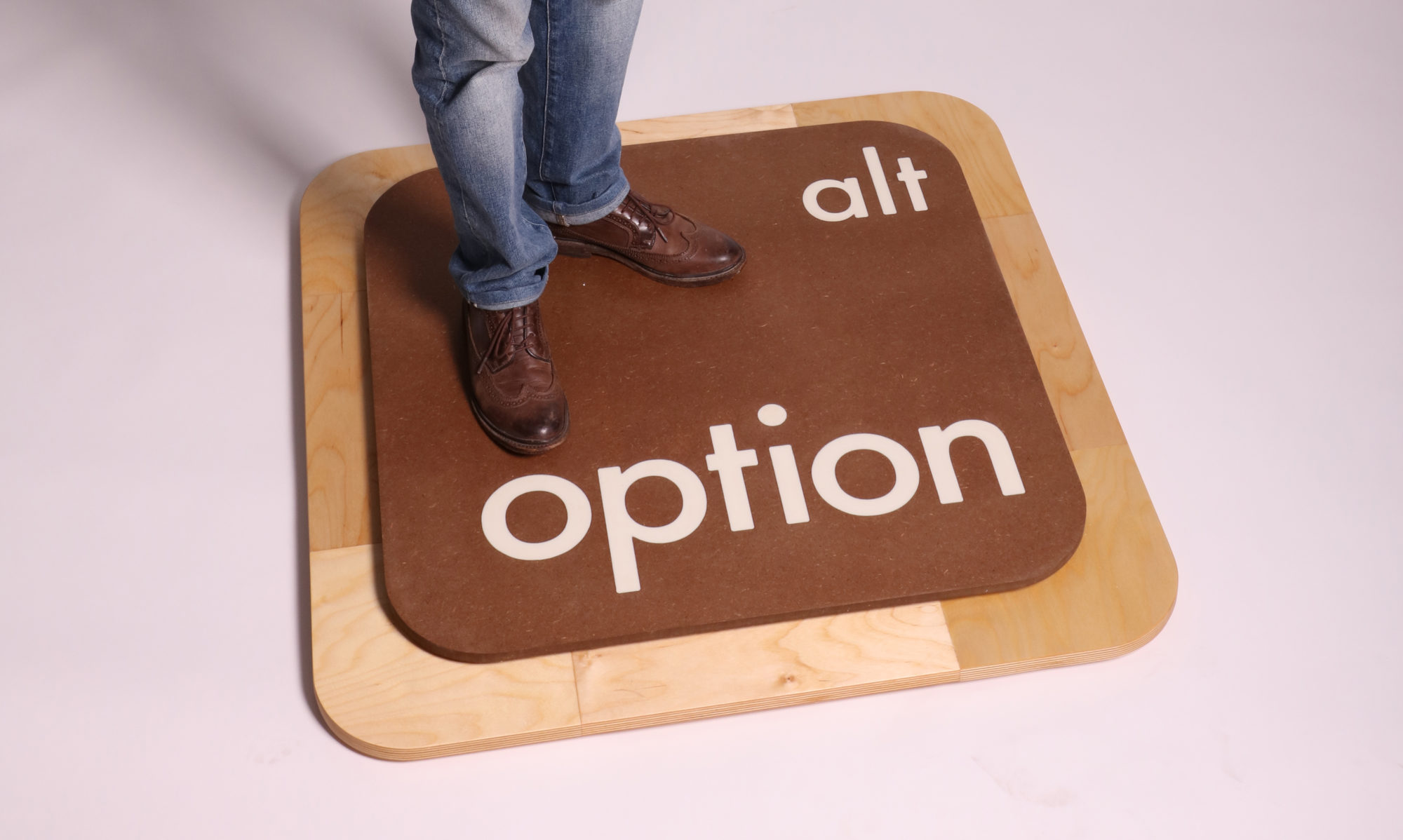
Skate game

I absolutely loved the games concept. I personally am not good at skating, especially with my fingers, but this game has a clear audience and it reached out! I know so many people who would fall in love with this game! The board is awesome and I hope you guys continue to work on it!

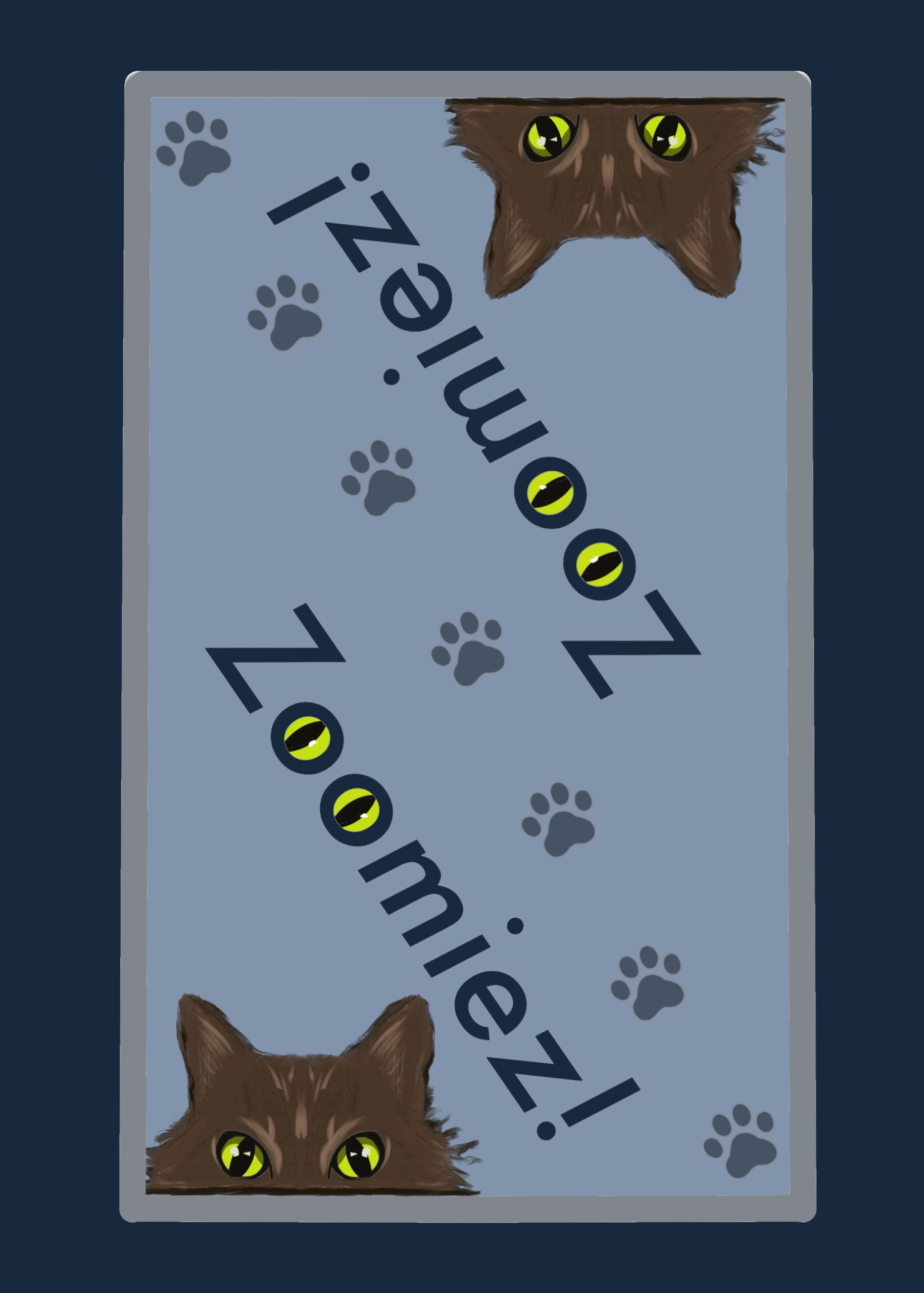
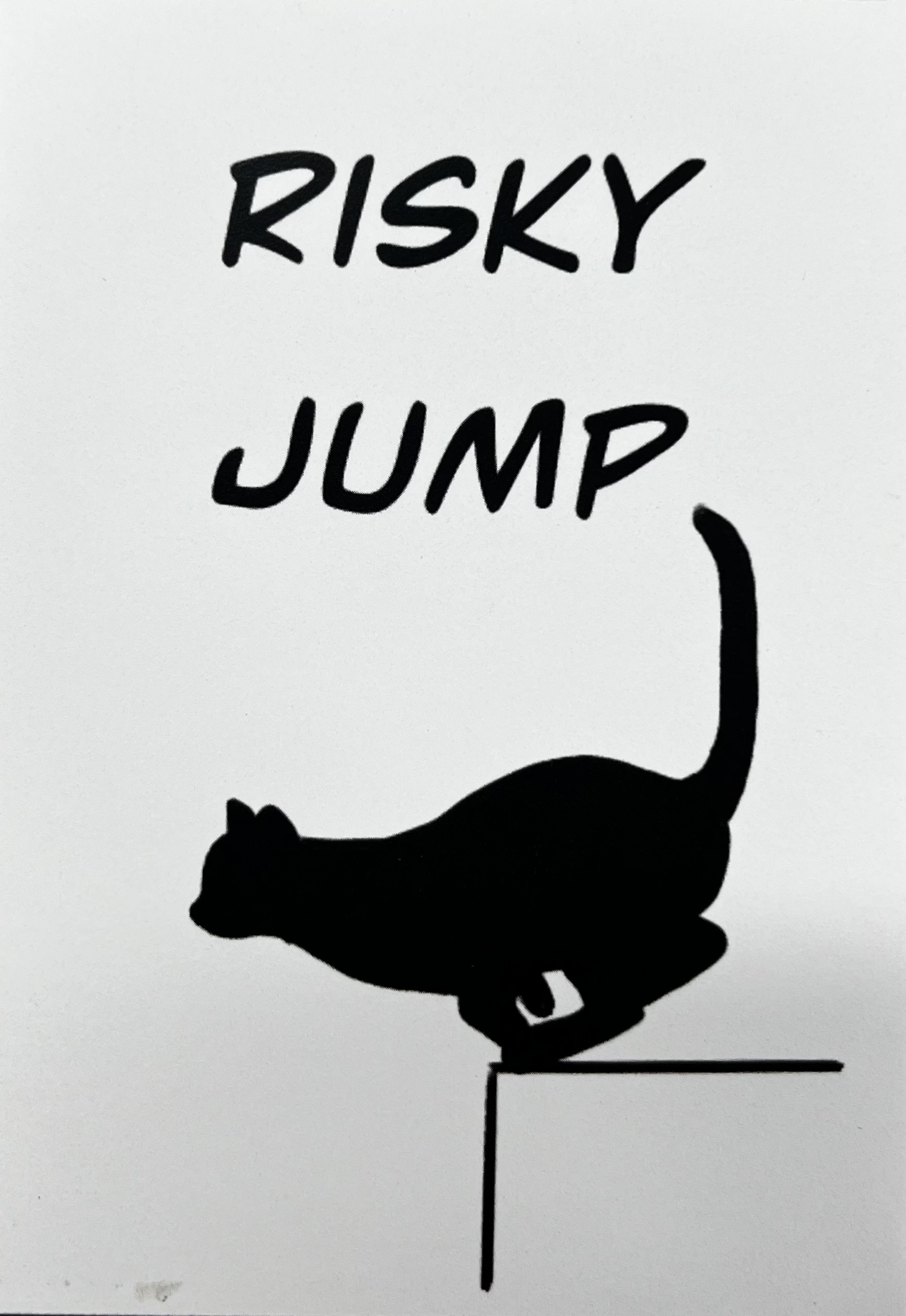
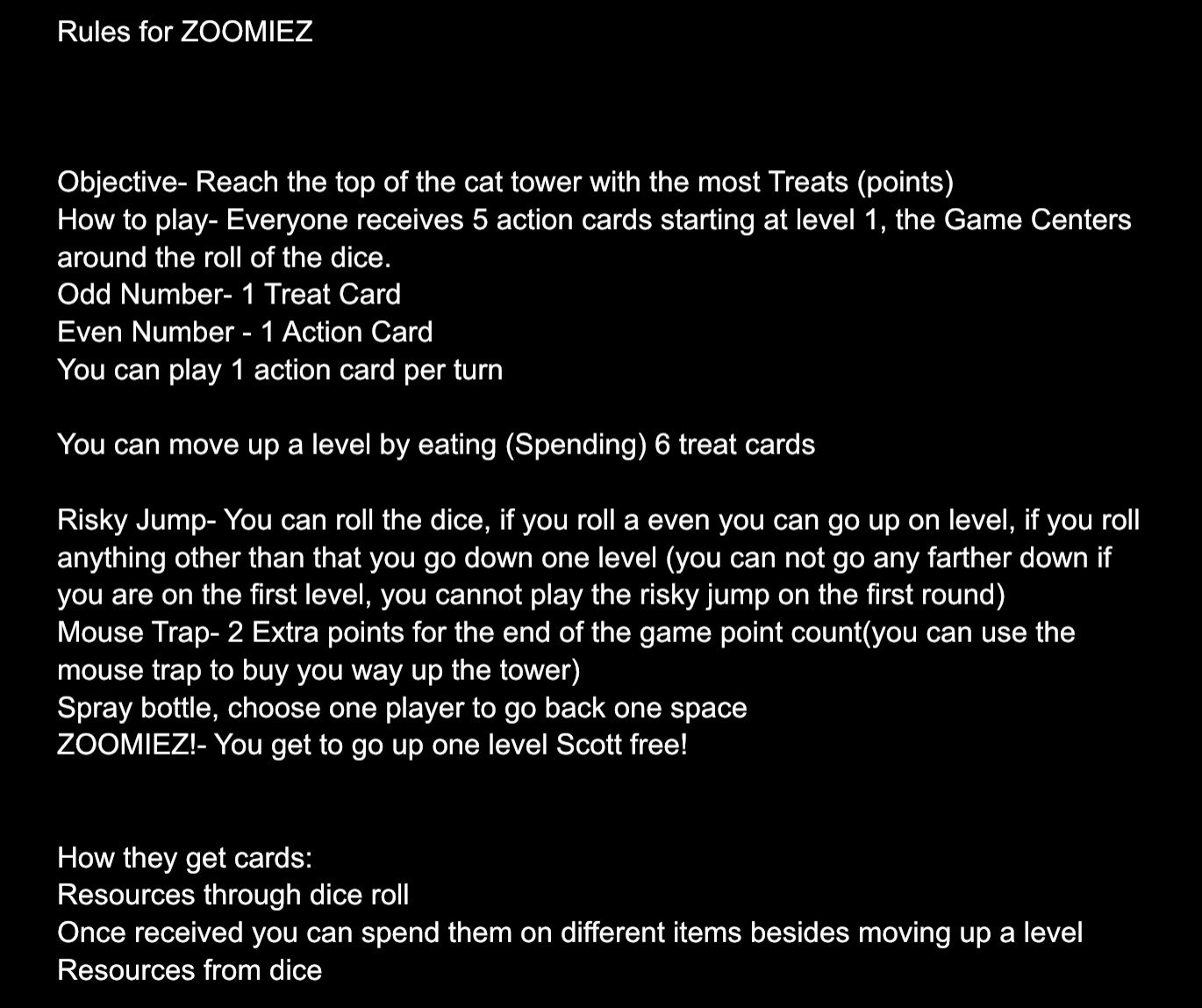
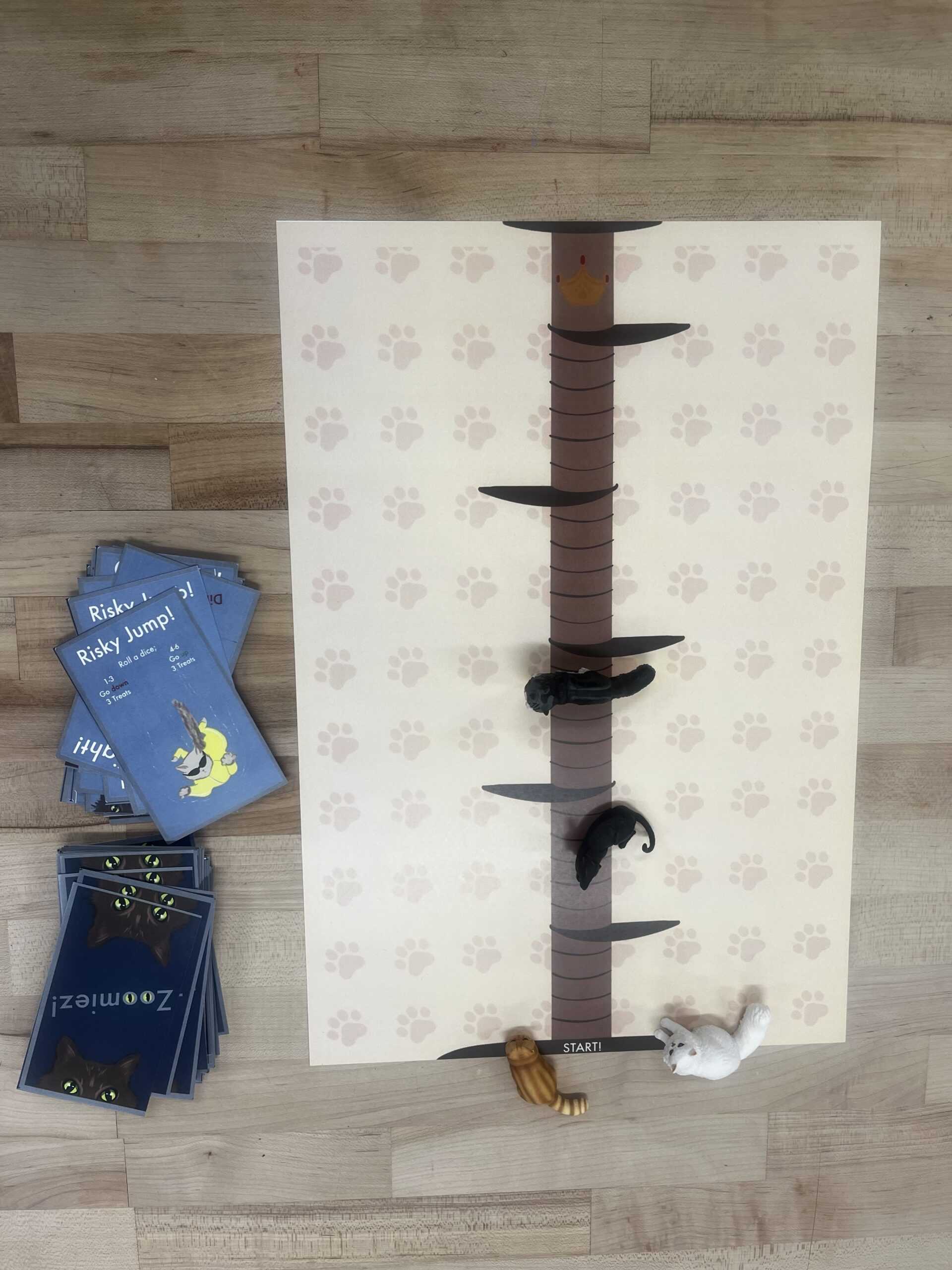
Gameplay of Zoomiez!

Beginning of game play goes very smoothly, every one loved that I put the rules on the cards everyone was moving all around the board which was intended!

Everyone had fun, they said it was very well paced

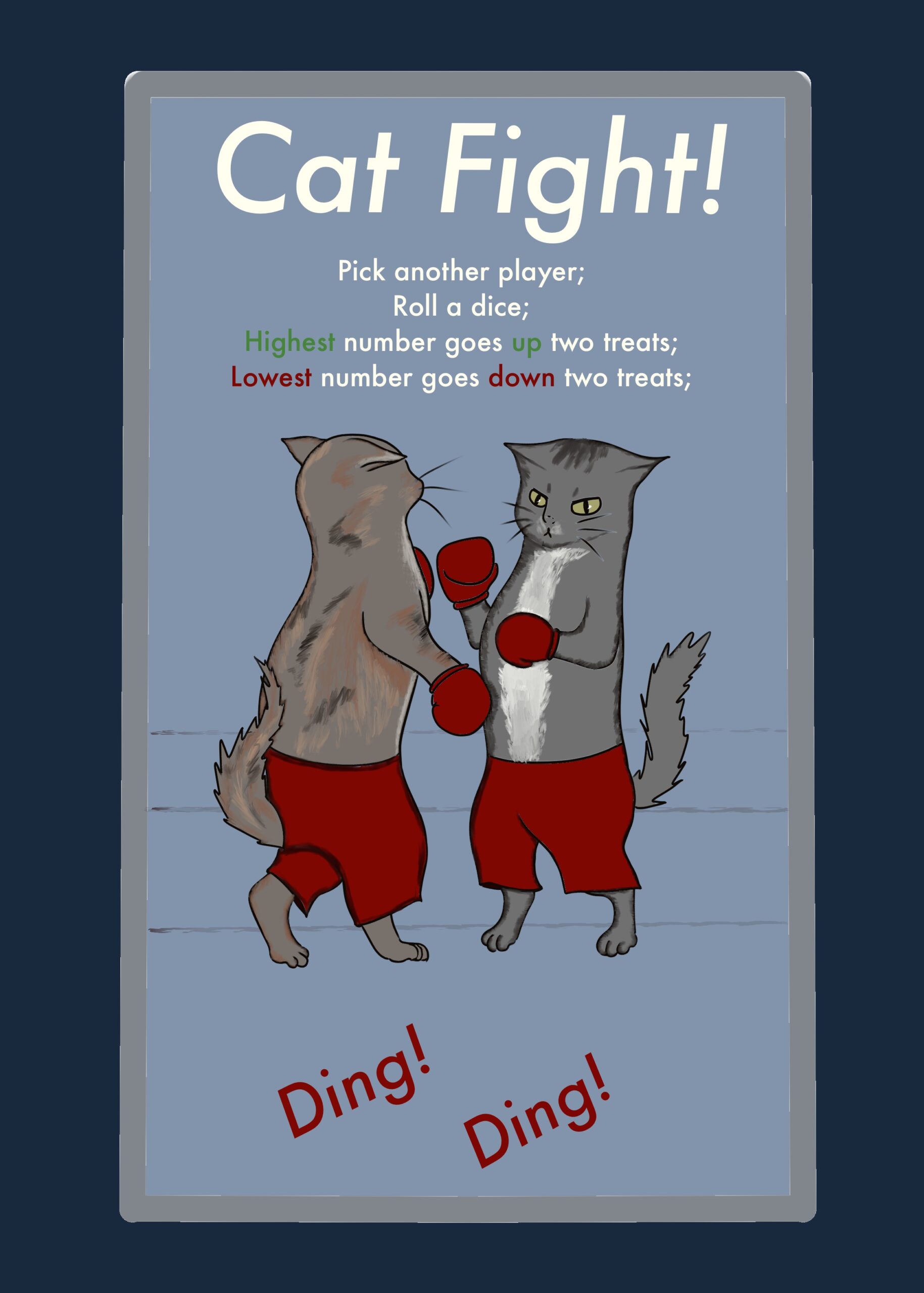
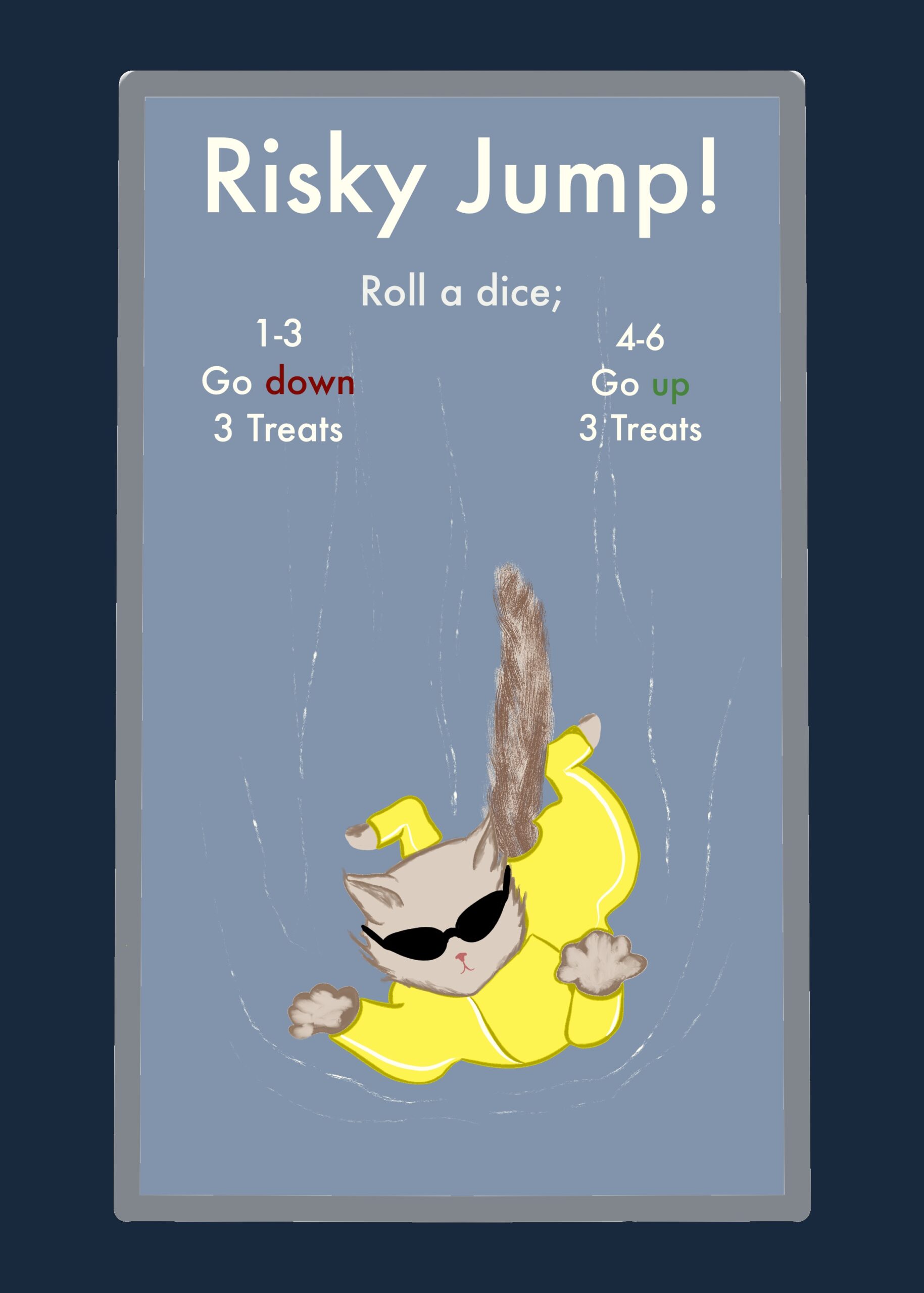
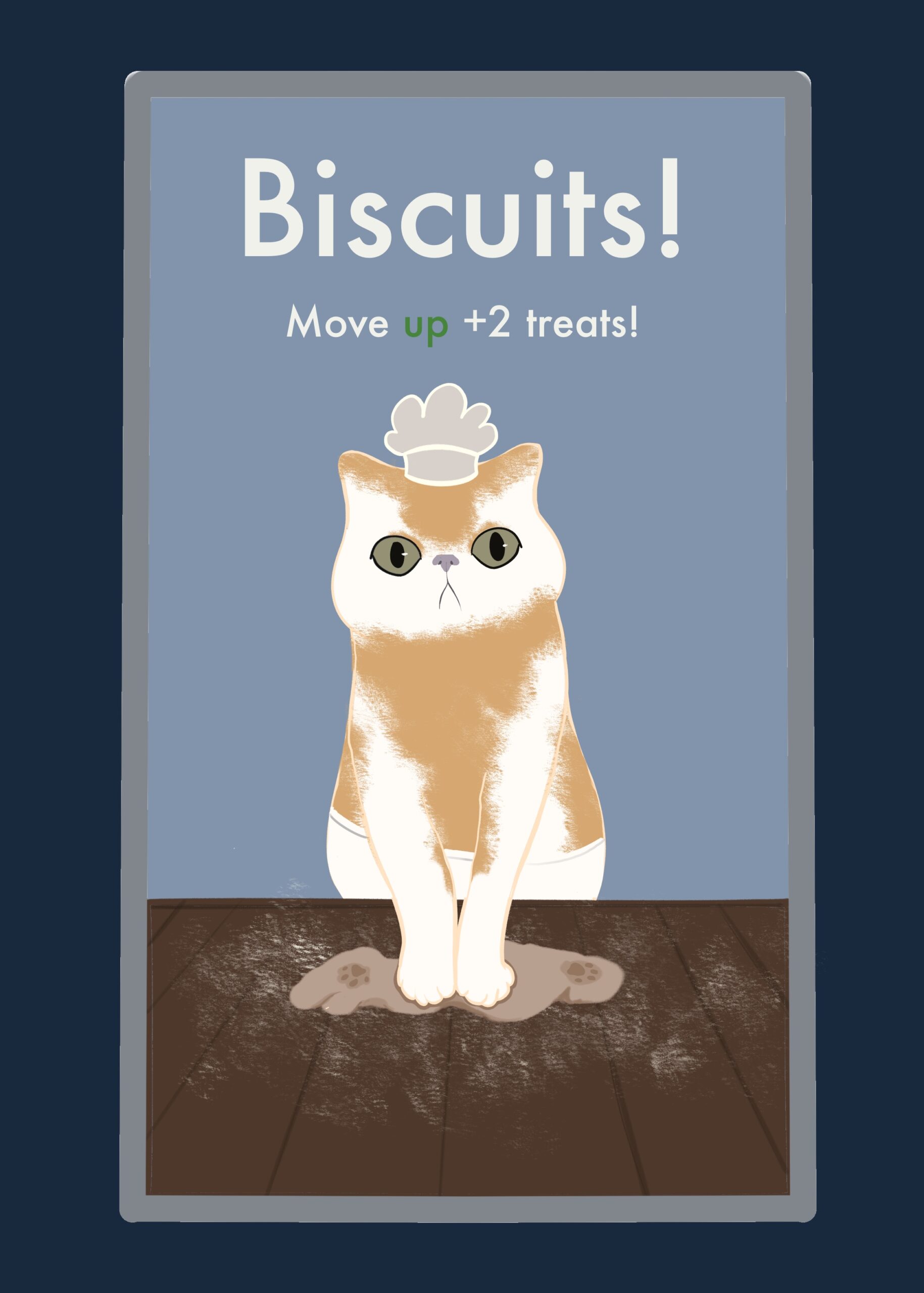
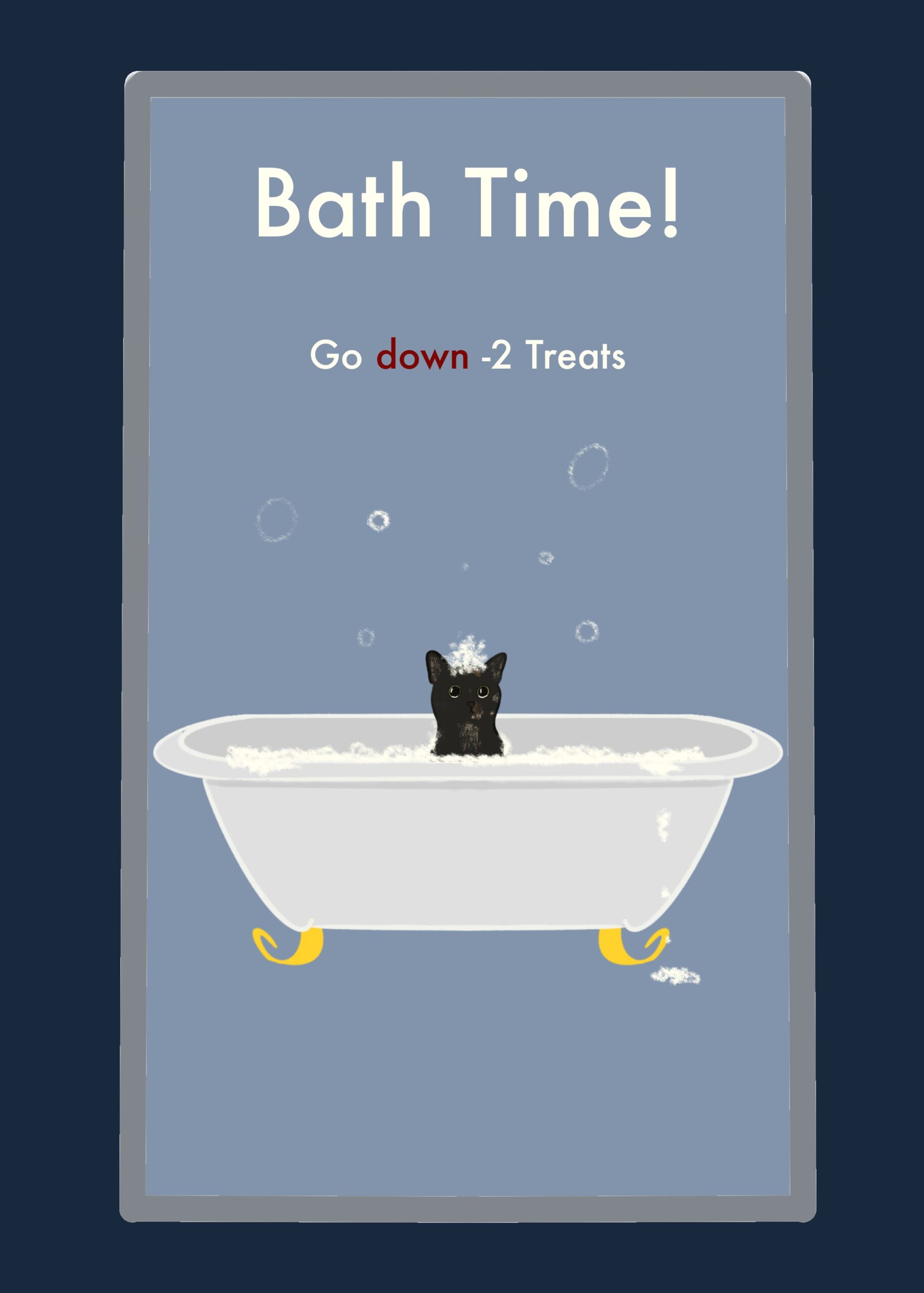
Cucumber card suggested

In between space cards treats

Market to cat cafe

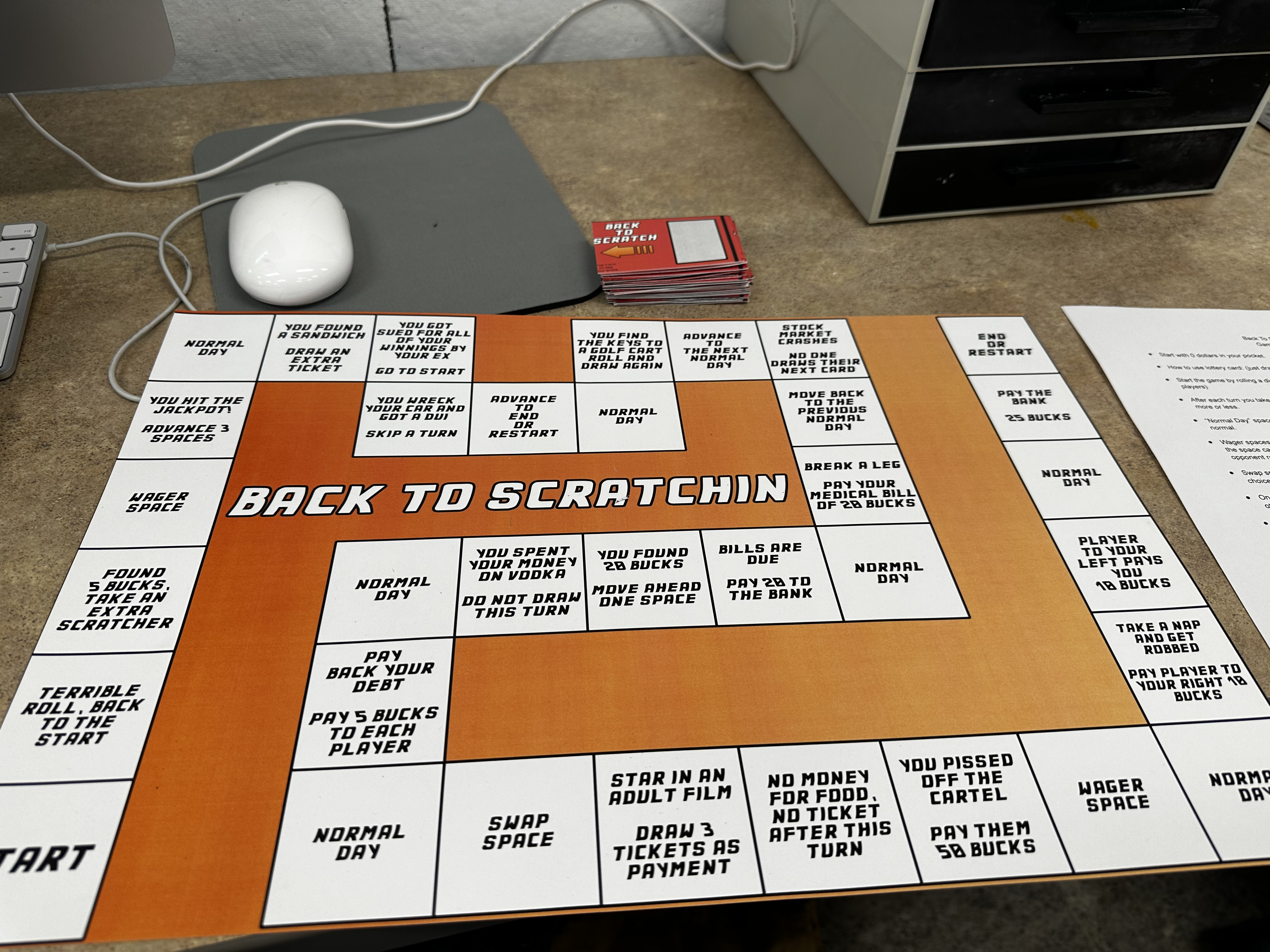
Back to Scratchin: Carson Bauer

Changes made:

Game Board sized up to be longer and board spaces added to increase the length of the game.

Normal Day and Wager Space added to give downtime on the board, as well as events throughout.

Thoughts:

Throughout making this game, I thought it was a simple idea that worked well. In the end though, it ended up being scrapped due to Skate Skirmish. If I was to come back and adjust the game, I would make the board larger and add more spaces for interaction with other players.

Week 13 Question Set

Describe the best game you’ve made this semester in 200 words? Follow Michelle Nephew’s advice.

The best game I’ve made this semester is Skater Skirmish. Compared to my other games, this game stands out as the most complete. While some of my other games struggled to progress beyond the first prototype phase due to playability issues, Skater Skirmish managed to overcome these challenges. The concept was easy with players, and their responses encouraged me to refine it further.

What makes Skater Skirmish special is its accessibility. The gameplay is easy, making it enjoyable for people of all age groups who can move their hands. This inclusivity comes from its  easy mechanics and simple rules, which ensures that anyone can learn and play the game. I prioritized simplicity because a more complicated design would have kept younger players or those unfamiliar with board games from playing.

To continue, Skater Skirmish blends fun and strategy with ease. Players are engaged in a game of classic skate, with just enough change to the game to make it interesting. It’s a game I’m proud of because it represents my growth as a designer and a carpenter. By focusing on player enjoyment, I created something that works with a wide audience.

Week 12 Question Set

  • Question Set 1
    • What is the difference between a “working” and a “display” prototype?
  • A working prototype is a functional game prototype that is playable, while a display prototype provides the artistic aspects of the game without it being functional.
    • What is required of a working prototype, and what might cause one to fail?
    • A working prototype is a game that functions as it should with all aspects of the game, and only needing further refinement based on what comes from playtesting. It can fail if the rules are unclear, or if there are elements missing.
    • What makes for a good prototype according to Dale Yu?
    • The game should be easy and intuitive to play, have a clear goal and rules, and the game should be complete enough to be clearly playable without much issue and interference from the creator.
    • What advice from Richard Levy will help you pitch your game?
    • Be clear and focused on your goals, understand your audience, include a demo of how the game is played, and be professional.
    • Where might you pitch your game?
    • I could pitch my game at local skate shops or similar stores. On top of that, it can be pitched at competitions where brands set up tents.
    • What do publishers look for in a game?
    • How well the game functions, how well it will sell, how re-playable it is, and that the game has a good appeal to the target audience.
    • What makes a good set of Rules?
    • Rules should be clear and concise, and shouldn’t have to be questioned by the player for more than a few seconds. If rules are not clear, than that can sway a player from playing the game as intended.